
From Vault to Gallery: How Superkül Is Reimagining a Toronto Bank as a Museum
There is a particular kind of alchemy in taking a building built to hold money and asking it instead to hold memory. That is precisely the transformation underway at 2 Queen Street East, where a former Bank of Montreal branch at the corner of Yonge and Queen is being reshaped into the permanent home of Museum of Toronto, with a Spring 2027 opening on the horizon.
Adaptive reuse is one of the most demanding forms of architecture precisely because the building already has an opinion. A banking hall was designed for authority, for the hush of marble and the weight of ceiling height meant to intimidate rather than invite. Toronto firm Superkül has been entrusted with softening that posture without erasing it, carving a 7,000 square foot, double height ground floor and mezzanine into galleries, workspaces, and back of house functions that feel civic rather than institutional. It is a question of proportion and restraint, letting the bones of the original structure carry new purpose instead of fighting them.
“Our city is defined by its diversity, its topography, and its vitality,” said Meg Graham, Partner at Superkül, describing a design intent to open the street level galleries outward and keep the programming spaces flexible enough to shift with the stories being told. That is the real craft on display here. A museum devoted to a living, changing city cannot be built as a static container. It needs light, sightlines, and circulation that can be rearranged as easily as the exhibitions themselves.
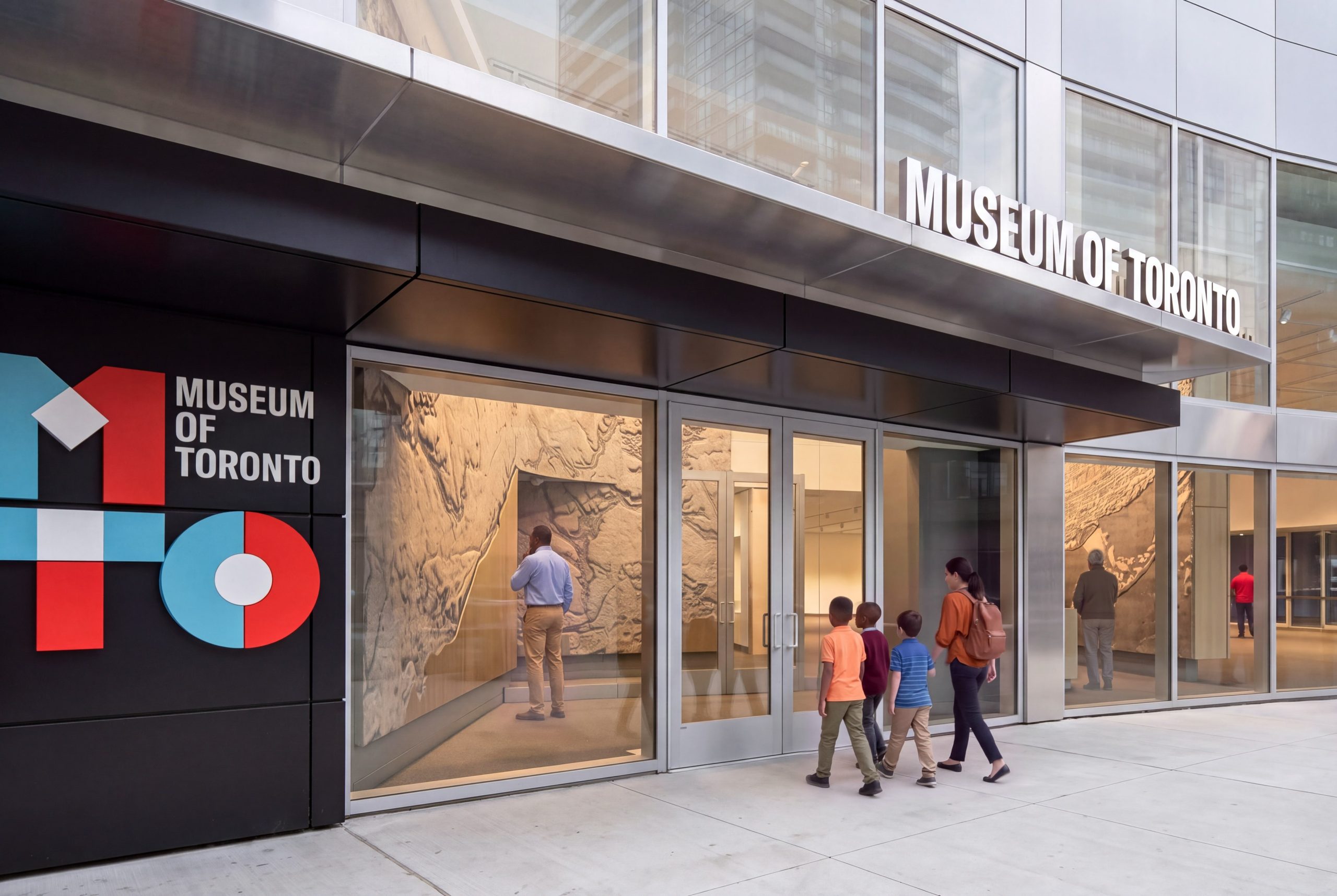
The $35 million gift from philanthropists Diane Blake and Stephen Smith, bringing their total support past $50 million since the Museum’s 2014 founding, is notable not only for its generosity but for what it signals about patronage and architecture together. Visual identity work from Bruce Mau Design will extend the spatial language beyond the walls, into how the institution presents itself to the city. mform Construction Group will carry out the build, with Avison Young managing the project, a reminder that even the most poetic design intentions rest on disciplined execution.
This will be a museum of and for Toronto, through and through.
What makes this project worth watching from a design perspective is its restraint in ambition. Rather than commissioning a new landmark from scratch, the Museum chose to inhabit a building already woven into the city’s streetscape, honouring its heritage while giving it a second, more democratic life. The opening pairing of a permanent exhibition on the city’s history with a rotating show on Toronto’s film legacy suggests a building meant to breathe and reconfigure, not one frozen at ribbon cutting.
For a city often accused of demolishing its past too quickly, this conversion offers a quieter argument: that some of the most meaningful architecture is not built new, but rediscovered, and given room to speak again.
Source: UrbanToronto