



Transform Your Space: 5 DIY Lighting Projects for a Chic Home Makeover
Lighting is one of the quiet luxuries of a well designed home. It does not merely make a room visible. It shapes how color is perceived, how textures are appreciated, and how comfortably a space supports everyday life. A modest apartment can feel elevated with the right pool of warm light, while a generous room can appear flat and impersonal if it relies on a single harsh ceiling fixture. For anyone dreaming of a home that feels polished, intimate, and expressive, lighting is often the most transformative place to begin.
Table Of Content
- Why Lighting Makes Such a Powerful Difference
- What to Know Before You Start
- Project One: Create a Statement with a Refined DIY Pendant Upgrade
- How to approach the project elegantly
- Project Two: Frame the Room with Plug In Wall Sconces
- Placement tips that elevate the result
- Project Three: Add Under Cabinet LED Lighting for a Custom Kitchen Glow
- What makes under cabinet lighting look custom
- Project Four: Turn Art into Atmosphere with a DIY Picture Light Moment
- Project Five: Refresh Table Lamps with Dimmable, Tunable Warmth
- How to Layer the Five Projects into One Cohesive Home
- Common Lighting Misconceptions to Leave Behind
- A Room by Room Strategy for Lasting Results
- Final Thoughts: Designing with Light, Not Just Fixtures
What makes DIY lighting especially appealing is its unusual power to change atmosphere without requiring a full renovation. A new pendant can redraw the proportions of a dining corner. A pair of sconces can give a bedroom the composed balance of a boutique hotel. A hidden LED strip can make a kitchen feel custom and architectural. These are not dramatic structural alterations, yet the emotional effect can be remarkable because light reaches every surface and every moment spent in a room.
Today, stylish DIY lighting is also more accessible than ever. LEDs have become the dominant practical choice for home upgrades across North America because they are energy efficient, long lasting, and available in a vast range of shapes, finishes, and smart controls. The U.S. Department of Energy has linked widespread LED adoption to major national energy and cost savings, while Natural Resources Canada notes that efficient fixtures can use one third or less of the energy of traditional fixtures. In a Canadian home, lighting accounts for about 11 percent of electricity use, which means even small changes can feel both beautiful and worthwhile over time.
Yet the true secret to a chic lighting makeover is not simply choosing efficient bulbs. It is understanding layered lighting. The most inviting interiors rarely depend on one source of illumination. Instead, they combine ambient light for overall comfort, task light for practical needs, and accent light for depth and visual drama. The result feels more intentional, more flattering, and far more luxurious than a room that is uniformly bright from corner to corner.
Expert guidance also supports what designers have intuitively known for years. Warm residential light tends to feel the most comfortable, with the Illuminating Engineering Society commonly placing homes in the 2700K to 3500K color temperature range. This is the zone where light begins to resemble hospitality interiors rather than office spaces. It is also where many DIY projects look most refined, because warm light softens edges, enriches materials, and creates a sense of ease.
In this guide, we will explore five DIY lighting projects that are easy to execute and elegant in result. Each one is chosen for its balance of style, accessibility, and practical impact. Some involve no wiring at all. Others may include light assembly or fixture updates that should always be handled according to local code and safety guidance. The goal is not to improvise recklessly, but to make thoughtful changes that allow your home to feel more personal, graceful, and complete.
Design truth: A chic home is rarely the brightest room in the building. It is often the best layered, with warm light placed exactly where it flatters the room and supports the way you live.
Why Lighting Makes Such a Powerful Difference
Before beginning any project, it helps to understand why lighting has such an outsized effect on interior design. Light is the medium through which every finish is seen. Matte paint, brushed brass, boucle upholstery, walnut grain, marble veining, and linen drapery all depend on lighting to reveal their character. Even beautifully chosen furniture can feel underwhelming if the room lacks softness, shadow, and focus.
There is also a psychological dimension to lighting that people instantly feel even if they do not articulate it. Bright overhead light can be useful, but if it is the only source, a room may feel exposed and restless. Layered light creates zones, rituals, and rhythm. It can make a kitchen feel lively while food is prepared, then calmer once dinner begins. It can turn a bedroom from a purely functional place into a sanctuary. It can make a hallway feel curated rather than transitional.
Efficiency adds another layer of appeal. The Department of Energy reports that most U.S. household light bulbs on the market now consume close to 80 percent less energy than traditional incandescent bulbs widely used in 2012. DOE also found that lighting electricity use in U.S. buildings fell dramatically from 18 percent of total electricity use in 2010 to 7.8 percent in 2020 as efficient lighting spread. These numbers remind us that beauty and practicality no longer sit on opposite sides of the design conversation. A stylish light source can also be a deeply sensible one.
What to Know Before You Start
The most elegant DIY projects are also the most thoughtful. Before choosing fixtures and bulbs, begin by asking how each room should feel. A living room usually benefits from layered ambient and accent light that invites conversation. A kitchen needs practical visibility, especially on counters and islands. A bedroom often feels best with low glare, bedside control, and warm pools of illumination rather than a single dominant ceiling source. Once you know the desired mood and function, the project becomes easier to shape with confidence.
Color temperature matters enormously. If you have ever felt that LED lighting looked too cold or clinical, the issue was likely not the technology itself but the bulb selection. Warm LEDs in the 2700K to 3000K range are widely available and particularly flattering in living spaces. A slightly brighter 3000K to 3500K light can work well in kitchens, bathrooms, and work zones if balanced thoughtfully. Dimming is equally important because brightness should adapt to time of day and activity rather than remain fixed.
Pay attention to color rendering as well. A high Color Rendering Index, often called CRI, helps fabrics, skin tones, wood finishes, and artwork appear richer and more accurate. In practical terms, this means your carefully chosen paint color or dining table will look more like itself under good light. For a design driven home, CRI is not a technical footnote. It is part of how elegance is perceived.
Most importantly, understand the boundary between a DIY upgrade and a task that may require professional help. Swapping bulbs, installing adhesive LED strips, styling plug in fixtures, and replacing accessible shades can be approachable for many homeowners and renters. Hardwired changes, fixture relocation, new junction boxes, or any work involving unfamiliar wiring may require permits, inspections, or a licensed electrician depending on local regulations. Always turn off power before working near existing fixtures, and choose the polished route over the risky one.
Project One: Create a Statement with a Refined DIY Pendant Upgrade
A pendant light is one of the simplest ways to alter the visual identity of a room. It draws the eye upward, gives scale to a dining table or kitchen island, and introduces materiality in a single gesture. A woven shade can feel relaxed and organic. Pleated fabric can feel softly Parisian. Opal glass offers an understated glow. Brushed brass adds warmth and quiet glamour. When chosen well, a pendant does more than illuminate. It anchors a composition.
For a DIY friendly approach, many people begin by updating an existing pendant shade or installing a plug in pendant where permanent electrical changes are not ideal. Renters often find plug in pendants especially useful because they can suspend from a ceiling hook and plug into a nearby outlet, creating the effect of a custom overhead fixture with far less complexity. If your home already has a compatible pendant fitting and local rules allow a simple swap, refreshing the shade alone can dramatically improve the look of the space.
The secret to making this project feel chic rather than improvised is proportion. Over a dining table, the pendant should feel generous enough to define the zone without overwhelming it. In a reading corner, a smaller sculptural form can create intimacy. Use a warm dimmable LED bulb, ideally in the 2700K to 3000K range, so the fixture casts a glow that feels gentle and deliberate. If the shade is opaque, make sure light is directed where you need it. If it is translucent, consider how it will glow from a distance in the evening.
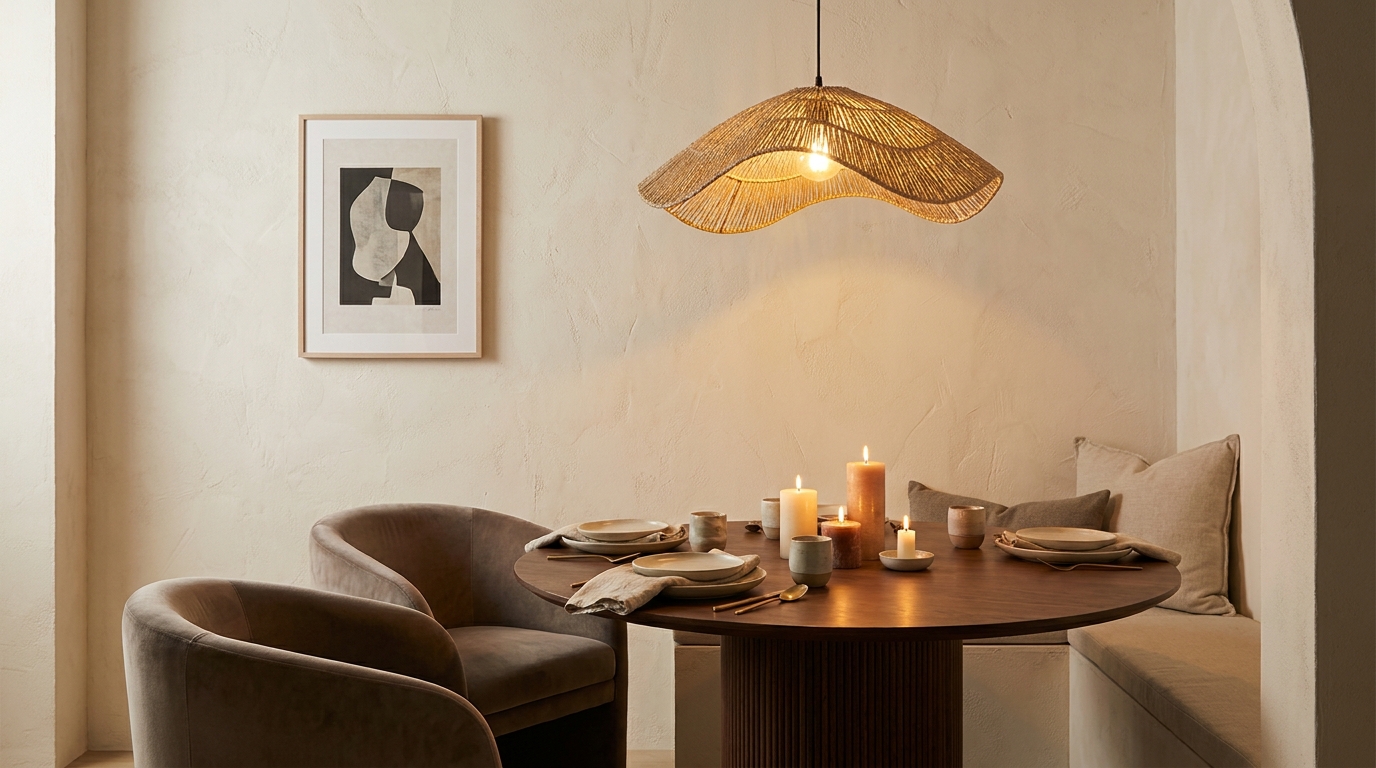
Stylistically, pendant upgrades pair beautifully with layered surroundings. Place a small lamp or wall sconce nearby so the pendant is not responsible for all illumination. This softer hierarchy instantly creates depth. It also addresses one of the most common misconceptions in home lighting, which is that brighter is always better. In reality, one luminous focal point supported by gentler secondary light often feels more luxurious than a room flooded from above.
How to approach the project elegantly
- Choose the room’s purpose first. Decide whether the pendant will frame dining, reading, or entry styling before selecting shape and scale.
- Select a warm LED bulb. Aim for approximately 2700K to 3000K for a welcoming glow, and choose dimmable if possible.
- Consider material carefully. Linen, glass, rattan, ceramic, and metal each shape light differently and change the emotional tone of the room.
- Use a professional finish mindset. Conceal cords neatly, center the fixture thoughtfully, and keep surrounding decor restrained so the pendant reads as intentional.
Project Two: Frame the Room with Plug In Wall Sconces
Few additions make a room feel more tailored than wall sconces. They bring symmetry, release space on nightstands or side tables, and introduce the subtle architecture of light at eye level. In bedrooms, they create a hotel like serenity. In living rooms, they help define a seating arrangement. In hallways or reading corners, they lend a sense of curation that overhead lighting alone rarely achieves.
Plug in wall sconces are among the most effective DIY lighting projects because they deliver the look of bespoke wall lighting without requiring invasive wiring. Today’s best options come in refined finishes such as antique brass, matte black, plaster, linen, and opal glass. Many have fabric wrapped cords or paintable covers that can be integrated more gracefully than older utilitarian styles. If you take time with placement and styling, they can feel astonishingly custom.
To create a polished effect, install sconces in pairs when symmetry suits the room. Flanking a bed, mirror, or artwork instantly adds composure. In a reading nook, a single adjustable sconce can cast useful task light while preserving floor space. This is where layered lighting becomes especially persuasive. Rather than forcing one overhead fixture to handle every mood, sconces allow the room to soften in the evening and become more intimate without sacrificing functionality.
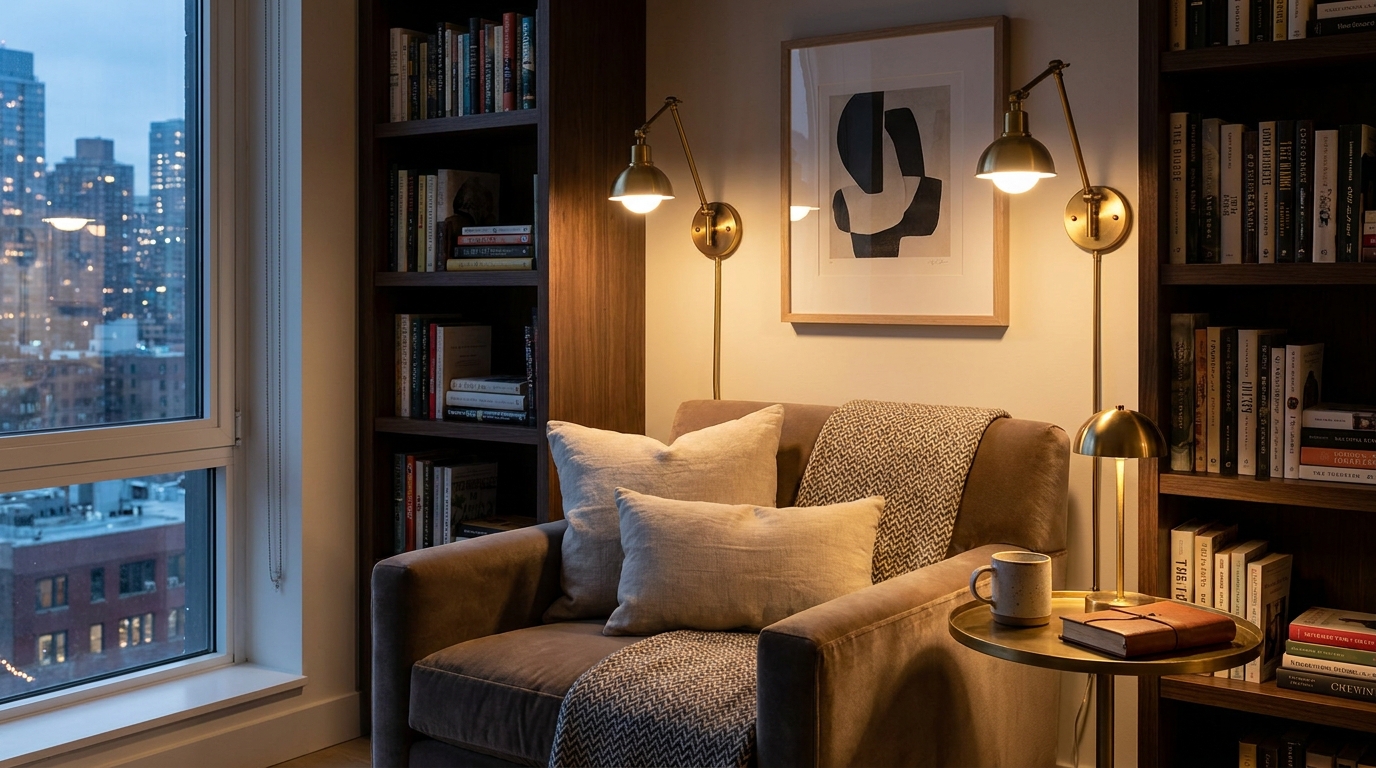
Choose shades and bulb types with care. Opaque shades can reduce glare and direct light downward, which works beautifully in bedrooms and lounge areas. Frosted glass can produce a more diffuse glow. Again, warm LEDs are your ally. A cool bulb in a decorative sconce can undermine the very romance the fixture is meant to create. Smart bulbs are also useful here because they allow you to dim or schedule light without changing the fixture itself.
Connected lighting is more than a novelty. DOE research points to connected LED lighting as part of future energy savings potential, and for homeowners this translates into highly practical beauty. A pair of app controlled sconces can move from bright morning functionality to a low evening glow with a single scene setting. One fixture can therefore serve multiple aesthetics across the day, making the room feel more adaptable and more considered.
Placement tips that elevate the result
- Think about eye level. Sconces should feel integrated into the architecture, not awkwardly floating too high or too low.
- Respect symmetry where it helps. Matching distances from bed edges, art frames, or console tables creates visual calm.
- Control the cord path. Use discreet cord covers or strategic furniture placement so the overall impression remains elegant.
- Add a dimmable bulb. This single detail makes the light significantly more versatile and sophisticated.
Project Three: Add Under Cabinet LED Lighting for a Custom Kitchen Glow
If one project consistently delivers a high end effect for relatively little effort, it is under cabinet LED lighting. Kitchens ask a great deal of light. They must support food preparation, cleaning, casual conversation, and often remote work or homework as well. Overhead fixtures can leave shadows on counters, especially when the user stands between the light source and the work surface. Under cabinet lighting solves this elegantly by bringing illumination exactly where it is needed.
Adhesive LED strip lighting is one of the most approachable DIY options available today. Many kits are designed for straightforward installation and can plug into an outlet or connect through simple low voltage systems. When installed neatly beneath upper cabinets, they create a clean ribbon of warm light that makes the backsplash more luminous, countertops more practical, and the entire kitchen more expensive looking. It is one of those rare upgrades that reads as both technical and decorative.
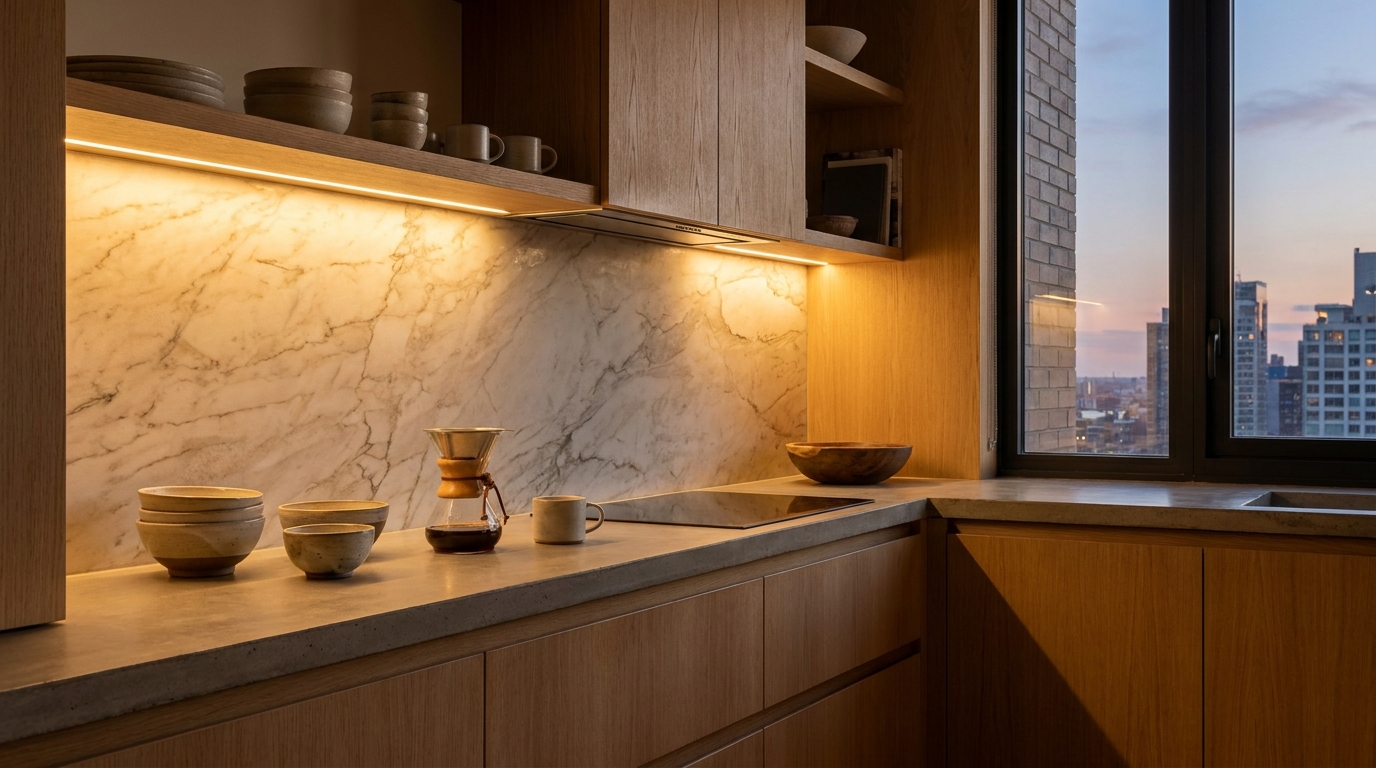
For the most graceful result, choose warm white LEDs rather than overly cool strips. In many kitchens, 3000K is an excellent balance because it remains inviting while still supporting visibility. If your cabinetry is painted in creamy whites, taupe, mushroom, or soft oak tones, warm light will complement those finishes beautifully. If possible, conceal the strip fully from normal standing height so only the glow is visible. The fixture should disappear and the atmosphere should remain.
This project also illustrates how efficient lighting can be stylish. NRCan notes that ENERGY STAR qualified fixtures in Canada can use one third or less of the energy of traditional fixtures, and some efficient lighting choices may save households meaningful money over time. In other words, the graceful evening glow under your cabinets can also represent a quieter monthly energy profile. Design and restraint often walk hand in hand.
Smart controls work especially well in kitchens. Motion sensors can gently illuminate counters at night without turning on every ceiling light. App controlled scenes can shift the room from bright prep mode to subdued dining mode. This is where the modern lighting trend toward connected control becomes genuinely useful, because the kitchen is rarely used in only one way. A chic room adapts, and so should its lighting.
What makes under cabinet lighting look custom
- Hide the hardware. The visual magic lies in seeing the light, not the strip itself.
- Use consistent color temperature. Match surrounding bulbs so the kitchen does not feel patchy or accidental.
- Keep cable management discreet. Thoughtful routing preserves the illusion of simplicity.
- Pair it with restrained overhead light. Let under cabinet illumination become part of a layered composition rather than an isolated trick.
Project Four: Turn Art into Atmosphere with a DIY Picture Light Moment
A picture light is one of the loveliest ways to bring a cultivated mood into a home. It suggests care, curation, and visual confidence. Whether installed above a painting, a family photograph, or even a shallow display shelf, it turns decoration into atmosphere. It also draws attention to something personal, allowing light to become a storytelling tool rather than only a functional necessity.
Battery powered and rechargeable picture lights have made this effect far more achievable for everyday interiors. These designs often mount easily and avoid the need for complicated wiring, which makes them especially appealing in rentals, hallways, stair landings, and homes where walls are already finished beautifully. The best models are slender, understated, and warm in tone. Some even include remote dimming, which is ideal because artwork generally looks best with restrained, focused illumination rather than intense brightness.
This project works especially well in transitional spaces that are often neglected. A hallway with a console and one meaningful framed piece can feel suddenly gallery like with a picture light above it. A home office gains depth when a favorite print is highlighted in the background. A dining room can feel intimate and layered when decorative art receives its own soft glow after sunset. Because the fixture is relatively small, the visual return is remarkably generous.
Keep placement centered and measured. The light should flatter the artwork without causing glare. If the frame has glass, test angles carefully. You may also want to consider CRI here, because a higher quality light source will render colors and tonal variation more faithfully. This matters for everything from abstract canvases to sepia family portraits. A picture light is a subtle gesture, but its success depends on precision.
Elegant homes are edited, not overlit. A single artwork softly illuminated can create more atmosphere than several brighter fixtures used without intention.
What I love most about this project is its emotional effect. It invites a pause. It says that the home has been considered not only for utility but for beauty and memory. In that sense, lighting becomes deeply personal. It helps turn walls into moments and rooms into experiences.
Project Five: Refresh Table Lamps with Dimmable, Tunable Warmth
Among all lighting upgrades, the table lamp is perhaps the most underestimated. Because lamps are familiar, many people forget how profoundly they influence a room’s mood. A lamp can soften a corner, balance a sofa, ground a console, and introduce height to a vignette. It can also provide the most flattering evening light in the home, particularly when paired with the right shade and bulb. If your home currently relies on overhead fixtures after dark, a thoughtful lamp refresh may change everything.
This project can be approached in several chic and affordable ways. You might replace outdated shades with linen or pleated forms that diffuse light more softly. You might update hardware or bases with more sculptural silhouettes. You might simply change the bulb to a dimmable warm LED or a tunable white smart bulb that adapts from brighter daytime use to gentler nighttime ambiance. Often, the fixture itself is not the problem. The quality and control of light are.
Tunable white lighting is especially compelling for multipurpose rooms. During the day, a living room lamp may need to support reading or work. In the evening, the same lamp should feel calm and atmospheric. Smart bulbs allow that shift with ease. The same is true of bedside lamps, where a low warm setting can replace harsh overhead lighting before sleep. This is not about technology for its own sake. It is about giving one elegant object a more nuanced role in daily life.
Scale and shade selection matter greatly here. A lamp should neither disappear nor dominate. A generous shade can cast a broader, more flattering pool of light, while a narrow one may feel more sculptural and directional. Consider what the lamp illuminates around it. Is it helping a reading chair, a sideboard, a bedside table, or an entry console? The placement should feel natural, but the effect should feel styled.
There is also a sustainability story in lamp updates that deserves appreciation. Rather than discarding perfectly good bases, you can reimagine them with new shades, better bulbs, and smarter controls. This is one of the gentlest forms of home makeover because it respects what already exists while quietly improving comfort, beauty, and energy performance.
How to Layer the Five Projects into One Cohesive Home
The real artistry of DIY lighting appears when these projects begin to converse with one another. A pendant over the dining table, sconces in the bedroom, LED strips in the kitchen, a picture light in the hallway, and refreshed table lamps in the living room all contribute to a home that feels intentional from room to room. The common thread should be warmth, consistency, and restraint. Choose finishes that relate to one another, whether that means repeating brass accents, black details, or soft white shades. Keep color temperatures harmonious so one room does not feel icy while another feels amber.
Think of your home in scenes rather than fixtures. Morning light should support energy and function. Evening light should relax the eye and flatter the room. Entertaining light should feel dimensional and inviting. If one source handles all of these needs, the result will rarely be as successful as a layered combination. This is why modern design is moving away from single fixture room illumination and toward more flexible compositions. It is not trend chasing. It is simply a more humane and beautiful way to live.
A wonderful advantage of layered lighting is that it helps modest spaces feel curated rather than crowded. You do not need an enormous house to create atmosphere. In fact, smaller homes often benefit most because good lighting brings order and intimacy to compact rooms. A narrow hallway becomes a gallery. A studio apartment gains visual zones. A small bedroom feels composed instead of cluttered. Light organizes space with extraordinary subtlety.
Common Lighting Misconceptions to Leave Behind
One of the most persistent misconceptions is that LED lighting is inherently cold and unattractive. This may have been a more common experience years ago, but it is no longer an accurate reflection of the market. Warm LEDs are widely available, deeply effective in residential interiors, and often indistinguishable in comfort from older technologies when selected thoughtfully. The issue is not whether the bulb is LED. The issue is its temperature, dimming quality, and placement.
Another misconception is that a room needs as much brightness as possible to feel luxurious. In truth, excessive uniform brightness often erases mood and texture. Elegant rooms use contrast gently. They allow for corners, highlights, and layers. A bedside sconce, a lamp on a console, and a pendant over a table can create a far richer experience than one indiscriminate overhead source.
A third misunderstanding is that all lighting DIY is easy and safe. Some projects truly are approachable, especially those involving plug in fixtures, bulbs, shades, and adhesive low voltage lighting. Others cross quickly into the territory of code compliance and electrical expertise. There is nothing less chic than a beautiful fixture installed unsafely. When in doubt, consult a licensed professional and preserve both peace of mind and the integrity of your home.
Finally, many people still assume that energy efficient lighting means compromising on style. The opposite is increasingly true. Today’s efficient fixtures and bulbs come in decorative, design forward forms that support everything from quiet minimalism to ornate traditional interiors. Efficiency no longer hides behind utility. It has become part of modern design sophistication.
A Room by Room Strategy for Lasting Results
If you are wondering where to begin, start with the room that would most benefit from an evening transformation. For many homes, this is the living room or bedroom because these spaces reveal atmosphere most clearly once daylight fades. Add a lamp or sconce first, then notice how the room changes before layering in additional sources. In kitchens, under cabinet lighting often offers the most immediate return. In dining areas, a pendant may define the room in one decisive move.
Move slowly and edit carefully. The aim is not to fill every wall or surface with a fixture. It is to create a sequence of light that feels natural and composed. The most refined homes often have fewer fixtures than one expects, but each one is well placed and thoughtfully controlled. This is why dimmers, smart bulbs, and scene settings matter. They allow a restrained design to remain flexible.
If budget is part of your decision making, remember that lighting upgrades can be staged over time. Begin with bulbs and lamps, then add plug in sconces, then move to under cabinet lighting or decorative overhead updates. Because lighting is visible every day and every night, even small improvements can feel deeply satisfying. You do not need to complete an entire house at once to experience the benefits.
Final Thoughts: Designing with Light, Not Just Fixtures
A chic home makeover does not always begin with furniture or paint. Sometimes it begins with the atmosphere you wish to inhabit. Light is one of the most expressive tools available to the home stylist because it can make a room feel serene, intimate, energetic, or ceremonial without changing its structure. It can celebrate materials, reveal beauty in ordinary routines, and support the emotional life of a home.
These five DIY lighting projects offer a graceful starting point. A pendant introduces character and scale. Plug in sconces add symmetry and softness. Under cabinet LEDs create practical elegance. Picture lights bring art into the mood of the room. Refreshed table lamps provide warmth, flexibility, and a sense of completion. None of these projects need to be extravagant to feel luxurious. The sophistication lies in restraint, warmth, and thoughtful placement.
As you transform your space, remember that the most memorable interiors are not lit in a single gesture. They are composed in layers, like music or perfume, with different notes emerging at different moments of the day. Choose warm light. Choose control. Choose fixtures that support your way of living and your personal sense of beauty. When lighting is approached with care, even the simplest room can begin to glow with unmistakable elegance.



No Comment! Be the first one.