



Essential Guide to Effective Irrigation System Maintenance for Sustainable Gardens
A healthy garden depends on more than good soil, thoughtful planting, and occasional watering. The way water is delivered matters just as much, especially when water costs are rising and climate conditions are becoming less predictable across many parts of North America. An irrigation system that is poorly maintained can waste a remarkable amount of water while leaving plants stressed, unevenly hydrated, or vulnerable to disease. By contrast, a well-maintained system can support stronger root growth, healthier soil conditions, and a landscape that looks better with fewer resources.
Table Of Content
- Why irrigation maintenance matters more than many homeowners realize
- The foundations of a sustainable irrigation routine
- Start with a seasonal irrigation inspection
- How to check for leaks, clogs, and hidden water waste
- A simple inspection checklist for each zone
- Controller settings: where efficiency is often won or lost
- How to schedule more sustainably
- Pressure regulation and spray performance
- Drip and microirrigation: efficient systems still need maintenance
- Plant health, soil health, and why overwatering is not harmless
- When and how to upgrade components for better efficiency
- The value of an irrigation audit
- Backflow prevention, safety, and system care
- Winterization in cold climates is not optional
- Common misconceptions that lead to wasted water
- A practical annual maintenance rhythm for homeowners
- Conclusion: maintenance as a form of water stewardship
This is why irrigation maintenance deserves a central place in sustainable garden care. The U.S. Environmental Protection Agency notes that outdoor water use accounts for about 30 percent of average household water use in the United States, and nearly 8 billion gallons are used outdoors each day, mostly for landscape irrigation. Just as importantly, the agency estimates that as much as 50 percent of outdoor water use can be wasted because of inefficiencies such as leaks, overspray, and incorrect pressure. Those numbers make one thing very clear: maintenance is not a minor chore. It is one of the most practical conservation actions a homeowner can take.
For gardeners who want to be thoughtful without becoming overly technical, the good news is that effective irrigation maintenance is very manageable. It does not require a full system redesign or a long list of expensive upgrades to begin making a difference. In many cases, sustainable results start with observation, seasonal checks, better scheduling, and a few targeted improvements. When those habits are built into your routine, your irrigation system becomes a quieter, smarter part of the landscape rather than a hidden source of waste.
This guide explains how to maintain your irrigation system step by step with water efficiency and garden health in mind. It covers seasonal inspections, leak detection, pressure management, controller adjustments, drip and microirrigation care, winterization, and ways to align your watering habits with the needs of your plants, soil, and local climate. The goal is not perfection. The goal is a resilient garden that receives the right amount of water, at the right time, with as little waste as possible.
Sustainable irrigation is not about watering less at all costs. It is about watering more precisely so plants stay healthy while water waste is reduced.
Why irrigation maintenance matters more than many homeowners realize
It is easy to assume that if an irrigation system turns on and water comes out, everything is functioning properly. In reality, many irrigation problems are subtle. A nozzle may be partially clogged, causing one area to flood while another stays dry. A spray head may be tilted, sending water onto pavement instead of planting beds. Pressure may be too high, creating a fine mist that evaporates before it reaches the root zone. None of these issues is dramatic on its own, but together they can quietly undermine both plant health and water efficiency.
Regular maintenance helps catch those small problems before they become expensive or wasteful. It also extends the life of your irrigation system. Valves, seals, emitters, controllers, sprinkler heads, and sensors all perform better and last longer when they are checked routinely and adjusted when needed. This matters from both a sustainability and cost perspective. Replacing an entire system prematurely is far more resource intensive than maintaining the one you already have.
There is also a broader environmental case for maintenance. In Canada, environmental indicators have noted that irrigation is among the sectors that consume more water than they return to the original source. On a household level, that means every saved gallon matters more than it may seem. Efficient irrigation supports water stewardship not only by reducing demand, but also by helping landscapes function more naturally through deeper roots, healthier soil biology, and less runoff.
When people think about sustainable gardening, they often focus first on plant choices, compost, or pollinator support. Those are valuable strategies, but irrigation maintenance belongs in the same conversation. If a system is wasting water every week, even the most carefully selected garden can become less sustainable in practice. Maintenance connects your good intentions to measurable results.
The foundations of a sustainable irrigation routine
A strong irrigation maintenance routine rests on four ideas: inspect regularly, repair quickly, schedule thoughtfully, and upgrade selectively. These principles keep the process simple and realistic. Instead of reacting only when something breaks, you build a habit of noticing how your system is performing and how your garden is responding.
Inspection is the starting point because irrigation systems are often hidden in plain sight. Pipes are underground, controllers are set and forgotten, and watering usually happens early in the morning when few people are watching. A scheduled inspection brings the system back into view. It allows you to see whether water is reaching the intended areas evenly and whether each component is working as designed.
Repair matters because even a small leak or misalignment can waste water every time the system runs. Sustainable maintenance is not only about high-tech tools. It is also about tightening connections, replacing worn seals, cleaning nozzles, and correcting spray patterns. Small fixes done early are usually the most affordable and effective.
Scheduling is where many systems either become efficient or remain wasteful. Oregon State University Extension emphasizes that effective irrigation scheduling means matching applied water to evapotranspiration losses and adjusting duration or frequency accordingly. In simple terms, you want to replace the water your landscape actually uses, not follow the same watering pattern regardless of temperature, rainfall, plant type, or soil conditions.
Selective upgrades complete the picture. Smart controllers, pressure-regulating spray bodies, matched precipitation nozzles, and microirrigation can all improve efficiency, but they work best when layered onto a system that is already maintained properly. Technology can help, but it does not replace seasonal care.
Start with a seasonal irrigation inspection
The most practical way to maintain an irrigation system is to follow the seasons. EPA guidance recommends annual or seasonal inspections, especially spring startup checks after winter weather. This timing is useful because cold temperatures, shifting soil, accidental impacts, and normal wear can all affect the system during the off season. A spring inspection helps you catch those issues before summer demand increases.
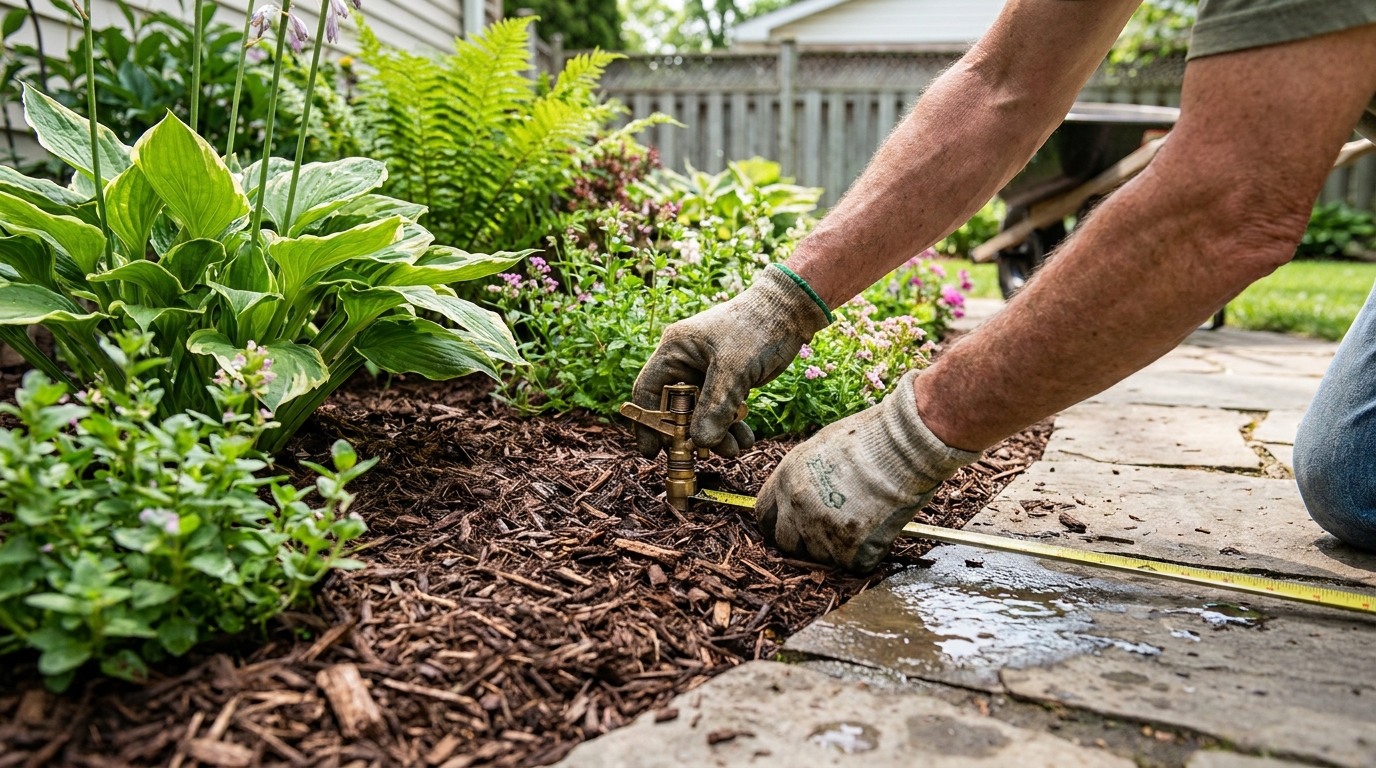
Begin by turning on the system one zone at a time. Move slowly through the landscape and watch what happens. Look for broken or missing sprinkler heads, clogged nozzles, uneven spray, pooling water, soggy patches, hissing sounds, and runoff onto sidewalks or driveways. Observe whether shrubs, perennials, lawns, and garden beds are being watered appropriately for their needs. A zone by zone review is one of the best ways to spot inefficiencies that would otherwise go unnoticed.
It helps to carry a notebook or use your phone to document what you see. Record which zones have problems, how long they run, and whether certain areas seem consistently too dry or too wet. Over time, these notes become valuable because they reveal patterns. A recurring issue in the same bed or slope may point to pressure imbalance, poor head placement, or a scheduling problem rather than a one-time glitch.
Seasonal checks should continue beyond spring. Mid summer is a good time to reassess how the system is coping with heat and peak plant demand. Early fall is useful for reducing run times as temperatures drop. In cold climates, late fall is also the moment to prepare for winterization. Sustainable irrigation is not static. It changes with the landscape and the weather.
How to check for leaks, clogs, and hidden water waste
Leaks are one of the most common and most overlooked sources of outdoor water waste. Some are obvious, such as a broken riser or a geyser around a cracked head. Others are much quieter. A valve may not close completely. A pipe may have a slow underground leak. Drip tubing may split under mulch where it is difficult to see. Because irrigation systems operate on a timer, even a modest leak can waste significant water over the course of a season.
Start with the visible signs. Inspect around sprinkler heads and valves for unusually wet soil, eroded areas, or water bubbling up when a zone is running. Check drip lines for damaged tubing, loose fittings, and emitters that have popped off. If one area of the garden is far greener or more saturated than the rest, that can indicate overdelivery caused by a leak or pressure issue. Also review your water bill if available. A sudden increase during irrigation season can point to a system problem.
Clogged nozzles and emitters create a different kind of waste because they reduce uniformity. One plant may receive too little water while another receives too much, leading homeowners to compensate by lengthening run times. The result is more water use without better plant performance. Remove and rinse clogged nozzles carefully, and flush drip lines when needed to clear sediment. If clogging is frequent, it may be time to inspect filters, water quality, or pressure conditions.
Hidden waste often appears as overspray and runoff rather than leaks. If water lands on pavement, fences, walls, or the side of the house, that water is not helping your garden. Reposition or replace misaligned heads, and make sure spray patterns match the shape of the planted area. Even a few degrees of adjustment can significantly reduce waste over time.
A simple inspection checklist for each zone
-
Run one irrigation zone at a time so you can observe performance clearly without distractions from other zones.
-
Watch every sprinkler head or drip section for activation, uniform flow, and proper coverage.
-
Check for broken heads, missing nozzles, clogged emitters, tilted spray bodies, and low or uneven pressure.
-
Look for overspray onto hard surfaces and runoff down slopes or across compacted soil.
-
Note any unusually wet or dry areas that suggest leaks, poor spacing, or mismatched scheduling.
-
Clean, adjust, or repair components before increasing watering time.
Controller settings: where efficiency is often won or lost
One of the most important misconceptions in irrigation is the idea that controller programming can be set once and ignored. In reality, controller settings should shift with the season, the weather, and the maturity of the landscape. A schedule that made sense in late June may be wasteful in early September, and a newly planted bed does not need the same watering pattern as an established native border.
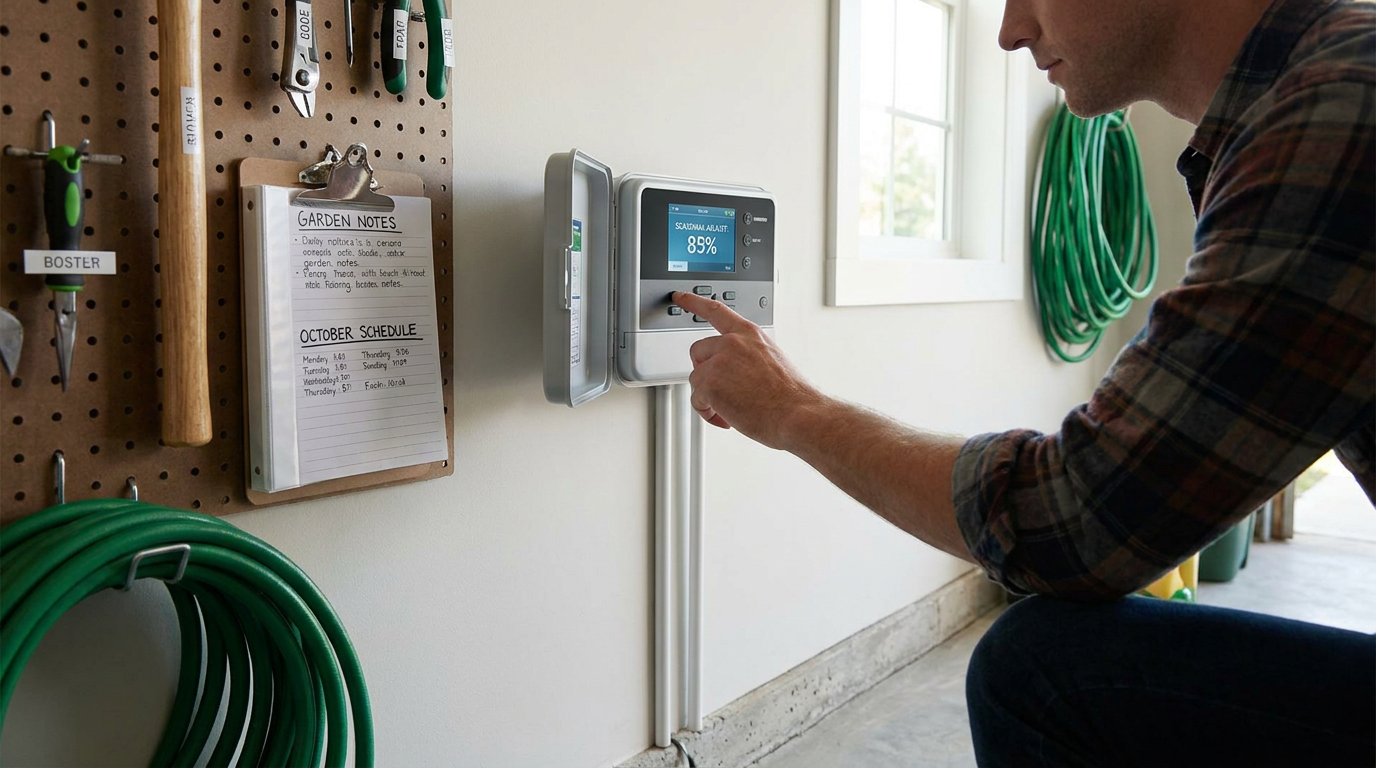
EPA estimates that a WaterSense-labeled irrigation controller can reduce irrigation water use by 15 percent. That is a meaningful savings, but only if the controller is programmed correctly and checked regularly. Smart controllers still need oversight. Rain sensors can fail, seasonal adjustments can be skipped, and default settings can remain in place long after landscape conditions have changed.
Review start times, run times, frequency, and zone assignments at least a few times each season. Watering in the early morning is generally more efficient than watering in the afternoon because temperatures are lower and wind is often calmer. Deep, less frequent watering is often better than shallow daily watering for established plants because it encourages stronger root systems. However, this should always be adapted to soil type, plant type, and current weather.
It is also worth checking whether each zone groups plants with similar water needs. This approach, often called hydrozoning, is an essential but sometimes overlooked sustainability strategy. Lawns, vegetable beds, drought tolerant shrubs, and shade perennials rarely need the same amount of water. If they are all on the same schedule, some part of the landscape will almost certainly be overwatered or underwatered.
How to schedule more sustainably
Good scheduling starts with the understanding that plants do not use the same amount of water every day. Temperature, humidity, wind, rainfall, and day length all affect evapotranspiration, which is the combined loss of water from soil evaporation and plant transpiration. Matching your irrigation to those losses is one of the most practical ways to reduce waste while preserving plant health. This is the principle highlighted by university extension guidance, and it applies to gardens of almost any size.
For a homeowner, this does not need to become an advanced calculation exercise. A simpler version is to reduce run times after rainfall, shorten watering frequency during cooler periods, and watch for signs that plants are receiving too much or too little water. Soil should be checked before adjusting schedules. If the soil several inches down is still moist, the next cycle may not be necessary. If it is dry sooner than expected, the duration or frequency may need refinement.
Weather-based controllers and soil moisture sensors can help automate this process. They are especially helpful for busy households or for landscapes with varied planting zones. Still, they work best when paired with observation. Technology adds precision, but your garden remains the final source of truth.
Pressure regulation and spray performance
Water pressure is one of the least visible factors in irrigation efficiency, yet it has a major effect on performance. When pressure is too high, sprinkler spray can turn into mist, drift in the wind, and evaporate before reaching the ground. High pressure can also cause uneven distribution, damage components over time, and increase runoff. When pressure is too low, heads may not pop up correctly or deliver their intended pattern, leaving dry spots across the landscape.
EPA has increasingly emphasized pressure regulation because it directly affects how well sprinklers apply water. WaterSense-labeled spray sprinkler bodies can save nearly 5,600 gallons of water per year for an average household using 50,500 gallons outdoors and operating at or above 60 psi. Under the right conditions, pressure regulation can reduce irrigation water use by more than 20 percent on a property. Those are substantial gains from a component many homeowners have never thought about.
If your sprinklers produce visible mist or very fine spray, pressure may be too high. If coverage appears weak and inconsistent, pressure may be too low or there may be another delivery issue. A professional irrigation audit can diagnose pressure problems precisely, but homeowners can often identify clues through visual observation during a zone check. If you are replacing spray bodies anyway, choosing pressure-regulating models is a sensible upgrade.
Matched precipitation nozzles are another useful consideration. These are designed so that different arc patterns apply water at a consistent rate. Without matched precipitation, a narrow arc may receive more water than a wider arc in the same zone. That imbalance leads to overwatering in some areas and plant stress in others. Good maintenance means paying attention not just to whether water comes out, but how evenly it is distributed.
Drip and microirrigation: efficient systems still need maintenance
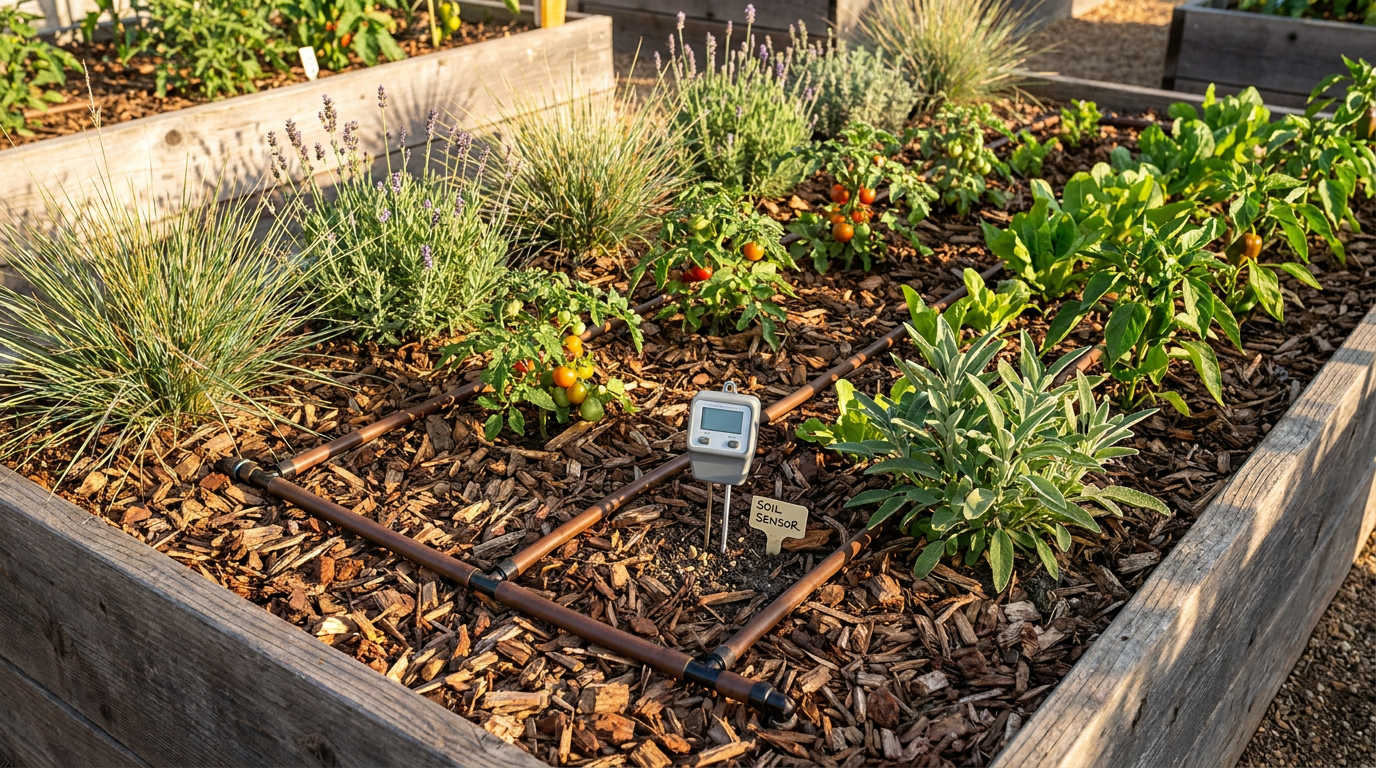
Microirrigation and drip systems are among the most practical tools for sustainable gardens, especially in mixed beds, vegetable plots, shrub borders, and dry climates. EPA says microirrigation systems can use 20 to 50 percent less water than conventional sprinkler systems. By delivering water slowly and closer to the root zone, they reduce evaporation and often improve plant performance. They can also work beautifully in gardens where aesthetics matter, because tubing is easy to conceal under mulch.
Still, it is a mistake to assume drip systems are maintenance free. Emitters can clog, tubing can crack, roots can interfere with lines, and pressure can become uneven across longer runs. Because drip systems operate quietly and discreetly, problems may remain unnoticed for weeks. A bed can look fine from a distance while one section is receiving almost no water.
To maintain a drip system effectively, inspect emitters periodically to confirm consistent flow. Look for dry pockets in the bed, plants that are wilting despite recent irrigation, or areas where mulch remains oddly dry. Flush the lines as recommended for your setup, clean filters, and replace damaged tubing promptly. If the system is exposed to sun, monitor for brittleness over time. If it is hidden under mulch, lift a few sections during inspections to verify everything is still functioning properly.
Drip irrigation is especially effective when paired with mulching, native plants, and hydrozoning. Mulch slows evaporation and moderates soil temperature, while native or climate adapted plants reduce overall water demand. Together, these strategies create a more forgiving garden, one that can remain healthy even when watering is reduced or delayed slightly during cooler weather.
Plant health, soil health, and why overwatering is not harmless
Many homeowners understandably worry more about underwatering than overwatering, but excessive irrigation can be just as harmful. Too much water can deprive roots of oxygen, encourage shallow root systems, increase disease pressure, and wash nutrients beyond the reach of plants. In lawns, it can contribute to fungal issues and weak growth. In ornamental beds, it can make plants more vulnerable to stress rather than less.
Healthy irrigation maintenance is really about plant response. If a garden is regularly showing yellowing leaves, soft growth, fungal spots, or persistent soggy soil, the problem may not be a lack of water. It may be poor timing, too much frequency, or a mismatch between irrigation method and plant type. Adjusting the system thoughtfully often improves the landscape more than simply adding more water.
Soil type matters greatly here. Sandy soils drain faster and may require shorter, more frequent watering in some cases, while clay soils absorb water more slowly and benefit from slower application to prevent runoff. Loamy soils generally offer more flexibility. The key is to make sure your irrigation method and timing align with how your soil actually behaves. A sustainable system works with the site rather than forcing a generic schedule onto it.
Gardeners can also support irrigation efficiency by building healthier soil over time. Organic matter improves soil structure and water retention, reducing stress between watering cycles. Mulch further protects moisture at the surface. These practices do not replace irrigation maintenance, but they make the entire system more effective by helping each watering cycle go further.
When and how to upgrade components for better efficiency
Maintenance often reveals which components deserve replacement or improvement. If your system is older, replacing worn parts with more efficient versions can offer meaningful water savings without requiring a complete overhaul. The best upgrades are usually the ones that solve a specific observed problem, such as misting, uneven coverage, runoff, or poor scheduling control.
Smart or WaterSense-labeled controllers are often a good starting point for homeowners who want more seasonal accuracy. Pressure-regulating spray bodies make sense where pressure is known to be high or where visible misting occurs. Matched precipitation nozzles help improve uniformity in irregularly shaped zones. Drip irrigation can be added to shrub beds, foundation plantings, raised beds, or vegetable gardens where overhead spraying is unnecessary.
Rain sensors and soil moisture sensors can also strengthen an efficient system. They help prevent unnecessary irrigation after rainfall or when soil is already adequately moist. This is especially useful in climates where weather shifts quickly or where homeowners may not remember to make manual adjustments as often as needed. Again, these tools are most effective when treated as part of a maintenance routine rather than as a substitute for one.
If you are planning a broader landscape update, consider the bigger picture as well. Xeriscaping, native plant landscaping, mulching, and rainwater harvesting can all complement irrigation maintenance by reducing demand and improving resilience. Sustainable gardening works best when equipment care and landscape design support one another.
The value of an irrigation audit
For homeowners who want a clearer understanding of system performance, an irrigation audit can be extremely useful. An audit looks beyond basic functionality and assesses how uniformly water is being applied, whether pressure is appropriate, how efficiently zones are operating, and whether scheduling aligns with landscape needs. Some professionals offer this service, but even a simple homeowner-led audit can reveal valuable insights.
A practical audit might include measuring how much water different areas receive during a cycle, documenting runoff locations, identifying zones with mixed plant needs, and noting where spray overlaps too much or too little. The point is to understand efficiency, not just operation. A system may appear to work, yet still deliver water unevenly enough to create waste and plant stress.
Auditing is particularly worthwhile if your landscape includes slopes, mixed sun and shade, lawn next to planting beds, or a combination of spray and drip zones. These conditions increase the chances of imbalance. An audit gives you a roadmap for small improvements that can accumulate into significant savings over time.
Backflow prevention, safety, and system care
While water efficiency is often the focus of irrigation maintenance, safety and water quality also matter. Backflow prevention devices help protect household drinking water from contamination by preventing irrigation water from flowing backward into the supply line. These components should be inspected periodically and maintained according to local requirements. In some jurisdictions, testing may be required by a certified professional.
Homeowners do not need to become specialists to take this seriously. The main point is to know whether your system includes a backflow prevention device, understand where it is located, and make sure it is not ignored during seasonal service. A sustainable irrigation system should conserve water while also protecting the integrity of the water supply.
General care around valve boxes, controllers, and exposed components also matters. Keep boxes accessible and free from heavy soil buildup, avoid damaging heads with mowers or garden tools, and trim back vegetation that interferes with spray patterns. These small acts of stewardship reduce wear and make future inspections easier.
Winterization in cold climates is not optional
In regions with freezing temperatures, winterization is a critical part of irrigation maintenance. Water left inside pipes, valves, sprinkler heads, or backflow devices can freeze, expand, and crack components. The damage may not be obvious until spring startup, when leaks and breakages appear throughout the system. Skipping winterization is one of the fastest ways to turn a manageable maintenance routine into a costly repair season.
Proper winterization typically involves shutting off the water supply to the irrigation system, draining the lines where appropriate, and in many cases blowing out the system with compressed air performed carefully and safely. Because improper blowout procedures can damage components, many homeowners choose to hire a professional for this step. That can be money well spent, particularly in colder regions where freeze damage is common.
Winter is also a good time to review the past season. Look back at your notes and ask what worked, what areas struggled, and whether any zones consistently used more water than expected. This reflection can guide spring improvements. Sustainable maintenance is cumulative. Each season teaches you how to make the next one more efficient.
Common misconceptions that lead to wasted water
Several persistent myths make irrigation systems less efficient than they could be. One of the most common is the belief that if the system activates reliably, it must be working well. In practice, hidden leaks, clogged nozzles, poor pressure, and overspray can waste large amounts of water even when everything appears normal from a distance. Function is not the same as efficiency.
Another misconception is that more watering automatically means healthier plants. In reality, overwatering can stress roots, increase disease risk, and encourage weak growth. Plants need appropriate moisture, not constant moisture. The right schedule depends on season, soil, plant type, and local weather.
Many people also assume that smart controllers eliminate the need for maintenance. They do not. Sensors need seasonal checks, settings need review, and physical components still need care. Similarly, not all sprinklers are the same. Pressure-regulating bodies, matched precipitation nozzles, and microirrigation can materially improve performance when chosen well.
Finally, in cold climates, winterizing is sometimes treated as optional if a winter happens to be mild. That is a risky gamble. Even a short freeze can damage a system, and the resulting repairs are rarely worth the chance.
A practical annual maintenance rhythm for homeowners
For most households, the most realistic approach is to build irrigation care into an annual rhythm rather than treating it as a one-time project. In spring, perform a full startup inspection and repair any visible issues before regular watering begins. In early summer, refine scheduling based on plant growth, rising temperatures, and rainfall patterns. In midsummer, monitor for stress, leaks, and pressure issues during peak demand. In fall, reduce watering as conditions cool and begin preparing for shutdown. In cold climates, winterize before freezes arrive.
This rhythm works because it mirrors how gardens actually change. Landscapes are dynamic, and irrigation needs are never perfectly fixed. By checking in at natural seasonal intervals, you reduce the risk of prolonged waste and help your plants remain more stable through weather shifts.
If you are new to irrigation maintenance, start small. Choose one weekend this month to run every zone and take notes. Clean a few nozzles, correct one area of overspray, and revisit your controller settings. The point is to begin paying attention. Once you do, the next steps become much clearer.
Conclusion: maintenance as a form of water stewardship
At its best, irrigation maintenance is not just about preserving equipment. It is a practical form of water stewardship that brings together conservation, landscape health, and long term household efficiency. When your system is inspected regularly, repaired promptly, and tuned to the needs of your soil and plants, it uses less water while delivering better results. That is the kind of sustainability that feels grounded and achievable.
The research is persuasive. Outdoor water use represents a substantial share of household consumption, and inefficiencies can waste an astonishing amount of it. Yet this is also what makes maintenance so encouraging. The potential for improvement is real, and many of the most effective actions are within reach for ordinary homeowners. A cleaner nozzle, a better schedule, a corrected spray pattern, a pressure-regulating upgrade, or a simple shift to drip irrigation in the right bed can all make a meaningful difference.
If you think of your garden as a living system rather than a collection of separate tasks, irrigation maintenance becomes easier to value. It supports root health, protects soil structure, reduces runoff, saves money, and helps landscapes stay resilient through dry spells and changing seasons. In that sense, maintaining your irrigation system is not a technical extra. It is one of the most elegant ways to care for a sustainable garden.


No Comment! Be the first one.