



Elevate Your Space: Stylish Sink Upgrades for Kitchens and Bathrooms
There are few home upgrades as deceptively powerful as a new sink. In both kitchens and bathrooms, the sink is touched, seen, and relied upon every day, which gives it an influence far beyond its footprint. It shapes how a room feels in the morning rush, how easily it cleans at the end of the day, and how confidently the entire design comes together. A thoughtful sink upgrade can make a compact powder room feel tailored and polished, or turn an ordinary kitchen into a more graceful, efficient workspace.
Table Of Content
- Why a Sink Upgrade Changes More Than You Think
- Choosing the Right Sink Style for Your Kitchen or Bathroom
- Undermount Sinks
- Top Mount or Drop In Sinks
- Farmhouse or Apron Front Sinks
- Integrated and Seamless Sinks
- Workstation Sinks
- The Beauty and Behavior of Sink Materials
- Stainless Steel
- Fireclay and Vitreous China
- Composite and Quartz Blends
- Solid Surface and Cast Resin
- How Faucet and Aerator Choices Complete the Upgrade
- Installation Realities Every Homeowner Should Understand
- Accessible Ready Design and the Luxury of Future Ease
- How to Match the Sink to the Room’s Design Language
- Practical Planning Before You Buy
- Common Misconceptions About Sink Upgrades
- Budget, Value, and When a Sink Upgrade Pays Off
- Final Thoughts: A Sink That Serves and Charms
What makes sink upgrades so appealing is their rare ability to blend beauty with utility. A basin is never merely decorative, yet it is often one of the first visual anchors in the room. The curve of an apron front, the crisp line of an undermount, the soft matte finish of a composite bowl, or the luminous smoothness of vitreous china all contribute to the atmosphere of the space. At the same time, bowl depth, faucet reach, drain placement, and material durability determine whether that elegance remains a pleasure in daily life.
For homeowners in Canada, there is also an essential practical layer beneath the design conversation. Plumbing installations are regulated provincially and territorially, while the National Plumbing Code of Canada 2025 provides the technical foundation for safe potable water systems, wastewater removal, and water use efficiency. In other words, a sink may look simple on the surface, but replacing one, moving one, or changing the counter cutout may involve requirements for drains, vents, traps, fixture spacing, backflow protection, and permits. The most successful makeover respects both the poetry of design and the discipline of proper installation.
This guide explores stylish sink upgrades for kitchens and bathrooms with that full perspective in mind. We will look at the most popular sink styles, discuss the strengths of different materials, consider water efficient faucet choices, and unpack the installation realities that affect cost and complexity. We will also examine accessibility and future proofing, because a sink should not only flatter your home today but support ease of living for many years to come.
Why a Sink Upgrade Changes More Than You Think
Many renovations focus first on paint, tile, or hardware, yet the sink is where daily rituals actually happen. In the kitchen, it supports prep, rinsing, soaking, draining, filling, and cleanup. In the bathroom, it frames handwashing, skincare, shaving, makeup, and the quiet start and end of each day. Because it is tied so closely to use, a sink that functions poorly quickly becomes frustrating, while a sink that performs beautifully can make a room feel instantly more luxurious.
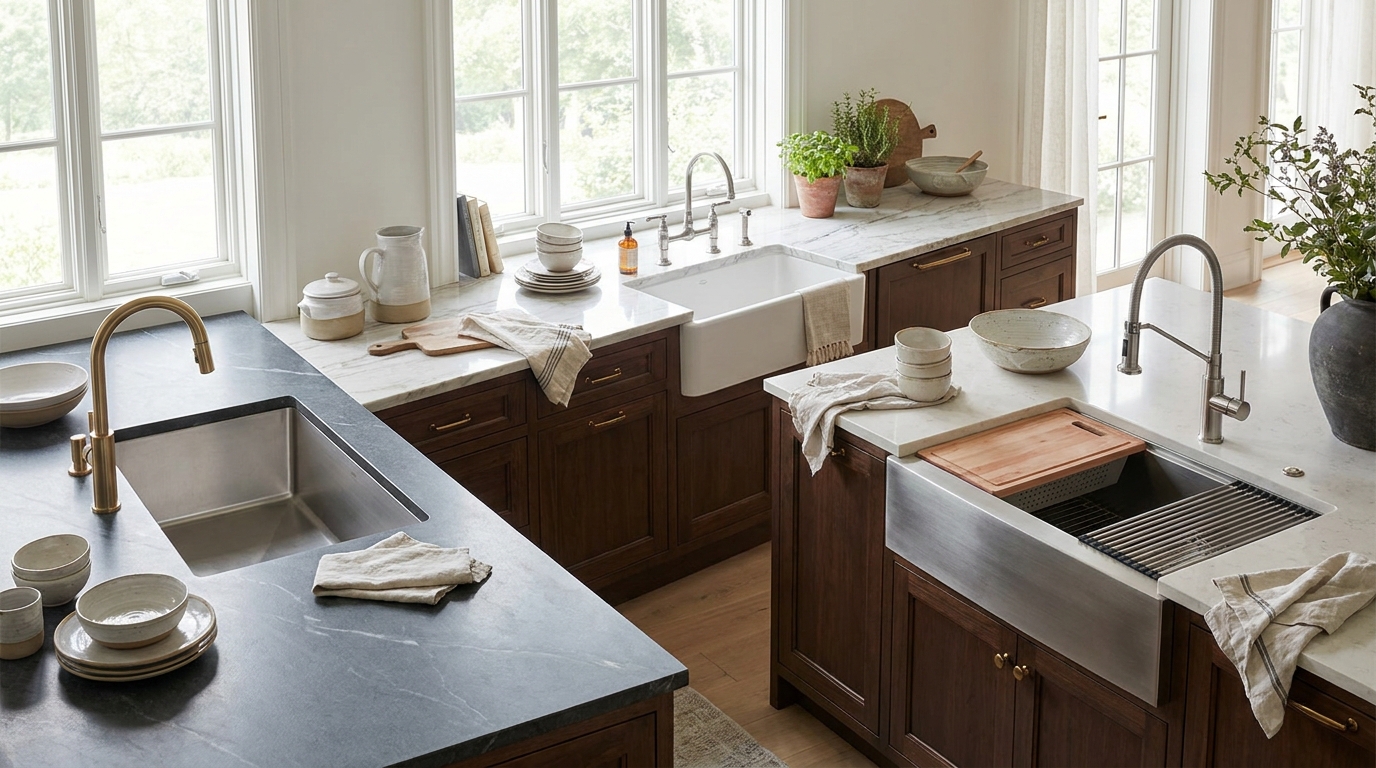
Visually, the sink often bridges major materials in the room. It sits between stone and metal, cabinetry and wall finish, plumbing hardware and accessories. This means a new sink has the power to harmonize the entire composition. A sleek undermount can let dramatic veining in a countertop take center stage, while a sculptural vessel sink can become the room’s jewel. In a kitchen, a wide workstation sink can reinforce a contemporary, purposeful look, while a fireclay apron front can introduce warmth and architectural character.
There is also the practical benefit of modernization. Many older sinks lack thoughtful bowl configurations, sound dampening, stain resistance, or ergonomic depth. Upgrading allows you to address splash, awkward reach, cluttered prep areas, and dated finishes all at once. If you pair the sink with a better faucet or aerator, you can improve water efficiency as well, making the project not only aesthetic but operationally smarter.
A beautiful sink upgrade is not just about appearance. It is a design decision, a water efficiency decision, and a long term livability decision brought together in one visible element.
Choosing the Right Sink Style for Your Kitchen or Bathroom
Style is often where homeowners begin, and rightly so. Sink form influences the architecture of the room, the flow of the countertop, the ease of cleaning, and the way the eye reads the whole composition. Yet style should never be selected in isolation. Every sink type carries its own installation needs, countertop implications, and maintenance rhythm. Understanding those tradeoffs is what allows a beautiful choice to remain beautiful in practice.
Undermount Sinks
Undermount sinks remain among the most elegant options for both kitchens and bathrooms. Installed beneath the countertop, they create a clean edge that allows crumbs or water to be swept directly into the basin. The look is refined and visually quiet, which makes undermount models especially appealing in contemporary kitchens, transitional spaces, and bathrooms where the counter material deserves emphasis.
The simplicity of an undermount sink, however, depends on compatible materials and sound support. Natural stone, engineered quartz, and solid surface counters are commonly used because they can handle the exposed cut edge. Laminate is usually less suitable unless specially detailed. In kitchens, larger undermount sinks can be heavy, especially when filled, so proper mounting and support matter greatly for durability and safety.
For homeowners seeking sleekness, undermount sinks are often the answer, but they are not automatically the best answer. They can cost more to install than top mount alternatives and may require precise fabrication if you are replacing the countertop or changing the cutout. Their beauty lies in restraint, and that restraint works best when all adjoining materials are equally well chosen.
Top Mount or Drop In Sinks
Top mount, also called drop in, sinks are sometimes underestimated because they are familiar. Yet familiarity does not mean inferiority. In many projects, especially practical refreshes with budget discipline, a well designed drop in sink can look crisp, current, and entirely intentional. It is also often easier to install because the sink rim rests on the countertop opening, which can make replacement more straightforward and forgiving.
Drop in sinks are particularly useful when you want to avoid replacing the countertop or when you are dealing with an existing cutout that limits your options. In busy family kitchens, they can also be a sensible choice because installation tends to be simpler and support concerns are reduced. The visible rim is the defining detail, so selecting a model with a slim, refined profile helps maintain a more tailored look.
In bathrooms, drop in sinks can be incorporated into traditional or transitional vanities with pleasing effect. Rather than seeing them as dated by default, it is better to judge them by proportion, material, and coordination with the faucet and top. In the right setting, they offer ease without sacrificing charm.
Farmhouse or Apron Front Sinks
Few sink styles make a stronger impression than the farmhouse sink. Its exposed front gives the kitchen a sense of permanence and crafted character, whether the surrounding aesthetic leans classic, rustic, European, or softly modern. Fireclay versions feel timeless and luminous, while metal or composite interpretations can make the silhouette feel more contemporary.
What homeowners love most about farmhouse sinks is often both visual and tactile. The basin is generous, the front is welcoming, and the style naturally becomes a focal point. It is ideal for kitchens where the sink is meant to be seen and celebrated rather than concealed in a seamless counter line. It also suits those who want a deep bowl for baking sheets, stockpots, and larger cleanup tasks.
Still, the romance of the apron front comes with real installation considerations. Cabinet modifications are frequently required, and heavier materials such as fireclay may need additional support. If the project involves changing cabinetry, counters, or plumbing alignment, the price and complexity can rise quickly. This is why farmhouse sinks are best approached as a feature upgrade rather than a simple swap.
Integrated and Seamless Sinks
Integrated sinks are increasingly favored in serene bathrooms and minimalist kitchens because they dissolve visual boundaries. Formed from the same material as the counter, or closely matched in appearance, they create a calm uninterrupted surface that feels effortless. In bathrooms especially, this approach supports a spa like atmosphere with fewer crevices to catch soap residue or clutter.
Solid surface, cast resin, and certain stone applications lend themselves beautifully to integrated sink design. The result is modern, easy to clean, and highly architectural. In powder rooms, where visual impact matters even more because the space is smaller, a seamless basin can feel quietly luxurious and highly custom.
The main consideration is repair, fabrication, and cost. Some integrated systems are easy to maintain, while others may be more specialized if damaged. Because the sink and top become one design gesture, measurements and planning need to be exact. When done well, though, integrated sinks offer one of the most polished expressions of contemporary design.
Workstation Sinks
One of the strongest current trends in kitchen sink upgrades is the workstation sink. Designed with ledges that hold accessories such as cutting boards, colanders, drying racks, and prep trays, these sinks transform the basin area into active workspace. They are especially compelling in urban homes, compact kitchens, and open concept layouts where every inch of function matters.
The attraction of a workstation sink is not novelty alone. It speaks to a broader design shift toward clutter reduction, multifunctionality, and more thoughtful zones for cooking and cleanup. Instead of scattering prep tasks across the counter, the sink becomes a beautifully organized hub. Manufacturers have continued to expand this category, often in stainless steel, with accessories that support chopping, rinsing, draining, and serving.
For households that cook often, this style can genuinely change the experience of the kitchen. It supports efficiency while also looking modern and purposeful. If your goal is a makeover that feels visually fresh and operationally improved, a workstation sink is one of the most persuasive choices available today.
The Beauty and Behavior of Sink Materials
If sink style determines silhouette, sink material determines mood. It also determines sound, maintenance, resistance to staining or scratching, and how gracefully the sink ages over time. Homeowners often assume that all sink materials perform in roughly the same way, but in reality, the differences are substantial. A wise decision balances visual aspiration with honest expectations about daily use.
Stainless Steel
Stainless steel remains a dominant kitchen choice for good reason. It is practical, versatile, and comfortable in design styles ranging from industrial to classic contemporary. It handles moisture well, suits busy cooking habits, and works beautifully with many faucet finishes, especially chrome, brushed nickel, matte black, and brass. In Canada, stainless steel sinks sold in the market are required to be manufactured in accordance with ASME A112.19.3-2008/CSA B45.4.08, according to CBSA guidance, which reinforces the importance of quality standards behind everyday products.
Not all stainless steel sinks feel the same, however. Gauge, sound dampening, bowl depth, and finish all affect the user experience. Better models reduce noise, resist denting more effectively, and feel more substantial in an open concept space where kitchen sounds carry farther. A brushed finish tends to hide water spots and small scratches better than a high polish, which makes it a favorite for hardworking homes.
Design wise, stainless steel is wonderfully adaptable. It can recede quietly into the room or reinforce a professional, tailored character. For homeowners who want durability without visual heaviness, it remains one of the most reliable and stylish options available.
Fireclay and Vitreous China
Fireclay and vitreous china are beloved for their classic beauty. Fireclay is especially associated with farmhouse kitchen sinks, where its luminous depth and handcrafted presence feel both grounded and graceful. Vitreous china, meanwhile, remains a cornerstone of bathroom sink design because it is smooth, bright, and timeless. Both materials bring a sense of tradition and permanence that suits many homes.
These surfaces are generally easy to wipe clean and aesthetically forgiving, which is part of their enduring appeal. In bathrooms, vitreous china pairs effortlessly with almost any vanity style, from ornate traditional cabinetry to pared back modern forms. In kitchens, fireclay creates a focal point that feels warm rather than technical.
Weight is the major caveat. Fireclay sinks in particular can be heavy and may require extra structural consideration in cabinetry and installation. Because these sinks are often chosen for visual impact, homeowners should ensure the practical foundation is equally strong.
Composite and Quartz Blends
Composite sinks, often made with quartz blends or similar engineered materials, have become increasingly popular thanks to their matte finish and contemporary presence. They offer a softness of appearance that can make a kitchen feel more composed and elevated, especially when paired with muted cabinetry, warm woods, or stone with subtle movement. Their visual appeal lies in restraint rather than shine.
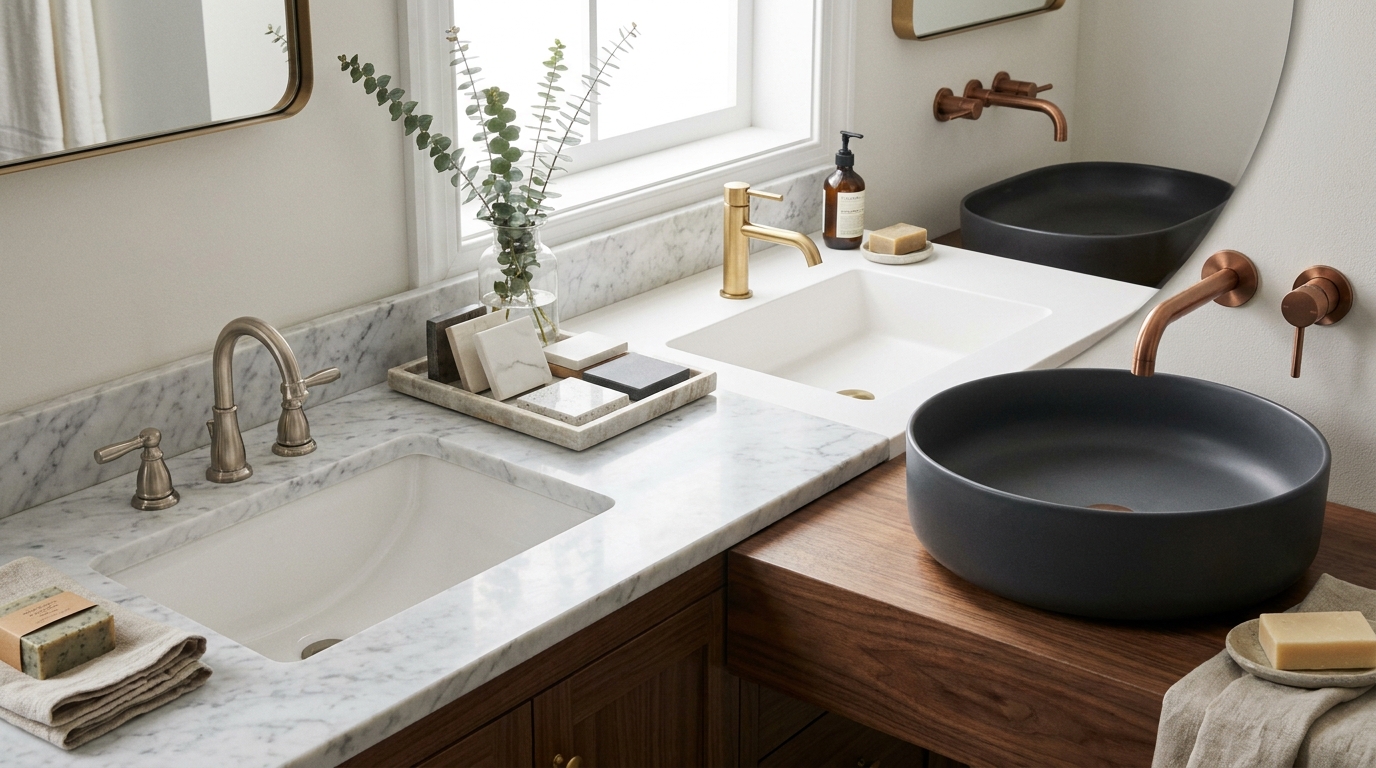
Performance is part of the attraction as well. Many composite sinks offer good scratch resistance and a satisfying solidity that feels quieter than lighter metal alternatives. They can also provide color options beyond standard metallic tones, which opens up opportunities for tonal design. A charcoal basin in a pale kitchen, for example, creates gentle contrast without harshness.
Homeowners should still check manufacturer care guidance, because maintenance expectations vary. Some finishes show mineral residue more quickly, while others are more forgiving. As with all materials, the right match depends on your habits, water quality, and tolerance for upkeep.
Solid Surface and Cast Resin
Solid surface and cast resin sinks excel where seamless design is the goal. Frequently used for integrated basins, they support uninterrupted lines and easy cleaning, making them especially attractive in bathrooms. Their smooth, sculpted presence can feel understated or luxurious depending on the color palette and surrounding finishes.
These materials are particularly compelling in homes that favor minimal visual noise. Because sink and counter can appear as one unified plane, the eye rests more easily and the room feels calmer. This quality is useful in smaller bathrooms, where too many junctions and materials can make the space feel busy.
As with any fabricated product, quality matters. A well made solid surface basin can be remarkably elegant and practical, while a poorly chosen one may lack depth or character. In the right application, though, these materials provide one of the finest routes to modern simplicity.
How Faucet and Aerator Choices Complete the Upgrade
A sink is never complete without its faucet, and treating the faucet as an afterthought is one of the most common renovation mistakes. The height of the spout, the reach into the bowl, the feel of the handles, and the flow rate all shape the daily experience. In visual terms, the faucet is also the sink’s closest companion, so the relationship between the two should feel intentional and balanced.
Water efficiency is where the faucet upgrade becomes especially valuable. The EPA notes that WaterSense bathroom sink faucets and aerators are designed to reduce water use while maintaining performance, and the maximum flow rate for WaterSense bathroom faucets and aerators is 1.5 gallons per minute. For kitchens in the United States, EPA guidance often points to an efficiency and performance balance in the range of 1.5 to 1.8 gallons per minute. In Canada, NRCan identifies kitchen faucets and replacement aerators as a regulated product category, which reflects the growing importance of efficient water use across North American homes.
For a bathroom sink, this means an aerator retrofit can be a modest but meaningful improvement even if you are not replacing the entire faucet. For a full sink makeover, pairing a new basin with an efficient, well designed faucet creates a much more coherent result. Low flow no longer needs to mean weak performance. Modern designs often provide a satisfying stream for handwashing and grooming while reducing unnecessary use.
Think carefully about proportion as well. A shallow vessel sink with a faucet that splashes is frustrating, while a deep kitchen basin with a short spout can feel awkward and impractical. The sink and faucet should work like a duet, each enhancing the function and elegance of the other.
Installation Realities Every Homeowner Should Understand
The most beautiful sink can become the most expensive mistake if installation realities are ignored. This is particularly true when homeowners assume a sink can simply be swapped without consequences. In many cases, a straightforward replacement is possible, but as soon as dimensions change, counter cutouts shift, plumbing moves, or a second sink is added, complexity increases. This is why early planning is essential.
In Canada, provinces and territories regulate plumbing installation, while the National Plumbing Code of Canada 2025 provides the technical framework for safe systems. Homeowners should confirm local permit, inspection, and code requirements before replacing a sink, moving plumbing lines, or altering cabinetry and countertops. This matters not only for compliance but for safety, insurance, and resale confidence. Stylish changes still need to align with drain, venting, trap, spacing, and backflow requirements.
Undermount sinks may require stronger support and compatible counters. Farmhouse sinks frequently need cabinet modifications and can demand special bracing if made from heavy materials like fireclay. Adding a prep sink or bar sink introduces more plumbing considerations, including fixture placement and wastewater removal. In bathrooms, changing from one sink style to another may affect faucet hole configuration, vanity top structure, and clearance around the basin.
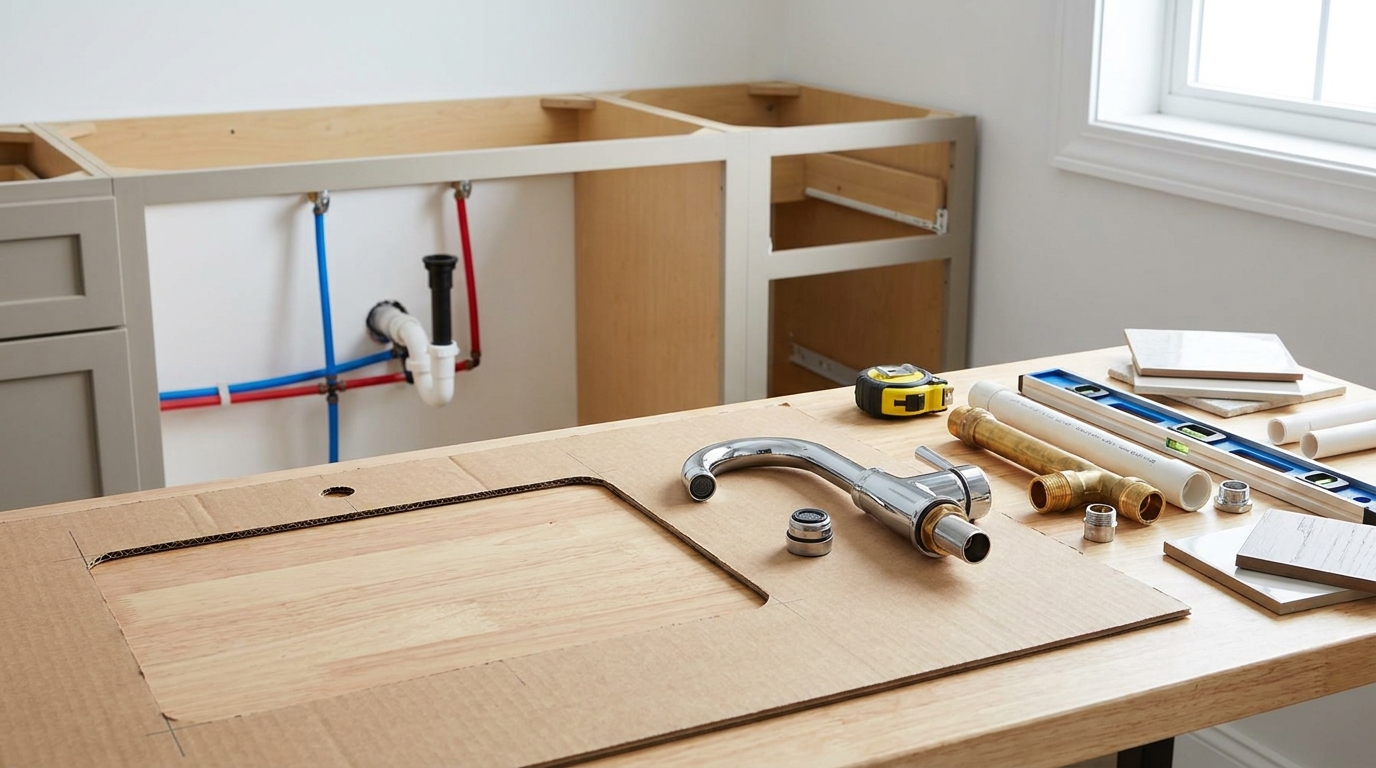
It is also worth remembering that visible beauty relies on invisible precision. A misaligned faucet, poorly sealed edge, or unsupported sink undermines the entire effect. Even in a DIY minded renovation, knowing where professional plumbing and fabrication are warranted is part of making a wise upgrade.
Accessible Ready Design and the Luxury of Future Ease
One of the most thoughtful directions in current renovation planning is the move toward accessible ready design. This is not about making a home look institutional. On the contrary, it is about creating spaces that are elegant today and easier to adapt tomorrow. Accessibility Standards Canada’s 2025 accessible ready housing guidance explicitly includes kitchens and bathrooms, with attention to sinks, counters, storage, and the flexibility to adapt later without major structural or plumbing upheaval.
Bathrooms are often renovated on roughly a 15 year cycle, which makes sink and vanity upgrades an ideal moment to think ahead. A wall mounted sink or vanity with some knee clearance beneath can be a graceful choice now and a useful feature later. Reinforcement in walls for possible grab bars, thoughtful spacing around the sink, and plumbing layouts that preserve adaptability are all examples of quiet foresight. None of these choices need to compromise beauty.
In kitchens, accessible ready planning may include more considered counter heights, easier reach to storage, and layouts that support different users over time. A sink with comfortable front access, sensible depth, and a faucet that is easy to operate can make daily life more pleasant for everyone, not only for those with immediate mobility needs. Good design is generous in this way. It anticipates human variation rather than forcing everyone into a rigid standard.
The most luxurious room is often the one that feels effortless to use. Future proofing a sink area can be both practical and profoundly elegant.
How to Match the Sink to the Room’s Design Language
A sink upgrade feels most successful when it belongs to the architecture around it. This does not mean every choice must be historically strict, but it should feel coherent. In a traditional kitchen with shaker cabinetry and warm stone, a fireclay apron front or classic stainless undermount may feel natural. In a streamlined modern apartment, a composite workstation sink or integrated basin may better support the visual language. The goal is not trend chasing but harmony.
Bathrooms reward the same sensitivity. A furniture style vanity may invite an oval undermount or refined drop in sink, while a floating oak vanity with slab fronts may call for a rectangular integrated basin. Material palette matters enormously here. Cool marble, warm walnut, aged brass, and soft white ceramic create one story, while charcoal composite, black fixtures, and pale concrete create another. Each can be beautiful if the elements speak to one another.
Scale also deserves close attention. A large dramatic sink in a small vanity can feel top heavy, while a tiny basin in a broad counter can seem accidental. Consider how much landing space you need, how deep the bowl should be, and how the faucet height affects the composition. Beautiful rooms are often the result of proportion more than decoration.
Practical Planning Before You Buy
Before choosing your sink, take careful measurements and inventory your constraints. Know the cabinet width, the existing cutout dimensions, the countertop material, the plumbing location, and the faucet hole configuration. Consider whether you are keeping the vanity or cabinet, replacing the top, or moving supply and drain lines. These details may seem unglamorous, yet they are what separate a smooth project from a frustrating one.
It is also wise to think honestly about daily habits. If you cook often and use large pans, a single deep kitchen basin or workstation layout may be ideal. If you prefer multitasking, double bowl configurations can still be useful. In bathrooms, think about whether the sink will mainly serve quick handwashing or more involved grooming routines. A delicate sculptural basin may look exquisite, but it should also be comfortable to use without splashing or crowding the counter.
Because style and utility are both important, homeowners often benefit from making decisions in the following order:
- Define the room’s overall design direction and color palette.
- Confirm cabinet, vanity, and countertop constraints.
- Choose the sink style that best suits both aesthetics and installation conditions.
- Select a material based on maintenance expectations, durability, and visual tone.
- Pair the sink with a faucet and aerator that support comfort and efficiency.
- Verify local code, permit, and professional installation needs before ordering.
That sequence keeps emotion and practicality in conversation with one another. It helps prevent the common problem of falling in love with a sink that does not fit the room, the budget, or the plumbing reality.
Common Misconceptions About Sink Upgrades
One common misconception is that a stylish sink can be installed anywhere without code implications. In reality, changing a sink may trigger plumbing, drainage, venting, or permit requirements, especially if the location moves or additional fixtures are introduced. Beauty never exempts a project from the technical logic of the house.
Another misconception is that all sink materials perform the same way. They do not. Stainless steel, fireclay, composite, and solid surface each have distinct advantages in terms of noise, care, appearance, and installation demands. Choosing solely by looks can lead to disappointment if the material does not suit your habits.
It is also easy to assume that low flow fixtures always feel weak, or that undermount sinks are always superior to drop in models. Modern efficient faucets often balance conservation with performance very well, and undermounts are only better when their costs, counter compatibility, and maintenance benefits align with the project. Likewise, accessibility features are not only for commercial spaces. Residential guidance increasingly supports flexible, elegant planning that works across life stages.
Budget, Value, and When a Sink Upgrade Pays Off
Sink upgrades can be modest or ambitious depending on scope. Replacing a bathroom faucet aerator or swapping a dated top mount basin for a sharper model can be relatively affordable. Moving plumbing, changing cabinet fronts for a farmhouse sink, or commissioning an integrated vanity top is a larger investment. The key is understanding where value comes from.
Value is not only resale, although a well designed kitchen or bathroom certainly supports buyer appeal. Value also comes from daily satisfaction. A sink that is easier to clean, quieter to use, better proportioned, and more water efficient returns something to the household every single day. This is especially true in busy family kitchens and heavily used bathrooms, where small irritations accumulate quickly over time.
If budget is limited, focus on the combination that delivers the greatest visual and functional change. Often this means updating the sink and faucet together, improving the drain hardware finish, and refreshing caulking or surrounding details so the result feels complete. Even a restrained makeover can look beautifully elevated when every element is coordinated.
Final Thoughts: A Sink That Serves and Charms
The finest sink upgrades do not ask you to choose between practicality and beauty. They offer both, with a kind of quiet intelligence that improves the room from every angle. Whether you are drawn to the clean line of an undermount, the inviting presence of a farmhouse sink, the utility of a workstation model, or the serenity of an integrated basin, the real success lies in selecting a design that suits the architecture of the room and the rhythms of your life.
As you plan your kitchen or bathroom makeover, let the sink become more than a replacement item on a checklist. Treat it as an opportunity to refine the room’s character, improve water efficiency, and think ahead to future comfort. Verify local Canadian plumbing and permit requirements, choose materials with honesty about maintenance, and pair the basin with a faucet that feels as considered as the sink itself.
When all of these pieces come together, the result is more than a prettier corner of the house. It is a space that feels composed, capable, and enduring. And that, in the most graceful sense, is what truly elevates a home.



No Comment! Be the first one.