



Essential Pump Maintenance Tips for a Sustainable Home Water System
A healthy home water system is easy to take for granted until something changes. Maybe the water pressure begins to feel uneven, the pump seems to run more often than usual, or the electric bill quietly climbs without an obvious reason. In many homes, especially those that rely on private wells or sump pumps, the pump is one of the hardest working pieces of equipment on the property. Regular maintenance is what keeps that hidden work efficient, reliable, and far less wasteful over time.
Table Of Content
- Why pump maintenance matters more than many homeowners realize
- Start with a simple baseline for your water system
- The most important pump maintenance habits for homeowners
- Inspect the system regularly for leaks and moisture
- Pay attention to short cycling
- Watch the pressure gauge and pressure behavior
- Keep the pressure tank in good condition
- Water conservation is pump maintenance in practice
- Private well owners have an added stewardship role
- How to recognize early warning signs before failure happens
- When maintenance becomes rehabilitation or repair
- Seasonal maintenance for year round performance
- A practical home checklist for sustainable pump care
- The long term environmental value of maintenance
- Final thoughts
Pump maintenance is also one of the most practical sustainability habits a homeowner can adopt. A well maintained pump uses less energy, experiences less wear, and is less likely to fail early and require replacement. It also supports better water stewardship, which matters even more in a time of rising utility costs, climate variability, and growing concern about groundwater protection. Health Canada estimates that about 4 million people in Canada rely on a private well for drinking water, which makes pump and well care a very real household responsibility for millions of families.
This article looks at pump maintenance through a wider lens. Yes, the goal is to avoid breakdowns, but the bigger benefit is a home water system that performs smoothly while using fewer resources. Whether you have a private well, a booster pump, or a sump pump protecting your basement, the same principle applies: small, regular actions often have the greatest long term value.
Homeowners do not need to become pump specialists to care for their systems well. In fact, the most effective routines are usually simple. Keeping records, noticing changes in pressure or cycling, inspecting for leaks, and reducing unnecessary water use can all help preserve equipment life. When these habits are paired with timely professional service for larger issues, the result is a water system that is more resilient, more efficient, and more environmentally responsible.
In the sections ahead, we will cover the maintenance habits that matter most, explain what warning signs to watch for, and show how water conservation and pump care are directly connected. The aim is not to create pressure around perfection. It is to make sustainable water system maintenance feel clear, achievable, and grounded in everyday decisions.
Why pump maintenance matters more than many homeowners realize
It is easy to think of pump maintenance as a purely mechanical issue, but the effects reach much further. A pump that is struggling rarely affects only one part of the home. It can influence water pressure, water quality, energy use, equipment life, and even the integrity of connected components like the pressure tank and plumbing lines. EPA guidance emphasizes that proper maintenance helps keep a pump near its original design efficiency, which is a useful reminder that pumps do not typically fail all at once. They often decline gradually first.
That gradual decline is where attentive maintenance becomes so valuable. When homeowners notice changes early, they can often address small issues before they become expensive repairs. A minor leak, a worn pressure switch, a clogged intake, or sediment buildup can all force a pump to work harder than necessary. Over time, extra runtime translates into more electricity use and more mechanical strain. This is one reason the water and energy connection is becoming a larger part of home efficiency guidance in both Canada and the United States.
Energy use is especially relevant because pumping water is not a low impact process. EPA notes that energy costs often make up 25 percent to 30 percent of a water or wastewater utility’s operating and maintenance costs, which illustrates just how significant pumping related energy can be. At the household level, the same logic applies. If your pump runs more often than needed because of leaks, poor pressure management, or excessive water use, your home is spending more energy to move the same resource.
There is also a resilience benefit. During dry spells, heavy rains, flooding events, or periods of equipment stress, a well maintained pump system is better prepared to perform as expected. For well owners, maintenance supports not only convenience but also drinking water reliability. For sump pump owners, it supports home protection during storms and groundwater surges. In both cases, maintenance is less about reacting to failure and more about quietly reducing risk ahead of time.
Sustainable pump care is not just about making equipment last longer. It is about reducing waste, protecting water quality, lowering electricity use, and creating a more resilient home system overall.
Start with a simple baseline for your water system
One of the most useful maintenance habits is also one of the least complicated: establish a baseline. This means learning what normal looks and sounds like in your home water system so that future changes are easier to spot. Baseline records can include water pressure readings, how often the pump cycles during typical household use, any unusual sounds, and general notes on flow at faucets or outdoor taps. If you have a private well, you may also want to record any known water level information, service dates, and water testing history.
These notes do not need to be technical to be valuable. A notebook kept in the utility room or a digital note on your phone can work well. The point is to create a reference point. If the pressure seems lower six months from now or the pump starts turning on more often, you will have a better sense of whether the change is minor or significant. Guidance from EPA and Canadian sources consistently points to the value of baseline performance data because it allows problems to be identified before a complete system failure occurs.
Baseline information is also helpful when you call a licensed professional. Instead of describing the issue only as bad pressure or a noisy pump, you can explain when the change began, how often it occurs, and what readings or patterns you have noticed. That can make diagnosis faster and more accurate. It also reduces the temptation to guess at the solution, which matters because one of the most common misconceptions is that a bigger pump will automatically fix low pressure or low yield.
In reality, the right fix depends on the cause. Pressure issues may be linked to a tank problem, a pressure switch issue, a clogged screen, piping restrictions, drawdown in the well, or a leak somewhere in the system. Simply adding more pump power can sometimes make the problem worse by increasing cycling or stressing a well that is already under pressure. A calm, informed baseline helps homeowners and professionals make better decisions.
The most important pump maintenance habits for homeowners
Inspect the system regularly for leaks and moisture
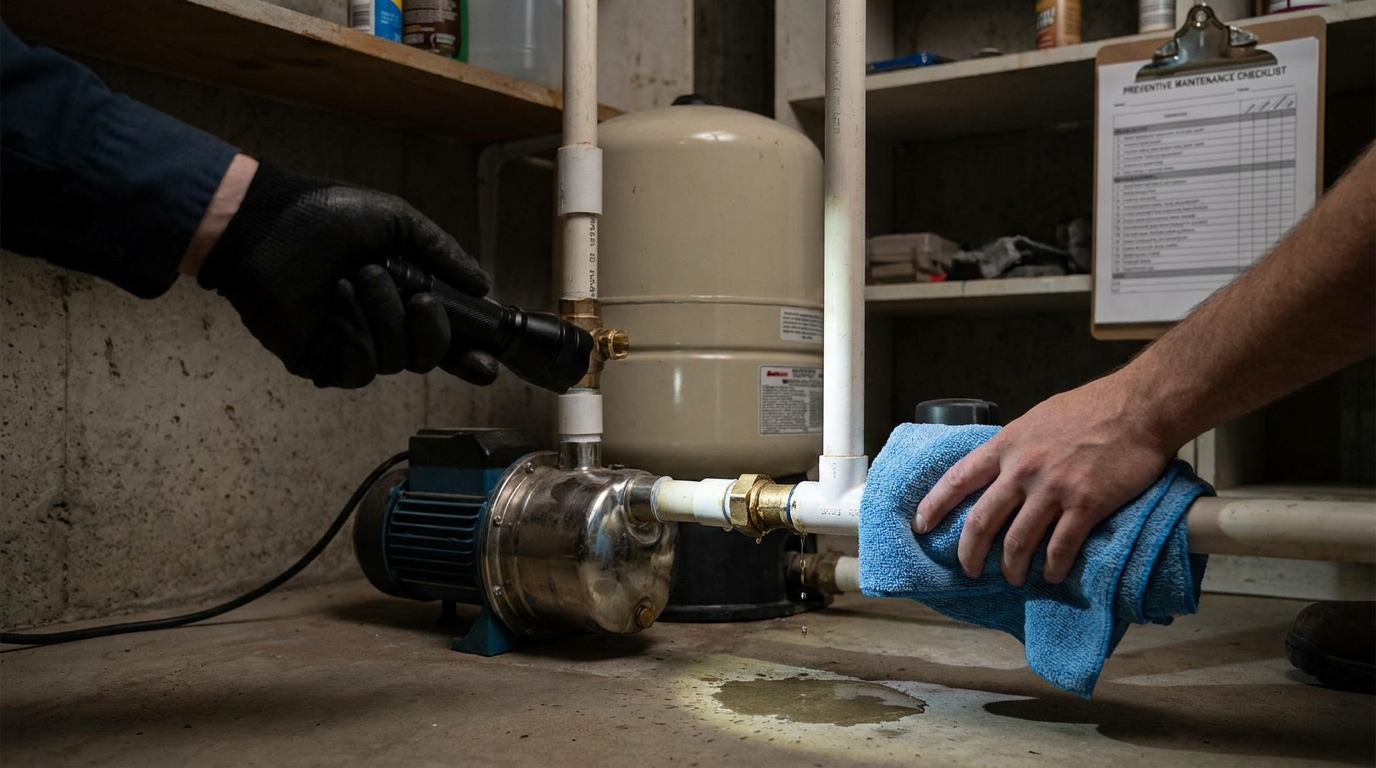
Leaks are among the simplest problems to overlook and one of the most expensive to ignore over time. Even a small drip in connected piping, fittings, or valves can trigger unnecessary pump activity. That means more frequent cycling, more electricity use, and more wear on the motor and pressure components. Moisture can also contribute to corrosion, mold, and material degradation around the system.
Take a careful look around the pump, pressure tank, visible pipes, fittings, and nearby floor area on a regular schedule. You are not only looking for active dripping. Also watch for rust stains, mineral deposits, damp insulation, discolored surfaces, or musty odors that suggest a slow leak has been developing. If your system is in a basement or utility room, a flashlight can help reveal fine moisture around joints and valves.
Prompt leak repair supports sustainability in two ways. First, it prevents direct water waste. Second, it reduces unnecessary pump runtime. Manitoba and U.S. EPA resources both frame water conservation as a way to reduce operating, maintenance, and replacement costs, and leak repair is one of the clearest examples of that connection.
Pay attention to short cycling
Short cycling happens when a pump turns on and off too frequently. This is one of the clearest signs that something in the system needs attention. It may be caused by a pressure tank problem, incorrect air charge, a failing pressure switch, a leak, or other system imbalance. Regardless of the source, frequent cycling is hard on pump components and tends to reduce lifespan.
Homeowners often notice short cycling during ordinary tasks like showering, running the dishwasher, or watering plants. Instead of a steady pattern, the pump may click on and off repeatedly in a short period. If that starts happening, it is worth noting when it occurs and whether it is getting worse. Early action can prevent avoidable strain and may save you from a larger repair later.
This is also where routine record keeping becomes useful. If the pump once ran in longer, steadier intervals and now cycles every few seconds or minutes under similar conditions, you have evidence that the system is changing. That does not always mean the pump itself is failing, but it does mean the system needs to be checked.
Watch the pressure gauge and pressure behavior
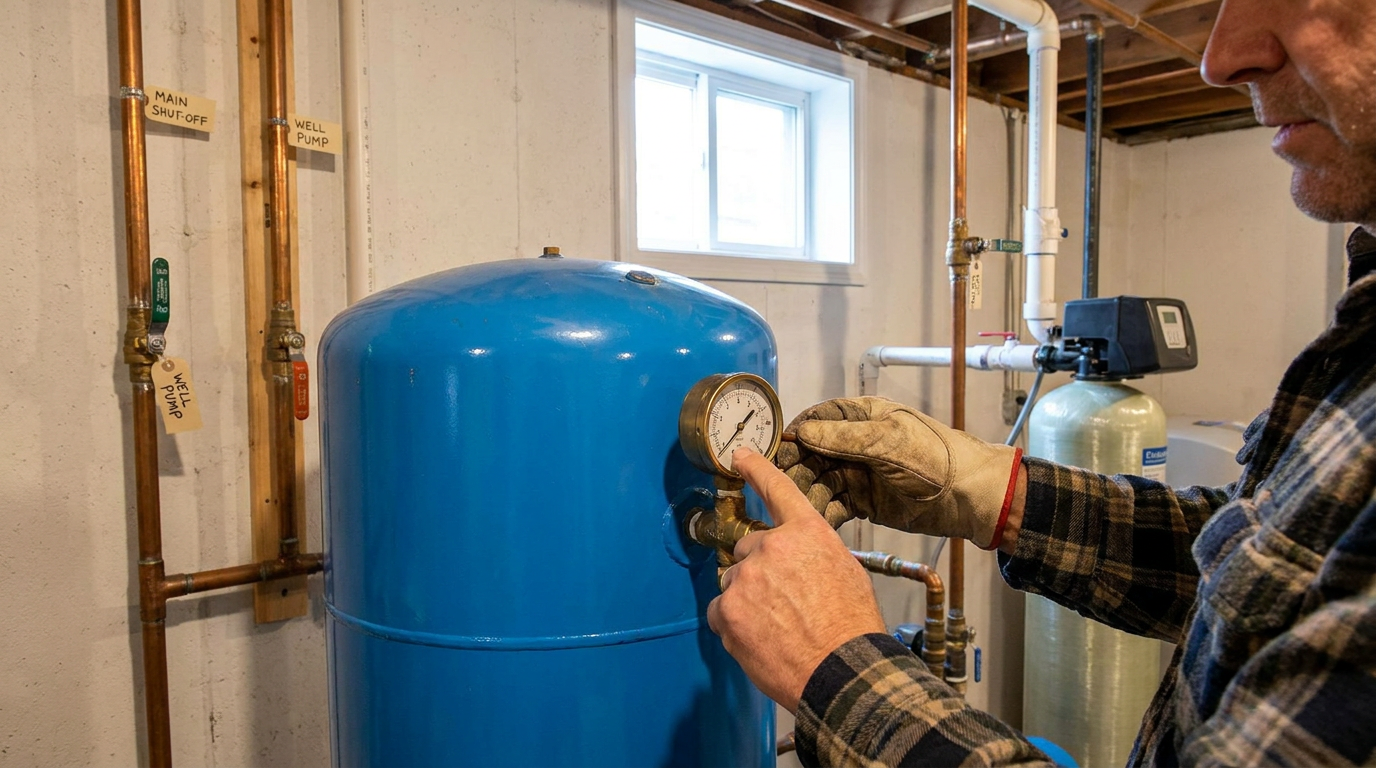
A pressure gauge is a quiet but valuable diagnostic tool. When the system is healthy, pressure should generally rise and fall in a predictable range. If the gauge fluctuates wildly, fails to reach normal cutoff pressure, or drops unusually fast when water is being used, these patterns may point to deeper issues. The gauge can also help you detect problems before they are obvious at sinks and showers.
Try checking the gauge under similar conditions from time to time so you have a sense of what is normal for your home. It can be useful to do this while someone runs water at a faucet or hose bib. You are not trying to perform a full technical test. You are simply looking for stability and consistency. If the needle behaves differently than it used to, that is worth documenting.
Pressure changes matter from a sustainability perspective because they often reflect system efficiency. A pump that takes longer to build pressure or cannot maintain stable pressure may be working harder to deliver the same result. That means more energy use for less effective performance, which is exactly the kind of hidden waste routine maintenance is meant to reduce.
Keep the pressure tank in good condition
The pressure tank plays a central role in reducing wear on the pump. It stores pressurized water so the pump does not have to start every time a small amount of water is used. If the tank loses proper air charge or develops internal issues, the pump may cycle much more frequently. This can create the impression that the pump is the problem when the tank is actually the first component that needs attention.
Many homeowners can visually inspect the tank for corrosion, leaks, unusual condensation, or physical damage. If you are comfortable with basic home maintenance and your manufacturer guidance allows it, checking tank air pressure when the system is depressurized may also be part of routine care. If you are unsure, this is an excellent point to involve a licensed professional, especially since pressure systems vary.
A healthy pressure tank is a sustainability asset because it allows the pump to operate more efficiently. Instead of repeated starts and stops for every small demand, the system can deliver water with fewer cycles. That means less motor stress and more efficient energy use across the life of the equipment.
Water conservation is pump maintenance in practice
One of the most important ideas in a sustainable home water system is that using less water helps the pump. This may sound indirect at first, but the relationship is straightforward. Every gallon you avoid wasting is a gallon that does not need to be pumped, pressurized, heated, or treated within the home. For private wells in particular, efficient water use can reduce pumping frequency, which lowers energy use and equipment wear.
This is why low flow fixtures, leak repair, smart irrigation habits, and shorter periods of unnecessary water use belong in any serious conversation about pump maintenance. They are not separate topics. They are upstream strategies that reduce the workload placed on the system every day. When the workload is lower, the pump runs less often and typically lasts longer.
EPA says WaterSense labeled homes can save a family an average of 50,000 gallons of water or more and 700 dollars in water and energy bills per year compared with a typical home. Even if your home is not fully built to that standard, the broader lesson is clear. Efficient fixtures and better water habits create measurable savings. They also support the long term health of water system components by reducing constant demand.
Simple changes can make a meaningful difference. Repairing a running toilet, replacing an inefficient showerhead, installing faucet aerators, and watering landscapes only when needed all help reduce pump runtime. If you are on a private well, spacing out large water uses can also help. Running the washing machine, irrigation, and long showers all at once forces a higher demand than spreading those tasks across the day.
In this sense, sustainability is not an abstract add on to maintenance. It is maintenance. The more intentionally a household uses water, the less stress the pump experiences. That creates a practical loop of lower demand, lower energy use, lower wear, and fewer replacement needs over time.
Private well owners have an added stewardship role
If your home uses a private well, pump maintenance is part of a broader responsibility that includes water quality and groundwater protection. Health Canada stresses that private well owners are responsible for monitoring and maintaining the quality of their well water. That means equipment care should never be separated from source protection and sensible testing practices. A pump can only be considered truly healthy if it is helping deliver safe, reliable water.
Routine maintenance helps retain a well’s integrity and productivity while also protecting water quality. That includes checking the area around the wellhead, ensuring the cap is secure, keeping surface contaminants away, and watching for signs that sediment or changes in taste, odor, or clarity may be entering the system. If you notice changes in water appearance or quality, maintenance should include both equipment assessment and appropriate water testing.
For many homeowners, the well itself is out of sight and easy to forget. Yet conditions around the well can directly affect pump performance and water safety. Standing water near the wellhead, poor drainage, damaged caps, or nearby contamination sources can all increase risk. Keeping the well area clean, accessible, and protected is a practical form of stewardship that benefits both the household and the aquifer.
Private well owners should also understand the difference between a system issue and a water source issue. If yield seems lower during drought conditions, for example, Canadian guidance recommends measuring water levels with the pump on and off to help distinguish plugging issues from depletion problems. That distinction matters because the right response is not always to increase pumping power. In some cases, reducing pumping rate, adjusting water use, or adding storage such as a cistern may be a better and more sustainable path.

How to recognize early warning signs before failure happens
Most serious pump failures give some warning, even if the signs are subtle at first. Learning to notice these changes can save money, protect water access, and reduce the environmental cost of emergency replacement. One of the clearest signals is changing pressure. If water pressure has become weaker, more inconsistent, or slower to recover than usual, the system deserves attention.
Unusual noise is another important clue. Grinding, clicking, humming, or vibration that was not present before may point to motor strain, cycling issues, or component wear. Even if water still seems to be flowing normally, these sounds should not be dismissed. One common misconception is that if water still comes out, the pump is fine. In reality, gradual declines in pressure, flow, or cycling behavior can signal efficiency loss or upcoming failure long before the system stops working.
Reduced yield is especially important for well owners. Canadian guidance on well rehabilitation says that it is generally considered when well performance has declined by about 25 percent. That threshold highlights the value of early diagnosis. Waiting until performance falls dramatically can make the problem more complex and expensive to address. Early intervention may allow for cleaning, repairs, or operational changes that preserve more of the original system function.
Other warning signs include cloudy water, bursts of sediment, frequent need to reset controls, rising electrical costs without another clear cause, or wet areas around indoor system components. None of these symptoms automatically means the pump must be replaced. They do mean it is time to inspect, document, and if needed, bring in a licensed professional for deeper evaluation.
When maintenance becomes rehabilitation or repair
Routine maintenance has limits, and it is important for homeowners to know where those limits are. In a private well system, issues such as biofouling, mineral scaling, sediment plugging, corrosion, and pump failure may require specialized inspection, cleaning, or replacement by a licensed well driller or rehabilitation specialist. Canadian federal guidance is clear that no single preventive treatment solves every well problem. The cause must be identified before the right fix can be chosen.
This is especially important because quick fix thinking can lead to wasted money and worse performance. A larger pump is not a universal answer to low water pressure or poor yield. If the well screen is plugged, if sediment is restricting flow, or if the aquifer is under stress, increasing pump capacity can intensify the problem rather than solve it. In some situations, cleaning a plugged intake, adjusting pumping rates, or adding storage is the more thoughtful and durable choice.
Professional help is also important any time electrical components are involved. Pumps, pressure switches, control boxes, and related wiring should be treated with caution. Homeowners can do a great deal through observation, record keeping, and visual inspection, but disassembly, electrical troubleshooting, and well rehabilitation should be left to trained, licensed people. This is a matter of safety as much as performance.
Choosing the right professional matters too. Look for someone experienced with your specific type of system, whether that means a drilled well, a shallow well jet pump, a submersible pump, or a sump pump setup with backup power. Good service should include diagnosis, explanation, and a discussion of options rather than a rushed recommendation to replace equipment immediately.
Seasonal maintenance for year round performance
A seasonal rhythm can make pump maintenance easier to remember. In spring, it is wise to inspect for winter damage, check drainage around the home and wellhead, and make sure sump pumps are ready for snowmelt or seasonal rains. In summer, higher outdoor water use can put more demand on well systems, so this is a good time to monitor pressure, note any changes in flow, and avoid wasteful irrigation patterns.
Autumn is a practical season for reviewing your maintenance records and scheduling professional service if performance has changed during the year. It is also a good time to inspect insulation and freeze protection in any vulnerable parts of the system. In winter, the focus shifts to protecting pipes, watching for signs of freezing or unusual cycling, and keeping an eye on energy use if the pump seems to be running more often than normal.
For sump pumps, seasonal checks should include making sure the pit is clean, the float moves freely, and discharge lines are clear. Backup power or battery systems also deserve routine review, especially in regions where storms and outages can coincide with heavy groundwater conditions. A sump pump is a core resilience device, and regular maintenance helps ensure it works during the moments when it matters most.
By assigning simple tasks to each season, homeowners can avoid the pattern of ignoring the system for years and then reacting in a rush. This kind of steady attention is often what makes a water system feel low maintenance in the best sense. Not because it never needs care, but because the care is manageable and preventive rather than disruptive.
A practical home checklist for sustainable pump care
If you want to build a simple routine, focus on repeatable actions that take little time but provide strong insight into system health. The goal is not to turn maintenance into a major project. It is to create habits that catch waste and wear before they grow.
-
Inspect visible pipes, fittings, the pressure tank, and surrounding floors for leaks, corrosion, or moisture every month or two.
-
Listen to the pump during normal household water use and note any new clicking, humming, vibration, or rapid on and off cycling.
-
Check the pressure gauge periodically and record what appears normal for your household.
-
Track any changes in water pressure, flow, clarity, odor, or sediment, especially if you use a private well.
-
Repair plumbing leaks promptly, including toilets, faucets, outdoor spigots, and irrigation components, to reduce unnecessary pump runtime.
-
Use water efficiently through low flow fixtures, smart scheduling of major water uses, and landscape watering only when needed.
-
Inspect the wellhead or sump pump area seasonally and keep the surrounding area clean, accessible, and protected from contamination or blockage.
-
Keep a record of service visits, water testing, pressure observations, and any unusual system behavior so that trends are easy to see.
-
Call a licensed professional when performance changes persist, especially if cycling, pressure loss, electrical issues, or water quality changes are involved.
The long term environmental value of maintenance
Home maintenance can sometimes feel purely reactive, but pump care offers a different model. It is one of those rare household tasks where practical upkeep aligns closely with environmental responsibility. A well maintained pump wastes less electricity, supports wiser water use, and is less likely to require early replacement. That means fewer materials consumed, fewer emergency service calls, and less strain on the systems that support daily water access.
There is also a broader cultural value in paying attention to systems we depend on. Water reaches our homes through infrastructure, energy, and natural resources that are easy to overlook when everything works. Maintaining a pump is a quiet way of respecting that chain. It acknowledges that convenience has a footprint and that even ordinary households can reduce that footprint through thoughtful habits.
This is not about perfection or anxiety. It is about staying observant and making a few smart choices consistently. In most homes, the difference between a stressed pump system and a healthy one is not dramatic technology. It is routine inspection, prompt repairs, efficient water use, and a willingness to act early when something changes.
As official guidance increasingly links water efficiency with energy efficiency, the message becomes even clearer. Homeowners do not need to choose between performance and sustainability. In a well cared for water system, the two support each other naturally.
Final thoughts
Essential pump maintenance is ultimately about stewardship. It helps protect your household budget, your comfort, your water quality, and the equipment that keeps daily life moving. More than that, it supports a calmer and more sustainable relationship with water itself. When a pump runs efficiently, the whole home system tends to feel more stable and less wasteful.
If you take only a few ideas from this guide, let them be these: notice changes early, keep simple records, fix leaks promptly, and treat water conservation as part of equipment care. Those habits are approachable for most homeowners and offer outsized returns over time. They reduce wear, improve performance, and help preserve the life of a system that is too important to ignore.
For homes with private wells or sump pumps, the stakes are even higher because the responsibility is more personal. Yet that responsibility does not have to feel heavy. With a modest routine and the right professional support when needed, pump maintenance can become one of the most practical and empowering parts of sustainable home care.



No Comment! Be the first one.