


The Ultimate Guide to Cabinet Care: Keeping Your Kitchen Happy and Beautiful
There are certain parts of a home that quietly shape daily life, and kitchen cabinets are high on that list. They are opened before the coffee is brewed, touched during rushed lunches, leaned against during conversations, and relied on during holiday cooking marathons. Because they are so woven into the rhythm of the day, their condition affects more than appearance. Clean, well-maintained cabinets help a kitchen feel calm, welcoming, and ready for the moments that matter most.
Table Of Content
- Why Cabinet Care Matters More Than Most Homeowners Realize
- The Golden Rules of Cabinet Cleaning
- Understanding Cabinet Finishes Before You Clean
- How to Clean Painted and Stained Wood Cabinets
- How to Clean Thermofoil, Laminate, Melamine, and Foil-Finished Cabinets
- The Best Products to Use and What to Avoid
- Preventive Maintenance That Protects Beauty and Function
- Simple Preventive Habits Worth Keeping
- Do Not Ignore the Under-Sink Cabinet
- Heat, Steam, and Appliance Zones Need Special Attention
- How to Handle Everyday Scuffs, Chips, and Wear
- Creating a Cabinet Care Routine That Fits Real Life
- A Gentle Cabinet Care Schedule
- Common Cabinet Care Mistakes to Avoid
- When to Call a Professional
- The Emotional Reward of a Well-Cared-For Kitchen
Cabinet care is often treated like a purely practical chore, but it carries an emotional reward that many homeowners feel immediately. When cabinet fronts are fresh instead of sticky, doors close properly instead of sagging, and storage areas feel clean instead of neglected, the entire kitchen becomes lighter to live in. Cooking can feel easier, hosting can feel less stressful, and even the small routines of unloading groceries or packing lunches seem to move with more ease. A happy kitchen is not just stylish. It is cared for.
This guide is designed to help you protect that feeling while also preserving the materials themselves. Whether your kitchen features painted wood, stained wood, laminate, melamine, or thermofoil, the core approach is simple and reassuring. Gentle cleaning, quick attention to moisture, sensible heat protection, and periodic maintenance go a long way. With the right habits and a finish-specific mindset, your cabinets can stay beautiful and functional for many years.
You do not need an overly complicated routine to care for cabinets well. In fact, the best guidance from manufacturers and educational sources consistently points toward a softer touch rather than an aggressive one. Mild soap, soft cloths, immediate drying, and an awareness of how your cabinet finish responds to water, heat, and household cleaners are the essentials. The goal is not perfection. It is preserving comfort, extending longevity, and helping your kitchen continue to support your life beautifully.
Well-kept cabinets do more than look polished. They help the kitchen feel ready for coffee, conversation, celebrations, and all the in-between moments that make a house feel like home.
In the sections ahead, you will learn how to clean cabinets safely, how to prevent the most common kinds of damage, which products to avoid, and how to build simple cabinet care into your weekly and seasonal home routines. You will also find practical advice for mixed-material kitchens, where one cleaning approach may not suit every surface. If your goal is to keep your kitchen both beautiful and deeply livable, cabinet care is one of the smartest places to begin.
Why Cabinet Care Matters More Than Most Homeowners Realize
Cabinets are among the hardest-working surfaces in the kitchen. Unlike a decorative shelf or occasional-use furniture piece, cabinet doors and drawers are touched repeatedly throughout the day. Hands transfer cooking oils, dust settles into corners, steam rises from sinks and dishwashers, and food residue often lands in places we barely notice until the light catches it. Over time, that buildup can dull a finish, stress hardware, and change the overall atmosphere of the room.
Because cabinets occupy so much visual space, even small signs of neglect can make a kitchen feel more chaotic. A little grease near the stove, smudges around handles, a sticky drawer front, or a swollen area under the sink can subtly affect how the entire room feels. On the other hand, cared-for cabinets create a sense of order that supports daily wellbeing. They make the kitchen feel fresher, more hygienic, and more emotionally grounding, especially in family homes where the kitchen acts as a central gathering place.
Cabinet care also protects a major investment. Replacing or refinishing cabinetry can be expensive, disruptive, and time consuming. Routine maintenance helps extend the life of existing cabinets, which is not only practical but increasingly aligned with a more sustainable approach to homeownership. Caring for what you already have well is often the most elegant and responsible choice.
There is also a convenience factor that should not be overlooked. Cabinets that open smoothly, stay aligned, and remain easy to clean simply make kitchen work easier. You spend less time wrestling with a crooked drawer or scrubbing old buildup and more time enjoying a space that supports your routine. Maintenance, in this sense, is a form of hospitality toward your future self and everyone who shares your home.
The Golden Rules of Cabinet Cleaning
Before diving into finish-specific care, it helps to understand the universal principles that apply to almost all kitchen cabinets. The first and most important rule is to clean gently and regularly rather than intensely and rarely. A soft cloth used often is far kinder to cabinet surfaces than a harsh deep-cleaning session after months of buildup. This simple shift in approach prevents grease and grime from hardening while reducing the temptation to use abrasive methods.
The second rule is to use mild cleaners. In most cases, a lightly damp microfiber cloth and a small amount of mild dish soap diluted in warm water are enough for everyday cleaning. Nonabrasive household cleaners may be acceptable for some laminate, melamine, or thermofoil surfaces, but the safest path is always to check manufacturer guidance when possible. As a general principle, strong solvents, aggressive degreasers, and rough scrubbing pads create more risk than benefit.
The third rule is to dry surfaces promptly. Moisture is one of the most common causes of cabinet damage, especially for wood and painted finishes. Even if a cloth is only slightly damp, it should not leave water sitting on the surface, pooling in corners, or seeping into joints and edges. A soft dry cloth immediately after cleaning is one of the easiest habits that can significantly extend cabinet life.
Another trusted principle is to clean in the direction of the wood grain where applicable. This is especially useful for stained wood cabinets because it helps lift residue more effectively while respecting the surface appearance. It also reduces the chance of creating streaks or emphasizing tiny scratches. For any new cleaner, always test it first in a hidden area before applying it broadly.
Finally, avoid the common mistake of assuming that shine equals health. Many homeowners reach for waxes or heavy polishes hoping to make cabinets gleam, but many manufacturers warn that these products can build up over time, attract dirt, discolor finishes, or interfere with future touch-ups. Cabinets tend to look their best when they are truly clean, not coated.
Understanding Cabinet Finishes Before You Clean
One of the biggest misconceptions in kitchen maintenance is the idea that any household cleaner works on any cabinet. In reality, finish type matters a great deal. A cleaner or technique that is harmless on one surface may damage another. If your kitchen combines painted island cabinetry, stained perimeter cabinets, glass inserts, and foil-finished pantry doors, treating everything the same can lead to unnecessary wear.
Wood cabinets, whether stained or clear-coated, are especially sensitive to moisture and harsh chemicals. Painted wood cabinets may also be vulnerable to chipping, dulling, or softening if cleaned too aggressively. Freshly painted or refinished cabinets deserve even more caution, since many finishes may need roughly 30 days to fully cure. During that period, it is wise to handle them gently and avoid anything beyond the mildest cleaning methods.
Thermofoil, laminate, melamine, and similar surfaces are often appreciated for their wipeable durability, which makes them popular in busy family kitchens. Even so, they are not indestructible. Heat can be a major issue, especially around self-cleaning ovens, dishwashers, and other high-temperature appliances. Certain solvents, including acetone, strong alcohols, and turpentine-like products, can also damage the surface or weaken adhesives along edges.
Hardware and decorative details deserve their own consideration as well. Metal pulls, knobs, and hinges may react poorly to harsh cleaners or standing moisture. Glass inserts may require a separate glass-safe cleaner applied to the cloth rather than sprayed directly onto the cabinet. Thinking in layers rather than treating the kitchen as one uniform material is the modern, more thoughtful approach to cabinet care.
How to Clean Painted and Stained Wood Cabinets
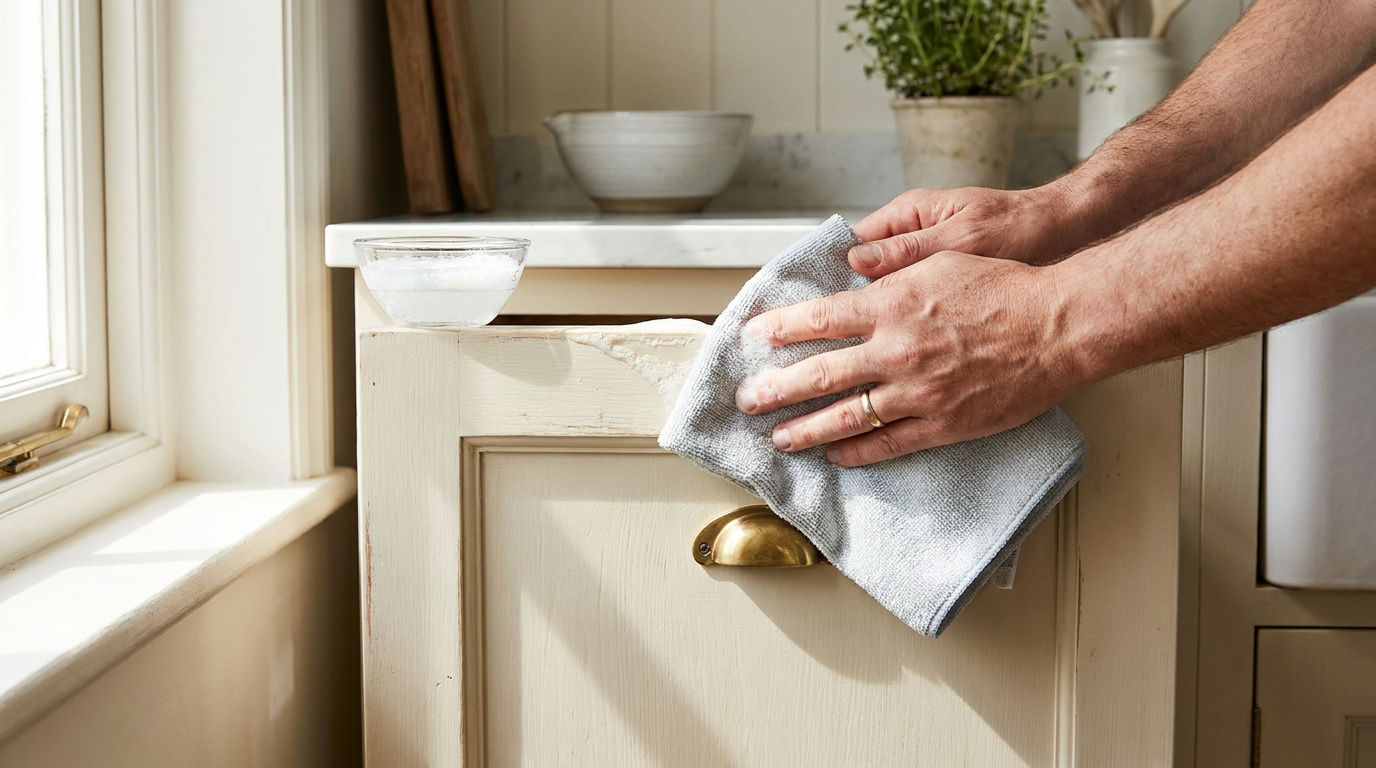
Painted and stained wood cabinets bring warmth and character to a kitchen, but they also benefit from the gentlest care. Start with a soft microfiber or chamois cloth that is lightly dampened, not wet. Add a small amount of mild dish soap to warm water if needed, then wring the cloth thoroughly so it does not drip. Wipe cabinet fronts and edges carefully, paying extra attention to areas around handles and near the range where oils tend to gather.
When cleaning stained wood, move with the grain whenever possible. This simple step helps preserve the finish visually and can make residue easier to lift. Avoid saturating corners, decorative grooves, or joints where water may collect. Once the surface is clean, immediately dry it with a second soft cloth. That final pass often makes the difference between a refreshed finish and one that slowly dulls over time.
Painted cabinets deserve a similarly soft touch. Their smooth surface can show fingerprints and splatters more clearly, especially in white or pale tones, which makes routine wiping particularly worthwhile. If marks persist, resist the urge to scrub with force. It is better to repeat a gentle method than to abrade the paint, soften the sheen, or create uneven spots that become visible in daylight.
If your cabinets are newly installed, newly painted, or recently refinished, be extra patient in the first month. Finishes often need time to fully cure, and they can be more vulnerable during that window. Handle doors and drawers carefully, keep them dry, and avoid any cleaner beyond a very mild soap solution unless the manufacturer or finisher specifically recommends it.
For occasional deeper cleaning on older buildup, work in small sections rather than trying to tackle the whole kitchen in one pass. This helps prevent moisture from lingering and makes it easier to assess how the finish is responding. Slow and gentle is nearly always the most effective strategy for wood cabinetry.
How to Clean Thermofoil, Laminate, Melamine, and Foil-Finished Cabinets
These cabinet surfaces are often chosen for their easy-care appeal, and in many homes they hold up beautifully with the right approach. A soft cloth with warm water and a mild, nonabrasive cleaner is typically sufficient for everyday maintenance. Because these finishes tend to be smooth, grease and food residue can often be removed without much effort if addressed regularly. Frequent light cleaning keeps them looking crisp and prevents sticky films from developing.
What matters most here is avoiding the wrong products. Strong solvents such as acetone, high-alcohol cleaners, turpentine-style products, or anything highly caustic can damage the surface, dull the finish, or affect edge bonding. Rough pads and powders are also poor choices because they can scratch the top layer or wear down vulnerable areas over time. A cleaner does not need to be aggressive to be effective.
Heat is another major concern for these finishes. Thermofoil and similar materials can be sensitive to prolonged high temperatures, particularly near self-cleaning ovens, dishwashers, toaster ovens, and sometimes coffee stations that release concentrated steam. If cabinet edges begin to lift or seams start to change, heat exposure is often part of the story. Checking for recommended appliance clearances and using heat shields where appropriate can help prevent this kind of damage.
Although these surfaces are often marketed as low maintenance, they still need attention to detail. Wipe spills promptly, dry after cleaning, and watch corners and edges where moisture can linger. Their beauty lies in their clean, tailored appearance, and that is easiest to preserve when care is routine rather than reactive.
The Best Products to Use and What to Avoid
Many homeowners already own what they need for basic cabinet care. The most reliable essentials include microfiber cloths, soft drying cloths, a bucket of warm water, and a mild dish soap. For some non-wood surfaces, a gentle nonabrasive household cleaner may also be suitable. The secret is not having a large collection of specialized products. It is understanding which simple products are safe and which tempting shortcuts should be skipped.
Microfiber is especially useful because it lifts grime without requiring much friction. That matters on painted finishes, stained wood, and glossy synthetic surfaces alike. If you need to clean glass inserts, spray the cleaner onto the cloth rather than directly onto the glass, since overspray can seep into surrounding trim or joints. For hardware, a soft cloth lightly dampened with water is often enough, followed by immediate drying to prevent spotting or corrosion.
Products to avoid include abrasive scrubbers, steel wool, scouring powders, undiluted harsh degreasers, bleach-heavy formulations not approved by the manufacturer, and solvent-based cleaners such as acetone. Waxes and silicone-heavy polishes are also often discouraged because they can leave residues that attract dirt or interfere with later repairs. If a product promises dramatic shine or ultra-powerful stripping action, it is usually not the right fit for kitchen cabinets.
It is also wise to be cautious with homemade remedies. While some internet cleaning recipes sound harmless, not all are suitable for every finish. Acids, strong oils, and untested combinations can leave films or affect coatings in ways that are hard to reverse. If you cannot confirm that a cleaner is safe for your particular cabinet material, the gentlest proven method is generally the best one.
When in doubt, check the manufacturer’s care instructions. More cabinet brands now provide online guides, touch-up instructions, and hardware adjustment tips, which makes it easier than ever to care for cabinetry as a long-term investment. A few minutes spent looking up official guidance can save you from expensive cosmetic damage later.
Preventive Maintenance That Protects Beauty and Function
Cleaning is only half of cabinet care. Preventive maintenance is what helps cabinets age gracefully and continue functioning well in a busy kitchen. One of the most important habits is wiping up spills quickly, especially around the sink, dishwasher, coffee area, and range. Moisture and heat are cumulative stressors, and catching them early protects both finishes and structural integrity.
Another important step is keeping an eye on hardware. Hinges, drawer slides, knobs, and pulls naturally loosen a bit over time with normal use. If a door begins to look crooked or a drawer no longer glides smoothly, addressing it early can prevent strain on the cabinet box and make daily use much more pleasant. Many modern hinges allow for simple adjustment, and manufacturer resources often explain how to do this safely.
Stable indoor humidity also matters more than many homeowners realize. Wood responds to environmental changes by expanding and contracting, which can stress joints, shift alignment, and contribute to cracked finishes in more extreme conditions. If your home swings between very dry and very humid, your cabinets may show the effects before you connect the cause. Consistent climate control supports both comfort and cabinet longevity.
It also helps to think about cabinet interiors, not just visible fronts. Crumbs, product spills, and cluttered corners can create odors, conceal stains, and make small problems easier to miss. A kitchen that feels easy to live in is usually one where maintenance is woven into the hidden areas too. Caring for the inside of cabinets strengthens the sense of order that homeowners often want the kitchen to provide.
Simple Preventive Habits Worth Keeping
- Wipe splatters and condensation as soon as you notice them, especially near sinks and appliances.
- Dry cabinet surfaces immediately after cleaning instead of letting them air dry.
- Check handles and hinges every few months to tighten anything that feels loose.
- Keep small countertop appliances that release heat or steam at a safe distance from cabinet sides and undersides.
- Review manufacturer instructions for your specific cabinet finish before trying a new product.
- Maintain comfortable indoor humidity to reduce stress on wood doors and frames.
Do Not Ignore the Under-Sink Cabinet
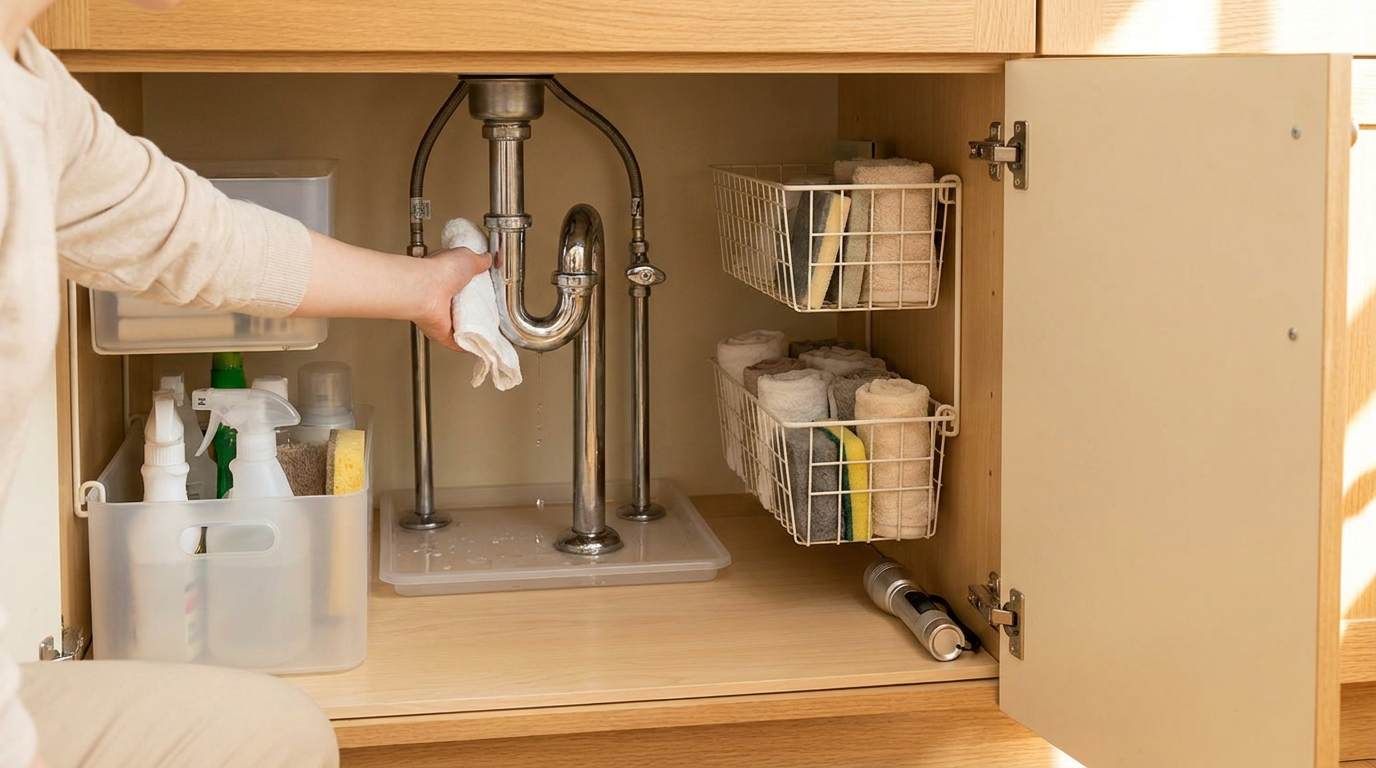
If one cabinet deserves more attention than it usually gets, it is the one under the sink. This is where hidden moisture damage often begins, and because the space is usually crowded with supplies, the earliest warning signs can be easy to miss. Small plumbing leaks, condensation, drips from disposal connections, and damp cleaning products can all affect the cabinet floor, side panels, and nearby doors over time.
Make a habit of emptying this cabinet periodically so you can truly see its condition. Look for stains, warping, soft spots, musty smells, pipe corrosion, and dampness around joints or supply lines. Even if everything seems fine at a quick glance, a more thorough check can reveal issues before they become expensive. This is one of the simplest maintenance routines with one of the biggest payoffs.
Keeping the under-sink area organized also helps. When products are piled too tightly, they trap moisture, conceal drips, and make cleaning less likely. An orderly interior makes it easier to wipe the base, notice changes, and avoid forgotten spills from soap or household cleaners. The goal is not a picture-perfect cabinet. It is a functional one that stays dry, clean, and easy to inspect.
For busy households, adding this check to a monthly routine can be enough. It takes only a few minutes and offers peace of mind that extends beyond cabinet appearance. Protecting this hidden space means protecting the entire mood of the kitchen, since few things disrupt comfort faster than water damage in a room used every day.
Heat, Steam, and Appliance Zones Need Special Attention
Modern kitchens are full of hardworking appliances, and the cabinetry around them quietly absorbs much of the environmental stress. Dishwashers release steam, ranges spread grease and warmth, and self-cleaning ovens can produce intense heat that affects adjacent materials. Cabinets near these zones often age differently from cabinets across the room, which is why targeted care matters.
Pay special attention to the cabinet faces and side panels next to the dishwasher and oven. If you notice recurring condensation, sticky residue, edge lifting, or subtle changes in finish texture, adjust your routine before the problem progresses. Drying nearby surfaces after heavy appliance use can help, as can using ventilation consistently during cooking. Small interventions often prevent visible wear.
For thermofoil, laminate, and foil-finished cabinets, heat protection is especially important. Many manufacturers highlight the need for proper appliance clearance and recommend heat shields in certain installations, particularly near self-cleaning ovens. If you are not sure whether your kitchen has the right protection, it is worth reviewing your cabinet or appliance documentation. Prevention is much easier than repair once adhesives and edges are affected.
Countertop appliances deserve attention too. Electric kettles, air fryers, coffee makers, and toaster ovens often release concentrated heat or steam under upper cabinets. Over time, that repeated exposure can weaken finishes and create avoidable wear. Pulling these appliances forward while in use is a small but valuable habit that helps keep nearby cabinetry in better condition.

How to Handle Everyday Scuffs, Chips, and Wear
Even the most cared-for kitchen will develop signs of life. A scuff near the trash pull-out, a tiny chip on a painted edge, or a scratch around a frequently used drawer does not mean you have failed at maintenance. It simply means your kitchen is being lived in. The key is to respond thoughtfully so minor wear does not become larger damage.
Start by cleaning the area gently to make sure what looks like damage is not just residue. If a true scuff or chip remains, check whether your cabinet manufacturer offers touch-up kits, markers, wax sticks, or paint recommendations. Many now provide easy-to-follow resources online, which can be incredibly helpful for matching color and sheen more accurately than guesswork. This is especially useful in kitchens with custom or semi-custom finishes.
For painted cabinets, tiny edge chips can often be improved with the correct touch-up product, but the goal should be subtle repair rather than overworking the surface. For stained wood, a finish-matched touch-up marker may soften the appearance of small scratches. If damage is widespread, it may be better to speak with a professional rather than layering multiple home fixes that create inconsistency.
Loose hinges, rubbing doors, or drawers that no longer sit evenly should also be addressed early. These issues are not just cosmetic. They can place ongoing stress on mounting points and make the kitchen feel less smooth to use. A few careful adjustments can restore both visual harmony and everyday comfort.
Creating a Cabinet Care Routine That Fits Real Life
The best maintenance plan is the one you will actually keep. Cabinet care does not need to become an elaborate project to be effective. Instead, think of it as a rhythm that blends naturally into the way you already care for your kitchen. A little consistency is much more valuable than occasional perfection.
A weekly routine might include wiping cabinet fronts near the range, sink, and refrigerator where fingerprints and splatters collect fastest. This can be done while cleaning counters, making it feel like part of one gentle reset rather than a separate task. Once you see how much brighter the room feels after a five-minute pass, it often becomes easier to stay consistent.
Monthly, it helps to check problem-prone zones more closely. Open the under-sink cabinet, inspect hinges and handles, and wipe drawer fronts that get frequent contact. If your kitchen has mixed finishes, this is also a good time to review whether any specific material needs different treatment. A few minutes of observation can catch subtle issues before they affect the whole room.
Seasonally, consider a deeper refresh. Empty a few cabinets at a time, wipe interiors, remove old crumbs, and look for any signs of moisture or wear. This is also a good opportunity to declutter and restore a sense of ease to storage areas. When cabinets are clean inside and out, the kitchen tends to support daily life in a quieter, kinder way.
A Gentle Cabinet Care Schedule
- Each week, wipe high-touch cabinet fronts with a soft cloth and mild cleaner, then dry immediately.
- Each month, inspect under-sink areas, tighten loose hardware, and check heat-prone appliance zones.
- Every season, clean selected cabinet interiors, look for finish wear, and touch up small issues if needed.
- Any time spills, steam, or leaks appear, address them promptly instead of waiting for the next routine cleaning day.
Common Cabinet Care Mistakes to Avoid
Some of the most common cabinet problems begin with good intentions. A homeowner wants a deeper clean, grabs a powerful cleaner, and accidentally dulls a finish. Someone notices a sticky spot, scrubs hard with the rough side of a sponge, and leaves micro-scratches behind. Another person adds polish regularly, believing it is protective, only to create residue that attracts dirt and changes the surface over time.
Leaving moisture on cabinets is another frequent mistake. It is easy to wipe with a damp cloth and assume that is enough, but standing water and prolonged dampness can quietly do damage, especially around edges, seams, and lower cabinets near the sink. Drying is not an optional finishing step. It is part of the cleaning itself.
Ignoring hidden issues is equally risky. A cabinet can look fine from the front while a slow leak under the sink or chronic humidity around an appliance is causing gradual deterioration. Visible cleanliness does not always mean healthy cabinetry. The most successful maintenance routines include a little curiosity about what is happening behind closed doors and beneath everyday surfaces.
Finally, avoid treating all finishes the same. Today many kitchens combine materials for depth and style, and each material responds differently to wear. A finish-sensitive approach protects the design choices that make your kitchen feel special in the first place.
When to Call a Professional
There is plenty homeowners can do on their own, but some situations deserve professional help. If cabinet doors are severely warped, finish peeling is widespread, water damage has softened panels, or hinges no longer hold securely, an expert can often prevent a small issue from turning into full replacement. Professional refinishing, refacing, or repair may also be worthwhile if your cabinets are structurally sound but visibly tired.
It can also help to consult a pro if your kitchen is exposed to unusual heat, recurring humidity, or ventilation problems. Sometimes maintenance symptoms point to a larger environmental issue rather than a cabinet issue alone. Solving the root cause is what truly protects the investment.
If your cabinets are under warranty, always review those terms before attempting major repairs or using unfamiliar products. Manufacturer support resources have become much better in recent years, and many brands offer touch-up advice, care documentation, and hardware guidance online. That accessibility makes long-term ownership feel less intimidating and more empowering.
The Emotional Reward of a Well-Cared-For Kitchen
A well-maintained kitchen does something subtle but powerful for a home. It lowers friction. It makes ordinary routines feel easier and gatherings feel more natural. When your cabinets are clean, aligned, dry, and pleasant to touch, the room supports you in dozens of quiet ways throughout the week.
This is why cabinet care is about more than preservation. It is about atmosphere, confidence, and the kind of comfort that grows from small acts of attention. The kitchen is where many households begin and end the day, where meals become memories, and where people instinctively gather. Keeping cabinets in good shape protects the backdrop to all of that life.
You do not need a perfect kitchen to have a happy one. You simply need a kitchen that feels respected, functional, and ready to welcome the people who use it. Cabinet care is one of the simplest ways to create that feeling. Gentle cleaning, thoughtful prevention, and finish-specific habits can keep your kitchen beautiful while also making it more joyful to live in.
If you have been putting cabinet care off, let this be your invitation to start small. Wipe one sticky door, check the under-sink cabinet, or move the coffee maker away from the upper doors before the next brew. Tiny actions add up quickly in a room this important. Over time, they help your kitchen stay not only beautiful, but deeply and reliably happy.



No Comment! Be the first one.