Why a Concrete Pillar North of Don Valley Station Signals Toronto’s Next Growth Corridor
A single support pillar rising out of the ground rarely makes headlines on its own. But when that pillar sits just north of the future Don Valley station on Toronto’s Ontario Line 3, it tells a much bigger story about where this city is headed, and how fast.
This particular structure, captured by UrbanToronto Forum contributor flonicky, will eventually support tail tracks beyond what is currently planned as the line’s northeastern terminal at Eglinton Avenue and Don Mills Road. Tail tracks are typically built with an eye toward what comes next. In transit planning, they are rarely the end of the conversation, they are a placeholder for future extension. For anyone tracking land value and growth corridors in this city, that distinction matters enormously.
Just to the west, the Crosstown Community is already filling in quickly on the site once occupied by IBM and Celestica’s former Canadian headquarters. That is not a coincidence. It is the pattern we see again and again across the Greater Golden Horseshoe: transit infrastructure arrives, or is credibly promised, and residential density follows close behind. Land that once supported office campuses and light industrial use becomes some of the most sought after development ground in the city, precisely because a rapid transit line is being built through it.
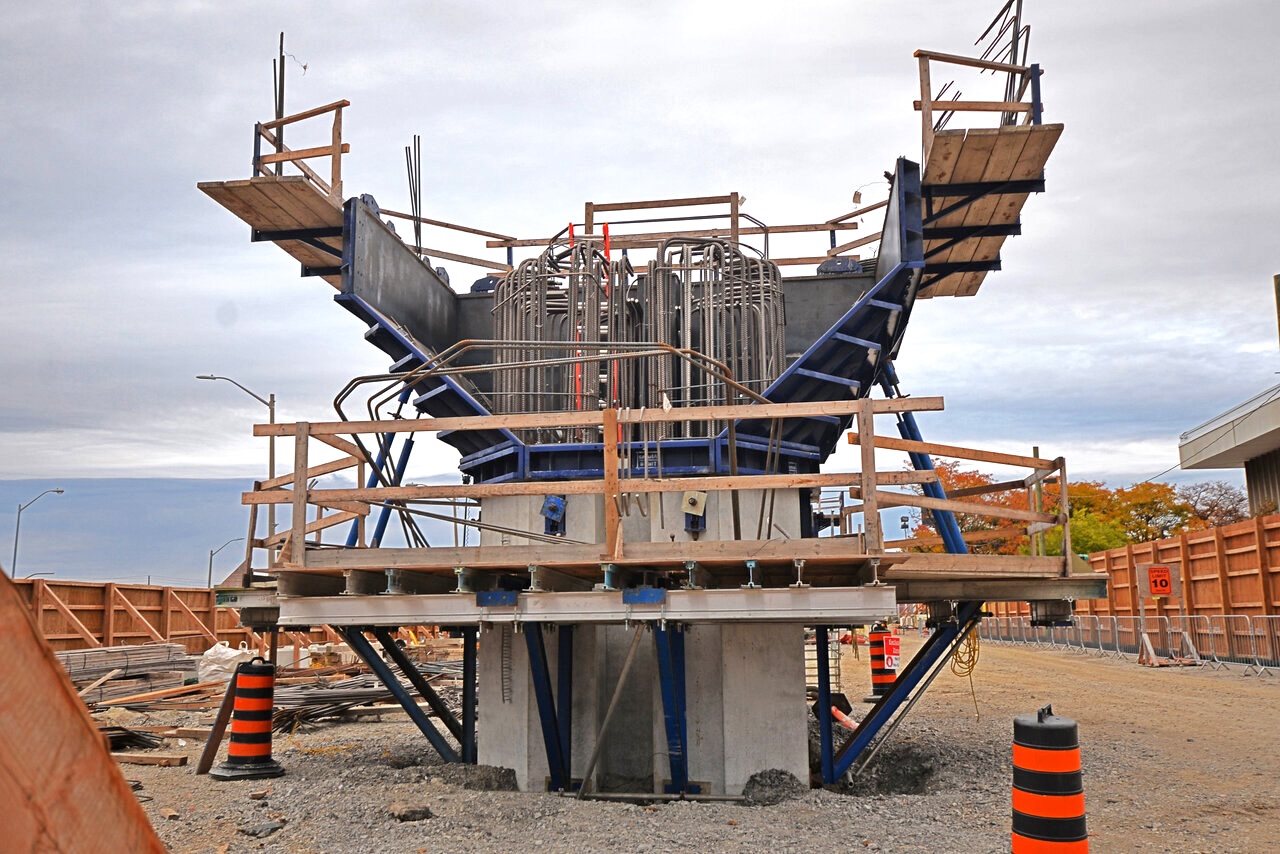
From a development strategy standpoint, this is exactly the kind of signal that should be on every planner’s and investor’s radar well before shovels break ground on the next phase. Tail track construction suggests Metrolinx and the city are building with future extension in mind, even if nothing north of Don Valley station has been formally greenlit yet. Developers who move early on adjacent parcels, as has already happened around the former IBM and Celestica lands, tend to capture the upside before it is fully priced into the market.
Strong projects are built from a wider understanding of timing, access, infrastructure, and the future identity of a community, not just the land itself.
What makes this corridor particularly interesting is the layering of transit investment on top of a neighbourhood already in active transition. The Crosstown Community did not emerge in isolation. It emerged because a former employment site became available at the same moment a rapid transit line was taking shape nearby. That convergence of land opportunity and infrastructure commitment is the exact formula that defines a strong long term growth corridor, and it is worth watching closely as construction continues north of Eglinton and Don Mills.
For those thinking in decades rather than quarters, a single pillar going up in the ground is rarely just about a pillar. It is an early marker of where a city is choosing to grow next.
Source: UrbanToronto