


Essential Care Tips for Maintaining the Beauty of Your Wood Furniture
Wood furniture has a quiet authority in the home. It carries grain like handwriting, records time through patina, and lends warmth that few other materials can offer. A well made dining table, a sculpted walnut console, or a painted chest with delicate detailing does more than serve a function. It shapes atmosphere, anchors memory, and gives a room its sense of permanence.
Table Of Content
- Why Wood Furniture Needs a Different Kind of Care
- The First Principle of Beautiful Preservation: Keep Conditions Stable
- Light Is Beautiful, but Too Much Light Is a Thief
- How to Clean Wood Furniture Properly Without Dulling the Finish
- Know the Finish Before You Clean Aggressively
- The Truth About Polishing: Less Is More
- How to Use Wax Wisely
- Water, Heat, and Everyday Contact: Small Habits That Prevent Big Damage
- Moving and Handling Wood Furniture Without Stressing Its Structure
- Special Care for Veneer, Antique, and Heritage Finish Pieces
- How to Recognize Early Signs of Trouble
- A Seasonal Care Rhythm for Wood Furniture
- What to Avoid if You Want Furniture to Age Beautifully
- An Elegant Routine You Can Actually Maintain
- When to Call a Professional
- The Lasting Beauty of Gentle Stewardship
To care for wood beautifully is not to overwhelm it with products or chase a glossy finish at every turn. The most elegant approach is also the most intelligent one. Wood responds best to gentle handling, stable surroundings, light maintenance, and thoughtful restraint. This philosophy echoes both heritage craftsmanship and modern conservation practice, where preventive care is valued far more than aggressive restoration.
In refined interiors, preservation is rarely dramatic. It happens through habits. A cloth used regularly rather than a harsh cleaner used too late. A piece placed away from direct sun rather than repaired after fading. A table lifted properly rather than dragged across a room and weakened at its joints. These small gestures protect not only beauty, but also structure, finish, and value.
This guide brings together practical wood furniture care methods anyone can adopt at home. Inspired by French elegance, cultural craftsmanship, and museum informed principles, it offers a grounded way to keep your wood furniture graceful for years to come. Whether you live with antique heirlooms, contemporary veneer pieces, or everyday wooden furnishings, the goal remains the same: preserve character through consistency.
Why Wood Furniture Needs a Different Kind of Care
Wood is a living material in the sense that it remains responsive to its environment long after it has been crafted into furniture. One of the most important facts to understand is that wood is hygroscopic, which means it absorbs moisture when humidity rises and releases moisture when humidity falls. This natural response can lead to swelling, shrinking, splitting, cracking, warping, and finish damage when conditions fluctuate too sharply.
That is why truly effective wood care begins with the room itself. Many people focus first on polishes, oils, or sprays, yet conservation experts consistently point to environmental conditions as a leading cause of damage. Light, humidity, careless handling, water exposure, and pests are among the most common threats. Product use matters, but it should support good conditions rather than compensate for neglect.
There is also a widespread misconception that wood needs to be fed with oils to stay healthy. In reality, stable humidity is far more important than oiling the surface. Excess product often creates residue, attracts dust, and gradually dulls the very finish it was meant to beautify. Restraint, once again, proves more sophisticated than excess.
When we care for wood with this understanding, furniture maintenance becomes less intimidating. We stop trying to force a cosmetic solution for every change and begin reading the material more accurately. A cloudy mark may be moisture trapped in the finish. A slight separation at a joint may reflect movement caused by dryness. A faded patch may be a story of light exposure rather than poor cleaning. These distinctions help prevent the kind of well intentioned overcorrection that often causes more damage than the original problem.
The First Principle of Beautiful Preservation: Keep Conditions Stable
If there is one habit that transforms the long term health of wood furniture, it is maintaining a stable environment. Dramatic shifts in relative humidity place stress on wood fibers and finishes. In dry conditions, wood can shrink and crack. In very humid conditions, it can swell, encourage mold growth, and become more vulnerable to insect activity. Even finely finished pieces are not immune to these changes.
For most homes, perfection is neither realistic nor necessary. What matters more is avoiding extremes and sudden fluctuations. A room that swings from very dry in winter to damp in summer asks too much of wooden surfaces and joinery. If you notice drawers sticking seasonally, panel gaps widening, or table leaves changing fit, your furniture may be responding to environmental instability rather than age alone.
A refined preventive approach starts with placement. Keep wood furniture away from radiators, heating vents, fireplaces, and air conditioning units that blow directly onto surfaces. Avoid pressing wooden pieces tightly against exterior walls that collect condensation or cold. In smaller interiors, where control is not always simple, even modest adjustments in furniture layout can reduce stress on treasured pieces.
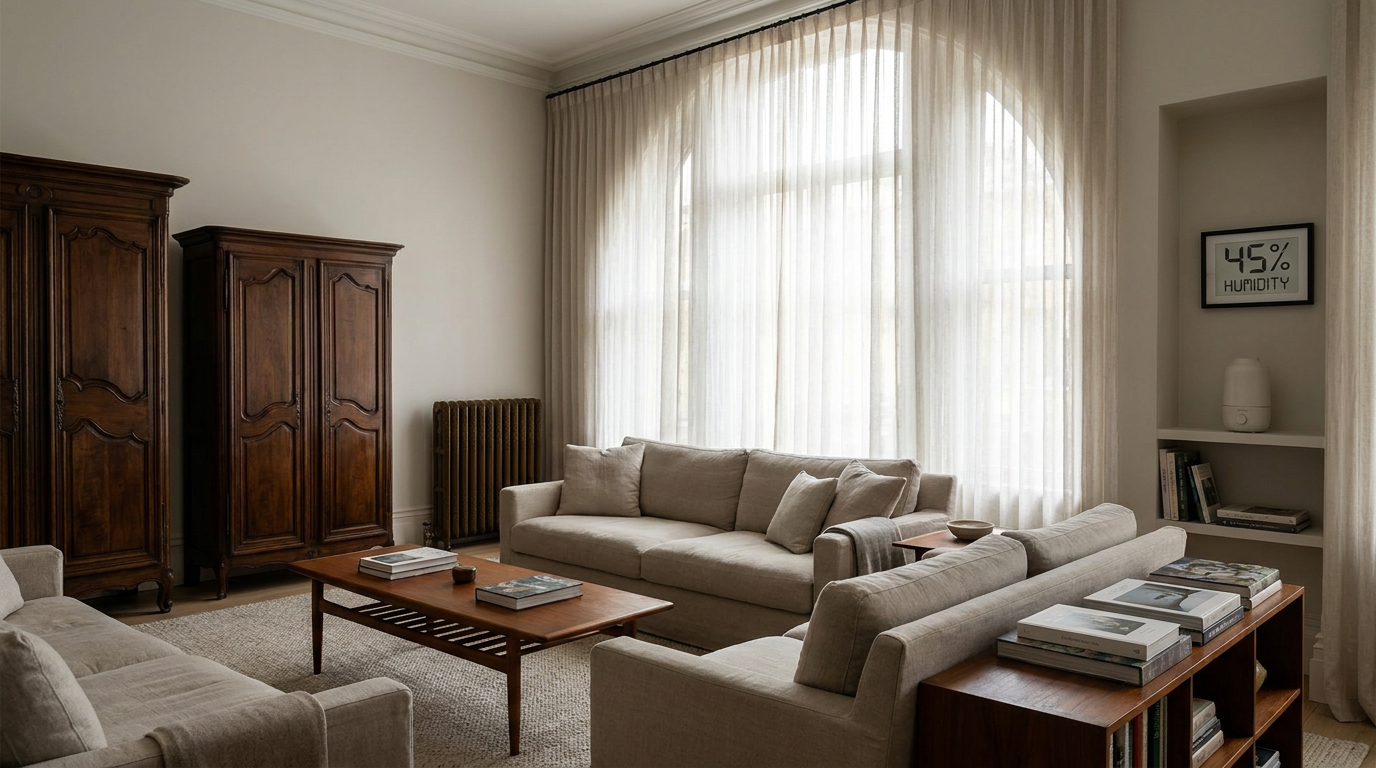
Humidity awareness can be beautifully practical. A simple hygrometer can help you understand the atmosphere in the rooms where your furniture lives. In spaces that are difficult to regulate, a microclimate approach may help. This does not have to mean anything technical or intrusive. Sometimes it simply means using curtains to soften heat and light, closing shutters during intense sun, or choosing a more stable room for a delicate piece rather than displaying it where conditions are dramatic.
Light Is Beautiful, but Too Much Light Is a Thief
Few things are lovelier than sunlight moving across wood grain, revealing depth and warmth in oak, walnut, teak, or cherry. Yet one of the most overlooked facts in furniture care is that light damage is cumulative and irreversible. Over time, direct light can darken some woods, bleach others, and make finishes discolored, opaque, cracked, or brittle. Once this transformation occurs, it cannot simply be wiped away.
Because the process is gradual, it often escapes notice until contrast appears. You move a lamp, lift a runner, or reposition books, only to discover ghosted outlines and uneven coloration beneath. These shifts are not signs of poor housekeeping. They are signs of lightfastness limits, and they affect antiques and contemporary pieces alike.
Protecting wood from excessive light does not require turning your home into a darkened archive. It means filtering rather than denying. Sheer curtains, lined drapery, UV filtering window treatments, and mindful furniture placement all help moderate exposure while preserving the atmosphere of the room. Delicate finishes, veneers, painted details, and richly toned woods benefit especially from this kind of elegant intervention.
It is also wise to rotate decorative objects occasionally if they sit on the same surface year round. A vase, tray, or bowl left permanently in one place can create uneven aging in the finish below it. In a beautifully composed interior, subtle movement preserves visual freshness while allowing the wood to age more evenly and naturally.
Care with style begins before damage appears. The most graceful wood furniture is often not the most polished, but the most thoughtfully protected from sun, heat, moisture, and daily strain.
How to Clean Wood Furniture Properly Without Dulling the Finish
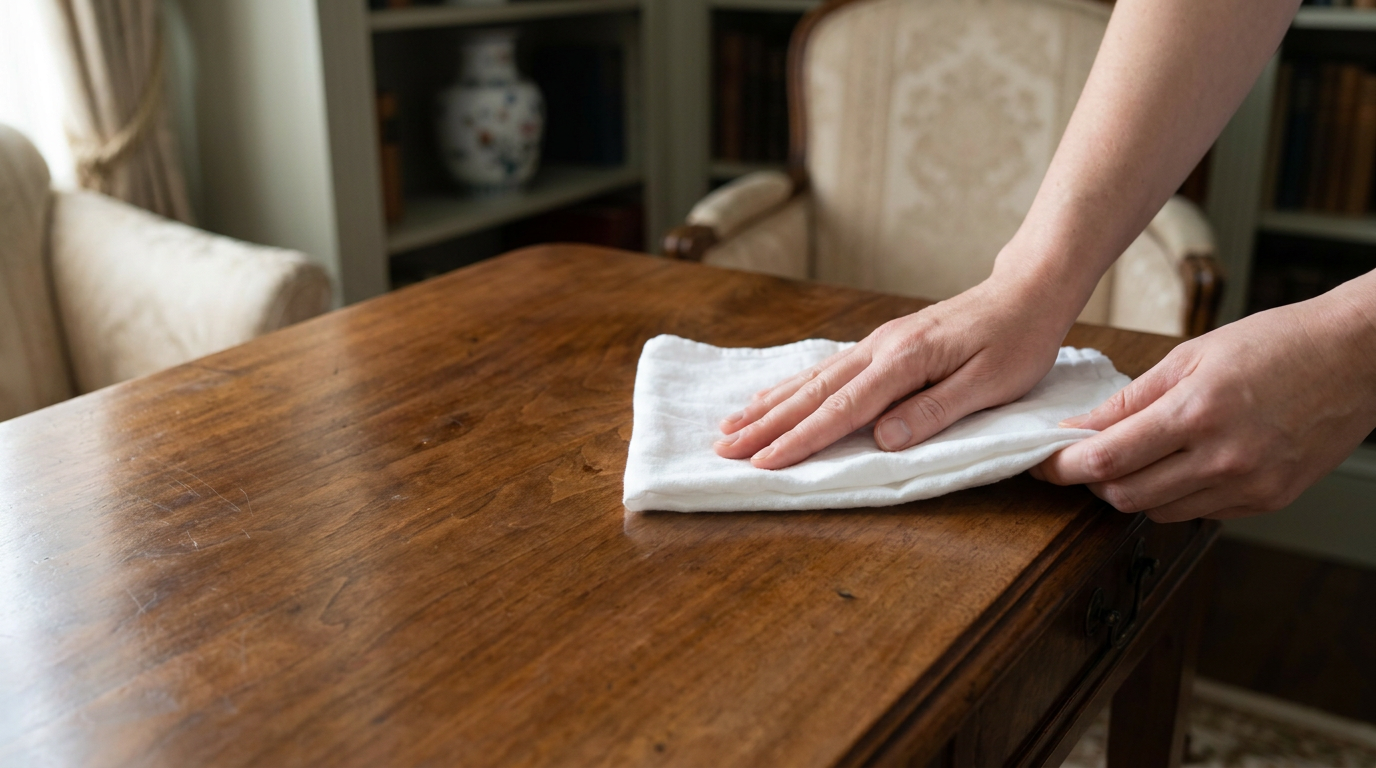
Daily or weekly cleaning should be simple, dry, and light handed. For most sealed wood furniture, regular dusting with a soft lint free cloth is enough to maintain visual clarity and prevent particles from accumulating. Dust is not innocuous. It can become mildly abrasive when rubbed repeatedly into the surface, especially if mixed with kitchen residue or airborne grime.
Always begin with the gentlest method. Fold a clean microfiber or soft cotton cloth and wipe with minimal pressure, following the grain where possible. Avoid feather dusters that simply redistribute particles into corners, carvings, and joints. A cloth that traps dust rather than chases it around the room gives a more controlled and polished result.
When deeper cleaning is needed, the key is caution. A lightly dampened cloth can help remove stubborn grime from many finished surfaces, but it should be only slightly moist, never wet. Excess water can penetrate joins, seep into veneers, or leave cloudy white patches on the finish. These marks often appear when moisture becomes trapped in the upper finish layers, particularly on lacquered, shellacked, or otherwise delicate surfaces.
After using a barely damp cloth, always dry the area promptly with a second soft cloth. This simple two step method is safer than saturating the surface with spray cleaners. It also gives you a better sense of how the finish is responding. If a cloth picks up color, if the surface feels tacky, or if you are unsure of the finish type, stop and reassess before proceeding further.
Know the Finish Before You Clean Aggressively
Not all wood furniture should be treated the same way. Unfinished wood, waxed wood, shellac, lacquer, varnish, painted finishes, and veneers all have different tolerances. A product suitable for a durable modern varnish may be far too strong for an older shellac or hand finished surface. This is where many care routines go wrong. Good intentions become damage because the finish was never identified.
Shellac, for example, is associated with heritage finishing traditions and can be exquisitely beautiful, but it is sensitive to water, alcohol, and heat. Waxed finishes have a soft glow that suits traditional interiors, yet they can smear or dull under inappropriate cleaners. Veneered furniture deserves special care because excessive moisture can compromise the adhesive bond or raise edges over time.
If you are uncertain, treat the piece as though it is delicate until you learn more. Purchase records, maker information, and antique dealer guidance can all be useful. For highly valuable or sentimental pieces, a conservator or qualified furniture restoration specialist can identify the finish more safely than trial and error at home.
The Truth About Polishing: Less Is More
There is a deeply rooted belief that shine equals care, yet wood furniture often suffers from too much polishing rather than too little. Many commercial products promise instant luster, but repeated use can leave residue that builds up over time, trapping dust and muting the natural character of the surface. Furniture should not look coated in effort. It should look quietly luminous.
Another important caution concerns silicone based polishes. These products can migrate into finishes and complicate future restoration or conservation. A piece that seems beautifully glossy today may become difficult to repair tomorrow because of contamination left behind by common sprays. For owners who value longevity and craftsmanship, this is an important reason to read labels carefully and avoid casual use of shine enhancing products.
Wood does not need to be fed. That phrase is charming, but misleading. Stable humidity, gentle cleaning, and protection from environmental stress are more meaningful than repeated applications of oils or sprays. In many cases, furniture remains healthiest when left largely alone, with interventions used sparingly and only for a clear purpose.
Where an extra layer of refinement is desired, a micro crystalline wax may be used sparingly on handled surfaces to increase gloss and reduce fingerprints. This is not something to do frequently. Conservation guidance suggests that a thorough waxing can last for years with only occasional buffing. The point is to create a subtle protective surface, not to initiate a constant cycle of product buildup.
How to Use Wax Wisely
If a piece is appropriate for waxing, make sure it is clean and fully dry first. Apply a very small amount with a soft cloth, spreading it thinly and evenly rather than layering it heavily. Allow it to haze according to product instructions, then buff gently with a clean cloth until the surface feels smooth and the sheen looks natural rather than forced.
The best waxed finish has a restrained glow, not a theatrical gloss. It should highlight the depth of the wood and the quality of the craftsmanship. If the surface feels sticky, smears under touch, or collects dust quickly, too much product has likely been used. In elegant maintenance, moderation is always more convincing than abundance.
Water, Heat, and Everyday Contact: Small Habits That Prevent Big Damage
Most damage to wood furniture happens not during special occasions, but through ordinary use. A cold glass set down without a coaster, a plant pot that traps condensation, a serving dish placed directly from oven to table, or a damp cloth left draped over an armrest can all leave lasting effects. Water can create cloudy white marks, while heat can damage finishes and alter sheen in a matter of moments.
Protection does not have to feel formal or inconvenient. It can be folded naturally into the rhythm of daily life. Use coasters beneath drinks, felt pads under decorative objects, placemats during meals, and trivets beneath anything warm. If you keep houseplants on wooden surfaces, place them in waterproof trays and check frequently for hidden moisture. Many beautiful tables have been damaged less by dinners than by neglected planters.
Writing directly on a wooden desk can also leave subtle impressions and scratches, especially on softer woods or older finishes. A blotter, leather pad, or layered textile not only protects the surface but adds a studied decorative note. Good care often has aesthetic rewards of its own.
When spills happen, speed matters. Blot liquid immediately with a clean, absorbent cloth. Do not rub aggressively, as this can spread moisture or abrade the finish. Once the spill is removed, dry the area gently and let the surface rest. If a white cloud appears afterward, it may indicate moisture in the finish, and a conservative response is wiser than an impulsive one involving heat, abrasives, or strong chemicals.
Moving and Handling Wood Furniture Without Stressing Its Structure
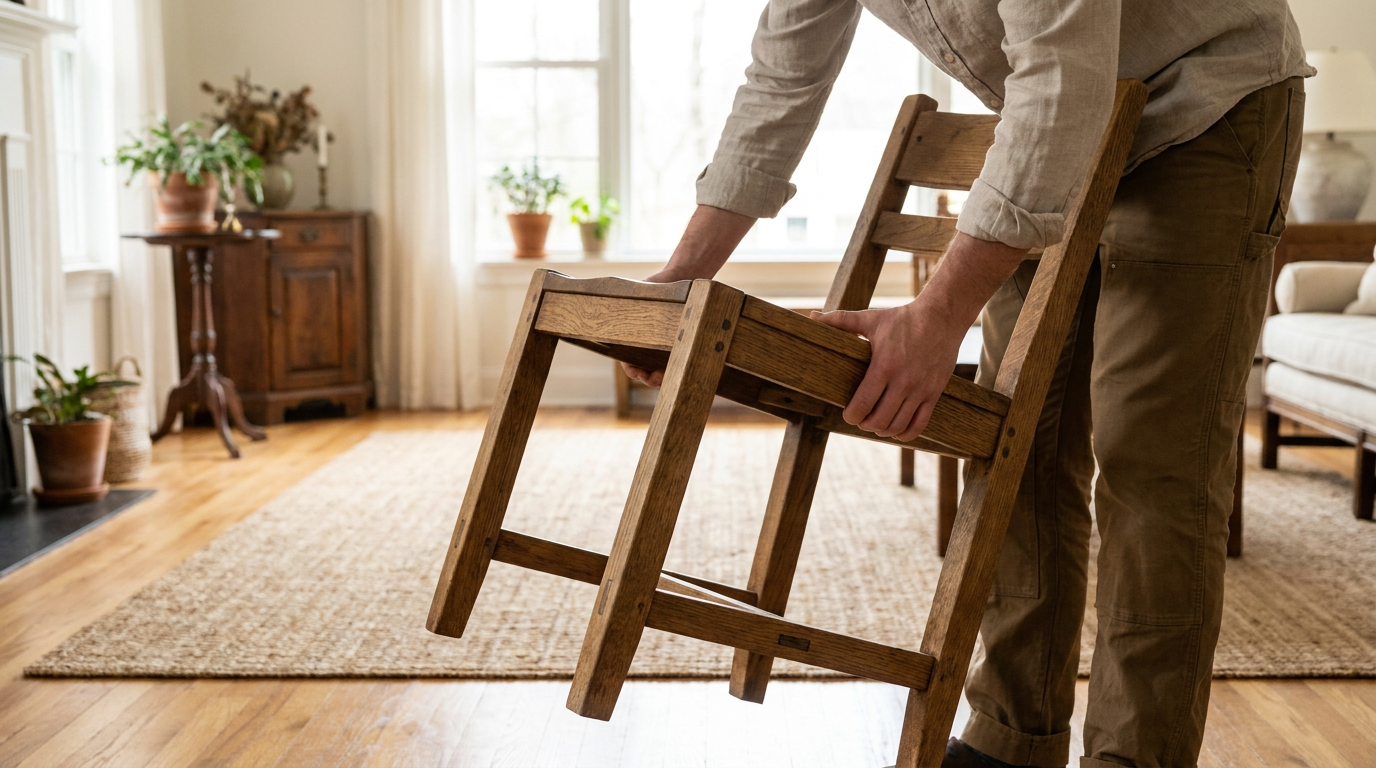
Furniture is often damaged during movement, even inside the same room. Dragging a chair or side table across the floor creates stress on legs, feet, stretchers, and joinery. Over time, this can loosen joints, crack supports, and misalign structural elements that once felt solid. What seems like a minor shortcut can gradually become a repair issue.
The safer method is always to lift furniture by strong structural points. For a chair, that may mean holding the seat frame rather than pulling on a decorative top rail. For a table, it means supporting the underside or apron rather than yanking from one leg. Drawers, doors, and delicate extensions should never serve as handles.
This principle becomes even more important with antique pieces, veneered cabinetry, and furniture with carved or ornamental details. Decorative elements may not be load bearing even if they appear sturdy. Whenever possible, remove contents before moving a cabinet or chest, and secure or remove detachable shelves and drawers so that weight does not shift unexpectedly.
Protective pads beneath furniture feet can also reduce friction and protect both flooring and furniture structure. They are especially useful in homes where pieces are rearranged often. A room should evolve with grace, but not at the expense of the joinery that gives each piece its long life.
Special Care for Veneer, Antique, and Heritage Finish Pieces
Some of the most beautiful wooden furniture is also the most nuanced to maintain. Veneer, for instance, allows makers to create extraordinary visual effects through grain matching, marquetry, and decorative patterning. Yet veneer is thinner than solid wood and more vulnerable to moisture, lifting, and edge damage. It should be cleaned with special gentleness and protected from saturation at all costs.
Antique furniture introduces another layer of complexity. Surface irregularities, worn edges, softened gloss, and subtle color variation are not always defects. They may be part of the piece’s history and should not be erased in pursuit of an artificial newness. Refinement is not the same as over restoration. A table that carries age with dignity can be more beautiful than one stripped of every trace of time.
French polishing and shellac based heritage finishes deserve particular respect. They can create a depth and softness unmatched by many modern coatings, but they are vulnerable to alcohol, water, and heat. A spirited attempt at DIY rescue can quickly turn into a far more serious problem. If a piece has significant value, family meaning, or a finish you suspect to be traditional, seek expert advice before using commercial products or internet tricks.
In general, heritage pieces benefit from preventive conservation rather than repeated intervention. Keep them stable, clean them gently, minimize direct handling, and reserve stronger treatment for moments when it is truly needed. The more irreplaceable the piece, the more disciplined your care should be.
How to Recognize Early Signs of Trouble
Wood furniture rarely fails without warning. It usually offers subtle clues first. A finish may begin to look cloudy, brittle, or uneven. Joints may creak or shift slightly. Veneer edges may lift. Tiny holes or fine powder may appear, suggesting pest activity. A musty smell may point to excessive humidity or hidden mold risk. Learning to notice these changes early allows you to act before damage becomes extensive.
It is worth taking a closer look at your furniture every so often, especially seasonally. Open drawers, inspect the backs of case pieces, and check undersides where conditions may reveal themselves first. Areas hidden from daily view often tell a more complete story than the polished front. This quiet attentiveness is central to preventive care.
If you detect active mold, insect evidence, severe cracking, or rapidly worsening finish issues, avoid improvised heavy treatment. The correct response depends on the nature of the problem. A pest issue requires different action than a dryness crack, and a finish contaminated by silicone needs a different strategy than one affected by ordinary dust and wear. Diagnosis matters as much as treatment.
A Seasonal Care Rhythm for Wood Furniture
One of the simplest ways to care for wood well is to think seasonally rather than reactively. Winter often brings lower indoor humidity, especially in heated homes. This is the time to watch for shrinkage, small cracks, and increased dryness in rooms with strong heat sources. Summer may invite higher humidity, especially in coastal or poorly ventilated spaces, which can contribute to swelling, stickiness, mold risk, or greater insect activity.
A seasonal rhythm can be both useful and elegant. In winter, check that furniture is not positioned too close to radiators or fireplaces and consider modest humidity support if the indoor air becomes extremely dry. In summer, promote air circulation and guard against damp corners, condensation near windows, or plant related moisture accumulating unnoticed on wooden surfaces.
Spring and autumn are ideal times for a more deliberate review. Dust thoroughly, inspect finishes in angled light, rotate decorative objects, and assess whether any protective pads, coasters, or curtains need refreshing. If a waxed piece needs light buffing, these transition seasons are a sensible moment to do it. By tying maintenance to the natural calendar, care becomes a composed household ritual rather than an afterthought.
What to Avoid if You Want Furniture to Age Beautifully
Beautiful aging is as much about what you do not do as what you do. Certain habits create cumulative harm, even when they seem harmless in the moment. Spraying unknown products directly onto surfaces, using too much water, placing furniture in direct sun, dragging pieces during cleaning, and polishing too often all interfere with long term preservation.
The following list offers a concise view of the most common mistakes to avoid:
- Do not use silicone based furniture sprays if you care about future restoration and finish integrity.
- Do not over wax or over polish, since buildup can dull the surface and attract dust.
- Do not assume all finishes respond the same way, especially when dealing with antiques, shellac, waxed surfaces, or veneers.
- Do not leave spills, condensation, or damp objects in place, even for short periods.
- Do not place wood furniture near strong heat sources or in harsh direct sunlight for extended periods.
- Do not drag furniture by legs, arms, or decorative elements when repositioning it.
These are not restrictive rules meant to make living with wood feel precious or stressful. They are liberating once understood, because they reduce the need for corrective work later. A well cared for piece asks little from you beyond awareness.
An Elegant Routine You Can Actually Maintain
The best furniture care routine is one you can sustain with ease. It does not rely on a cupboard full of products or an elaborate weekend ritual. Instead, it rests on a few intelligent habits repeated with consistency. Dust regularly. Keep surfaces dry. Protect from harsh sun and heat. Use coasters and pads. Move pieces carefully. Inspect seasonally. Intervene lightly.
If it helps, think in three time frames. Weekly care is mostly dusting and general awareness. Monthly care includes a closer look at high touch areas, underside moisture risks, and room conditions. Seasonal care brings deeper inspection, minor rearrangement, and environmental adjustments as needed. This rhythm feels natural in a lived in home and preserves beauty without making furniture feel untouchable.
There is also something deeply satisfying about this approach. It treats furniture not as disposable decor, but as crafted matter worthy of respect. Whether your home leans classic, contemporary, rustic, or eclectic, that philosophy elevates the entire interior. Care becomes part of style.
When to Call a Professional
Some situations deserve experienced hands. If a finish is alligatored, flaking, or dissolving under mild cleaning, if veneer is lifting, if joints are structurally loose, or if you suspect pest activity, professional assessment is wise. The same is true for pieces with high monetary value, strong sentimental importance, or identifiable heritage finishes. A premature DIY attempt can erase original material or make future repair more complicated.
Professional conservators and skilled restorers differ in methods, but both can offer valuable guidance when chosen carefully. Look for someone who respects original finishes, explains options clearly, and favors minimum necessary intervention. The goal is not always to make a piece look new. Often it is to stabilize, preserve, and allow the furniture to continue aging with dignity.
The Lasting Beauty of Gentle Stewardship
Wood furniture rewards a certain kind of sensibility. It asks for patience over shortcuts, softness over aggression, and observation over excess. In return, it offers a form of beauty that deepens rather than fades when cared for properly. Grain grows richer, patina becomes more nuanced, and the piece settles more fully into the life of the home.
There is great elegance in this idea of stewardship. A table is not merely cleaned. It is preserved for future gatherings. A chest is not simply polished. It is protected so its craftsmanship may continue to speak. In homes shaped by intention, maintenance is never separate from aesthetics. It is part of the atmosphere, part of the culture of living well.
If you remember only one principle, let it be this: wood furniture lasts best when it is protected from extremes and cared for with restraint. You do not need to feed it, flood it with product, or constantly intervene. You need to understand it, respect its material nature, and create the calm conditions in which it can remain beautiful.
That is the timeless secret behind interiors that feel collected, graceful, and enduring. Their furnishings are not merely owned. They are looked after with intelligence and affection. And wood, perhaps more than any other material in the home, shows its gratitude in the quiet glow of a surface that has been allowed to age well.



No Comment! Be the first one.