


Essential Sink Maintenance Tips for a Sparkling, Hygienic Kitchen
The kitchen sink is one of those quietly important features that supports nearly every part of home life. It is where vegetables are rinsed, bottles are washed, glasses are polished, and busy family routines seem to gather all at once. Because it works so hard, the sink can quickly become dull, stained, or unpleasant if it is not cared for with a little consistency. The good news is that sink maintenance does not have to be complicated, technical, or time consuming to make a visible difference.
Table Of Content
- Why sink maintenance matters more than most people realize
- Know your sink material before you clean
- The daily sink care routine that makes the biggest difference
- A simple daily rhythm to follow
- How to deep clean your kitchen sink once a week
- Natural cleaning methods that work beautifully
- How to prevent and manage sink stains
- Keeping the drain fresh and clog free
- Smart drain habits worth keeping
- What to avoid if you want your sink to last
- How to care for the sink area beyond the basin
- Creating a realistic sink maintenance schedule
- An easy maintenance timeline
- Maintenance tips for renters and busy households
- When to call a professional
- The emotional value of a clean kitchen sink
- Final thoughts on keeping your sink sparkling
A well maintained sink does more than help your kitchen look tidy. It also supports hygiene, helps prevent odors, protects your plumbing, and extends the life of the sink itself. Whether you have a classic stainless steel basin, a white porcelain sink, a composite material, or a farmhouse style favorite, small daily habits can keep it cleaner and fresher than you might expect. In many homes, this is one of the easiest maintenance routines to improve because the results are immediate and satisfying.
This guide is designed to feel approachable and realistic for homeowners and renters alike. You do not need a cabinet full of specialty products or an entire afternoon set aside for deep cleaning. Instead, you need a thoughtful routine, a little awareness of what causes damage, and a few practical habits that make sink care part of daily life. When your sink is clean, dry, and working properly, the entire kitchen feels calmer and more welcoming.
Below, you will find a complete guide to everyday sink maintenance, weekly care, deep cleaning strategies, stain prevention, drain protection, and a few smart habits that help this essential kitchen element stay beautiful for years. With a little intention, your sink can remain one of the most hygienic and attractive features in the room.
Why sink maintenance matters more than most people realize
It is easy to think of the sink as a purely functional zone, but it has an outsized impact on how the whole kitchen feels. A clean sink makes the room look brighter, cleaner, and more orderly, even if a few dishes are still drying nearby. By contrast, a stained basin, cloudy faucet, or slow drain can make an otherwise lovely kitchen feel neglected. Because the sink sits at the center of so many daily tasks, its condition is noticed constantly, even when we do not realize it.
There is also the question of hygiene. The kitchen sink comes into contact with food scraps, grease, soap residue, coffee, tea, sauces, and bacteria from dishwashing and raw ingredients. Without regular attention, these layers build up in ways that affect both cleanliness and odor. Keeping the sink clean helps reduce grime and supports healthier daily routines, especially in households where cooking happens often.
Maintenance is also about preserving materials. Hard water can leave mineral deposits, acidic foods can stain some surfaces, and abrasive scrubbers can scratch finishes that once looked pristine. Over time, those little forms of wear can change the appearance of your sink and even make it harder to keep clean. A gentle but consistent approach helps protect both the basin and the surrounding faucet, drain, and countertop edges.
A sparkling sink has a ripple effect. When this one hardworking area is fresh and well cared for, the entire kitchen feels more inviting, more sanitary, and easier to enjoy every day.
Know your sink material before you clean
One of the most important parts of proper sink maintenance is understanding what your sink is made from. Different materials respond differently to cleaners, scrubbing tools, and even standing water. A habit that works beautifully for one sink may cause dullness or fine scratches in another. When you know your material, it becomes much easier to clean with confidence and avoid accidental damage.
Stainless steel sinks are popular because they are durable, timeless, and forgiving. They handle daily use well, but they can show water spots, soap film, and scratches if they are cleaned with harsh abrasive pads. They usually respond best to mild soap, baking soda, soft cloths, and drying after use. Wiping with the grain rather than against it also helps maintain a polished appearance.
Porcelain and enamel sinks often bring a classic, charming look to the kitchen, especially in older homes or farmhouse spaces. These surfaces can stain from coffee, tea, tomato sauce, and rusty metal left sitting too long. They are also more vulnerable to chipping if heavy pots are dropped inside. Gentle cleansers and non scratch sponges are the safest choice, and it helps to avoid leaving dark colored residue in the basin overnight.
Composite granite and quartz sinks have a rich, modern look and generally hold up well, but they can develop mineral film or dull areas if residue is allowed to build up. They usually benefit from regular rinsing and drying, along with manufacturer approved cleaners. Strong bleach or very harsh chemicals may not be ideal, depending on the finish, so a simple routine is often the best routine.
Fireclay and natural stone sinks can be beautiful statement pieces, but they deserve a little extra mindfulness. Depending on the finish, they may require pH balanced cleaners and should not be exposed to products that could etch or discolor the surface. If you have a more premium or less common sink material, checking the care guidance once can save you from years of small avoidable damage.
The daily sink care routine that makes the biggest difference
If there is one secret to sink maintenance, it is this: daily care prevents most of the problems people later try to solve with heavy scrubbing. A few minutes of attention at the end of the day can stop stains from setting, reduce odors, and keep buildup from forming around the drain and faucet base. This routine is simple enough to become second nature, and once it does, your sink tends to stay in good shape with very little effort.
Start by clearing the basin completely. That means no dishes left soaking overnight, no food particles clinging to the strainer, and no sponges sitting in a puddle. Food residue becomes much harder to remove once it dries, and standing moisture encourages odor and bacterial growth. Emptying the sink fully gives you a fresh starting point and makes the entire area look instantly tidier.
Next, rinse the sink with warm water to wash away loose debris and soap residue. If you cook often, pay attention to corners, seams, and the area around the drain, where small bits of food tend to gather. A quick rinse may sound basic, but it prevents layers of grime from quietly settling in. In many kitchens, this step alone improves freshness more than people expect.
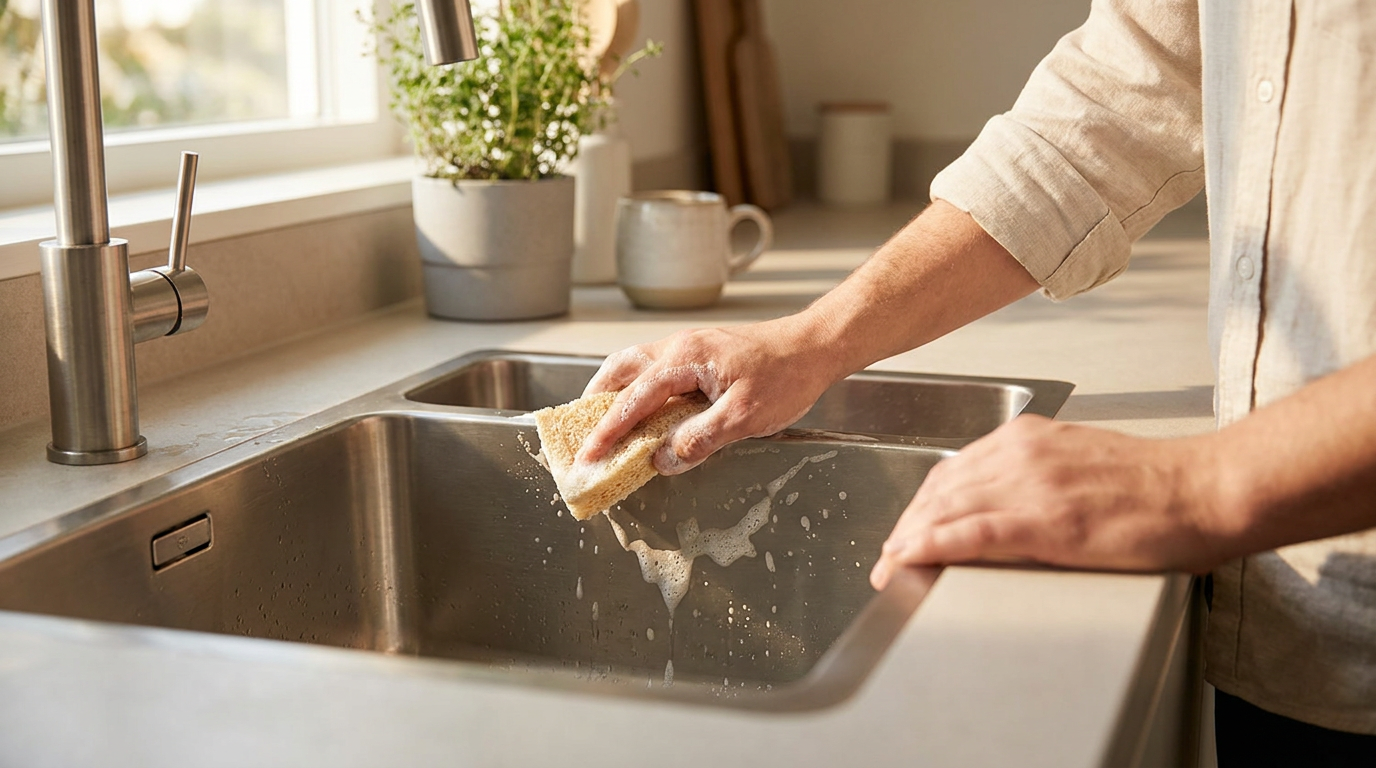
Then, use a soft sponge or cloth with a drop of dish soap or a gentle cleaner to wipe down the basin, the drain area, and the faucet. This is not meant to be an intense scrub every day. Think of it as resetting the sink so that residue does not have a chance to linger. With regular daily care, the surface usually needs only light pressure to look clean.
Finish by rinsing again and drying the sink with a microfiber cloth or soft towel. Drying is often skipped, but it is one of the most effective habits for preventing water spots, cloudy film, and mineral deposits. It also leaves the sink looking polished and intentional, which changes how the whole kitchen feels at the end of the evening.
A simple daily rhythm to follow
- Remove dishes, strainers, and leftover debris.
- Rinse the basin with warm water.
- Wipe surfaces with mild soap and a soft sponge.
- Clean around the faucet and drain opening.
- Rinse thoroughly.
- Dry with a clean cloth for a streak free finish.
How to deep clean your kitchen sink once a week
Even with strong daily habits, every sink benefits from a more thorough weekly cleaning. This is where you address buildup that a quick wipe down might miss, especially around the drain, faucet base, sink rim, and any textured surfaces. Weekly cleaning also creates a moment to notice early signs of wear, such as small rust marks, mineral deposits, or a drain that is beginning to slow.
Begin by emptying the sink and giving it a full rinse. Sprinkle baking soda across the damp basin and use a soft sponge or cloth to work it gently over the surface. Baking soda is useful because it adds mild cleaning power without being too aggressive for most sinks. It helps lift residue, freshen the area, and lightly polish the basin without the harshness of stronger abrasive cleansers.
Pay special attention to the zones that collect the most residue. The drain edge, the overflow opening if your sink has one, and the corners where the sink meets the counter often hold grime that can be missed in a quick daily clean. A soft toothbrush or detail brush can be helpful here because it reaches into creases without excessive force. You do not need to scrub aggressively if you are cleaning regularly.
Once the basin is clean, turn your attention to the faucet and handles. Water spots, fingerprints, and mineral buildup can make fixtures look older than they are. A cloth dipped in warm soapy water usually handles most of this, and a dry buff afterward restores shine. If the faucet base has white or chalky residue, a little vinegar on a cloth can help loosen mineral deposits, provided your finish can tolerate it.
After rinsing everything well, dry all surfaces thoroughly. Weekly drying and polishing make a surprising difference, especially on stainless steel and polished metal finishes. What you are creating is not only cleanliness but a cared for feeling, which is part of what makes a kitchen feel inviting and well lived in.
Natural cleaning methods that work beautifully
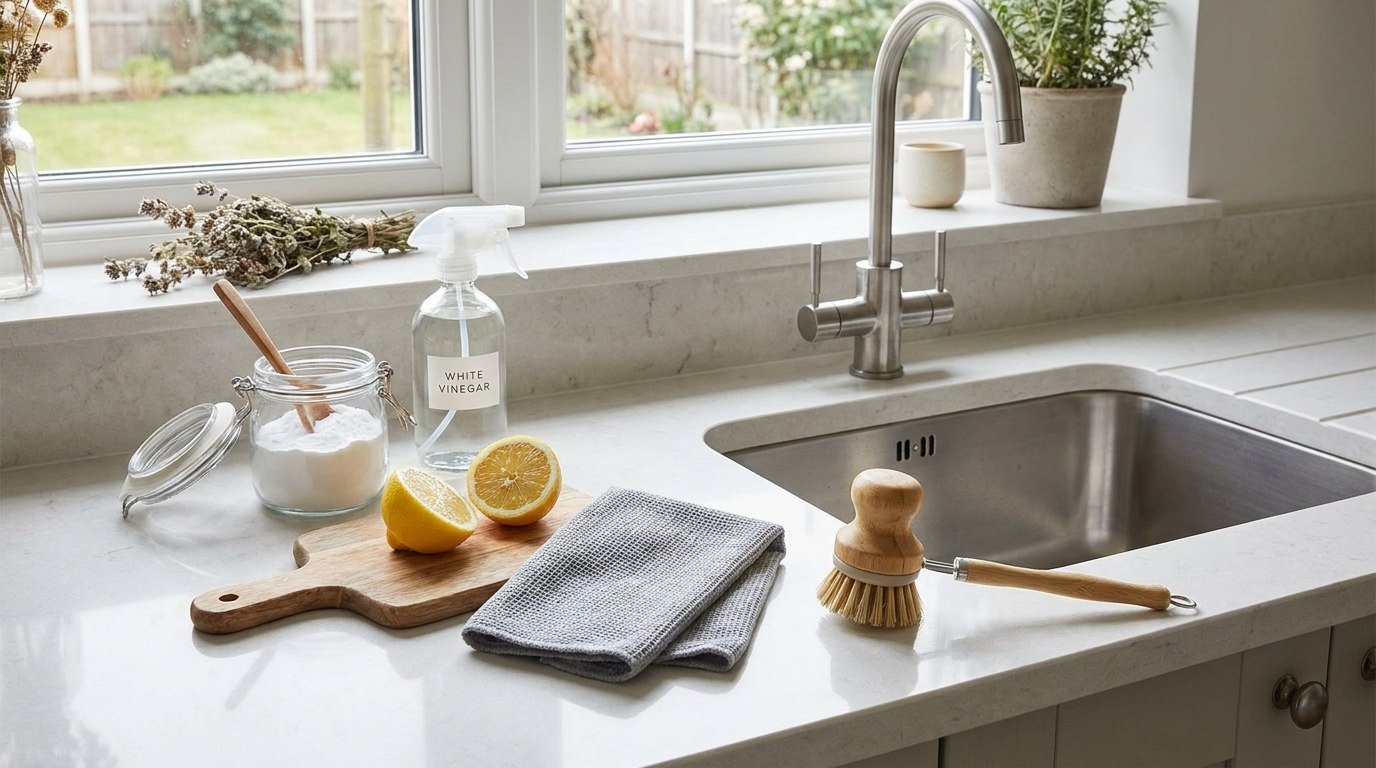
Many people prefer simple cleaning ingredients for sink care, especially in a kitchen where food preparation happens every day. The encouraging news is that some of the most effective options are already familiar. Mild dish soap, baking soda, white vinegar, lemon, and warm water can handle a surprising amount of routine maintenance when used thoughtfully.
Baking soda is especially useful for regular freshening. It lifts surface grime, softens residue, and helps neutralize odors. Sprinkled onto a damp sink and worked in gently with a soft cloth, it becomes an easy weekly polishing step for many sink types. It is a classic choice because it is straightforward, affordable, and versatile.
White vinegar is often helpful for hard water deposits and cloudy mineral film, particularly around faucet bases and drain rims. It should be used with care and not left on surfaces that may react poorly to acid, but when appropriate, it can be very effective. A cloth dampened with vinegar or a brief soak around stubborn buildup is often enough to loosen residue so it wipes away cleanly.
Lemon can add a fresh scent and light brightening effect, especially on stainless steel and some other durable surfaces. It is not a miracle cleaner, but it can make maintenance feel pleasant and leave the sink smelling clean. As always, it is best to be mindful of your sink material before using anything acidic too often.
If you enjoy a natural approach, the key is consistency rather than intensity. Gentle ingredients used regularly usually outperform harsh products used only once in a while. They also make sink care feel more integrated into everyday home life, which is often the secret to routines that last.
How to prevent and manage sink stains
Stains are one of the most common complaints in kitchen sink maintenance, but they are often easier to prevent than remove. Most staining happens when pigmented foods, coffee grounds, tea, red sauces, or metal items sit in the basin for too long. In lighter sinks, this can happen quickly, especially if residue is left overnight. The habit of rinsing promptly after use makes a major difference.
For stainless steel sinks, what looks like staining is sometimes simply a film of residue or mineral spotting. In those cases, a gentle cleanser and a microfiber dry buff can restore much of the original shine. Fine scratches can also make the sink appear dingier over time, which is another reason to avoid rough scouring pads. A polished, clean surface always resists that tired look better than one that is scratched and cloudy.
For white or light colored sinks, prompt cleanup matters even more. Tea bags, coffee, beets, curry, tomato sauce, and wine can all leave visible traces if ignored. If a stain develops, applying a gentle paste of baking soda and water for a short period before wiping can help lift discoloration. The goal is to treat it early rather than let layers accumulate week after week.
Rust marks sometimes appear when metal cans, cast iron pans, or utensils are left sitting wet in the sink. These marks can be frustrating because they seem sudden, but they are often avoidable. Try not to leave reactive metals in the basin for long periods, especially in lighter sinks. A quick rinse and dry after washing cookware goes a long way toward prevention.
Keeping the drain fresh and clog free
A beautiful sink loses some of its charm very quickly if the drain smells unpleasant or empties too slowly. Drain maintenance is an essential part of sink care, even though it is often overlooked until a problem is already noticeable. The best approach is preventative. Small daily habits can significantly reduce clogs, odors, and the need for messy interventions later.
First, be mindful about what goes down the drain. Grease, oils, coffee grounds, fibrous vegetable scraps, eggshells, starchy leftovers, and large food particles are all frequent contributors to sink trouble. Even if your kitchen has a disposal, it is wise not to treat it as a catch all system. The more solids you keep out of the drain, the easier everything stays.
Using a sink strainer is one of the simplest and most effective maintenance choices you can make. It catches food debris before it enters the pipe, and it takes only a moment to empty after meals. This small barrier does a lot of invisible work, particularly in busy family kitchens where multiple people are rinsing plates throughout the day.
To keep the drain smelling fresh, flush it regularly with hot water after dishwashing, especially if greasy residue may have gone through. Once a week, many households find success with a simple baking soda and vinegar treatment followed by hot water. This can help freshen the drain and loosen minor buildup, though it is not a solution for a true clog. If the drain is persistently slow, it is better to address the blockage early before it becomes more stubborn.
Smart drain habits worth keeping
- Use a strainer every day to catch food particles.
- Never pour cooking grease directly down the sink.
- Run hot water after washing oily pans or heavy dishes.
- Clean the strainer basket regularly so residue does not sit.
- Address slow drainage early instead of waiting for a full clog.
What to avoid if you want your sink to last
Some of the most damaging sink habits are incredibly common simply because people assume a sink is indestructible. In reality, everyday misuse is often what shortens the life or beauty of a sink. Avoiding these habits can preserve both appearance and function without requiring any extra effort beyond mindfulness.
One common mistake is using overly abrasive tools. Steel wool, very rough scrubbing pads, and harsh powdered cleansers may remove grime quickly, but they can scratch surfaces and wear down protective finishes. Once a sink is scratched, residue may cling more easily, making the sink seem harder to clean over time. Gentle tools usually create better long term results.
Another issue is leaving standing water in the sink too often. Water itself may not seem harmful, but repeated moisture contributes to mineral spots, film, and in some cases discoloration around fixtures or seams. Drying the sink regularly is a small habit with outsized benefits. It is especially important in areas with hard water.
Dropping heavy pans into the basin or piling cookware carelessly can also chip or dent certain sink materials. Even durable sinks have their limits, and impact damage tends to happen in an instant. A little gentleness when washing large pots helps preserve the surface and the overall finish.
Finally, do not ignore recurring odors, leaks, or slow drainage. These issues rarely improve on their own, and they can signal buildup, worn seals, or plumbing concerns that deserve attention. Good maintenance is not only about cleaning what you can see but also responding to early signs that something is not working as it should.
How to care for the sink area beyond the basin
True sink maintenance extends beyond the basin itself. The surrounding area often gathers just as much grime, and when these surfaces are neglected, the sink never quite looks fully clean. The faucet, handles, backsplash, counter edge, caulk lines, soap dispenser, and even the cabinet beneath the sink all contribute to the overall feeling of freshness.
The faucet deserves regular wiping because it collects fingerprints, water spots, and mineral residue every day. A polished faucet makes the sink area look instantly brighter and better maintained. Focus not just on the spout but also the base and handle seams, where grime can quietly settle. Drying the fixture after cleaning creates that subtle shine associated with a cared for kitchen.
Counter edges and seams around the sink should also be kept clean and dry. Water that sits around these areas can wear down caulk, encourage mildew, or affect delicate countertop materials over time. Wiping splashes after dishwashing protects the surfaces and keeps the sink area looking crisp. It is a small ritual that gives the kitchen a more intentional, serene appearance.
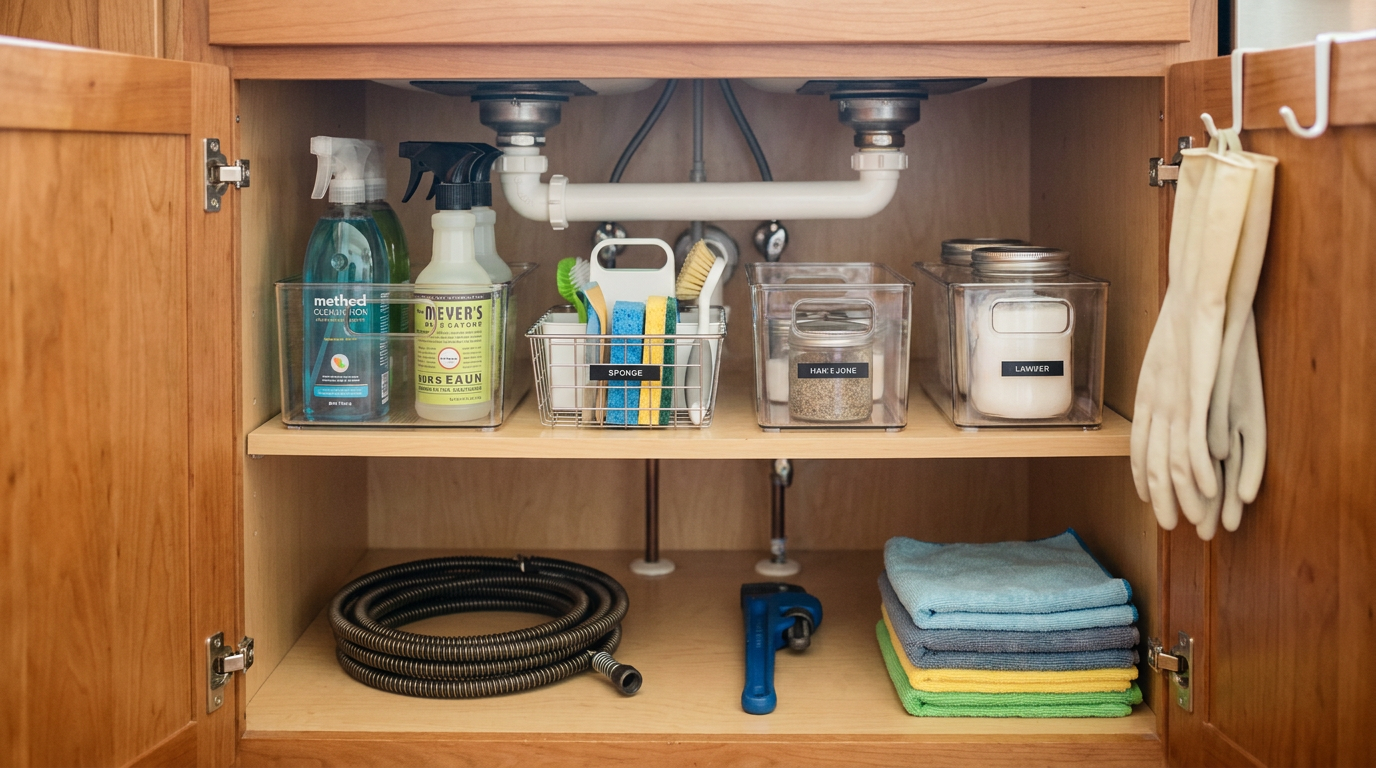
The cabinet beneath the sink is another place that deserves occasional attention. This space can hide slow leaks, drips from cleaning bottles, and general clutter that makes maintenance more stressful than it needs to be. A quick monthly check can reveal moisture issues early and help keep supplies organized.
Creating a realistic sink maintenance schedule
One of the reasons household maintenance feels overwhelming is that people often think in extremes. They either clean intensely or not at all. Sink care becomes far more manageable when it is broken into daily, weekly, and monthly rhythms. This approach removes guesswork and makes maintenance feel like a natural part of home life instead of a looming chore.
Daily tasks should be very light and focused on resetting. Clear debris, rinse the basin, wipe with mild soap, and dry the sink before bed. This usually takes just a few minutes, but it stops buildup before it starts. If several people share the kitchen, encouraging everyone to contribute to this small routine helps distribute the work.
Weekly tasks can go a little deeper. Clean the basin with baking soda or a gentle cleaner, polish the faucet, freshen the drain, wash the strainer thoroughly, and check corners and seams for residue. This is also a good time to clean the soap dispenser tray or nearby accessories that collect grime. A weekly reset keeps the sink from ever feeling truly dirty.
Monthly tasks are more about inspection and prevention. Look under the sink for leaks, review the condition of caulk lines, clear out expired or cluttered cleaning products, and assess whether hard water buildup is starting to return. If you stay on top of these small checks, major sink problems are much less likely to surprise you.
An easy maintenance timeline
- Daily: rinse, wipe, dry, and empty the strainer.
- Weekly: deep clean the basin, polish the faucet, and freshen the drain.
- Monthly: inspect under the sink, organize supplies, and check for wear or leaks.
Maintenance tips for renters and busy households
If you rent your home, sink maintenance is still worth prioritizing even if the sink is not your forever fixture. A clean, well functioning sink improves daily comfort immediately, helps you avoid deposit related issues, and makes the kitchen feel more personal and cared for. You do not need to replace anything or invest in expensive products to see a difference. Consistency matters much more than ownership.
Busy family households benefit especially from simple systems. Keep a soft sponge, a microfiber cloth, and a gentle cleaner within easy reach so the sink can be wiped in moments rather than postponed. If children are old enough to help, teaching them to clear food scraps and rinse the basin after use turns maintenance into a shared routine. The easier the system, the more likely everyone is to follow it.
In high traffic kitchens, it also helps to set one clear evening habit. Some households call it closing the kitchen. Whatever you name it, the ritual is the same: dishes are finished, counters are wiped, and the sink is left clean and dry. Waking up to a fresh sink changes the mood of the morning more than you might expect.
When to call a professional
Most sink maintenance is simple and fully manageable at home, but there are moments when professional help is the wiser choice. If your sink drains slowly despite regular cleaning, emits persistent odors, leaks underneath, or shows signs of damaged seals or plumbing connections, it may be time to bring in an expert. Trying to force a solution with harsh chemicals or repeated makeshift fixes can sometimes cause more harm than good.
Visible cracks, chips near drain fittings, recurring rust around fixtures, or water damage inside the sink cabinet also deserve attention. These problems can start small but lead to bigger repairs if ignored. Calling a professional early often protects both the sink and the surrounding cabinetry or countertops from more extensive damage.
There is no failure in asking for help with home maintenance. In fact, responding promptly is often one of the most responsible things you can do for your home. The goal is not perfection. It is preserving comfort, cleanliness, and function in a space you rely on every day.
The emotional value of a clean kitchen sink
It may sound surprisingly sentimental to talk about a kitchen sink this way, but anyone who has walked into a calm, tidy kitchen understands the feeling. A clean sink signals closure at the end of a long day and possibility at the start of a new one. It supports routines that feel smoother, helps the room smell fresher, and creates a subtle sense of order that affects the whole atmosphere of the home.
Home care is often less about dramatic transformations and more about these small repeated acts of attention. Wiping the sink, drying the faucet, emptying the strainer, and keeping the drain fresh are not glamorous tasks, yet they shape daily life in meaningful ways. They make the kitchen easier to enjoy and easier to share with others.
In many homes, the kitchen is where conversations happen, lunches are packed, coffee is poured, and life unfolds in the ordinary moments. Caring for the sink is really a way of caring for that rhythm. It is practical, yes, but it is also deeply connected to comfort, hospitality, and the feeling that your home supports you well.
Final thoughts on keeping your sink sparkling
The most effective sink maintenance routine is the one you can actually maintain. That usually means choosing gentle products, adopting a few reliable daily habits, and handling small issues before they grow. You do not need to scrub endlessly or chase perfection. A consistent rinse, wipe, dry rhythm paired with a weekly deeper clean is enough to keep most sinks looking bright and functioning beautifully.
As with so many parts of the home, little choices have lasting impact. Clearing the strainer, drying the basin, watching what goes down the drain, and respecting your sink material all add up over time. These are simple actions, but they protect one of the hardest working spots in the kitchen and help preserve the room’s sense of cleanliness and ease.
If you have been looking for a manageable way to make your kitchen feel better without a major renovation or expensive upgrade, start here. A sparkling sink brings freshness, order, and quiet satisfaction to everyday life. And sometimes, that kind of small improvement is exactly what makes a home feel its best.



No Comment! Be the first one.