



Futuristic architecture has long occupied a vivid place in the collective imagination. It appears in films, visionary sketches, and cultural conversations as something daring, fluid, and almost untouchable, a language of design reserved for distant decades and monumental cities. Yet the most compelling truth about this style is that it has already begun to shape the way we live, work, and move through space. What once looked speculative is increasingly becoming practical, elegant, and deeply relevant to contemporary life.
Table Of Content
- What Is Futuristic Architecture?
- The Evolution from Visionary Concept to Everyday Reality
- Defining Characteristics of Futuristic Architecture
- Fluid Forms and Dynamic Geometry
- Seamless Integration of Technology
- Adaptability and Multifunctional Planning
- The Materials Shaping Tomorrow’s Buildings
- Sustainability as the New Design Luxury
- How Futuristic Architecture Is Changing Residential Design
- Urban Futures and the Reinvention of the City
- The Emotional Appeal of Futuristic Design
- Common Misconceptions About Futuristic Architecture
- How to Bring Futuristic Architecture Into Contemporary Living
- Key Elements That Define the Style
- Why Futuristic Architecture Matters Now
- Final Thoughts
At its core, futuristic architecture is not simply about dramatic silhouettes or unusual forms. It is about rethinking the relationship between people, buildings, technology, and the environment. It asks how architecture can respond more intelligently to climate, adapt more gracefully to changing needs, and offer spaces that are not only beautiful but also emotionally and functionally refined. In this sense, the future is not a separate destination. It is quietly unfolding through design decisions being made today.
This architectural direction attracts attention because it feels expressive and new, but its appeal runs deeper than novelty. Futuristic architecture offers a way of living that values efficiency without sacrificing atmosphere, innovation without abandoning comfort, and boldness without losing human scale. For homeowners, enthusiasts, and design lovers, it opens a fascinating conversation about what a home or a city can become when imagination is paired with responsibility.
In this article, we will explore what defines futuristic architecture, the ideas and materials that support it, the shapes and systems that distinguish it, and the reasons it matters far beyond avant-garde skylines. From smart homes and adaptive interiors to sustainable facades and sculptural urban structures, tomorrow’s architecture is revealing itself not as fantasy, but as a possible and increasingly beautiful mode of contemporary living.
What Is Futuristic Architecture?
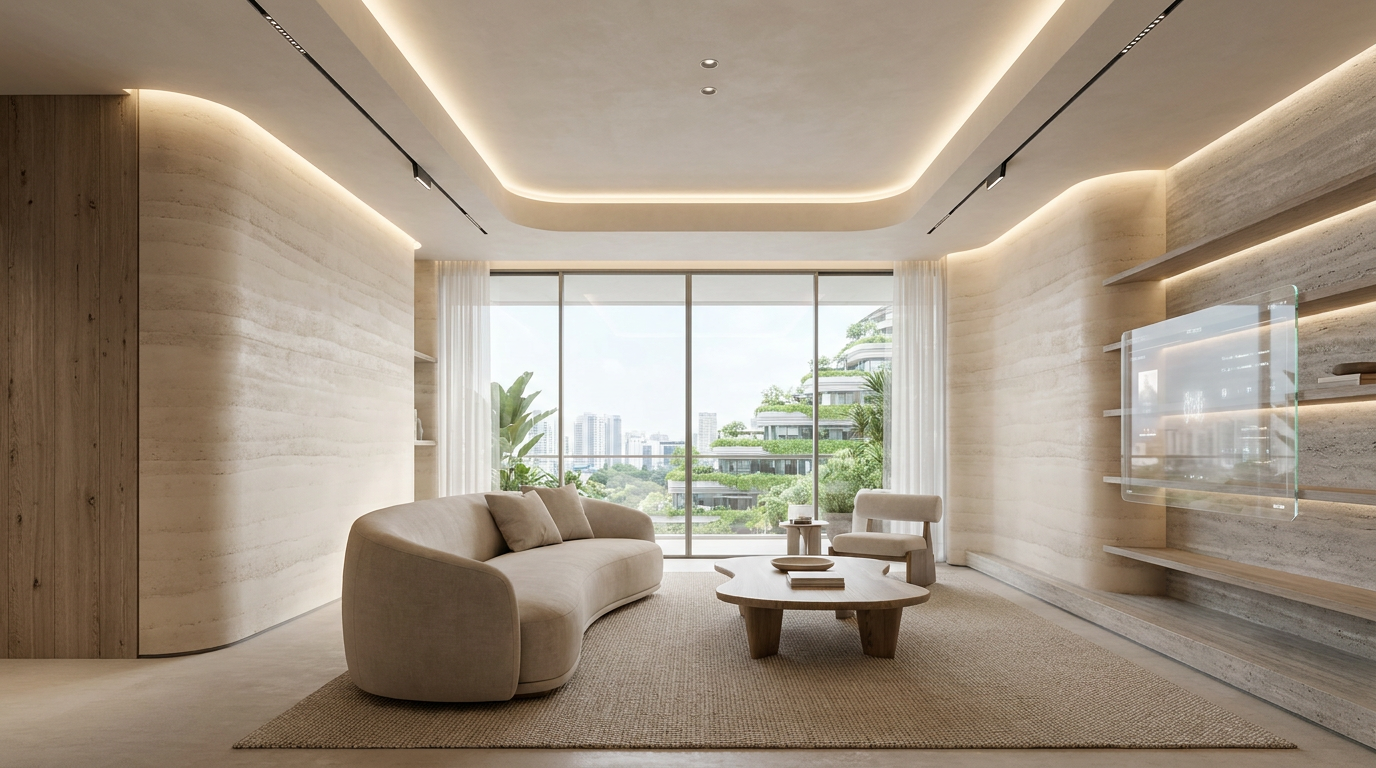
Futuristic architecture is best understood as a design approach that anticipates changing lifestyles, technological progress, and environmental realities. Rather than repeating established forms, it seeks to create spaces that feel forward-looking in both appearance and performance. This may include fluid geometries, advanced construction systems, energy-conscious planning, and interiors designed around flexibility and smart integration. The result is architecture that appears visionary while serving very real present-day needs.
Unlike a single historical style with strict visual rules, futuristic architecture is a broad and evolving expression. One project may lean toward sleek minimalism with intelligent automation and seamless surfaces, while another may take inspiration from nature, using biomorphic curves, planted terraces, and responsive facades. What unites these varied interpretations is a commitment to innovation. The aesthetic can differ, but the ambition remains the same, to imagine better ways of inhabiting space.
There is also a philosophical dimension to this style. Futuristic architecture often reflects optimism, adaptability, and a desire to harmonize technology with the human experience. It suggests that buildings should not remain static containers, but active participants in daily life. They can respond to sunlight, regulate temperature efficiently, support wellness, encourage social interaction, and evolve with their occupants over time.
For this reason, futuristic architecture should not be dismissed as merely dramatic or extravagant. When thoughtfully executed, it is highly functional. It addresses density, energy use, spatial constraints, and the increasing demand for environments that are both intelligent and restorative. The future, in architectural terms, is not only what looks different. It is what works better.
The Evolution from Visionary Concept to Everyday Reality
For much of the twentieth century, futuristic architecture occupied the realm of experimentation. Visionary architects drew cities suspended in the sky, homes formed from capsules, and urban networks shaped by mobility and machines. These images were powerful because they challenged familiar assumptions, even if many of the proposals remained unbuilt. They prepared the cultural ground for later innovation by expanding what architecture was allowed to imagine.
Today, many elements once considered radical have entered mainstream design. Curved building envelopes, floor-to-ceiling glazing, parametric facades, solar integration, and modular prefabrication are now visible in residential neighborhoods, office districts, hospitality projects, and public institutions. The shift is significant because it reveals how technical progress has caught up with creative ambition. Materials, software, and fabrication methods now allow designers to translate complex ideas into buildable, livable spaces.
This evolution has also been accelerated by necessity. Climate change, rapid urbanization, and changing family structures demand new architectural responses. Traditional formulas alone cannot solve issues of energy consumption, land scarcity, and interior adaptability. Futuristic architecture offers tools for addressing these conditions with intelligence and grace. It embraces the challenge of complexity rather than resisting it.
As a result, futuristic design is no longer reserved for iconic public landmarks. It is entering homes through smart systems, open and transformable layouts, efficient envelopes, and clean spatial planning. Even modest projects may borrow its logic through flexible rooms, sustainable materials, and technology that disappears elegantly into the background. The future is becoming less theatrical and more intimate.
Defining Characteristics of Futuristic Architecture
Fluid Forms and Dynamic Geometry
One of the most recognizable qualities of futuristic architecture is its relationship to form. Instead of relying only on rigid boxes and conventional symmetry, it often embraces curves, folds, cantilevers, and layered silhouettes. These gestures create movement, allowing buildings to appear as though they are shaped by airflow, water, or growth rather than simple assembly. There is an almost sculptural quality to such architecture, which gives it emotional presence.
These forms are not purely decorative. In many cases, dynamic geometry supports performance by improving natural light, encouraging ventilation, managing solar gain, or maximizing views. A curved wall may soften circulation and create spatial continuity, while a layered roof may collect rainwater or shade glazing below. Futuristic architecture often blurs the line between visual drama and technical precision, allowing beauty and utility to emerge together.
For residents and users, these forms can also create a more immersive experience. Rooms feel less rigid, transitions feel more natural, and the building itself becomes memorable in daily life. This is one of the quiet luxuries of futuristic design. It does not simply house activity. It frames it with intention.
Seamless Integration of Technology
Technology is central to the futuristic architectural imagination, but the most refined projects do not display it in an aggressive or mechanical way. Instead, they integrate it so smoothly that it enhances life without overwhelming it. Smart lighting, climate control, automated shading, energy monitoring, voice-responsive systems, and adaptive security can all be incorporated into a design language that remains calm and elegant.
This seamlessness matters because true luxury in contemporary architecture often lies in discretion. The most desirable spaces are not those cluttered with visible devices, but those in which systems work quietly and intuitively. Futuristic architecture understands that innovation should feel natural. It should reduce friction, improve comfort, and support efficiency while preserving the serenity of the space.
In homes, this may translate into responsive environments that shift according to time of day, occupancy, or seasonal conditions. In larger buildings, it can mean facades that react to sunlight, energy systems that optimize consumption, and digital tools that assist maintenance and long-term performance. The architecture becomes intelligent, not because it appears mechanical, but because it behaves thoughtfully.
Adaptability and Multifunctional Planning
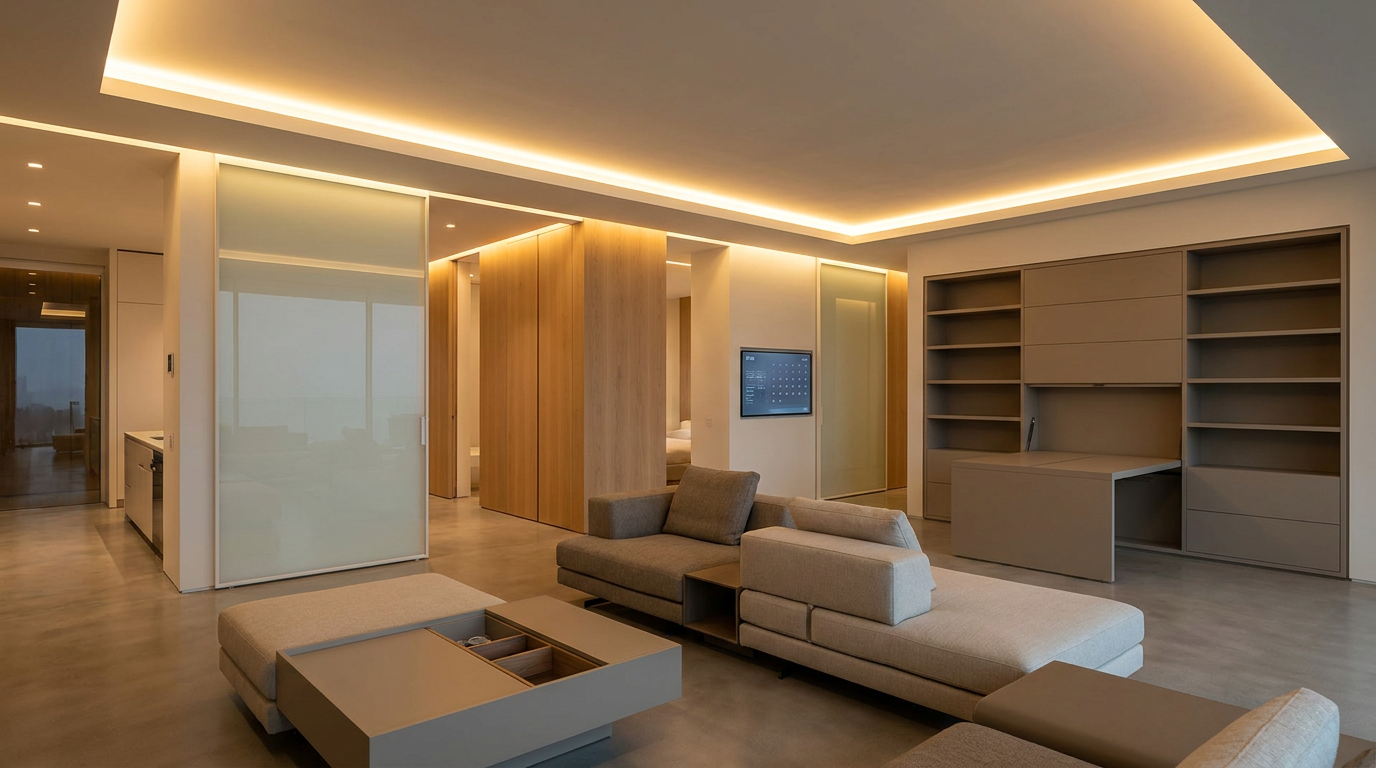
Another defining principle of futuristic architecture is adaptability. As modern life becomes more fluid, spaces are expected to serve multiple functions with elegance. A home office may need to become a guest room, a kitchen may operate as a social hub and work zone, and a residential tower may combine living, leisure, greenery, and community amenities in one integrated environment. Futuristic architecture responds to this shift with flexibility built into the plan itself.
Movable partitions, modular systems, concealed storage, transformable furniture, and open spatial sequences all support this way of living. Rather than assigning a single purpose to every room, the design allows for change over time. This is especially important in urban environments, where compact footprints must work harder and more intelligently. Adaptability is not a compromise. It is a sophisticated answer to contemporary life.
There is also a psychological benefit to flexible planning. People feel more empowered in spaces that can evolve with them. A home becomes more resilient when it can support work, rest, gathering, solitude, and creativity without constant renovation. Futuristic architecture recognizes that the most enduring spaces are those capable of transformation.
The Materials Shaping Tomorrow’s Buildings
Materials play an essential role in communicating the spirit of futuristic architecture. They influence not only visual identity but also thermal performance, maintenance, longevity, and environmental impact. In the most compelling projects, materials are selected for both sensory and technical qualities. Surfaces feel precise yet warm, advanced yet grounded, polished yet responsible.
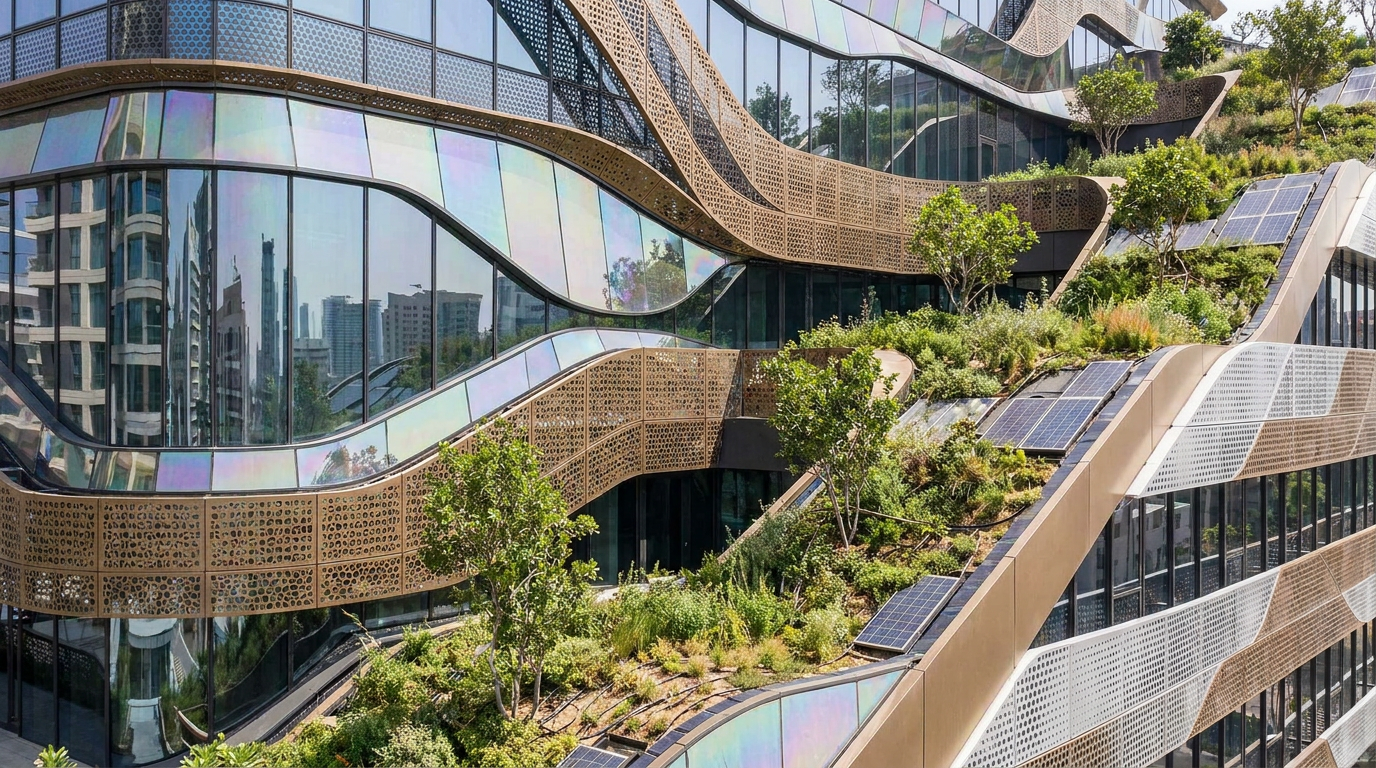
Glass remains one of the most prominent materials in futuristic architecture, though its use has become more sophisticated. High-performance glazing can regulate heat transfer, reduce glare, improve daylight access, and connect interiors with the outside world. When paired with structural finesse and thoughtful orientation, glass creates a feeling of openness and lightness that aligns beautifully with forward-looking design.
Metal also appears frequently, particularly aluminum, steel, titanium, and various engineered alloys. These materials support sleek lines, expressive forms, and durable envelopes. Perforated screens, reflective panels, and textured metallic finishes can all contribute to facades that feel responsive and layered rather than flat. When handled with restraint, metal introduces a quiet brilliance that feels distinctly contemporary.
Concrete, too, has evolved within futuristic architecture. Far from appearing heavy or purely industrial, it can now be cast with remarkable precision and finished in ways that highlight subtle texture and sculptural clarity. In many projects, concrete provides thermal mass, structural strength, and visual calm. It is often balanced with timber, vegetation, or soft interior palettes to create spaces that feel humane and enduring.
Engineered timber and bio-based materials are also becoming increasingly important. Their presence signals a meaningful shift in the future of architecture, one that values carbon reduction, renewability, and tactile richness. Futuristic design is no longer defined only by synthetic expression. It increasingly includes natural and regenerative materials, carefully detailed to support a more sustainable vision of luxury.
Beyond familiar materials, innovation continues through self-cleaning coatings, solar glass, recycled composites, smart membranes, and responsive facade systems. These technologies expand what a building envelope can do. It can collect energy, filter light, improve insulation, and reduce maintenance while contributing to a strong visual identity. In this way, materials are no longer passive finishes. They become active instruments of performance.
Sustainability as the New Design Luxury
No conversation about futuristic architecture is complete without sustainability. In fact, one of the most significant transformations in contemporary design is the realization that environmental responsibility is not separate from architectural ambition. It is central to it. The most compelling buildings of the future will not be those that merely look advanced. They will be those that operate with intelligence, restraint, and care for the planet.
This shift has reframed the meaning of luxury. Where extravagance once emphasized excess, today’s most sophisticated projects often emphasize efficiency, durability, air quality, daylight, and thermal comfort. A building that consumes less energy, supports well-being, and ages gracefully offers a deeper form of refinement. Futuristic architecture understands that elegance must be sustainable to remain relevant.
Passive design strategies are especially important in this regard. Building orientation, shading devices, insulation, cross ventilation, and thermal mass can significantly reduce the need for mechanical intervention. These principles are not new, but futuristic architecture reinterprets them with advanced modeling, fabrication, and material systems. Tradition and innovation meet in a more intelligent environmental response.
Renewable energy integration further strengthens this direction. Solar panels, photovoltaic glass, geothermal systems, and water recycling solutions can all be incorporated without disrupting aesthetic coherence. In the best projects, sustainability is not added as an afterthought. It is embedded from the beginning, shaping massing, materiality, and user experience in subtle and elegant ways.
Futuristic architecture is most persuasive when it proves that innovation can be both visually arresting and environmentally responsible.
Green roofs, planted terraces, and biophilic strategies also play a growing role. These features soften dense urban environments, support biodiversity, improve insulation, and contribute to emotional well-being. They remind us that the future of architecture may not feel colder or more mechanical. It may, in fact, feel more alive, more breathable, and more connected to nature than many buildings of the past.
How Futuristic Architecture Is Changing Residential Design
For homeowners and design enthusiasts, one of the most exciting aspects of futuristic architecture is its impact on residential living. The ideas once associated with experimental public buildings are now reshaping houses, apartments, and private interiors. This shift makes the style more accessible and more relevant, especially for people who want homes that feel contemporary, efficient, and emotionally composed.
Open planning remains a key feature, but in futuristic homes it is often approached with greater sensitivity. Instead of simply removing walls, designers think carefully about flow, zoning, light, and acoustics. Spaces are connected without losing intimacy. Kitchen, dining, and living areas may unfold in a continuous sequence, while changes in ceiling height, material tone, or lighting establish subtle distinctions. The result is openness with nuance.
Smart technology is another defining element of future-oriented homes. Homeowners increasingly expect lighting scenes, automated climate regulation, energy monitoring, integrated audio, and security systems that can be managed easily. Yet the most elegant homes avoid a visibly technical atmosphere. Devices are concealed, interfaces are simplified, and design remains centered on calm visual harmony. Futuristic living is less about gadgetry and more about effortless experience.
Wellness is also becoming central to residential architecture. Improved air filtration, natural light optimization, acoustic comfort, circadian lighting, and spaces for retreat or movement are all part of a more holistic vision of home. Futuristic architecture responds to contemporary pressures by making residences feel restorative rather than merely efficient. The home becomes an active partner in daily well-being.
There is growing interest as well in smaller, more efficient footprints that do not sacrifice comfort. Compact homes, modular extensions, and multifunctional rooms reflect a future in which thoughtful design matters more than excess square footage. A well-planned space with integrated storage, flexible furniture, and strong natural light often feels more luxurious than a larger but poorly organized one. This is one of the most persuasive lessons of futuristic architecture.
Urban Futures and the Reinvention of the City
Beyond the home, futuristic architecture is influencing the larger urban landscape. Cities face immense pressure to accommodate population growth, climate adaptation, mobility shifts, and the need for public well-being. Architecture alone cannot solve these issues, but it plays a vital role in shaping how density is experienced. Futuristic design proposes that cities can be efficient without feeling oppressive and technologically advanced without losing humanity.
Mixed-use developments are one clear example. Rather than separating residential, commercial, cultural, and recreational functions into isolated zones, many future-focused projects combine them vertically or within walkable districts. This creates neighborhoods that feel more connected and reduces dependence on long commutes. The building becomes not just an object, but part of a living urban ecosystem.
Public space is equally important. Futuristic architecture often pairs bold buildings with carefully designed plazas, elevated gardens, shaded walkways, and communal terraces. These spaces acknowledge that the future of the city depends on social life as much as efficiency. Architecture should invite people to gather, pause, and move comfortably through the urban environment.
Transport integration is another area of innovation. Buildings increasingly respond to evolving mobility systems, whether through cycling infrastructure, electric vehicle charging, pedestrian-first circulation, or connections to transit networks. The architecture of tomorrow is expected to support broader urban intelligence. It understands that sustainability extends beyond the building envelope to include how people access and inhabit the city itself.
The Emotional Appeal of Futuristic Design
It is easy to discuss futuristic architecture in technical terms, but its emotional dimension deserves equal attention. People are drawn to these buildings not only because they perform well, but because they awaken curiosity and possibility. A beautifully shaped structure can alter the mood of a street. A luminous interior can make daily rituals feel more intentional. Architecture has the power to influence how time, movement, and atmosphere are perceived.
In this sense, futuristic architecture is deeply artistic. It often relies on light, shadow, reflection, rhythm, and proportion to create environments that feel cinematic yet livable. Surfaces may appear to glow softly at dusk, corridors may unfold with almost seamless continuity, and facades may change character throughout the day. These effects contribute to a sense of wonder that should not be underestimated.
For residents, the emotional value of such spaces can be profound. Living in a carefully designed environment often encourages clarity, calm, and pride of place. When innovation is paired with warmth and usability, futuristic architecture becomes less intimidating and more inspiring. It tells us that progress can be graceful.
Common Misconceptions About Futuristic Architecture
One common misconception is that futuristic architecture is impractical. Because many examples feature unusual shapes or advanced technologies, some assume they are difficult to maintain or incompatible with everyday life. While poorly resolved projects can present challenges, the best future-oriented designs are often exceptionally functional. They are planned around performance, adaptability, and user experience from the earliest stages.
Another misunderstanding is that this style is cold or impersonal. Certainly, some futuristic interiors have leaned too heavily on stark surfaces and visual severity. Yet many of today’s most admired projects combine clean lines with warm materials, soft lighting, natural textures, and biophilic elements. The future does not have to look sterile. In fact, the most successful spaces feel balanced, tactile, and inviting.
There is also a belief that futuristic architecture is only for the wealthy or for large landmark projects. While iconic examples can be expensive, many of its ideas can be adapted at different scales. Energy-efficient windows, flexible layouts, integrated lighting, sustainable materials, and smart controls are increasingly available to homeowners and smaller developers. Futuristic architecture is not a single luxury package. It is a mindset of thoughtful advancement.
How to Bring Futuristic Architecture Into Contemporary Living
For those inspired by this style, adopting its spirit does not require building a dramatic sculptural house from the ground up. Many of its principles can be introduced gradually through intelligent design choices. The first is to focus on clarity of space. Open circulation, reduced visual clutter, and integrated storage can transform the feel of a home and make it more responsive to modern life.
Material selection is another powerful tool. Large-format surfaces, refined metal accents, high-performance glazing, engineered timber, and subtle textural contrasts can all evoke a forward-looking aesthetic without feeling excessive. What matters most is precision and coherence. Futuristic interiors tend to feel intentional, with each material supporting a clean but layered composition.
Lighting should be treated as architecture, not decoration alone. Recessed fixtures, concealed LED lines, adjustable scenes, and daylight management contribute enormously to the atmosphere of future-oriented spaces. Good lighting can make a room feel serene, adaptable, and spatially expansive. It is one of the most accessible ways to achieve a contemporary, elevated mood.
Technology should be integrated selectively and elegantly. Smart thermostats, motorized blinds, app-controlled lighting, and discreet charging solutions can improve everyday comfort without dominating the design. The goal is not to fill the home with visible devices, but to create an environment that feels responsive and effortless.
Finally, flexibility should guide planning wherever possible. A corner that supports work by day and relaxation by evening, a dining area with hidden storage, or a room divided by sliding panels can make a home feel distinctly contemporary. Futuristic architecture succeeds because it understands that modern living is fluid. Designing for that fluidity is one of the most practical luxuries available.
Key Elements That Define the Style
Although futuristic architecture can take many forms, several recurring elements help define its identity. These features often appear together, though not every project includes them all:
- Expressive geometry that introduces movement, curvature, or sculptural distinction.
- Integrated technology that improves comfort, efficiency, and control while remaining visually discreet.
- Sustainable systems such as passive design, renewable energy integration, and efficient facades.
- Flexible planning that supports changing needs and multifunctional living.
- Advanced materials selected for durability, performance, and refined aesthetic impact.
- Biophilic thinking that reconnects architecture with light, air, greenery, and natural rhythms.
Together, these elements create buildings that feel visionary without losing their practical value. They suggest that the future of architecture will be measured not only by appearance, but by responsiveness, intelligence, and grace.
Why Futuristic Architecture Matters Now
Futuristic architecture matters because it offers more than style. It offers a framework for living better in a time of rapid change. As households become more dynamic, cities more complex, and environmental questions more urgent, architecture must evolve with equal imagination and discipline. The future cannot be addressed with outdated assumptions about form, function, or resource use.
This is why the style resonates so strongly today. It captures a cultural desire for spaces that feel hopeful, efficient, and beautifully resolved. People want homes and buildings that support their routines while elevating them. They want environments that are technologically capable but emotionally calm, visually bold but operationally smart. Futuristic architecture responds to those desires with unusual clarity.
It also reminds us that innovation need not feel alienating. When handled with sensitivity, the architecture of the future can be intimate, restorative, and deeply human. Its finest achievement is not simply that it looks ahead. It is that it makes the present more livable.
Final Thoughts
Exploring futuristic architecture reveals a world far richer than glossy surfaces and dramatic skylines. At its best, this style represents a graceful union of imagination and practicality. It reshapes how buildings look, certainly, but more importantly, it transforms how they perform, adapt, and support human life. Its ambition is not novelty for its own sake, but a better dialogue between design, technology, and the rhythms of living.
For contemporary homeowners, designers, and enthusiasts, that makes futuristic architecture especially meaningful. It offers lessons that can be applied at every scale, from an urban landmark to a single thoughtfully designed room. Through sustainable materials, integrated systems, flexible planning, and emotionally resonant form, the future becomes something tangible and attainable.
Tomorrow’s architecture is already arriving in quiet, elegant ways. It lives in the smart facade that saves energy, the adaptable interior that changes with family life, the planted terrace that cools the city, and the luminous room that feels both modern and serene. Futuristic architecture is no longer simply a glimpse into what may come. It is an invitation to shape the present with greater beauty, intelligence, and care.



No Comment! Be the first one.