



Artificial intelligence has changed how people shop, search, write, travel, and now invest. What once sounded like institutional finance jargon is increasingly built into the apps and platforms that everyday investors already use. If you have opened a brokerage account recently, compared robo-advisors, or read a market summary generated in plain language, you have likely already encountered some form of AI investment tool. The important shift is not simply that AI exists in finance. It is that AI is becoming part of the normal investing experience for mass-market users.
Table Of Content
- What AI Investment Tools Actually Are
- Why AI Investment Tools Appeal to Everyday Investors
- The Most Useful Categories of AI Investment Tools
- Robo-advisors and automated portfolio management
- AI-powered screening and research
- News summarizers and sentiment tools
- Portfolio analytics and rebalancing assistants
- What AI Investment Tools Do Well and What They Do Not
- How to Evaluate an AI Investment Tool Before You Use It
- Warning Signs, Scams, and the Risk of AI Washing
- Practical Strategies for Using AI Investment Tools Wisely
- Best Fit by Investor Type
- The Future of AI in Investing
- Final Takeaway
That shift creates real opportunity. AI investment tools can help investors organize information, automate repetitive tasks, reduce friction, monitor portfolios, summarize research, and make the basic mechanics of investing more accessible. They can support investors who do not have the time to review earnings reports line by line or manually rebalance holdings every quarter. At their best, these tools act like an efficiency layer that helps people make more informed and disciplined decisions.
Still, the excitement around AI has also produced confusion. Many people hear the phrase AI investing and assume it means a machine that can consistently beat the market with hidden intelligence. That is not how most investor-facing tools work. In practice, AI investment tools are a broad category that includes robo-advisors, portfolio assistants, screening engines, market news summarizers, risk analytics, and compliance or fraud detection systems embedded in brokerage platforms. Most are designed to support decisions or automate processes rather than produce guaranteed outperformance.
That distinction matters because regulators in the United States and Canada have been clear on one point. AI does not erase the need for investor protection, suitability, fee transparency, or common sense. FINRA has noted that digital investment platforms historically relied heavily on rules-based models, while newer AI applications now extend into communications, portfolio workflows, surveillance, and sentiment analysis. SEC officials have also emphasized that while AI may improve the investment experience, the same obligations around disclosure, conflicts of interest, and fair treatment still apply.
For savvy investors, the practical question is not whether AI will replace human judgment. It is how to use these tools well without becoming overconfident or vulnerable to hype. This article breaks down how AI investment tools work, where they are genuinely useful, which categories matter most, what to watch for, and how everyday investors can build smarter habits around them.
What AI Investment Tools Actually Are
One of the biggest misconceptions in this space is that AI investment tools are a single product type. They are not. The category includes several kinds of software that perform different tasks across the investing workflow. Some tools automate portfolio construction. Others scan large amounts of market data. Others summarize documents, screen securities, identify patterns, or explain complex disclosures in simpler language.
For beginners, the easiest entry point is usually the robo-advisor. A robo-advisor asks a series of questions about goals, time horizon, and risk tolerance, then recommends and often manages a portfolio on the investor’s behalf. Some platforms use relatively straightforward rules-based logic, while others increasingly incorporate more adaptive models, richer personalization, or AI-enhanced customer support. FINRA has pointed out that many U.S. robo platforms historically used mostly rules-based models, which is a useful reminder that not every digital platform using automation is deeply AI-driven in the way consumers imagine.
A second major category is the AI-powered research platform. These tools help investors search for securities, summarize earnings transcripts, compare funds, estimate valuation scenarios, and filter huge data sets using natural language. Morningstar’s 2025 annual report highlighted how AI is being embedded into natural-language screening, valuation estimates, portfolio talking points, and AI assistants. That is a sign that AI is moving from specialist quant systems into mainstream financial software used by ordinary investors, advisors, and analysts.
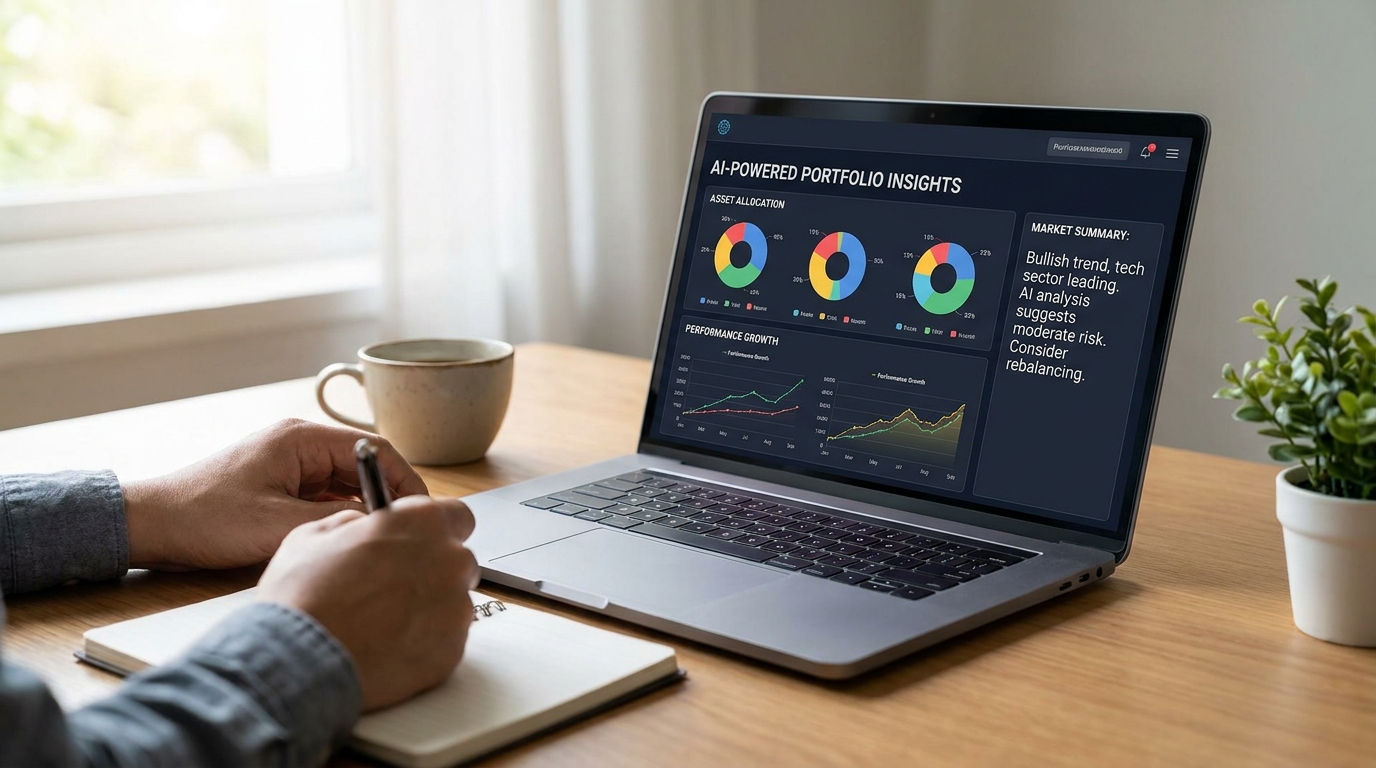
A third category includes portfolio analytics and monitoring tools. These products can help investors understand diversification, concentration risk, sector exposure, drawdown history, tax efficiency, and rebalancing needs. Some also monitor headlines, analyst revisions, or changes in volatility and alert users when a portfolio drifts away from target allocation. These are often less glamorous than AI stock pickers, but for long-term investing they can be more useful because they improve discipline rather than encourage impulsive trading.
There are also tools related to sentiment analysis, fraud prevention, and communication. FINRA has described AI uses in customer communications, surveillance, social-sentiment analysis, and portfolio management. For retail investors, this can show up as simplified disclosures, chat interfaces that explain products in plain English, alerts about suspicious activity, or market summaries that extract key points from large document libraries. These use cases may not sound flashy, but they solve real problems by helping people process too much information more efficiently.
Why AI Investment Tools Appeal to Everyday Investors
The popularity of AI investment tools is not just a story about technology. It is also a story about accessibility. For decades, professional investors had an overwhelming advantage in research capacity, data processing, and execution discipline. They could run screens, track portfolios in real time, and generate scenario analysis at a scale that retail investors simply could not match. AI narrows some of that gap by making intelligent workflows available through consumer-facing apps and software.
That accessibility matters because the hardest parts of investing are often not about intelligence but about consistency. People struggle to stay diversified, keep emotions under control, review fees, read disclosures, and monitor whether their portfolios still match their goals. AI tools can help by reducing the burden of repetitive analysis and surfacing the information that matters most. If a platform can show that your portfolio is too concentrated in one sector, summarize a company’s latest earnings call, or explain why your asset mix no longer matches your risk tolerance, it has already created practical value.
In Canada, this is especially relevant because the advice landscape has been moving toward digital and hybrid models. IIROC has discussed the growing role of robo platforms and advisor-support technologies as part of the broader evolution of advice. That means mass-market investors are increasingly likely to encounter AI-enhanced features not only in self-directed brokerages but also in advice relationships that combine technology with human guidance. The choice is no longer between fully independent investing and traditional one-on-one advisory channels. There is now a broader middle ground.
Another reason these tools appeal to everyday investors is the ability to translate complexity into usable language. SEC commentary in 2025 pointed to the possibility of AI agents helping retail investors navigate dense fund documents in plain English. That is an important development because many investment products are buried under long disclosures, unfamiliar terminology, and fragmented information. When AI helps investors understand rather than simply transact, it can improve financial literacy at the point of decision.
The Most Useful Categories of AI Investment Tools
Robo-advisors and automated portfolio management
Robo-advisors remain one of the clearest examples of useful investment automation. They are designed to take a set of investor inputs, such as age, goals, income needs, and risk tolerance, and turn them into a managed portfolio that is often built from low-cost exchange-traded funds. Many also provide automatic rebalancing, dividend reinvestment, and in some cases tax-loss harvesting. For investors who might otherwise leave cash idle or build a random portfolio of familiar names, that structure can be a major upgrade.
The best way to think about a robo-advisor is not as a machine that predicts winning assets, but as a disciplined system for implementing basic portfolio management. This matters because investor outcomes are often shaped more by allocation, costs, behavior, and time in the market than by dramatic attempts to outsmart it. A good robo-advisor can support those fundamentals by keeping a portfolio aligned to its intended strategy. It can also reduce the temptation to chase headlines or constantly react to short-term noise.
That said, investors still need to review what is actually being offered. You should know the platform’s fee structure, account minimums, underlying funds, tax treatment, and whether recommendations are tied to a registered advisory framework. AI or automation does not remove responsibility from the investor. It simply changes where diligence is required.
AI-powered screening and research
AI-powered screening tools are particularly useful for investors who want more control but need help sorting through a large investment universe. Instead of reading dozens of reports or manually creating spreadsheet filters, users can search for companies or funds that meet specific criteria. Depending on the platform, those criteria can include valuation ranges, profitability trends, debt levels, dividend history, analyst revisions, insider activity, or sector-specific metrics.
What makes AI-enhanced screening different from older stock screeners is often the interface and the depth of interpretation. Natural-language search means an investor may be able to type something like, show me profitable dividend stocks with low debt and stable margins, and get a curated output. Some tools also summarize why certain investments meet those filters and flag changes over time. This turns raw data into guided insight, which is especially useful for investors who understand what they are looking for but do not want to spend hours building the query.
Morningstar’s public reporting suggests that this kind of workflow is becoming more common across mainstream platforms. That does not mean every result is superior or unbiased. It means the mechanics of research are getting faster, more interactive, and more accessible. The opportunity for investors is to use these tools to ask better questions, not to outsource all thinking to the interface.
News summarizers and sentiment tools
Investors are overwhelmed by information volume. Earnings releases, conference call transcripts, economic data, market commentary, social media posts, analyst notes, and fund documents create a constant stream of material that few people can fully process. AI summarization tools can reduce this overload by condensing long documents into key takeaways and highlighting notable changes in tone, guidance, or risk factors.
Sentiment tools take this a step further by attempting to detect how markets, media, or online communities are reacting to a company or sector. Used carefully, that can be helpful for monitoring unusual shifts in attention or volatility. Used carelessly, it can become a shortcut to speculation. Social buzz is not the same as fundamental value, and some of the most crowded retail trades of recent years show how sentiment can swing far faster than underlying business quality.
The right use case for sentiment analysis is context rather than conviction. It can tell you what the market is paying attention to. It should not be the sole basis for an investment decision. If a stock appears attractive only because a trend-monitoring dashboard says online enthusiasm is rising, the thesis is probably too thin.

Portfolio analytics and rebalancing assistants
This may be the most underrated category of all. Many investors focus too much on finding new ideas and too little on understanding the portfolio they already own. AI-enhanced portfolio analytics can reveal concentration, overlap, style drift, income exposure, currency sensitivity, factor bias, and correlations that are easy to miss when holdings are spread across multiple accounts.
Some tools also show how a proposed trade would affect the portfolio as a whole. That is powerful because investing should not be about selecting isolated securities in a vacuum. It should be about how each holding fits into a broader plan. If adding another technology stock pushes your concentration too high, or if a new fund duplicates positions you already own elsewhere, a good analytics tool can make that visible before you act.
Rebalancing support is another meaningful benefit. Investors often know they should rebalance, but many fail to do it consistently. AI-assisted tools can monitor thresholds, recommend adjustments, and even automate part of the process depending on the platform. That kind of quiet discipline can do more for long-term results than a constant hunt for the next hot trade.
What AI Investment Tools Do Well and What They Do Not
The strongest case for AI in investing is not that it predicts the future with magical precision. It is that it helps investors process more information, automate routine actions, and reduce avoidable friction. This is a meaningful advantage. Investment decisions are often weakened by incomplete information, delayed follow-through, fragmented accounts, and emotional overreaction. AI can improve each of those pressure points when it is designed responsibly.
For example, AI tools are good at scanning large data sets, surfacing patterns, summarizing repetitive materials, and keeping workflows moving. They can help investors compare options, identify gaps in diversification, and understand shifts in a portfolio faster than manual review alone. They can also support better onboarding by translating technical documents into clearer language and by structuring investor questionnaires more effectively.
What AI tools do not do is remove uncertainty from markets. They do not guarantee higher returns, and they do not make risk disappear. In fact, some AI systems can amplify problems if they are trained on biased data, optimized for engagement, or used within business models that reward platform revenue over client welfare. SEC commentary has repeatedly highlighted concerns about conflicts of interest in predictive analytics and AI-driven retail journeys. If a tool is nudging users toward activity that benefits the platform more than the investor, the technology itself is not a safeguard.
Another limitation is explainability. Some AI systems generate outputs that look polished without making their reasoning easy to verify. In investing, that creates a serious issue because confidence should come from understanding, not presentation quality. If a platform recommends a product or strategy and cannot clearly explain the basis, the investor should treat that opacity as a warning sign rather than an innovation premium.
How to Evaluate an AI Investment Tool Before You Use It
Choosing a platform requires more than looking at design quality or marketing language. The first step is to determine what the tool actually does. Is it executing trades automatically, recommending portfolios, screening securities, summarizing research, or simply offering educational guidance? A platform that handles investment advice or managed accounts carries different implications from one that only provides analytics or information support.
The second step is to verify registration and legitimacy. FINRA and other regulators have made it clear that some unregistered auto-trading services market themselves using AI claims and may falsely promise high returns or low risk. The phrase AI-powered is not proof of oversight, competence, or trustworthiness. Investors should check whether a firm is properly registered, what entity is behind the product, and how client assets are actually held and protected.
The third step is fee clarity. AI can make a platform feel modern, but it does not make costs irrelevant. Investors should review management fees, underlying fund expenses, trading costs, spreads, subscription charges, and any premium feature pricing. Small recurring costs matter over time, especially when they are layered on top of standard fund expenses or account fees. If pricing is difficult to understand, that complexity works against the user, not for them.
The fourth step is model transparency. You do not need a full machine learning audit to use an AI tool responsibly, but you should know the basics. Ask what data informs the recommendations, how often the system is updated, whether outputs are personalized or generic, and whether a human reviews any critical advice workflows. If the tool is making risk or suitability judgments, investors should be especially careful about how those decisions are reached.
A practical review framework can help. Before committing to a platform, ask the following questions:
- What exact problem does this tool solve for me?
- Is it registered or connected to a regulated investment service where required?
- How does it make money, and could that create conflicts?
- What fees will I pay directly and indirectly?
- What data does it use, and how current is that data?
- Can it explain recommendations in plain language?
- Does it improve my discipline, or tempt me to trade more?
- What happens if the tool is wrong, unavailable, or discontinued?
Smart rule: If an AI investment tool cannot clearly explain what it does, how it is paid, and why it made a recommendation, you should not trust it with meaningful decisions.
Warning Signs, Scams, and the Risk of AI Washing
As AI has become a popular marketing term, it has also become a popular sales hook for bad actors. Regulators including the SEC, FINRA, and NASAA warned investors in 2024 that scammers are using AI claims to make fraudulent products sound credible and advanced. In many cases, the red flags are familiar. Guaranteed returns, low-risk high-return promises, pressure tactics, fake testimonials, and vague explanations remain classic signs of trouble. AI does not create new logic for scams. It gives scams a new vocabulary.
FINRA also warned in 2025 about unregistered auto-trading services increasingly using AI language to market themselves. That is a particularly important point for retail investors because social platforms are full of supposed AI bots, automated trading communities, and black-box systems that promise easy gains. Many of these products rely on a mix of urgency, mystique, and selective performance claims. Some may not be legitimate businesses at all.
Fraud risk is also increasing because generative AI makes impersonation easier. Fake endorsements, cloned voices, fabricated videos, and polished but deceptive marketing materials can make a poor or fraudulent investment offer look professional. Investors should be far more skeptical of slick presentation than they were a few years ago. A persuasive dashboard or branded AI assistant means very little if the entity behind it is not registered, transparent, and accountable.
There are a few practical red flags worth treating seriously every time:
- Promises of guaranteed or near-guaranteed returns
- Claims that risk has been eliminated by AI
- Requests to hand over brokerage login credentials
- Pressure to act immediately before a short-lived opportunity expires
- No clear explanation of who owns the platform or where assets are custodied
- Opaque fees or vague references to proprietary technology
- Heavy reliance on influencer marketing without regulatory clarity
Investors should also beware of AI washing. This happens when firms imply deeper AI capabilities than they actually have. Sometimes a platform’s core function may be little more than a standard rules engine, a templated alert system, or a generic chatbot layered over basic workflows. That does not necessarily make the tool useless, but it does mean marketing language should not be confused with true value. The right question is always whether the tool helps you invest more effectively and responsibly.

Practical Strategies for Using AI Investment Tools Wisely
The most effective investors use AI as a support system rather than a substitute for judgment. That begins with matching the tool to the task. If your main challenge is staying invested and diversified, a robo-advisor may be more useful than a complex trading bot. If your challenge is comparing funds or reviewing company updates efficiently, a research assistant or summarization tool may be the better fit. Precision starts with knowing your own friction points.
It also helps to build a workflow around layers of decision-making. You might use one tool to screen candidates, another to evaluate portfolio impact, and a final step to manually review valuation, fundamentals, or product disclosures. This layered process reduces the chance that one model output becomes the entire thesis. The more money involved, the more important that final human review becomes.
Another smart strategy is to use AI to improve discipline rather than increase activity. Investors are often tempted to treat new tools as reasons to trade more often. In reality, many of the best uses of AI support patience. Automatic rebalancing, goal tracking, allocation monitoring, document summarization, and alert-based review schedules all encourage steadier habits. A tool that makes you more systematic is generally more valuable than a tool that merely makes markets feel more exciting.
Security should be part of the strategy as well. Use strong account protections, verify integrations, and be cautious about giving third-party apps broad access to brokerage data. Some tools operate through secure read-only connections, while others may request permissions that are difficult to justify. Investors should understand what data is being shared, how it is stored, and what happens if the service is compromised or sold.
Finally, measure whether the tool is helping. Over a period of months, ask whether it has improved allocation, reduced impulsive decisions, clarified fees, increased savings consistency, or made research more manageable. If not, the value may be more cosmetic than practical. Good AI should create better decisions or better processes, not just a more futuristic interface.
Best Fit by Investor Type
Not every AI investment tool is appropriate for every investor. Beginners often benefit most from simple automation. A low-cost robo-advisor can provide diversification, rebalancing, and a manageable starting framework without requiring constant attention. For someone building first habits, that may be far more useful than an advanced screening engine or algorithmic signals service.
Intermediate investors may get more value from combining automated portfolio support with AI research tools. This group often wants to understand why holdings behave the way they do and may be ready to compare sectors, funds, and valuation ranges in more detail. AI can help them move beyond surface-level research without pushing them into institutional complexity. The best setup here is often a hybrid one where automation covers portfolio structure and AI research supports selective decision-making.
Experienced self-directed investors tend to benefit most from analytics, alerts, and workflow compression. They may already have a clear strategy but use AI to monitor changes faster, summarize new information, and stress-test portfolio implications. For them, the value is less about basic access and more about speed, scale, and consistency. Even so, the same cautions apply. Experience does not make anyone immune to overconfidence, and sophisticated tools can sometimes reinforce it.
The Future of AI in Investing
The direction of travel is clear. AI is moving from specialist analysis into everyday investor interfaces. That includes plain-language assistants, better onboarding, smarter search, integrated research summaries, document interpretation, and more responsive portfolio monitoring. We are likely to see more platforms that blend digital advice, education, and execution into a smoother consumer experience. In practical terms, investing software will increasingly feel conversational, personalized, and context-aware.
But the future will not simply reward the platform with the flashiest AI layer. It will reward the platforms that combine useful intelligence with responsible governance. Regulators are already focused on conflicts of interest, transparency, and AI washing. That means investor trust will depend not only on innovation but also on how clearly firms explain what their systems do and whose interests those systems serve.
For investors, this future is promising if approached carefully. AI can lower barriers, simplify research, improve routine decisions, and make good financial habits easier to maintain. It can also create new risks if people mistake convenience for certainty or marketing for expertise. The winning mindset is not to reject AI or surrender to it. It is to use it deliberately, test it against reality, and keep core investing principles in place.
Final Takeaway
AI investment tools are best understood as force multipliers for good process. They can help everyday investors screen ideas, automate diversified portfolios, summarize complex disclosures, monitor risks, and stay more disciplined over time. That makes them genuinely valuable, especially in a world where information overload and decision fatigue are constant challenges. The key is to use them for clarity and consistency, not as shortcuts to easy profits.
The smartest strategy is balanced. Use AI to save time, reduce friction, and improve visibility into your portfolio. Keep diversification, due diligence, fees, and suitability at the center of every decision. Verify registration, question hype, and walk away from any platform that promises more certainty than the market can honestly provide.
For savvy investors, AI is not the end of judgment. It is the next layer of support beneath it. The better you understand that distinction, the more useful these tools become.



No Comment! Be the first one.