



Robotic construction is the use of programmable machines, AI-enabled systems, digital layout tools, drones, and factory automation to handle specific parts of the home-building process more precisely and consistently than traditional methods alone. For most homeowners, it is not about a fully autonomous machine arriving on the lot and building an entire house without human hands. It is about targeted automation working alongside skilled crews on the tasks where machines add the most value, such as digital layout, machine-guided excavation, off-site fabrication, and automated inspection. When used properly, these tools help contractors work faster, more consistently, and with fewer mistakes that end up costing homeowners time and money. That practical distinction matters, because a lot of the public conversation around construction robots focuses on novelty rather than on schedule, cost, quality, and risk.
Table Of Content
- What robotic construction actually means
- Why the construction industry is turning to robotics
- Where homeowners are most likely to see robotic construction in real life
- Surveying, layout, and site measurement
- Excavation, grading, and site preparation
- Prefabrication and modular construction
- Repetitive trade work
- Inspection, progress tracking, and quality control
- How robotic construction can save homeowners money
- Where the technology still has limits
- Safety, code compliance, and the reality of risk
- Common misconceptions homeowners should ignore
- What this means for renovations, additions, and custom homes
- Questions homeowners should ask a builder using robotics
- The role of BIM, digital twins, and connected workflows
- What the near future looks like
- Should homeowners seek out robotic construction?
- Final thoughts
If you are planning a custom home, an addition, a major renovation, or even a prefab project, robotic construction may already be affecting the bids you receive and the methods builders propose. In many cases, it is quietly working in the background through survey equipment, automated fabrication, machine-guided excavation, and digital inspection systems.
The construction industry has had a long productivity problem. The World Economic Forum has noted that construction productivity has historically been stagnant or even declining in some areas, which is one reason automation keeps getting attention. That matters because when an industry struggles to improve productivity, homeowners usually feel it through rising labor costs, long lead times, inconsistent workmanship, and expensive rework. Robotic construction is being explored as one answer to those problems, not as a cure-all, but as a practical way to improve how some work gets done.
There is also a bigger reason this subject matters. Construction represents a major part of the economy, and buildings account for a significant share of environmental impact. According to the World Economic Forum, construction accounts for about 6% of global GDP and buildings are responsible for about 30% of greenhouse gas emissions. That means improvements in efficiency, material use, and build quality are not just good for contractors. They can affect affordability, waste, operating performance, and the long-term value of homes.
For homeowners, the useful question is simple: where does robotics make a real difference in a home project today? The answer is not everywhere. Residential construction is still hands-on, weather-sensitive, and full of site-specific variables. But in the right tasks, robots and automation can reduce delays, improve precision, and help teams deliver more predictable results. That is where the technology becomes relevant to ordinary projects instead of just trade-show demos.
What robotic construction actually means
Robotic construction is a broad term. It includes autonomous or semi-autonomous machines, programmable equipment, drones, robotic arms, sensor systems, and software-guided tools that perform construction tasks with a level of automation beyond standard equipment. Some of these systems work directly on job sites. Others work off-site in factories where housing components are built under controlled conditions before being delivered for installation.
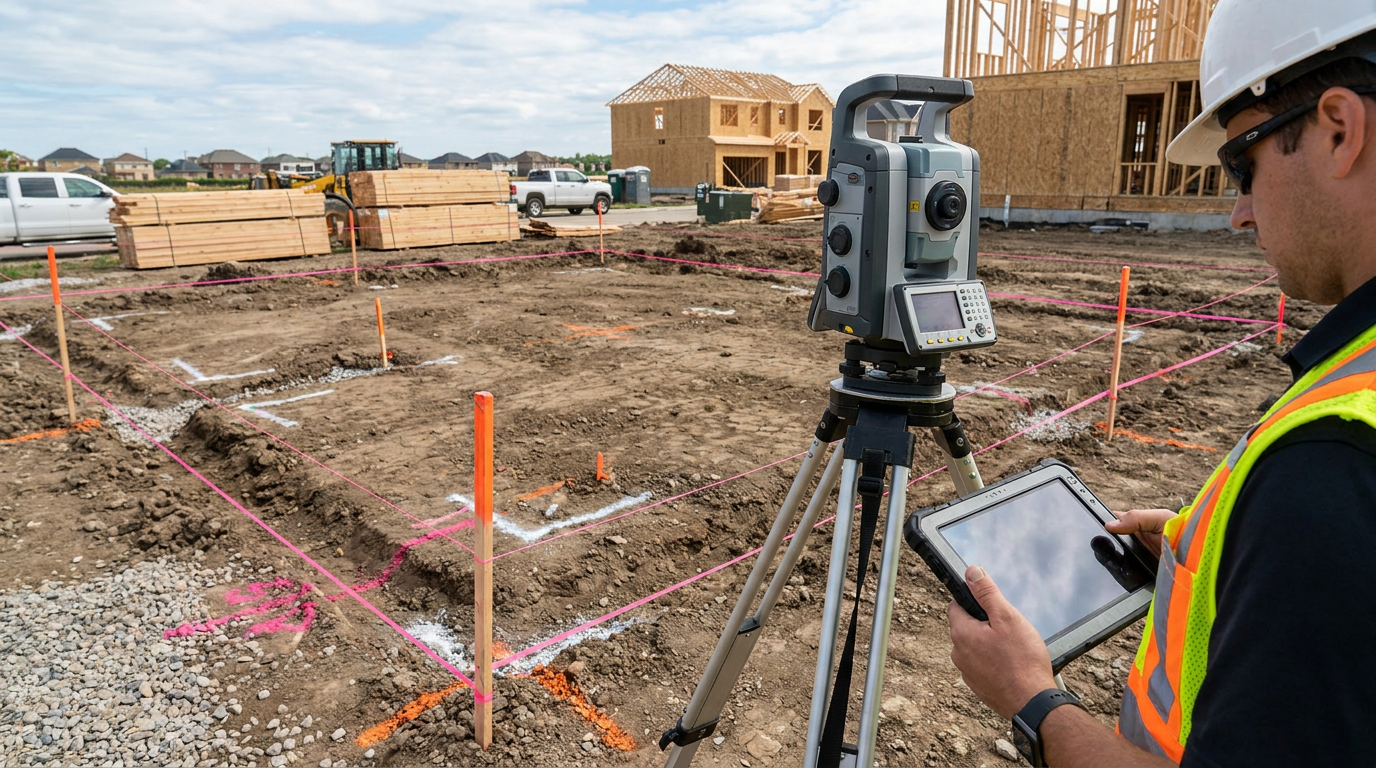
On a residential project, this might include robotic surveying and layout equipment that marks points more accurately than manual tape-based methods. It can include machine-guided excavation that follows digital site plans with tighter tolerances. It can also include robots in a prefab facility building wall panels, floor cassettes, roof assemblies, or modular units. In renovation work, drones and scanning systems may assist with inspection, measurement, and progress verification.
The important thing to understand is that these technologies are usually part of a system rather than a standalone miracle machine. The best results often happen when robotics is tied to digital design tools such as Building Information Modeling, or BIM, along with prefabrication and disciplined project management. That connection between design data and machine execution is where a lot of the efficiency comes from. If the plans are coordinated well, the machine has a better chance of doing the work accurately the first time.
Homeowners should also know what robotic construction is not. It is not a guarantee of lower cost on every project. It is not proof that a builder is more skilled. It is not a way to eliminate the need for good supervision, code compliance, inspections, or quality control. Most of all, it is not a replacement for the judgment of experienced tradespeople. The strongest current model is human crews supported by machines and software, not jobsites with no people.
Why the construction industry is turning to robotics
Anyone who has spent time around building projects knows the same problems keep showing up. Labor shortages leave schedules exposed. Weather disrupts progress. Trade coordination breaks down. Materials arrive late or get damaged. A small layout error in one phase causes expensive corrections in the next. These are ordinary jobsite problems, but when they stack up, they create very real cost overruns for the owner.
Robotics is attractive because it targets some of those weak points directly. A machine does not get tired laying out hundreds of repeated points. A guided earthmoving system can hold grade more consistently than rough manual work. A prefab line with robotic assistance can cut and assemble components in a controlled environment with less waste and fewer weather delays. Inspection drones can identify issues early, before they turn into hidden defects or end-of-project surprises.
There is also pressure from affordability. In North America, many homeowners and buyers are dealing with high construction costs, tight labor markets, and long build timelines. Builders are looking for methods that improve throughput and reduce dependency on finding large numbers of skilled workers for every repetitive task. Robotics does not solve the labor shortage by itself, but it can help crews do more with the people they have.
The trend is not isolated to construction either. The International Federation of Robotics has reported strong growth in professional service robots and continued scale in industrial robotics worldwide. In 2023, more than 205,000 professional service robots were sold globally, and factory automation reached over 4.28 million operating industrial robots worldwide. Construction is not at that level of adoption, but it does benefit from the broader development of sensors, mobile robotics, AI guidance, and control systems already proven in other sectors.
Where homeowners are most likely to see robotic construction in real life
The biggest misconception is that homeowners need to look for a company promising a fully robot-built home. In reality, the value is usually in selected tasks. The current sweet spot for robotics is work that is repetitive, dangerous, precision-sensitive, or easier to perform in a controlled environment. Those are the areas where machines can create the clearest benefit without trying to automate the whole project.
Surveying, layout, and site measurement
One of the earliest and most practical uses of robotics in residential work is digital layout. Robotic total stations, laser-guided systems, drones, and scanning equipment can help transfer design dimensions to the job site with better consistency. That may not sound exciting, but layout errors can be expensive. If a foundation is out of position, if framing lines drift, or if openings are marked incorrectly, the mistake can ripple through the rest of the project.
For homeowners, accurate layout means fewer hidden problems later. Cabinet runs fit better, walls align properly with structural and mechanical systems, and prefab components are more likely to install without field modifications. This is one of those behind-the-scenes improvements that rarely makes headlines but can quietly improve project quality from the ground up.
Excavation, grading, and site preparation
Autonomous or semi-autonomous earthmoving equipment is another practical use case. Site prep work depends heavily on grade accuracy, drainage planning, and efficient handling of soil. Machine-guided systems can help operators cut and fill to plan with greater precision, which is useful on projects involving foundations, driveways, retaining areas, and stormwater control. For a homeowner, better site prep can reduce later problems like drainage failures, settlement issues, and rushed corrective work.
This is also a good example of how robotics supports rather than replaces people. A skilled operator still matters. The machine may follow a digital model or provide guidance, but someone still needs to manage site conditions, safety, and judgment calls. Good technology in poor hands does not produce good work.
Prefabrication and modular construction
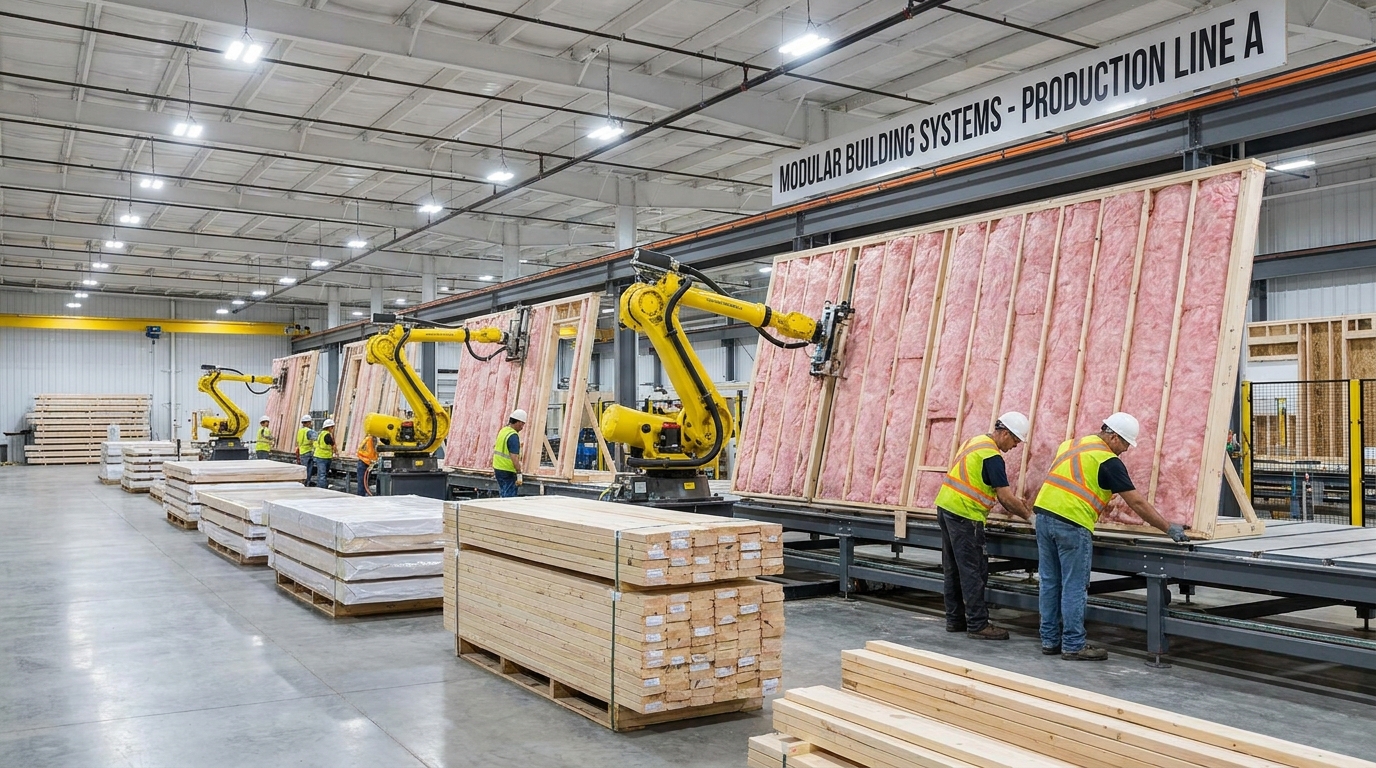
If there is one area where robotic construction already makes the most sense for homeowners, it is off-site manufacturing. Robots are easier to use in factories than on exposed, messy, constantly changing job sites. In a prefab plant, wall panels, roof sections, and even full modules can be cut, assembled, inspected, and moved with much tighter control than in open-air construction.
That matters because controlled environments reduce weather exposure, improve repeatability, and make quality checks easier to standardize. Robotic cutting, fastening, material handling, and assembly can help produce more consistent parts, which can shorten installation time once the components arrive on site. Homeowners considering accessory dwelling units, additions, panelized homes, or modular houses should pay close attention to how much of the project is built off-site and what automation is used there.
Repetitive trade work
Some trade tasks are repetitive enough to be good candidates for robotic assistance. Bricklaying, drilling, cutting, rebar tying, and certain welding operations can benefit from automation where the conditions are suitable. In residential work, these systems are still more selective than universal, but they are gaining relevance in developments with repeated units or similar building details. The benefit is usually consistency and speed, not magic.
Homeowners should be realistic here. A robot may lay brick efficiently on a straightforward wall section, but details, corners, penetrations, weather changes, and jobsite irregularities still require experienced masons and supervisors. The practical value is in reducing labor strain on repeat work so skilled workers can focus where their judgment matters most.
Inspection, progress tracking, and quality control
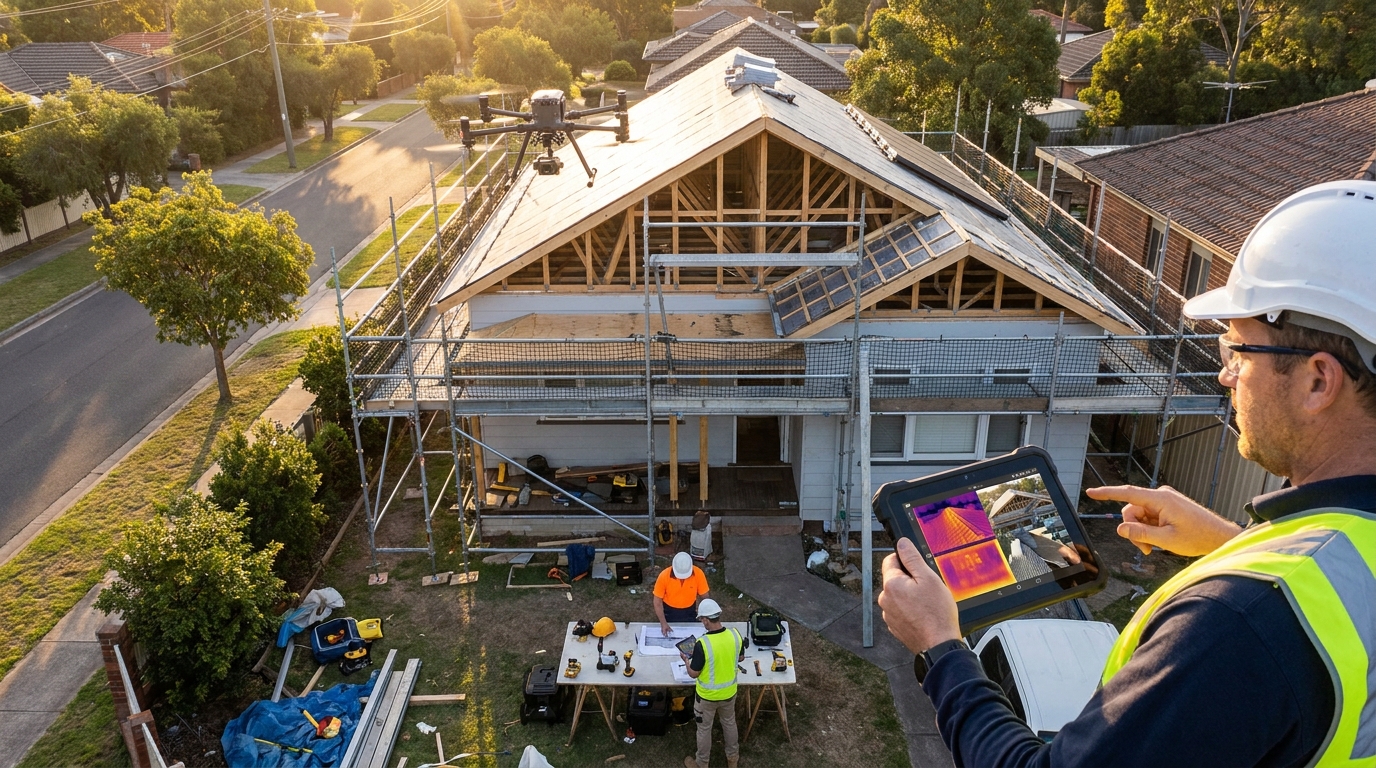
Drones, mobile scanners, and sensor-based inspection tools are becoming more useful in both new construction and renovation. They can document roof conditions, exterior work, difficult-to-access elevations, and progress against design plans. When paired with digital models, these tools can flag deviations early. That gives builders a chance to correct issues before finishes cover them up and before change orders get more expensive.
For homeowners, better inspection tools can translate into clearer communication. Instead of vague site updates, a contractor may be able to show scan data, imagery, or progress verification that supports the schedule and identifies problems honestly. Transparency does not depend on robots, but good technology can make transparency easier.
How robotic construction can save homeowners money
Homeowners usually ask the same question first: does this lower the cost? The honest answer is sometimes, but not always in the way people expect. Robotic construction is often less about dramatically slashing the initial quote and more about controlling the full project cost by reducing errors, delays, waste, and uncertainty. That distinction matters because many expensive problems in homebuilding do not come from the base estimate. They come from what goes wrong after work starts.
Consider a typical chain reaction on a traditional project. A layout mistake causes framing to shift slightly. Mechanical runs no longer align as planned. A soffit has to be added, cabinet dimensions change, and finish trades spend extra time compensating. The original mistake may have taken minutes to make, but the correction can ripple through multiple trades. Better digital coordination and machine-guided execution can reduce those kinds of avoidable disruptions.
Robotics can also help reduce material waste. Precision cutting and controlled manufacturing are often more efficient than on-site cutting under variable conditions. Fewer damaged parts, fewer remakes, and fewer over-orders can tighten the budget even when the tools themselves are expensive. Over a full project lifecycle, those efficiencies may show up as lower contingency spending and fewer unpleasant surprises.
Schedule compression is another cost factor. Time matters because longer projects mean more site overhead, more financing exposure, more temporary living costs if the homeowner is displaced, and more opportunity for weather or labor disruptions. If robotic fabrication or layout shortens critical path activities, the savings can be meaningful even if the equipment itself is costly. That said, homeowners should be cautious of anyone promising blanket savings without explaining exactly where those savings come from.
Where the technology still has limits
Construction is not a factory, at least not most of the time. Every residential lot is a little different. Soil conditions vary. Access can be tight. Existing homes hide surprises behind walls and under floors. Weather changes the sequence of work. Local code requirements and inspection practices differ by region. These are the practical reasons robotic construction is still an emerging toolset rather than the default way homes are built.
Machines perform best when tasks are repeatable and conditions are somewhat controlled. That is why prefabrication has moved faster than fully autonomous on-site homebuilding. Once you take the work outdoors and ask the machine to react to mud, wind, uneven surfaces, incomplete information, and constant trade interference, the challenge increases fast. That does not make robotics unhelpful. It just means deployment has to be targeted and realistic.
There is also the issue of integration. Buying or renting advanced equipment is only one piece of the puzzle. A builder needs trained operators, compatible design workflows, reliable maintenance, and crews who understand how to work around the technology without losing productivity. Poor integration can erase expected gains. A company using robots badly can be less efficient than a company using traditional methods well.
For homeowners, this means the real question is not whether a contractor uses robotics. It is whether that contractor knows how to use it to improve your project. The process, the people, and the planning still matter more than the gadget.
Safety, code compliance, and the reality of risk
Some people assume robots automatically make construction safer. There is truth in that, but only part of the story. Automation can reduce exposure to repetitive strain, high-risk access, heavy lifting, and certain dangerous site conditions. Drones can inspect areas without sending a worker onto a steep roof. Automated systems can handle some hazardous or tiring tasks more consistently than manual methods.
But robotics also creates new risks. OSHA has stated that there are currently no specific OSHA standards for the robotics industry overall, and it notes that many robot accidents happen during non-routine operations such as programming, maintenance, testing, setup, or adjustment. On construction projects, those are exactly the kinds of moments when systems are being adapted to changing conditions. That means machine guarding, lockout practices, training, supervision, and clear safety procedures still matter a great deal.
For Canadian contexts and many North American projects more broadly, robotic construction must still fit within existing building code and inspection frameworks. A robot does not exempt a project from structural requirements, fire separation rules, energy code compliance, or inspection signoffs. In practical terms, the technology must support code-compliant work, not bypass it. Good builders understand that automation is a tool inside the existing regulatory system.
Practical takeaway: A safer project is not one with more machines. It is one where the machines, crews, plans, and safety procedures are properly coordinated.
Common misconceptions homeowners should ignore
Robotic construction attracts strong opinions because people tend to picture extremes. Either they imagine a flawless machine-built future or they dismiss the whole idea as hype. The truth sits in the middle. Homeowners are best served by understanding the technology for what it is today, not what marketing videos suggest.
The first misconception is that robots are about replacing all trades. They are not. The most successful projects still rely on experienced builders, site supervisors, inspectors, and specialized tradespeople. Robotics works best when it takes over parts of the work that benefit from repetition, precision, or reduced exposure to hazards, while people handle judgment, coordination, and problem solving.
The second misconception is that robotics automatically lowers price. It may, but it may also increase upfront cost because of equipment, training, software, maintenance, and workflow changes. The real value is often in predictability and reduced rework rather than a dramatically cheaper sticker price. A homeowner who only compares bid totals may miss the bigger difference in schedule reliability and quality control.
The third misconception is that this technology only matters on huge commercial jobs. That used to be more true than it is now. Residential owners are increasingly touched by robotics through panelized construction, modular fabrication, digital layout, drones, scanning, and machine-guided site work. You may never see a humanoid robot on your property, but the walls, measurements, or site prep on your project could still be shaped by automation.
What this means for renovations, additions, and custom homes
Robotic construction is often easier to understand in new builds, but homeowners planning renovations should pay attention too. Renovation projects are notorious for uncertainty. Existing structures may be out of square, hidden systems may not match old drawings, and selective demolition can expose unexpected problems. Technologies such as laser scanning, drone imaging, and digital measurement can improve planning before major work starts. Better information at the beginning usually leads to fewer mid-project surprises.
Additions can also benefit from off-site fabrication. Wall panels or roof components built in controlled conditions can reduce the amount of time the existing house is exposed to weather. That matters if a family is living in the home during construction. Faster enclosure can mean less disruption, fewer moisture risks, and tighter schedule control. In these cases, robotic construction is not always visible on site, but it may still be one of the reasons the job goes more smoothly.
For custom homes, robotics can help where design complexity meets production discipline. A custom house is not the easiest environment for full automation, but digital coordination, guided layout, controlled component fabrication, and better inspection tools can all support higher quality execution. The most practical builders are not trying to force a robotic process onto every detail. They are choosing the methods that fit each part of the work.
Questions homeowners should ask a builder using robotics
It is easy for contractors to use technology as a selling point because it sounds advanced. Homeowners should slow that conversation down and ask practical questions. The goal is not to be impressed by equipment. The goal is to understand how the method improves your project specifically.
-
Which parts of my project will actually use robotic or automated methods, and why are those tasks a good fit?
-
How does this approach affect schedule, accuracy, waste, safety, and quality control compared with your standard process?
-
Who operates the equipment, and what training or experience do they have with it?
-
How is the robotic workflow connected to the design documents, field measurements, and any prefab components?
-
What happens if the equipment is unavailable, breaks down, or the site conditions make automation impractical?
-
Will this change the inspection process, code documentation, or warranty coverage in any way?
-
Can you show examples of past residential projects where this method reduced rework or improved the outcome?
A capable builder should be able to answer those questions in plain language. If the explanation stays vague, or if the sales pitch leans on buzzwords without connecting them to your job, that is a red flag. Good technology should make a process clearer, not harder to understand.
The role of BIM, digital twins, and connected workflows
One reason robotics is becoming more useful is that it is increasingly connected to digital project data. Building Information Modeling helps organize geometry, dimensions, assemblies, and coordination between systems. When that information feeds layout tools, fabrication equipment, or inspection software, the project can move with less guesswork. The machine is not creating quality on its own. It is executing or validating against better information.
Digital twins and related tracking systems push that idea further by helping teams compare what was planned with what was actually built. In residential work, the use of full digital twins is still selective, but the underlying concept is growing. Better scans, progress records, and model-based verification can make it easier to catch discrepancies before they become expensive corrections. That is especially useful on projects with prefab components, tight tolerances, or multiple subcontractors working in sequence.
NIST has researched autonomous construction for years, including work on crane automation, metrology, 3D imaging, object tracking, and sensor-based data exchange. That kind of research matters because it shows the field is not just about machines moving materials. It is also about measurement, coordination, and the reliable transfer of information between planning and execution. For homeowners, that may eventually mean more predictable outcomes as these systems mature.
What the near future looks like
The next phase of robotic construction is likely to be less dramatic and more useful. Instead of waiting for fully autonomous houses, homeowners will probably see more mobile robots, more AI-guided tools, better drone inspections, stronger prefab integration, and more collaborative systems that work alongside crews. In other words, the technology will become normal before it becomes flashy.
That trend matches what is happening across automation more broadly. The International Federation of Robotics has highlighted growth in service robots and continued expansion of industrial automation, while construction technology is moving toward more adaptable systems rather than fixed machines built for one narrow task. Physical AI and collaborative robots may make jobsite automation more practical over time, especially as sensing and navigation improve. But even then, the best results will still depend on buildable design, disciplined supervision, and skilled labor where it counts.
For residential construction, prefab and modular methods are likely to remain one of the biggest beneficiaries. Controlled environments are simply easier for automation. As panelized and modular home systems improve, homeowners may see more options that combine factory precision with faster site assembly. That does not eliminate the need for foundations, site work, utility connections, and finishing trades. It just shifts more of the high-precision repetitive work into a setting where machines can do it well.
Should homeowners seek out robotic construction?
In most cases, homeowners should not shop for robotics as an end in itself. They should shop for a well-run project. If robotic methods are part of that project and clearly improve the work, that is a real advantage. If they are only being used as a marketing angle, they add little value. What matters most is whether the builder can explain how the technology helps deliver a better result on your lot, with your budget, under your local code requirements.
There are certain situations where it makes particular sense to pay attention. If your project involves modular or panelized construction, repetitive structural elements, precise site grading, difficult inspection conditions, or a tight schedule, robotic methods may offer measurable benefits. If your project is highly one-off, deeply dependent on hand craftsmanship, or taking place in a constrained and unpredictable existing structure, the gains may be narrower and more selective.
The best homeowner mindset is practical, not ideological. Do not assume newer means better, and do not assume traditional means safer. Ask how the work will be measured, how errors will be prevented, how schedules will be protected, and how quality will be verified. If robotics helps answer those questions with more confidence, then it is worth serious consideration.
Final thoughts
Robotic construction is transforming building methods, but not in the simplistic way people often imagine. It is not replacing the whole construction process with machines. It is improving specific parts of the process where precision, repetition, safety, and efficiency matter most. For homeowners, that can mean fewer mistakes, better coordination, more predictable schedules, and tighter control over the hidden costs that often derail projects.
The technology is most mature today in surveying, layout, site preparation, prefab manufacturing, repetitive trade assistance, and inspection. Those are practical areas with clear homeowner value. At the same time, robotics still comes with limits, training needs, safety requirements, and integration challenges. It remains a toolset, not a shortcut.
If you are planning a build or renovation, the right question is not whether your house will be robot-built. The right question is whether the team you hire uses people, machines, and information in a disciplined way that produces better work. When that balance is done right, robotic construction stops being a futuristic concept and starts being what homeowners actually need: a smarter, steadier way to build.



No Comment! Be the first one.