



Green robotics can sound like a concept reserved for research labs, futuristic factories, or highly specialized environmental projects. In reality, it is becoming much more practical than that. From robot vacuums and lawn mowers to advanced recycling systems and precision agriculture tools, robotics is beginning to shape the way people use energy, manage waste, and maintain homes and communities. The most important shift is that the conversation is no longer just about what a robot does. It is also about how that robot is designed, how much energy it uses, how long it lasts, and what happens when it reaches the end of its useful life.
Table Of Content
- What green robotics really means
- Why the idea matters now
- Green robotics in the home
- How homeowners can judge whether a consumer robot is truly sustainable
- Waste sorting and recycling: one of the clearest green robotics success stories
- Why robotic recycling fits the circular economy
- Precision agriculture: where robotics can reduce chemicals and improve efficiency
- What this means for household sustainability
- Green robotics in buildings and shared spaces
- Common misconceptions about green robotics
- How to bring green robotics into daily life thoughtfully
- Practical questions to ask before buying
- The future of green robotics
- A balanced way to think about green robotics
That broader view matters because sustainability is rarely created by a single gadget or a single purchase. It is usually created by a pattern of better decisions over time. Green robotics fits into that idea when it helps reduce material waste, lower chemical use, improve efficiency, support repair and recovery, and avoid unnecessary consumption. A robot that saves time but burns through batteries, cannot be repaired, and quickly ends up as electronic waste may not be very green at all. A robot that is efficient, durable, repairable, and integrated into a smarter system can be a meaningful part of a lower impact lifestyle.
For homeowners, the value of green robotics is often incremental rather than dramatic. That is not a weakness. In sustainability, small efficiencies add up when they happen consistently across energy use, cleaning, landscaping, water management, food systems, and waste recovery. This is why green robotics is worth understanding now. It offers a grounded way to think about clean technology, not as a distant ideal, but as a practical toolset that can improve daily life while supporting broader environmental goals.
This article looks at what green robotics actually means, where it is already making a difference, and how to evaluate whether a robotic system is genuinely sustainable. It also explores how these technologies fit into larger ideas like the circular economy, climate smart agriculture, and smarter building operations. The goal is not to convince readers that every robot belongs in every home. It is to show where the technology is useful, where caution is warranted, and how to make choices that are both practical and thoughtful.
What green robotics really means
At its simplest, green robotics refers to robots that reduce environmental impact across their full life cycle. That includes the materials used to build them, the manufacturing process, energy consumption during operation, maintenance needs, software support, repairability, and end of life recovery. A 2025 study published in Scientific Reports frames green robotics as a whole cycle sustainability approach rather than a narrow label for machines doing environmental work. This is an important distinction because a robot that sorts recycling or weeds crops is not automatically sustainable if the machine itself is inefficient or disposable.
That life cycle perspective makes green robotics more rigorous and more useful. It asks a few practical questions. Does the robot reduce waste compared with the process it replaces. Does it use energy efficiently. Can its components be repaired or updated rather than discarded. Are batteries manageable and replaceable. Is the machine built from materials that can be recovered, recycled, or responsibly processed later. These questions move the conversation away from marketing language and toward measurable outcomes.
In everyday terms, green robotics is best understood as a balance between function and footprint. A robot may offer convenience, but its environmental value depends on whether it creates a net reduction in resource use or emissions over time. That is why the strongest green robotics applications tend to be the ones that improve precision, reduce contamination, minimize overuse, or support circular systems. When a robotic solution makes a process more exact, more efficient, and less wasteful, the sustainability case becomes much stronger.
Green robotics is not about adding automation for its own sake. It is about designing and using automation so that less energy, fewer materials, and fewer chemicals are needed over the long term.
Why the idea matters now
Several trends are pushing green robotics into the mainstream. First, machine vision and machine learning have improved enough that robots can identify objects, materials, and plant differences with much greater accuracy than before. Second, labor shortages and rising service costs have made automation more attractive in sectors like farming, waste management, and building operations. Third, governments and institutions across North America are increasingly supporting circular economy strategies, cleaner procurement, and technology that can reduce emissions and material waste.
There is also a more practical reason this matters now. Many sustainability challenges are no longer abstract. Communities are dealing with contaminated recycling streams, expensive waste hauling, chemical intensive landscaping, water stress, and pressure to make buildings more efficient. Green robotics offers tools that can help with these very ordinary problems. In that sense, it is less about a technological revolution and more about a quiet improvement in how routine tasks are handled.
The North American policy environment adds to that momentum. The U.S. Environmental Protection Agency has supported robotic waste sorting and material recovery technologies that aim to reduce contamination and lower processing costs. One 2024 EPA case release noted that an autonomous robotic sorting system could potentially reduce recycling costs for cities by 13 percent while improving sorting accuracy. In Canada, federal agriculture initiatives have highlighted robotic weeders and machine learning tools that help distinguish crops from weeds, supporting more climate smart farming practices. Public funding has also supported Canadian companies developing waste management robotics, which signals that clean technology and robotic sorting are increasingly seen as connected priorities.
Green robotics in the home
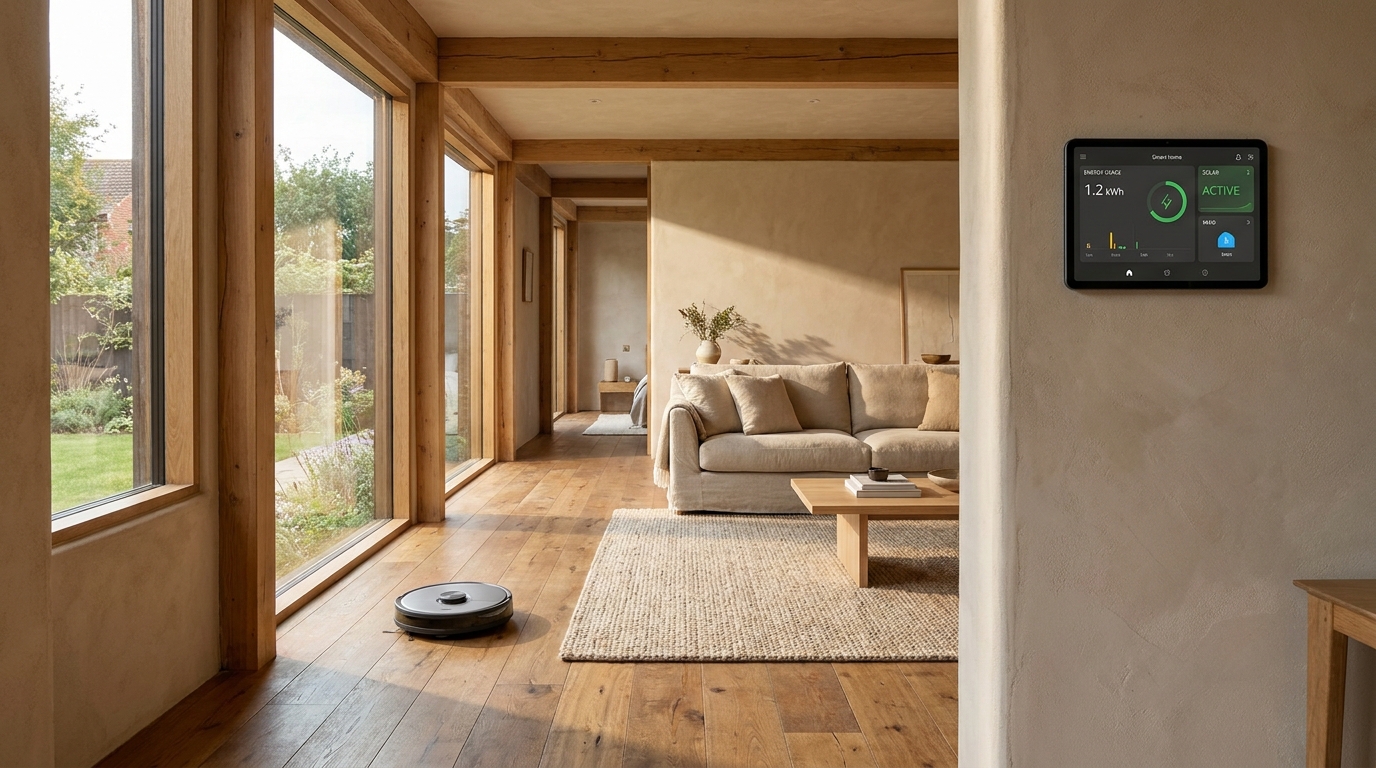
For most people, the most visible form of green robotics is in the home. Robot vacuums, robotic lawn mowers, pool cleaners, and smart home systems all promise convenience. Some also promise efficiency. The sustainability case for these devices is real, but it is usually modest and dependent on how the product is used. A household robot becomes environmentally valuable when it reduces overcleaning, optimizes timing, avoids excess water or chemicals, and lasts long enough to justify the materials and energy invested in making it.
Take robot vacuums as an example. On their own, they are not a climate solution. But in a well chosen setup, they can contribute to a lower waste routine. Because they clean frequently and in smaller passes, they may help maintain floors with less intensive deep cleaning, less disposable dusting material, and more targeted use of electricity. Their sensors and scheduling features can also make cleaning more efficient by focusing on high traffic areas rather than the whole house every time. The benefit is not dramatic, but it is sensible, especially in homes where regular maintenance helps extend the life of flooring and indoor finishes.
Robotic lawn mowers offer a similar pattern. Their strongest sustainability benefit tends to come from electric operation and consistent light trimming, which can support healthier lawns and reduce the need for gasoline powered mowing in some settings. If paired with lower water landscapes, native planting, and thoughtful yard design, they can become part of a broader low impact approach to outdoor maintenance. Still, the value depends on product quality, battery lifespan, and whether the mower replaces a more resource intensive method rather than simply adding another layer of consumption.
Pool cleaners and smart irrigation controllers can also play a role. When robotic cleaning and automated scheduling reduce unnecessary pump time, water waste, or chemical use, the environmental benefit becomes more concrete. This is especially true in regions where water and electricity use are major household concerns. The robot is not green because it is new or advanced. It is green when it helps the household use less while maintaining the same or better result.
How homeowners can judge whether a consumer robot is truly sustainable
A practical approach is to look beyond branding. Many products are marketed with eco friendly language, but the details matter more than the label. Before buying a robotic device, it helps to compare it against the routine it would replace. If the old routine already uses very little energy and material, the robotic upgrade may not improve much. If the routine is repetitive, inefficient, or dependent on consumables, automation may create a clearer environmental gain.
There are a few useful checkpoints to keep in mind.
- Battery life and replacement: A robot with a short battery lifespan or a sealed battery that cannot be replaced can generate unnecessary waste.
- Repairability: Devices with accessible parts, service options, and software support tend to have a much better long term sustainability profile.
- Energy efficiency: Lower power use, smart scheduling, and targeted operation matter more than flashy features.
- Durability: A robot that lasts many years is usually far more sustainable than a cheaper model replaced every two or three years.
- Actual resource savings: The strongest case is when the robot reduces water, chemicals, emissions, or waste in measurable ways.
These considerations align with a larger shift in clean technology thinking. Good products should not just be efficient when they are new. They should also be serviceable, upgradeable, and worth keeping in use. That mindset supports both sustainability and household value.
Waste sorting and recycling: one of the clearest green robotics success stories
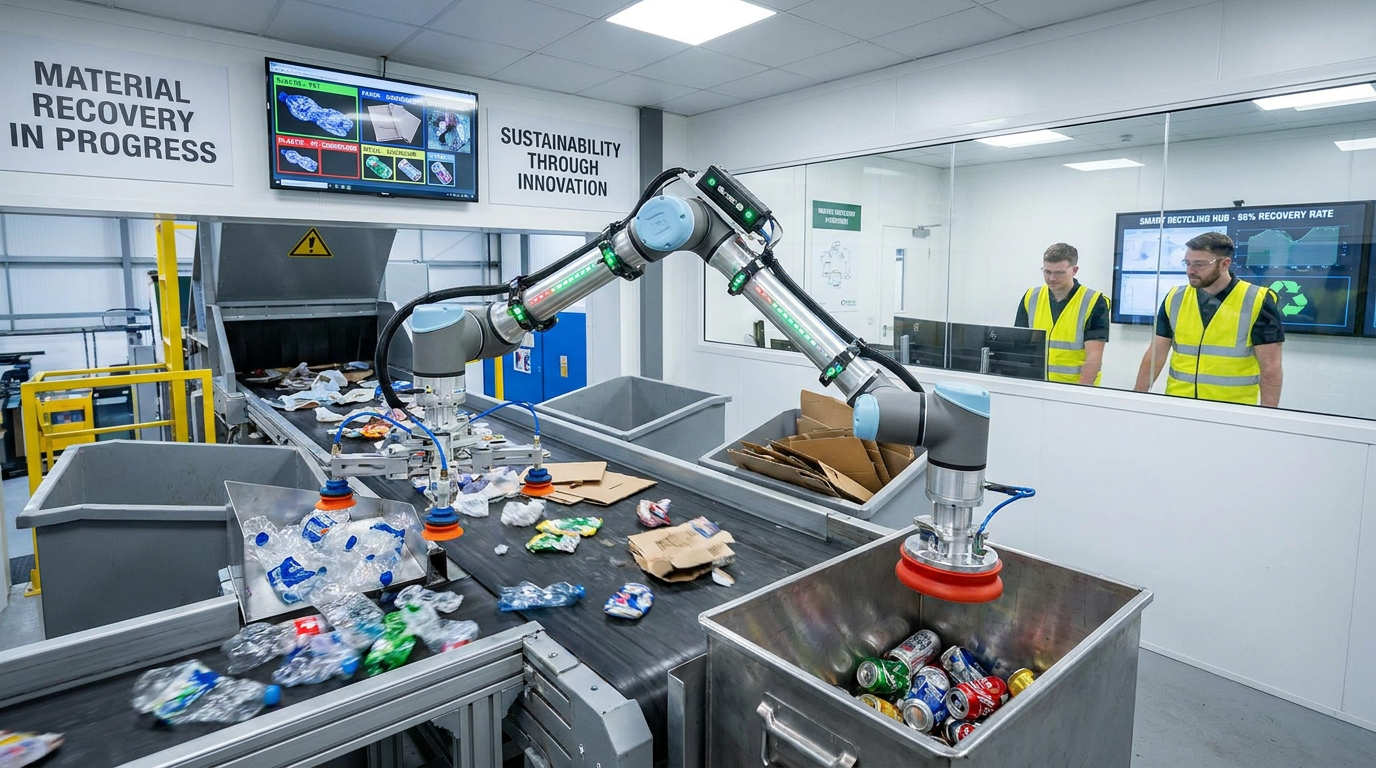
Among all current applications, robotic sorting in waste and recycling may be one of the strongest examples of green robotics delivering measurable benefits. Recycling systems often struggle with contamination, inconsistent sorting, labor constraints, and rising operating costs. When recyclable material is contaminated by food waste, plastic film, or incorrect items, valuable resources can be lost and more material ends up in landfill. Robots equipped with machine vision and AI can help identify and separate materials more accurately, making recovery systems more effective.
The EPA has supported examples of smart waste sorting and autonomous robotic sorting that aim to improve diversion rates and lower recycling costs. This matters because material recovery is directly tied to climate impact. The EPA notes that recycling and material recovery help slow climate change by reducing the need to extract and process new natural resources, activities that account for a large share of global greenhouse gas emissions. In other words, better sorting is not just a waste management issue. It is a resource and emissions issue too.
For homeowners, this may feel distant because few people have a sorting robot in their garage. But the local effect is significant. Robotic sorting is especially relevant in airports, hospitals, stadiums, campuses, and multi unit residential buildings where contamination is common and volumes are high. When these systems work better, communities can recover more usable material, reduce hauling and disposal costs, and improve the economics of recycling itself. That can strengthen local waste systems that every household depends on.
Why robotic recycling fits the circular economy
The circular economy is built around keeping materials in use for as long as possible through reuse, repair, recovery, and smarter design. Robotic sorting supports that goal by helping valuable materials stay in circulation instead of being downgraded, contaminated, or discarded. This is one reason governments and institutions are paying attention. Better recovery systems reduce dependence on virgin resources and improve the viability of recycling markets.
Canada’s sustainability framework includes circular economy, green procurement, and electronic waste considerations, all of which are relevant to robotics and batteries. This is a useful reminder that green robotics does not exist on its own. It works best when it is part of a broader system that includes better packaging design, public education, service infrastructure, and responsible end of life management. A sorting robot can improve outcomes, but it does not remove the need for households to recycle properly or for producers to reduce hard to recycle materials.
There is also a social and operational dimension. In many facilities, robotics can improve worker safety by handling repetitive or hazardous sorting tasks while people focus on oversight, maintenance, quality control, and system management. That is an often overlooked benefit. Sustainability is not only about carbon and materials. It is also about building systems that are safer, more resilient, and more realistic for the people who operate them.
Precision agriculture: where robotics can reduce chemicals and improve efficiency
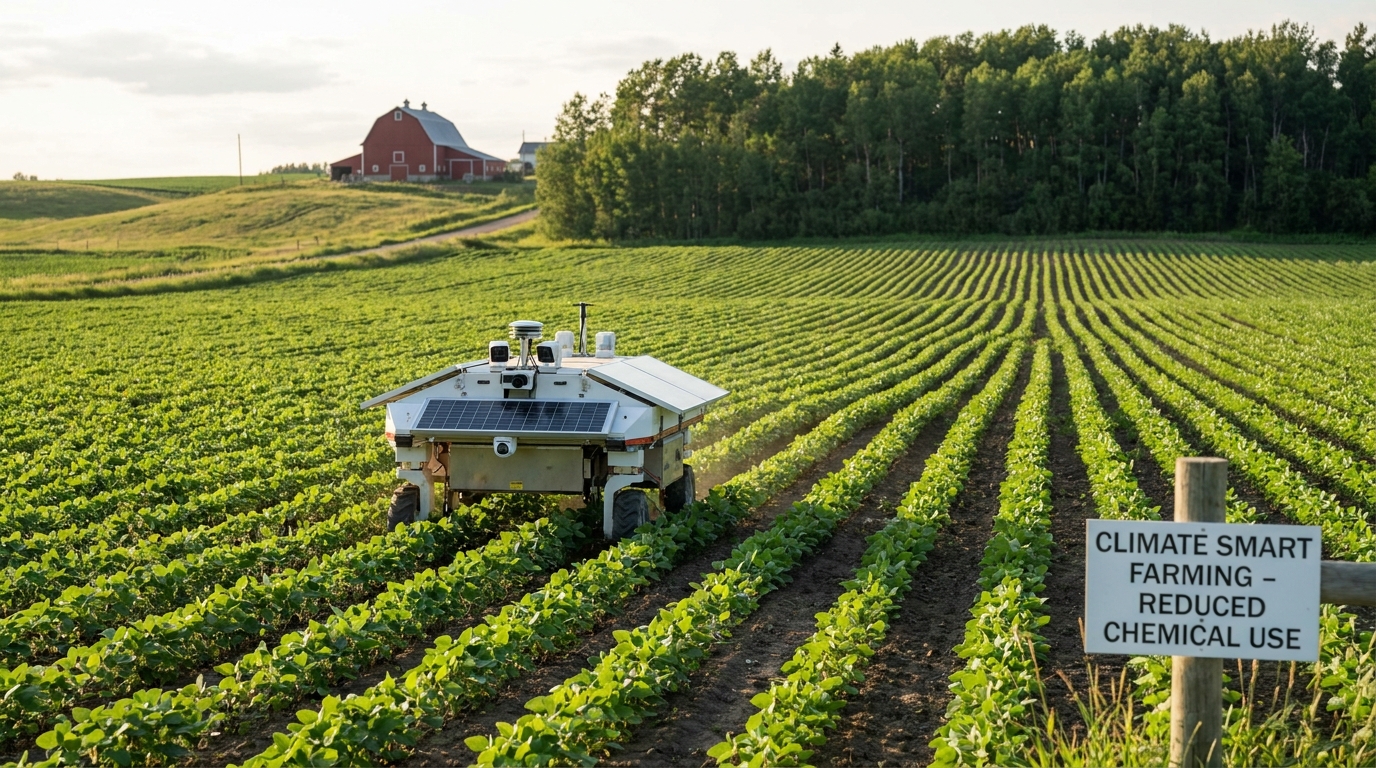
Agriculture may seem far removed from homeowners, yet it touches daily life through food prices, local landscapes, water use, and chemical exposure. Green robotics in farming is becoming one of the most promising areas because the environmental gains can be specific and measurable. Precision agriculture robots can detect weeds, target interventions, monitor crops, and reduce unnecessary inputs. Instead of treating an entire field uniformly, robotic systems can respond to what is actually happening in each row or section.
Canada’s federal agriculture department has highlighted automation and robotics for sustainable farming, including robotic weeders and machine learning systems that can distinguish weeds from crops. The practical benefit is straightforward. When a machine can identify weeds more accurately, farmers may be able to reduce herbicide use, lower labor pressure, and improve crop management. That supports climate smart agriculture while also addressing one of the most difficult realities in food production, which is the need to produce reliably under increasing economic and environmental stress.
This does not only apply to very large industrial farms. Smaller farms, specialty growers, and high value crop producers can also benefit, especially where labor is scarce or chemical reduction is a priority. Precision tools are often most helpful in situations where manual work is intensive and margins are tight. In those settings, robotics can support a more careful use of inputs rather than a blanket increase in mechanization.
What this means for household sustainability
Most homeowners are not buying field robots, but the downstream impact is still relevant. Cleaner farming methods can reduce chemical loads, preserve soil health, and support more resilient local food systems. Home gardeners may also see smaller scale versions of this logic in the future through smart garden tools, soil sensing, and targeted irrigation technologies. The broader point is that robotics can improve sustainability when it increases precision. The less guesswork there is, the less waste tends to follow.
Canada’s Sustainable Canadian Agricultural Partnership, a five year investment valued at $3.5 billion, reflects how seriously this innovation pathway is being treated. Funding for agricultural technology, waste reduction, and resilience suggests that green robotics is increasingly linked to food security as well as environmental performance. For readers interested in low impact living, this matters because sustainability is always connected across systems. The health of homes and communities is tied to the health of the farms, landscapes, and supply chains that support them.
Green robotics in buildings and shared spaces
Beyond homes and farms, green robotics is becoming useful in the buildings people use every day. Commercial properties, hospitals, schools, airports, and residential towers all face similar pressures. They need to manage energy, cleaning, waste, maintenance, and occupant health more efficiently. Robotics can support these operations by automating repetitive tasks, gathering data, and reducing overuse of resources.
In cleaning and maintenance, robotic floor scrubbers and autonomous cleaning systems can reduce water, detergent, and labor intensity when they are programmed correctly. In landscaping, robotic equipment can support quiet electric maintenance schedules in dense communities. In building systems, robotics works alongside sensors and smart controls to detect leaks, monitor performance, and identify inefficiencies before they become larger problems. These applications may not seem glamorous, but they align well with sustainability because they focus on doing ordinary tasks with fewer inputs and better timing.
Multi unit residential buildings are especially interesting because they sit between private homes and public infrastructure. A single building may benefit from robotic cleaning in common areas, smart waste sorting at loading docks or disposal rooms, and better mechanical system monitoring that reduces wasteful energy use. When these improvements are shared across dozens or hundreds of households, the effect can be meaningful. This is often where clean technology becomes most cost effective, not because it is flashy, but because it improves systems at scale.
Common misconceptions about green robotics
One of the biggest misconceptions is that any robot used in an environmental context must be sustainable. That is not always true. A robot may perform a green sounding task and still have a poor environmental profile if it uses too much energy, relies on short lived components, or is difficult to repair. The concept only holds when the full system shows a genuine reduction in impact over time.
Another misconception is that automation automatically leads to sustainability. In reality, automation can increase waste if it encourages unnecessary purchases, rapid product turnover, or software driven obsolescence. A household filled with disposable smart devices is not necessarily a low impact household. Technology is most sustainable when it replaces a clearly more wasteful routine or when it helps a system operate with greater precision and less excess.
There is also a tendency to overstate what consumer robots can do. A robot vacuum or robotic mower may offer incremental sustainability benefits, but they are not transformative on their own. The bigger environmental gains often come from larger systems like waste recovery, resource efficient building operations, and precision agriculture. That does not make household robots irrelevant. It simply places them in the right context. They are useful tools, not miracle solutions.
Finally, robotic recycling does not remove the need for human behavior change, education, or better product design. If packaging remains hard to recycle and households continue contaminating recycling bins, even advanced sorting systems will face limits. Green robotics works best as part of a broader pattern of smarter systems and smarter choices.
How to bring green robotics into daily life thoughtfully
For homeowners who are curious but cautious, the best approach is to start with a problem rather than a product. Ask where waste, inefficiency, or repetitive resource use is already happening. Is there overwatering in the yard. Is cleaning dependent on disposable products. Is there frequent overmowing, excessive pool chemical use, or poor energy scheduling at home. A robotic or automated solution is worth considering when it clearly addresses one of those issues and can do so efficiently over many years.
It also helps to think in layers. The most sustainable home technology choices are often the ones that build on solid fundamentals like insulation, durable materials, efficient appliances, and sensible landscape design. Robotics can enhance those systems, but it should not substitute for them. A smart irrigation device is more useful in a landscape designed for low water demand. A robotic mower is more sensible in a yard that does not require constant intervention. A cleaning robot works best in a home where durable finishes and thoughtful layout already reduce maintenance needs.
When shopping, look for brands that publish information about serviceability, replacement parts, software support, and battery access. Consider whether the device has a realistic lifespan and whether it is likely to receive updates that keep it functional and secure. Products that cannot be maintained often become waste long before their hardware is truly finished. In sustainability terms, longevity is a feature.
Practical questions to ask before buying
- Will this robot reduce electricity, water, chemicals, or disposable consumables compared with my current routine?
- Can the battery be replaced, and are replacement parts available?
- Is the device durable enough to justify the materials and energy used to manufacture it?
- Does it replace a more wasteful process, or am I adding complexity without much benefit?
- Will I realistically use its smart features, such as scheduling or targeted operation, to improve efficiency?
- What is the end of life plan for this device, especially if it contains batteries or electronics?
These are simple questions, but they tend to lead to better outcomes. They also reflect a calmer and more realistic view of sustainability, one that values usefulness and durability over novelty.
The future of green robotics
The next phase of green robotics will likely be less about standalone machines and more about integrated systems. Robots will increasingly work alongside sensors, building controls, waste management platforms, and data analysis tools that measure actual environmental performance. That means the most meaningful stories in this field will focus less on the robot itself and more on outcomes such as lower contamination rates, fewer chemical inputs, reduced hauling costs, better worker safety, and more efficient resource use.
Life cycle assessment will also become more important. As researchers and companies look more carefully at the material and energy costs of manufacturing, charging, maintaining, and replacing robots, sustainability claims will need to be more precise. This is a healthy development. It encourages better design and helps consumers distinguish between products that are genuinely useful and products that simply use green language.
In North America, the direction is already visible. AI guided sorting robots are gaining traction in recycling. Precision agriculture robots are expanding in response to labor pressure and environmental goals. Governments are supporting clean technology through grants, innovation programs, and procurement strategies. All of this suggests that green robotics is moving out of the conceptual stage and into the practical systems that shape everyday life.
A balanced way to think about green robotics
Green robotics deserves attention because it offers a very modern kind of sustainability. It is not based on perfection. It is based on better systems, better timing, better precision, and better recovery of materials and resources. That makes it especially relevant to people who want realistic ways to reduce impact without turning daily life into a constant project.
The most reassuring thing about this field is that it does not require an all or nothing mindset. Homeowners do not need to fill their homes with devices to participate in the benefits of green robotics. In many cases, the biggest gains may happen in the background through improved municipal recycling, cleaner food production, and smarter building operations. Where household devices are involved, the key is to choose carefully and expect them to earn their place through durability and genuine efficiency.
Understanding green robotics means seeing technology not as inherently good or bad, but as something that needs to be evaluated in context. When robots are designed for long life, low energy use, repairability, and measurable savings, they can support a more circular and resource conscious future. When they are treated as disposable novelties, they can easily undermine the same goals they claim to serve.
That balanced view is probably the most useful one. Green robotics is not a magic answer to sustainability challenges. It is a practical toolset that can help homes, buildings, farms, and communities waste less and operate more intelligently. Used thoughtfully, it points toward a future where technology feels less extractive, more elegant, and much more aligned with the way people actually want to live.



No Comment! Be the first one.