



Construction risk management is the process of identifying what could go wrong on a project, judging how serious each problem could become, and putting practical controls in place before problems cause injuries, delays, rework, disputes, or budget overruns. It applies whether you are renovating a kitchen, building an addition, managing a commercial fit-out, or overseeing a large capital project. Many people hear the word risk and think only of job site injuries, but safety is just one part of the picture. Construction risk also includes schedule slippage, permit delays, bad soil conditions, hidden building defects, long-lead material shortages, weather disruption, subcontractor failure, quality problems, financing pressure, and change-order disputes. On real projects these issues are connected: a late delivery can force rushed work, rushed work can create safety hazards, and both can increase cost and damage trust.
Table Of Content
- Why Risk Management Matters More Than Most People Realize
- What Construction Risk Management Actually Includes
- Start at the Earliest Stage: Planning and Design
- Questions to Ask Before Construction Starts
- How to Identify Risks Without Making It Overcomplicated
- Assess the Risk: Likelihood, Impact, and Priority
- Choose Strong Controls, Not Just Easy Controls
- Examples of Stronger Controls on Real Projects
- Risk Management During Procurement and Contracting
- Managing Risk on the Job Site Every Day
- Why Monitoring Matters More Than One-Time Assessments
- Common Construction Risks and How to Handle Them
- Real-World Examples That Show the Difference
- Digital Tools Are Helping, but They Do Not Replace Judgment
- Risk Management Through Commissioning and Closeout
- Actionable Risk Management Tips for Homeowners
- Actionable Risk Management Tips for Construction Professionals
- The Bottom Line
That is why effective risk management needs to run through the full project lifecycle. It starts before drawings are finalized and continues through design, procurement, mobilization, site work, construction, commissioning, and closeout. Canadian guidance from the Canadian Centre for Occupational Health and Safety emphasizes that risk assessment works best when done early at the planning or design stage, and that it should be repeated when work changes or non-routine tasks appear. In construction, conditions change constantly, so risk management has to stay tied to the actual work, not just the original paperwork.
That practical approach matters now more than ever. Construction across Canada and North America continues at a very large scale, and Statistics Canada has reported major investment levels in building construction and non-residential capital spending, which means the sector carries a large base of financial and safety exposure. At the same time, industry outlooks continue to point to tariffs, inflation, elevated rates, labor shortages, material volatility, and supply chain disruption. In plain terms, there is more money at stake, less room for error, and more reasons to plan ahead.
This article breaks risk management down into real job-site terms. It covers how to identify risk, how to assess it, how to choose stronger controls, and how to manage changing conditions as the work moves forward. It is written for homeowners who want to avoid nasty surprises and for construction professionals who need practical systems that hold up in the field.
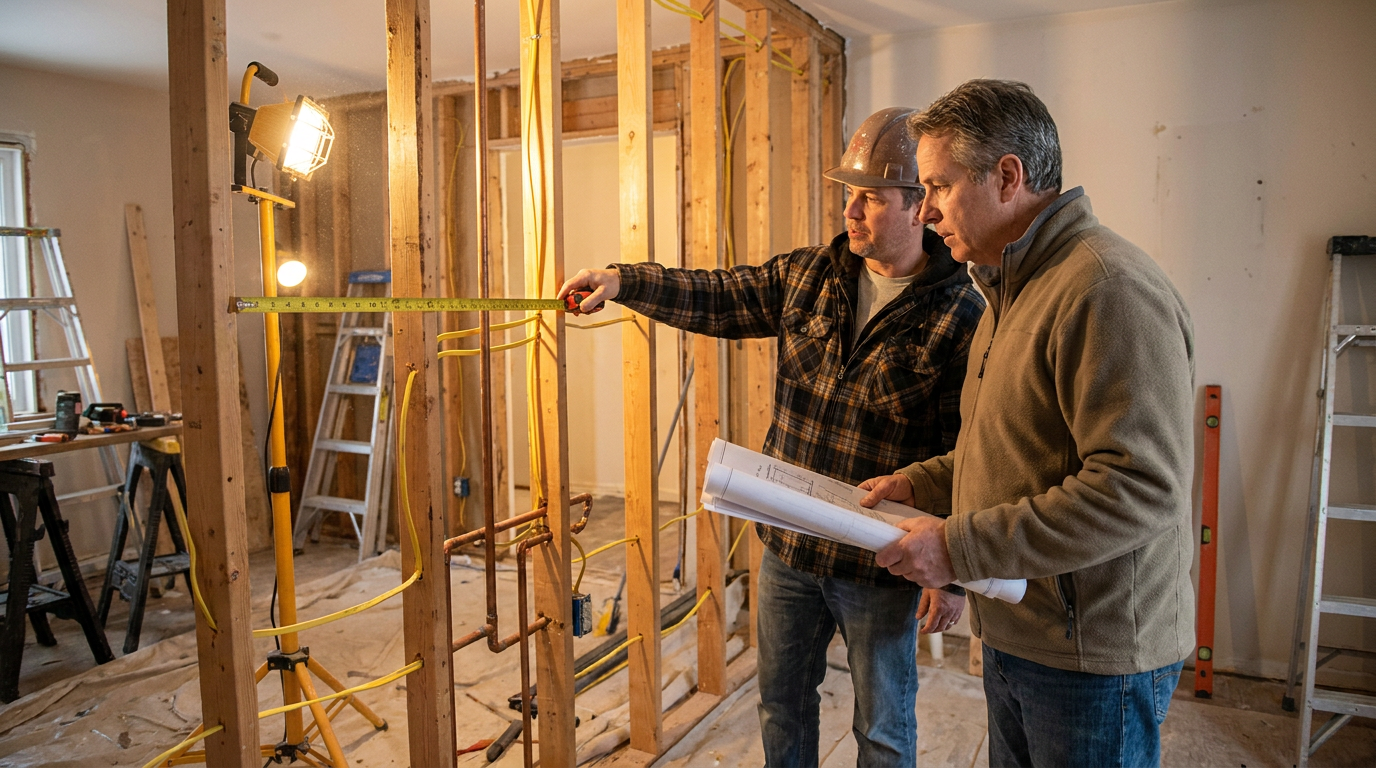
Why Risk Management Matters More Than Most People Realize
A well-run project usually looks calm from the outside. Materials show up, trades move in sequence, inspections are passed, and the owner sees steady progress. What most people do not see is the amount of coordination it takes to keep that calm on track. Good risk management is often invisible because its success shows up as problems that never happened.
On the other hand, poor risk management usually becomes visible fast. A renovation opens a wall and discovers unsafe wiring that was never documented. A commercial job assumes steel will arrive in eight weeks and then learns the lead time is sixteen. A demolition crew starts work before utilities are fully verified and creates a dangerous strike hazard. These are not rare events. They are common construction realities, and they are exactly why risk management needs to be practical instead of theoretical.
There is also a common misconception that formal risk management is only for large contractors. That is not true. A homeowner taking on an older-house renovation may be exposed to asbestos, lead paint, moisture damage, framing rot, undersized beams, and old branch wiring hidden behind finished surfaces. A small contractor without a written process can lose money quickly on missed scope, poor sequencing, or undocumented changes. Scale changes the paperwork, but it does not remove the need for disciplined thinking.
Risk management matters because construction is dynamic. Excavation conditions can change by the day. Weather can stop pours, lifting, roofing, and exterior envelope work. Trade stacking can create congestion and productivity losses. A single permit condition can affect sequencing. A missed approval can hold up a long-lead purchase. If the team is not watching these pressure points early, the project can drift into trouble before anyone fully understands what happened.
The strongest projects do not assume things will go smoothly. They assume problems can happen, assign ownership early, and build controls that can hold up when site conditions change.
What Construction Risk Management Actually Includes
In practice, construction risk management covers several categories at once. Safety risk is the most obvious category because injuries, exposures, falls, struck-by incidents, and equipment hazards can have immediate and severe consequences. But project teams also need to manage cost risk, schedule risk, quality risk, environmental risk, legal risk, procurement risk, public safety risk, and reputational risk. These categories overlap constantly in live projects.
For example, if a project orders custom curtain wall too late, that looks like a procurement issue at first. But a late envelope can delay interior dry-in, which affects schedule. Delayed schedule can trigger overtime or out-of-sequence work, which affects cost. Accelerated work can reduce quality control and increase safety pressure. One unmanaged issue can move through the whole job.
This is why many experienced builders use a mix of tools rather than relying on one form. Those tools can include a risk register, pre-task planning, job hazard analysis, contractor prequalification, change management procedures, schedule look-aheads, procurement logs, quality hold points, and field-level reassessments. A homeowner will not need all of that in a formal package, but the logic is the same. The job needs a system for spotting problems before they become expensive.
There is also a difference between hazard and risk. A hazard is something with the potential to cause harm, such as silica dust, unstable excavation walls, energized wiring, or an unknown structural condition. Risk is the chance that the hazard will actually cause harm and how severe the consequences could be. Understanding that distinction helps teams choose controls that match the real exposure instead of reacting loosely.
Start at the Earliest Stage: Planning and Design
The cheapest time to reduce risk is usually before the work starts. CCOHS guidance makes this point clearly by noting that risk assessment is most effective when done at the planning or design stage. That is because changes made on paper are cheaper than changes made after labor, equipment, and materials are committed. Once the crew is on site, every revision costs more and creates more disruption.
At the planning stage, the first practical step is to define the scope clearly. Vague scope creates risk because everyone fills in the blanks differently. For a homeowner, that can mean believing a contractor is handling permits, disposal, and patching when those items were never written in. For a commercial project, it can mean gaps between drawing packages, consultant assumptions, and subcontractor pricing. Clear scope does not eliminate risk, but it removes preventable confusion.
The next step is a realistic site and building review. In renovations, this means understanding the age of the building, previous alterations, likely hidden conditions, utility routes, and signs of moisture or movement. In new construction, it means understanding access, soil information, neighboring structures, drainage, utility availability, and municipal constraints. Risk starts increasing when teams make assumptions instead of verifying conditions.
Design review should also include constructability. A detail may look fine on a screen and still be difficult or unsafe to build in the field. Tight access for equipment, sequencing conflicts between trades, awkward temporary support needs, and maintenance access issues all show up during this stage if the right people review the work. Good builders ask not only, Can this be designed? but also, Can this be built safely, efficiently, and in the right sequence?
For older buildings, planning needs to account for hazardous materials and hidden deterioration. Demolition and renovation work can reveal asbestos-containing materials, lead-based paint, mold, decayed framing, corroded piping, or undersized structural members. CCOHS guidance on demolition also highlights the need to identify utilities before work begins and to plan non-routine work step by step. That advice is just as relevant in a basement remodel as it is on a large selective demolition package.
Questions to Ask Before Construction Starts
A practical risk review at the front end should answer several basic questions. What conditions are known, and what conditions are still assumptions? Which materials or equipment have long lead times? Which permits or approvals control the start of work? What tasks are high risk or non-routine? What hidden conditions are likely in this type of building or site? Who is responsible for making final decisions when unexpected conditions are uncovered?
When teams answer those questions honestly, they usually uncover risks that can still be controlled. Maybe the project needs exploratory openings before final pricing. Maybe the owner needs a larger contingency because the building is old. Maybe a utility locate needs to happen earlier. Maybe a structural review is needed before demolition. These are not signs of overthinking. They are signs of competent planning.
How to Identify Risks Without Making It Overcomplicated
Risk identification does not have to be complicated, but it does have to be disciplined. The simplest useful method is to walk through the project from beginning to end and ask what could go wrong at each stage. Start with pre-construction, then procurement, then mobilization, then each major phase of work, then testing and closeout. Include not just what usually happens, but also what changes when work becomes non-routine.
For example, a home renovation might identify permit delays, concealed plumbing, poor demolition sequencing, dust migration into occupied areas, and homeowner-driven design changes. A commercial build might identify delayed utility relocation, crane access restrictions, steel lead times, labor shortages for specialized trades, weather exposure during envelope work, and incomplete turnover documentation at closeout. Different project sizes produce different lists, but the process is the same.
One useful way to organize the process is by category. Teams can review safety, cost, schedule, quality, procurement, environmental, regulatory, and stakeholder risks one by one. This helps prevent blind spots. Many projects focus heavily on visible field hazards and miss slower-building risks like inadequate submittal review, underqualified subcontractors, or weak documentation of changes.
Worker involvement is also essential. OSHA emphasizes worker involvement in hazard prevention and control, and that principle matters because field crews often see problems first. A superintendent, operator, lead hand, carpenter, or electrician may notice access issues, temporary power concerns, congestion, or material handling risks before a manager reviewing spreadsheets does. Risk identification improves when the people doing the work are invited into the process and taken seriously.
Assess the Risk: Likelihood, Impact, and Priority
Once risks are identified, the next step is to assess them. In simple terms, that means looking at how likely the issue is and how severe the impact would be if it happens. Some risks are low probability but high consequence, such as a structural collapse during demolition or a major utility strike. Others are high probability but moderate consequence, such as weather-related schedule delays during exposed exterior work. Both matter, but they require different responses.
A practical assessment does not need complicated software. Many teams use a simple matrix that ranks likelihood and impact as low, medium, or high. The goal is not to produce a perfect score. The goal is to decide which risks need immediate action, which ones require monitoring, and which ones can be accepted with contingency. If every risk is marked critical, the tool becomes useless. If serious risks are marked casually, the team gets false confidence.
For homeowners, this often comes down to budget, safety, and disruption. A hidden structural issue in an old house may not be certain, but if it is reasonably possible and very expensive to correct, it deserves contingency planning. For professionals, the same thinking applies to long-lead items, seasonal work windows, or specialty trade availability. The point is to match attention and resources to the real exposure.
One of the most practical habits here is assigning ownership. Every major risk should have a person responsible for watching it and responding if conditions change. A risk with no owner is usually just a note on paper. When someone owns procurement tracking, utility coordination, temporary works review, or hazardous material verification, the project has a better chance of catching trouble early.
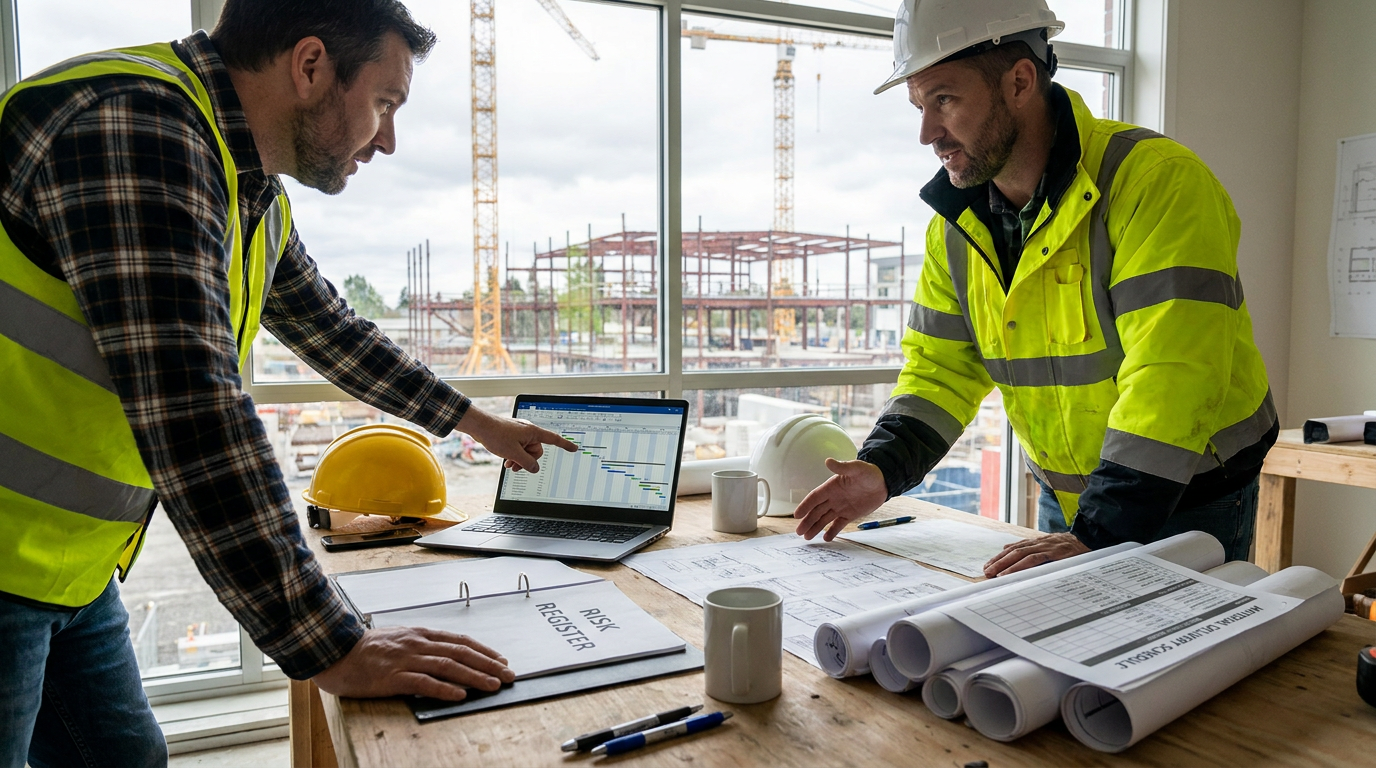
Choose Strong Controls, Not Just Easy Controls
After a risk is assessed, the team needs to decide what to do about it. This is where many projects weaken. People often jump straight to the easiest control, not the strongest one. In safety work, the best guide is the hierarchy of controls. Start by eliminating the hazard if possible, then look at substitution, engineering controls, administrative controls, and finally personal protective equipment as the last line of defense.
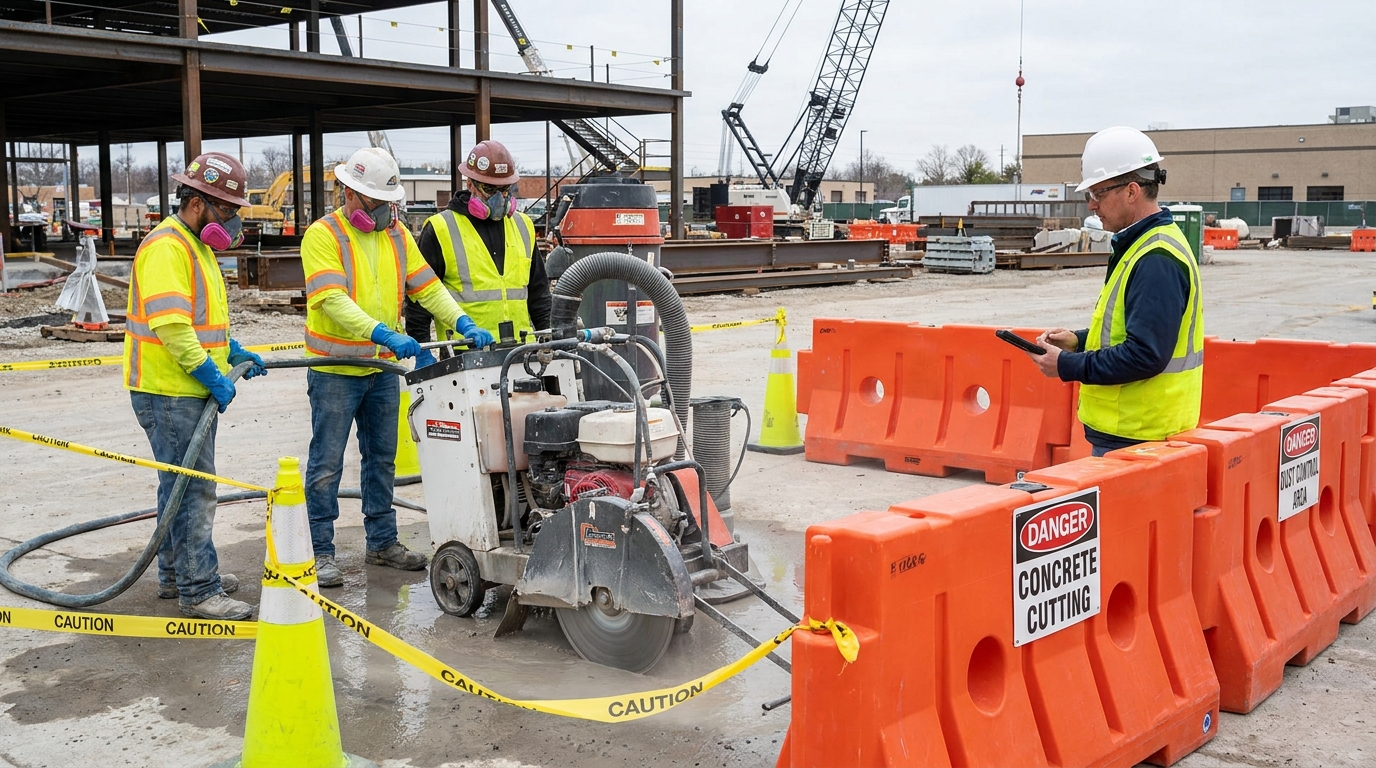
That order matters. If a dust hazard can be controlled with a different method, wet cutting, local extraction, or prefabrication that reduces site cutting, those measures are stronger than simply handing out respirators. OSHA’s silica guidance in construction makes this point clearly by emphasizing effective exposure controls rather than relying on PPE alone. The same logic applies across construction. Stronger controls reduce dependence on perfect human behavior.
The same principle works for non-safety risks too. If a project has schedule exposure because a custom component has a long lead time, the stronger control might be early procurement or a design adjustment to use more available materials. If a renovation has high risk of dust migration into occupied rooms, the stronger control is containment and sequencing, not just cleaning more often. If a project is vulnerable to change disputes, the stronger control is a clear written change-order process rather than verbal approvals.
In practical terms, risk responses usually fall into four groups: avoid the risk, reduce the risk, transfer the risk, or prepare contingency. Insurance and contract terms can transfer some financial exposure, but they do not make the operational problem disappear. A project still needs a plan. That is why smart teams combine contractual protection with field controls, scheduling buffers, and real communication.
Examples of Stronger Controls on Real Projects
Consider a kitchen renovation in an older home where demolition is about to begin. A weak approach is to assume existing wiring and plumbing generally run where the plans suggest, then deal with surprises as they appear. A stronger approach is to shut down and verify utilities, open limited exploratory areas first, review signs of previous work, and carry contingency for concealed repairs. That extra care costs something up front, but it usually costs less than emergency decisions made mid-demo.
Now consider a commercial project relying on structural steel. A weak approach is to assume lead times will remain stable and schedule downstream work tightly against optimistic delivery dates. A stronger approach is to lock in procurement early, confirm fabrication milestones, track shipping status, identify alternate sequencing options, and maintain a schedule buffer where practical. In a market affected by tariffs, inflation, and supply disruption, that kind of planning is not optional. It is basic project control.
Risk Management During Procurement and Contracting
Procurement is one of the biggest pressure points in modern construction. Material volatility, long-lead equipment, shipping disruption, and trade capacity shortages can damage a project long before the first major installation begins. Yet procurement risk is often underestimated because it feels less dramatic than visible field hazards. In reality, weak procurement planning can quietly drive major cost and schedule loss.
The first practical step is identifying long-lead items early. These may include electrical gear, HVAC units, windows, curtain wall, switchgear, specialty doors, elevators, structural steel, or custom millwork. Once those items are known, the team needs realistic lead times from actual suppliers, not assumptions based on past jobs. Market conditions shift, and stale assumptions are a common source of delay.
Subcontractor vetting is another major control. The lowest price is not always the lowest risk. Teams should look at experience, manpower capacity, financial stability, safety record, references, and ability to meet documentation requirements. A subcontractor that cannot staff the job, manage submittals, or maintain schedule can become far more expensive than a slightly higher initial number.
Contracts also matter more than many owners realize. Clear scopes, exclusions, allowances, unit rates, schedule expectations, and change procedures help control risk before a dispute begins. Change orders are not just paperwork. They are a central risk-control tool because they document who requested a change, what it costs, and how it affects time. On many troubled jobs, undocumented changes are one of the fastest routes to conflict.
Contingency planning should be built into procurement strategy as well. If a specified item becomes unavailable, what is the substitution path? If a delivery slips, what work can proceed without causing rework? If pricing jumps, what value-engineering options preserve function without lowering build quality in the wrong places? These questions are easier to answer before the project is under pressure.
Managing Risk on the Job Site Every Day
Once work starts, risk management becomes a field discipline. Plans and registers still matter, but the project lives or dies on daily execution. Conditions change. Deliveries move. Crews overlap. Weather turns. Existing conditions reveal themselves. The team has to keep reassessing and adjusting without losing control of safety, sequence, and communication.
This is where field-level risk assessments and pre-task planning are valuable. Before a task begins, the crew should understand the work steps, the hazards, the controls, the tools, the access plan, and what to do if conditions are different from expected. CCOHS notes that non-routine and high-risk tasks deserve special care, and that is exactly right in construction. Demolition, confined access, temporary support, energized work, critical lifts, and hot work all require more than casual verbal discussion.
Written safety and health programs also matter here. OSHA emphasizes their importance because written programs create consistency, define expectations, and support worker involvement. On a practical level, they help ensure the team is not reinventing basic controls every morning. They also help smaller contractors and homeowners recognize that safe work is not just about intent. It depends on planning, procedure, and verification.
Daily site management should include close attention to housekeeping, access routes, temporary power, material staging, weather protection, equipment interface, and trade sequencing. These issues may seem routine, but routine problems cause a large share of preventable incidents and delays. A site with poor housekeeping, unclear access, and stacked trades is usually a site where both safety and productivity suffer.
Why Monitoring Matters More Than One-Time Assessments
One of the biggest misconceptions in construction is that a risk assessment done once at the start is enough. It is not. Conditions shift too often. New trades arrive, workfaces move, weather changes, temporary works evolve, and hidden conditions appear. A control that made sense two weeks ago may be inadequate now.
That is why effective teams monitor leading indicators, not just final outcomes. They review near misses, recurring coordination failures, delivery slippage, inspection trends, labor availability, and change volume. They do not wait for an accident or major delay before asking whether the system is weakening. The goal is to see patterns early and respond while options still exist.
For homeowners, this can be simpler but still important. If a renovation starts uncovering more concealed damage than expected, that is a signal to pause and reassess budget, scope, and sequencing rather than pushing forward blindly. If dust containment is failing in an occupied house, that needs stronger control immediately. Good risk management means paying attention to what the project is telling you while there is still time to adapt.
Common Construction Risks and How to Handle Them
Some risks show up so often that every project team should look for them deliberately. Hidden conditions are one of the biggest. Older buildings often contain surprises behind walls, under slabs, or above ceilings. The best response is early investigation where possible, written assumptions where not possible, and contingency in both budget and schedule.
Weather is another major factor. Exterior work, excavation, roofing, concrete placement, crane activity, and access roads can all be affected by rain, wind, freezing temperatures, or heat. Smart teams build seasonal realism into schedules and avoid pretending that every day is equally productive. Weather risk is not an excuse for weak planning. It is a reason to plan honestly.
Labor shortage and trade availability continue to affect many markets. The practical response includes early subcontractor engagement, realistic manpower planning, and sequencing that does not rely on perfect labor availability. Procurement and labor risk often interact, especially when delayed materials cause crews to be remobilized later at a premium cost.
Quality failures deserve attention too. Rework is expensive and often avoidable. Clear submittal review, mockups, hold points, inspection planning, and defined acceptance standards help reduce quality risk. When quality is managed poorly, the result is not just cosmetic disappointment. It can affect waterproofing, firestopping, structural performance, energy use, and long-term durability.
Utility strikes are another serious and preventable risk, especially in demolition, excavation, and renovation work. Utilities need to be located, verified, and where necessary isolated before intrusive work begins. Assumptions are dangerous here. A buried line, concealed conduit, or mislabeled circuit can create immediate harm.
Real-World Examples That Show the Difference
Take a straightforward residential example. A homeowner plans a main-floor renovation in a 1950s house. The initial budget is built around finishes, cabinets, and flooring, but no one has accounted for exploratory work. Once demolition begins, the contractor finds patched-over wiring, a sagging beam pocket, and signs of an old plumbing leak. On a poorly managed project, work keeps pushing forward without clear documentation, the budget jumps unpredictably, and trust starts breaking down. On a better-managed project, the contract had already flagged concealed-condition risk, a contingency was discussed up front, changes were documented properly, and the team paused long enough to verify the structural repair before rebuilding.
Now consider a mid-sized commercial project with exposed structural steel and rooftop mechanical equipment. The original schedule assumed standard lead times based on older market conditions. During procurement, the team learns key components will arrive much later than expected. A weak response is to hope dates improve and keep the downstream schedule untouched. A stronger response is to revise the procurement log, meet with affected trades, resequence available work, evaluate temporary weather protection, and communicate the schedule impact early to the owner. That does not erase the problem, but it keeps the problem manageable.
Another example comes from demolition planning. A crew is preparing selective demolition in an occupied building. The drawings show utility shutoffs, but field verification reveals circuits feeding adjacent occupied areas and undocumented low-voltage runs above ceilings. A poor process would start demolition anyway and trust that issues can be sorted out as they appear. A disciplined process stops, maps the actual conditions, coordinates shutdowns, updates the work plan, and resumes only when the risks are controlled. That delay may feel frustrating in the moment, but it is far better than causing a strike, outage, or injury.
Digital Tools Are Helping, but They Do Not Replace Judgment
Digital capital project tools are getting more attention for a reason. Better dashboards, procurement tracking, schedule controls, document management, and field reporting can improve visibility and help teams respond faster. Industry perspectives in Canada have pointed to digital strategies as a way to improve financial performance, efficiency, safety, and resilience. That aligns with what good builders already know: better information supports better decisions.
Still, software does not manage risk by itself. A clean dashboard cannot fix weak site supervision, vague scope, or poor subcontractor coordination. The best use of digital tools is to strengthen discipline, not replace it. If the data is current, ownership is clear, and field conditions are feeding back into planning, digital systems can be very useful. If they become a reporting exercise disconnected from reality, they add little value.
For smaller contractors and homeowners, this does not need to be complicated. A simple spreadsheet, shared document folder, photo record, procurement list, and written change log can do a lot of the same work at a simpler scale. The important part is consistency. Risks need to be tracked somewhere, reviewed regularly, and tied to decisions.
Risk Management Through Commissioning and Closeout
Many projects treat closeout as an administrative finish line, but it is also a risk stage. Incomplete commissioning, missing manuals, unresolved deficiencies, poor turnover documentation, and rushed final inspections can create lasting problems. A building that looks finished but has not been properly tested or documented may still carry serious operational risk.
Commissioning should confirm that systems perform as intended and that deficiencies are recorded and resolved properly. This matters for life safety systems, HVAC performance, controls, drainage, doors and hardware, and equipment startup. If closeout is compressed too aggressively, the owner often receives a building with hidden operating issues that should have been caught before handover.
From a risk-management standpoint, closeout is also the time to capture lessons learned. Which assumptions were wrong? Which procurement items caused the most trouble? Which controls worked well in the field? Which changes drove the most cost? Teams that review these questions honestly improve future projects. Teams that skip them usually repeat the same mistakes.
Actionable Risk Management Tips for Homeowners
Homeowners do not need a corporate system to manage renovation risk, but they do need structure. Start by assuming that older homes may contain hidden issues. Build contingency into the budget and do not commit every dollar to finishes. Ask clearly who is responsible for permits, utility coordination, disposal, dust control, inspections, and patching. If it is not written down, do not assume it is included.
Before demolition begins, ask whether there have been exploratory openings, whether hazardous materials are a concern, and whether utilities have been identified and isolated as needed. During the job, request written pricing and time impact for changes rather than relying on hallway conversations. If unexpected conditions are found, pause long enough to understand the fix. Fast decisions made without information are usually expensive.
It also helps to keep a simple project record. Save drawings, selections, change approvals, invoices, site photos, and key emails. That record reduces confusion and helps everyone resolve issues based on facts rather than memory. Home renovation projects often go sideways not because the work is impossible, but because expectations and decisions were never documented properly.
Actionable Risk Management Tips for Construction Professionals
For professionals, the basics still matter most. Build a usable risk register early and update it as conditions change. Tie risk reviews to schedule milestones, procurement status, and upcoming non-routine work. Assign owners to major risks and expect status updates. Keep the process short enough that people will actually use it.
Use the hierarchy of controls for safety planning and apply the same logic to operational risks by preferring stronger front-end controls over weaker reactive fixes. Vet subcontractors beyond price. Lock in long-lead procurement as early as practical. Maintain disciplined change management and document schedule impacts before they become disputes.
Field engagement is just as important as management systems. Involve workers in identifying hazards and reviewing task plans. Investigate near misses and recurring coordination issues, not just recordable incidents. Make sure the paperwork reflects the site, not the other way around. The strongest risk systems are the ones crews recognize as useful, not the ones that look impressive in a binder.
The Bottom Line
Risk management in construction is not about eliminating uncertainty. No project can do that. It is about reducing preventable surprises, preparing for the ones that cannot be avoided, and keeping the project under control when conditions change. That applies to a bathroom renovation, a home addition, a tenant fit-out, and a major commercial build alike.
The practical formula is consistent across project sizes. Identify what could go wrong. Assess likelihood and impact honestly. Put strong controls in place early. Assign ownership. Monitor for change. Document decisions. Learn from what happens. When teams follow that process, they protect people, budgets, schedules, and finished quality at the same time.
Construction will always involve uncertainty because buildings are made in the real world, not in perfect conditions. But uncertainty does not have to mean chaos. With clear planning, disciplined reassessment, and respect for how work actually happens on site, risk management becomes one of the most useful tools a project team can have.



No Comment! Be the first one.