



Stone has been part of construction for as long as people have been building permanent shelter, and there is a reason it still matters now. It is durable, widely recognized as a premium finish, and capable of fitting everything from traditional masonry to modern minimalist design. In practical construction terms, stone is not just about appearance. It is a material category with real structural and performance implications, which means the right decision depends on climate, installation method, maintenance expectations, and the exact use of the space.
Table Of Content
- Why Stone Still Matters in Modern Construction
- What Counts as Stone in Construction
- The Main Types of Natural Stone and How They Actually Perform
- Granite
- Limestone
- Marble
- Sandstone
- Slate
- Durability Is About More Than Hardness
- How Stone Is Used in Real Projects
- Exterior Cladding and Veneer
- Flooring and Paving
- Countertops, Vanities, and Interior Features
- Environmental Impact: What the Sustainability Claims Really Mean
- Cost, Value, and Lifecycle Thinking
- Common Mistakes People Make With Stone
- How to Choose the Right Stone for Your Project
- A Practical Selection Checklist
- Stone in Canada: Why Compliance and Climate Matter
- Final Thoughts: Stone Rewards Good Decisions
For homeowners, stone often raises a familiar set of questions. Is it worth the price, will it hold up in Canadian winters, does it need sealing, and is it actually a sustainable choice compared with manufactured alternatives? For builders, designers, and renovators, the questions become more technical. Which stone belongs outside, which one stains too easily for a kitchen, how does water absorption affect freeze thaw performance, and what detailing prevents early failure? Those are the kinds of questions that matter in real projects, because stone can perform exceptionally well when it is specified properly and disappoint badly when it is treated as interchangeable.
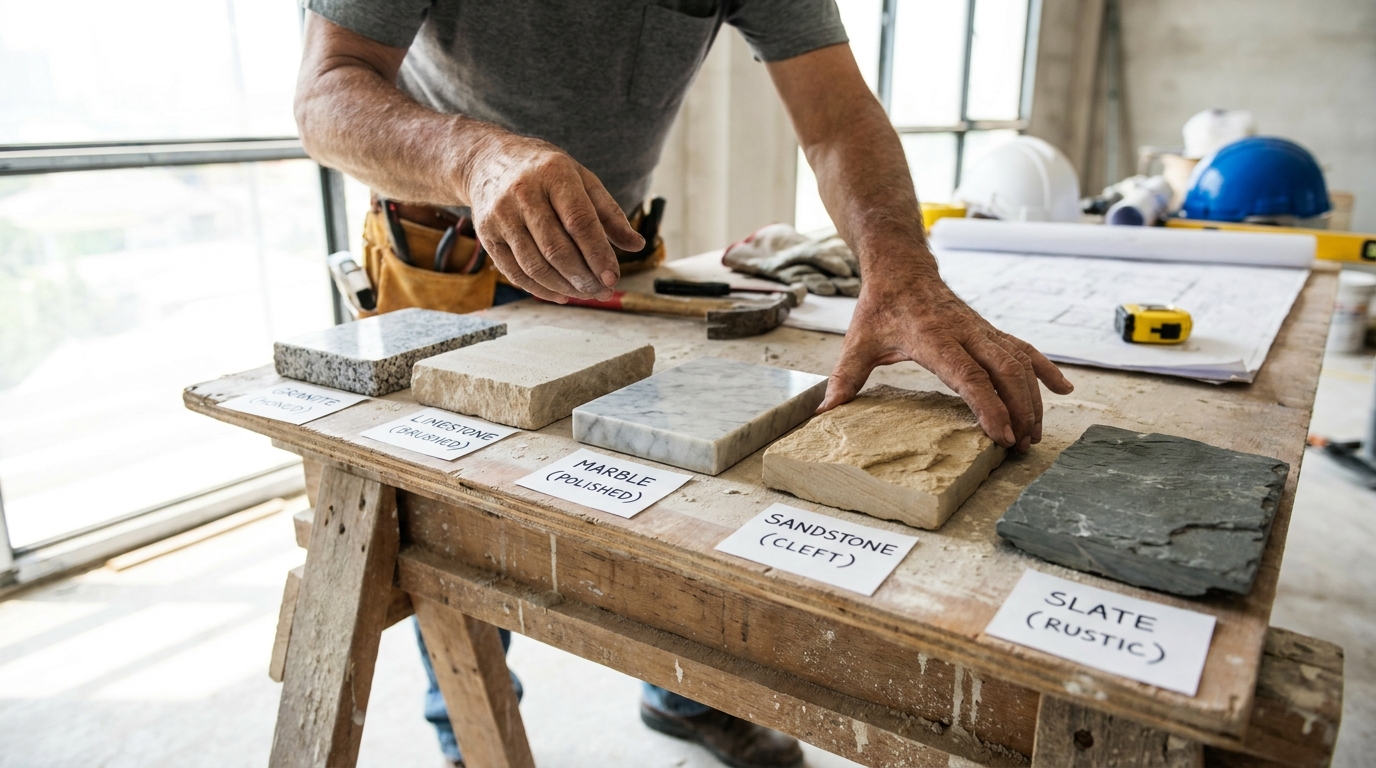
According to the U.S. Geological Survey, dimension stone refers to natural rock quarried into blocks or slabs for architectural or engineering purposes. The main selection factors include color, grain texture, surface finish, durability, strength, and polishability. That definition is useful because it reminds us that stone is not one product. Granite, limestone, marble, sandstone, and slate all belong in the conversation, but they do not behave the same way and they should not be selected the same way.
This guide looks at stone materials from a practical construction point of view. It covers where different stones work best, how durability actually plays out on real job sites, what environmental claims are worth paying attention to, and how to avoid the common mistakes that lead to staining, cracking, spalling, or disappointing value. If you want straight answers about how to use natural stone effectively, this is the place to start.
Why Stone Still Matters in Modern Construction
Natural stone is sometimes treated as an old world material that survives mostly on looks, but that misses the bigger picture. Stone remains a major part of the North American building market because it offers long service life, excellent compressive strength, and a broad visual range. USGS reported that roughly 2.3 million tons of dimension stone, valued at $410 million, were sold or used by U.S. producers in 2023. That is not a niche material category. It is a substantial and established part of the industry, with production spread across 176 companies operating 224 quarries in 33 states.
That scale matters because it shows stone is not limited to luxury custom homes or landmark buildings. It shows up in cladding, paving, stairs, retaining walls, countertops, flooring, site features, landscape work, hearths, civic buildings, and commercial interiors. In many cases, the reason is simple. Owners want something that can survive hard use, look better with age, and avoid the short replacement cycles that come with lower cost finishes. That does not mean stone is always the right answer, but it does mean it deserves to be evaluated seriously rather than treated as an indulgence.
Stone also fits current design priorities in a way that surprises some people. It works in traditional homes, but it also works in clean contemporary spaces because it has texture, depth, and natural variation that manufactured products often struggle to replicate convincingly. Designers increasingly use stone in projects that aim for tactile comfort, biophilic character, and a stronger connection to local materials. When sourced regionally, stone can also contribute to a building identity that feels rooted to place rather than generic.
From a builder’s perspective, stone’s value comes down to this. If you pick the right material for the exposure and install it correctly, it can outlast many alternatives by a wide margin. If you pick the wrong one, the same material can become expensive trouble. That is why understanding the stone family matters more than simply deciding that you want a natural finish.
What Counts as Stone in Construction
In everyday conversation, people tend to use the word stone loosely, but construction requires more precision. Dimension stone is natural rock cut into blocks, slabs, tiles, or shaped pieces for building and architectural use. That is different from crushed stone, which is used as aggregate in concrete, asphalt, drainage, and road base. Both start in a quarry, but they serve completely different roles and should not be confused in specification or conversation.
The principal dimension stone types in North America are granite, limestone, marble, sandstone, and slate. Each one has its own geological makeup, which affects hardness, porosity, finish options, resistance to wear, and reaction to moisture or acids. A polished marble vanity top and a split face granite retaining wall may both be stone, but from a performance standpoint they are worlds apart. The same goes for honed limestone flooring versus cleft slate paving.
Selection should always start with the application. A stone that performs well indoors on a feature wall may not be a good fit for exterior paving in freeze thaw conditions. A stone that looks excellent in a dry powder room may be a poor choice for a busy family kitchen where acidic spills and heavy use are routine. In other words, stone should be specified like a system component, not chosen like a paint color.
The Main Types of Natural Stone and How They Actually Perform
Granite
Granite is usually the first stone people associate with toughness, and that reputation is mostly earned. It is dense, hard, and generally resistant to wear, which makes it a common choice for high traffic flooring, exterior steps, curbs, countertops, and paving. It typically handles abrasion better than softer stones and is often a strong option where durability comes first. Granite also comes in a wide range of colors and grain patterns, from subtle salt and pepper tones to dramatic veining and movement.
That said, not every granite product is the same. Finish matters, thickness matters, and support conditions matter. A polished granite surface can become slippery when wet, which can make it a poor choice for exterior walking surfaces unless the finish is selected for traction. Some granites are also more absorbent than people expect, so sealing may still be part of the maintenance plan depending on the use.
For practical construction use, granite is often one of the safest choices when you need a hard wearing material. It is especially useful in areas that see repeated contact, grit, water, and heavy loads. Still, it should be checked for the exact application instead of being treated as automatically suitable for everything.
Limestone
Limestone remains one of the most widely used dimension stones in North America, and USGS reported it accounted for about 51 percent of U.S. dimension stone production by tonnage in 2023. That tells you something important right away. Limestone is not just a design favorite. It is a workhorse material used at scale. Builders and designers value it for its warm tones, relatively uniform appearance, and ability to give a project a calm, solid, architectural feel. Kingsgate Luxury Homes has leaned on that same quality on several custom builds, including a hand-carved limestone facade at 203 Newton Dr in North York, where the exterior cladding sets a crisp, classical tone for the whole home.
In the field, limestone can be an excellent choice for cladding, architectural trim, interior floors, wall applications, and some landscape uses. It is often easier to shape and finish than harder stones, which helps in projects where custom detailing matters. The tradeoff is that many limestones are more porous and softer than granite. That means they can be more vulnerable to staining, erosion, abrasion, or freeze thaw problems if the stone quality, detailing, or exposure conditions are not handled properly.
For homeowners, limestone is often attractive because it feels timeless without being flashy. For professionals, the key is to match the specific limestone to the climate and use. Exterior limestone in a severe winter environment needs careful attention to water management, anchoring, joint design, and maintenance expectations. Done right, it can last for decades. Done carelessly, it can weather unevenly or fail early.
Marble
Marble is valued for beauty first, and there is nothing wrong with saying that plainly. Its veining, depth, and reflective quality give it a level of visual richness that few other materials can match. It is commonly used for bathrooms, fireplace surrounds, feature walls, furniture tops, and other areas where elegance matters. In some projects, marble is the right answer because no substitute really delivers the same effect.
The practical issue with marble is that it demands honesty. It is generally more sensitive to etching from acids and more vulnerable to staining than granite. In kitchens, bars, and other active use areas, that matters a lot. Lemon juice, vinegar, wine, and common household cleaners can mark some marble surfaces. If a client wants a perfect, maintenance light surface, marble may not be the best choice.
That does not make marble a poor material. It means it should be used where its strengths make sense and its limitations are accepted upfront. In the right space, marble ages gracefully and adds character. In the wrong space, it becomes a source of frustration because expectations were set badly from the start.
Sandstone
Sandstone is often chosen for its earthy color palette and natural texture. It can give a building or landscape feature a grounded, regional feel that works especially well in traditional, rustic, and site integrated designs. USGS reported sandstone represented about 14 percent of U.S. dimension stone production by tonnage in 2023, which reinforces that it remains an important material category.
Performance with sandstone depends heavily on the particular stone and its exposure. Some sandstones are durable and effective in exterior applications, while others are more absorbent and vulnerable to weather related deterioration. Bedding direction, surface finish, water exposure, and freeze thaw cycling all matter. A good sandstone installation requires more than liking the color. It requires knowing how that particular stone behaves over time.
In practical terms, sandstone can be very successful for wall cladding, paving, steps, garden structures, and landscape elements when it is properly sourced and detailed. It is less forgiving when water gets trapped, when edges remain constantly saturated, or when the wrong product ends up in a harsh climate with repeated freeze thaw stress.
Slate
Slate is known for its layered structure and textured finish. It is often used for roofing, flooring, paving, treads, and wall surfaces where a more natural split face appearance is wanted. One of its practical advantages is slip resistance when left with a textured surface, which can make it useful for entries, mudrooms, patios, and some exterior circulation areas.
Like the other stone types, slate is not one uniform material. Quality varies. Some slates are dense and long lasting, while others can delaminate or weather poorly if they are not suited to the exposure. That is one reason sourcing and specification matter so much. A well selected slate can perform very well and offer a distinctive look that manufactured tile rarely matches. A low quality product in a wet freeze thaw setting can break down much faster than expected.
Slate tends to appeal to people who want stone that feels natural and honest rather than polished and formal. It is often a strong option where traction, texture, and visual depth are priorities.
Durability Is About More Than Hardness
One of the biggest mistakes in stone selection is reducing durability to a simple ranking of hard versus soft. Hardness matters, but it is not the whole story. In construction, real durability depends on water absorption, resistance to freeze thaw damage, abrasion resistance, structural support, anchoring, joint design, sealant compatibility, and maintenance. A hard stone can still fail if moisture gets trapped behind it or if thermal movement is ignored. A softer stone can last a very long time if it is used in the right environment with good detailing.
This point is especially important in Canada and the northern United States. Winter exposure changes the conversation. Repeated freeze thaw cycles can damage stone and supporting assemblies when water enters the material or gets trapped in joints and cavities. De icing salts can add another layer of stress. Exterior stone needs to be selected and detailed with climate in mind, not copied blindly from a warmer region or from an indoor application.
The right stone in the right assembly can last generations. The wrong stone in the wrong exposure can start showing trouble far sooner than most owners expect.
That is why weather exposed stone should be treated as part of a larger wall, paving, or landscape system. Drainage paths, flashing, movement joints, substrate preparation, anchorage, and mortar or adhesive selection all affect performance. If any part of that chain is weak, the stone itself may get blamed even when the root problem is installation or detailing.
How Stone Is Used in Real Projects
Exterior Cladding and Veneer
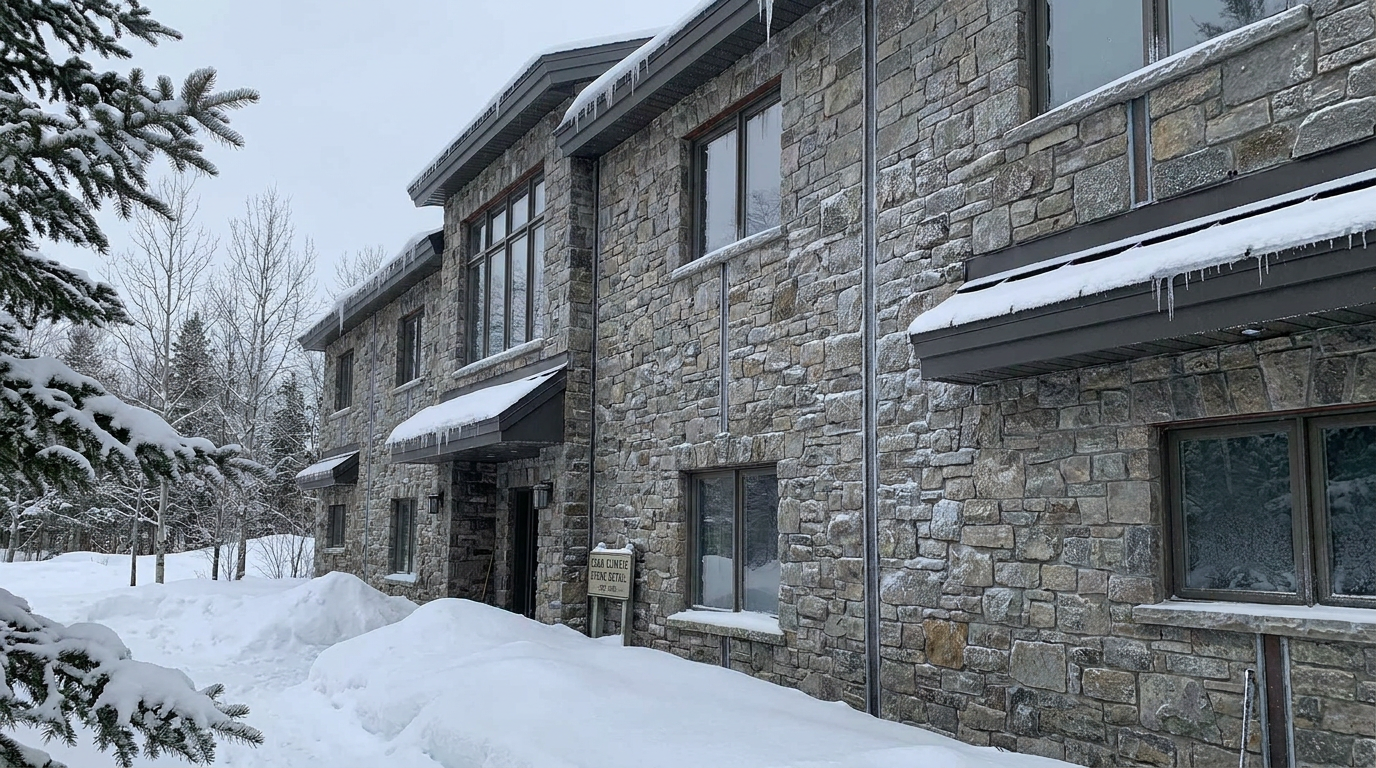
Stone cladding gives buildings permanence and visual weight, but it is not just a finish layer. Exterior stone veneer must work with weather barriers, flashings, anchorage systems, drainage cavities, and movement joints. In Canada, this should always be tied to code compliant design and relevant standards or engineering guidance. CSA Group’s broader standards ecosystem supports safe, resilient, and durable construction practices, which is an important reminder that stone on a wall is never only a decorative decision.
For cladding, stone selection should consider panel size, anchoring method, weight, absorption characteristics, and the exposure of the wall. Driving rain, freeze thaw cycling, and solar gain all influence performance. Thinner modern cladding systems can work very well, but they leave less room for sloppy execution. Good detailing is what separates a long lasting façade from one that starts staining, cracking, or shedding pieces.
Flooring and Paving
Stone flooring works best when people think beyond appearance and ask practical questions first. How much grit will come through the entrance, will the floor stay wet, what footwear will be used, and how easy is it to maintain traction and appearance? A polished surface can look impressive but create slip concerns in certain locations. A honed or textured finish may be the better construction choice even if it is less glossy.
Exterior paving needs an even more cautious approach. Freeze thaw exposure, subbase preparation, drainage slope, and jointing details all matter. A durable stone can still rock, crack, or heave if the base underneath it is poor. In landscape work, this is a common issue. People focus on the visible stone and ignore the support system that determines whether the installation survives winter.
Countertops, Vanities, and Interior Features
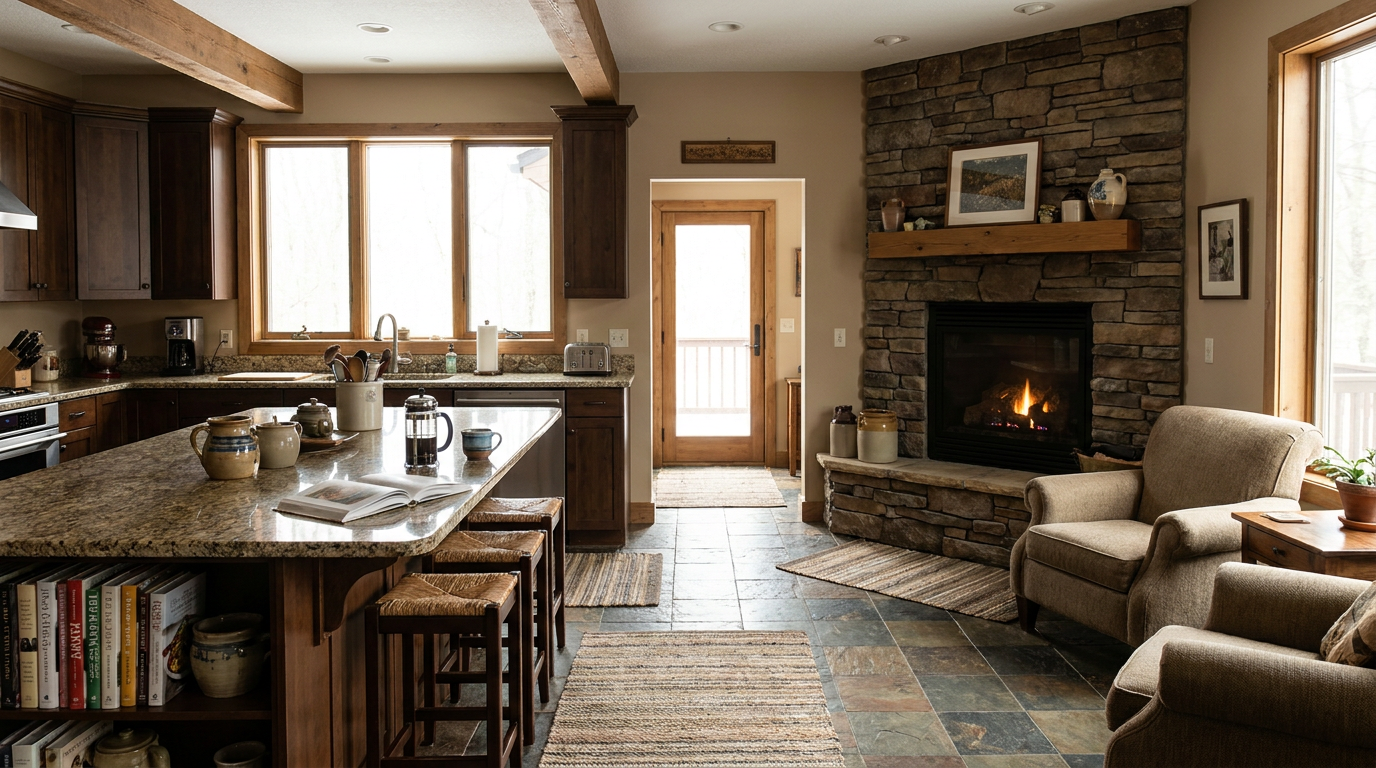
Interior stone gets judged heavily on appearance, but use patterns should lead the conversation. Granite is often favored for countertops because of its toughness and wear resistance. Marble may be better reserved for lower abuse locations if the owner wants a surface that stays looking pristine. Limestone and slate can work beautifully, but their porosity and maintenance requirements should be understood before installation.
Fireplace surrounds, accent walls, stair treads, bath surfaces, and window sills are all common places where stone adds real value. These are often the smartest uses of premium stone because they put the material where it can be appreciated without exposing it to the highest wear conditions. That is a practical way to control cost while still getting the visual and tactile benefits of natural material.
Environmental Impact: What the Sustainability Claims Really Mean
Stone is often presented as a sustainable choice, and in many cases there is a real basis for that claim. Natural stone can have a long service life, it is repairable in many applications, and it may avoid frequent replacement cycles that drive up lifetime material use. The Natural Stone Institute has also published industry wide Environmental Product Declarations and embodied carbon research for flooring, cladding, and countertops. That is a meaningful development because it gives designers, builders, and owners better data for comparison instead of relying on vague green marketing.
Recent industry messaging has highlighted natural stone as a lower embodied carbon option compared with some manufactured alternatives. That is an important point, but it still needs context. Stone is not automatically the most sustainable option in every project. Quarrying methods, transportation distance, thickness, fabrication waste, support systems, expected service life, and maintenance all affect the final environmental picture. A local or regional stone that lasts a very long time may be an excellent choice. A heavily processed imported product used in the wrong application may be much harder to justify.
The better way to think about sustainability is through whole life performance. Ask how long the material is likely to last, how often it will need replacement, how much maintenance it requires, and whether it can be repaired instead of removed. In that framework, stone often performs well because durability is one of its main strengths. That does not remove the need for careful sourcing and clear documentation, but it does explain why stone is still part of serious low impact material discussions.
Cost, Value, and Lifecycle Thinking
Stone usually carries a higher upfront price than many standard finish materials, and there is no point pretending otherwise. Material cost, fabrication, shipping, specialized installation, and structural support can all push the price up. That is why some owners dismiss stone too early and some sales conversations oversell it too quickly. Neither approach is useful.
The more honest approach is to compare lifecycle value instead of first cost alone. If a lower priced cladding or flooring product needs major replacement in fifteen years while a properly installed stone assembly continues performing well beyond that, the stone may be the better value over time. The same applies to features like steps, paving, and interior surfaces that see repeated wear. Replacement work is expensive, disruptive, and wasteful. Longevity has financial value even when it does not show up in the initial budget line.
There is also a quality factor that matters in resale and user experience. Real stone ages differently from many synthetic finishes. It can develop patina rather than simply looking worn out. In homes and buildings where long term character matters, that can make the higher initial investment easier to justify. Still, the calculation only works if the material was chosen wisely and installed properly. Premium materials do not forgive poor workmanship.
Common Mistakes People Make With Stone
Most stone failures are not mysterious. They usually come from a small set of avoidable mistakes. The first is assuming all stone behaves the same. Marble is not granite, limestone is not slate, and sandstone is not automatically suitable for the same exposures as denser materials. Aesthetic selection without performance review is one of the fastest ways to create regret.
The second mistake is assuming stone is maintenance free. Many natural stones benefit from sealing, though sealing is not the same thing as making the surface indestructible. Cleaning products also matter. Acidic or harsh cleaners can damage sensitive stone, while neglected joints and poor water management can create problems that no sealer will solve. Owners need realistic maintenance instructions, not vague reassurance.
The third mistake is treating installation as routine finish work. Exterior stone especially requires proper substrate preparation, drainage detailing, movement accommodation, and climate aware design. When stone is used in Canada or other cold regions, freeze thaw resistance and moisture control should be central to the specification process. This is where standards, manufacturer guidance, and qualified installers make a real difference.
The fourth mistake is focusing on slab or sample appearance without considering finish and slip resistance. A polished surface that looks great in the showroom may not belong on exterior steps or a wet entry. The finish should serve the use of the space. Good material choices always balance looks with performance.
How to Choose the Right Stone for Your Project
If you are choosing stone for a project, start with the use case before looking at color. Ask whether the material will be inside or outside, whether it will get wet regularly, whether it will see freeze thaw cycling, whether it must resist staining, and whether traction matters. Those questions narrow the field quickly and save time later. After that, look at the visual side such as grain, movement, finish, edge treatment, and how the stone works with the rest of the palette.
It also helps to think in terms of priorities. If your top priority is wear resistance, granite may lead the discussion. If architectural warmth and a softer visual character matter most, limestone or sandstone may be stronger candidates. If elegance and veining are central to the design, marble may be worth the maintenance tradeoff. If texture and slip resistance are important, slate may be a good fit. The right answer depends on what the project needs most.
Before finalizing a choice, review product data, finish samples, maintenance requirements, and the installation method. On exterior work, make sure the design team or installer has accounted for water management, movement, and local climate. On interior work, confirm how the stone reacts to common spills, cleaners, and use patterns. A good selection process does not eliminate all maintenance or variation. It simply reduces surprises and matches the material to the reality of the job.
A Practical Selection Checklist
- Define the application clearly. Decide whether the stone is for cladding, paving, flooring, countertops, stairs, landscape work, or decorative use.
- Review the exposure. Consider water, sunlight, abrasion, snow, de icing salts, and freeze thaw cycling.
- Match finish to function. Make sure the selected finish supports traction, cleanability, and the desired appearance.
- Confirm maintenance expectations. Understand sealing needs, appropriate cleaners, and likely long term wear patterns.
- Check sourcing and documentation. Ask about origin, product data, environmental documentation, and compatibility with the intended assembly.
- Use qualified installers. Good stone can still fail in a bad assembly, so detailing and workmanship matter as much as the slab or tile itself.
Stone in Canada: Why Compliance and Climate Matter
In Canadian construction, material decisions have to respect more than design preference. They need to fit local climate conditions, code requirements, and accepted standards. This is particularly relevant for load bearing masonry, exterior veneer, weather exposed assemblies, and accessibility related paving choices. CSA Group’s standards framework helps support safe and durable construction across the country, and stone should be approached within that broader compliance culture.
That means exterior stone work should not be copied casually from inspirational photos. Wall systems need to be engineered and detailed for regional weather loads, moisture control, thermal movement, and durability. Paving and site work need to consider slip resistance, drainage, accessibility, and winter maintenance. In practical terms, code compliance is not a burden placed on good design. It is what allows good design to survive real conditions.
For homeowners, the takeaway is simple. If a contractor recommends a stone system for exterior use, ask how it handles water, freezing conditions, movement, and maintenance. If those answers are vague, keep asking. Stone is too good a material to be undermined by casual detailing.
Final Thoughts: Stone Rewards Good Decisions
Stone remains one of the most credible materials in construction because it offers something many modern products struggle to deliver at the same time. It can be durable, visually rich, repairable, and potentially strong from a lifecycle standpoint. It also carries a sense of permanence that people still respond to, whether they are building a front entry, renovating a kitchen, or designing a full exterior façade.
But the practical truth is that stone is never just stone. Granite, limestone, marble, sandstone, and slate each bring different strengths and different risks. Durability depends on more than hardness. Sustainability depends on more than a natural label. Value depends on more than upfront cost. The success of a stone project comes from matching the material to the use, the climate, the detailing, and the owner’s expectations.
If you approach stone that way, it can be one of the smartest material choices available. It asks for respect, clear specification, and good workmanship. In return, it can give you a building element that performs well, ages honestly, and still looks right long after trend driven finishes have been replaced.


No Comment! Be the first one.