


Family living in 2026 is not defined by a single ideal home, a fixed household structure, or a predictable daily routine. It is being shaped by a more complex reality where housing costs are high, caregiving responsibilities are growing, and digital infrastructure has become as essential as electricity or running water. For many households, the question is no longer simply where to live. It is how to live well under changing economic, demographic, and technological conditions.
Table Of Content
- Why family living is changing now
- The rise of multigenerational living
- What the data suggests about shared living
- Broadband is now part of core home infrastructure
- How connected living changes household decisions
- Automation is becoming practical family infrastructure
- Where automation helps most in family life
- Caregiving is reshaping home priorities
- Flexible layouts matter more than ever
- Questions families should ask when evaluating space
- What family households often get wrong
- How to make data-driven family living decisions in 2026
- A practical household decision framework
- The outlook for family living beyond 2026
- Final takeaway
The strongest signals point to a clear shift. Families are becoming more modular, connected, and adaptive. Shared living is rising, especially across generations. Broadband access has become a foundation for work, school, healthcare, and home management. Automation is moving beyond novelty and becoming a practical tool for comfort, energy savings, and daily coordination. These trends are not separate stories. They are connected responses to the realities of modern life.
Data helps clarify what many households already feel. In Canada, Statistics Canada reported 441,750 multigenerational households in 2021, representing 2.9% of private households. Nearly 1 in 10 children in Canada lived in a multigenerational family in that same year. In the United States, Pew Research Center found that 22% of people lived in multigenerational households in 2024, up from 13% in 1970. These are not marginal numbers. They point to a long-term redefinition of what family housing looks like.
This article explores the major family living trends of 2026 through a practical and analytical lens. It looks at affordability pressure, demographic aging, broadband dependence, home automation, and flexible design. Most importantly, it explains how households can use these signals to make smarter decisions about space, technology, and long-term comfort. The goal is not to predict a single future. It is to help families understand the intelligence layer behind the choices they are already making.

Why family living is changing now
Family living trends in 2026 are best understood as the convergence of three forces: affordability pressure, demographic aging, and technology-enabled convenience. Each of these forces is powerful on its own. Together, they are reshaping how families use space, share costs, manage care, and organize everyday life. A household that might once have prioritized privacy and separation may now be prioritizing resilience, flexibility, and support.
Affordability remains the central driver in many housing decisions. When home prices, rents, and living costs rise faster than incomes, households adapt by pooling resources. This can mean adult children living with parents longer, grandparents moving in for support, or families intentionally choosing homes that can accommodate several generations. These arrangements are often framed as cultural preferences, and culture certainly matters, but data shows that economics is an equally important part of the story.
Statistics Canada has noted that the growth in multigenerational households likely reflects both affordability challenges and cultural preferences. Another StatCan analysis found that in 2021, 16.3% of Canadian millennials aged 25 to 39 lived in a census family with parents. That was roughly double the share of baby boomers at the same age in 1991. This matters because it shows that shared family living is not simply a timeless tradition. It is also a modern adaptation to structural market pressure.
At the same time, demographic aging is changing household composition. People are living longer, and more families are balancing childcare with eldercare. Pew’s 2026 caregiving research found that 10% of U.S. adults provide care for a parent age 65 or older. That statistic reveals a major shift in household function. Homes are increasingly expected to support not just shelter, but care coordination, accessibility, recovery, supervision, and emotional connection across generations.
Modern family housing is no longer just about square footage. It is about how well a home supports affordability, care, privacy, and routine under one roof.
The rise of multigenerational living
Multigenerational living has moved from the edges of housing conversation to the center of it. In both Canada and the United States, the numbers show that shared intergenerational living is a significant and durable pattern. This shift should not be misread as a temporary reaction. It reflects long-run changes in affordability, labor patterns, family expectations, and caregiving needs.
In practical terms, multigenerational living can take many forms. It may involve grandparents helping with childcare while parents work hybrid schedules. It may involve an adult child remaining at home while saving for a purchase or managing debt. It may involve an older parent moving in because living alone has become costly or difficult to maintain. The common thread is interdependence. These arrangements distribute both costs and responsibilities across the household.
There is also a misconception worth correcting. Shared living does not automatically imply overcrowding, instability, or financial distress. In many cases, it is a strategic decision. Families may choose to combine households in order to reduce duplicate costs, increase support, and improve quality of life. The smarter framing is not whether multigenerational living is old-fashioned or modern. It is whether the home is designed and managed in a way that supports healthy shared living.
That design question matters because successful multigenerational households depend on more than goodwill. They depend on room allocation, sound control, scheduling, storage, and privacy. A family may function much better in a modest home with clear spatial logic than in a larger home with poor layout. Data-driven households increasingly evaluate properties through this lens. They ask which spaces can change function over time, which rooms can support remote work or caregiving, and which upgrades will make co-living sustainable rather than stressful.
What the data suggests about shared living
When multigenerational living becomes more common, it changes the criteria people use to assess a home. Bedrooms are only one part of the equation. Families start paying attention to separate entrances, flexible dens, basement suites, secondary bathrooms, wider circulation areas, and opportunities for partial independence. Accessory dwelling units and adaptable lower levels are becoming more relevant because they create a balance between togetherness and autonomy.
Urban and high-cost regions show this trend more clearly because financial pressure accelerates household adaptation. Statistics Canada has indicated that Ontario and British Columbia hold a disproportionate share of people living in multigenerational arrangements. This is exactly what housing analysts would expect in expensive markets. When affordability tightens, households search for solutions inside the home before they can find them in the market.
For modern households, the takeaway is practical. If shared living is even a possibility within the next five to ten years, it is worth evaluating homes not just for current needs but for conversion potential. Can a spare room become a caregiver room. Can an office become a nursery. Can a main-floor area support aging in place later on. Families that think in scenarios tend to make more resilient housing choices.
Broadband is now part of core home infrastructure
One of the clearest but often underestimated trends in family living is the normalization of digital dependence. In 2026, internet access is not an optional lifestyle feature. It is basic infrastructure that supports education, employment, healthcare, household administration, and entertainment. Families who once evaluated a neighborhood based on schools and commute times now also evaluate it based on connectivity quality.
In Canada, 96.4% of households had access to unlimited broadband at 50/10 Mbps in 2024, and the country had 13.8 million residential broadband subscriptions. In the United States, Census data showed that only 6.7% of households lacked an internet subscription in 2024, which implies that connected living is now the norm for the overwhelming majority of households. This baseline matters because it has changed the internal logic of the home.
Work-from-home schedules, virtual classes, telehealth appointments, grocery delivery, digital banking, streaming entertainment, smart speakers, security systems, and connected thermostats all compete for stable bandwidth. A modern household may have multiple video calls happening at once while another family member monitors a health portal or controls smart lighting from a phone. Broadband is not just about speed. It is about the reliability of family routines.
Yet high adoption does not eliminate digital inequality. There are still meaningful differences in access, speed, affordability, device quality, and router performance inside the home. Two households may both technically have internet, but one may be dealing with weak coverage in bedrooms, outdated devices, or a connection that struggles under simultaneous use. That is why a data-driven view of family living includes not only whether a home is connected, but whether its digital setup matches the household’s real behavioral load.
How connected living changes household decisions
When broadband becomes essential, home selection criteria expand. Families start asking where the router can sit, how signal travels through the floor plan, whether there are enough quiet zones for video calls, and whether home systems depend on a stable connection. These may sound like technical concerns, but they shape comfort and productivity every day. A home that works poorly for connected living can create recurring friction that is hard to solve later.
The smartest households increasingly think of digital capacity the same way they think about parking, insulation, or storage. They ask whether the home supports current usage and future demand. Children grow into heavier digital users. Older adults may begin using telehealth services more often. Parents may shift to hybrid work. The home that fits a family well in 2026 is often the one that can absorb these changes without requiring constant workaround behavior.
This is where technology integration becomes less about gadgets and more about systems thinking. The useful question is not how many devices a home can support. It is whether connectivity, hardware, and household routines align. A connected home should reduce complexity, not add to it. If automation depends on unreliable internet, confusing apps, or incompatible platforms, families may end up with more friction instead of more ease.
Automation is becoming practical family infrastructure
Home automation has matured. In earlier years it was often marketed as a luxury or novelty, focused on voice commands or aesthetic convenience. In 2026, the more relevant story is utility. Families are using automation to save time, improve comfort, reduce energy waste, and support changing routines. This shift is important because it reframes smart-home technology from optional add-on to practical household tool.
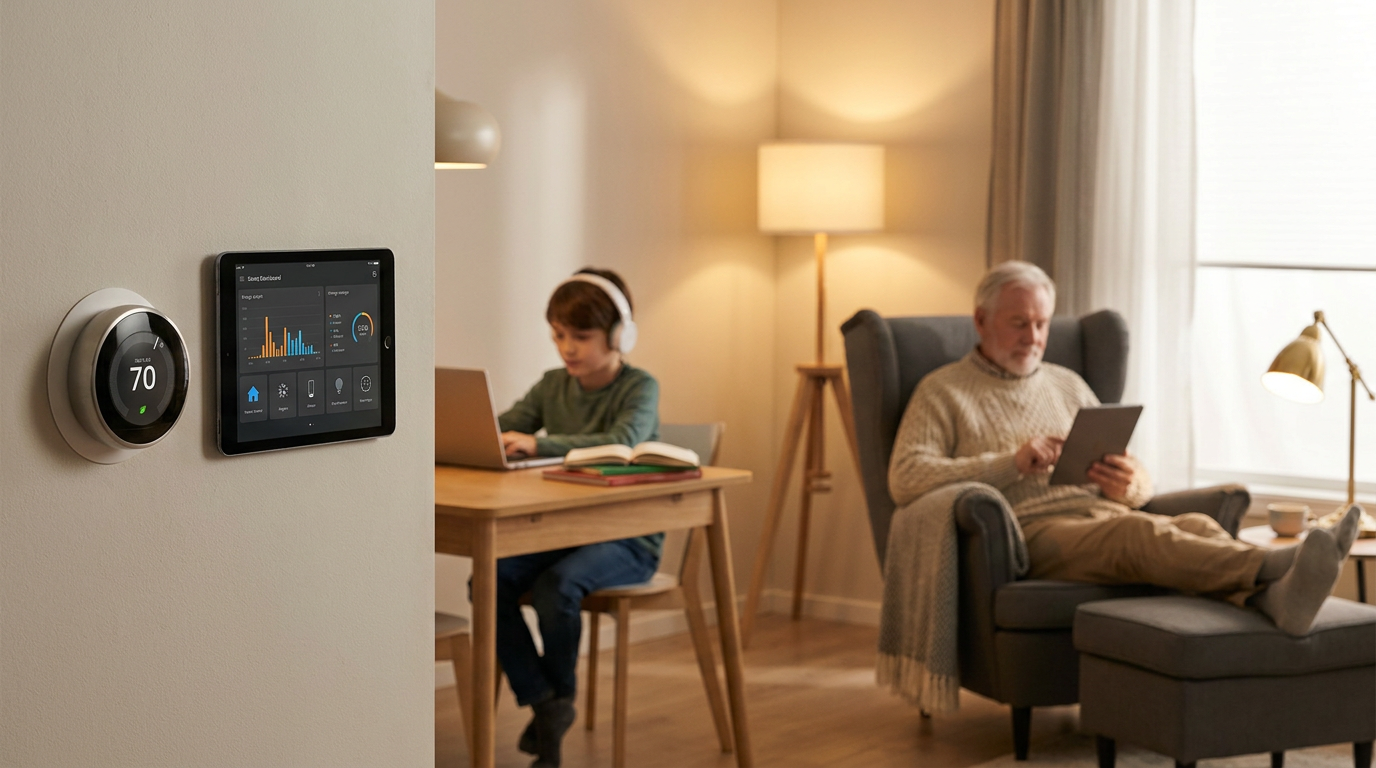
Smart thermostats are a clear example. According to ENERGY STAR, certified smart thermostats can save roughly 8% on heating and cooling bills, or about $50 per year on average in U.S. homes. On the surface, that may sound modest. But the deeper value is behavioral. These devices can learn schedules, adjust when people leave home, maintain stable temperatures for children or older adults, and allow remote control from a phone. They support comfort without requiring constant manual input.
For families, this matters because daily life is rarely linear. School pickups shift. Workdays run long. Older relatives may need warmer rooms. Children may move between study time and sleep time in ways that affect comfort preferences. Automation can absorb some of that variation. When systems respond intelligently to household patterns, they reduce the number of small tasks that consume attention. That is where modern convenience has real value.
Still, automation should not be romanticized. Its benefits depend on device compatibility, user adoption, setup quality, and internet reliability. A smart thermostat that no one understands will not save much energy. A security system with confusing permissions may frustrate everyone. The goal is not maximum automation. It is selective automation that solves real household problems.
Where automation helps most in family life
The strongest use cases are usually the least flashy. Climate control, lighting schedules, leak detection, door access, and energy monitoring often deliver more real value than trendier smart devices. These tools reduce repetitive decisions and help households manage risk. For a busy family, the ability to check whether the front door is locked, whether the home is too warm, or whether water use has spiked can create meaningful peace of mind.
Automation can also support caregiving. If an older adult lives in the home, voice-controlled lighting, simpler thermostat management, and sensor-based routines can help maintain comfort and independence. If children move through changing schedules, timed lighting and routine-based controls can reduce friction around mornings and evenings. None of this replaces human care, but it can make the home easier to manage.
The best approach is incremental. Start with one or two systems that address clear pain points, then assess whether they genuinely improve household flow. Families often overestimate the value of novelty and underestimate the value of consistency. A home that quietly works better every day is more useful than one filled with disconnected smart features.
Caregiving is reshaping home priorities
The modern family home increasingly operates as a place of care. This is one of the most important trends in 2026, and it extends beyond aging parents. Care can include childcare, recovery from illness, disability support, and the day-to-day logistics of helping relatives remain safe and connected. As caregiving rises, home priorities shift from appearance-based features to function-based ones.
Pew’s finding that 10% of U.S. adults provide care for a parent age 65 or older captures only part of the larger shift. Caregiving often changes room use, time allocation, household noise levels, mobility requirements, and transportation patterns. A dining room may become a temporary workspace. A guest room may become a care room. A main-floor powder room may suddenly feel inadequate if mobility changes. These are not edge cases. They are increasingly common transitions within ordinary households.
This is why concepts like aging in place and universal design are moving into mainstream housing decisions. Families are looking for homes with fewer steps, wider doorways, accessible bathrooms, better lighting, and layouts that reduce strain for both caregivers and care recipients. Even households that do not need these features immediately are paying more attention to them because they understand that family circumstances can change quickly.
The data-driven insight here is simple. Homes that can absorb caregiving demands tend to retain functional value longer. A family may not know exactly what future care needs will look like, but they can still evaluate flexibility. A home that allows a bedroom on the main level or a bathroom upgrade later on offers more resilience than one with a rigid and compartmentalized layout.
Flexible layouts matter more than ever
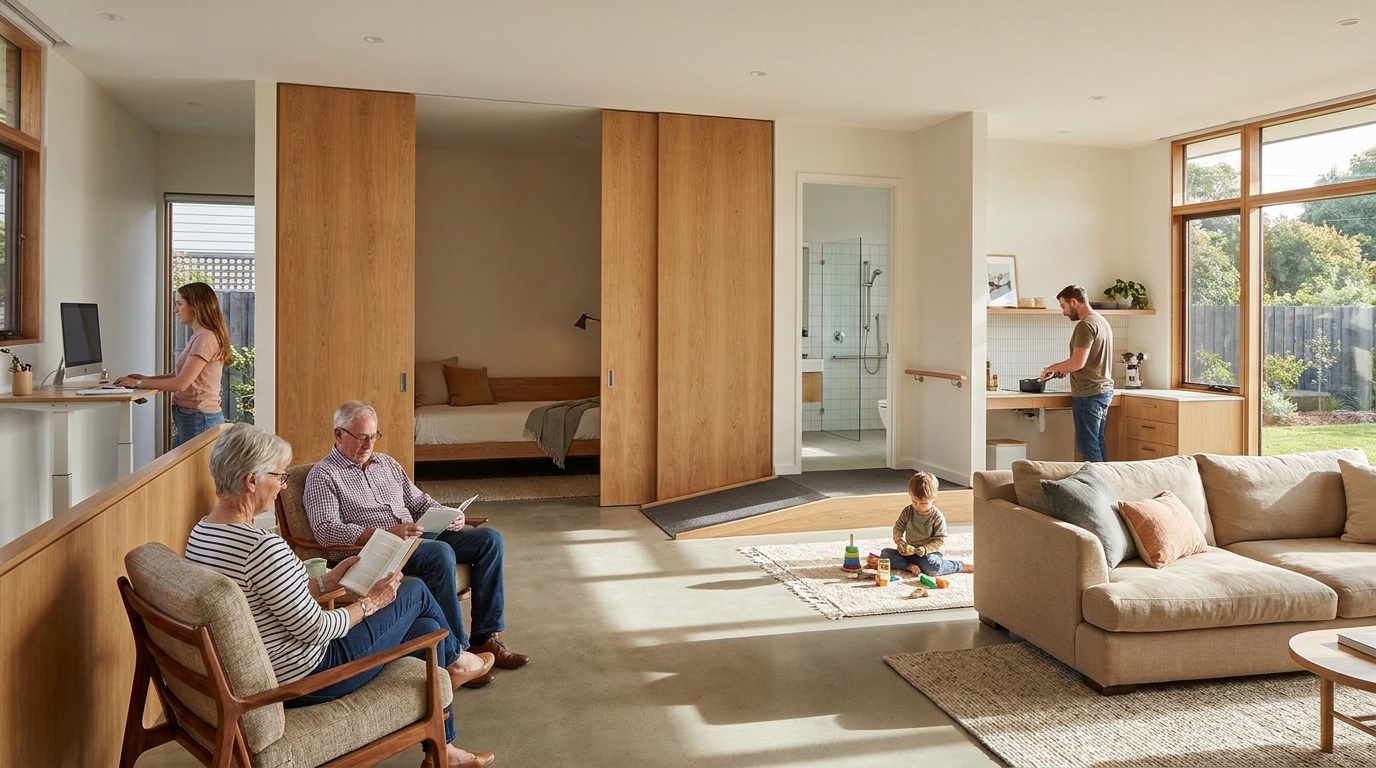
If there is one housing principle that defines family living in 2026, it is flexibility. Households need rooms that can shift purpose over time. A nursery may become an office. A den may become a teen study room. A finished basement may become an elder suite. Static design is giving way to adaptive space planning, especially in markets where moving frequently is costly or unrealistic.
This is one reason accessory dwelling units and semi-independent spaces are gaining attention. They can create privacy within proximity, which is often the key challenge in multigenerational homes. Not every family needs a separate unit, but many benefit from homes that have gradations of privacy rather than a simple public-private split. A small sitting area, a dedicated bathroom, or a separate entrance can significantly improve long-term household harmony.
Flexible design also improves efficiency. A room that works for multiple functions increases the productive use of every square foot. For households under affordability pressure, this matters because it reduces the need to pay for excess space that is only occasionally used. Smarter layout can sometimes outperform larger size. That is a valuable insight in expensive housing markets.
Families making housing decisions should pay close attention to what can be modified affordably. Flooring transitions, lighting, storage systems, acoustics, and furniture layout all shape whether a space can evolve. It is often easier to buy a home with good bones and upgrade key functions than to search endlessly for a perfect floor plan that may not exist within budget.
Questions families should ask when evaluating space
Rather than focusing only on bedroom count or headline square footage, households benefit from a more diagnostic approach. A home performs better over time when space aligns with behavioral patterns and possible future transitions. The following questions can help families assess whether a property is truly adaptable.
- Can one or more rooms serve dual purposes, such as office and guest room, or playroom and study area?
- Is there a path to greater accessibility if an older adult needs support later on?
- Are there enough bathrooms or plumbing options to support a larger or more layered household?
- Can privacy be maintained through layout, sound separation, or independent access?
- Does the home support digital routines, including work, school, and connected devices?
- Are utility and energy costs manageable if more people begin living in the home?
These questions are not abstract. They help reveal whether a property supports a family’s likely future, not just its present snapshot. In a market defined by uncertainty, that distinction matters.
What family households often get wrong
One of the most common mistakes households make is treating today’s needs as permanent. A home can feel ideal for a narrow moment and still perform poorly across a five-year period. Children age into new routines. Work patterns change. Caregiving arrives unexpectedly. Costs increase. The more a family can think in scenarios rather than static assumptions, the better its housing decisions tend to be.
Another misconception is that smart-home tools automatically create efficiency. In reality, poorly integrated technology can generate frustration, expense, and digital clutter. Households should be wary of buying devices without a clear use case, platform strategy, or maintenance plan. The best home technology feels almost invisible because it supports routine without demanding constant attention.
There is also a persistent assumption that shared living means a household has somehow failed to achieve independence. The data suggests the opposite. Many families are using shared living strategically to manage affordability, childcare, eldercare, and long-term planning. In a high-cost environment, interdependence can be a rational and resilient choice.
Finally, families often underestimate operational costs. It is easy to focus on purchase price or rent and ignore internet upgrades, energy usage, storage needs, accessibility modifications, and the cost of adding comfort systems for more people. A truly data-driven decision considers the full monthly and annual performance of the home, not just the entry cost.
How to make data-driven family living decisions in 2026
Good decisions come from translating broad trends into household-specific choices. Families do not need advanced analytics software to think in a data-driven way. They simply need to define priorities clearly, use relevant evidence, and compare scenarios honestly. The goal is to reduce guesswork around space, technology, and affordability.
A practical approach begins with household mapping. List who lives in the home now, who may live there within five years, and what each person needs from the space. That includes work routines, school requirements, care responsibilities, mobility considerations, sleep patterns, privacy needs, and digital dependence. This turns vague preferences into measurable constraints.
Next, evaluate the home as a system. Consider housing cost, energy cost, internet reliability, commuting time, room flexibility, maintenance demands, and technology compatibility together. A cheaper home that requires constant adaptation may cost more in stress and upgrades than a slightly more expensive one with stronger long-term fit. Families often discover that the best value lies in performance, not headline price.
Finally, test the home against realistic scenarios. What happens if one parent works from home full time. What happens if a grandparent moves in. What happens if a child needs quiet space for schoolwork. What happens if energy prices rise. Scenario planning is especially useful in family housing because change is normal, not exceptional.
A practical household decision framework
Families can use the following framework to guide housing and technology choices in 2026:
- Affordability: Measure total monthly cost, not just mortgage or rent. Include utilities, broadband, maintenance, commuting, and likely upgrades.
- Adaptability: Identify whether rooms can change use over time without major renovation.
- Connectivity: Assess broadband quality, Wi-Fi coverage, and device capacity for work, school, healthcare, and automation.
- Care readiness: Review accessibility, bathroom placement, entry conditions, and sleeping arrangements for possible caregiving needs.
- Efficiency: Prioritize technologies that reduce repetitive tasks, save energy, or improve comfort in measurable ways.
- Privacy and harmony: Consider sound separation, storage, entrances, and routine conflicts in shared spaces.
This framework is useful because it connects household experience to measurable factors. It does not assume every family wants the same outcome. It helps each household identify the trade-offs that matter most.
The outlook for family living beyond 2026
The trends shaping family living today are unlikely to disappear soon. Affordability pressure remains persistent in many urban and suburban markets. Populations will continue aging. Technology will become more integrated into domestic life, not less. For this reason, households that adapt early to flexible, connected, and care-aware living are likely to be better positioned over time.
We should also expect a broader cultural shift in how successful family housing is defined. The ideal home may become less about maximizing separation and more about balancing independence with support. It may be valued not for having specialized rooms for every purpose, but for offering adaptable spaces that evolve with household needs. Efficiency, comfort, resilience, and digital readiness will increasingly shape what families consider desirable.
For policymakers, builders, and property professionals, this creates a clear signal. Housing design and planning should better reflect the realities of multigenerational living, hybrid work, caregiving, and connected-home infrastructure. For households, the message is equally clear. The smartest move is not to chase a static image of family life. It is to choose spaces and systems that can absorb change with less friction.
Family living in 2026 is more dynamic than in previous decades, but it is not less meaningful. In many ways, it is becoming more intentional. Families are using data, technology, and shared planning to create homes that work harder for the people inside them. That may be the most important trend of all. The future of family living is not simply bigger, newer, or smarter. It is better aligned with how real households actually live.
Final takeaway
If there is one lesson from the data, it is that modern family living is becoming less standardized and more strategic. Multigenerational households are growing. Broadband has become essential infrastructure. Automation is valuable when it solves practical problems. Caregiving is reshaping what households need from space. Flexible design is no longer a bonus feature. It is a core advantage.
The families that navigate these shifts best are usually not the ones with the most space or the newest devices. They are the ones that understand their own patterns clearly and make decisions with future scenarios in mind. In 2026, that is what data-driven family living really means. It means choosing homes, tools, and routines that support comfort, efficiency, and resilience across changing stages of life.



No Comment! Be the first one.