



Buyer behavior has always reflected a mix of need, habit, emotion, and context. What has changed in the modern marketplace is the precision with which those forces can be tracked, measured, and influenced. Every search, click, abandoned cart, loyalty scan, store visit, and product comparison leaves behind a small behavioral signal. When those signals are aggregated, businesses gain a far sharper view of what consumers want, what they hesitate over, and what ultimately drives a purchase.
Table Of Content
- Buyer Behavior Has Moved From Observation to Measurement
- Economic Pressure Is Reshaping What Consumers Value
- The Rise of Strategic Shopping
- E-commerce Is Not Replacing Stores. It Is Rewiring the Journey
- Personalization Has Become One of the Most Powerful Behavioral Tools
- Why Personalized Systems Feel So Convincing
- Sentiment and Spending Do Not Always Move Together
- Choice Architecture Can Inform or Manipulate
- Dark Patterns and the Cost of Friction by Design
- The Psychology Behind Data-Driven Consumer Choices
- How Businesses Use Data Responsibly to Improve Decisions
- What Informed Consumers Can Do in a Data-Driven Marketplace
- Practical Signals to Watch Before You Buy
- How Buyer Behavior Is Evolving in Canada and the U.S.
- The Future of Buyer Behavior Will Be More Intelligent and More Contested
- Conclusion
For consumers, this data-rich environment can feel empowering. It is easier than ever to compare prices, read reviews, find alternatives, and buy from almost anywhere. At the same time, the same systems that help people discover useful products can also steer attention, amplify urgency, and make certain choices feel more attractive than they really are. Modern buyer behavior is no longer just about personal preference. It is increasingly shaped by the intelligence layer built into digital platforms, retail strategies, and pricing systems.
That tension is especially visible in Canada and across North America. In Canada, retail spending reached $865.2 billion in 2024, while retail e-commerce revenue reached $73.7 billion, up 9.0% year over year. Statistics Canada also reported that retail e-commerce sales accounted for 6.1% of total retail trade in December 2024. Those numbers matter because they confirm that online shopping is no longer a side channel. It is a structural part of how people browse, compare, and purchase.
This article explores how data shapes buyer behavior through economic pressure, digital convenience, personalization, and platform design. It also looks at the limits of data and the growing concern that more information does not always produce better decisions. The central idea is simple: today’s consumers have more tools than ever, but businesses also have more ways to shape attention and choice. Understanding that balance is now essential for anyone trying to make smarter purchasing decisions or build stronger customer strategies.
Buyer Behavior Has Moved From Observation to Measurement
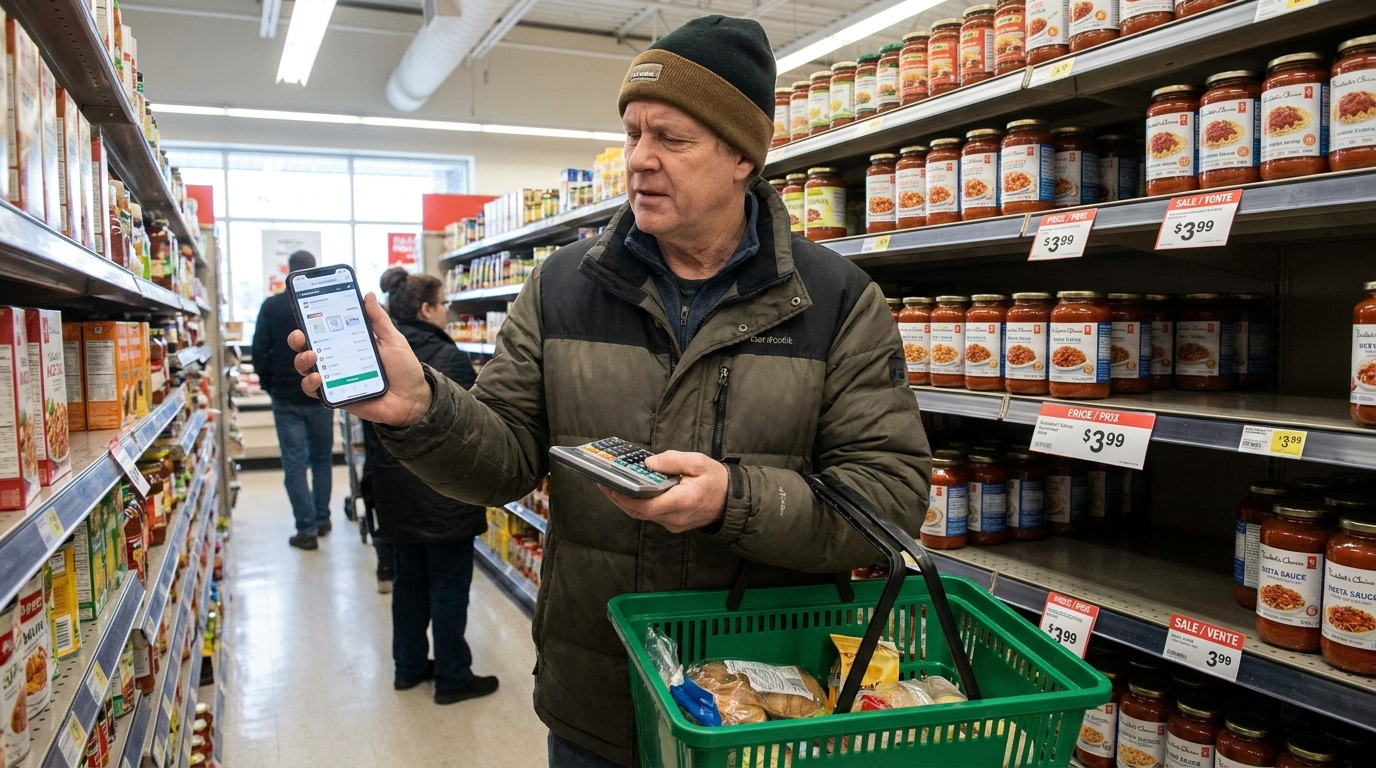
Traditional retail relied heavily on observation. A store could see which products sold quickly, which displays attracted attention, and how traffic moved through aisles, but much of the buyer journey remained invisible. Digital commerce changed that completely. Now, retailers can see how long someone viewed a product page, which recommendation led to a click, whether price changes improved conversion, and how different customer segments responded to the same offer.
That level of measurement matters because buyer behavior is rarely linear. Consumers may discover a product on social media, compare it on a marketplace, read reviews on a third-party site, and then purchase it in a physical store days later. The decision is distributed across channels and moments. Data analytics allows businesses to reconstruct these fragmented paths and identify which touchpoints matter most.
For consumers, the result is a marketplace that often feels smoother and more relevant. Search results improve over time. Product recommendations become more aligned with prior interests. Promotions arrive at moments when they seem useful. Yet relevance is never neutral. What appears as convenience is also a form of commercial optimization, and that means every recommendation carries both informational value and persuasive intent.
This is why buyer behavior is now best understood through a data lens. Businesses are no longer reacting only to what consumers buy. They are actively modeling what consumers are likely to want next, how sensitive they are to price, and what kind of interface or message is most likely to move them toward action.
Economic Pressure Is Reshaping What Consumers Value
Data alone does not drive buyer behavior. The broader economy still sets the conditions under which people make decisions. In the last few years, inflation has been one of the most important forces shaping consumer habits across North America. Even as inflation rates cooled, its behavioral effects remained. People remember price shocks longer than they remember the official inflation numbers.
In Canada, Statistics Canada reported that food purchased from stores rose 2.2% in 2024, down from 7.8% in 2023. That deceleration sounds encouraging, but it does not mean households feel relief in full. Grocery costs still take up a larger share of budgets than before the inflation surge, and that shifts how people shop. Consumers are not just buying different things. They are also buying with different expectations, different thresholds for value, and different levels of patience.
Statistics Canada also found that many Canadians changed shopping habits by seeking lower prices, visiting different store types, and stretching budgets more strategically. This point is crucial because it expands the meaning of buyer behavior. A purchase is not just a yes or no decision. It reflects tradeoffs across brand, channel, timing, quantity, and perceived necessity.
When budgets tighten, value becomes more than a discount. Consumers begin to evaluate whether a product lasts longer, solves a problem more effectively, or offers less risk than a cheaper alternative. That is why inflation often boosts demand for private labels, promotional bundles, discount formats, and loyalty programs. It also increases store switching. If trust in one retailer weakens on price, consumers become more willing to test another.
The Rise of Strategic Shopping
Many households now behave less like passive buyers and more like portfolio managers. They split spending across channels, wait for promotions, compare package sizes, and use apps to track deals. Grocery shopping offers the clearest example. Consumers may buy staples from a discount chain, specialty items from a premium retailer, and bulk goods from a warehouse club, all within the same month. The behavior is rational, but it also reflects the pressure households feel to optimize every dollar.
This strategic approach extends well beyond food. In apparel, electronics, home goods, and personal care, many buyers now delay purchases until they see a price drop or stronger justification. They read more reviews, watch more video comparisons, and revisit carts multiple times. What looks like indecision is often careful budget management informed by digital tools.
From a business perspective, this means brand loyalty is more conditional than it once was. Customers may like a brand, but still leave if a competitor offers a stronger price, clearer value, or easier experience. Data helps companies detect this change by monitoring churn, switching patterns, coupon use, and basket composition. The firms that respond well are usually the ones that understand that price sensitivity is not just about low income. It is about uncertainty, memory, and perceived fairness.
E-commerce Is Not Replacing Stores. It Is Rewiring the Journey
One of the most persistent misconceptions in retail is that e-commerce is simply replacing physical shopping. The evidence points to something more nuanced. Consumer behavior is becoming omnichannel, which means online and offline experiences increasingly shape each other. A shopper may inspect an item in person, then buy it online later. Another may research online first, then purchase in-store for speed or certainty.
Canada’s e-commerce figures illustrate this structural shift. With $73.7 billion in retail e-commerce revenue in 2024 and online sales representing 6.1% of total retail trade in December 2024, digital commerce is clearly embedded in everyday purchasing. Yet physical stores remain highly relevant. They provide immediacy, tactile confidence, local convenience, and lower return friction for many categories.
The real transformation is not channel substitution. It is the blending of channels into a single decision system. Online reviews influence in-store purchases. In-store displays trigger later online searches. Mobile phones have become the bridge connecting these moments, allowing consumers to compare prices in real time, check stock, redeem offers, and revisit prior browsing behavior while standing in a store aisle.
This matters because omnichannel behavior generates richer datasets. Businesses can learn not only what consumers buy, but also how digital and physical environments interact. They can see whether a product page drives store traffic, whether app users spend more frequently, and whether customers who use multiple channels are more loyal over time. In many cases, they are.
Personalization Has Become One of the Most Powerful Behavioral Tools
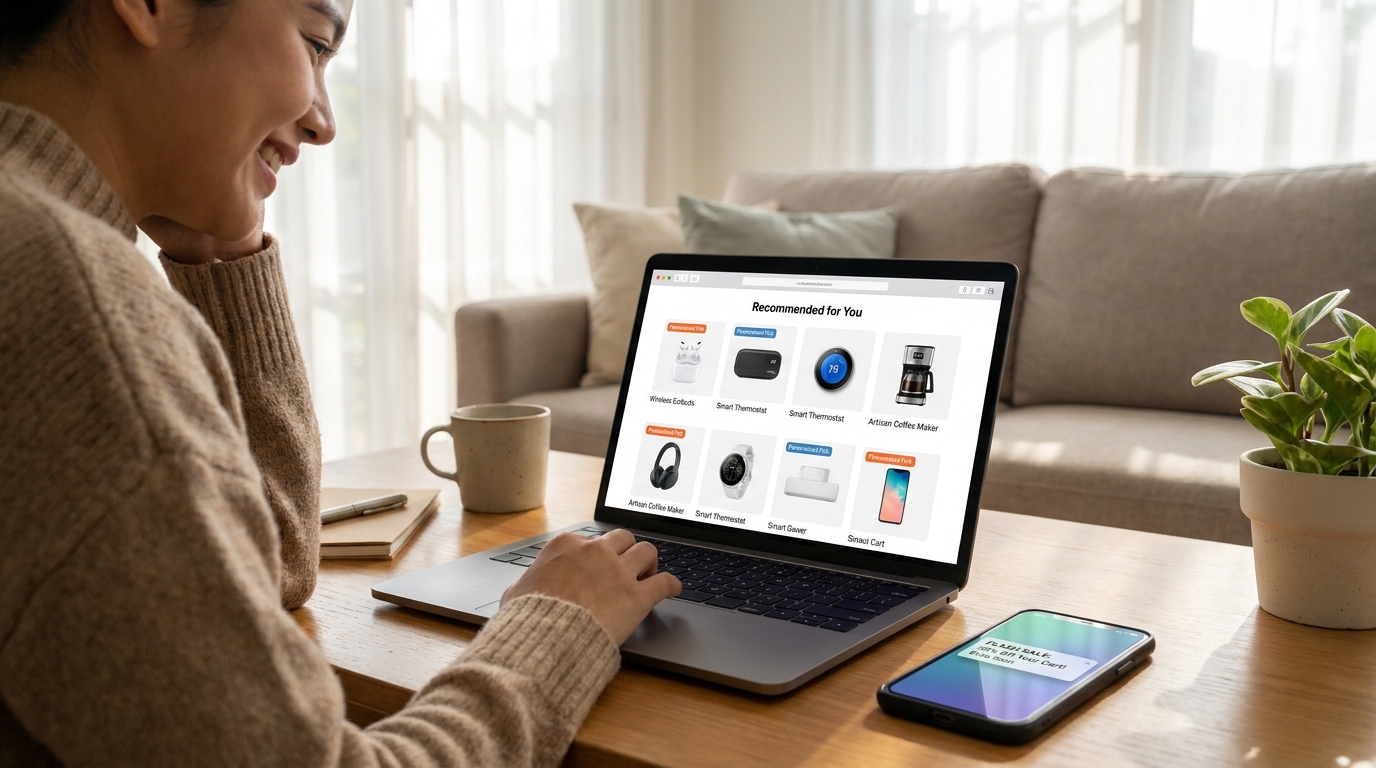
If one data-driven capability defines modern commerce, it is personalization. Personalization uses browsing history, purchase records, location, demographics, and behavioral signals to tailor products, offers, messages, and timing to individual users or customer segments. In theory, this improves relevance. In practice, it also changes what consumers notice, what they desire, and what they end up buying.
McKinsey reports that personalization can increase revenues by 5% to 15%, lift marketing ROI by 10% to 30%, and reduce customer acquisition costs by as much as 50%. Those numbers help explain why retailers, marketplaces, and consumer brands continue to invest in recommendation engines, loyalty analytics, customer data platforms, and AI-driven segmentation. Personalization is not a surface feature. It is now a core revenue engine.
For consumers, personalization can genuinely improve the shopping experience. It can reduce search fatigue, highlight relevant substitutes, and surface products that fit previous preferences or budget ranges. Someone who shops for eco-friendly household products may appreciate seeing more of them. A parent buying school supplies may welcome reminders and category bundles during a seasonal rush. Relevance saves time.
But personalization also creates a more adaptive form of persuasion. It can identify who responds to urgency, who is likely to buy on payday, who tends to add premium accessories, and who abandons carts unless given a discount. In other words, personalization does not only help consumers find what they need. It helps businesses predict which message or interface is most likely to trigger action.
Why Personalized Systems Feel So Convincing
Personalized systems often work because they reduce friction in the decision process. Instead of reviewing hundreds of options, the consumer sees a narrowed set that appears curated. This creates cognitive ease, and cognitive ease often feels like trust. When a platform consistently shows relevant products, users begin to assume that its suggestions are helpful by default.
That assumption can be useful, but it can also weaken critical evaluation. Consumers may compare fewer alternatives, spend less time checking price history, or overlook whether recommendations are sponsored. The smarter the system feels, the easier it is to forget that its objective is not merely guidance. Its objective is conversion.
This is where behavioral economics becomes especially relevant. People are influenced not only by product quality and price, but by framing, timing, defaults, scarcity cues, and social proof. Personalization allows those classic behavioral levers to be deployed with much more precision. A countdown timer shown to everyone is one thing. A countdown timer shown only to users most likely to respond is another.
Sentiment and Spending Do Not Always Move Together
Another important lesson from recent data is that consumer confidence does not always translate into actual spending. McKinsey reported that U.S. consumer optimism in late 2024 reached its highest level since before the COVID-19 pandemic. That sounds like a strong signal for retailers, but McKinsey also warned that intent to spend does not always become real spending.
This gap matters because buyer behavior is shaped by more than mood. A consumer can feel optimistic about the future and still delay discretionary purchases because rent is high, debt costs remain elevated, or grocery bills still feel heavy. The memory of inflation can outlast the inflation cycle itself. Households may continue behaving cautiously even after macro indicators improve.
For analysts and businesses, this means survey responses should be interpreted alongside transaction data, loyalty behavior, category shifts, and channel usage. Confidence tells us how people feel. Spending data tells us what tradeoffs they are actually making. Both are useful, but neither is complete on its own.
For consumers, the sentiment-spending gap is also revealing. It shows that modern buyer behavior is often disciplined rather than impulsive, even in an environment designed to stimulate impulse. People may browse aspirationally but purchase selectively. They may save products for later, use wish lists as a planning tool, and compare options across weeks instead of minutes. That delay is itself data, and businesses increasingly analyze it for clues about pricing and timing.
Choice Architecture Can Inform or Manipulate
One of the most important questions in buyer behavior today is not just what consumers choose, but how those choices are presented. This is the domain of choice architecture, the structure within which decisions are made. On a website or app, choice architecture includes button placement, checkout flow, subscription defaults, urgency labels, recommendation panels, and cancellation processes.
Good choice architecture can simplify complex decisions. It can make it easier to compare options, understand delivery times, see total costs, and evaluate alternatives. But poor or deceptive design can do the opposite. It can obscure fees, make opt-outs difficult, pressure users into rushed decisions, or steer them toward choices they might not make under clearer conditions.
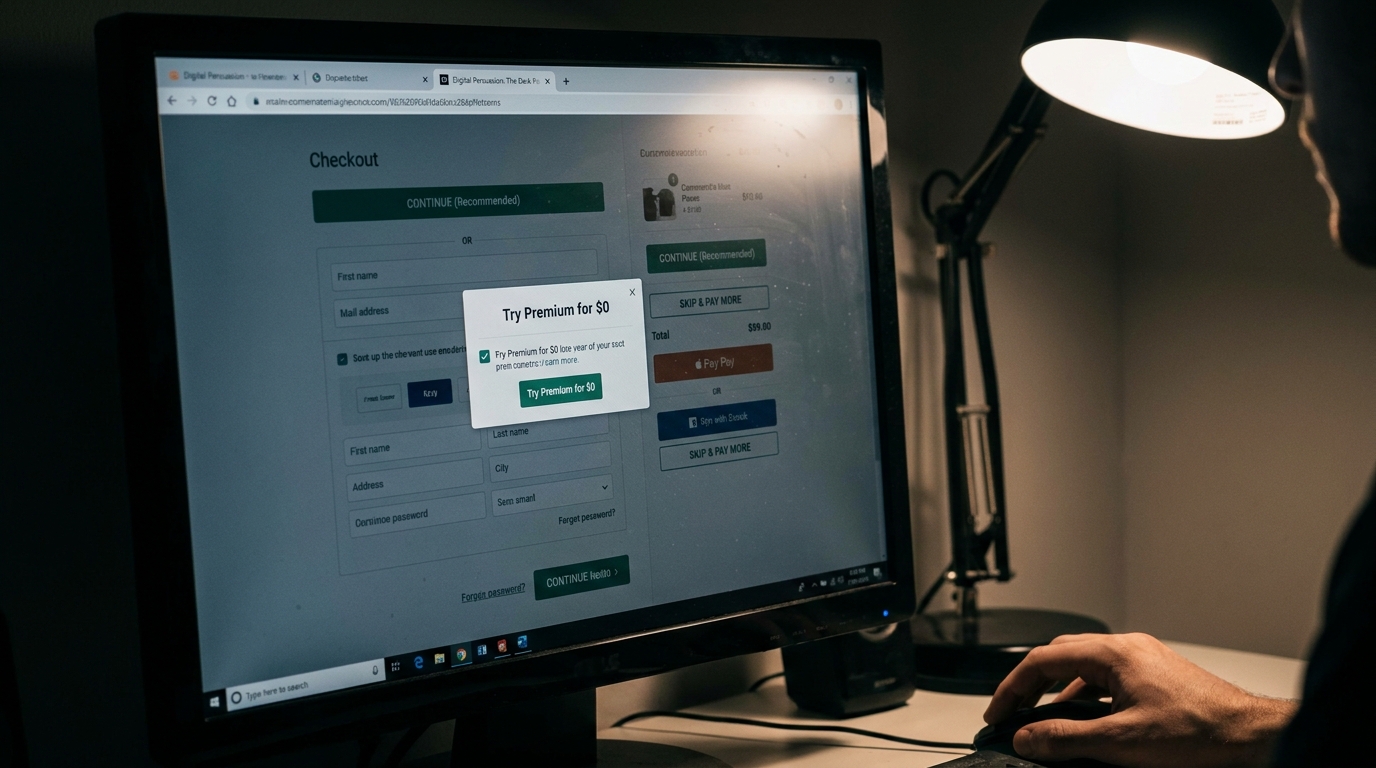
The Federal Trade Commission highlighted the scale of this issue in 2024. In an international sweep, the FTC reported that nearly 76% of 642 websites and mobile apps reviewed appeared to use at least one possible dark pattern, and nearly 67% used multiple possible dark patterns. These patterns can include hidden disclosures, confusing navigation, preselected options, emotionally loaded prompts, or cancellation systems designed to exhaust users.
This is the central counterpoint to the idea that more data automatically improves buyer decisions. Data can make systems smarter, but smart systems can be used to exploit attention and reduce resistance. A highly optimized interface may be efficient for the platform while being less transparent for the consumer.
Dark Patterns and the Cost of Friction by Design
Dark patterns deserve attention because they reveal how buyer behavior can be shaped without explicit persuasion. A pop-up that frames declining an offer as irresponsible, a hidden checkbox that opts someone into marketing, or a cancellation process spread across multiple screens all change outcomes. The consumer still clicks, but the environment has been engineered to make one path easier than the others.
For businesses, this is a trust issue as much as a compliance issue. Short-term gains from manipulative design can create long-term reputational damage. Consumers remember when a platform made them feel trapped, misled, or pressured. In a market where alternatives are often one search away, trust has become a measurable commercial asset.
For consumers, awareness is the first defense. The smartest digital shoppers are not just comparing products. They are also evaluating interfaces. They ask whether urgency claims are credible, whether a discount is genuine, and whether the total cost is clear before purchase. That kind of literacy is becoming as important as price awareness.
Modern buyer behavior is shaped by a tension between empowerment and influence. Consumers have more information than ever, but businesses also have more precise tools to direct attention, urgency, and choice.
The Psychology Behind Data-Driven Consumer Choices
Data matters because human decision-making is not purely rational. Most people do not run a formal cost-benefit analysis every time they buy shampoo, order takeout, or choose a streaming subscription. They rely on shortcuts. They trust familiar brands, respond to visual cues, avoid decision fatigue, and look for signs that a choice is safe and socially validated.
Behavioral data allows businesses to map those shortcuts at scale. They can see which categories trigger impulse, which pages reduce hesitation, and which forms of social proof improve conversion. Reviews, star ratings, low stock notices, bestseller labels, and personalized discounts all tap into specific psychological responses. None of these tools is new in principle. What is new is the precision with which they can be targeted and tested.
This is why consumer behavior analytics has become so influential. It turns psychology into measurable patterns. It helps companies distinguish between customers who need reassurance and customers who need urgency. It reveals whether a buyer is driven more by convenience, status, savings, habit, or fear of missing out. Once those motivations are visible, they can be operationalized.
That does not mean consumers are powerless. It means they are participating in a marketplace where persuasion is increasingly systematic. Understanding the mechanics behind that system can make people less reactive and more deliberate, which is one of the most practical benefits of studying buyer behavior.
How Businesses Use Data Responsibly to Improve Decisions
The most effective use of data is not manipulation. It is clarity. Businesses that understand buyer behavior well can improve inventory planning, reduce irrelevant marketing, offer better service, and build experiences that feel more intuitive. When done responsibly, analytics can make commerce more efficient for both sides.
For example, better demand forecasting helps retailers keep essential products in stock and avoid over-ordering. Customer segmentation can help brands send fewer but more relevant messages. Omnichannel data can reveal whether shoppers want in-store pickup, local delivery, or more flexible returns. These improvements are commercially valuable, but they also reduce friction for consumers.
Responsible data use usually shares a few characteristics. It is transparent about how information is collected and used. It prioritizes relevance without hiding costs or limiting autonomy. It treats privacy and consent as part of the customer experience, not as obstacles to growth. And it recognizes that long-term trust often matters more than short-term conversion spikes.
In categories where purchases carry financial or emotional weight, responsible analytics becomes even more important. Whether someone is choosing a grocery basket, a healthcare plan, or a home-related service, data should support better judgment rather than overpower it. That distinction may define the next phase of consumer trust.
What Informed Consumers Can Do in a Data-Driven Marketplace
Consumers do not need to reject digital commerce to shop more intelligently. They simply need to become more aware of how influence operates. A data-driven market rewards convenience, but informed consumers can add a layer of pause before reacting to every recommendation, timer, or promotional message.
One useful approach is to separate discovery from decision. It is fine to use personalized systems to explore options, but important purchases benefit from a second step that includes outside review sources, price comparisons, and a quick check for hidden conditions. This is especially true when a deal is framed as urgent.
Another useful habit is to track patterns in your own behavior. Are you more likely to overspend when shopping late at night? Do app notifications trigger impulse purchases? Do subscription trials quietly convert because cancellation is inconvenient? Self-awareness is one of the few advantages consumers can build that algorithms cannot fully automate against.
It also helps to recognize the difference between a lower price and better value. In an inflation-sensitive environment, the cheapest option is not always the most efficient one over time. Product quality, return policies, delivery reliability, and customer support all shape the true value of a purchase. Data can help reveal those factors, but consumers still need to interpret them.
Practical Signals to Watch Before You Buy
-
Check whether the discount is meaningful by comparing the current price with recent historical pricing or competitor listings. A dramatic percentage off can be less impressive than it looks if the base price was inflated.
-
Look for signs of interface pressure, such as countdown timers, preselected add-ons, or confusing declines. These signals do not always mean an offer is bad, but they should slow your decision.
-
Use multiple sources of information when the purchase matters. Platform reviews, third-party reviews, return policy details, and total cost all deserve attention.
-
Be aware that personalization is shaping what you see. The first products displayed are not necessarily the best fit. They are often the most strategically placed.
-
Review subscription terms, renewal conditions, and cancellation steps before checkout. Friction often appears after the purchase, not before it.
How Buyer Behavior Is Evolving in Canada and the U.S.
Canada and the United States share many consumer trends, but their buyer behavior is shaped by somewhat different balances of inflation, retail structure, geography, and household expectations. In both markets, digital convenience is now standard, not exceptional. In both, personalization is expanding. And in both, consumers remain highly responsive to value signals even as confidence indicators improve.
In Canada, the data points to a consumer who is adapting strategically to elevated living costs. The combination of substantial retail spending, rising e-commerce activity, and persistent grocery pressure suggests a buyer who remains engaged but selective. Shopping behavior is being optimized around budget efficiency, store format choice, and practical tradeoffs.
In the United States, stronger consumer optimism has not erased caution. This creates a market where intent appears healthy, but spending decisions remain filtered through concerns about affordability and value. Businesses that rely only on confidence surveys may overestimate demand, while those that pair sentiment with transaction-level data are likely to see the market more clearly.
Across both countries, the common pattern is clear. Consumers have not become less sophisticated. They have become more conditional. They want convenience, but not at any cost. They appreciate relevance, but not if it feels invasive. They are willing to buy, but they increasingly expect transparency, flexibility, and proof of value.
The Future of Buyer Behavior Will Be More Intelligent and More Contested
Looking ahead, buyer behavior will likely become even more shaped by artificial intelligence, predictive analytics, and automated merchandising systems. Product discovery will feel faster. Offers will become more context-aware. Interfaces will adapt more quickly to user history, device, and intent. The commercial upside for businesses is obvious.
The unresolved question is whether these systems will make markets more transparent or simply more persuasive. That depends on regulation, design ethics, and consumer literacy. As scrutiny of privacy practices and dark patterns grows, businesses may face stronger pressure to prove that personalization is useful rather than manipulative. The firms that navigate this well will likely be those that understand trust as part of performance.
For consumers, the future is not about resisting data. It is about learning how to read the market signals data creates. A recommendation is a signal. A price drop is a signal. A personalized email is a signal. A difficult cancellation process is also a signal. The more people understand what those signals are designed to do, the more control they regain over their own decisions.
That is ultimately what makes buyer behavior such an important subject. It is not only about retail metrics or marketing efficiency. It is about how people make choices under pressure, under influence, and under conditions of abundant information. The more precisely those conditions can be mapped, the more carefully they should be examined.
Conclusion
Buyer behavior in today’s marketplace sits at the intersection of economics, psychology, and technology. In Canada and across North America, consumers are navigating inflation memory, omnichannel shopping, personalized recommendations, and growing concerns about trust. Data has made the buying journey more measurable and often more convenient, but it has also made influence more precise.
The key insight is that data does not determine consumer choices on its own. It shapes the environment in which those choices are made. That environment can support better decisions through relevance, transparency, and efficiency, or it can distort judgment through pressure, opacity, and manipulation. Businesses and consumers both have a stake in how that balance evolves.
For businesses, the path forward is responsible intelligence. Use data to improve service, understand value sensitivity, and respect autonomy. For consumers, the path is informed awareness. Use digital tools, but do not outsource judgment to them. In a data-driven economy, the smartest choice is often not the fastest one. It is the one made with clarity about who benefits, what is being signaled, and why the decision feels compelling in the first place.



No Comment! Be the first one.