



If you own a home, your HVAC system is one of the most important systems you rely on every day, even if you barely think about it until something stops working. HVAC stands for heating, ventilation, and air conditioning, and in practical terms it is the group of equipment that keeps your house warm in winter, cool in summer, and livable all year. It also plays a major role in how fresh the air feels, how much dust circulates, and how much you pay in utility bills. For many homeowners, HVAC feels technical and hard to understand, but the basics are actually manageable once you look at the system one piece at a time.
Table Of Content
- What an HVAC System Actually Does
- The Main Parts of a Typical Home HVAC System
- Heating equipment
- Cooling equipment
- Air distribution
- Controls and thermostat
- Filters, ventilation, and humidity control
- How Heating and Cooling Work in Plain Language
- Common Types of HVAC Systems in Homes
- Furnace with central air conditioning
- Heat pump systems
- Ductless mini-split systems
- Hybrid or dual-fuel systems
- Why Proper Sizing Matters More Than Most Homeowners Realize
- Efficiency Ratings and What They Mean for Homeowners
- Filters, Ventilation, and Indoor Air Quality
- What to Consider During HVAC Installation or Replacement
- Routine Maintenance That Actually Matters
- Signs Your HVAC System May Need Attention or Replacement
- Questions Homeowners Should Ask Contractors
- Heat Pumps, Incentives, and Current HVAC Trends
- The Bottom Line for Homeowners
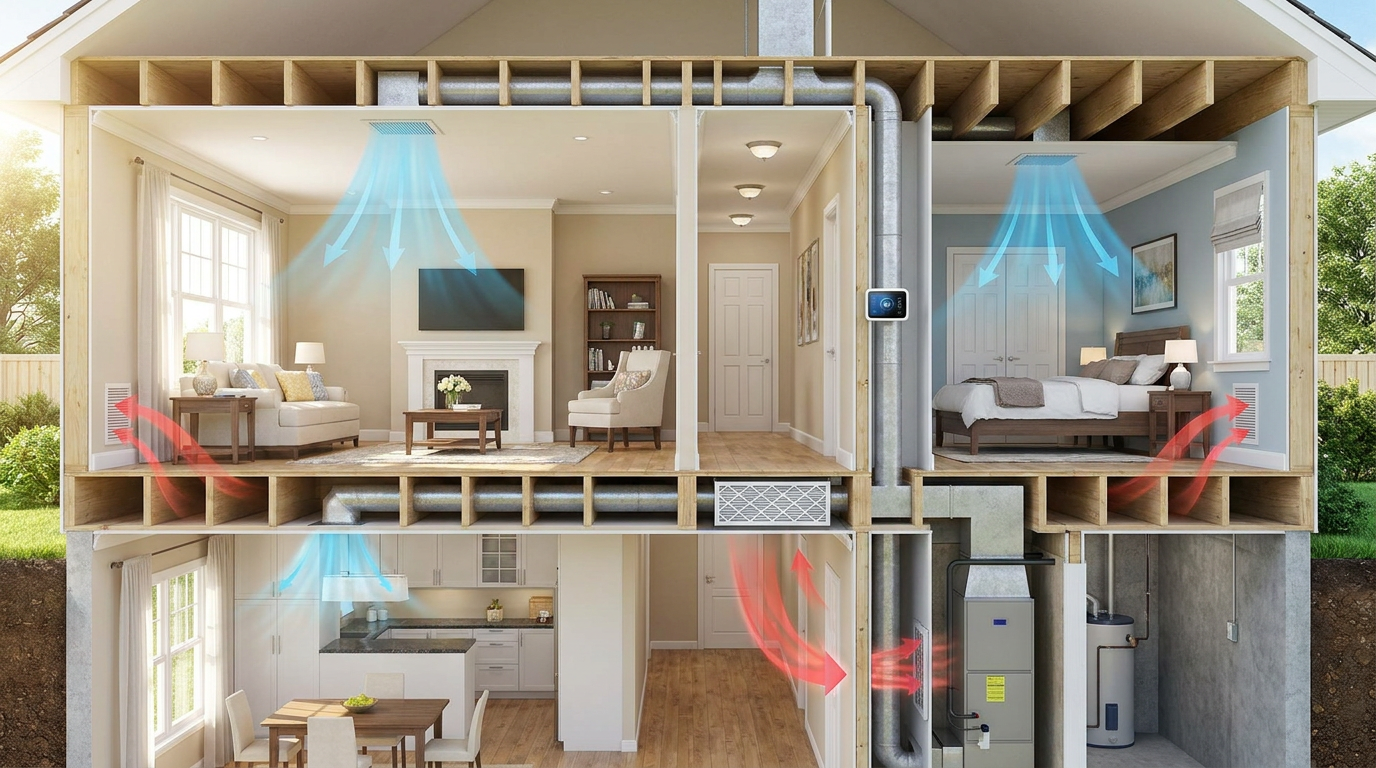
The first thing to understand is that HVAC is not one single appliance. It is a connected system made up of equipment that heats air, cools air, moves air, filters air, and controls when and how all of that happens. In many homes, that means some combination of a furnace, air conditioner, heat pump, ductwork, vents, thermostat, filter, and sometimes additional parts for ventilation or humidity control. Natural Resources Canada describes HVAC as part of the home working as a system, and that is the right way to think about it if you want to make good decisions about comfort, energy use, and replacement planning.
Homeowners often run into trouble when they focus only on the brand or the size of a furnace or air conditioner and ignore the rest of the system around it. A high efficiency unit installed on poor ductwork, with bad airflow or incorrect sizing, will not perform the way the brochure suggests. The U.S. Environmental Protection Agency has emphasized that improper sizing, refrigerant charge, airflow, and duct design can all reduce system performance and efficiency. In plain language, even good equipment can deliver bad results if the design and installation are sloppy.
This guide is meant to give you the essential knowledge without burying you in jargon. We will cover what each part of an HVAC system does, how common system types compare, what matters during installation or replacement, why filters and ventilation matter, and how to avoid some of the most common homeowner mistakes. If you understand these fundamentals, you will be better prepared to talk to contractors, evaluate quotes, and recognize the difference between a thoughtful recommendation and a sales pitch.
What an HVAC System Actually Does
At a basic level, an HVAC system handles three jobs. It heats the home when outdoor temperatures drop, cools the home when temperatures rise, and moves air through the house so that conditioned air reaches the rooms where you live. Depending on the setup, it may also filter particles out of the air, bring in outdoor air for ventilation, remove excess humidity, or add humidity during dry seasons. That is why HVAC affects not only comfort, but also indoor air quality and energy costs.
Many homeowners think of heating and cooling as separate topics, but the system works best when you see the whole picture. Your thermostat tells the equipment when to run. The equipment heats or cools air. The blower moves that air through ducts or another distribution method. Return vents pull indoor air back to the system, where it passes through a filter and starts the cycle again. If any one of those steps is weak, blocked, undersized, oversized, or poorly installed, the entire system can suffer.
That whole-house view matters because comfort problems are often caused by something other than the main unit itself. A second floor that stays hot may point to duct balancing issues, insulation problems, air leakage, or poor return air design rather than a weak air conditioner. A furnace that runs a lot may be responding to an oversized or undersized home load, a bad thermostat location, clogged filters, or duct losses. Looking only at the machine and not the system is one of the most common mistakes homeowners make.
The Main Parts of a Typical Home HVAC System
Heating equipment
The heating side of the system is what keeps the home warm during cold weather. In many homes, this is a furnace that burns natural gas, propane, or oil, or uses electric resistance heat. In other homes, especially newer all-electric setups, the heating source may be a heat pump that moves heat from outside to inside. Some homes also use boilers and radiators, but in a standard forced-air setup, the furnace or heat pump is the main source of heat.
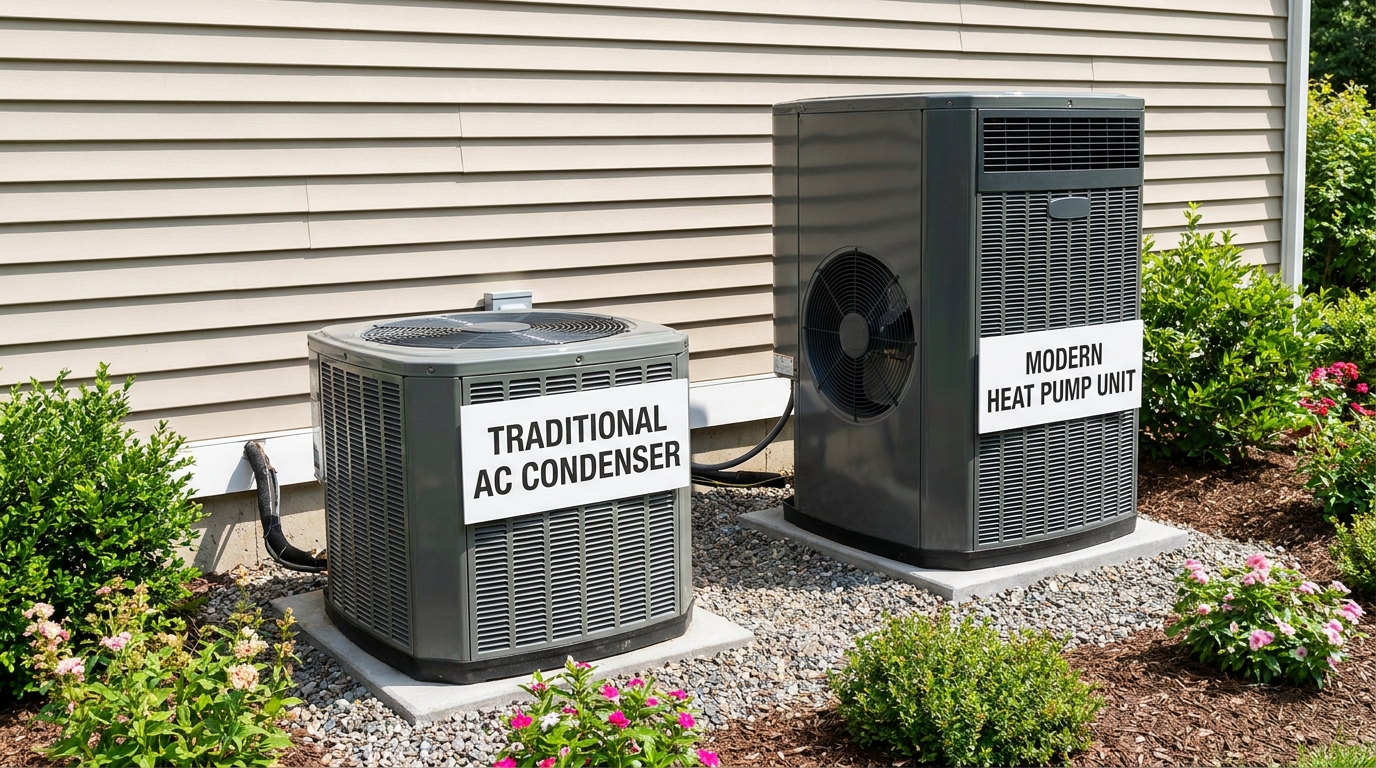
A furnace creates heat and then transfers it to the air that moves through the duct system. A heat pump works differently. Instead of creating heat from combustion, it moves heat using refrigeration technology. That can sound abstract, but the important homeowner takeaway is simple: a heat pump can often provide both heating and cooling in one system, and it does so by transferring heat rather than generating it directly.
Cooling equipment
In many houses, cooling is provided by a central air conditioner. This system uses refrigerant to absorb heat from inside the home and release it outdoors. Natural Resources Canada explains this with the standard refrigeration cycle: refrigerant evaporates indoors to absorb heat, then the system compresses and condenses that refrigerant outside to release the heat. That is why your outdoor unit blows warm air in summer. It is not making cool air outside. It is dumping indoor heat outside.
If you have a heat pump, the cooling process is very similar to an air conditioner. The difference is that a heat pump can reverse that process during heating season. That is one reason heat pumps are getting so much attention. They combine functions that used to require separate equipment, though whether they are the best choice depends on your climate, budget, utility rates, and house conditions.
Air distribution
Once air is heated or cooled, it has to be delivered around the house. In a forced-air system, that happens through ductwork, supply registers, and return grilles. Supply ducts send conditioned air to rooms. Return ducts bring indoor air back to the equipment so it can be filtered and conditioned again. If the ducts are leaky, poorly insulated, undersized, or badly routed, comfort and efficiency can drop quickly.
This is one reason ductwork deserves more respect than it usually gets. Homeowners often spend a lot of time comparing furnace efficiency ratings but overlook old, damaged, or poorly designed ducts. Good duct design and balancing help rooms receive the right amount of airflow. A strong piece of equipment connected to weak ducts is like a good engine paired with flat tires. The system cannot perform properly as a whole.
Controls and thermostat
The thermostat is the control center most homeowners interact with directly. It senses temperature and tells the HVAC equipment when to start and stop. Basic thermostats do the job, but programmable and smart thermostats add scheduling, remote access, and energy tracking. They can improve comfort and efficiency, though they are not magic. If the system is badly designed or the thermostat is installed in a poor location, a smart control will not fix those deeper issues.
Still, controls matter. A well-set thermostat can reduce unnecessary runtime and help maintain steadier indoor temperatures. Many replacement projects now include smart thermostats because homeowners want more visibility into system operation and energy use. They are useful tools, but they work best when the core HVAC system is already properly sized and installed.
Filters, ventilation, and humidity control
Air filters remove dust and other particles from the airstream before that air is recirculated through the home. Ventilation equipment may bring in outdoor air or exhaust stale indoor air. Humidity control devices can remove moisture in humid weather or add moisture when indoor air becomes too dry in winter. These functions are often treated as extras, but they directly affect how healthy and comfortable a home feels.
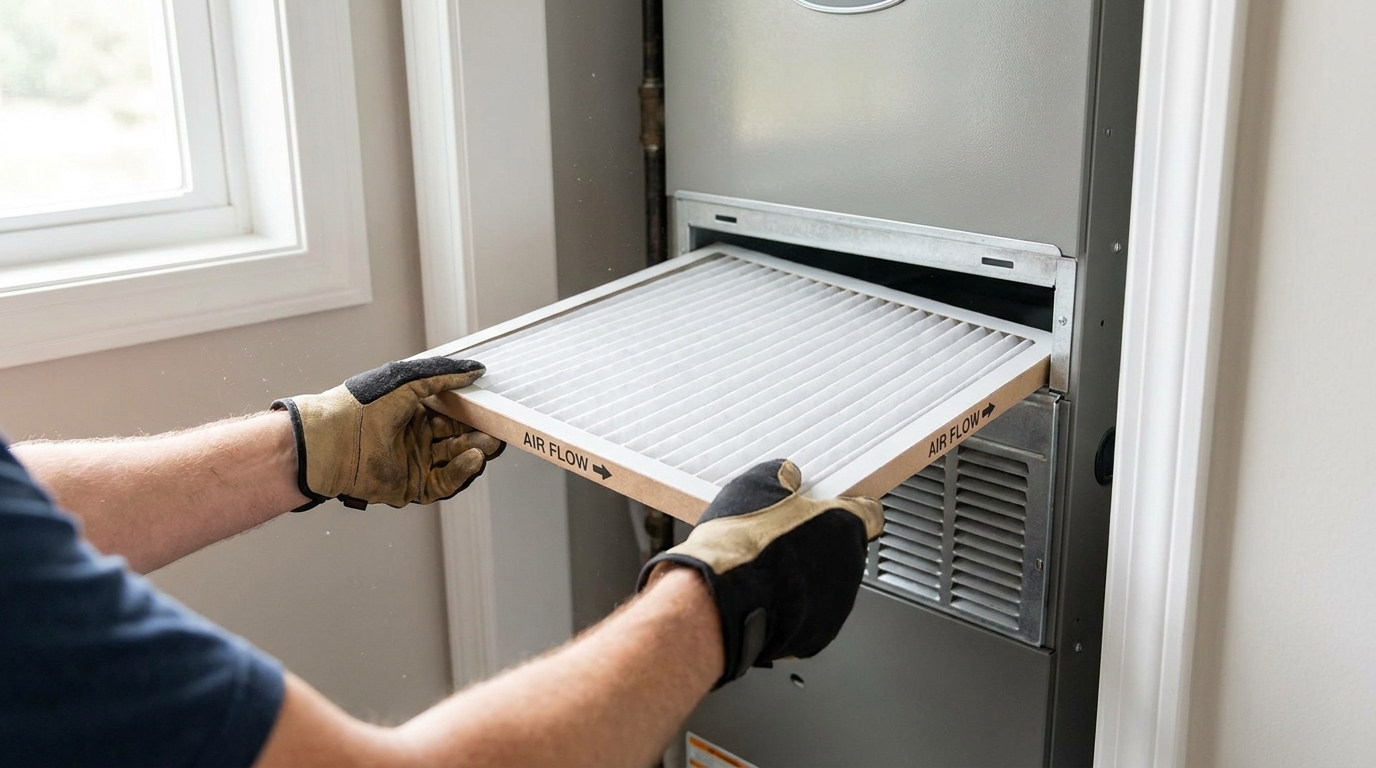
The EPA explains that MERV ratings compare how effectively filters capture particles. In general, a higher MERV rating means stronger particle capture, but that does not automatically mean every system should use the highest-rated filter available. If the filter is too restrictive for the system, airflow can suffer. Homeowners should confirm the highest-efficiency filter their specific system can handle rather than assuming more is always better.
How Heating and Cooling Work in Plain Language
Heating is fairly easy to picture. The system creates or captures heat, then transfers that heat into air or water that moves through the house. In a forced-air furnace system, indoor air is pulled back through returns, warmed by the equipment, and then pushed through supply ducts into living spaces. The thermostat shuts the system off when the indoor temperature reaches the set point. That cycle repeats as needed.
Cooling feels more confusing because air conditioners do not exactly create cold. What they really do is remove heat from inside the home. Refrigerant circulates between indoor and outdoor components. Indoors, it absorbs heat from the air. Outdoors, it releases that heat. The blower keeps air moving across the indoor coil so the house gradually cools down. If airflow is poor or refrigerant levels are wrong, the system cannot transfer heat effectively.
A heat pump uses the same basic refrigeration principles, but with the added ability to reverse direction. In summer, it moves heat from inside to outside, just like an air conditioner. In winter, it pulls heat from outdoor air and moves it inside. That may sound surprising if you live in a cold climate, but there is still heat energy in cold outdoor air. Modern cold-climate heat pumps are designed to make use of it more effectively than older models.
This matters because a lot of homeowners still believe heat pumps do not work in cold regions. That is outdated thinking. Natural Resources Canada notes that air-source heat pumps are the most common type and that there are more than 700,000 installed units across the country. Performance still depends on the climate, the exact model, the installation quality, and the home itself, but modern equipment can work well in many Canadian regions.
Common Types of HVAC Systems in Homes
Furnace with central air conditioning
This is one of the most common setups in North America. A furnace provides heat, and a separate central air conditioner provides cooling. They usually share the same duct system and indoor blower. This arrangement is familiar, widely serviceable, and often a practical option for homes that already have ductwork and access to natural gas. If your current home has this setup, replacement can be relatively straightforward if the ducts are in good shape.
The downside is that you are still dealing with two separate comfort functions, even if they share some components. If you are replacing both pieces at once, cost can climb. This setup can still be a strong choice, especially in colder areas where gas heating remains economical, but it is no longer the only realistic path for whole-house comfort.
Heat pump systems
Heat pumps are one of the biggest trends in residential HVAC right now, and for good reason. They can handle both heating and cooling, and they are part of a broader move toward electrification. Natural Resources Canada also notes that homeowner interest is being supported by incentives and programs, including heat pump related affordability initiatives. That financial support has made many homeowners take a closer look at options they might have ignored a few years ago.
That said, heat pumps are not automatically the right answer for every house. NRCan points out that payback and suitability vary depending on climate, soil conditions for some system types, retrofit complexity, utility rates, and the fuel being replaced. A heat pump may be a great fit in one home and a poor financial match in another. The sensible approach is to compare whole-system performance and operating cost, not just chase the newest technology.
Ductless mini-split systems
Ductless mini-splits are heat pumps or air conditioners that deliver heating and cooling without traditional ductwork. They use one or more indoor wall, floor, or ceiling units connected to an outdoor unit. These systems are useful for additions, older homes without ducts, rooms with chronic comfort issues, and homeowners who want zoned control. They can also be part of a broader whole-home strategy.
Mini-splits can be efficient and flexible, but they still require thoughtful design. Indoor unit placement matters. Capacity matters. Cold climate performance matters. A poorly planned mini-split installation can leave dead zones, visual clutter, or uneven comfort. The absence of ductwork does not remove the need for competent design and installation.
Hybrid or dual-fuel systems
A hybrid system combines a heat pump with a furnace. The heat pump handles heating during milder conditions and provides cooling in summer, while the furnace takes over when outdoor temperatures fall far enough that combustion heat becomes more practical or economical. This can be a good compromise for homeowners who want the efficiency and flexibility of a heat pump without giving up the security of strong backup heat in cold weather.
Dual-fuel systems can be especially appealing in climates with cold winters and mixed utility costs. They are more complex than a simple furnace or simple heat pump setup, but they can make sense where homeowners want both resilience and efficiency. As always, the value depends on proper controls, setup, and an honest evaluation of how the home will actually be used.
Why Proper Sizing Matters More Than Most Homeowners Realize
One of the most persistent myths in HVAC is that bigger equipment is better. Homeowners often assume a larger furnace will heat faster or a larger air conditioner will cool more effectively, so more capacity sounds like a safe choice. In reality, oversized equipment can create a long list of problems. It may short cycle, wear out faster, dehumidify poorly in cooling season, create more temperature swings, and waste energy.
The right equipment size should be based on the home, not on guesswork or what your neighbor installed. Contractors should use a recognized load calculation method, often referred to as Manual J, to estimate how much heating and cooling your house actually needs. Duct design should also be evaluated, often through Manual D principles, especially in major retrofits or new installations. These are not fancy extras. They are basic signs that a contractor is sizing the system properly rather than making assumptions.
The EPA has highlighted that sizing, refrigerant charge, airflow, and duct design all affect performance. That is important because homeowners are often shown efficiency ratings and product brochures without enough discussion of installation quality. A premium unit that is oversized and poorly commissioned will not deliver premium performance. A properly selected and properly installed mid-range system will often outperform a badly installed top-tier one.
If a contractor sizes your new system based only on the square footage of the house or simply replaces the old unit with the same capacity without analysis, that should raise questions. Older equipment may have been incorrectly sized from the start. The house may also have changed over time through air sealing, insulation upgrades, new windows, finished basements, or additions. Good HVAC work starts with measuring the home’s actual needs today.
Efficiency Ratings and What They Mean for Homeowners
Efficiency ratings matter, but they should be interpreted with some common sense. For cooling equipment, you may see terms like SEER or EER. For heat pumps, you may also see HSPF. These ratings are useful for comparing equipment, but they are lab-style performance benchmarks, not guarantees of your exact utility savings. Your actual results depend on installation, climate, duct condition, thermostat settings, home insulation, and how you use the house.
ENERGY STAR certification remains a common decision point because it helps homeowners identify equipment that meets recognized efficiency criteria. That can be a good starting filter when comparing options. Still, an efficient rating on paper does not mean much if the installer does not verify airflow, refrigerant charge, controls, and commissioning. The system has to be put together correctly to achieve anything close to the intended performance.
It is also worth remembering that the most efficient equipment is not always the best financial choice for every homeowner. Higher efficiency often comes with a higher upfront price. Sometimes the long-term savings justify it. Sometimes the payback is slower, especially if your energy use is modest or your climate is mild. The right question is not just, “What is the most efficient unit?” It is, “What system gives this house the best balance of upfront cost, operating cost, reliability, and comfort?”
Filters, Ventilation, and Indoor Air Quality
Homeowners are paying more attention to indoor air quality than they used to, and that is a good thing. Comfort is not just about temperature. Air that feels stale, dusty, humid, or overly dry can make a home unpleasant even when the thermostat says conditions are fine. HVAC systems play a major role here because they move and treat the air people breathe every day.
Filters are the simplest place to start. The EPA notes that MERV ratings compare particle capture, and in general a higher rating captures more particles. But there is a practical limit. If your system is not designed for a very restrictive filter, airflow can drop, which can reduce efficiency and put strain on the equipment. The sensible approach is to use the highest efficiency filter your system is rated to handle and to replace it on schedule.
Ventilation also matters because a tightly sealed home can trap pollutants, moisture, and odors indoors. Some homes benefit from dedicated ventilation systems that exchange indoor and outdoor air in a controlled way. Others rely on bathroom fans, kitchen exhaust, and infiltration, which may or may not be enough depending on the house. If you are doing a major renovation, weatherization project, or HVAC replacement, it is worth asking whether ventilation should be part of the conversation.
Humidity control is another piece that often gets overlooked. Too much humidity can contribute to discomfort, condensation, and mold concerns. Too little humidity can make indoor air feel harsh and dry, especially in winter. The HVAC system may already influence humidity to some degree, especially during cooling season, but some homes need separate dehumidification or humidification strategies for better year-round comfort.
What to Consider During HVAC Installation or Replacement
Replacing HVAC equipment is not just a shopping decision. It is a design and installation decision, and the contractor matters as much as the brand. The first thing to look for is whether the company evaluates the house rather than giving you a one-size-fits-all answer. They should ask about comfort problems, inspect ductwork, review insulation and window conditions where relevant, and explain how they are determining system size. If they skip straight to model numbers and financing, that is not a good sign.
You should also ask what exactly is included in the quote. Many homeowners compare bids that are not remotely equivalent. One proposal might include duct modifications, new controls, commissioning, permit costs, condensate management, and filter cabinet upgrades, while another includes only the bare minimum equipment swap. The cheaper quote can become expensive later if important system work was omitted up front.
It is also smart to ask who will handle startup and testing. Good installation includes verifying airflow, refrigerant charge where applicable, control setup, and safe operation. Refrigerant handling is regulated for a reason. The EPA requires Section 608 certification for technicians who may open the refrigerant circuit, and Canadian authorities have also warned about counterfeit refrigerants falsely labeled as R-410A. That is not a minor issue. Poor refrigerant handling can damage equipment, reduce efficiency, and create safety and environmental risks.
Another practical consideration is whether your current ductwork is suitable for the new equipment. Heat pumps, high-efficiency systems, and variable-speed units may have airflow needs that differ from older equipment. Duct leakage, poor returns, or undersized branches can limit system performance no matter how advanced the equipment is. This is why replacement projects should include a serious look at the distribution side, not just the box in the basement or outside.
Finally, think about how long you plan to stay in the house and what your priorities are. If you want the lowest upfront cost and expect to move soon, your decision may be different than if this is your long-term home and you care about lower operating costs, better air quality, quieter performance, and future-ready electrification. There is no universal right answer, but there should always be a clear and honest explanation of tradeoffs.
Routine Maintenance That Actually Matters
Routine maintenance is one of the few parts of HVAC that homeowners can influence directly without major expense. The most basic task is changing or cleaning filters at the proper interval. A clogged filter reduces airflow and can make the system work harder than it should. That affects comfort, efficiency, and sometimes equipment life. Check the manufacturer guidance and inspect filters regularly rather than waiting until they look obviously dirty.
Outdoor units also need attention. Keep the area around them clear of leaves, debris, and overgrown vegetation so air can move freely. Indoor vents and returns should not be blocked by furniture, rugs, or closed doors that interfere with circulation. Condensate drains should stay clear. These are not glamorous tasks, but they help the system do its job without unnecessary strain.
Professional maintenance is also worthwhile, especially before peak heating or cooling season. A technician can inspect electrical components, burners, igniters, blower performance, refrigerant-related issues, drain systems, and safety controls. They can also spot early signs of wear before a breakdown happens on the hottest or coldest day of the year. Maintenance does not guarantee zero failures, but it often catches avoidable problems early.
One thing homeowners should not do is attempt DIY refrigerant work. Refrigerant leaks are not minor. They can reduce performance, increase operating costs, and create environmental and equipment issues. If you suspect a refrigerant problem, call a qualified technician. This is regulated work and not an area for shortcuts.
Signs Your HVAC System May Need Attention or Replacement
Not every HVAC issue means the system is at the end of its life, but some warning signs should not be ignored. Uneven temperatures, rising utility bills, short cycling, excessive noise, weak airflow, persistent humidity issues, and frequent repairs all suggest something is wrong. Sometimes the fix is simple, such as a dirty filter or failing thermostat. Sometimes the issue runs deeper, such as duct leakage, an aging blower, or a refrigerant-related problem.
Age matters too, but age alone is not enough to judge a system. An older system may still run, yet still be inefficient and costly. One of the common misconceptions in HVAC is that if a system still operates, it must be working fine. In reality, older equipment may run with poor efficiency, declining comfort, airflow issues, or hidden wear that increases the chance of a sudden failure.
Replacement usually becomes worth serious consideration when repair costs are mounting, comfort is poor, energy bills are high, or the system no longer matches the home’s needs. This is especially true if you are already planning renovations, insulation upgrades, or energy improvements. HVAC replacement often makes more sense when considered as part of a broader house performance plan rather than as an isolated emergency purchase.
Questions Homeowners Should Ask Contractors
When you meet with HVAC contractors, the quality of the questions matters. Good contractors should be able to explain their process clearly and without hiding behind vague technical language. If they cannot explain what they are proposing in plain terms, that is a problem. You are hiring them to solve a real comfort and building performance issue, not just to install a machine.
- How did you determine the system size? Ask whether they performed a load calculation rather than guessing by square footage.
- What ductwork changes, if any, are needed? This helps reveal whether they are thinking about the system as a whole.
- What efficiency ratings does this equipment have, and what real-world benefits should I expect? This keeps the conversation grounded.
- What filtration level can my system handle safely? This matters for indoor air quality and airflow.
- Will you verify airflow, controls, and refrigerant charge during commissioning? Installation quality matters as much as the equipment.
- What permits and inspections are required? A professional job should comply with local requirements.
- What kind of warranty applies to equipment and labor? Understand who stands behind the work.
Asking these questions does not make you difficult. It makes you informed. Good contractors usually appreciate homeowners who want to understand the system and the reasoning behind the recommendation.
The most expensive HVAC mistake is not always buying the wrong equipment. Often it is buying decent equipment and having it installed as if sizing, airflow, ductwork, and commissioning do not matter.
Heat Pumps, Incentives, and Current HVAC Trends
Current HVAC decisions are being shaped by more than comfort alone. Energy costs, building codes, electrification goals, and rebate programs are all influencing what homeowners choose. Heat pump adoption is accelerating in Canada, supported by rebates and public interest in lower-emission home heating. Cold-climate heat pumps are a major focus because they address one of the biggest concerns homeowners have in northern regions, which is winter performance.
There is also growing attention to refrigerant policy and environmental impact. Refrigerant regulations are tightening, and concerns about counterfeit or improperly handled refrigerants have become more visible. For homeowners, the practical lesson is simple: work with qualified professionals and do not treat refrigerant issues casually. It is a technical and regulated part of the system for good reason.
At the same time, homeowners continue to look for practical improvements they can see and feel right away. Better filtration, improved ventilation, quieter operation, and smart thermostat control are all popular priorities. That is healthy progress. HVAC should not be reduced to just heating output or cooling tonnage. A good system should support the way a home actually feels and functions day to day.
The Bottom Line for Homeowners
If you remember only a few things from this guide, remember these. HVAC is a system, not a single box. Proper sizing matters more than “bigger is better.” Good installation and duct performance matter as much as efficiency ratings. Filters and ventilation affect both comfort and indoor air quality. Heat pumps are now a serious option for many homes, but they still need to be evaluated honestly based on climate, house conditions, and utility costs.
For homeowners, the goal is not to become an HVAC engineer. The goal is to understand enough to ask the right questions and avoid common mistakes. You do not need to master every technical detail to recognize whether a contractor is thinking carefully about your house or just pushing equipment. A straight answer about sizing, airflow, filtration, and installation quality is worth more than a polished sales presentation full of brand language.
When HVAC is designed and installed properly, it fades into the background in the best possible way. The house feels even, clean, and comfortable. Energy bills stay more predictable. Maintenance becomes manageable. And when replacement time comes, you can make decisions with a clear head instead of reacting in a panic. That is what homeowners really need from an HVAC system: not mystery, not hype, just dependable comfort built on sound work.



No Comment! Be the first one.