

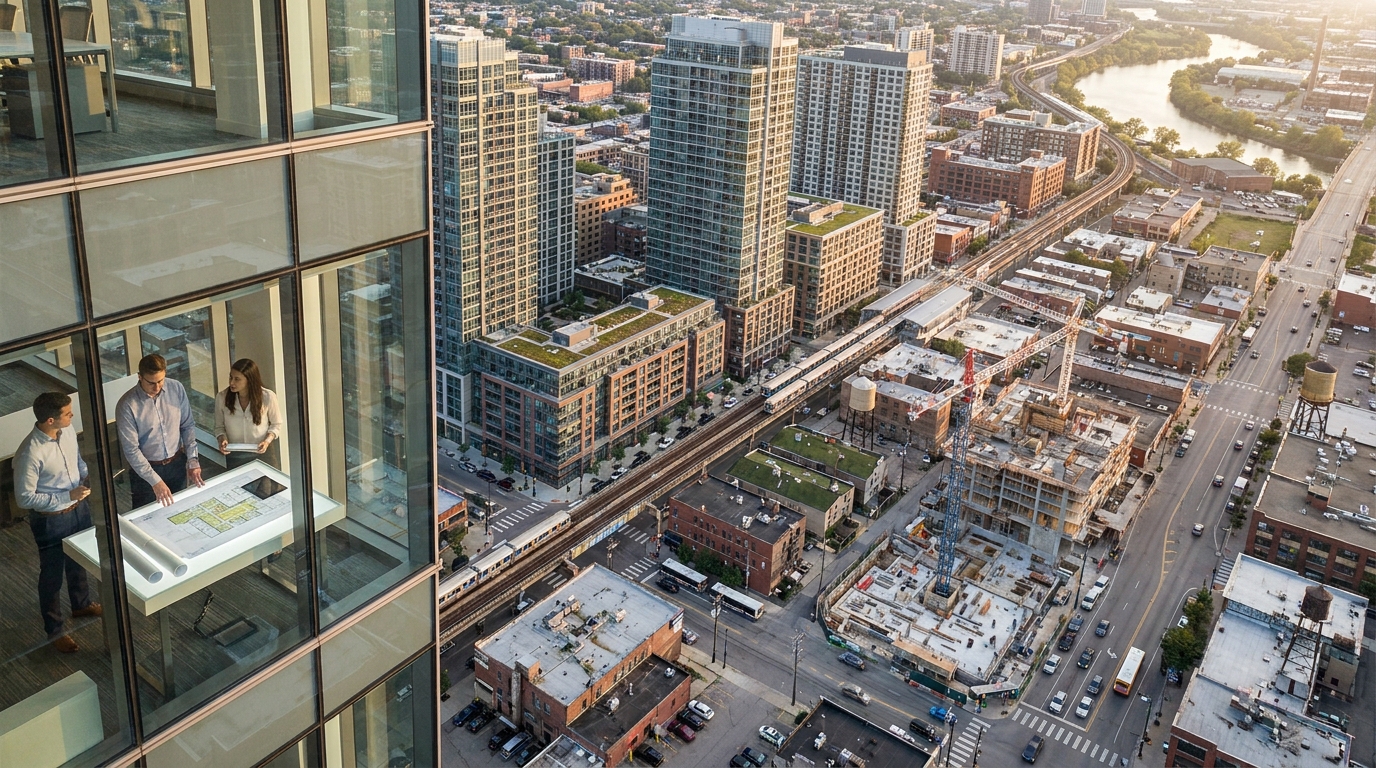

Gen Z is starting to leave a visible mark on the housing market, but the story is more complex than the usual headlines about digital natives wanting sleek apartments and smart gadgets. In 2026, younger buyers are making housing decisions inside a very different economic environment from the one that shaped Gen X or even older millennials. High prices, tighter borrowing conditions, slower income growth, and climate risk are not side issues for this group. They are the context around every decision.
Table Of Content
- Why Gen Z housing demand looks different in 2026
- Affordability is the foundation of every Gen Z housing decision
- Sustainability matters, but only when it becomes practical
- Smart-home features are no longer optional branding
- What smart-home features actually resonate with Gen Z
- Flexible space is one of the most important design signals
- How Gen Z compares with Millennials and Gen X
- Common misconceptions about Gen Z housing demand
- What this means for homeowners selling to younger buyers
- What investors and developers should watch next
- The future of housing is more measured, more efficient, and more adaptive
- Final takeaways for 2026
Gen Z housing trends in 2026 center on affordability, sustainability, smart-home technology, and flexible layouts. Young buyers increasingly favor energy-efficient homes that lower utility bills, smart-home features that improve security and convenience, and adaptable floor plans that support hybrid work, smaller households, and shared living arrangements. Homeownership remains a goal: CMHC’s 2026 Mortgage Consumer Survey found that 81 percent of recent mortgage consumers still view homeownership as a good long-term investment. Yet rising prices, tighter lending conditions, and slower income growth are delaying that path for many young adults. A growing share now rely on family support, including parental co-signing, to qualify for a mortgage at all. As a result, Gen Z evaluates housing less by size or status and more by monthly cost, operating efficiency, and long-term livability, making practicality the defining feature of how this generation approaches housing in 2026.
That is why Gen Z housing trends need to be read as both a preference story and a feasibility story. Yes, younger buyers care about sustainability, indoor comfort, and homes that work with the technology they already use every day. But they also need those features to make financial sense. An energy-efficient home is attractive because it aligns with climate values, yet it becomes much more powerful when it also lowers utility bills. A flexible floor plan is appealing because it feels modern, but it matters more when it helps a smaller home function like a larger one.
For homeowners, investors, and real estate professionals, this distinction matters. The old idea of the generic starter home is losing relevance. In its place is a more demanding buyer or renter profile that values efficiency, resilience, digital convenience, and adaptable design. Gen Z is not simply chasing aesthetics. They are evaluating housing through the lens of monthly cost, long-term livability, and the ability to adapt to uncertain work and economic conditions.
This article explores what young buyers want in 2026, how their choices compare with previous generations, and what these signals mean for the future of housing. The strongest conclusion is clear. Gen Z does want ownership and stability, but the route there is narrower, more data-driven, and more conditional than it was for the generations that came before them.
Why Gen Z housing demand looks different in 2026
Every generation enters the housing market under different conditions, but the current gap between aspiration and access is especially sharp for younger adults. Canadian data provides one of the clearest signals. Statistics Canada found that after adjusting for young adults living with parents, millennials aged 25 to 39 had a homeownership rate of 49.9 percent in 2021. That was below Gen Xers at 56.2 percent and baby boomers at 55.9 percent at a similar stage of life. This is important because millennials were already on a more difficult path than previous generations, and Gen Z is entering the market after them in an even more affordability-sensitive environment.
The pressure is visible not only in ownership rates but also in delayed household formation. Statistics Canada also found that 16.3 percent of millennials aged 25 to 39 lived with parents in 2021, roughly double the baby-boomer share at the same age in 1991. For Gen Z, that trend feeds into delayed renting independence, delayed ownership, and a greater focus on smaller units, shared arrangements, and flexible living situations. The lifestyle narrative is often framed as preference, but in many cases it is a response to cost.
Young adults in Canada are also more likely than older adults to report housing affordability challenges, according to Statistics Canada’s 2024 housing challenges survey release. That means Gen Z is not entering housing with the same freedom to prioritize space, location, and long-term customization in the way earlier generations often could. Their housing search starts with constraints, then moves into optimization. They are asking not only what kind of home they want, but what kind of home can absorb financial volatility without becoming a burden.
This is why Gen Z’s housing profile can seem paradoxical at first glance. They want lower-maintenance homes but also care about design quality. They are highly interested in sustainability but are skeptical of premium pricing that does not produce savings. They are open to renting longer but still often view ownership as a meaningful goal. CMHC’s 2026 Mortgage Consumer Survey found that 81 percent of recent mortgage consumers still believe homeownership is a good long-term financial investment, even as fewer expect home values to rise in the next 12 months. That shift captures the current mindset very well. Faith in ownership remains, but optimism is more measured and practical.
Affordability is the foundation of every Gen Z housing decision
To understand what Gen Z wants in a home, it helps to begin with what they can realistically buy or rent. Affordability is not one factor among many for this cohort. It is the framework through which every other feature is judged. A layout, neighborhood, sustainability package, or smart-home system only becomes meaningful if the monthly budget still works.
One of the strongest signals in the current market is the growing role of family support. Bank of Canada research found that the share of first-time-buyer mortgages co-signed by parents rose from 4 percent in 2004 to about 11 percent in 2025. Even more striking, the bank estimated that 74 percent of adult children in that analysis would not have qualified for their current mortgage without parental co-signing. This does not mean all Gen Z buyers are relying on family wealth, but it does mean intergenerational support is now a meaningful part of the ownership landscape.
That changes how the market should be interpreted. When a younger buyer looks at a home, they are often balancing their own income, debt load, and living costs against the possibility of gifted down payments, co-signing, or shared family strategy. This can expand access, but it can also create segmentation. Some young buyers can stretch into ownership with support, while others remain renters for longer or target smaller, more efficient homes in less central locations. As a result, Gen Z is not a monolith. Region, income, immigration background, and family balance sheet matter enormously.
For sellers and developers, this means the most compelling value proposition is not necessarily more space. It is more usable value per dollar. Lower utility expenses, reduced maintenance, adaptable rooms, better storage, and transit access often matter more than traditional markers of status. In practical terms, Gen Z is more willing than earlier generations to trade square footage for functionality if the home supports daily life in a reliable and cost-effective way.

Sustainability matters, but only when it becomes practical
One of the biggest misconceptions about young buyers is that sustainability is a purely ideological preference. The evidence suggests something more grounded. Sustainability is attractive to Gen Z because it connects environmental values with cost control, health, and resilience. In other words, green features become most persuasive when they make everyday ownership or renting easier to manage.
NAR’s 2025 sustainability research found that sustainable home features are increasingly influencing buying and remodeling decisions, especially when they reduce costs or provide financial savings. Green Builder Media’s 2026 consumer messaging points in the same direction, showing that younger buyers strongly prioritize long-term value and operating costs over sticker price. This is a crucial distinction for real estate messaging. A solar-ready roof, high-performance insulation, or electric heat pump should not be framed only as a climate statement. For Gen Z, the stronger argument is lower energy bills, improved indoor comfort, and better long-term cost predictability.
That practical logic extends to wellness as well. Younger buyers tend to think about housing in a more integrated way. They are not separating efficiency, comfort, and health into different mental categories. A better-sealed building envelope can mean lower bills, fewer drafts, more stable temperatures, and less moisture risk. Better ventilation can mean healthier indoor air quality. Durable exterior materials can mean lower maintenance exposure over time. These are not abstract upgrades. They are quality-of-life signals that fit the Gen Z preference for homes that work smarter rather than simply look newer.
In climate-exposed areas, resilience is also becoming part of the sustainability conversation. Improved insulation, water management, and backup-ready electrical planning have growing relevance because younger buyers are increasingly aware that climate events can create direct household risk. Homes that can hold comfort longer during outages, shed water more effectively, or adapt to electrified systems are likely to feel more future-ready. For a generation thinking in terms of uncertainty, resilience is part of value.
The Gen Z sustainability mindset is best understood as pragmatic idealism. Young buyers care about climate, but in housing they reward features that also lower monthly costs, improve health, and reduce long-term maintenance risk.
This is where the market often misses the signal. Sustainability is sometimes presented as premium housing language, but Gen Z tends to interpret it through monthly ownership economics. If a home is marketed as efficient, buyers want evidence. They want lower bills, durable systems, stronger insulation, and fewer hidden costs. The lesson is simple. Sustainability sells best when it is measurable.
Smart-home features are no longer optional branding
The role of technology in Gen Z housing choices is also easy to oversimplify. It is tempting to assume younger buyers want homes filled with novelty devices because they grew up with smartphones and apps. In reality, the demand is far more disciplined. What Gen Z wants is not a gadget-heavy home. They want a home that is easier to manage, secure, and optimize through technology.
In Canada, the smart-home market is being shaped by consumer demand for convenience, energy efficiency, and enhanced security. That aligns almost perfectly with the way Gen Z evaluates housing. Smart thermostats, leak sensors, connected lighting, app-based entry systems, package monitoring, and integrated energy management tools make sense because they reduce friction. They help residents control costs, monitor risk, and adapt quickly without adding operational complexity.
This matters because tech features in housing now need to be judged by utility rather than novelty. A voice-controlled appliance may not influence a purchase much, but a smart thermostat that helps cut winter heating costs probably will. A flashy control panel means less than a reliable security system with remote alerts. A smart blind system may look good in a showroom, but a home energy dashboard that shows real-time usage can directly support better monthly budgeting. Gen Z responds to digital features when they solve a clear problem.
There is also a familiarity advantage. Younger buyers and renters generally expect mobile-first interactions across the rest of life, from banking to transport to shopping. Housing that still feels analog in all the places where digital convenience is now normal can seem outdated. This does not mean every property needs a high-tech identity. It means basic digital functionality is increasingly part of housing quality. Online visitor access, app-based maintenance requests in rental buildings, smart parcel handling, and efficient climate controls all contribute to a sense that the building is keeping pace with everyday living.
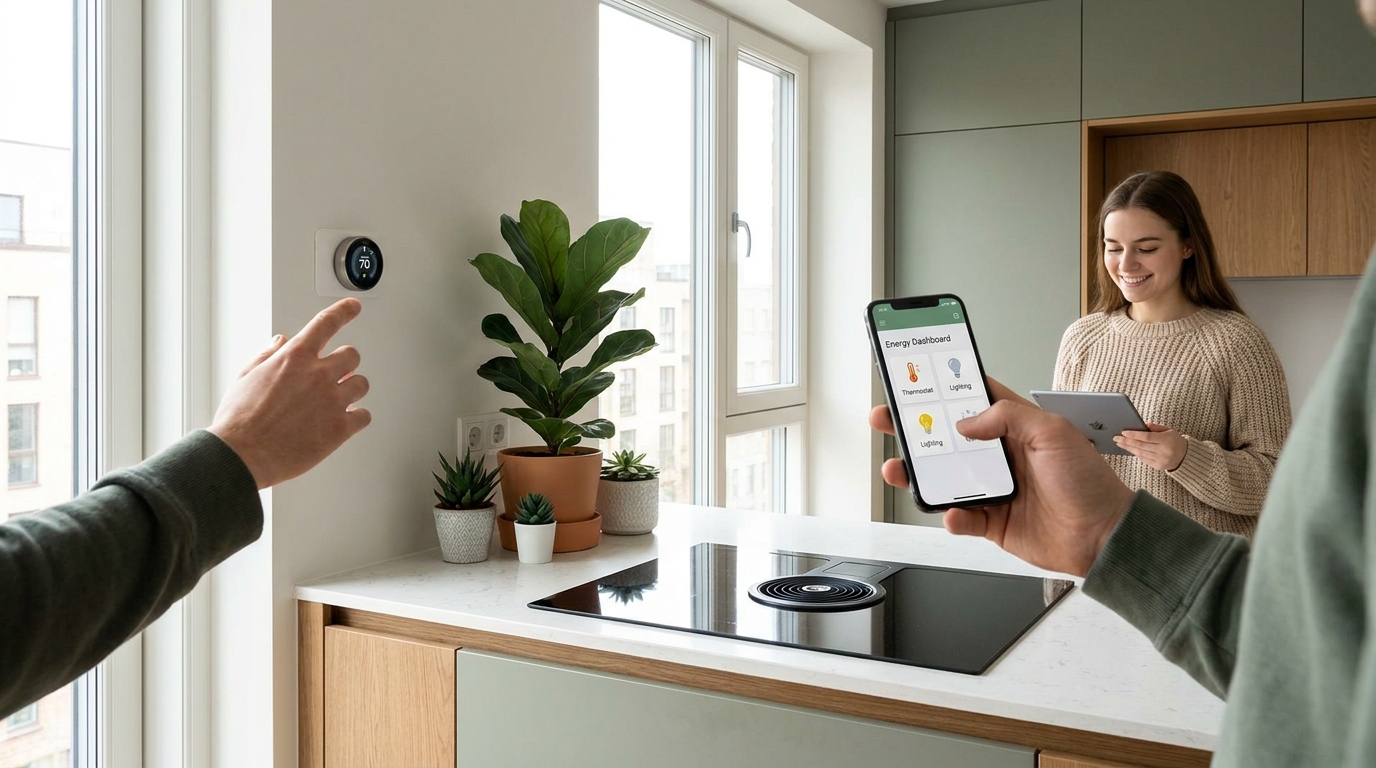
What smart-home features actually resonate with Gen Z
Not every technology feature carries equal weight. The strongest-performing smart-home elements are usually the ones that connect to routine decisions and visible savings. That is why the following categories tend to matter most:
- Energy management, such as smart thermostats, zoned controls, and usage dashboards.
- Security and access, including smart locks, video doorbells, and mobile alerts.
- Water and maintenance monitoring, such as leak detection and automated shutoff systems.
- Convenience infrastructure, including robust Wi-Fi planning, device charging zones, and app-enabled building systems.
- Electrification readiness, like induction cooking, EV charger capability, and compatibility with all-electric systems.
What ties these categories together is not luxury. It is control. Gen Z wants visibility into how a home performs and confidence that it can be managed from a phone when necessary. The home becomes a system, not just a static asset.
Flexible space is one of the most important design signals
If there is one spatial trend that defines younger buyer and renter preferences in 2026, it is flexibility. The pandemic did not create this demand by itself, but it accelerated it. Hybrid work, side income, digital entrepreneurship, and changing household structures have all increased the value of rooms that can do more than one job.
CMHC’s 2026 outlook expects housing activity to remain weak in the near term, with lower prices, lower housing starts, and easing rental markets in 2026. In this environment, many Gen Z households will continue renting longer or buying smaller homes than they might have preferred in a less expensive market. That makes layout efficiency especially important. A compact home that supports remote work, study, fitness, hosting, and storage can outperform a larger but less adaptable one.
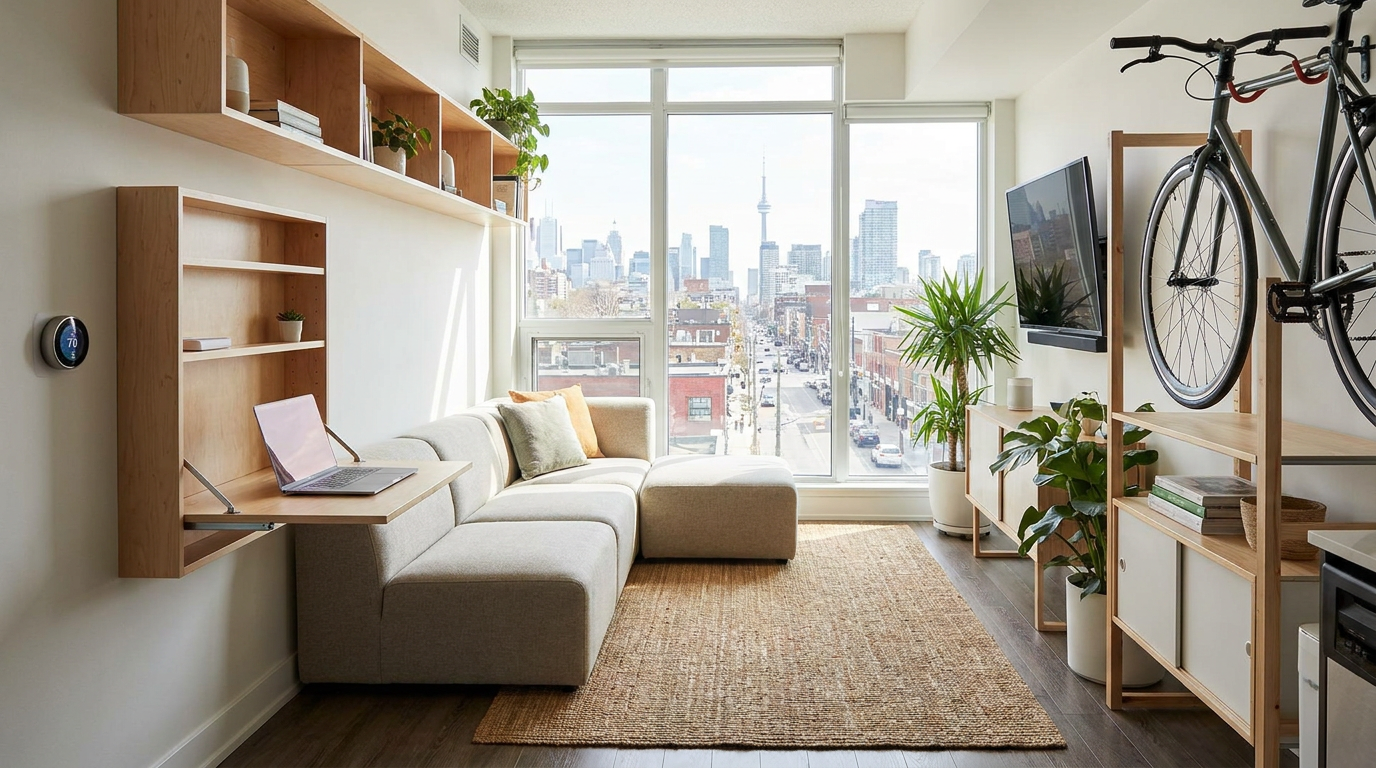
Flexible design does not necessarily require major square footage. In fact, Gen Z often values clever use of space more than raw room count. A den that can become a work area, a dining nook that doubles as a study zone, a bedroom with integrated storage, or a living area that can be reconfigured for different uses all add functional value. These are not cosmetic features. They reduce the pressure to trade up quickly, which matters when moving costs and financing conditions remain difficult.
For rental properties, the same logic applies. Buildings that offer co-working lounges, acoustic privacy areas, reservable meeting rooms, parcel storage, bike rooms, and strong internet infrastructure can attract younger tenants even if unit sizes are modest. The line between private space and building-level amenities is becoming more strategic. Gen Z is often willing to live smaller if the total living ecosystem works better.
How Gen Z compares with Millennials and Gen X
One of the most useful ways to understand Gen Z is by comparing them with the generations immediately ahead of them. This avoids the mistake of treating Gen Z as entirely unique when many of their preferences are part of a broader transition already visible among millennials. At the same time, it highlights the structural differences that make Gen Z’s housing reality harsher.
Gen X entered adulthood during a period when detached homeownership remained a stronger default aspiration and, in many markets, a more reachable one. Space, location, and long-term ownership often aligned more comfortably. Millennials encountered a tougher path, particularly after housing inflation accelerated and urban affordability weakened. Gen Z is now inheriting a market where many of those pressures are even more intense, and where climate compatibility and digital infrastructure are much more central to housing value.
In that sense, Gen Z is both continuous with and distinct from millennials. Like millennials, they value walkability, lower maintenance, and homes that support modern lifestyles. Unlike older millennials at the same life stage, they have come of age in a period where climate risk, electrification, and smart-home functionality feel less like upgrades and more like baseline relevance. They are also more accustomed to thinking of space as fluid. The traditional progression from rental apartment to starter home to larger detached home is no longer a reliable default path.
Compared with Gen X, Gen Z is less likely to assume that more square footage is always better and more likely to evaluate total carrying cost. Compared with millennials, Gen Z is somewhat more explicit about wanting homes that align with sustainability and wellness, but also more candid about the role of feasibility. They often combine idealism with disciplined budget logic. That combination may define the next decade of mainstream housing demand more than any single style trend.
Common misconceptions about Gen Z housing demand
Several misconceptions continue to distort how the market interprets younger buyers. Correcting them helps align product, marketing, and pricing with actual demand.
- Gen Z does not universally want large detached houses. Many still like the idea of ownership and privacy, but affordability and flexibility often matter more than size alone.
- Sustainability is not just ethical branding. For many young buyers, it is primarily about lower bills, lower maintenance, and long-term cost stability.
- Smart-home demand is not mostly about luxury gadgets. It is often about security, convenience, and energy control.
- Gen Z is not one uniform market segment. Income level, city, family support, and cultural background all shape housing choices.
- Younger buyers are not rejecting ownership. Many still see homeownership as valuable, but the path to getting there is more constrained and often slower.
These points matter because market strategy often fails when it confuses visible style with underlying value. A home can look trendy and still miss Gen Z demand if operating costs are high, layouts are rigid, or systems feel outdated.
What this means for homeowners selling to younger buyers
Homeowners preparing to sell into a market influenced by Gen Z should think beyond cosmetic modernization. Fresh finishes still help, but the strongest story is one of performance. Younger buyers want to know how the home lives, what it costs to operate, and whether it can adapt to evolving needs. That means sellers should be ready to present evidence, not just impressions.
Energy usage history, recent utility bills, upgraded insulation, efficient windows, smart thermostats, induction cooking, water-saving fixtures, and maintenance records can all strengthen a listing narrative. Even simple improvements can have an outsized effect if they reduce uncertainty. A buyer may hesitate over a stylish kitchen if the heating system is inefficient, but feel more confident in a less flashy home with lower predictable costs and stronger resilience.
Layout matters too. Sellers should stage rooms to show versatility rather than one fixed use. A spare room can be presented as a home office and guest space. A dining corner can be shown as a hybrid study area. Storage solutions should be visible. Gen Z often evaluates homes through scenarios, asking how the space will handle work, errands, guests, and downtime within one compact footprint.
Digital readiness also deserves attention. Strong internet setup, smart entry systems, modern thermostats, and clear charging access can all strengthen appeal. These features signal that the home is current in ways that support daily life. They are not gimmicks when they are integrated and useful.
What investors and developers should watch next
For investors and developers, Gen Z housing preferences point toward a broader shift in what counts as durable demand. The strongest assets may not be those with the most traditional starter-home branding, but those that combine lower operating costs, climate resilience, digital convenience, and flexible design. In a market where affordability remains tight, properties that reduce friction will likely outperform those that rely only on location or visual finish.
Rental strategy is especially important. CMHC’s 2026 outlook points to easing rental markets, though rebalancing is uneven. That means landlords cannot rely on generic demand alone. Buildings that align with Gen Z expectations around connectivity, wellness, and convenience may hold a competitive edge. This includes secure parcel systems, bike storage, practical amenity spaces, and efficient environmental performance. A renter who stays longer because a unit works well is often more valuable than one initially attracted by superficial staging.
Developers should also watch the continued relevance of missing-middle housing. Townhomes, multiplexes, compact stacked units, and well-designed mid-rise apartments can fit the Gen Z demand profile better than both micro-units and large detached products in many markets. The key is balancing affordability with dignity of use. Natural light, acoustic separation, storage, outdoor access, and remote-work compatibility matter. Gen Z is highly sensitive to whether a home feels intelligently designed.
Electrification and resilience will likely grow in importance as well. Projects that are all-electric or electric-ready, with durable envelopes and smart controls, may increasingly appeal to younger households seeking lower long-term operating volatility. This is not only a consumer trend. It also aligns with broader policy attention on supply, affordability, and climate compatibility in Canada. In that sense, Gen Z preference is converging with structural forces shaping the future housing stock.
The future of housing is more measured, more efficient, and more adaptive
The larger significance of Gen Z housing trends is that they reveal where mainstream housing demand is heading. Younger buyers are not simply asking for different finishes or trendier branding. They are redefining what a good home means. A good home in 2026 is increasingly one that protects the monthly budget, supports hybrid lifestyles, uses energy wisely, and feels ready for a changing climate and a more digital everyday life.
This does not mean detached homes disappear or that every buyer wants the same urban compact product. It means the market is shifting away from assumptions that space alone creates value. Operating efficiency, adaptability, and resilience are becoming part of the core housing equation. Homes are judged not just by what they look like on listing day, but by how they will perform over time.
That is why Gen Z should not be dismissed as a niche demand segment. Their constraints are sharp, but their preferences are also instructive. They are forcing a clearer conversation about what housing should actually deliver. A home is not just shelter, and it is not just an investment. It is an operating system for daily life. The better that system functions, the more likely it is to remain desirable across market cycles.
The strongest housing products for the next few years will not simply be newer or larger. They will be easier to afford, easier to run, and easier to adapt.
For homeowners, investors, and real estate professionals, the message is practical. Stop treating Gen Z demand as a style trend. Treat it as a performance standard. The homes that win attention in 2026 are likely to be those that combine lower operating costs, smart controls, healthier interiors, and layouts that can do more with less. In a constrained market, that is what future-ready housing looks like.
Final takeaways for 2026
Gen Z housing trends in 2026 are defined by a mix of realism and ambition. Young buyers still believe in the long-term value of housing, but they are approaching the market with tighter financial margins and higher expectations for how a home should perform. Their interest in sustainability is real, yet it is strongest when tied to affordability and resilience. Their interest in smart-home technology is genuine, yet focused on convenience, security, and energy management rather than novelty.
Compared with previous generations, Gen Z is less attached to the idea that larger is automatically better and more willing to prioritize flexibility, efficiency, and lower operating costs. They are also navigating a housing market where family support plays a bigger role, rental pathways remain relevant for longer, and compact living needs to work harder. That makes design intelligence, not just location or size, a key differentiator.
If there is one idea to carry forward, it is this: Gen Z wants homes that reduce friction. They want spaces that make life simpler, not heavier. They want technology that helps, sustainability that saves money, and layouts that adapt as work and household patterns change. Anyone trying to serve this market well should start there.



No Comment! Be the first one.