



Cities do not grow by accident. They expand, intensify, and evolve because economic forces, public policy, infrastructure systems, and demographic change all interact over time. Urban growth economics is the field that helps explain why certain places attract more people, more investment, and more jobs, while others struggle to translate growth into prosperity. For anyone involved in planning, real estate, infrastructure, housing, or public policy, understanding these forces is essential because city growth is not just about size. It is about whether growth becomes productive, affordable, connected, and resilient.
Table Of Content
- Why Urban Growth Economics Matters More Than Ever
- Agglomeration Economies and the Productivity Advantage of Cities
- Demographics: The Demand Engine Behind Urban Expansion
- Housing Supply as a Core Urban Growth Constraint
- Why Housing Policy Is Economic Policy
- Infrastructure as an Economic Input, Not Just a Public Cost
- The Metropolitan Scale of Infrastructure Planning
- Land Use, Zoning, and the Economics of Urban Form
- Metropolitan Expansion, Suburban Growth, and the New Geography of the City
- Climate Resilience and the Next Phase of Urban Economics
- Policy, Governance, and Institutional Capacity
- Common Misconceptions That Distort Urban Growth Strategy
- What Urban Growth Economics Means for Planners, Developers, and Investors
- Strategic Priorities for the Future of City Development
- Conclusion
In Canada, this conversation matters enormously. Statistics Canada reported that 61.2% of Canadians lived in large urban population centres with more than 100,000 residents in the 2021 Census, up from 59.6% in 2016. By July 1, 2023, roughly 74.4% of Canadians lived in census metropolitan areas, which confirms that metropolitan regions are where most people, labor market activity, infrastructure demand, and housing pressure are concentrated. When cities perform well, they support national productivity and opportunity. When they underperform, the effects show up in higher living costs, labor shortages, congestion, fiscal strain, and weaker long term competitiveness.
The strategic question is no longer whether cities will continue to grow. In many major regions, that is already a given. The more important question is how they grow and whether institutions can keep pace with the scale and complexity of demand. This article explores the key economic factors that drive city development, from agglomeration and demographics to housing, infrastructure, governance, and climate resilience. The goal is not simply to describe urban growth, but to explain what it means for future planning and investment decisions.
Urban growth is not inherently positive or negative. Its value depends on whether a city can convert population increase into productivity, accessibility, affordability, and long term resilience.
Why Urban Growth Economics Matters More Than Ever
Urban growth economics sits at the intersection of land, labor, capital, and governance. It asks why firms cluster in some places, why workers follow opportunity, why land values rise unevenly, and why some metropolitan areas adapt better than others. In practical terms, it offers a framework for understanding housing shortages, transit demand, development feasibility, wage growth, infrastructure gaps, and even municipal fiscal stress. It helps decision makers move beyond surface level trends and focus on structural drivers.
That matters because the current growth cycle is more complex than previous ones. Population growth remains strong in major metropolitan areas, but growth is also spilling into suburban and exurban municipalities. This means urban economics can no longer focus only on downtown cores. It must account for entire regional systems, including commuting patterns, freight corridors, greenfield expansion, service delivery costs, and the policy relationships between central cities and surrounding municipalities.
There is also a widespread misconception that urban growth is mostly a population story. Population is important, but on its own it explains very little about whether a city becomes more efficient or more strained. A larger population can deepen labor markets, support transit, and create stronger tax bases. It can also intensify housing scarcity, overload transportation systems, and increase inequality if land use and infrastructure do not adapt. In other words, growth is not self-executing. It requires strategy.
Agglomeration Economies and the Productivity Advantage of Cities
One of the foundational ideas in urban growth economics is agglomeration. Agglomeration describes the benefits that firms and workers gain when they locate close to one another. Dense urban environments support larger labor pools, faster matching between employers and employees, stronger supplier networks, and more frequent knowledge spillovers. When people and businesses cluster, they often become more productive because ideas, specialization, and market opportunities circulate more efficiently.
OECD research has consistently shown that city productivity rises with size. One widely cited finding is that each doubling of city population is associated with a 2% to 5% increase in productivity. This does not mean every larger city is automatically high performing, but it does show why metropolitan concentration persists. Firms are often willing to pay higher rents and workers tolerate higher costs when the productivity benefits of location are large enough to justify them.
The productivity case for cities also helps explain why economic activity tends to become spatially concentrated rather than evenly distributed. A high functioning urban region creates reinforcing advantages. Skilled workers move there for better opportunities, employers follow talent, service firms gather around both, and infrastructure investment often responds to demand. Over time, this concentration can deepen economic resilience and innovation capacity. At the same time, it can widen regional disparities if less productive places struggle to attract capital and talent.
That disparity is not theoretical. The OECD has reported that in 2022, labor productivity in a country’s most productive regions was about double that of its least productive regions across OECD members and accession countries. This highlights an important truth for policymakers: urban growth economics is not only about big cities winning. It is also about understanding how spatial concentration shapes national inequality, political pressure, and infrastructure needs.
Demographics: The Demand Engine Behind Urban Expansion
Population growth remains one of the clearest inputs into urban expansion, but the composition of that growth matters just as much as the headline number. In Canada, immigration plays a major role in shaping demand for housing, transportation, schools, healthcare, and employment space. Interprovincial migration also shifts growth between regions, sometimes rapidly, in response to housing costs, labor market conditions, and quality of life considerations. Household formation patterns add another layer, because the same population total can create very different housing demand depending on age, family structure, and income levels.
This is why demographic analysis must go beyond simple growth forecasts. A city attracting younger workers may see strong demand for rental housing, flexible mobility, and mixed use neighborhoods. A region receiving more families may require schools, parks, larger housing formats, and community infrastructure. An aging population may push policy toward healthcare access, accessible housing, and service proximity. Demographics shape not only how much a city grows, but what it needs in order to function well.
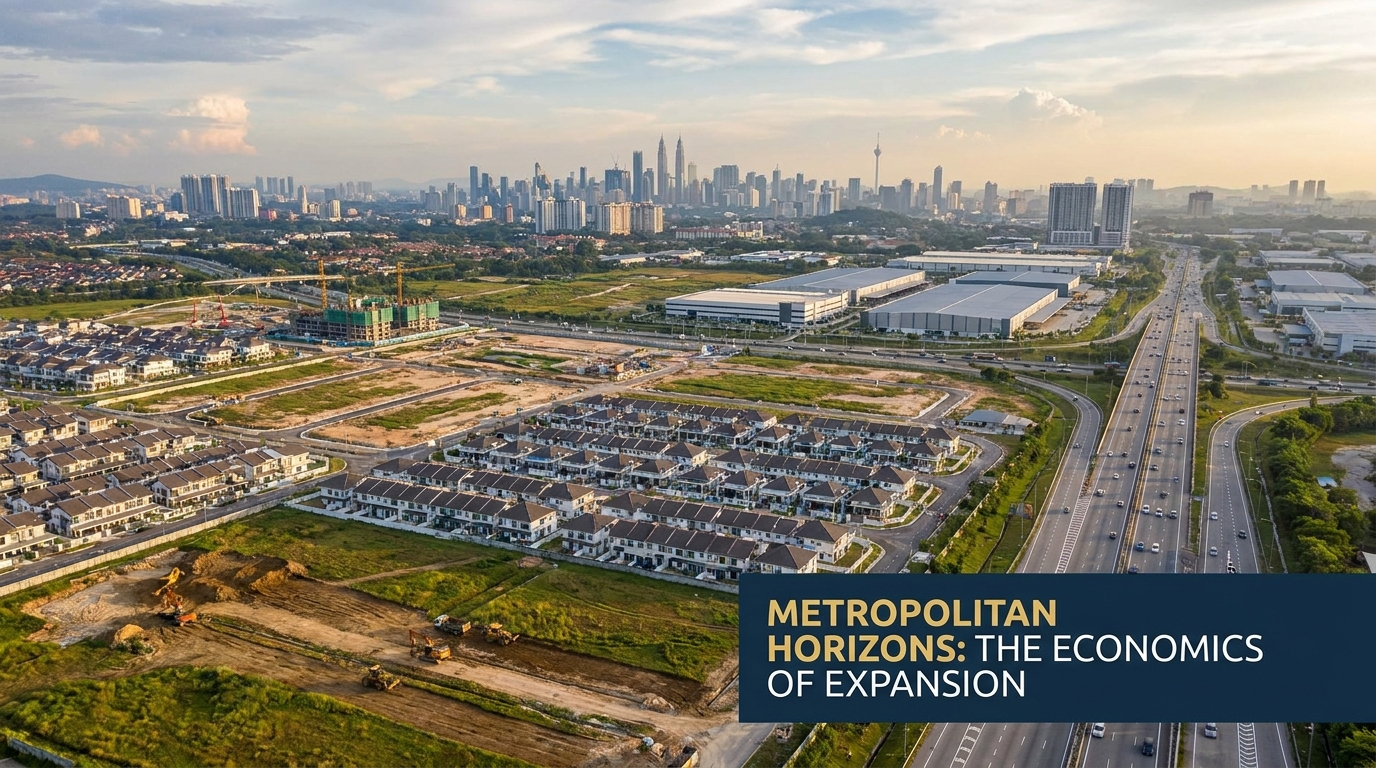
Recent Statistics Canada releases also indicate that growth is increasingly metropolitan rather than purely central city based. Expansion has been spreading beyond core downtowns into suburban and exurban municipalities, where land is more available and housing options may appear more attainable, at least initially. This matters because growth at the urban edge can lower immediate land acquisition costs while increasing long term infrastructure obligations, vehicle dependence, and municipal servicing complexity.
For planners and investors, the implication is clear. It is no longer enough to ask which city is growing fastest. The more useful question is where within the metropolitan region growth is concentrating, what household types are driving demand, and whether the receiving areas have the transportation, utilities, schools, and governance capacity to support that expansion productively.
Housing Supply as a Core Urban Growth Constraint
Housing is one of the most important variables in urban growth economics because it determines whether labor can access opportunity at a sustainable cost. When a city generates jobs but fails to add enough housing, workers are pushed farther away, affordability deteriorates, commuting times rise, and employers face more difficulty attracting talent. At that point, housing ceases to be a social policy issue alone. It becomes a direct constraint on economic performance.
This is exactly why housing has become central to the growth conversation in Canada and across North America. CMHC has reported persistently tight rental and ownership conditions, even as purpose-built rental construction reached record levels in 2023. Strong building activity is encouraging, but it does not automatically close the supply gap when population growth is also accelerating. In markets with entrenched underbuilding, years of elevated production may still be required just to restore balance.
Federal policy now increasingly reflects this economic reality. Budget 2024 materials stated that policy actions and housing initiatives could support at least 1.2 million of the 2 million net new homes the government estimates are needed. That framing is important because it connects housing supply directly to national economic strategy. The underlying message is that permitting speed, land availability, density policy, and infrastructure financing are no longer niche planning concerns. They are central growth levers.
There is also a misconception that rising demand alone is to blame for housing pressures. Demand matters, but the urban economics view is broader. Housing affordability is shaped by supply elasticity, zoning rules, approval timelines, servicing constraints, construction costs, interest rates, and infrastructure readiness. Cities that fail to align these systems often create shortages even when land exists in theory. Conversely, cities that allow more forms of housing in well connected areas improve both affordability and labor market efficiency over time.
From a development feasibility perspective, housing supply constraints also distort land value. When approvals are difficult and entitlement is scarce, land with development permissions can command a large premium. This pushes up project costs, narrows the range of viable housing types, and encourages a more speculative market environment. A more predictable land use system does not eliminate risk, but it can lower friction and improve the ability of the private sector to respond to genuine demand.
Why Housing Policy Is Economic Policy
When housing production lags, the costs extend far beyond the household sector. Employers face tighter labor pools because workers cannot afford to live close to job concentrations. Transit systems become less efficient when more trips originate from distant low density locations. Municipal budgets are pressured by dispersed servicing obligations, while households absorb more time and money in transportation. These are growth costs, not side issues.
Well designed housing policy therefore does more than increase unit count. It supports complete communities, strengthens transit viability, enables aging in place, and broadens access to opportunity. In strategic terms, housing policy determines whether urban density becomes an asset or a source of stress.
Infrastructure as an Economic Input, Not Just a Public Cost
Infrastructure is often discussed in terms of budgets, backlogs, and service delivery. Those are important, but they do not capture the full economic role of infrastructure in city development. Transportation, water, wastewater, energy systems, broadband, and community facilities all shape the usable geography of a metropolitan region. They determine what land can support growth, how efficiently people move, where businesses can operate, and whether density translates into access rather than congestion.
In this sense, infrastructure should be viewed as an economic input. It enables labor market matching by connecting workers to jobs. It supports industrial and commercial activity by reducing friction in movement and servicing. It improves land use efficiency by making higher intensity development feasible in targeted corridors and nodes. When infrastructure is weak, fragmented, or delayed, urban growth becomes more expensive and less productive.
OECD and Canada focused research has emphasized that car dependence, urban sprawl, and fragmented governance can reduce city productivity while increasing congestion and pollution costs. This observation is especially relevant in North American regions, where postwar development patterns often separated housing from employment and prioritized road based mobility. Those patterns delivered land consumption and accessibility in one era, but they also created long term liabilities in congestion, emissions, infrastructure maintenance, and household transportation costs.
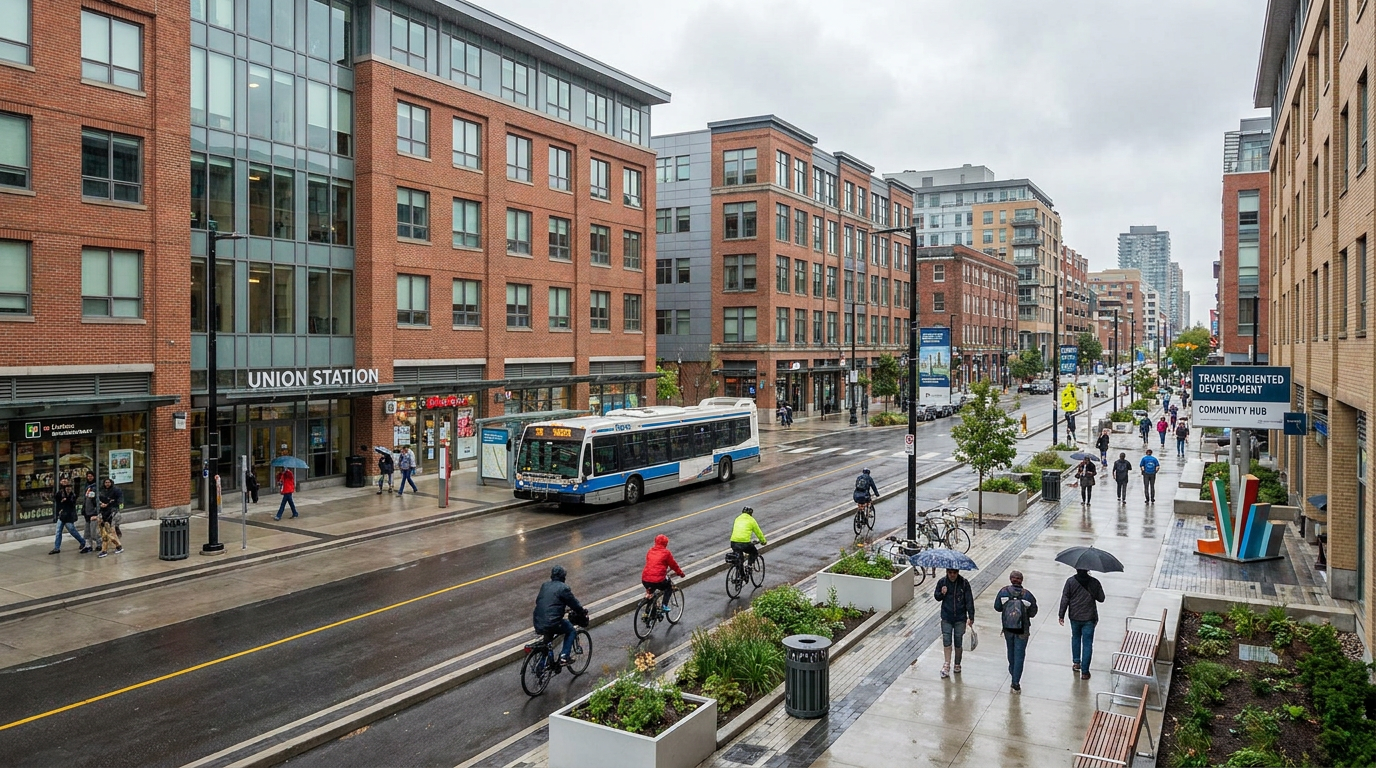
A strategic city does not simply build more infrastructure everywhere. It aligns infrastructure investment with growth priorities. Transit oriented development is one example. When transit investment is paired with supportive zoning, public realm improvements, and mixed use development, it can increase accessibility while reducing pressure for more outward sprawl. The economic return is not only measured in fare revenue or travel time savings. It is also visible in land value uplift, employment access, housing capacity, and private investment confidence.
The Metropolitan Scale of Infrastructure Planning
Because growth increasingly spreads across suburban and exurban municipalities, infrastructure planning must be metropolitan in scope. A transit line, highway interchange, watermain, or regional employment area can affect development patterns far beyond one municipal boundary. If governance remains fragmented, decisions about land use, transportation, and servicing can become misaligned. One municipality may approve growth without the infrastructure base to support it, while another bears the mobility or fiscal consequences.
That is why metropolitan governance is becoming more important in urban growth economics. The economics of a region do not stop at a city boundary, and neither do commuting flows, freight systems, or housing pressures. More coordinated regional planning can improve sequencing, reduce duplication, and support more efficient land use outcomes. For long range development strategy, this is often the difference between orderly expansion and reactive sprawl.
Land Use, Zoning, and the Economics of Urban Form
Land use regulation plays a central role in shaping city development because it determines what can be built, where, and at what scale. Zoning is often presented as a technical planning instrument, but economically it acts as a supply framework. It influences housing availability, development intensity, land value, transit performance, and the mix of uses that define everyday urban life. Restrictive zoning can preserve existing patterns, but it can also prevent a city from adapting to changing demand.
This is especially relevant in high demand metropolitan regions where employment concentration and population growth continue to intensify pressure on the built environment. If most residential land is reserved for low density formats while demand increasingly favors proximity and access, prices rise and spillover growth moves outward. The region still grows, but in a more land consumptive and infrastructure intensive way. This is one reason zoning reform remains such a major policy theme in North American planning.
The goal of reform is not growth at any cost. It is better alignment between urban form and economic need. Allowing more missing middle housing, mid-rise intensification, mixed use corridors, and transit supportive density can expand supply without relying entirely on greenfield expansion. It can also create more housing choice, improve neighborhood adaptability, and support local retail and community services. Economically, this makes the city more flexible.
Land economics also remind us that location value is created collectively. Public investment in transit, parks, utilities, and streets increases the value of nearby land. Strong labor markets and demographic growth do the same. The challenge for policymakers is to ensure that land use systems capture enough of this value to help fund infrastructure and community benefits without making projects unworkable. This is where development charges, value capture, approvals policy, and municipal finance all intersect with urban growth economics.
Metropolitan Expansion, Suburban Growth, and the New Geography of the City
One of the most important shifts in recent urban development is that growth is no longer confined to the traditional image of the city center. In Canada, recent data shows that population growth is spreading beyond core cities into suburban and exurban municipalities. This does not mean downtowns have become irrelevant. It means the economic unit of analysis has expanded. The modern city is increasingly a metropolitan region composed of multiple nodes, housing markets, employment clusters, and transportation systems.
This shift changes how growth should be evaluated. A suburban municipality may absorb substantial housing demand, but if jobs remain highly centralized and transit connectivity is weak, that growth can generate long commutes and lower labor market efficiency. Conversely, suburban growth paired with regional transit, employment diversification, and complete community planning can support a more balanced metropolitan structure. The issue is not whether growth occurs in the suburbs. The issue is whether that growth is planned as part of an integrated regional economy.
For developers and investors, the spread of growth creates both opportunity and risk. Emerging municipalities may offer lower land costs and more room for large scale master planning. At the same time, returns can be undermined if infrastructure timing lags, municipal processes are inconsistent, or market demand shifts faster than planning assumptions. Strategic site selection therefore depends on understanding regional mobility, servicing capacity, housing segmentation, and policy direction, not just near term acquisition economics.
For governments, the rise of metropolitan growth reinforces the need to think in corridors, nodes, and networks. Housing supply targets, transit investment, and climate planning all need to align with where actual population growth is heading. Otherwise, public systems remain optimized for an older urban geography while the region evolves around them.
Climate Resilience and the Next Phase of Urban Economics
Climate risk is becoming a more visible component of urban growth economics because it affects infrastructure reliability, insurance costs, public finance, and long term investment decisions. Flooding, heat, wildfire smoke, and extreme weather events do not simply create environmental disruption. They alter the economics of place. They influence what infrastructure must cost, where future growth is safer to direct, and how resilient buildings and communities need to be.
OECD regional analysis has highlighted growing climate and disaster risks alongside persistent productivity gaps across places. This is a reminder that future competitiveness will depend not only on growth rates, but also on the capacity to adapt. A city that grows quickly while underinvesting in stormwater systems, energy resilience, and emergency preparedness may face mounting liabilities later. A city that integrates climate adaptation into land use and capital planning may prove more investable over the long run.
Climate resilience also overlaps with housing and infrastructure policy. Compact growth in well served locations can reduce emissions and improve resource efficiency, but only if building quality, public space, and mobility systems are well designed. Low density expansion may appear less risky in some contexts, but it can create larger servicing footprints and greater infrastructure exposure. As a result, resilience planning needs to be embedded into urban economics rather than treated as a separate environmental agenda.

Policy, Governance, and Institutional Capacity
Even the strongest market fundamentals cannot produce good urban outcomes without capable institutions. Governance determines how quickly housing can be approved, how infrastructure is financed, how regional priorities are coordinated, and how tradeoffs are managed between local concerns and broader growth needs. In many metropolitan areas, fragmented authority makes these tasks harder. Municipalities may control land use while higher levels of government shape transit funding, immigration, fiscal transfers, and housing incentives.
This fragmentation often leads to misalignment. A region may need more housing near transit, but local approvals may remain slow or politically constrained. A municipality may want growth, but lack the funding tools to expand water, roads, or community services. A provincial or federal government may announce ambitious supply goals, but implementation depends on local institutions that vary widely in capacity. Urban growth economics therefore requires governance analysis as much as market analysis.
Institutional quality also affects investor confidence. Predictable approvals, clear growth plans, and transparent infrastructure sequencing reduce uncertainty and improve feasibility. By contrast, unclear policy direction, shifting regulations, and long entitlement timelines can suppress delivery even in high demand markets. Strong institutions do not guarantee perfect outcomes, but they do create the conditions in which private and public capital can respond more effectively to growth pressure.
Common Misconceptions That Distort Urban Growth Strategy
Several misconceptions continue to weaken public debate. The first is that more people automatically means better outcomes. In reality, unmanaged growth can deepen congestion, affordability pressure, and inequality. The second is that urban growth is mainly a downtown issue, when evidence increasingly shows that metropolitan expansion is distributed across suburban and exurban areas. The third is that infrastructure should be treated only as a cost centre rather than as a productivity enhancing asset.
Another common misunderstanding is that housing shortages are separate from economic development. They are not. Housing shortages limit labor mobility, constrain business expansion, and push growth into less efficient forms. Finally, there is a tendency to frame density itself as the problem. Density is not the problem. Poorly supported density is the problem. When density is matched with transit, public space, services, and sound design, it often improves economic and environmental performance.
What Urban Growth Economics Means for Planners, Developers, and Investors
For planners, urban growth economics reinforces the importance of aligning land use with infrastructure and demographic reality. Growth targets are only meaningful if they are supported by zoning capacity, transit investment, servicing plans, and implementation tools. Planning should therefore focus less on abstract growth aspirations and more on the operating systems that determine whether growth can be delivered at scale.
For developers, the lesson is that opportunity lies where market demand, policy direction, and infrastructure alignment converge. Sites with strong accessibility, supportive permissions, and exposure to long term demographic demand are better positioned than sites that rely on speculative policy change or weak servicing assumptions. Feasibility is increasingly shaped by how well a project fits into broader urban systems, not just by short term pricing.
For investors, city growth should be evaluated through a broader risk lens. Rapid population growth may appear attractive, but without housing delivery, infrastructure capacity, and institutional competence, that growth can become inflationary rather than productive. Markets that combine strong demographic momentum with pragmatic policy and resilient infrastructure are likely to outperform over time. The quality of growth matters more than the headline volume.
Strategic Priorities for the Future of City Development
The next generation of urban strategy should focus on a few core priorities. Cities need more housing supply in locations that support accessibility and complete communities. They need infrastructure planning that treats transit, utilities, and public realm investment as productivity tools. They need governance models that better coordinate growth across municipal boundaries. They also need climate adaptation embedded into long term development planning rather than added later as a corrective measure.
At the same time, growth policy must be realistic about tradeoffs. Intensification can create local resistance, but greenfield expansion carries long term infrastructure and environmental costs. Regional productivity gains can be significant, but uneven spatial development can widen disparities. Faster approvals are necessary, but quality and fit still matter. Sound urban economics does not erase these tensions. It helps policymakers navigate them with clearer priorities and better evidence.
The strongest cities in the decades ahead will not simply be the biggest. They will be the ones that turn concentration into capability. They will add housing without undermining livability, expand infrastructure without losing fiscal discipline, and manage growth in ways that improve access to opportunity across the metropolitan region. That is the real promise of urban growth economics. It gives us a framework for building cities that are not only larger, but more effective.
Conclusion
Urban growth economics offers a strategic lens for understanding city development in a period of profound change. Demographics, immigration, housing supply, infrastructure quality, land use policy, agglomeration effects, and climate resilience are all shaping the future of metropolitan regions. None of these factors operates in isolation. The success of a city depends on how well they are aligned.
In Canada, where most people live in urban and metropolitan areas, the stakes are especially high. The concentration of population and economic activity means that city performance now has national consequences for productivity, affordability, and long term prosperity. Strong urban policy is therefore not a niche concern. It is a core economic agenda.
For stakeholders across planning, development, government, and investment, the takeaway is straightforward. Growth should not be measured by how many people arrive alone. It should be measured by whether the city can absorb that growth in ways that expand housing choice, improve accessibility, raise productivity, and strengthen resilience. That is the standard future city development will increasingly be judged against.



No Comment! Be the first one.