



Hospitality development has moved back into serious investment conversations for a simple reason. Travel demand has recovered faster than many expected, hotel operating metrics have improved across much of North America, and the sector now sits at the intersection of real estate, operating income, and place-based economic growth. For investors willing to understand the nuances, hospitality developments build sustainable wealth through three connected channels: stabilized operating cash flow from strong occupancy and rate performance, asset appreciation as destinations strengthen and infrastructure improves, and strategic repositioning upside through rebranding, mixed-use integration, or higher-yield concepts. That combination of income, appreciation, and repositioning upside is what separates hospitality from more passive forms of real estate investment. In that sense, hospitality investing is not a bet on travel volume alone; it is a bet on well-run, well-located assets capturing recovering demand over a full market cycle.
Table Of Content
- Why hospitality developments are back in focus
- Understanding the investment case: cash flow plus appreciation
- Post-pandemic travel recovery is real, but not evenly distributed
- The role of sustainability in modern hospitality investing
- Which hospitality segments offer the most compelling opportunities?
- What success looks like in hospitality development
- Core indicators investors should evaluate
- The biggest misconceptions investors need to avoid
- How to underwrite risk with discipline
- Canada and North America: where the opportunity is strongest
- Hospitality as a long-term wealth strategy
- What investors should ask before committing capital
- Final perspective
That opportunity is more relevant today because the sector is no longer being assessed only on occupancy growth or headline tourism numbers. Investors are increasingly looking at brand positioning, mixed-use potential, financing conditions, sustainability performance, climate resilience, and the depth of local demand. In other words, hospitality development is being viewed with more discipline and more sophistication. The projects attracting capital are not simply hotels in good locations. They are differentiated assets with a clear operating thesis and a credible long-term role within their market.
For Canada and the broader North American market, the case is especially interesting. Global tourism has largely regained pre-pandemic levels, with UN sources noting that international arrivals reached 96% of pre-pandemic levels by mid-2024. At the same time, hotel operators in Canada have been benefiting from stronger average daily rates, healthier revenue per available room, and renewed activity from group, event, and business-related travel. That combination creates a more constructive backdrop for development, repositioning, and patient capital seeking resilient exposure to travel-linked real estate.
This does not mean every hospitality project is a winning investment. It means the sector deserves a more serious look. Hospitality developments can produce robust returns, but they require sharp underwriting, a realistic understanding of operating risk, and a development strategy rooted in demand rather than optimism. The investors who perform best in this space typically think like both real estate owners and business operators.
Key takeaway: Hospitality development is not just about owning a building. It is about creating an operating asset that captures travel demand, pricing power, and long-term location value while meeting rising standards around sustainability and resilience.
Why hospitality developments are back in focus
The strongest reason hospitality developments are regaining investor attention is the broad recovery in travel. Leisure travel rebounded first, but the more important story for asset performance has been the return of group demand, meetings, events, and international inbound activity. These demand layers matter because they help strengthen occupancy across more months of the year and support better rate discipline. A hotel that relies on one seasonal segment is inherently more fragile than one supported by several channels of demand.
Recent market indicators have been encouraging. CBRE reported that Canadian hotel ADR increased 4.5% in 2024 to more than $200, while RevPAR continued to grow in most major markets. Those metrics are important because they point to pricing power rather than simple volume recovery. Higher ADR combined with improving RevPAR usually indicates that operators are not merely filling rooms at discounted rates. They are monetizing demand more effectively, which is a much healthier sign for both existing assets and new developments.
There is also a financing dimension to this renewed interest. In the Americas, cross-border hotel investment activity declined in 2024, but market outlooks have suggested the potential for stronger momentum as rates ease and lending conditions improve. This matters because hospitality is capital intensive. Even an excellent project can struggle if debt pricing is too restrictive or construction financing remains narrow. A more constructive credit environment does not erase execution risk, but it can reopen the window for viable developments that were previously difficult to capitalize.
Another reason the sector stands out is replacement cost. In many urban and destination markets, the cost of developing a high-quality hotel has risen materially due to labor, materials, design standards, and financing expenses. That can be a challenge at the front end, but it also creates a barrier to new competition. If a developer can deliver a differentiated asset in a market where supply remains constrained, the scarcity value of that property may become a meaningful source of long-term wealth.

Understanding the investment case: cash flow plus appreciation
Many investors misunderstand hospitality because they compare it too directly with traditional multifamily or office assets. Hotels do sit within the real estate universe, but they function very differently. Revenue is repriced daily, management quality has an immediate impact on performance, and the value of the asset is tied not only to the building itself but also to the effectiveness of the operating model. That complexity can deter inexperienced investors, yet it is also where opportunity often comes from.
At a high level, hospitality developments offer three core return levers. The first is operating cash flow. If a property is delivered into a healthy market with strong demand segmentation, effective distribution, and sound cost control, it can generate meaningful stabilized income. The second is asset appreciation. Well-located hospitality real estate can increase in value as room rates rise, as the destination strengthens, or as new infrastructure and surrounding development improve the market. The third is strategic repositioning upside. Hospitality assets often have room for rebranding, amenity enhancement, mixed-use integration, or conversion into higher-yield concepts.
This combination is why hospitality can be a powerful wealth-building vehicle over a full cycle. It is not passive and it is not low risk. However, unlike some property types that depend heavily on long lease terms and incremental rent growth, hotels can capture upside relatively quickly when market conditions improve. A well-positioned asset in a recovering city or resort market may benefit from stronger average rates, better guest mix, and higher ancillary spending through food and beverage, wellness, meetings, or branded experiences.
Investors should also think about optionality. A hospitality development can often serve broader place-making goals that increase surrounding land values. In mixed-use formats, the hotel may support retail foot traffic, branded residences, conference business, or destination visibility for an entire district. That means the return profile is not always confined to room revenue alone. In the right context, hospitality acts as an anchor use that elevates the economics of adjacent components.
Post-pandemic travel recovery is real, but not evenly distributed
One of the most common mistakes in hospitality investing is assuming that a broad tourism recovery guarantees project success. It does not. Recovery has been real, but it has also been highly uneven across regions, cities, and travel segments. Some urban centers have rebounded strongly due to meetings, events, and international inbound demand. Others still face slower office utilization, inconsistent business travel, or pressure from new supply. Resort and leisure markets have also diverged depending on air access, seasonality, and the durability of domestic tourism demand.
This is why submarket analysis matters more than national averages. Investors need to understand who the customer is, what drives the trip, when demand peaks, and how much competitive supply exists within the primary catchment. A hotel near a convention center, airport corridor, medical campus, university district, or major entertainment node behaves differently from a resort tied to seasonal leisure demand. The strongest hospitality developments are built around clear demand engines rather than general assumptions about travel returning.
In the United States, investor expectations have increasingly favored urban locations that stand to benefit from ongoing inbound travel recovery and stronger meetings demand. That aligns with broader observations across North America, where gateway cities and event-oriented destinations are seeing renewed interest. Still, urban investment only works when the supply pipeline is manageable and the project’s positioning is precise. A generic upper-upscale hotel in a crowded downtown market may struggle, while a thoughtfully branded lifestyle property attached to a high-traffic district may perform exceptionally well.
For Canadian markets, the combination of ADR growth and continued RevPAR gains suggests healthier operating fundamentals, but investors still need to distinguish between markets with durable travel demand and those relying on short-term momentum. Hospitality development rewards precision. It does not reward broad generalization.
The role of sustainability in modern hospitality investing
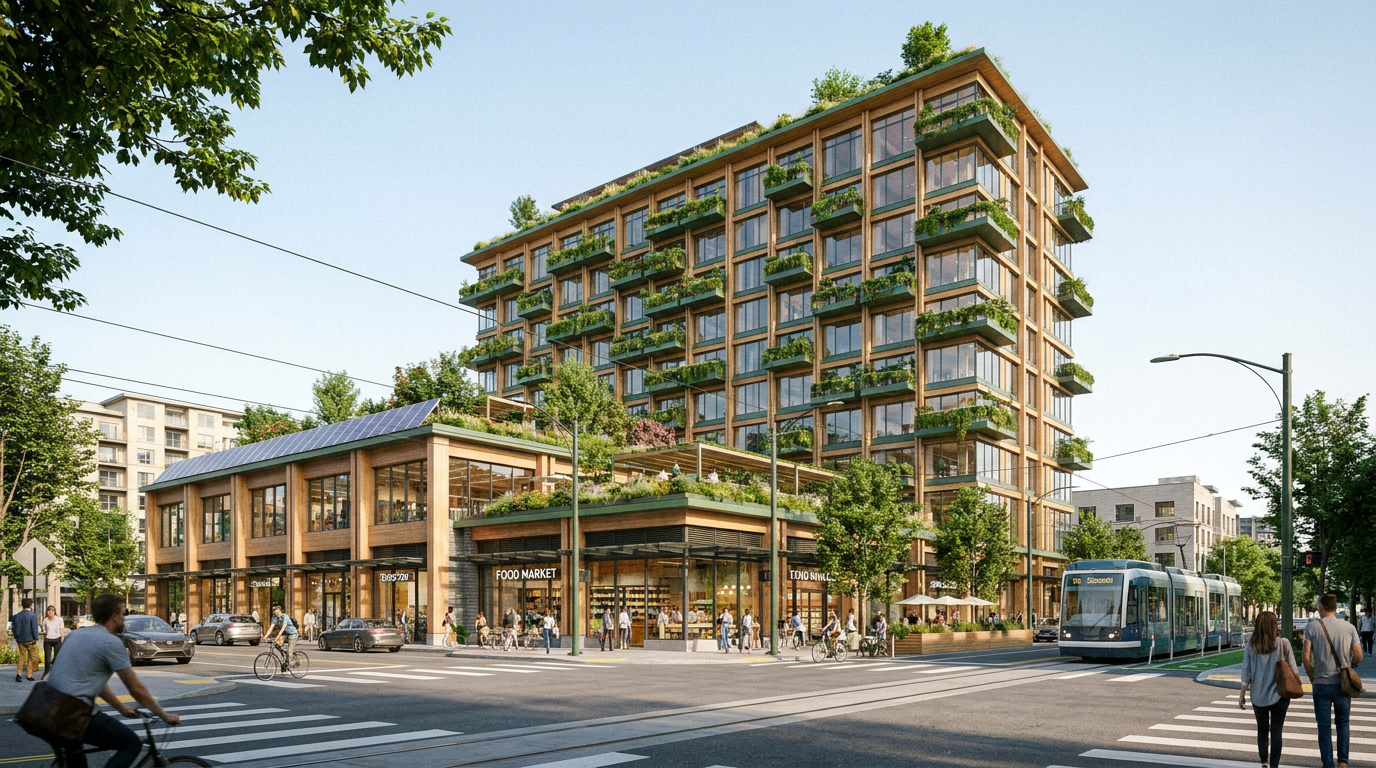
Sustainability has moved from peripheral marketing language to a central investment consideration. In hospitality, that shift is especially important because the asset is visible, operationally intensive, and deeply connected to local ecosystems and communities. UNCTAD and UN Tourism’s 2024 guidance on sustainable tourism investment emphasizes local jobs, environmental protection, value creation, and long-term resilience. For investors, this changes how projects are evaluated at every stage, from site selection to financing to brand partnerships to exit strategy.
There are practical reasons this matters beyond reputation. Energy efficiency, water management, waste reduction, and resilient design can directly improve operating margins over time. Hotels consume substantial energy and water, especially in full-service and resort formats. Reducing those costs through efficient systems, smarter building design, and better operational controls can make a meaningful difference to net operating performance. In a capital-intensive business, margin improvements compound value.
Sustainability also affects risk. Climate exposure, insurance costs, extreme weather resilience, and local regulatory requirements are becoming more material in underwriting. A coastal resort with weak flood planning or a remote property with poor water stewardship may face increasing operational and financial pressure over time. By contrast, developments that can demonstrate resilience and credible ESG planning may secure better financing terms, stronger public support, and more favorable brand alignment.
There is also a demand-side advantage. Travelers increasingly pay attention to environmental impact, authenticity, and community connection. That does not mean every guest chooses a hotel solely based on sustainability credentials, but it does mean that sustainable hospitality is becoming part of the product itself. A property that combines strong design, operational quality, and measurable local value creation can stand out in a crowded market. In the long run, that differentiation can support both occupancy and pricing power.
Which hospitality segments offer the most compelling opportunities?
Investors should avoid thinking about hospitality as a single monolithic category. The sector now includes lifestyle hotels, limited-service urban properties, extended-stay formats, destination resorts, wellness-led assets, mixed-use hospitality, branded residences, and hybrid concepts built around experiences rather than standard room inventory. Some of the best opportunities today come from formats aligned with how people are actually traveling, not how they traveled a decade ago.
Lifestyle hotels continue to attract attention because they can command stronger emotional connection, design premium, and local relevance when executed well. They often perform best in urban districts with vibrant food, culture, and event demand. However, lifestyle is not just a visual identity. It needs genuine programming, a distinct guest profile, and an operating team that understands how to drive both room revenue and social energy. Investors should be careful not to overpay for a concept label without the fundamentals to support it.
Wellness-oriented hospitality is another notable growth area. As travelers place more value on health, recovery, outdoor access, and personalized experiences, wellness-led developments can benefit from higher-spend guests and diversified revenue streams. Spa, fitness, medical-adjacent wellness, sleep-focused design, and nature-based programming can all strengthen an asset’s appeal. The opportunity is strongest when wellness is integrated into the development’s design and operating model rather than added as a superficial amenity.
Mixed-use resort and urban destination concepts are also compelling because they spread risk across multiple uses while reinforcing the overall customer proposition. A hotel connected to residential, retail, conference, entertainment, or wellness components can generate stronger year-round activity. It can also improve land efficiency and create multiple monetization channels. For investors and developers, this can mean a more resilient capital structure and a broader set of exit options.
McKinsey’s hospitality trend analysis has highlighted new business models, while market outlooks from major advisory firms continue to point toward lifestyle brands, wellness initiatives, and design differentiation as durable themes. That does not mean every investor should chase trend-led concepts. It means the strongest opportunities are often found where product design, guest behavior, and local demand align with unusual clarity.
What success looks like in hospitality development
A successful hospitality development begins with location, but it does not end there. Strong performance usually emerges from an alignment of location, timing, product positioning, branding, operational discipline, and capital structure. Investors who treat hospitality like a pure land play or a generic building exercise often underestimate how many moving parts determine eventual returns. The project has to work physically, financially, and operationally.
Location should be evaluated in terms of real demand generators. These may include major event venues, transit hubs, airports, medical districts, universities, national parks, waterfronts, ski corridors, or cross-border tourism routes. The key is durability. A market driven by one annual event or one short-lived attraction is less attractive than a market with layered and recurring demand from business, leisure, institutional, and social travel.
Positioning is equally important. Investors need to know exactly what the hotel is meant to be and why guests will choose it over existing alternatives. That includes the service level, brand strategy, room mix, amenity package, pricing tier, food and beverage concept, and relationship to the competitive set. In many markets, a clearly differentiated upper-midscale or lifestyle project can outperform a more expensive but less focused luxury development.
Operator selection can make or break a project. Hospitality is an operating business, and execution quality shows up quickly in guest satisfaction, labor management, digital distribution, and revenue optimization. Investors should evaluate whether the chosen operator or brand has the right platform, market reach, loyalty ecosystem, and cost discipline. A beautiful asset with poor management will underperform. A well-run asset in a strong submarket can produce returns far beyond initial expectations.
Core indicators investors should evaluate
Before moving forward with any hospitality development, investors should assess a set of metrics and operating assumptions that reveal whether the project can absorb shocks and still stabilize effectively. These indicators are not theoretical. They shape financing, valuation, and eventual exit outcomes.
- ADR potential: The market’s achievable average daily rate based on positioning, competitive set, and target guest profile.
- Occupancy durability: Whether room demand is broad enough to support stable occupancy across weekdays, weekends, and shoulder seasons.
- RevPAR growth path: How revenue per available room may evolve under conservative, base, and upside scenarios.
- Supply pipeline: The amount and quality of new competitive inventory expected to enter the market.
- Development yield: Whether projected stabilized returns justify construction cost, financing cost, and execution risk.
- Brand and operator fit: How well the management and branding strategy align with the local demand profile.
- Exit liquidity: The likely buyer pool and valuation framework once the asset is stabilized.
These indicators should always be stress tested. Hospitality is cyclical by nature, and underwriting should never assume uninterrupted growth. The project should still make sense if occupancy softens, rate growth slows, or opening is delayed.
The biggest misconceptions investors need to avoid
One persistent misconception is that hospitality investing is simply about owning a hotel. In reality, it is a hybrid of real estate and operating business management. The building matters, but so do staffing, service delivery, revenue strategy, guest experience, and brand execution. Investors who are used to long-duration leases may underestimate how dynamic hotel cash flow really is.
Another misconception is that a strong macro travel rebound will lift every project. It will not. A market may post solid tourism growth while still being overbuilt or poorly segmented. Likewise, a new hotel may open into favorable demand conditions but underperform because its positioning is vague or its financing leaves no margin for delay. Strong sectors still produce weak projects when development discipline is missing.
There is also a tendency to treat sustainability as a branding layer rather than a financial issue. That view is outdated. Sustainable design can affect operating costs, resilience, approvals, lender perception, and guest appeal. In certain jurisdictions and institutional capital channels, weak ESG credentials can become a disadvantage long before the asset reaches maturity.
Luxury assets are often seen as inherently safer because they target affluent travelers, yet they can be highly sensitive to discretionary spending cycles, airfare costs, and seasonal volatility. In some markets, a well-designed upper-upscale or wellness-led development may present a more stable investment case than a fully luxury resort with narrower demand concentration.
How to underwrite risk with discipline
Hospitality development can be rewarding, but it is never risk free. Construction costs remain elevated relative to pre-pandemic norms, labor markets can be unpredictable, and interest-rate sensitivity still matters even in an easing environment. Alternative lodging also continues to compete for certain traveler segments, particularly in leisure-heavy and urban short-stay markets. The right response is not avoidance. It is disciplined underwriting.
Conservative leverage is one of the first safeguards. Excess debt can turn a viable hospitality development into a fragile one, especially during lease-up or market softening. Investors should structure capital around realistic ramp-up assumptions and avoid financing plans that depend on immediate peak performance. Hospitality often needs time to establish brand recognition, stabilize staffing, and build repeat demand.
Phased delivery can also reduce risk in larger destination or mixed-use projects. Rather than launching every component at once, developers can sequence hotel, residential, retail, or wellness elements based on market absorption and financing conditions. This approach allows teams to learn from early operating performance and adjust later phases with better data. It may reduce upside in the short term, but it can materially improve the project’s risk-adjusted return.
Stress testing should be built into every underwriting model. Investors should examine what happens if occupancy is lower than expected, if ADR growth stalls, if opening is delayed by six to twelve months, or if labor costs run above budget. They should also test downside scenarios for valuation at exit. A project that only works under perfect assumptions is not an investment thesis. It is a hope-based plan.
Discipline matters more than optimism. In hospitality development, the quality of assumptions often matters more than the attractiveness of the concept.
Canada and North America: where the opportunity is strongest
For investors focused on Canada and North America, the strongest opportunities are likely to emerge in markets where several favorable conditions overlap. These include recovering international visitation, robust domestic travel, constrained new supply, improving access to construction and acquisition capital, and a clear destination story. Not every city or resort market checks all of those boxes, but the ones that do can support attractive development economics.
Urban hospitality remains one of the more interesting themes. As inbound travel normalizes further and meetings and group demand continue to improve, select downtown and gateway-city hotel projects could benefit from stronger weekday occupancy and pricing depth. This is especially true where supply growth is manageable and the project can tie into a larger district strategy involving sports, entertainment, convention activity, waterfront redevelopment, or transit-led urban renewal.
Destination-driven development is another area to watch. Nature-based tourism, wellness travel, and event-linked regional visitation are all contributing to demand in specific submarkets. Developments near national parks, ski regions, coastal corridors, or high-profile cultural destinations can perform well if they balance seasonal demand with year-round programming and thoughtful operating models. The best of these assets do not rely solely on scenery. They create a compelling, service-led experience around the destination.
In Canada, supply has reached its highest level since 2019, yet RevPAR growth has continued in most major markets according to CBRE. That suggests market conditions remain supportive, though not without selectivity. For investors, the question is not whether hospitality is recovering. The question is where recovery is translating into durable economics after development cost, financing structure, and operational realities are fully considered.
Hospitality as a long-term wealth strategy
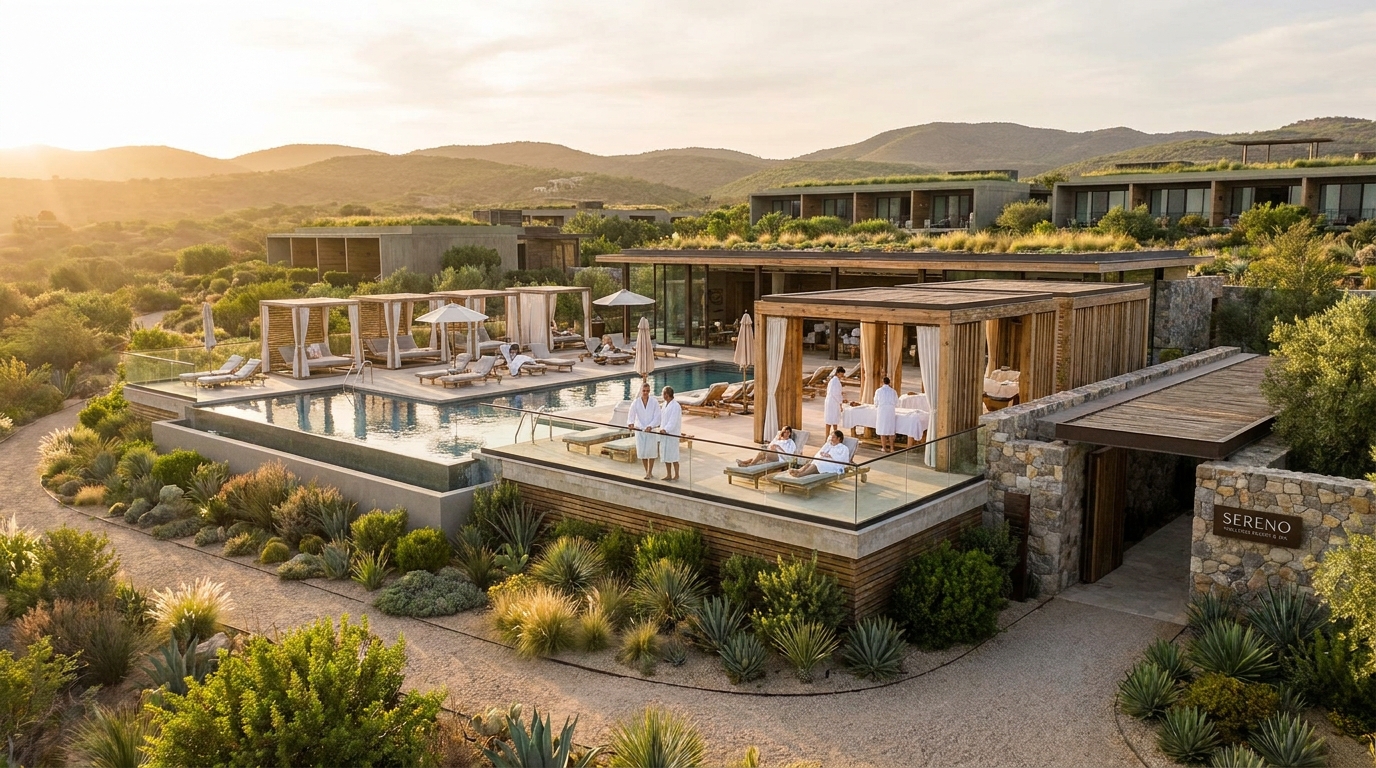
Hospitality can be a pathway to sustainable wealth when investors approach it with patience, selectivity, and an operating mindset. The wealth-building case comes from more than one source. It can come from stabilized cash flow, from land and asset appreciation, from strategic repositioning, from mixed-use uplift, and from the ability to ride long-term travel and destination growth. Few real estate sectors combine these drivers in quite the same way.
There is also a broader economic relevance to hospitality that supports its long-term appeal. Tourism contributes meaningfully to employment across major regions, and hospitality assets often serve as anchors for local spending, regeneration, and small business ecosystems. This gives well-conceived projects a role beyond room revenue alone. They participate in regional development and can become embedded within the identity and functionality of a place. That local significance can strengthen support from municipalities, partners, and communities when handled responsibly.
For investors with a strategic horizon, hospitality can also provide inflation sensitivity through repricing ability. Unlike property types locked into fixed rent steps, hotels can adjust rates daily. That does not eliminate downturn risk, but it can be powerful in inflationary or high-demand periods. Over time, this flexibility may enhance revenue growth in a way that supports both cash flow and valuation.
Of course, sustainable wealth does not come from chasing every cycle. It comes from choosing projects where demand is durable, supply is controlled, product-market fit is clear, and resilience is embedded from the start. Hospitality rewards conviction when that conviction is backed by data, execution quality, and disciplined capital planning.
What investors should ask before committing capital
Before investing in any hospitality development, there are several fundamental questions worth asking. These questions can help separate a compelling investment thesis from a well-marketed but weak proposition. They also force clarity around demand, risk, and operational realism.
- What are the property’s core demand generators? Investors should be able to identify the specific reasons guests will come, how often, and in which seasons.
- Is new supply limited or accelerating? A strong market can still become overcompetitive if too many projects are entering at once.
- Does the concept match actual traveler behavior? Product design should reflect how target guests spend, book, and move through the destination.
- Can the project demonstrate sustainability and resilience? ESG performance should be practical, measurable, and connected to both operations and community value.
- Is the operator best in class for this exact asset type? A good operator in the wrong concept is not enough.
- How does the project perform under downside scenarios? Underwriting should account for slower lease-up, cost overruns, and weaker-than-expected ADR growth.
If these questions cannot be answered clearly, the issue is usually not a lack of optimism. It is a lack of investment-grade clarity. Hospitality development can create exceptional value, but only when the full business model is understood.
Final perspective
Investing in hospitality developments today is not a speculative bet on travel enthusiasm alone. It is a strategic allocation to a real asset class that has regained momentum through post-pandemic recovery, improving operating performance, and rising interest in sustainable tourism. The sector offers a distinctive blend of current income potential, appreciation, and destination-linked upside. For capable investors, that blend can be powerful.
The strongest opportunities will likely be found in projects that go beyond generic hotel exposure. They will be in assets with a precise market position, a disciplined capital structure, strong operator alignment, and a credible sustainability narrative that improves both resilience and relevance. In Canada and across North America, these developments can serve not only as income-producing properties, but as long-term platforms for wealth creation rooted in location, experience, and enduring demand.
Hospitality has always rewarded those who understand timing, negotiation, and the deeper economics of place. In the current cycle, it is doing so again. The difference now is that the next generation of successful projects will not just host travelers. They will create value for investors, communities, and destinations in a way that is both commercially smart and structurally sustainable.



No Comment! Be the first one.