



Urban redevelopment has moved from a niche strategy to a core investment theme across Canada and North America. At its best, redevelopment takes land that is underused, obsolete, fragmented, or environmentally impaired and converts it into higher-performing residential, commercial, civic, or mixed-use real estate. For investors, the appeal is not limited to buying low and waiting for appreciation. The real opportunity lies in creating value through repositioning, entitlement, remediation, density, and alignment with modern urban demand.
Table Of Content
- Why Urban Redevelopment Matters Now
- Where Returns Come From in Redevelopment Investments
- The Investment Thesis Behind Infill and Transit-Oriented Redevelopment
- Sustainability as a Genuine Value Driver
- Community Engagement as an Underwriting Variable
- How to Identify Strong Urban Redevelopment Opportunities
- Due Diligence: Where Smart Investors Protect Returns
- Key Questions to Ask Before Committing Capital
- Financing and Capital Structuring for Redevelopment
- Adaptive Reuse, Mixed-Use, and Brownfield Strategies Compared
- Common Misconceptions That Distort Investment Decisions
- What the Most Successful Redevelopment Investors Do Differently
- The Outlook for Urban Redevelopment
- Conclusion
That demand is real and measurable. Canadian urban centres continue to face strong housing pressure, particularly in rental markets, which supports infill and higher-density redevelopment strategies. Public policy is also reinforcing the investment case. The Government of Canada has launched the Canada Housing Infrastructure Fund and the Canada Public Transit Fund, both of which strengthen the economics of projects located near existing services, transit corridors, and growth nodes. In Ontario, transit-oriented community initiatives are explicitly designed to bring more homes and jobs closer to transit, creating a powerful intersection of public policy and private return.
The strongest redevelopment investors understand a simple truth. Urban redevelopment is not just a construction exercise. It is a capital allocation and risk management discipline shaped by land scarcity, public approvals, local demand, environmental constraints, and timing. Investors who treat it as a strategic process can unlock substantial upside. Those who underestimate complexity often find that cleanup costs, entitlement delays, fee structures, or neighborhood resistance erode projected returns.
This article explores how investors can approach urban redevelopment with discipline and clarity. It explains where value comes from, why sustainability and community engagement have become meaningful financial drivers, which risks matter most, and how to structure an investment approach that balances ambition with feasibility. In a market defined by housing shortages, aging infrastructure, and competition for well-located land, redevelopment is increasingly where sophisticated returns are made.
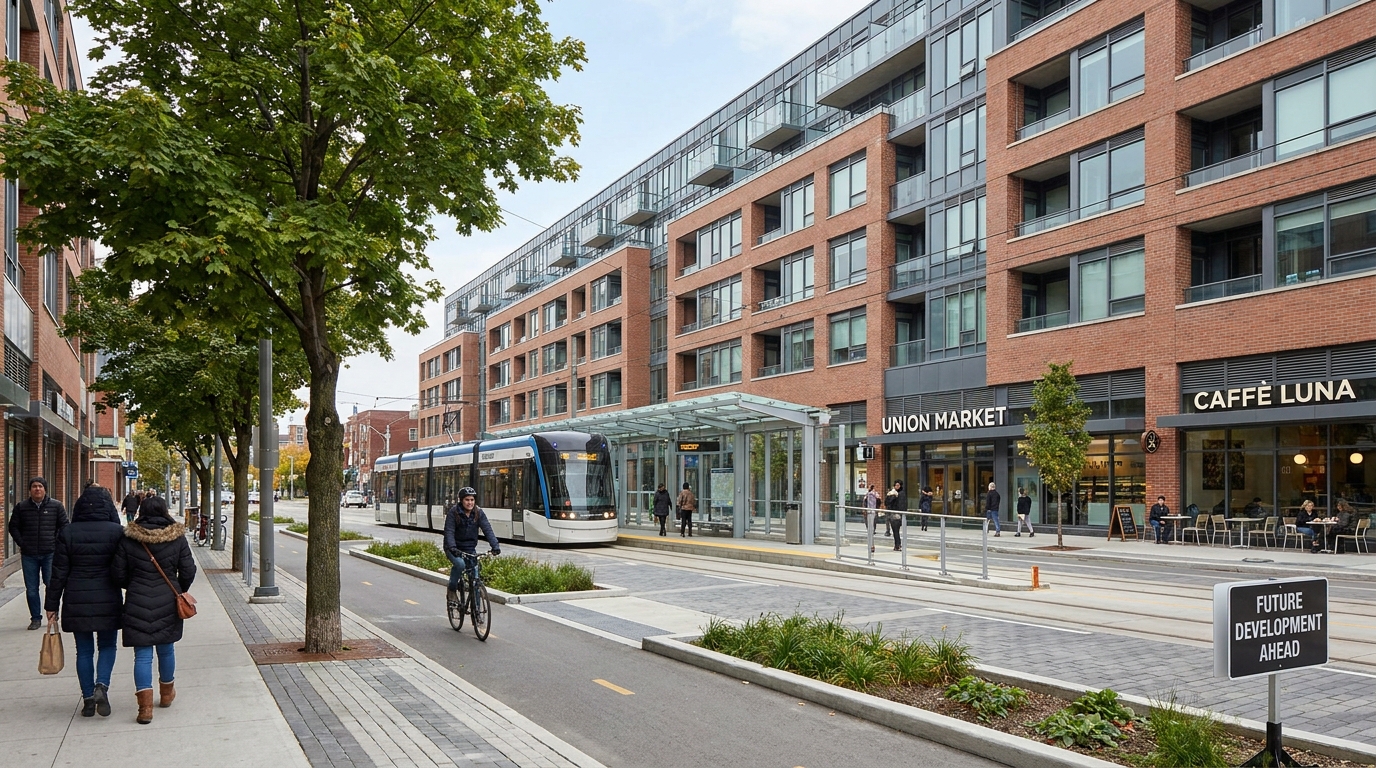
Why Urban Redevelopment Matters Now
Redevelopment matters because cities are facing structural constraints that cannot be solved through outward expansion alone. Well-located land is limited, infrastructure is expensive, and households increasingly want access to transit, employment, amenities, and walkable neighborhoods. In that environment, obsolete malls, aging industrial sites, vacant parcels, surface parking lots, and underbuilt station-area properties become strategic assets. They are not valuable simply because they exist. They are valuable because they sit in places where demand already has a foundation.
From an investment standpoint, this creates an important asymmetry. Greenfield development often depends on extending services outward and competing with many similar parcels. Urban redevelopment, by contrast, can benefit from pre-existing infrastructure, established labor markets, and a proven local identity. When projects are close to transit, universities, healthcare districts, or employment corridors, the land can support stronger absorption and more resilient long-term value. This is one reason transit-oriented development has become central to both policy and investor attention.
Public funding trends reinforce this theme. Housing supply, transit expansion, and infrastructure capacity are no longer isolated policy topics. They are increasingly linked in a redevelopment framework that rewards intensification near serviced land. This alignment reduces friction for projects that fit municipal and federal priorities. It can also improve investor confidence because the political case for urban infill is stronger when it supports housing supply, climate targets, and mobility goals at the same time.
Another reason redevelopment matters is that it can solve multiple market problems in one project. A former industrial site can become rental housing. An underused commercial parcel can evolve into a mixed-use node. A warehouse or institutional building can be repurposed through adaptive reuse. A transit-adjacent parking lot can support residential density above retail or community space. These are not isolated design concepts. They are investment responses to scarcity, affordability pressure, and changing patterns of work and living.
Where Returns Come From in Redevelopment Investments
Many investors make the mistake of evaluating redevelopment as though it were a conventional stabilized acquisition. That approach misses the core economics. In redevelopment, returns are often generated through a sequence of value-creation events rather than a single yield spread. The site may appreciate when zoning changes, when contamination is removed, when infrastructure capacity is upgraded, when density increases, or when the asset is repositioned to a product type that better matches local demand.
In practical terms, there are several layers of return. The first is land basis arbitrage, where an underperforming use is acquired at a price that does not reflect the site’s best long-term potential. The second is entitlement uplift, where approvals and planning work convert uncertainty into a more financeable development path. The third is physical transformation, where demolition, remediation, adaptive reuse, or new construction creates a marketable asset. The fourth is operational optimization, where a project’s tenant mix, rental profile, sustainability features, and community integration support stronger long-term cash flow.
Brownfield redevelopment offers a particularly clear example of this layered return profile. The perceived discount on a contaminated or obsolete site reflects legitimate risk, but that risk is not always equal to its market penalty. When remediation can be quantified, funded, and phased intelligently, the value gap can narrow quickly. U.S. EPA reporting has shown that brownfields grant dollars have leveraged an average of $19.47 for every $1 awarded through fiscal year 2025, a useful illustration of how public participation can improve capital efficiency and unlock private investment.
There is also the neighborhood effect. Cleanup and reuse do not just improve the project parcel. They can influence adjacent values and market confidence. EPA findings note that nearby residential property values increased by 5 percent to 15.2 percent in one study after cleanup. That matters to investors because urban redevelopment often works best in clusters. A project’s returns can be strengthened when surrounding parcels are also improving, when public realm investments are visible, and when the district narrative shifts from overlooked to investable.
The Investment Thesis Behind Infill and Transit-Oriented Redevelopment
One of the strongest urban redevelopment strategies today is infill development near mobility corridors. The logic is straightforward. Strong cities have growing populations, constrained housing supply, and rising pressure on transportation systems. Projects that add housing and services near transit reduce commute friction, support higher utilization of public infrastructure, and appeal to renters and buyers who value convenience. From an underwriting perspective, this can translate into deeper demand pools and more stable occupancy.
CMHC reported in 2025 that housing demand remained strong in Canadian urban centres, especially for rentals. That single fact has broad implications. It supports redevelopment models that prioritize multifamily, mixed-income housing, and dense infill in established locations. It also suggests that investors should focus less on speculative fringe growth and more on places where demand is already visible in rents, absorption, and household formation.
Transit-oriented communities add another layer of return potential because they often attract political support and planning flexibility. Municipalities are more likely to support higher density, mixed-use programming, and reduced parking ratios when a project aligns with transit investment and broader growth plans. This is especially relevant in Ontario, where the transit-oriented communities approach is designed to bring more homes and jobs closer to transit. For investors, that can mean faster market acceptance, stronger place-making, and better long-term land value.
Not every transit-adjacent site is a great investment, of course. The best opportunities typically combine several strengths at once: a credible path to density, sufficient infrastructure, neighborhood amenity growth, and a local demographic base that can support the proposed product. Infill redevelopment is strongest when it serves a clear market need and when the public policy case is already established. This is why station areas, aging retail nodes, and inner-suburban commercial corridors are increasingly important targets. They often offer enough scale for transformation without the extreme barriers associated with fully built downtown cores.
Sustainability as a Genuine Value Driver
Sustainability in redevelopment is often misunderstood as a branding layer added after the financial model is complete. In reality, it is increasingly part of the financial model itself. Reusing urban land can lower sprawl-related infrastructure costs, reduce pressure on greenfield expansion, and align a project with climate resilience and emissions objectives. Those benefits matter to cities, communities, lenders, and institutional capital. They also matter to operating performance over the life of the asset.
Brownfield and infill redevelopment can deliver measurable environmental value. The EPA has reported that every brownfield acre redeveloped can avert roughly 1.3 to 4.6 acres of new impervious surface elsewhere. That statistic is significant because it links land reuse to broader ecological and infrastructure outcomes. In a regulatory environment that increasingly prices carbon, resilience, and stormwater impacts into planning and cost structures, the ability to demonstrate more efficient land use can be financially relevant.
Canada’s brownfield opportunity is substantial. An NRCAN guide from the 2000s estimated roughly 30,000 brownfield sites in Canada, with 20,000 potentially suitable for redevelopment. That is not a marginal inventory. It represents a large pipeline of urban land-reuse opportunities in places where infrastructure, employment access, and population demand may already exist. Investors who can underwrite environmental complexity with rigor are positioned to access sites that others avoid.
Sustainability also improves value through building performance. Energy-efficient retrofits, durable materials, flood-conscious design, lower-emission systems, and adaptive reuse can reduce long-term operating costs while supporting leasing and financing outcomes. Capital providers increasingly assess environmental resilience as part of risk evaluation, not public relations. Insurance costs, utility expenses, and regulatory compliance are all moving targets. Investors who build resilience into redevelopment projects are not simply signaling values. They are protecting cash flow and reducing future capital stress.
In modern urban redevelopment, sustainability is not a cosmetic feature. It is a form of risk pricing, cost control, and long-term value protection.
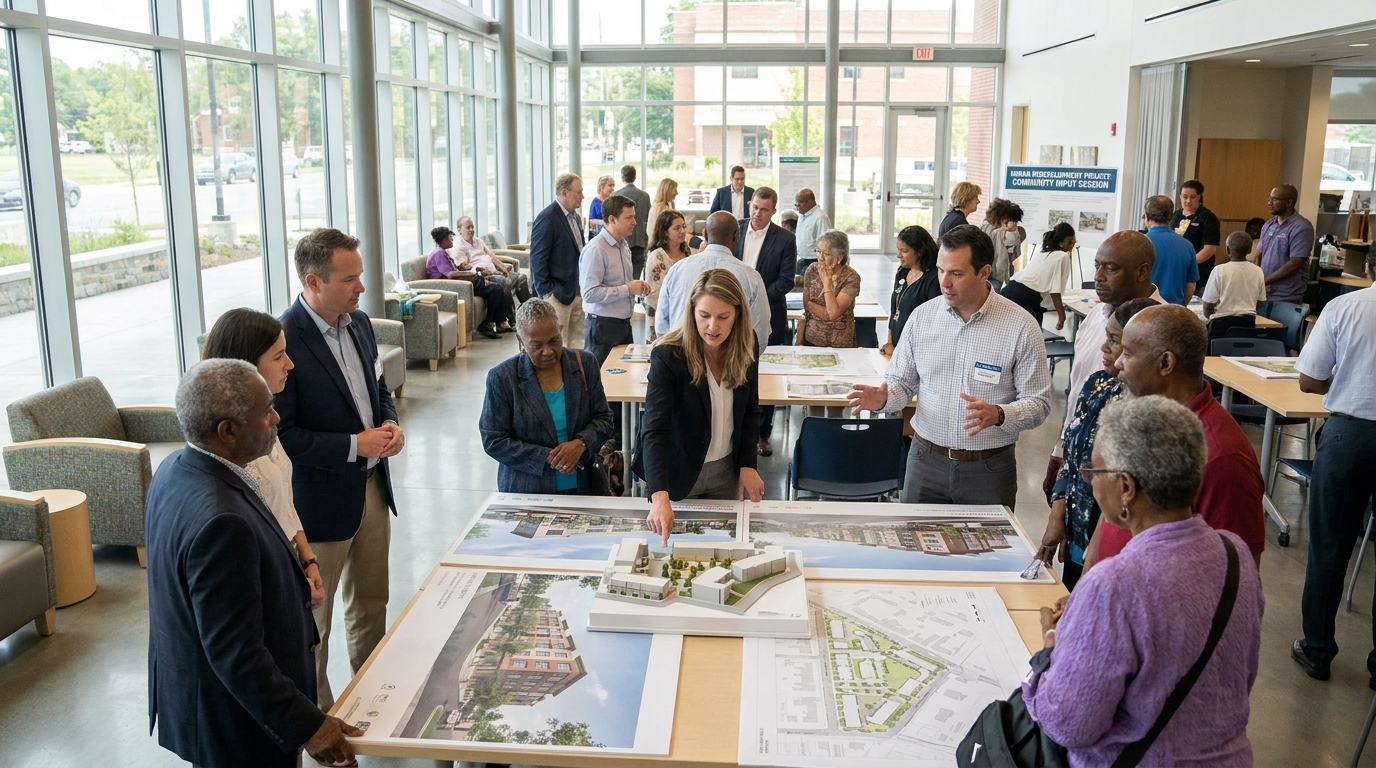
Community Engagement as an Underwriting Variable
Community engagement is often treated as a soft process that slows execution. Serious redevelopment investors know the opposite is frequently true. Early and credible engagement can reduce approval risk, improve project design, strengthen municipal relationships, and create a clearer path through public review. In many urban markets, community support or opposition has a direct impact on timeline certainty, legal complexity, and eventual absorption.
This matters because urban redevelopment rarely happens in a vacuum. It affects neighbors, public spaces, local services, traffic patterns, and housing accessibility. If a project visibly addresses local priorities such as rental supply, affordability, streetscape improvements, community amenities, or inclusive design, it is more likely to gain traction. When a project appears disconnected from neighborhood needs, resistance can harden quickly. That resistance has a cost, even when the project is eventually approved.
Recent Canadian examples of community housing and co-housing demonstrations show that investors and public actors are paying more attention to models that combine affordability, shared space, and social value. CMHC’s 2025 funding for housing research and demonstration initiatives also suggests that innovative partnership structures, pooled capital, and land assembly strategies are becoming more relevant. Investors do not need every project to be mission-driven to learn from this trend. They do need to recognize that social alignment increasingly influences entitlement success and long-term demand.
The practical implication is clear. Community engagement should be built into underwriting from the beginning. That means budgeting for consultation, understanding ward-level politics, identifying likely areas of concern, and evaluating whether community benefits can improve feasibility rather than simply add cost. A public plaza, childcare component, affordable unit share, better pedestrian design, or local-serving retail mix can strengthen a project’s position while also making the finished asset more attractive.
How to Identify Strong Urban Redevelopment Opportunities
The best redevelopment opportunities are rarely the cheapest parcels on a map. They are the sites where mispricing exists because complexity has obscured future utility. Investors should begin by asking whether the location has durable demand drivers. Is the site near transit, employment, education, healthcare, or established retail? Is the surrounding neighborhood gaining population, attracting capital, or benefiting from infrastructure upgrades? Are rents or sales values sufficient to justify the density required?
The next step is to examine the gap between current use and highest reasonable use. A single-storey retail strip near rapid transit may support mid-rise residential over ground-floor commercial. An aging office property may be suitable for conversion or mixed-use repositioning. A former industrial parcel may be a candidate for multifamily, logistics, life sciences, or a hybrid employment format depending on zoning and submarket conditions. The investment edge comes from seeing a more productive future use before the market fully prices it in.
Investors should also pay close attention to parcel geometry, assembly potential, servicing capacity, and municipal planning direction. Land that appears attractive from an aerial map may become unworkable because of setbacks, contamination spread, access limitations, or servicing constraints. On the other hand, a site that looks modest on paper may become highly valuable if neighboring ownership can be assembled, if a station-area plan supports density, or if local reforms are improving approval timelines.
There is also a strategic case for focusing on inner suburbs and aging corridors rather than only prime downtown districts. One common misconception is that redevelopment only matters in large urban cores. In practice, many strong opportunities sit in station areas, older commercial nodes, and post-industrial districts just outside the traditional center. These locations often offer lower entry basis, enough scale for meaningful transformation, and policy support for intensification.
Due Diligence: Where Smart Investors Protect Returns
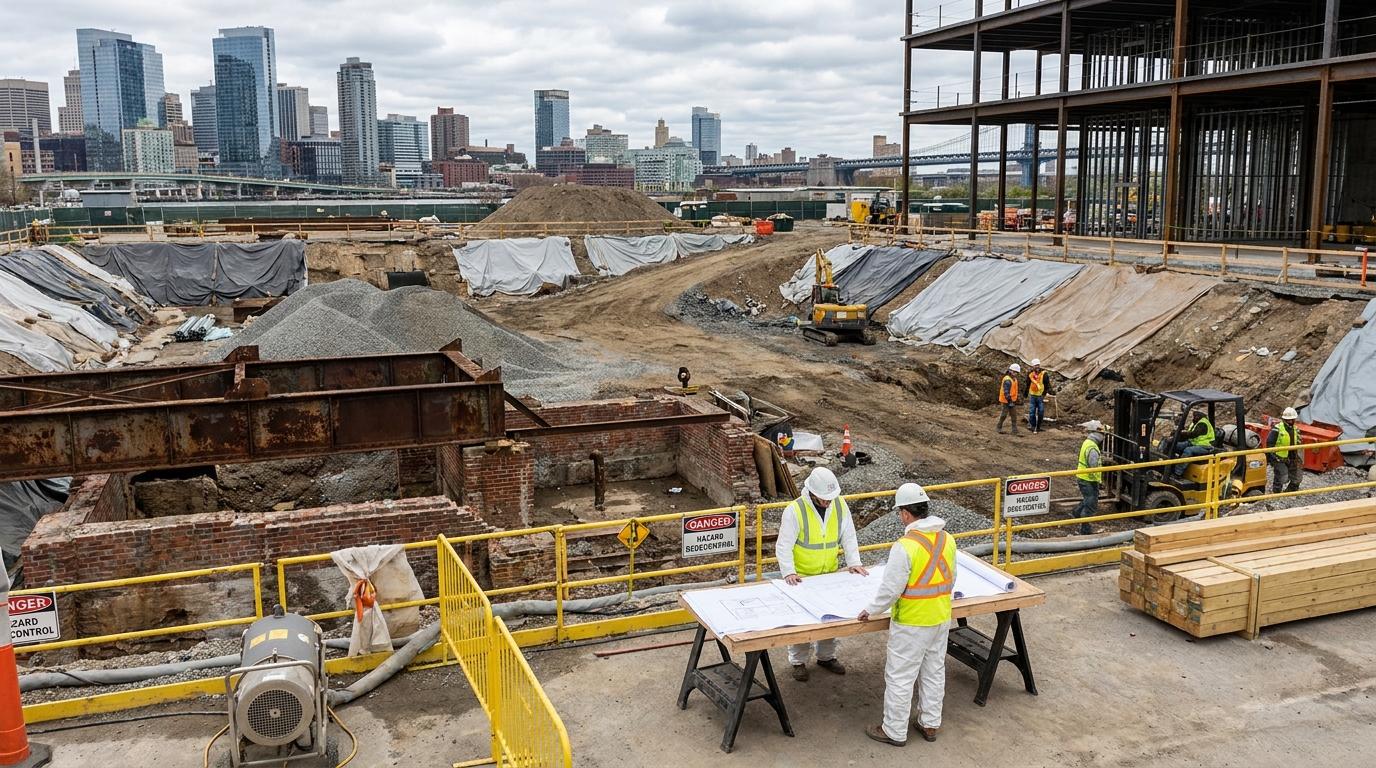
Redevelopment can generate outsized returns, but it also demands deeper diligence than many other real estate strategies. Environmental liability is an obvious concern. Brownfield and infill investors should expect phase I and phase II environmental assessments where appropriate, along with realistic remediation contingencies and specialist review of historical site use. The point is not to avoid complex sites automatically. It is to price uncertainty properly and ensure that cleanup assumptions are supportable.
Zoning and entitlement risk are equally important. A site may appear attractive based on surrounding density or conceptual planning language, yet still face significant barriers to execution. Investors should review official plans, secondary plans, urban design guidelines, transportation studies, heritage overlays, and any local growth objectives that affect the parcel. Timing assumptions need to be conservative. A project that works only if approvals arrive quickly is often a fragile investment thesis.
Construction cost escalation remains another major pressure point. Redevelopment often involves demolition, utility relocation, structured parking, façade retention, remediation, and unusual site logistics. These factors can create cost profiles that differ materially from standard new-build projects on uncomplicated land. Feasibility should include robust contingencies, contractor input, and sensitivity testing around schedule and material pricing. Sophisticated investors model scenarios rather than relying on a single optimistic budget.
Development charges and local fee structures can also materially affect project viability. CMHC has noted that development charges can represent a major component of new-unit cost in some Canadian cities. That means underwriting needs to account for jurisdiction-specific costs rather than using generic assumptions. A project can look compelling at the land stage and become marginal once local charges, infrastructure contributions, and public benefit obligations are fully layered in.
Key Questions to Ask Before Committing Capital
-
What specific source of value creation justifies redevelopment instead of a hold strategy, such as density uplift, adaptive reuse, remediation, or product repositioning?
-
Does local demand support the proposed end use, especially for rental housing, mixed-use retail, office conversion, or community-serving space?
-
What are the environmental, entitlement, and infrastructure risks, and have they been reflected in realistic contingencies and timeline assumptions?
-
How does the project align with municipal, provincial, and federal priorities related to housing, transit, sustainability, and intensification?
-
What community concerns are likely to arise, and can project design or benefit-sharing improve approval certainty and long-term performance?
Financing and Capital Structuring for Redevelopment
Redevelopment is often financeable, but it rarely fits a simple capital stack. Investors need to think in phases. Land acquisition may require higher-cost capital because the site is not yet fully entitled or because contamination creates lender caution. As approvals advance and technical risk declines, the project may be refinanced into lower-cost debt or brought into a construction facility with more conventional terms. This staged approach is one reason entitlement and de-risking can create value before a building is even delivered.
Public capital and policy tools can play a meaningful role. Affordable housing funding, infrastructure support, transit investment, brownfield incentives, and municipal partnerships can all improve project feasibility if they are incorporated intelligently. Canada’s 2025 CMHC annual reporting highlights more than $14 billion in cumulative commitments through the Affordable Housing Fund since launch, demonstrating the scale of public capital support connected to housing and community redevelopment. That does not mean every project should seek subsidy. It means investors should understand where public objectives can align with private economics.
Joint ventures are also common because redevelopment requires multiple forms of expertise. A land-rich owner may partner with a developer that understands approvals. A capital partner may team up with an operator that specializes in adaptive reuse or mixed-income housing. An institutional investor may participate after entitlements are secured and the project is more clearly defined. The best capital structures match the risk profile of each stage instead of forcing one source of capital to cover every phase inefficiently.
Investors should be cautious about overleveraging early complexity. Redevelopment returns can be attractive, but they are sensitive to delay. A capital structure that assumes aggressive timing and little friction leaves no room for the realities of urban projects. More resilient deals are built around patient capital, staged underwriting milestones, and multiple exit options. The discipline to structure for uncertainty often distinguishes professional redevelopment investing from speculative land betting.
Adaptive Reuse, Mixed-Use, and Brownfield Strategies Compared
Not all redevelopment follows the same path, and investors should choose strategy based on site conditions, market demand, and local policy context. Adaptive reuse typically involves repositioning an existing structure for a new use. This can work well when a building has strong bones, heritage value, or a location where replacement cost would be difficult to justify. It can reduce demolition waste and preserve character, though it may also involve structural surprises and complex code upgrades.
Mixed-use redevelopment is often the clearest expression of urban value creation because it layers several demand streams onto one site. Housing over retail, office with public space, or community amenities integrated with commercial uses can create a more resilient asset than a single-purpose building. The strength of mixed-use is that it matches how modern neighborhoods function. The challenge is that it requires sharper planning, leasing, and phasing discipline than simpler product types.
Brownfield redevelopment typically carries the highest upfront complexity but can also produce some of the strongest basis advantages. Investors willing to address contamination, legal diligence, and cleanup planning may gain access to larger or better-located sites at discounts to clean urban land. The misconception that brownfield projects are always too risky overlooks the role of public programs, strong market fundamentals, and sophisticated technical underwriting. When these pieces are in place, brownfields can become highly profitable development platforms.
The right strategy often combines these categories rather than choosing just one. A former industrial building may be adaptively reused as part of a larger mixed-use brownfield plan. An aging shopping centre may become a phased transit-oriented district with housing, retail, and public space. Investors should think less in terms of labels and more in terms of what each site can become under realistic policy and market conditions.
Common Misconceptions That Distort Investment Decisions
One common misconception is that redevelopment only applies to distressed properties. In reality, some of the best returns come from strategic infill and repositioning in valuable locations where the current use is simply outdated. A site does not need to be broken to be underutilized. It may already sit in a strong neighborhood but still support far more productive density or a better mix of uses.
Another misconception is that sustainability adds cost without improving returns. That view ignores how operating efficiency, resilience, public support, and access to certain forms of capital increasingly shape project economics. In redevelopment, sustainability can support approvals, reduce long-term expenses, and make the investment thesis more durable. It is not merely a marketing statement.
A third misconception is that community engagement only creates delay. While poor engagement can certainly become a time sink, thoughtful and early engagement often reduces friction later. It can surface design issues before they become formal opposition and help create a project that better fits local needs. Since approvals, litigation risk, and market perception all affect return, engagement should be seen as part of execution quality.
Finally, some investors assume every apparently distressed urban parcel is a bargain. This is dangerous. Site cleanup, utility upgrades, legal complexity, and community requirements can quickly consume a perceived discount. The best redevelopment investors are selective. They do not buy complexity for its own sake. They buy complexity when they have a credible edge in solving it.
What the Most Successful Redevelopment Investors Do Differently
The most successful investors in this space share several habits. First, they spend more time on site selection and policy mapping than on promotional narratives. They know that redevelopment returns are usually won at acquisition and planning, not after the ribbon cutting. Second, they underwrite with humility. Instead of assuming frictionless execution, they build in contingencies around environmental conditions, timing, fees, and capital costs.
Third, they understand the political economy of the neighborhood. They know which projects a municipality wants, what the community is likely to accept, and how broader public priorities such as housing supply, affordability, transit use, and climate resilience affect approvals. They do not treat government and community factors as external noise. They treat them as core inputs to return.
Fourth, they think in district terms rather than only parcel terms. A single project can perform better when it is part of a visible corridor transformation, station-area strategy, or public-realm improvement cycle. Redevelopment becomes more compelling when an entire submarket is shifting in a favorable direction. Investors who identify these transitions early often capture the strongest upside.
Finally, they stay flexible on execution. The market can change between acquisition and delivery. Rental demand may outperform condo demand. Community feedback may support a stronger affordable housing component. Policy reforms may favor standardized housing forms or faster approvals for certain product types. Investors who maintain optionality are better positioned to protect returns when conditions evolve.
The Outlook for Urban Redevelopment
The long-term outlook for urban redevelopment remains strong because the underlying drivers are structural rather than cyclical. Cities still need more housing, better use of infrastructure, cleaner land, and more resilient forms of growth. Transit-oriented development continues to gain traction. Municipal pro-housing reforms tied to federal funding are pushing higher density and faster approvals in many markets. Standardized housing designs and modular approaches are also gaining attention as ways to improve feasibility and shorten delivery timelines.
Climate resilience is likely to become an even more explicit part of redevelopment planning. Investors will increasingly need to account for flood exposure, heat, stormwater management, and the long-term performance of building systems. At the same time, public and private capital will continue to favor projects that show credible social and environmental value alongside financial discipline. This supports the case for mixed-income housing, adaptive reuse, and integrated district planning in well-located urban areas.
For investors, the implication is clear. The best-performing redevelopment strategies will combine location quality, public policy alignment, sustainability, and community buy-in within a coherent capital plan. That combination is difficult to execute, which is exactly why it can produce superior returns. Complexity creates opportunity when it is managed professionally.
Conclusion
Urban redevelopment is one of the most compelling areas in modern real estate investing because it operates at the intersection of scarcity, policy, infrastructure, and demand. It offers the potential for substantial returns, but those returns are earned through strategy rather than assumption. The strongest opportunities are typically found where underused land can be repositioned in ways that meet real urban needs, especially housing, mobility, sustainability, and neighborhood vitality.
Investors looking to maximize returns should focus on infill and transit-oriented sites, evaluate brownfield and adaptive reuse opportunities with disciplined diligence, and treat sustainability and community engagement as core value drivers rather than optional extras. They should also build capital structures that respect the realities of entitlement timelines, remediation risk, and construction complexity. In redevelopment, patience and precision are often more profitable than speed and optimism.
The market is sending a clear signal. Well-located urban land that can be intensified, cleaned up, or repositioned is becoming more strategically important. For investors who understand both the numbers and the negotiation, urban redevelopment is not just a development story. It is a long-term value creation strategy built for the next era of real estate.



No Comment! Be the first one.