


Elevate Your Space: Stylish Cabinet Upgrades to Transform Your Home
Cabinets shape the atmosphere of a room more than many homeowners realize. They define sightlines, establish color balance, and quietly determine whether a kitchen, bathroom, laundry room, or storage wall feels dated, polished, heavy, or beautifully composed. The encouraging truth is that you do not need a full renovation to enjoy a striking transformation. With thoughtful cabinet upgrades, it is entirely possible to renew the character of your home through changes that are practical, graceful, and achievable.
Table Of Content
- Why Cabinet Upgrades Matter More Than Ever
- The Cabinet Upgrade Mindset: Refresh, Do Not Rush
- Choose the Right Upgrade Strategy for Your Space
- Painting Cabinets for a Fresh, Lasting Finish
- How to Choose a Cabinet Color That Feels Current and Timeless
- Step by Step: How to Paint Cabinets Properly
- The Instant Upgrade: Replacing Cabinet Hardware
- How to Measure and Install Hardware Like a Professional
- Lighting: The Detail That Makes Cabinets Feel Custom
- Design Enhancements Beyond Paint and Pulls
- Glass-Front Cabinets and Accent Moments
- Open Shelving as a Complement, Not a Replacement
- Interior Organization That Supports the Visual Upgrade
- Pairing Cabinets with Surrounding Surfaces
- Cabinet Upgrades by Room
- Kitchen Cabinets
- Bathroom Vanities
- Laundry Rooms, Mudrooms, and Built-Ins
- A Simple Step by Step Plan for a Weekend Cabinet Refresh
- Mistakes to Avoid for a More Sophisticated Result
- The Lasting Beauty of Small Transformations
Across North American design trends, homeowners are increasingly choosing focused upgrades over disruptive tear-outs. Research from Houzz and the National Kitchen and Bath Association shows that style changes, storage improvements, visual continuity, and personalized finishes continue to guide renovation choices. In Houzz’s 2025 U.S. kitchen study, which surveyed 1,620 homeowners, 81% changed their kitchen style during renovations, with transitional design leading at 25%. That finding reveals something important for everyday homes: dramatic impact often comes from refining what is already there rather than beginning from nothing.
This makes cabinet updates especially compelling. Paint can soften an overly stark kitchen or lend warmth to a tired bath vanity. New hardware can instantly sharpen an outdated silhouette. Lighting can elevate ordinary cabinetry until it feels custom and architectural. Add a glass-front accent, improved shelf organization, or a cleaner door profile, and a modest room can begin to feel more intentional, more luxurious, and more aligned with the way you want to live.
In this guide, we will explore the most stylish cabinet upgrades for today’s home with a focus on results that are realistic for a weekend, a few evenings, or a carefully planned DIY project. You will learn where trends are moving, how to choose colors and materials that feel timeless, and how to execute each step with care so that your work lasts. The goal is not simply to make cabinets look new. It is to make your space feel composed, current, and unmistakably yours.
Why Cabinet Upgrades Matter More Than Ever
Cabinetry sits at the center of daily life. In the kitchen, it frames the room where meals, conversations, and routines unfold. In a bathroom, it influences whether the space feels serene or neglected. In a laundry room or mudroom, it determines whether utility feels orderly or chaotic. Because cabinets occupy so much visual space, even subtle adjustments can transform the entire emotional register of a room.
Current trend research supports this idea. Homeowners are not merely chasing novelty. They are seeking cohesion, calm, and greater performance from the spaces they use most. NKBA’s 2026 research highlights whole-home continuity, minimalism, storage maximization, and personalized style as major themes. Cabinet upgrades speak to all of these desires at once because they can unify a palette, improve organization, and introduce refined details without requiring structural construction.
There is also a practical reason these projects resonate so strongly right now. A cautious market environment has made many households more selective about where to invest. Woodworking industry reporting in 2025 reflected a softer replacement market, reinforcing the value of updating rather than fully replacing. That does not mean sacrificing beauty. In fact, it often encourages better decisions by focusing attention on finish quality, proportion, and detail.
Perhaps most importantly, cabinet refreshes bridge the space between aspiration and access. They allow homeowners to participate in design in a deeply personal way. A warmer paint color, a sculptural pull, or a gentle band of under-cabinet lighting can make a room feel tailored rather than generic. These gestures may be small in scale, yet they alter how the home is experienced every day.
The Cabinet Upgrade Mindset: Refresh, Do Not Rush
Before choosing paint chips or hardware finishes, it helps to approach cabinet upgrades with the right mindset. Many people assume that if cabinets feel old, replacement is the only meaningful answer. In reality, that belief is one of the most expensive misconceptions in home design. A cabinet box that is structurally sound can often be dramatically improved with refinishing, refacing, hardware replacement, lighting, and organizational enhancements.
Another common misconception is that timelessness means playing it safe to the point of blandness. White cabinets certainly remain classic, yet they are no longer the only accepted route to elegance. NKBA’s 2026 Kitchen Trends Report found that 96% of respondents identified neutrals as the most popular colors over the next three years, while greens ranked at 86% and blues at 78%. The message is clear: a sophisticated cabinet color can be soft, muted, and expressive without becoming risky or short-lived.
As you begin planning, try to think in layers rather than single decisions. Cabinet paint influences hardware. Hardware influences whether the room leans modern, traditional, or transitional. Lighting changes how color reads at night. Adjacent surfaces, such as backsplash tile and countertops, affect whether the upgrade feels intentional. This does not mean every surrounding element must be replaced. It simply means the most successful cabinet transformations are considered as part of a visual composition.
Take note of proportions, too. A room with heavy upper cabinets may benefit from a lighter paint color above and a deeper shade below. A plain run of cabinetry may come alive with one glass-front section or one standout accent finish. Houzz reported that 52% of homeowners added or upgraded an accent cabinet during renovations, a detail that suggests people are increasingly drawn to curated contrast rather than one-note uniformity.
Choose the Right Upgrade Strategy for Your Space
Every cabinet makeover does not need to involve every possible improvement. The most polished results often come from selecting one or two interventions and carrying them out beautifully. If your cabinet layout works well and the doors are in good shape, painting and new hardware may be enough. If the style feels especially dated, refacing or changing a few door fronts might create a stronger shift. If the cabinets already look acceptable but the room lacks atmosphere, lighting and styling may provide the change you are craving.
Think about what bothers you most when you enter the room. Is the color too cold or too dark. Do the pulls feel flimsy or visually busy. Are countertops crowded because storage is inefficient. Is there a lack of softness after sunset because task lighting is poor. Once you identify the true source of dissatisfaction, your upgrade plan becomes more focused and far more effective.
There is elegance in restraint. A beautifully painted cabinet in a warm neutral with slim new pulls may create more sophistication than a long list of disconnected updates. Likewise, adding a glass-front upper cabinet with interior lighting can feel more luxurious than replacing every door style in the room. Let your choices serve the architecture and daily rhythm of the home.
Painting Cabinets for a Fresh, Lasting Finish
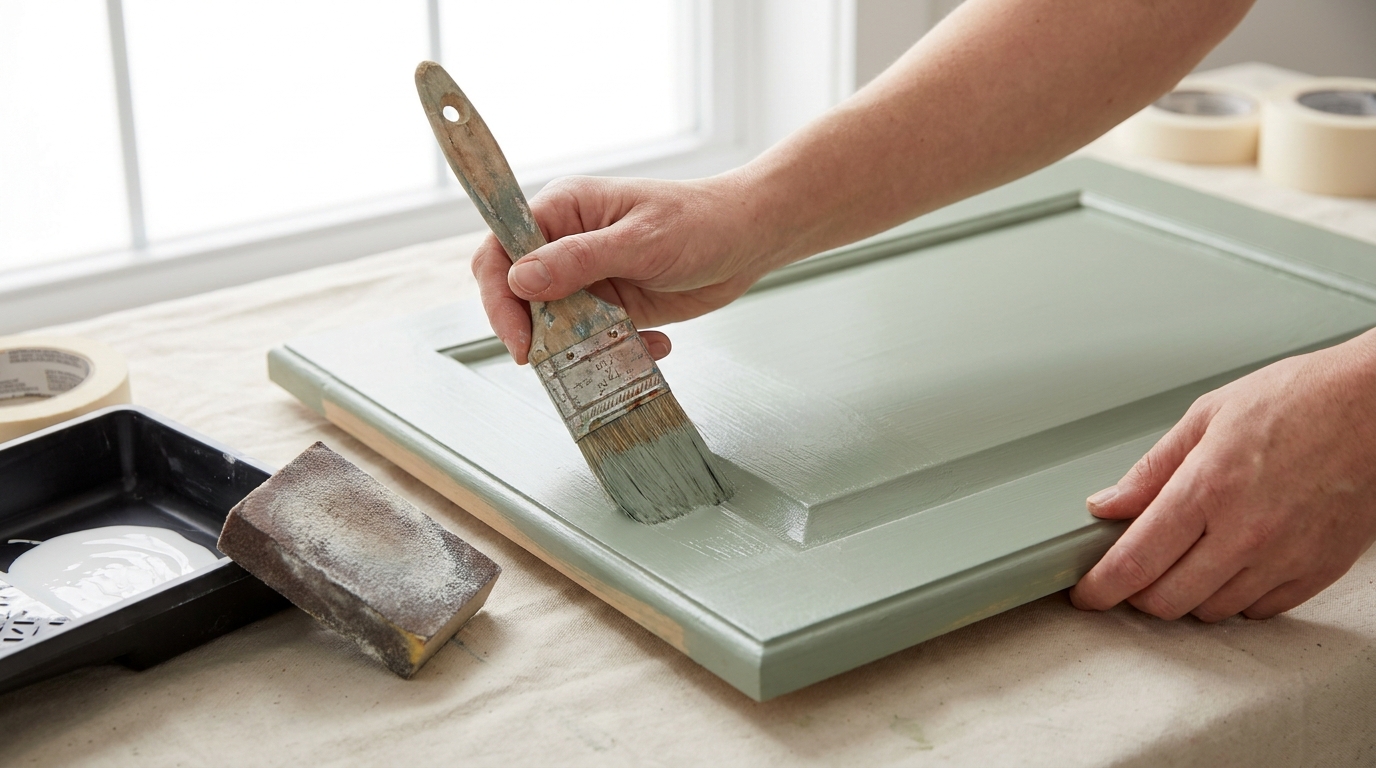
Painting remains one of the highest-impact cabinet transformations available to homeowners. It can shift the mood of a room from stark to soft, from dated to contemporary, from visually cluttered to serene. Yet cabinet painting is also where many DIY projects falter because people underestimate how much the final result depends on preparation. The color may attract attention, but the prep work is what creates beauty that endures.
How to Choose a Cabinet Color That Feels Current and Timeless
The movement away from the all-white kitchen has opened a richer, more nuanced palette. Warm whites still have a place, especially in rooms with limited natural light, but today’s most graceful cabinet colors tend to carry more depth. Soft taupe, mushroom, muted sage, dusty olive, blue gray, and deep charcoal can all feel current while remaining deeply livable. These tones complement a wide range of countertops and work especially well with natural wood accents, brushed metals, and stone textures.
If you want a look that will age beautifully, choose colors with complexity rather than brightness. A green that feels chalky and earthy is more adaptable than one that reads sharp or saturated. A blue with a gray undertone usually feels more architectural than a crisp navy. For a whole-home sense of harmony, look at nearby rooms and repeat undertones instead of trying to make each space feel dramatically different.
Door style matters as well. Houzz found that Shaker cabinet doors were still the most common style at 61%, while NKBA reported rising interest in flat or slab fronts at 69%. Paint can help either style feel fresh. On Shaker doors, softer colors highlight panel depth without exaggerating it. On slab doors, velvety neutrals emphasize the simplicity and clean profile that contemporary homeowners increasingly appreciate.
Step by Step: How to Paint Cabinets Properly
A durable painted finish begins with methodical preparation. Remove doors, drawers, hinges, and hardware, then label everything so reassembly is simple. Even if the cabinets appear clean, wash every surface thoroughly with a degreasing cleaner suitable for cabinetry. Kitchens, in particular, collect invisible oils that interfere with adhesion. Skipping this stage often leads to peeling, even when premium paint is used.
Once the surfaces are dry, sand lightly but evenly. The aim is not to strip the cabinets completely in most cases. It is to create a surface that allows primer to bond securely. Repair dents, chips, or old hardware holes with a filler designed for cabinetry, then sand those areas smooth. Dust removal matters as much as sanding itself, so vacuum crevices and wipe with a tack cloth before moving on.
Primer is essential for high-touch surfaces such as cabinets. Choose a quality bonding primer that suits your cabinet material, whether wood, MDF, laminate, or previously painted surfaces. Primer creates a stable base, blocks stains, and improves the final appearance of color. After the primer dries, inspect the finish in natural light. Small imperfections become easier to correct at this stage than after topcoats are applied.
For paint, use a durable cabinet-grade enamel or trim paint in a finish recommended for cabinetry, often satin or semi-gloss depending on the look you prefer. Apply thin, even coats with a quality brush, roller, or spray system. Two topcoats are usually necessary, sometimes more with lighter colors over dark bases. Patience during cure time is as important as the application itself. Cabinets may feel dry quickly, but full hardness takes longer. Reinstalling too soon can leave marks and compromise the finish.
If you are working in sections rather than all at once, prioritize visible areas first. Paint the exterior faces and the most prominent door fronts before interior cabinet boxes if time is limited. This phased approach allows you to enjoy a visual transformation early while still maintaining quality control. A carefully staggered project often feels less overwhelming and leads to better results.
Design note: Cabinet paint is never only about color. It is about light, texture, and the way a surface reflects daily life. A soft satin finish can make even a simple cabinet door feel intentional and quietly luxurious.
The Instant Upgrade: Replacing Cabinet Hardware
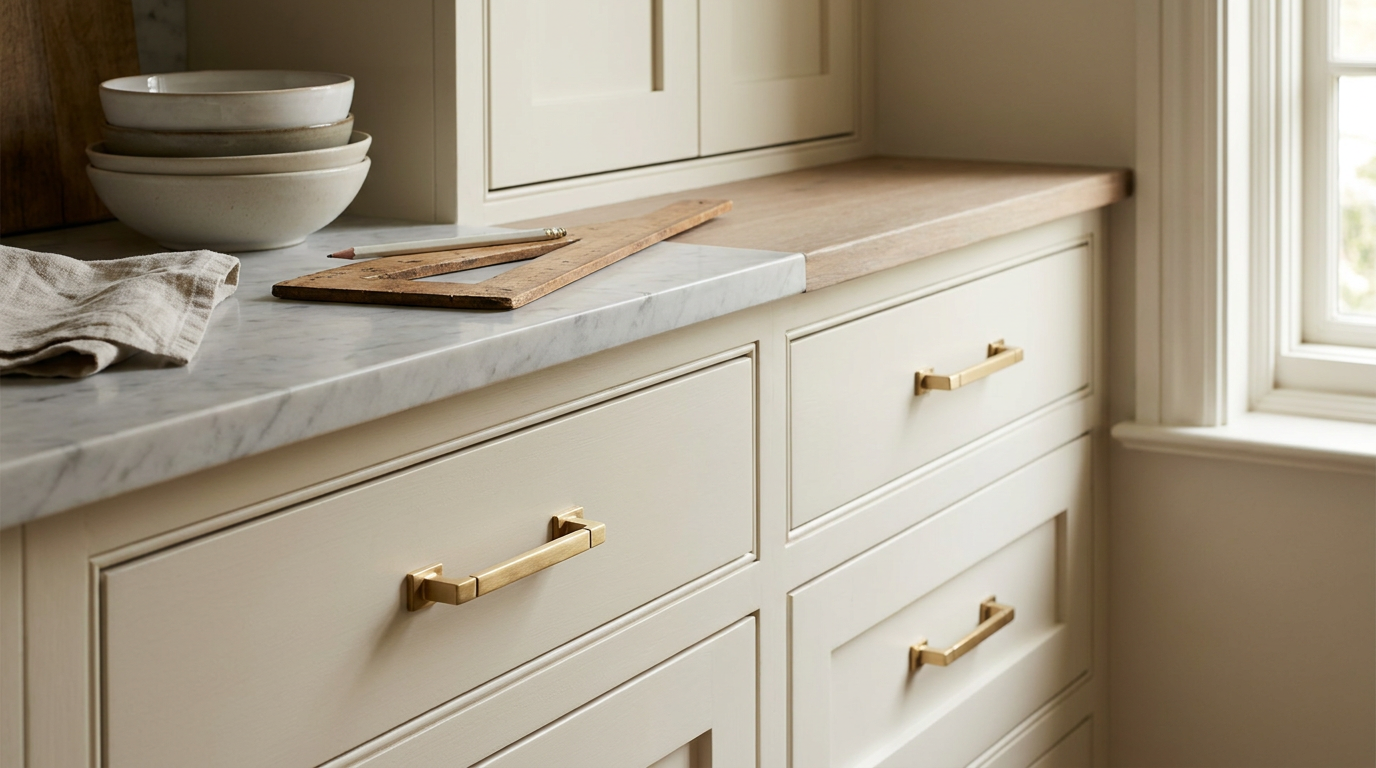
New hardware is one of the fastest ways to modernize cabinets, yet it deserves more thought than a simple aesthetic swap. Pulls and knobs are the jewelry of the room. They affect comfort, rhythm, and visual scale. The wrong hardware can make newly painted cabinets feel unresolved, while the right hardware can make original cabinetry look custom.
Today’s most versatile hardware finishes include brushed brass, matte black, polished nickel, and aged bronze. Mixed metals can also work beautifully when handled with intention. A brushed brass pull paired with a stainless faucet or black sconce no longer feels unusual. Instead, it can create layered sophistication, especially in rooms that blend old and new elements.
How to Measure and Install Hardware Like a Professional
One of the most persistent DIY myths is that hardware replacement is always plug-and-play. In truth, the outcome depends on precise measurement. If your existing handles use two screws, measure the center-to-center spacing exactly. This determines whether your new hardware will fit the current holes or whether filling and redrilling will be required. Never estimate based on appearance alone.
Scale also matters. Long drawer pulls can make a run of cabinetry feel more current and tailored, while tiny knobs on wide drawers can look underdressed. In many cases, larger pulls feel more balanced on modern or transitional cabinets. On upper doors, knobs can remain charming and practical, especially in classic layouts. On lower drawers, pulls often provide both comfort and visual weight.
Use a hardware template or jig to ensure consistency across every installation point. A fraction of an inch may not seem significant, yet slight misalignment becomes painfully obvious once repeated across an entire cabinet run. If you are changing from knobs to pulls or from one pull size to another, fill old holes cleanly, sand smooth, and repaint those spots before installation. The extra care is what separates a hurried update from a graceful one.
Soft-close hinges and drawer slides are also worth considering during a hardware refresh. While they are less visible, they dramatically improve the feel of the cabinetry. The sensation of a drawer gliding quietly closed contributes to the impression of quality in a way that homeowners notice every single day.
Lighting: The Detail That Makes Cabinets Feel Custom
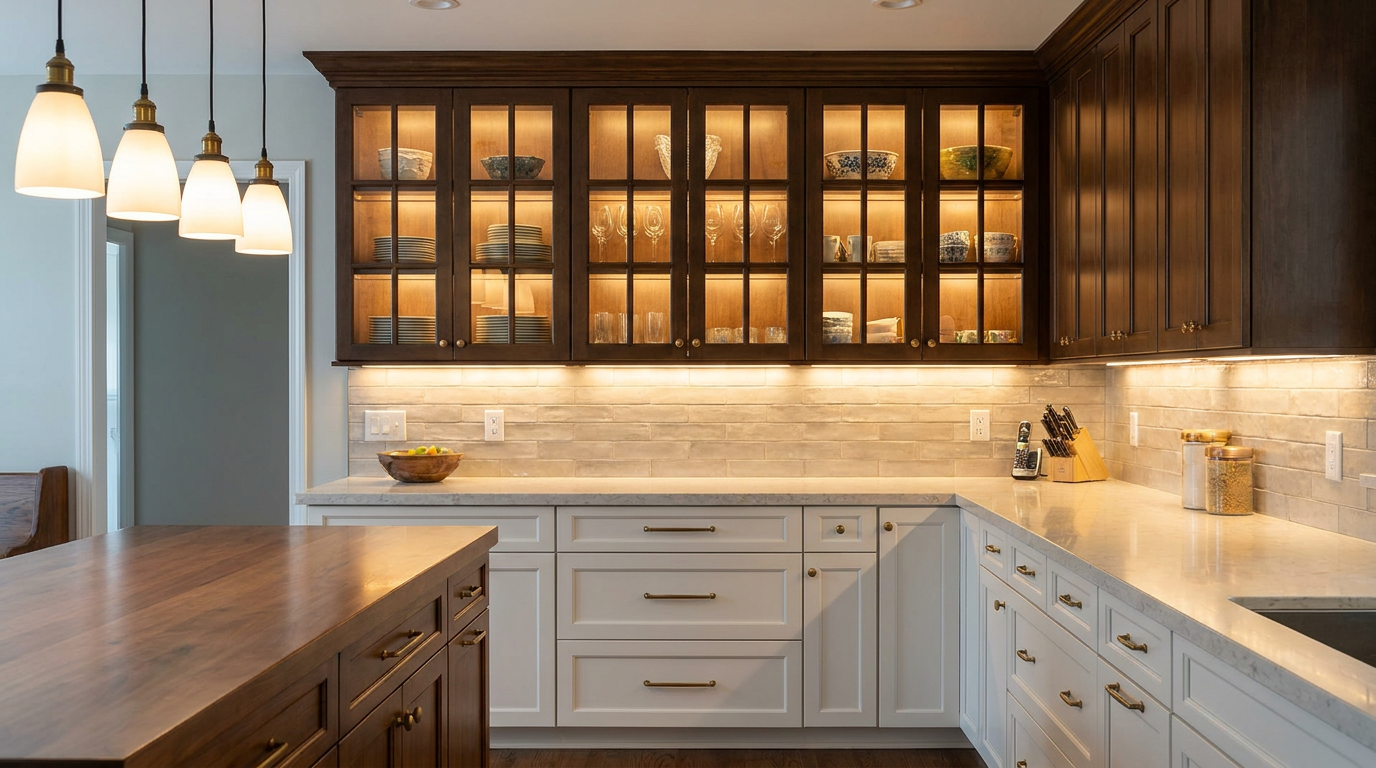
Lighting is perhaps the most underestimated cabinet upgrade. Many homeowners focus on color and hardware while overlooking the transformative power of illumination. Yet current design research consistently shows that lighting has become central to both function and style. NKBA’s 2026 report said under-cabinet lights were chosen by 82% of respondents and interior cabinet lights by 72%, making them two of the most desirable lighting features in contemporary kitchens.
Under-cabinet lighting instantly improves the usability of counters by reducing shadows, but its visual effect may be even more compelling. It creates depth along the backsplash, adds warmth in the evening, and gives cabinetry a more tailored architectural presence. In a simple room with otherwise modest finishes, this one addition can make the space feel more elevated and intentional.
Interior cabinet lighting works beautifully in glass-front cabinets, pantry units, or specialty storage. It highlights dishes, glassware, or objects in a way that turns storage into display. It also adds a softness that balances the harder materials often found in kitchens and baths. If you have ever admired the quiet glow of a luxury interior, this is one of the details responsible for that mood.
For DIY installation, adhesive LED strips and rechargeable options have made cabinet lighting more approachable than ever. Choose a warm white temperature that flatters finishes and avoids a cold, clinical cast. Conceal wires and fixtures as much as possible so the effect remains discreet. Good lighting should be felt immediately but noticed only as a refinement.
Design Enhancements Beyond Paint and Pulls
Once the major changes are complete, a few additional enhancements can take your cabinets from updated to thoughtfully composed. These are the details that create a custom impression without demanding a full remodel. They also align beautifully with today’s trend toward personalization and storage intelligence.
Glass-Front Cabinets and Accent Moments
Not every cabinet needs to conceal its contents. A single glass-front upper cabinet can break visual heaviness and introduce rhythm into a long run of solid doors. It also provides an opportunity to display beautiful everyday pieces such as ceramics, stemware, or linen-textured baskets. Because Houzz reported strong interest in accent cabinets, this approach feels especially current while remaining timeless.
If your kitchen or built-in storage wall feels monotonous, consider converting one section to glass or using a contrasting paint finish on a designated focal cabinet. This does not need to be dramatic. A slightly deeper tone on an island, a pantry cabinet, or a hutch-like section can add richness and structure. The key is to maintain harmony rather than force contrast.
Open Shelving as a Complement, Not a Replacement
Open shelving remains appealing in small doses, but it works best as a complement to cabinetry rather than a total replacement. One of the common misconceptions in modern design is that open shelves are always preferable because they appear lighter. In reality, concealed storage remains essential for daily life, especially in hardworking spaces. A balanced approach is more practical and more elegant.
A short run of shelves can soften a bank of upper cabinets or create room for artwork, pottery, or cookbooks. However, do not remove cabinets indiscriminately if storage is already limited. Whole-home continuity and thoughtful utility matter just as much as visual trendiness. The most successful rooms are those where beauty supports the way people actually live.
Interior Organization That Supports the Visual Upgrade
A beautifully painted cabinet loses some of its magic if opening the door reveals clutter. Organization upgrades may be less glamorous than new finishes, but they are deeply connected to how transformed the room ultimately feels. Pull-out trays, tiered shelf inserts, drawer dividers, vertical pan storage, and pantry bins all improve the experience of using the space.
Houzz’s 2026 study noted that 76% of homeowners incorporated built-in features during kitchen renovations, which underscores how strongly people value storage-focused improvements. You can borrow that logic even in a modest update. The objective is not simply to store more. It is to make cabinets feel purposeful, calm, and easy to maintain.
Pairing Cabinets with Surrounding Surfaces
A cabinet makeover rarely exists in isolation. Even when you are not replacing the backsplash or counters, it helps to evaluate how they interact with your new cabinet finish. Houzz reported that 67% of homeowners chose full backsplash coverage up to the cabinets or range hood in 2025, illustrating the increasing importance of cabinet-adjacent details. This does not mean you must undertake another project immediately, but it does suggest that surrounding materials shape the success of your cabinets more than many people expect.
If your cabinets are being painted a warm neutral, cool blue-gray wall paint or a harsh white backsplash may suddenly feel disconnected. Likewise, dark charcoal cabinets may benefit from lighter counters, softer hardware, or improved under-cabinet lighting to prevent the room from feeling visually compressed. Test samples in daylight and evening light before making final decisions.
Countertop styling matters too. One reason cabinet upgrades can feel underwhelming is that clutter remains untouched. Once the cabinets are renewed, simplify surfaces. A tray near the coffee area, a small lamp, a ceramic bowl, or a vase of branches can help the new cabinetry read as part of a refined composition instead of a project interrupted by everyday disorder.
Cabinet Upgrades by Room
Kitchen Cabinets
The kitchen offers the most obvious opportunity for cabinet transformation because cabinets dominate the room visually and functionally. If your kitchen already has a good layout, painting the cabinets and replacing hardware may produce a striking shift with very little disruption. Add under-cabinet lighting and one accent feature, such as glass doors or a contrasting island color, and the room can feel entirely renewed.
Because kitchens are social spaces as much as working spaces, aim for a balance of polish and warmth. Nature-inspired colors, subtle texture, and mixed materials feel especially appropriate here. A soft olive lower cabinet with creamy uppers, or a taupe perimeter with a slightly deeper pantry wall, can create the layered continuity many homeowners are now seeking.
Bathroom Vanities
Bathroom cabinets respond beautifully to small upgrades because the scale is usually manageable. A vanity painted in a rich, muted tone with a new stone-look top, elegant pulls, and flattering wall sconces can make the room feel boutique in spirit. Since bathrooms are often used in both early morning and evening, pay close attention to how lighting interacts with the cabinet color.
Storage inserts inside vanity drawers also have a remarkable effect on daily comfort. Dividers for cosmetics, grooming tools, and small linens allow the exterior beauty of the vanity to be matched by calm within. This consistency between outer appearance and inner order is the essence of a successful makeover.
Laundry Rooms, Mudrooms, and Built-Ins
Utility spaces deserve beauty as much as primary living areas. In fact, cabinet upgrades in laundry rooms or mudrooms often feel especially satisfying because they improve both function and mood in spaces associated with routine tasks. A sophisticated paint color, durable hardware, and improved storage accessories can make these hardworking zones feel deliberately designed rather than neglected.
Built-in storage walls in living rooms, offices, or hallways can also benefit from cabinet refreshes. Here, a quieter palette often works well, with integrated lighting or minimal hardware to support a more architectural look. Because these cabinets interact with the broader home, they offer a wonderful opportunity to reinforce whole-home continuity.
A Simple Step by Step Plan for a Weekend Cabinet Refresh
If you want a manageable path forward, a focused weekend makeover can work beautifully for a small area or a phased project. Begin on day one by emptying the cabinets, removing hardware, labeling doors and drawers, and cleaning every surface thoroughly. In the afternoon, sand lightly, make repairs, and prime. This is the unglamorous stage, but it forms the foundation for everything that follows.
On day two, apply the first paint coat early and the second once dry times allow. While waiting, install or test-fit lighting, prepare new hardware, and edit cabinet contents so the interior of the space will feel as refreshed as the exterior. Once the paint has cured sufficiently, reinstall doors and drawers carefully, then add hardware using a template for precision.
If your project is larger, divide it into zones. Complete the island first, then the perimeter, or begin with the bathroom vanity before tackling the kitchen. Momentum matters in DIY work, and finishing one area elegantly often brings clarity to the next. Progress should feel composed, not exhausting.
Mistakes to Avoid for a More Sophisticated Result
The first mistake is rushing preparation. Cabinet paint fails most often because surfaces were not cleaned properly, sanded sufficiently, or primed appropriately. A beautiful color cannot compensate for poor adhesion. The second mistake is choosing hardware without considering scale and existing hole spacing. Misaligned pulls or undersized knobs can instantly diminish the impact of an otherwise polished makeover.
The third mistake is ignoring lighting. If you refresh your cabinets but leave the counters in shadow, the room may still feel flat at night. The fourth is chasing trendiness over harmony. A fashionable color or finish means little if it clashes with the rest of the home. Trends are useful when they illuminate direction, not when they override proportion and context.
Finally, many homeowners underestimate the importance of editing. Cabinet upgrades have the greatest impact when accompanied by a quieter, more intentional room. Clear a few surfaces, reorganize visible shelves, and let the renewed cabinetry breathe. Space itself is part of the design.
The Lasting Beauty of Small Transformations
There is something deeply satisfying about a cabinet makeover because it proves that meaningful change does not always require demolition. It requires attention. It asks you to look closely at the surfaces you touch every day and imagine what they could become with better color, better texture, better light, and better rhythm. That is the essence of design at home. It is not excess. It is refinement.
Stylish cabinet upgrades are powerful precisely because they are achievable. A can of paint, a set of well-chosen pulls, a warm strip of lighting, or a single glass-front detail can shift the entire feeling of a room. These changes also align beautifully with where home design is heading: toward continuity, personalization, comfort, and practical elegance.
If your space feels tired, start with the cabinets. Assess what can be preserved, what can be improved, and what detail would bring the greatest visual relief. Then proceed with patience and care. A transformed home is often built not from grand gestures, but from a series of thoughtful decisions made beautifully.
When done well, cabinet upgrades do more than modernize storage. They bring clarity to a room. They make daily routines feel more graceful. They remind us that beauty in the home is rarely accidental. It is shaped by materials, by proportion, by light, and by the quiet confidence of details chosen with intention.


No Comment! Be the first one.