


Transform Your Entryway: A Step-by-Step Guide to Smart Entry Organization
The entryway is one of the hardest working spaces in any home, yet it is often one of the least understood. It catches everything that comes in and goes out, from shoes and school bags to grocery totes, dog leashes, umbrellas, and the endless drift of mail. When it functions well, it creates a gentle landing place for daily life and gives the whole house a more settled feeling. When it does not, it can become a visual bottleneck that quietly adds friction to every morning and every return home.
Table Of Content
- Why an Organized Entryway Changes the Feel of a Home
- Step 1: Observe How Your Entryway Actually Works
- Step 2: Declutter the Entryway with Purpose
- How to Decide What Stays
- Step 3: Create Clear Zones for Daily Life
- Step 4: Choose Storage That Matches Your Space
- Best Storage Elements for a Smart Entryway
- Step 5: Build a Drop Zone That Reduces Daily Friction
- Step 6: Make It Family Friendly and Easy to Maintain
- Step 7: Keep Safety and Accessibility in Mind
- Step 8: Add Warmth Without Adding Clutter
- Smart Entryway Ideas for Different Home Types
- For Small Apartments and Narrow Hallways
- For Busy Family Homes
- For Homes with Pets
- For Multigenerational or Accessible Homes
- Common Entryway Organization Mistakes to Avoid
- A Simple Weekly Reset Routine
- The Emotional Reward of Coming Home to Order
That is why smart entry organization matters so much. This is not only about making a foyer look pretty for guests, though that can certainly be part of the pleasure. It is about building a space that supports your routines, reduces clutter before it spreads, and helps everyone in the household know where things belong. Even in a very small apartment entry or a narrow hall by the front door, a few thoughtful systems can change the emotional tone of the home.
There is also a deeper reason this area deserves attention. Research on household crowding, clutter, and home stress consistently points to the fact that disorganized spaces can shape how people feel and function. A chaotic home environment can increase mental load, make daily tasks harder, and create a low grade sense of tension that is easy to overlook until you experience the difference a calmer setup can bring. A well organized entryway becomes a transition zone that helps you exhale when you arrive and feel more prepared when you leave.
In this guide, we will walk step by step through how to create a welcoming and functional entry. You will learn how to declutter, define zones, choose practical storage, support family routines, and add warmth without inviting fresh chaos. Whether you have a grand foyer, a modest mudroom, or only a few feet by the front door, the goal is the same: a homecoming space that feels intentional, easy, and uplifting every day.
Why an Organized Entryway Changes the Feel of a Home
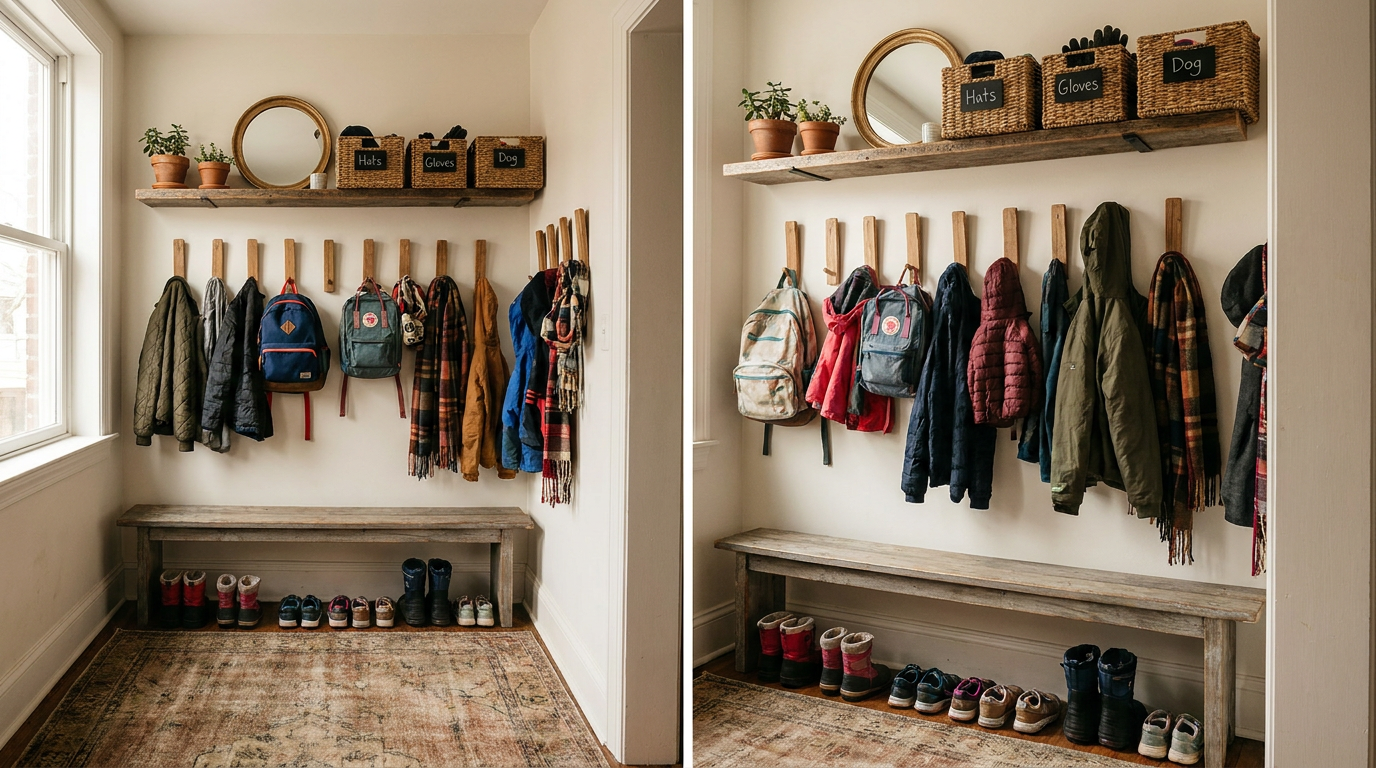
The entryway is a threshold in every sense. It marks the shift from public life into private life and from outdoor energy into the atmosphere of your home. Because it is the first place you see when you come in, it has a powerful effect on mood. If the floor is crowded, coats are slipping off chairs, and no one can find their keys, the entire house can feel less calm, even if the rest of it is fairly tidy.
By contrast, a clear and welcoming entrance offers immediate reassurance. You know where your bag goes, where shoes belong, where the dog leash lives, and where to place incoming papers before they spread onto the kitchen counter. These small moments may seem ordinary, but together they reduce decision fatigue and friction. That is the beauty of good organization: it works quietly in the background, supporting comfort instead of asking for attention.
There are practical benefits too. A smart entryway can improve traffic flow, reduce tripping hazards, and make busy mornings more efficient. This is especially helpful for active families, multigenerational households, and anyone trying to support aging in place. Clear walkways, low thresholds, and easy access to everyday essentials all matter, not just for appearance but for safety and ease of movement.
A well organized entryway is not about perfection. It is about creating a home that feels easier to live in from the first step through the door.
One common misconception is that entry organization is mostly decorative. In reality, it is one of the most functional forms of home design because it shapes habits. If there is a clear drop zone for keys and bags, people are more likely to use it. If there is nowhere to place shoes, they will gather wherever they happen to land. Smart organization works with behavior rather than fighting it.
Step 1: Observe How Your Entryway Actually Works
Before buying storage baskets or installing hooks, pause and study what really happens in your entry. This is the step many people skip, and it is often the reason beautiful systems fail after a week. A smart setup begins with honest observation. Notice what enters the home each day, what gets dropped immediately, what gets misplaced, and where congestion tends to happen.
You may discover that the biggest issue is not shoes but mail. Or perhaps backpacks have no natural home, so they end up on the floor. Maybe everyone takes off coats in a hurry, but there are not enough hooks at a reachable height. A home with young children will need different support than one with older adults, frequent pet walks, or athletic schedules that bring in equipment and muddy gear.
It helps to ask a few simple questions. What do you always carry when you come in. What do you need to grab on your way out. Which items are used daily, and which only occasionally. Where do people naturally pause. The answers will help you create storage that feels intuitive rather than forced.
This stage is also useful for noticing accessibility needs. If someone uses a walker or wheelchair, or if you are planning for long term comfort, open pathways and low resistance movement become especially important. Good organization is never only about fitting in more stuff. It is also about preserving ease, dignity, and safety in everyday living.
Step 2: Declutter the Entryway with Purpose
Once you understand how the space is being used, the next step is to clear what does not belong there. Entryways often collect items by default rather than by design. Holiday decor, shopping bags, single gloves, random receipts, shoes no one wears, and outerwear for the wrong season can all accumulate and make the area feel busier than it needs to be. Decluttering creates breathing room for the systems you actually want to maintain.
Start by removing everything from the floor, surfaces, shelves, and hooks. Group similar items together so you can see the volume more clearly. You may be surprised by how many duplicate umbrellas, empty tote bags, or forgotten scarves are living by the door. From there, sort into categories: keep in the entry, relocate elsewhere, donate, recycle, and discard.
The key is to keep only what supports your current routine in this specific area. If your household uses three coats each day, those deserve easy access. If formal jackets or out of season boots are only used occasionally, store them somewhere else. This is where many entryways go wrong. They try to hold everything instead of serving the present season and the present rhythm of the family.
Decluttering does not mean making the space feel cold or stripped down. It simply means removing obstacles so the essentials can work better. A welcoming entry can still include personality, softness, and lived in warmth. In fact, those qualities often shine more beautifully when they are not competing with visual noise.
How to Decide What Stays
A useful way to make decisions is to think in terms of frequency and necessity. Daily items should be the easiest to reach. Weekly items can be stored nearby but not necessarily in the prime spots. Rarely used items should live somewhere else entirely. This approach prevents your entry from becoming an overflow closet and keeps the most useful things visible and accessible.
If you live with children, involve them in the process. Ask which shoes they wear most often, which bags they use for school or sports, and what makes it hard to put things away. When people help shape the system, they are more likely to respect it. Smart organization is as much about family habits as it is about furniture.
Step 3: Create Clear Zones for Daily Life
After decluttering, the most important move is to define zones. Zoning is what turns an ordinary entry into a smart entryway. Instead of treating the whole area as one catch all surface, you assign specific functions to specific places. This makes the space easier to use and easier to maintain because every item has a purpose and a home.
Most entryways benefit from a few basic zones. There is usually a zone for shoes, one for coats and bags, one for keys and small essentials, and one for papers or mail. Some households also need a pet zone, a sports gear zone, or a seasonal accessories zone for hats, gloves, and umbrellas. The exact arrangement depends on your layout, but the principle stays the same: store things where they are naturally used.
Try to place each zone in a way that supports movement. Shoes should be close to where people take them off. Hooks should be easy to reach without blocking the doorway. Mail should have a tray or slot that keeps paper contained from the beginning. If children are expected to hang backpacks, lower hooks or cubbies make success much more likely than adult height storage.
Good zoning also reduces the common problem of clutter migration. When every item has a designated landing place near the door, it is less likely to drift into the kitchen, hallway, or living room. This is where the entryway begins to support the whole house. It catches disorder early before it spreads.
Step 4: Choose Storage That Matches Your Space
Once your zones are clear, you can choose storage with much more confidence. The goal is not to fill the entryway with as many containers as possible. It is to use the right pieces to support the items you actually need there. This can be simple and affordable or more built in and architectural, depending on your space and budget.
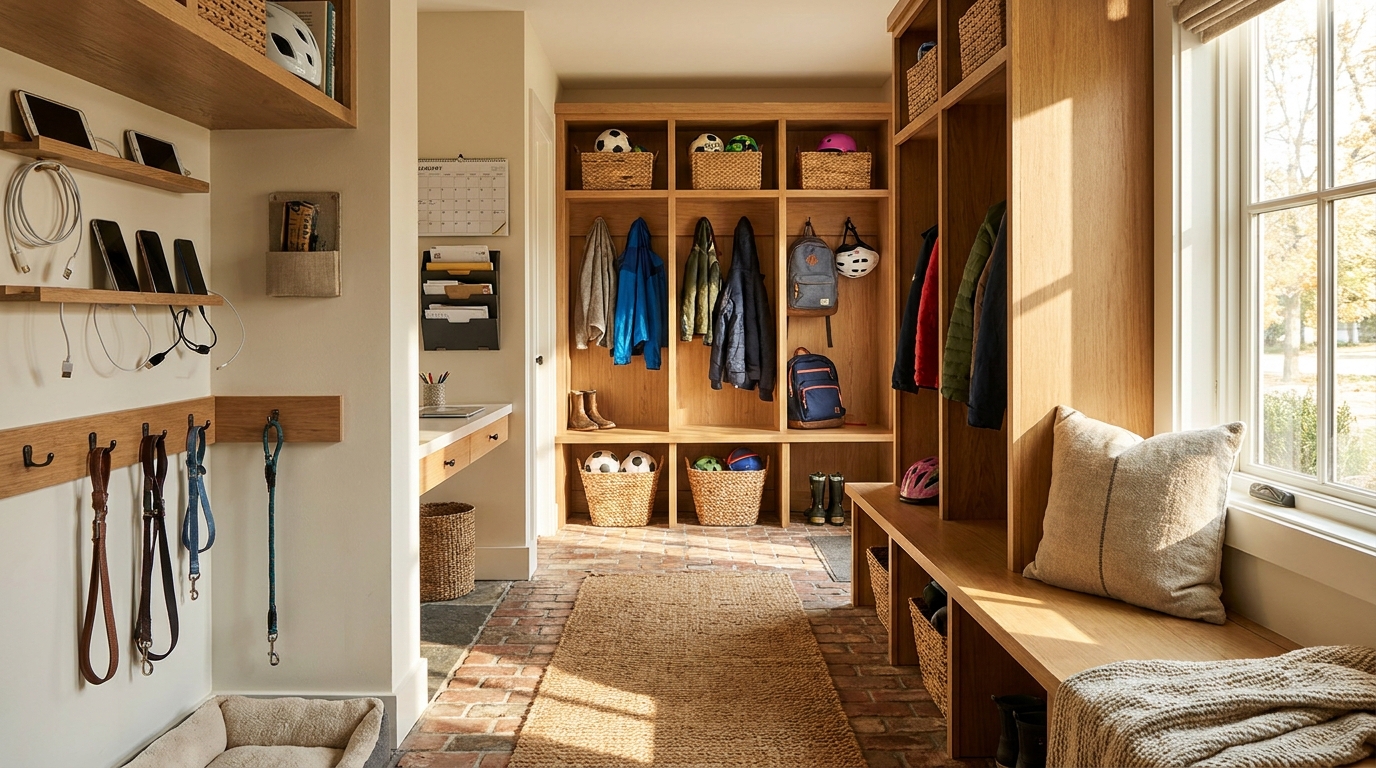
In a narrow entry, vertical storage is often the smartest solution. Wall hooks, floating shelves, slim cabinets, and mounted organizers make use of height without crowding the floor. A bench with hidden storage underneath can also work beautifully because it provides a place to sit while putting on shoes and a place to store them afterward. In a larger mudroom, cubbies and tall cabinets can create a more tailored family station that handles everything from backpacks to sports equipment.
Closed storage is helpful for visual calm, especially if your household carries a lot of items in and out each day. Bins, cabinets, and baskets can soften the look of necessary clutter and make the area feel more serene. Open storage, however, can be easier for quick access and habit building. Often the most balanced approach is a mix of both: visible hooks and trays for everyday essentials, with concealed space for overflow and less attractive necessities.
When choosing storage, think about how each item will be used in real time. Can the basket be reached easily. Is the hook sturdy enough for a heavy tote. Can children place their own belongings away without help. Is there still enough open floor area to move comfortably through the space. These practical questions matter more than matching every bin perfectly.
Best Storage Elements for a Smart Entryway
- Hooks for coats, backpacks, hats, and dog leashes, especially when placed at different heights for adults and children.
- A bench for comfort, shoe changes, and hidden storage if space allows.
- Shoe trays or cubbies to contain dirt and stop footwear from spreading across the floor.
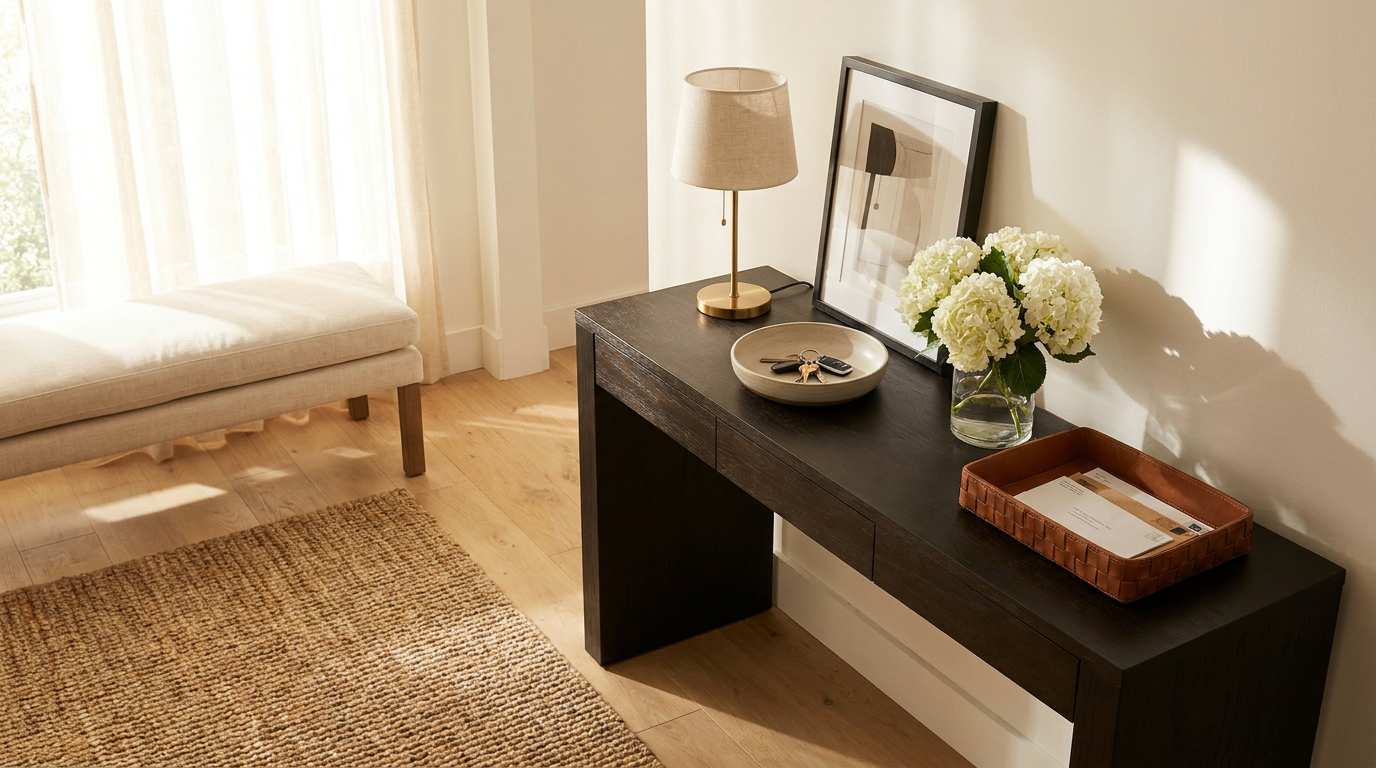
- A catchall tray or bowl for keys, sunglasses, and small pocket items.
- A mail sorter to prevent paper buildup before it reaches other rooms.
- Baskets or bins for gloves, pet supplies, reusable bags, and seasonal accessories.
- A mirror that adds light, helps with last minute checks, and visually expands a small entry.
If your home has no formal foyer, do not assume you cannot create a useful system. A small wall beside the door can still support a narrow shelf, two or three hooks, and a slim basket for shoes. Lack of square footage does not mean lack of function. Often it simply calls for more intention.
Step 5: Build a Drop Zone That Reduces Daily Friction
One of the most effective concepts in modern home organization is the drop zone, sometimes called a landing strip. This is the area where the small but essential things of everyday life come to rest. Keys, wallets, headphones, sunglasses, incoming mail, transit cards, and charging cables all need a predictable place. Without one, these items tend to scatter, and their absence is often felt most painfully when you are already late.
A good drop zone should be simple enough to use almost automatically. A small tray on a console, a shallow drawer with dividers, or a wall shelf with a bowl and mail slot can all work well. The ideal setup lets you empty your hands quickly, while still keeping everything visible enough that it is easy to grab on the way out.
This is also where behavior design becomes useful. The easier a system is to use, the more likely it is to become a habit. If keys always go in a bowl at arm level by the door, you stop searching for them. If incoming papers go straight into one tray, the kitchen island stays clearer. The best organization often looks humble because it simply removes tiny points of stress before they become bigger problems.
For families, you can expand the drop zone into a small command center. This might include a calendar, a charging station, a clipboard for permission slips, or a bin for library books that need to go back out. As long as it stays edited and contained, this kind of station can make the entire household feel more coordinated.
Step 6: Make It Family Friendly and Easy to Maintain
Any entryway system is only as good as its ability to survive normal life. This is why maintenance matters as much as setup. A smart entry should be easy for everyone to use, not just the person who organized it. That means designing with real habits, real heights, and real time pressures in mind.
If children use the entry daily, give them storage they can reach and understand. Open cubbies, labeled baskets, and lower hooks are often more effective than beautifully arranged adult systems that depend on assistance. If a household includes older adults, prioritize stable seating, clutter free walkways, and easy to handle storage. If pets are part of the family rhythm, a dedicated place for leashes, towels, and waste bags prevents these items from floating around the house.
Maintenance also becomes easier when you limit the volume each zone is allowed to hold. A basket for winter accessories should be sized so it can contain only what your family actually uses. A shoe area should reflect how many pairs reasonably need to live there at once. When storage has clear limits, it sends a gentle message about what belongs and what needs to be put elsewhere.
Set aside a few minutes once or twice a week to reset the space. Return stray items, sort mail, shake out the rug, and rotate seasonal needs as necessary. This small routine keeps the entry from slipping back into disorder. More importantly, it preserves that welcoming feeling that makes coming home feel smoother and lighter.
Step 7: Keep Safety and Accessibility in Mind
Entry organization should always support safe movement through the home. Shoes left in the path, overloaded corners, and unstable piles can all create tripping hazards, especially in busy households or homes with children and older adults. A beautiful entry is not truly successful if it blocks circulation or makes movement awkward.
Try to keep pathways clear and as open as possible. Even if your entry is compact, avoid letting baskets or benches narrow the route more than necessary. Smooth flooring transitions and low thresholds can also make the entrance easier to navigate. These details are especially important in homes designed for aging in place or for anyone using mobility aids.
Lighting matters too. A dim entry can make clutter feel worse and can increase the chance of accidents. If possible, include a lamp, overhead fixture, or wall lighting that gives the area a warm, usable glow in the early morning and evening. Organization works best when people can easily see where things belong.
There is a quiet elegance in entryways that feel easy to move through. That ease is part of what makes a home feel cared for. It is not only about storage or style. It is about creating a daily experience that feels gracious and supportive for everyone who lives there.
Step 8: Add Warmth Without Adding Clutter
Once the practical systems are in place, you can turn your attention to atmosphere. This is the moment when an organized entry stops feeling merely efficient and starts feeling truly inviting. Since this area sets the tone for arrival, a few thoughtful finishing touches can make a meaningful difference.
Start with elements that soften the space without interfering with function. A runner can add warmth and help catch dirt. A mirror can reflect light and make the entry feel more open. A small lamp, a framed print, or a bowl of fresh greenery can make even a practical corner feel loved and intentional. These details tell the story that organization is not about strictness. It is about making room for beauty to be felt more clearly.
The key is restraint. Choose a few pieces that complement your storage rather than competing with it. A tray should help contain essentials, not become a dumping ground for miscellaneous objects. Decorative baskets should still serve a purpose. Art should bring pleasure without reducing useful wall space if hooks are still needed. When style and function support each other, the result feels polished but also easy to live with.
If you enjoy seasonal touches, the entryway is a lovely place to express them in a simple way. A wreath, a textured doormat, a branch in a vase, or a subtle shift in color can make the front of the home feel fresh and cared for. Just remember that the best welcoming details are the ones that leave enough room for the routines of everyday life.
Smart Entryway Ideas for Different Home Types
For Small Apartments and Narrow Hallways
Small spaces benefit from editing and vertical thinking. Use wall hooks, a narrow shelf, and one compact shoe solution rather than several competing pieces. A mirror can keep the area feeling open, while a small tray or mounted organizer creates order for keys and mail. In a compact home, even a tiny organized landing strip can dramatically reduce visual clutter.
For Busy Family Homes
Family entryways often need stronger zoning and more durable storage. Cubbies, labeled bins, and easy to clean flooring can help contain the daily volume of school bags, lunch boxes, sports gear, and coats. It is often worth dedicating a little more space here because the return on smoother mornings and calmer arrivals is so high.
For Homes with Pets
A pet friendly entry might include a leash hook, a basket for toys, a towel for wet paws, and a small container for waste bags. If your dog is walked several times a day, placing these items by the door reduces repetitive searching and keeps pet routines from spilling into other rooms. This kind of setup feels especially helpful in rainy or snowy seasons.
For Multigenerational or Accessible Homes
In homes where accessibility is a priority, open pathways and stable seating become central. Storage should not protrude too far into circulation space, and items should be easy to access without reaching awkwardly. A calm, uncluttered entry can make the home feel safer and more respectful of everyone’s changing needs over time.
Common Entryway Organization Mistakes to Avoid
One of the most common mistakes is trying to organize without first reducing volume. No storage system can fully compensate for too many items in too little space. Another mistake is buying containers before understanding the household routine. Beautiful baskets will not solve the problem if they are in the wrong place or sized for the wrong things.
Another issue is designing only for adults. If children cannot reach hooks or understand categories, the space will quickly stop working. The same is true when a household has accessibility needs that are not reflected in the layout. Good organization should feel natural to the people using it every day.
Some entryways also become too decorative to remain practical. This often happens when surfaces are filled with objects and there is no clear place left for essentials. A home can absolutely be stylish and welcoming, but the first job of the entry is to support movement and routine. If it looks lovely but causes inconvenience, it is not finished yet.
A Simple Weekly Reset Routine
Even the best organized entryway needs a little attention to stay that way. The good news is that once the systems are in place, upkeep is usually quick. A short weekly reset can keep clutter from building and help the whole home feel more grounded.
- Return any stray items to their proper homes or relocate them out of the entry.
- Sort incoming mail, recycle what is unnecessary, and file anything important.
- Put away out of season accessories or items that no longer need to stay by the door.
- Shake out mats or rugs and wipe down trays, shelves, or bench surfaces.
- Check whether any storage zones are overflowing and edit them back to what fits.
This routine is not about chasing perfection. It is about preserving ease. Five or ten minutes of attention each week can protect the feeling that your home is ready to welcome you rather than overwhelm you.
The Emotional Reward of Coming Home to Order
There is something deeply comforting about walking into a home that feels ready for you. It does not need to be large or luxurious. It simply needs to offer clarity, softness, and a sense that daily life has a place to land. An organized entryway does exactly that. It catches the weight of the outside world and helps you step into your home with a little more peace.
This is why the entry matters more than people often realize. It is a small area with an outsized emotional impact. By reducing clutter, improving flow, and supporting routine, it can make the whole house feel calmer and more intentional. The effect is practical, but it is also deeply personal. You feel it in the reduced scrambling, the cleaner sightlines, and the quieter first moments after the door closes behind you.
If you have been thinking about organizing your entryway, let this be encouragement to begin simply. Start with observation, clear what no longer serves, define a few key zones, and create storage that fits the life you actually live. Then add warmth in a measured way so the space feels as welcoming as it is useful. Bit by bit, your entry can become one of the most supportive spaces in your home.
When the place where you arrive is calm, the entire experience of home changes. And that is what smart entry organization is really about: not perfection, not show, but creating an everyday threshold that feels thoughtful, functional, and genuinely good to come home to.

No Comment! Be the first one.