



Crafting a Stunning Autumn Outdoor Space: Elegant Seasonal Decorating Tips for Porches, Patios, and Garden Corners
Autumn has a particular kind of beauty that asks very little of us. The light softens, the air sharpens, and gardens begin to shift from abundance to structure. It is a season of texture more than brightness, of subtle color rather than excess. For anyone looking to refresh a porch, patio, terrace, or quiet corner of the garden, this is the perfect moment to create an outdoor space that feels warm, elevated, and deeply connected to nature.
Table Of Content
- Begin with the Landscape You Already Have
- Plan Around Frost, Not Just the Calendar
- Choose a Refined Autumn Palette
- Build the Space with a Few Large Gestures
- Create Elegant DIY Autumn Containers
- A Simple Formula for a Stylish Fall Container
- Use Natural Materials with Intention
- Design for Gatherings and Quiet Evenings Alike
- Layer the Lighting for Warmth and Safety
- Where to Place Outdoor Fall Lighting
- Let Pollinator-Friendly Styling Guide the Garden Edge
- Avoid the Cluttered Look
- DIY Styling Ideas That Look Expensive
- Transition the Space from Early Fall to Early Winter
- Styling Different Outdoor Areas with Autumn Grace
- The Front Porch
- The Patio or Deck
- The Garden Corner
- Common Mistakes to Avoid
- Bring It All Together
The most successful autumn outdoor decor ideas do not compete with the season. They follow it. Instead of forcing a theme with too many novelty accents, elegant fall styling draws from what the landscape is already offering: fading greens, tawny grasses, muted berries, weathered wood, dried stems, and the deep gold of late afternoon sun. The result is a setting that feels composed and inviting, equally suited to a small gathering around warm drinks or a solitary evening wrapped in a blanket outdoors.
This guide brings together practical and stylish ways to design a beautiful outdoor autumn scene using simple materials. You do not need an extravagant budget, and you do not need to fill every corner. A few statement pieces, a restrained palette, climate-aware plant choices, and thoughtful lighting can transform even the simplest entrance or patio into a serene seasonal retreat. The goal is not clutter. The goal is atmosphere.
There is also a practical side to fall styling that deserves attention. Across Canada and North America, autumn arrives differently depending on region. In Montreal, the average first fall frost is around October 11, while many northern locations can experience frost much earlier. Frost dates are based on local climate probabilities rather than fixed guarantees, which means your decorating timeline should respond to weather and not only to the calendar. A space that looks beautiful in early October in one city may need hardier choices in another. Elegance, in this season, begins with paying attention.
The finest autumn outdoor spaces feel as though they belong to the landscape around them. They do not announce the season loudly. They echo it quietly and beautifully.
Begin with the Landscape You Already Have
Before bringing in a single lantern or arranging a single pumpkin, take a moment to look at your outdoor space as it is. Autumn decorating becomes far more refined when it begins with observation. Notice the color of surrounding foliage, the tone of your exterior walls, the texture of decking or stone, and the quality of light at different hours. A shaded porch may call for softer creams and mossy greens, while a sunlit patio may support rust, ochre, and charcoal with ease.
This is also the moment to assess what still looks healthy in your planters and beds. Many summer annuals and tropicals decline quickly once the nights become cold. In containers especially, tender plants rarely survive winter outdoors, and fall often becomes a transition point from lush summer planting to more structural, cold-tolerant displays. Rather than trying to preserve what is clearly fading, embrace the shift and replace tired elements with materials that feel seasonally appropriate and visually calm.
If you have shrubs, ornamental grasses, seed heads, or perennial forms still standing in the garden, consider them part of your decor. One of the most effective design decisions is to let the existing landscape carry some of the visual weight. The best seasonal outdoor decor ideas often rely less on buying and more on framing what is already present. A view of turning trees, a stone wall with creeping vines, or even a line of bare branches can become the backdrop that makes every other styling choice feel intentional.
Plan Around Frost, Not Just the Calendar
A truly useful autumn styling plan respects climate. This matters whether you are creating a front porch display, refreshing patio containers, or arranging a dinner setting outdoors. Average first frost dates vary widely across North America, and local frost-date tools are far more reliable than assuming the season changes at the same moment everywhere. In Canada and the United States, frost dates are typically expressed as probabilities, not certainties, which is why one chilly week can arrive earlier than expected and alter your plants almost overnight.
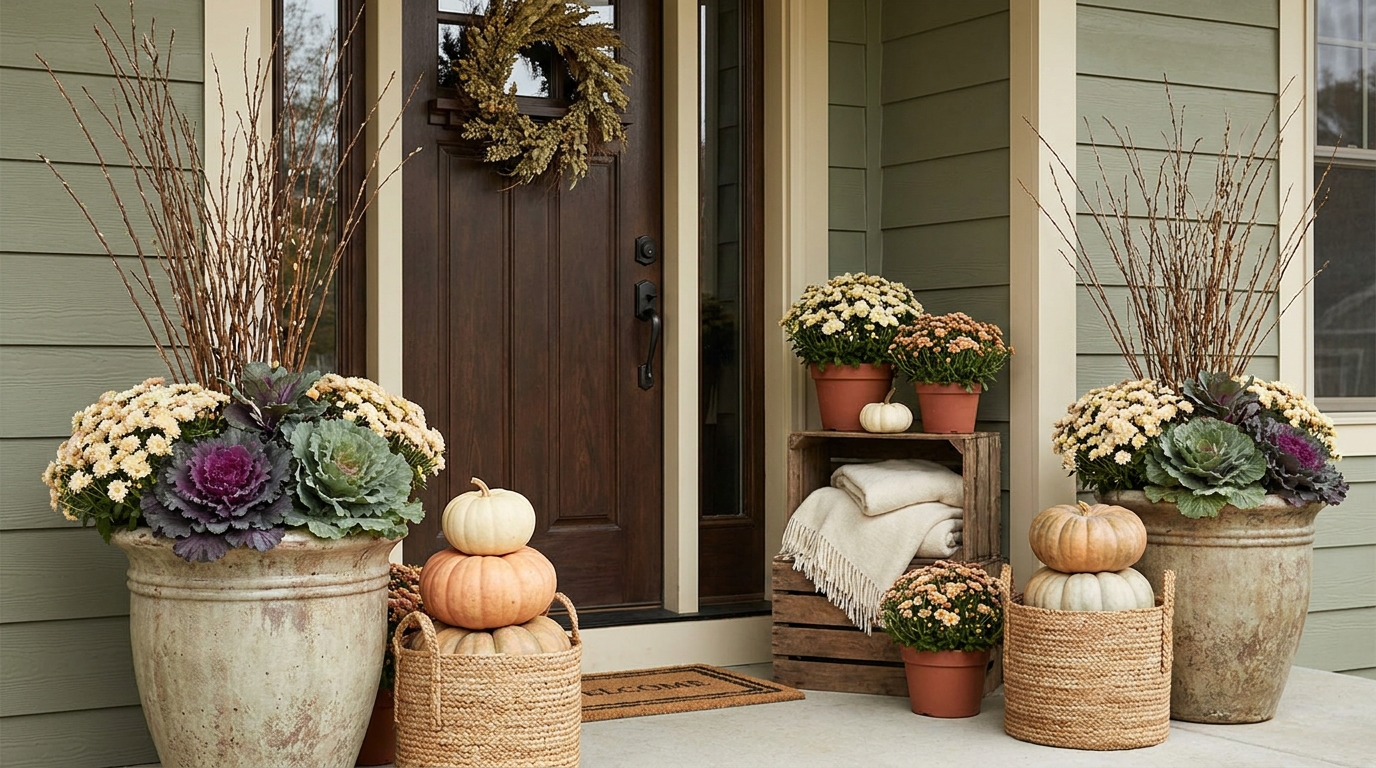
Why does this matter for outdoor decor? Because living displays are often the first thing affected. If your planters still hold petunias, coleus, or tropical foliage, they may collapse quickly after a cold night. Hardy materials such as ornamental kale, asters, mums, evergreen cuttings, and branches are much better suited to the shifting temperatures of autumn. When in doubt, build your display so that it can survive a temperature dip gracefully, even if not indefinitely.
In colder regions, you may also need to think about what should be brought indoors or protected. Some potted plants can be overwintered inside, while others are best composted and replaced with seasonal arrangements. This moment of transition can become part of the decorating ritual itself. Clearing away summer excess makes room for simpler, more sculptural compositions. There is something deeply satisfying about moving from exuberance to restraint.
Choose a Refined Autumn Palette
One of the most common misconceptions about fall decorating is that it must revolve around bright orange, novelty signage, and an abundance of themed accessories. Yet the most elegant fall patio decorating tips begin with restraint. A limited palette instantly makes an outdoor setting feel curated. Instead of using every seasonal tone at once, choose two or three primary colors and repeat them gently throughout the space.
Beautiful combinations for autumn include rust with cream and deep green, charcoal with sage and faded gold, or taupe with burgundy and natural wood tones. These palettes feel sophisticated because they echo the landscape rather than overwhelming it. Cream gourds, muted terracotta pots, dark wicker, galvanized metal, aged wood, and clear glass all work beautifully within this more refined approach.
Texture is just as important as color. Autumn asks for layers of woven fiber, soft wool-like fabrics designed for outdoor use, rough bark, matte ceramic, dried grasses, and weathered surfaces. When the palette is edited and the textures are repeated, even the humblest materials look considered. A basket filled with pinecones and a few branches can feel far more luxurious than a crowded display of unrelated seasonal objects.
Build the Space with a Few Large Gestures
Minimalist fall styling is not empty. It is intentional. Instead of scattering small accents everywhere, anchor your outdoor area with a few larger elements that give the eye a place to rest. A pair of oversized planters at the entry, a single substantial wreath made from local branches, or a large lantern grouped beside a bench can establish the entire mood. Fewer pieces often create more presence.
This approach is especially helpful on porches and patios where space is limited. Small surfaces can quickly feel chaotic if every inch is filled. Think in layers and height rather than quantity. Use stacked wooden crates to lift one arrangement, place a trailing textile across the back of a chair, and allow a tall branch composition to add vertical interest beside the door. The composition begins to feel architectural rather than decorative.
There is also a practical benefit here. Large, durable pieces transition more easily from early fall into late fall and even early winter. Lanterns, evergreen cuttings, baskets, dark ceramic pots, and natural wood accessories remain useful long after delicate blooms fade. This is one of the smartest forms of low-waste seasonal decor. You are styling for longevity, not for a single photograph.
Create Elegant DIY Autumn Containers
One of the most effective ways to transform an outdoor area is through a well-composed planter. Autumn containers offer structure, color, and a strong focal point, especially near entrances or around seating areas. The secret is to treat them less like summer flower pots and more like sculptural arrangements. Think in terms of silhouette, contrast, and seasonal endurance.
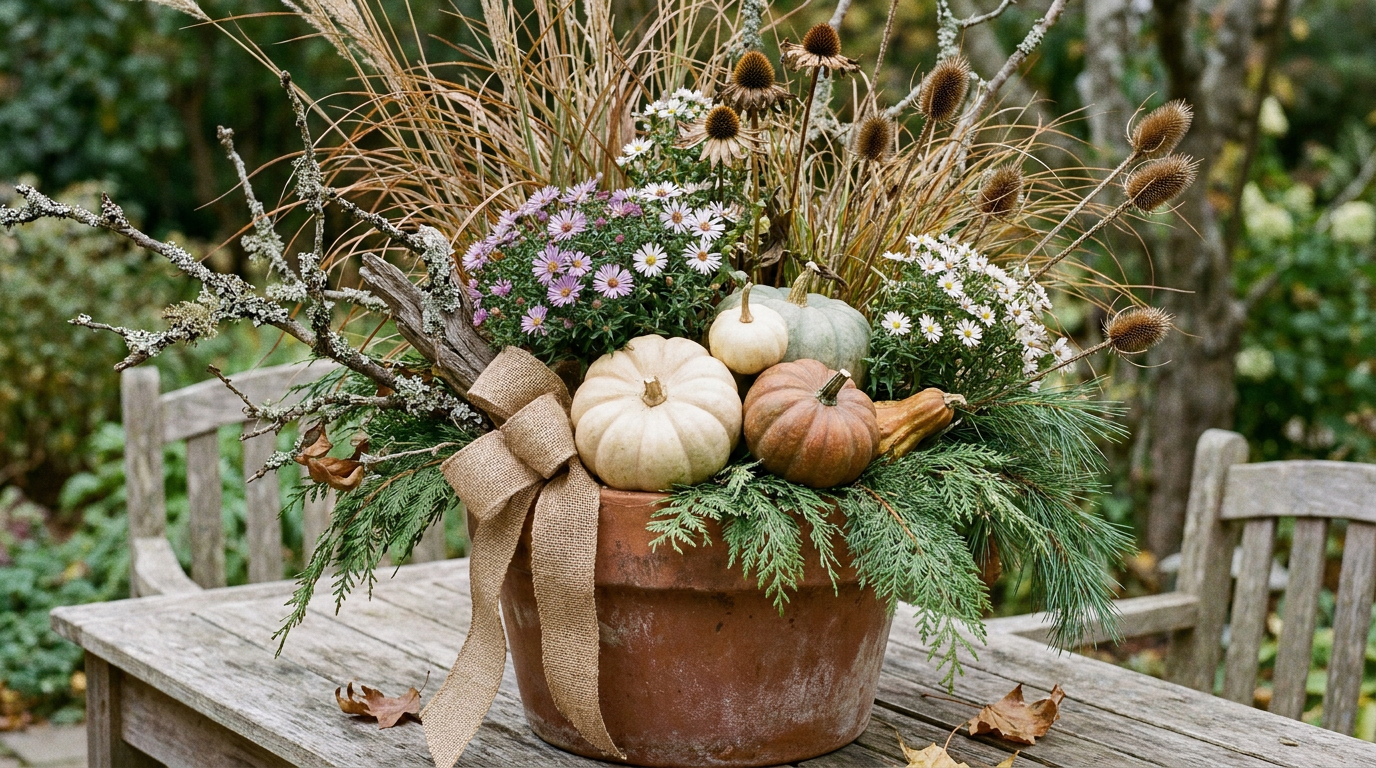
A graceful fall planter usually includes a vertical element, a mounded or full element, and a soft or trailing layer. For height, branches, dogwood stems, curly willow, or upright grasses can create elegant movement. For fullness, hardy mums, asters, or ornamental kale provide volume and seasonal color. Around the base, small gourds, trailing ivy in milder regions, evergreen clippings, or dried seed heads can soften the arrangement and make it feel complete.
Native and late-season plants bring another layer of meaning. Asters and goldenrod are especially valuable in pollinator-friendly gardens because they offer late-season support to insects while also providing beautiful form and color. If you are creating a porch or patio arrangement visible from the garden, using these plants helps your decor connect to the surrounding ecosystem. It is a quieter luxury, one rooted in awareness and care.
A Simple Formula for a Stylish Fall Container
If you want a reliable formula for an elegant autumn planter, start with a container that has visual weight. Stone, matte ceramic, aged metal, or dark composite planters tend to look more sophisticated than overly bright seasonal bins. Fill the center or rear of the pot with tall stems or grasses. Add one or two hardy flowering or leafy plants for substance, then finish with gathered natural elements that bridge the display to the season.
- Choose a container in a neutral tone with enough size to feel substantial outdoors.
- Add upright structure with branches, native grasses, or seed heads.
- Layer in hardy plants such as mums, asters, or ornamental kale.
- Tuck in gourds, evergreen clippings, pinecones, or dried stems for texture.
- Keep the palette limited so the arrangement feels refined, not crowded.
This formula works at different scales and can be adapted for regional climate. In very cold areas, living plants may be less important than evergreen cuttings, branches, and preserved materials. In milder climates, hardy bloomers can remain beautiful for much longer. The visual principle remains the same: structure first, color second, detail last.
Use Natural Materials with Intention
Autumn is generous with material. Fallen branches, seed pods, grasses, pinecones, bark, and dried hydrangea heads can all become part of a graceful outdoor arrangement. The difference between refined and haphazard lies in editing. Gather selectively, repeat textures, and avoid combining too many unrelated shapes or colors. Nature already gives you variation. Your role is to compose it.
A simple DIY branch arrangement in a tall planter or vintage vessel can be remarkably striking. A grapevine wreath dressed with a few asymmetrical sprigs feels more elegant than one overloaded with ornaments. Even stacked firewood, if neatly arranged, becomes a decorative gesture in itself. These choices embody the kind of understated beauty that makes a space feel expensive without looking purchased all at once.
Repurposed containers are equally useful. Crates, zinc tubs, woven baskets lined for protection, old urns, and even weathered stools can help create vignettes with depth and variation. The charm here is not rustic disorder. It is balance. Pair rough elements with something smooth such as glass lanterns or a clean-lined planter, and the whole composition gains poise.
Design for Gatherings and Quiet Evenings Alike
A successful autumn outdoor space should work whether you are hosting friends or simply stepping outside with a book and tea at dusk. That means designing not only for appearance but also for comfort. Consider how people will move through the space, where they might sit, what they will reach for, and how the area will feel once the temperature drops. Outdoor styling becomes especially beautiful when it anticipates use.
Start with seating. Even one bench or pair of chairs can feel transformed with weather-resistant cushions and throws in rich, restrained tones. Fabrics in deep olive, warm rust, oat, charcoal, or soft plaid create coziness without becoming overly thematic. Keep the layering tactile and elegant. One textured throw and a lumbar pillow are often enough. Excess fabric outdoors can quickly look heavy, especially when damp weather arrives.
Next, think about surfaces. A small side table for mugs, a tray for a lantern, or a narrow console near the door can make the space more functional and therefore more inviting. If you entertain, set the tone with a neutral outdoor runner, simple ceramic serving pieces, and gathered foliage rather than formal floral centerpieces. The best gatherings in autumn often feel effortless, even when every detail has been considered.
Layer the Lighting for Warmth and Safety
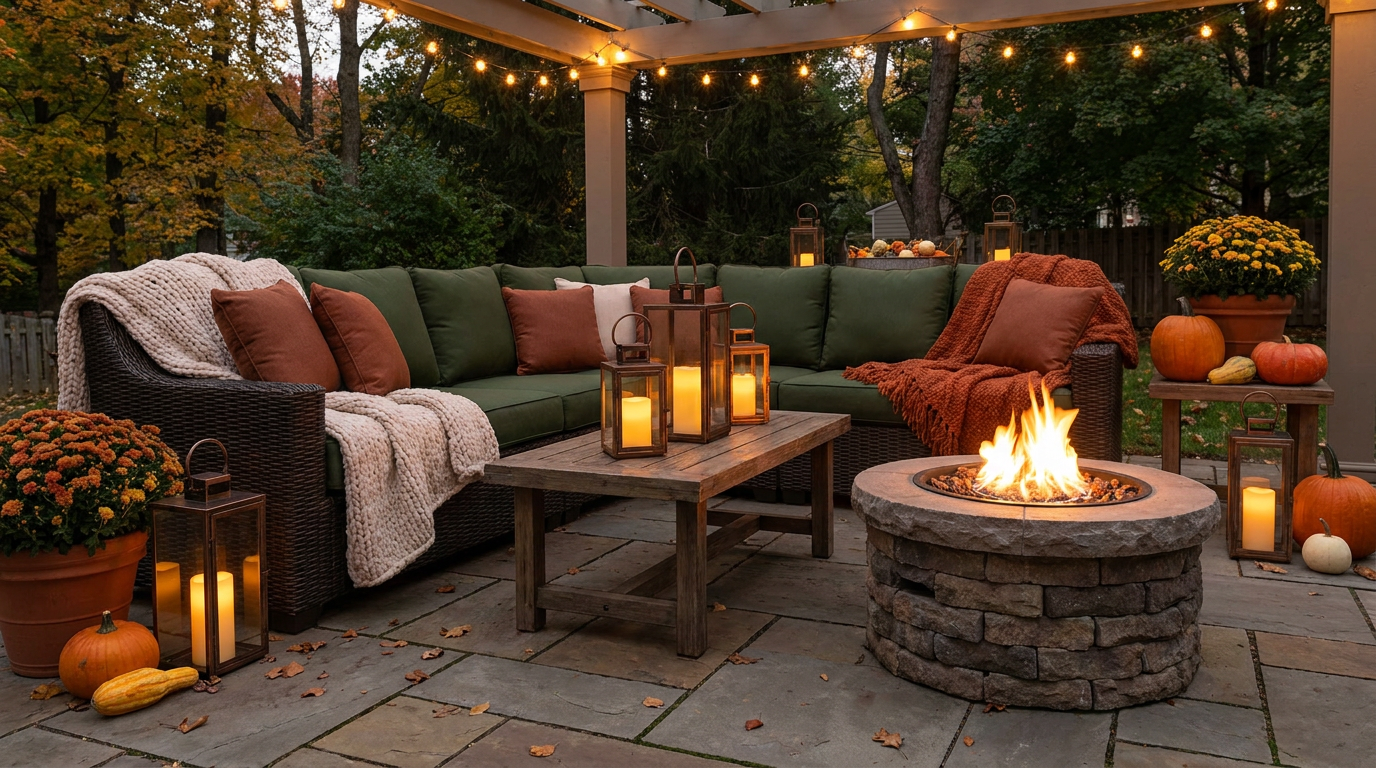
Lighting is what turns an autumn outdoor area from attractive to atmospheric. As daylight shortens, soft illumination becomes essential to comfort and mood. The most elegant setups use layered light at different levels: lanterns near the ground, warm string or bistro lights overhead where appropriate, subtle path lighting, and battery-operated candles for gentle flicker.
There is an important safety dimension here as well. Dry leaves, textiles, paper decor, and breezy evenings all increase fire risk. NFPA guidance is clear that candles should never be left unattended and should be kept away from combustible materials. For outdoor fall styling, this is a strong argument for choosing battery candles, enclosed lanterns, or other protected sources of light instead of placing open flames among foliage and fabrics. Safety, in this case, also happens to look more polished.
Warm LEDs tend to create the most flattering atmosphere. Avoid lights that are too bright or too cool in color temperature, as they can flatten the richness of autumn textures. Think of your outdoor room the way you would think of a salon or dining room indoors. Pools of low light, rather than one harsh source, create intimacy and visual depth. Lanterns beside steps, a dim string of warm bulbs, and an illuminated table centerpiece can be enough to carry the entire evening.
Where to Place Outdoor Fall Lighting
Placement matters as much as the fixture itself. Light should support movement, mark focal points, and enhance texture without feeling theatrical. A few carefully placed sources often do more than an overlit arrangement.
- Place lanterns near entry steps or beside seating to create a welcoming glow.
- Use enclosed or battery-lit candles on tables where guests gather.
- Add soft overhead string lighting only if it suits the scale of the space.
- Highlight a statement planter, wreath, or branch arrangement with nearby warm light.
- Keep lighting clear of dried leaves, fabric, and any combustible materials.
Let Pollinator-Friendly Styling Guide the Garden Edge
Some of the most beautiful autumn spaces are those that blur the line between decor and habitat. Pollinator-friendly fall gardens, often described through ideas like naturescaping, can be visually exquisite. Late-season native plants such as asters and goldenrod offer movement, rich color, and ecological value at a time when pollinators still need support. They also pair beautifully with ornamental grasses, seed heads, and evergreen structure.
This approach helps shift autumn styling away from disposability. Rather than treating the season as an opportunity for short-lived decorations only, you begin to think of the outdoor space as a living composition. Parks Canada and conservation resources emphasize that late-season flowering plants support monarchs and other insects during autumn migration. That means a beautiful display can also be meaningful, sustaining life while enriching the visual language of the garden.
Another often overlooked idea is to leave some stems, seed heads, and a modest amount of leaf litter in less formal edges of the garden. These are not merely remnants of summer. They can provide habitat for overwintering insects and nesting pollinators. If your front entry needs a tidier expression, keep that area composed and swept while allowing quieter corners to remain more natural. The contrast can be both ecologically wise and aesthetically sophisticated.
Elegant autumn styling does not have to erase nature. Often, it becomes most beautiful when it frames the season gently and leaves space for the landscape to continue its own quiet work.
Avoid the Cluttered Look
Because autumn offers so many motifs, it is easy to overdecorate. The result can feel busy, themed, and visually heavy. If your goal is a more elevated outdoor setting, edit firmly. Resist mixing too many signs, figurines, bright ribbons, and contrasting colors. Instead, let one idea lead. Perhaps it is a branch arrangement, a composition of neutral gourds, or a seating area shaped by lantern light and deep-toned textiles.
A useful rule is repetition. Repeat a shape, a texture, or a color several times rather than introducing something new at every turn. If you choose cream pumpkins, echo that tone in a throw pillow and in dried hydrangea heads. If your planters are dark charcoal, repeat that through lantern finishes or metal trays. Design feels luxurious when it is coherent.
It also helps to leave intentional empty space. Not every corner needs decoration. A porch wall can remain plain if a strong wreath and pair of planters already establish the mood. A patio table may need only one low arrangement if the surrounding trees are already doing the work visually. This restraint is what allows natural beauty to breathe.
DIY Styling Ideas That Look Expensive
You do not need elaborate purchases to create a striking result. Some of the most charming and refined autumn DIY projects are simple in construction but rich in effect. A gathered branch arrangement tied with dark velvet ribbon, a wreath of local twigs and eucalyptus, or a set of stacked crates holding lanterns and gourds can all look beautifully composed when placed with intention.
Consider creating a single oversized container arrangement for maximum impact. Or make a low table centerpiece from clipped evergreen, seed heads, and a few battery candles placed inside glass hurricanes. A neutral outdoor runner across a small bistro table can immediately soften the scene. Even a bench transformed with one folded throw and a basket of blankets nearby becomes a visual invitation.
Another elegant idea is to use produce sparingly and sculpturally. One or two heirloom squash, a cluster of pale pumpkins, or a bowl of apples can be more effective than dozens of scattered pieces. Arrange them as still life, not as inventory. Autumn decor becomes far more beautiful when each object has room to be seen.
Transition the Space from Early Fall to Early Winter
One of the best strategies for outdoor styling is to choose elements that can evolve as the season moves forward. Early autumn may support more flowers, grasses, and gourds, while late autumn tends to call for evergreen cuttings, branches, seed heads, and heavier texture. If your design is built on a neutral palette and durable materials, this transition becomes seamless rather than abrupt.
For example, a planter that begins the season with asters and ornamental kale can later be refreshed with cedar, pine, red twig dogwood, and pinecones once hard frost becomes frequent. Lanterns remain relevant throughout. Blankets grow more useful rather than less. Wooden crates, ceramic pots, and woven baskets continue to work beautifully. This is where investing in foundational pieces pays off.
Thinking ahead also prevents waste. Instead of buying many purely decorative accents that must be stored or discarded after a few weeks, use versatile materials with longevity. Natural branches can compost. Evergreens can bridge seasons. Textiles and lanterns store easily and return year after year. Such choices are not only sustainable, they also tend to be more beautiful because they avoid novelty fatigue.
Styling Different Outdoor Areas with Autumn Grace
The Front Porch
The porch is often the clearest place to make a seasonal impression. Focus on symmetry or balanced asymmetry, depending on the architecture. A pair of substantial planters, one wreath, and two lanterns can be all you need. Keep the path clear, sweep leaves regularly where safety matters, and let the arrangement frame the doorway rather than compete with it.
The Patio or Deck
Patios benefit most from comfort and atmosphere. Use textiles sparingly but generously enough to invite use. Add warm lighting, a tabletop arrangement, and a few cold-tolerant containers around the perimeter. If you have a dining area, a simple centerpiece and layered place settings in stoneware or matte finishes can make even a casual supper feel memorable.
The Garden Corner
A secluded corner of the garden can become a restorative autumn retreat. Here, less formal styling works beautifully. A bench, a lantern, a gravel path edged with grasses, or a small arrangement of native plants and seed heads can create a contemplative mood. This kind of space is particularly well suited to those quiet evenings when the season feels most intimate.
Common Mistakes to Avoid
Even with the best intentions, a few common missteps can undermine a fall outdoor design. The first is decorating by date alone rather than by weather. If your climate has already turned cold, summer plants and fabrics may look out of place or deteriorate quickly. The second is using too many small decorative accents without a clear palette or hierarchy. This often creates visual noise where calm would be more striking.
Another mistake is assuming that outdoor candles are automatically safe because they are outside. Dried leaves, breezes, and textiles still present real risks, which is why enclosed lanterns and battery options are often the wiser and more elegant solution. Finally, many people remove every stem and seed head in pursuit of neatness, missing the chance to create a more ecological and visually textured autumn setting. A little structure left in place can be both beautiful and beneficial.
Bring It All Together
The art of DIY outdoor styling for autumn is less about acquiring seasonal objects and more about composing mood. Begin with climate and existing landscape. Edit your palette. Add a few strong forms through planters, lanterns, or branches. Layer in soft comfort, safe light, and a touch of life through hardy plants or native late bloomers. Then step back and allow the setting to breathe.
The loveliest outdoor autumn spaces feel welcoming because they are believable. They acknowledge cooling nights, shifting leaves, and the slower rhythm of the season. They make room for guests, but they are equally generous to solitude. A porch with soft light and rustling grasses, a patio with enclosed lantern glow, a garden corner where seed heads catch the last sun. None of this needs to be extravagant to feel exquisite.
In the end, autumn decorating at its best is an act of refinement, not abundance. It is choosing materials that age gracefully, colors that echo the earth, and arrangements that feel at home in the weather. It is understanding when to protect what is tender, when to let things fade, and when to gather what remains into beauty. With a careful eye and a light hand, your outdoor space can become one of the most elegant rooms of the season.


No Comment! Be the first one.