



Multi-generational living has become one of the most meaningful shifts in the way families think about home. For many households, it is not simply a backup plan or a temporary arrangement. It is a thoughtful response to real life, shaped by rising housing costs, caregiving responsibilities, cultural values, and the simple wish to stay close to the people who matter most. When a home is designed with care, multi-generational living can feel deeply supportive, practical, and emotionally rich.
Table Of Content
- Why Multi-Generational Living Is Growing
- The Emotional Benefits of Sharing a Home Across Generations
- The Most Common Challenges and Why They Matter
- Designing for Connection Without Sacrificing Privacy
- Universal Design and Aging in Place
- Shared Spaces That Invite Togetherness
- Private Space Is Not a Luxury
- Secondary Suites, Basement Apartments, and Flexible Layouts
- Household Agreements That Protect Harmony
- How to Make the Home Feel Good for Everyone
- Letting the Home Evolve Over Time
- Final Thoughts on Creating a Harmonious Multi-Generational Home
Multi-generational living is a household arrangement in which two or more adult generations, such as grandparents, parents, and adult children, share one home rather than living separately, often to support caregiving, affordability, or family closeness. Across North America, the numbers show just how established this lifestyle has become. Statistics Canada reported 441,750 multigenerational private households in 2021, representing 2.9% of all private households, with 2.4 million people living in such homes. In the United States, Pew Research Center found that 59.7 million people lived in multigenerational households in March 2021, about 18% of the population, a share that has more than doubled since 1971. Living under one roof with multiple generations is no longer a niche idea; it is part of the contemporary housing story, shaped as much by practicality as by family tradition for millions of households today.
Still, numbers only tell part of the picture. What really matters is how a home feels once several generations begin sharing its rhythms. The beauty of a multi-generational home is the possibility of everyday connection. A grandparent gets more time with grandchildren. Adult children may receive practical support as they build careers or navigate parenthood. Aging parents can remain close to loved ones instead of feeling isolated. At its best, this kind of home creates a gentle web of care that supports everyone.
At the same time, closeness needs structure. Privacy, personal space, noise control, daily schedules, caregiving boundaries, and emotional breathing room all shape whether the arrangement works. The most successful multi-generational homes are not built on constant togetherness. They are built on balance. They create opportunities to gather while making it equally easy to retreat, rest, and live independently within a shared environment.
This guide explores both sides of multi-generational living: the warmth and the complexity. It looks at why more families are choosing this path, what benefits it can bring, where challenges often appear, and how thoughtful design can protect comfort for every age. If you are considering a multi-generational home, planning a renovation, or simply trying to make a current shared household feel more harmonious, the goal is not perfection. It is a home that feels supportive, beautiful, and livable in the real world.
Why Multi-Generational Living Is Growing
There is a tendency to romanticize multi-generational homes as a return to old-fashioned family closeness, but the reality is more layered. In many cases, this living arrangement is driven by practical needs. Housing affordability pressures have made it harder for younger adults to buy or rent independently. At the same time, longer life expectancy means more families are supporting aging parents who may benefit from proximity, care, or simply companionship. For others, a multi-generational household reflects longstanding cultural values around family support and shared responsibility.
Pew Research has found that financial issues are among the leading reasons adults in the United States live in multi-generational households. This makes affordability a central part of the conversation. A shared home may reduce costs related to mortgage payments, rent, utilities, childcare, groceries, and transportation. It can also offer flexibility during transitions such as job loss, divorce, relocation, or a return to school. In that sense, a multi-generational home can function as both a safety net and a long-term strategy.
In Canada, the trend also reflects migration patterns and community networks. Statistics Canada has reported that 52.7% of people in multigenerational households were racialized and 40.5% were born outside Canada in 2021. This highlights an important truth: multi-generational living is often deeply connected to cultural preferences, immigration experiences, and family-based systems of support. For many families, living together is not a compromise. It is a valued way of life that prioritizes closeness, mutual care, and continuity between generations.
Regional differences matter as well. Places with stronger housing pressure often see higher rates of multi-generational living, and some communities rely on this model more naturally than others. That means the conversation should not be limited to one stereotype. These homes can be urban or suburban, compact or expansive, temporary or permanent. Some look like a classic family house with an adapted basement. Others function more like side-by-side suites within a single property. What unites them is not a single layout but a shared need to make home work for different people at different life stages.
The Emotional Benefits of Sharing a Home Across Generations
The strongest advantage of multi-generational living is often emotional rather than architectural. A home shared by several generations can create an atmosphere of belonging that is hard to replicate when everyone lives separately. Small everyday moments begin to matter more. Children grow up with grandparents woven into normal life rather than reserved for special visits. Older family members remain close to the energy and routine of family life. Adults in the middle generation may feel less alone as they juggle work, caregiving, parenting, and household responsibilities.
There is also comfort in having support nearby. In many families, the practical and emotional labor of daily life becomes more sustainable when it is shared. A grandparent may help with school pickup, bedtime stories, or after-school supervision. An adult child might assist an older parent with meals, appointments, or medication reminders. Someone is often available to receive a delivery, help in an emergency, or simply check in at the end of a long day. This kind of quiet support can reduce stress in a way that feels deeply grounding.
For older adults, the arrangement can help reduce loneliness and make aging in place more realistic. Aging in place refers to remaining in one’s home or community safely and comfortably as needs change over time. When older family members live in a shared household, they may enjoy both companionship and practical help without necessarily losing independence. That emotional steadiness can be just as important as physical assistance, especially when familiar routines and loving relationships are part of daily life.
Children benefit too. A multi-generational home can expose them to different perspectives, stories, traditions, and forms of care. They may develop stronger empathy and a more expansive understanding of family roles. Grandparents can become daily anchors of memory, culture, and affection. The home itself begins to carry more layers of identity. It becomes a place where generations overlap, where life lessons are passed quietly through meals, routines, celebrations, and ordinary afternoons.
The heart of a successful multi-generational home is not constant proximity. It is a sense that support is available, dignity is protected, and everyone has a place that truly feels like their own.
The Most Common Challenges and Why They Matter
As warm as the idea can be, multi-generational living does not succeed on affection alone. Most households encounter friction points, especially when the home was not originally designed for multiple generations. Noise is one of the most common issues. Sleep schedules, television habits, work-from-home calls, children at play, and different definitions of quiet can quickly create tension. Even deeply loving families can feel strained when there is no buffer between activity and rest.
Privacy is another major concern. People need space not only to sleep but also to decompress, think, work, and maintain autonomy. When bedrooms are too close together, bathrooms are shared by too many people, or common spaces become the setting for every part of the day, family members can start to feel watched or overstimulated. Privacy does not signal distance or dysfunction. It is a healthy part of shared living and one of the clearest ingredients in long-term harmony.
Caregiving can also become uneven if expectations are vague. Public health guidance around caregiving emphasizes that informal caregivers are the backbone of long-term care at home, but it also notes the importance of planning, respite, and protecting caregiver well-being. In a family home, that means one person should not automatically become the default helper simply because they are physically present or emotionally dependable. Care has to be discussed, distributed, and revisited as needs change.
Then there are the softer tensions that arise from overlapping habits and values. One generation may be early to bed while another is active late into the evening. Some family members may want an open-door, communal lifestyle while others prefer structure and advance notice. Parenting styles, standards of tidiness, guest policies, food preferences, and financial boundaries can all create stress if they are left unspoken. The goal is not to eliminate differences. It is to build a home culture that makes those differences easier to live with.
Designing for Connection Without Sacrificing Privacy
Design has the power to turn a crowded household into a comfortable one. Organizations such as CMHC and AARP have highlighted the value of adaptable layouts, universal design, and the careful balance between gathering spaces and private retreat areas. This matters because the best multi-generational homes do not force everyone into the same pattern. They create options. They allow a family to be together when that feels good and apart when that feels necessary.
Start with the concept of zoning. Instead of thinking about the house as one shared environment, think of it as a collection of smaller emotional zones. Some spaces are naturally social, such as the kitchen, dining area, and family room. Others should support rest and independence, such as bedroom suites, sitting nooks, office corners, or lower-level lounges. Even in a modest home, furniture placement, rugs, lighting, doors, and storage can help define which spaces are for gathering and which are for retreat.
One of the most effective design moves is creating a suite-like space for at least one generation. This may be a finished basement with a bedroom, bathroom, and sitting area, a first-floor in-law suite, an attic conversion, or a garden-level secondary suite. The exact form matters less than the feeling it creates. A suite allows family members to maintain routine and autonomy without being entirely separate from household life. It can support aging parents, adult children, or even rotating caregiving needs over time.
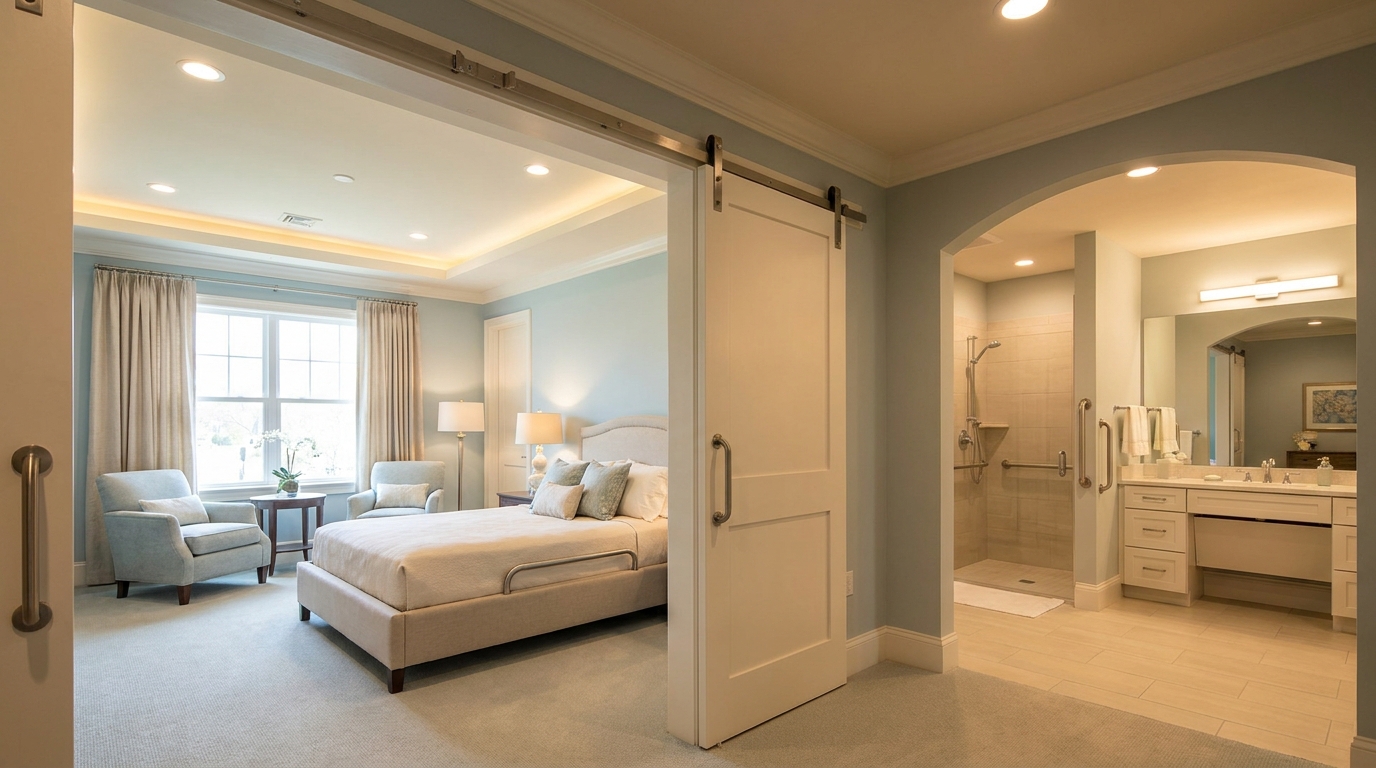
Bathrooms deserve special attention. In any multi-generational household, bathroom bottlenecks can affect mornings, privacy, and dignity. A second or third bathroom, or even a thoughtfully planned powder room, can dramatically improve daily flow. If an older adult lives in the home, an accessible ensuite or nearby bathroom with a curbless shower, grab bar reinforcement, non-slip flooring, and easy-to-reach fixtures can make the space safer while also feeling more elegant and future-ready.
Universal Design and Aging in Place
Universal design is one of the most helpful frameworks for a multi-generational home because it focuses on spaces that work well for people of different ages and abilities. Rather than making a home feel clinical or overly specialized, universal design aims to create comfort, access, and flexibility from the beginning. This approach is especially valuable if your household includes older adults, people with mobility challenges, young children, or family members whose needs may shift over time.
Simple choices can make a lasting difference. Wider doorways improve movement for wheelchairs, walkers, strollers, and even moving furniture. Lever-style door handles are easier for hands of all strengths to use. Good lighting reduces strain and improves safety. A bedroom on the main floor can future-proof the house even if it is first used as a guest room, office, or den. Zero-step entries and stable, slip-resistant flooring can quietly support both convenience and dignity.
CMHC has emphasized adaptable and accessible-ready housing because family needs rarely stay fixed. A home that works beautifully today may need adjustments in five or ten years. Thinking ahead allows families to make design investments that continue to serve them rather than forcing reactive, stressful changes later. Even if extensive renovations are not possible now, planning for future accessibility can inform what you buy, where you renovate, and how you allocate space.
There is also an emotional benefit to this kind of planning. A home that can adapt over time communicates care. It tells family members that their comfort has been considered not only for this season of life but for what may come next. That sense of reassurance can soften many of the anxieties that surround aging, health changes, and long-term caregiving. It turns design into a form of support rather than just decoration.
Shared Spaces That Invite Togetherness
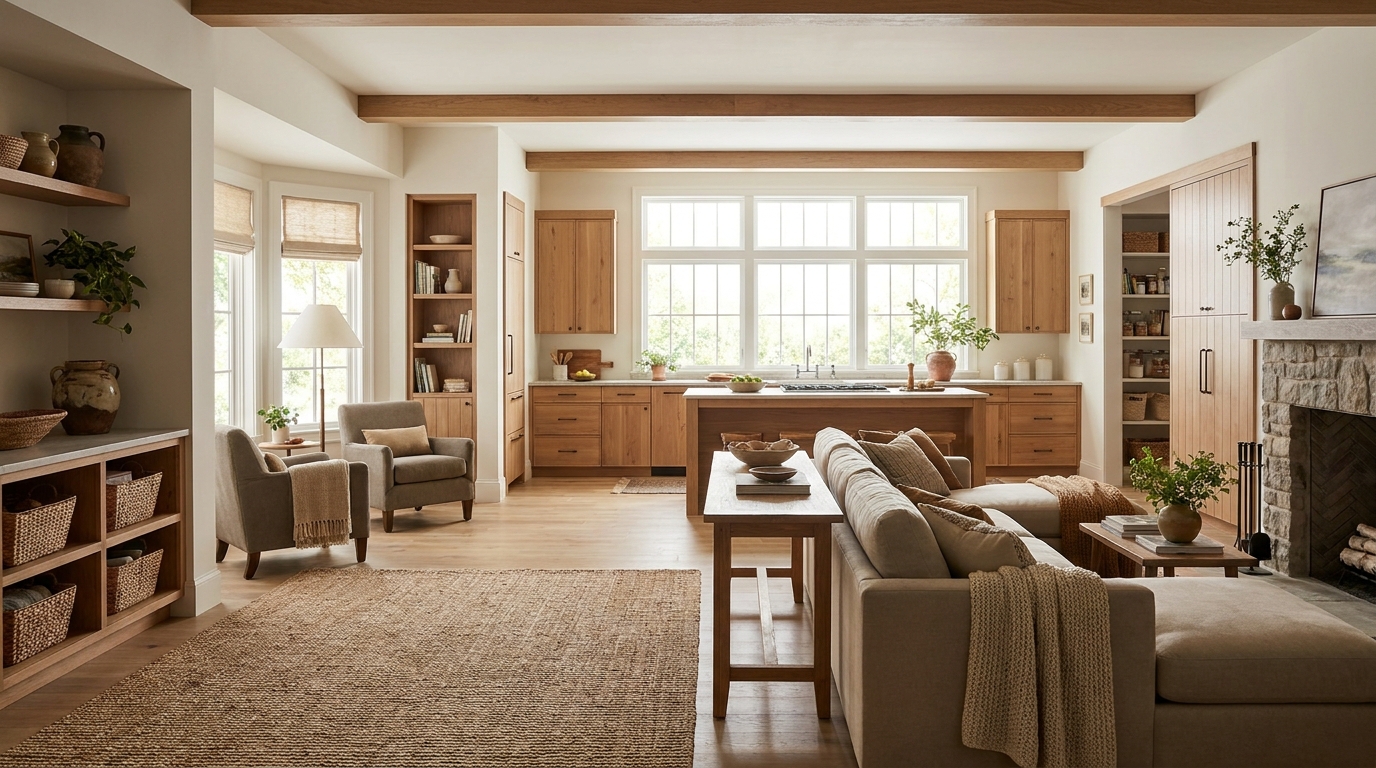
Privacy is essential, but shared spaces are where the emotional life of a multi-generational home often flourishes. The kitchen is usually the heart of this. It becomes a place where morning routines overlap, meals are prepared collaboratively, and casual conversation fills the gaps between tasks. In a home with multiple generations, a well-planned kitchen benefits from generous storage, clear work zones, seating that invites lingering, and traffic flow that allows several people to move comfortably at once.
The dining area also deserves intention. Shared meals do not need to happen every night to matter. What matters is creating a place where they can happen comfortably and without friction. A table that accommodates different ages and mobility needs, good lighting, and a sense of openness can encourage family rituals to form naturally. These moments often become the emotional glue of the household, especially when life is busy or family members come and go on different schedules.
Living rooms work best when they support more than one kind of use at the same time. A large sectional may be wonderful for movie night, but a second smaller seating area can make the room feel more versatile and less intense. A reading chair by a window, a game table, or a quieter corner with softer lighting can give family members choices within the same shared environment. This is especially useful in households where energy levels, screen habits, and social preferences differ by generation.
Outdoor spaces can be equally valuable. A patio, porch, deck, or backyard sitting area often provides the breathing room that indoor spaces cannot. Children can play while adults talk nearby. Older family members may enjoy a calm, familiar place to sit in the fresh air. Even a small balcony or garden bench can create a welcome sense of retreat. Shared spaces do not need to be grand. They simply need to feel easy to use and emotionally inviting.
Private Space Is Not a Luxury
One of the biggest misconceptions about multi-generational homes is that connection and privacy are opposites. In reality, privacy makes connection more sustainable. When people know they can step away, close a door, and reset, they are more likely to show up generously in shared spaces. The emotional climate of the household becomes gentler because there is less pressure to be socially available all the time.
Private space can take many forms. Ideally, each adult has a bedroom that feels personal and complete rather than temporary. If possible, this area should include not only sleeping space but also a place to sit, store belongings, and enjoy quiet. For aging parents or adult children, a bedroom with a small seating zone or kitchenette-style feature can make a huge difference in comfort. For families with children, even small rituals around respecting doors, knocking, and quiet time help create a culture of personal space.
Soundproofing is often one of the smartest investments in a multi-generational home. It is less glamorous than finishes and furniture, but it may have a bigger impact on daily peace. Insulation between floors, solid-core doors, rugs, acoustic panels, curtains, and strategic placement of televisions or play areas can all reduce tension. If renovation is planned, think carefully about where bedrooms sit in relation to kitchens, laundry rooms, and family rooms. Layout matters as much as decor.
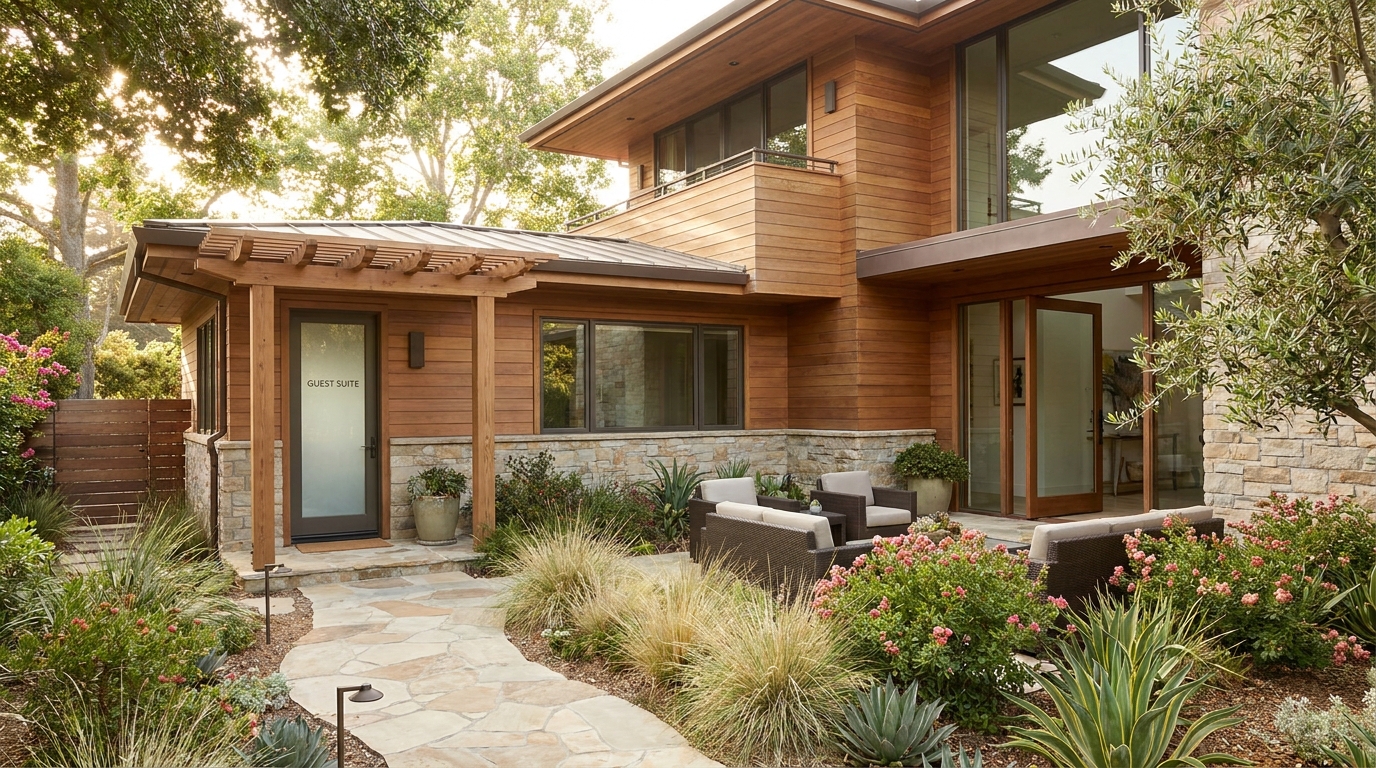
Separate entrances can also be transformative. Not every home can support this, but when it is possible, a private entrance for one suite or level adds dignity and independence without reducing closeness. Family members can come and go more freely, manage guests more easily, and maintain routines that feel adult and self-directed. This is one reason secondary suites and accessory dwelling style arrangements have become such important ideas in the conversation around multi-generational homes.
Secondary Suites, Basement Apartments, and Flexible Layouts
Not all multi-generational households need everyone living in the same style of space. For many families, the most comfortable solution is a home that includes a semi-independent area. This might be a legal secondary suite, a finished basement apartment, an over-garage suite, or a thoughtfully adapted lower level with its own bathroom, sitting room, and small kitchen zone. These layouts preserve family closeness while allowing a daily rhythm that feels more independent.
Recent Canadian housing conversations have paid increasing attention to secondary suites as a practical way to create flexible housing. CMHC has also pointed to refinance pathways that can help homeowners create self-contained suites. For families considering a major renovation, this can be more than a design upgrade. It can be part of a long-term housing strategy that supports caregiving, affordability, and adaptability within a single property.
There are practical advantages to these arrangements. An older parent may appreciate having their own sitting room, television, and entrance while still being close enough for easy support. An adult child returning home after university, divorce, or a career transition may feel less like they are moving backward if their living space has genuine autonomy. Even if the suite is occupied by family now, it may later become guest accommodation, rental income, or a flexible work-live space depending on changing needs.
What matters most is coherence. A suite should feel integrated into the home’s style rather than treated as an afterthought. Consistent finishes, good lighting, quality ventilation, and practical storage make the space feel dignified and welcoming. Emotional comfort often follows visual comfort. When the environment feels intentional, family members are more likely to feel respected within it.
Household Agreements That Protect Harmony
Even the best-designed home needs clear expectations. Many tensions in multi-generational living are not really about space. They are about assumptions. One family member assumes meals are shared. Another assumes food is separate. Someone expects spontaneous drop-ins to bedrooms or suites. Someone else expects privacy. The more these things remain unspoken, the easier it is for resentment to grow under the surface.
Household agreements do not have to feel rigid or formal, but they should be specific. Quiet hours, guest policies, parking arrangements, kitchen cleanup expectations, pet responsibilities, chore rotations, and caregiving schedules all deserve conversation. Families may also want to discuss financial contributions openly, including utilities, groceries, internet, home maintenance, and renovation expenses. Clarity is kinder than confusion, especially in a home where emotional relationships are already layered.
It can help to frame these conversations around comfort rather than control. Instead of asking who is doing something wrong, ask what would make the home feel easier for everyone. This shift keeps the tone collaborative. A good multi-generational household is not one where no one ever gets frustrated. It is one where adjustments can be made before frustration becomes chronic.
Regular check-ins are especially useful when caregiving is part of the arrangement. Needs change quickly, and what felt manageable at the beginning may become exhausting later. Public health guidance consistently reminds caregivers to protect their own well-being and seek respite where possible. In family homes, that may mean rotating tasks, scheduling time away, or bringing in outside support before burnout sets in. Caregiving works best when it is treated as a shared responsibility, not an invisible one.
How to Make the Home Feel Good for Everyone
Comfort is more than floor plans and square footage. It is sensory and emotional. It lives in lighting, softness, routine, temperature, storage, and the feeling of being considered. In a multi-generational home, these details matter even more because they shape how people experience togetherness. A home can be full of love and still feel draining if it is noisy, cluttered, dim, or constantly in motion.
Start with the basics that affect everyday ease. Make sure there is enough closed storage so shared rooms do not always feel visually crowded. Layer lighting so spaces can shift from bright and practical during the day to soft and calming in the evening. Consider temperature preferences across generations, especially if older adults prefer more warmth or if basement suites run cooler than upper floors. Thoughtful textiles such as rugs, curtains, and upholstered seating can also soften acoustics and make common spaces feel more restful.
Routine supports comfort too. Families often thrive when there is a gentle rhythm to the household, even if everyone is not following the same schedule. Maybe mornings are more independent while Sundays are for shared lunches. Maybe the kitchen is busiest at certain times, so coffee stations or snack drawers are placed in other zones of the home. These small planning choices reduce friction and make the home feel more intuitive to live in.
It is also worth protecting beauty. Practicality matters, but a multi-generational home should still feel uplifting. Fresh flowers on the table, art that reflects family history, comfortable bedding, a reading lamp in the right corner, and a tidy entry that welcomes everyone home all contribute to emotional well-being. A home shared by many people does not need to feel overly utilitarian. In fact, warmth and beauty often become even more important when daily life is full.
Letting the Home Evolve Over Time
No multi-generational household stays the same forever. Children grow up. Careers change. Health needs shift. A parent who once needed daily support may become more independent with the right modifications, or the reverse may happen. An adult child may stay temporarily and then move out again. The smartest homes are designed with this reality in mind. They allow rooms to change purpose without major disruption.
A guest room that doubles as a future bedroom on the main floor, a den with nearby access to a full bath, a basement rec room that can later become a suite, or a garage conversion with flexible plumbing access are all examples of planning for evolution. This kind of flexibility is not just financially wise. It preserves emotional stability because the home can respond to life rather than resist it.
That is one reason universal design, accessible housing principles, and adaptable planning are becoming so relevant in current housing conversations. Families are increasingly aware that a beautiful home is not only one that photographs well. It is one that supports real life over time. In the context of multi-generational living, this means making decisions that can age gracefully along with the household itself.
The most comforting homes are rarely static. They are responsive. They acknowledge that family life is dynamic and sometimes unpredictable. A home that can bend without breaking offers something deeply reassuring: the sense that whatever changes come, the household has room to meet them with dignity and care.
Final Thoughts on Creating a Harmonious Multi-Generational Home
Multi-generational living is both a housing solution and a relationship practice. It can ease financial pressure, support caregiving, reduce loneliness, and strengthen family bonds in ways that feel deeply valuable. But it works best when it is approached intentionally. The goal is not simply to fit more people into one house. The goal is to create a shared home where each person feels respected, comfortable, and genuinely at ease.
That takes thoughtful design, honest conversation, and a willingness to balance togetherness with independence. It may mean creating a private suite, adding a bathroom, improving sound insulation, or rethinking how shared rooms function. It may also mean setting expectations around chores, guests, and care so that love is supported by clarity. These choices are not small. They shape the emotional life of the household every day.
As multi-generational homes become more common across Canada and the United States, they deserve to be seen with nuance. They are not only responses to economic strain, though affordability matters. They are not only cultural traditions, though family values play a powerful role. They are also opportunities to build homes that reflect how people actually want and need to live: connected, supported, and still able to breathe.
When a multi-generational home is done well, it offers one of the most comforting promises a house can make. It says that family can remain close without feeling crowded, that care can be present without overwhelming independence, and that a home can hold many lives at once while still feeling calm, beautiful, and deeply personal.


No Comment! Be the first one.