


The Ultimate Guide to Vinyl Flooring Care: Sophisticated Tips for Lasting Elegance
Vinyl flooring has evolved into one of the most graceful and practical surfaces in the modern home. It can mimic oak, walnut, limestone, concrete, and ceramic with remarkable realism, yet it offers the ease and comfort that busy households quietly appreciate. In a refined interior, vinyl succeeds not only because it is durable, but because it allows beauty to feel effortless. Its appeal lies in balance, where design sophistication meets everyday livability.
Table Of Content
- Why Vinyl Flooring Deserves a More Refined Care Routine
- Understanding the Different Types of Vinyl Flooring
- The Foundation of Good Care: A Routine That Protects the Wear Layer
- Dry Cleaning Comes First
- Wet Cleaning With Restraint
- The Cleaners and Tools to Avoid
- Common Mistakes That Quietly Diminish Beauty
- How to Handle Spills and Spot Cleaning Gracefully
- Furniture Protection: The Invisible Luxury
- Entrance Mats, Rugs, and the Art of Prevention
- Light, Heat, and Environmental Control
- Room-by-Room Vinyl Care in a Sophisticated Home
- Kitchen
- Living and Dining Areas
- Bedroom
- Entry and Utility Areas
- A Weekly and Seasonal Care Rhythm
- Misconceptions Worth Leaving Behind
- When to Revisit the Manufacturer Guide
- Design Trends and the Future of Vinyl Care
- Final Thoughts: Lasting Elegance Through Restraint
That balance, however, depends on thoughtful care. The true secret to preserving vinyl flooring is not aggressive scrubbing or glossy treatments, but restraint. The most elegant floors are usually the ones maintained with consistency, gentle products, and preventive habits that protect the wear layer before damage begins. Fine grit, harsh cleaners, excess water, and inappropriate tools can slowly interrupt the visual serenity that makes vinyl so attractive in the first place.
This guide is designed for homeowners who want their vinyl floors to remain pristine, composed, and beautiful for years to come. Drawing on manufacturer guidance and current resilient flooring best practices, it explains how to clean vinyl flooring correctly, how to avoid common mistakes, and how to shape a maintenance routine that suits a sophisticated home environment. Whether you have luxury vinyl plank, luxury vinyl tile, rigid core flooring, or sheet vinyl, the principles remain elegantly simple: protect the surface, clean with care, and always respect the specific recommendations for your product line.
The most beautiful vinyl floors are not overtreated. They are preserved through gentle cleaning, prompt attention, minimal moisture, and discreet protection that keeps the surface calm and unmarked.
Before adopting any care method, it is important to begin with the most reliable rule of all. Always read and follow the manufacturer instructions for your exact flooring product. North American brands often provide product-specific care guides because vinyl formulations, finishes, wear layers, and installation systems are not identical. A method that is excellent for one floor may not be suitable for another, and an elegant result always begins with informed restraint.
Why Vinyl Flooring Deserves a More Refined Care Routine
Many people choose vinyl because it is considered low maintenance, and that reputation is well deserved. Modern sheet vinyl, luxury vinyl tile, luxury vinyl plank, and rigid core products are designed for relatively easy upkeep compared with some natural materials. Yet low maintenance does not mean no maintenance. It means the material responds best to regular, measured care rather than dramatic interventions.
The central element to understand is the wear layer. This top surface is what shields the decorative layer below and gives the floor its resistance to scratches, stains, and daily abrasion. When manufacturers recommend sweeping, dust mopping, or vacuuming before wet cleaning, they are protecting this layer from fine particles that behave like sandpaper underfoot. Even an otherwise immaculate room can slowly lose its polished appearance if dust and grit are allowed to circulate day after day.
In a sophisticated interior, appearance retention matters as much as simple cleanliness. Vinyl flooring contributes to the atmosphere of a room through tone, texture, and visual continuity. A floor that is free from haze, residue, dents, and scratches allows the entire space to feel more composed. This is why the best maintenance routines are preventive. They preserve the floor before wear becomes visible, rather than trying to restore elegance after damage has settled in.
Understanding the Different Types of Vinyl Flooring
One of the most common misconceptions in flooring maintenance is the belief that all vinyl should be treated the same way. In reality, care can vary according to product construction, finish, and intended use. Residential sheet vinyl, luxury vinyl tile, luxury vinyl plank, rigid core flooring, and certain commercial products may all belong to the vinyl family, yet their surface treatments and maintenance expectations may differ.
Sheet vinyl is often appreciated for its seamless look and practical water resistance. It tends to perform beautifully in kitchens, utility spaces, and family areas, where easy cleaning is especially valuable. Because seams are minimal, it can present an uninterrupted visual field that works well in elegant, quietly modern homes. Still, it requires the same respect for the surface finish as other vinyl products.
Luxury vinyl tile and luxury vinyl plank, often called LVT and LVP, are among the most design-forward options available today. They offer highly realistic wood and stone visuals and are often paired with embossed textures that add depth and authenticity. Their refined appearance makes them especially popular in open-plan interiors, where the flooring becomes a foundation for the entire visual identity of the home.
Rigid core flooring is frequently selected for its dimensional stability and resilience under active household use. It is part of the wider movement toward low-maintenance premium finishes, combining design realism with practical durability. Although it is robust, it should never be mistaken for indestructible. Protective habits remain essential if you want the floor to retain its original calm, even finish.
Some commercial-grade vinyl products may also allow or require different maintenance systems, including optional finishes or specialized care protocols. That is why manufacturer guidance matters so much. A no-polish product should not be treated like an old-fashioned floor that needs wax, and a residential floor should not automatically be cleaned with commercial assumptions. Precision is part of elegance.
The Foundation of Good Care: A Routine That Protects the Wear Layer
If there is one principle that elevates vinyl maintenance from ordinary to exceptional, it is consistency. A floor that is lightly cared for every day and properly cleaned every week will almost always look better than one subjected to occasional deep cleaning. Gentle routine care allows the surface to remain clear, matte or satin as intended, and free of the buildup that can make a beautiful floor appear tired.
The recommended sequence is simple. First remove dry soil. Then address any spots or spills. Finally, if needed, follow with a light wet cleaning using a manufacturer-approved product. This order matters because adding moisture before removing grit can spread debris across the floor and increase abrasion.
For most households, the most useful rhythm is intuitive rather than rigid. Entry zones, kitchens, and dining areas may need more frequent attention than formal rooms or low-traffic spaces. The aim is not to overclean, but to respond to how the home is actually lived in. A well-run space feels effortless because its maintenance patterns are discreetly aligned with real life.
Dry Cleaning Comes First
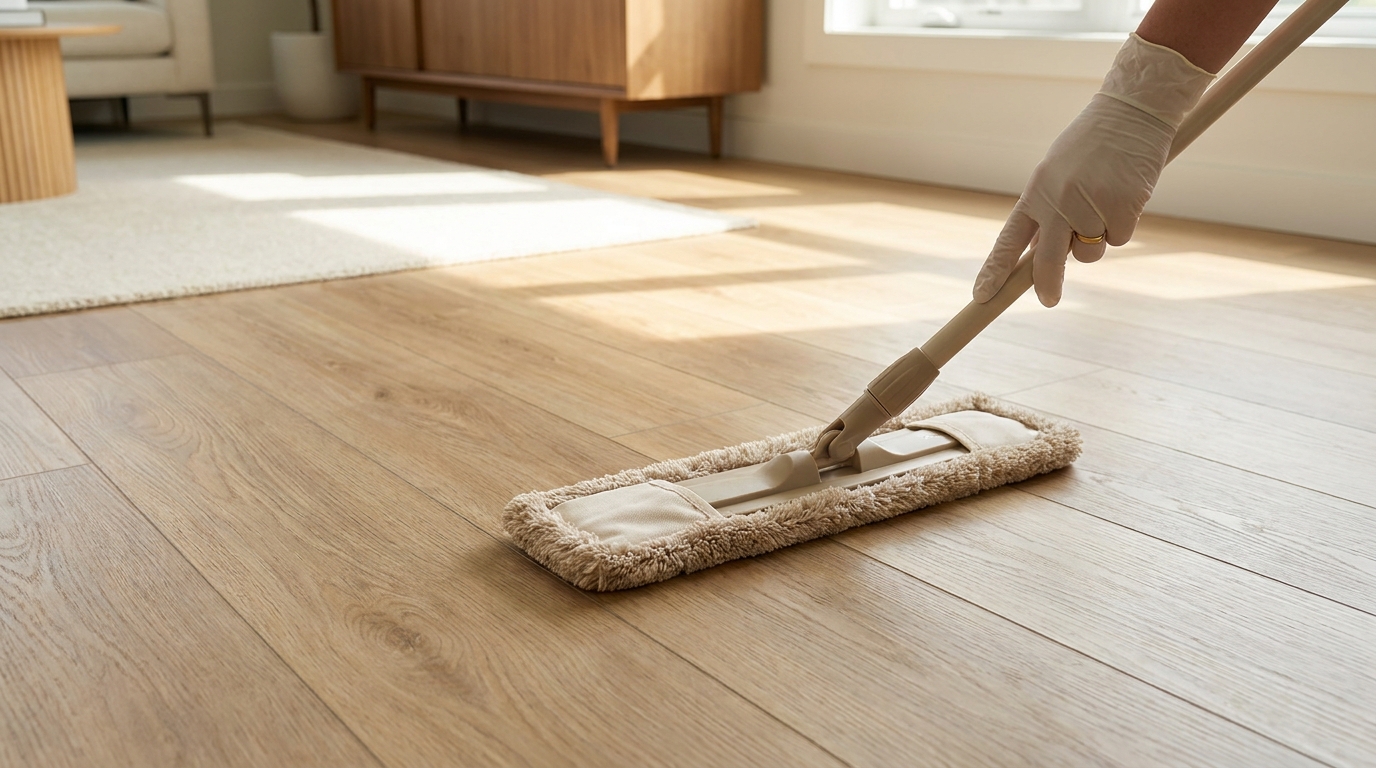
Sweeping, dust mopping, or vacuuming is the first and most essential step in vinyl floor care. Manufacturers consistently recommend dry debris removal before any wet cleaning because tiny particles can scratch and dull the wear layer over time. In practical terms, this means that a quick pass with a soft broom or microfiber dust mop may do more for long-term beauty than any later treatment.
A vacuum can also be effective, provided it is suitable for hard floors and does not use a harsh beater bar setting that could mark the surface. The best tools are soft, clean, and non-abrasive. A microfiber dust mop is especially elegant in use because it captures fine dust efficiently while gliding gently across the floor. It also supports a quieter ritual of care, one that suits a composed and orderly home.
Daily or near-daily dry cleaning in high-traffic spaces is ideal, especially near entrances where outdoor particles first arrive. Hallways, mudrooms, kitchens, and breakfast areas often benefit the most. In lower-traffic spaces, a few times each week may be perfectly sufficient. The key is to remove grit before it has the chance to grind under shoes, chairs, or pet paws.
Wet Cleaning With Restraint
Once the surface is free of dust and debris, wet cleaning can be introduced carefully when needed. Here, product choice matters enormously. Shaw and other manufacturers recommend using a neutral-pH cleaner approved for the floor. This is not merely a technical preference. A neutral cleaner helps cleanse the surface without etching the finish, leaving residue, or clouding the floor’s intended appearance.
The cloth or mop should be damp rather than soaking. Excess water is unnecessary and often unwise for vinyl flooring. While the surface itself may resist moisture well, too much water can seep into seams, edges, or vulnerable transitions depending on the product and installation method. It may also leave a dull residue if the floor is overwashed and not properly dried.
A refined result depends on moderation. Use only as much cleaner as necessary, rinse or replace dirty mop pads promptly, and avoid flooding the floor. After cleaning, allow the surface to dry fully before regular foot traffic resumes. The ideal finish should look naturally fresh, not glossy from residue or streaked from overapplication.
The Cleaners and Tools to Avoid
Some of the most common floor care habits are also the ones most likely to compromise vinyl over time. Certain internet-famous cleaning shortcuts may sound natural, powerful, or economical, but elegance is rarely achieved through improvisation. Vinyl performs best when it is treated according to the chemistry and finish it was designed with.
Manufacturers commonly warn against abrasive cleaners, ammonia-based products, vinegar-based products, and harsh chemicals. These can damage the finish, leave the surface looking dull, or slowly interfere with appearance retention. Vinegar, in particular, is often mistaken for a universal floor cleaner because it is popular in general household cleaning. Yet for vinyl, it is frequently discouraged because acidic solutions can work against the protective finish rather than preserving it.
Steam mops are another product many homeowners assume is safe everywhere. Some manufacturers explicitly advise against them for vinyl flooring because heat and moisture may damage the material or affect the installation system. Steam can be too aggressive for a surface that thrives under gentler conditions, and its dramatic sense of cleanliness is not worth the risk to a carefully selected floor.
Likewise, waxing is often unnecessary and sometimes harmful. Many modern vinyl floors are designed as no-wax or no-polish products. Applying paste wax or solvent-based polishes where they do not belong can create buildup, alter the intended sheen, and complicate future maintenance. A contemporary vinyl floor should look beautifully resolved on its own, without needing cosmetic layers to imitate luxury.
Common Mistakes That Quietly Diminish Beauty
- Using vinegar or abrasive DIY mixtures because they seem natural or strong.
- Steam mopping for convenience, despite the risks of heat and excess moisture.
- Applying wax to no-wax flooring in hopes of increasing shine.
- Skipping dry debris removal and going straight to wet mopping.
- Using overly wet mops that leave standing moisture or residue behind.
- Assuming every vinyl product line has the same maintenance requirements.
These mistakes rarely ruin a floor overnight, which is precisely why they are so common. Instead, they quietly interrupt clarity, texture, and finish over time. A surface that once looked tailored and refined can begin to seem tired, hazy, or uneven. Preventing that decline is far easier than attempting to reverse it later.
How to Handle Spills and Spot Cleaning Gracefully
Prompt spill removal is one of the simplest and most important habits in vinyl care. A spill that is wiped quickly is rarely dramatic, but one that is left to linger can stain, leave residue, or attract further dirt. In a polished home, speed matters as much as product selection. The goal is to respond calmly and immediately, before the moment becomes a maintenance problem.
For ordinary household spills, begin with a soft cloth or paper towel to blot and lift the liquid. Then clean the area with a damp microfiber cloth and, if needed, a manufacturer-approved neutral cleaner. Dry the surface thoroughly afterward so no film remains. This method works beautifully for water drips, light food spills, or minor kitchen accidents.
For more stubborn marks, some manufacturer guidance permits targeted use of substances such as isopropyl alcohol or mineral spirits, but only where the product guide specifically allows it. These should never be used casually or as a substitute for routine cleaning. If a spot treatment is approved, it should be applied carefully to the affected area only, followed by neutralization and thorough wiping according to the manufacturer’s instructions. Precision protects both the finish and the visual consistency of the floor.
Marks from shoes, grease, cosmetics, crayons, or food coloring can often be managed successfully when treated promptly and correctly. The temptation to scrub hard should be resisted. Gentle repetition is safer than force. In many cases, a floor remains elegant not because it never encounters spills, but because each small incident is handled with quiet discipline.
Furniture Protection: The Invisible Luxury
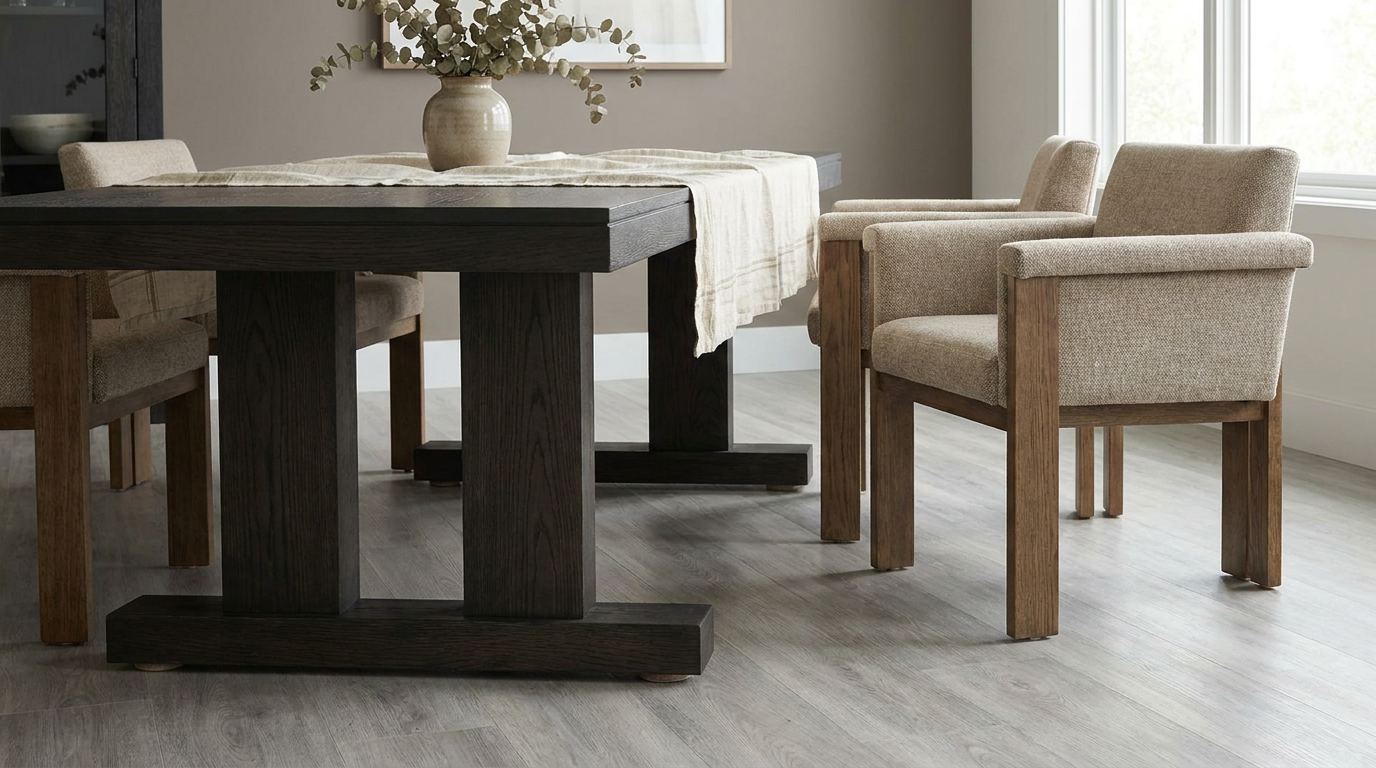
Some of the most effective vinyl floor care techniques are nearly invisible. Felt protectors under chair legs, tables, sofas, and movable accent pieces may seem like minor details, yet they are fundamental to preserving an unmarked surface. Manufacturers such as Shaw recommend felt floor protectors, and they are especially valuable in homes where design objects are frequently repositioned or where dining chairs move every day.
Heavier furniture deserves even more attention. Wide-load bearing leg bases or rollers help distribute weight and reduce the risk of dents or pressure marks. This is particularly important beneath substantial dining tables, storage pieces, kitchen islands with seating, and upholstered beds. A generous furniture base creates a more graceful relationship between object and floor, protecting the vinyl without altering the room’s look.
Dragging furniture, even for a short distance, should always be avoided. Lift pieces carefully or use proper moving aids that are suitable for resilient flooring. A single careless adjustment can leave a scratch that interrupts the quiet continuity of an otherwise beautiful room. In design, atmosphere is often built from what remains undisturbed.
Entrance Mats, Rugs, and the Art of Prevention
Elegant vinyl care begins before dirt reaches the floor itself. Entrance mats are among the most effective tools for reducing grit, moisture, and seasonal debris. At exterior doors, use quality mats that capture particles from shoes before they travel into the interior. This small threshold gesture has an outsized effect on long-term floor appearance.
Area rugs can also protect high-traffic zones while adding softness and visual layering to a room. However, the underlayment matters. Use rug pads and backings that are approved for vinyl flooring, since certain materials can transfer color, react with the finish, or cause discoloration over time. A beautiful rug should enhance the room without compromising the floor beneath it.
In dining spaces, runners or rugs may help cushion movement under chairs, while in hallways they can absorb traffic gracefully. Yet they should be placed thoughtfully so the flooring still breathes visually and the room retains balance. The objective is not to conceal the vinyl, but to protect it selectively in the places where life naturally presses hardest against the surface.
Light, Heat, and Environmental Control
Vinyl flooring is durable, but like many interior materials, it benefits from stable environmental conditions. Direct sunlight can contribute to fading or visual change over time, especially in bright rooms with large windows and extended exposure. This does not mean the floor cannot live beautifully in sunlit spaces. It simply means that window treatments should be considered part of the maintenance strategy.
Sheer curtains, blinds, solar shades, or layered drapery can soften intense light while preserving the elegance of a luminous interior. Controlled daylight helps protect both the floor and the furnishings around it. It also allows color tones and textures to remain more consistent across the room, which is essential in spaces where materials have been selected with care.
Temperature and moisture management matter as well. While surface cleaning is the focus of most homeowners, long-term vinyl performance is also connected to installation quality, substrate preparation, and moisture control below the floor. ASTM guidance emphasizes evaluating moisture conditions in concrete slabs against manufacturer requirements before installation. That step may seem distant from routine care, yet it is part of the same philosophy: a refined surface remains beautiful when the conditions supporting it are equally well managed.

Room-by-Room Vinyl Care in a Sophisticated Home
Kitchen
The kitchen is one of the most rewarding places for vinyl flooring because it combines visual warmth with practical resilience. Here, dry debris removal is especially important since crumbs and fine grit are common. Spot cleaning should happen quickly, particularly around cooking zones, sinks, and dining areas where oils, sauces, and water can leave residue if ignored.
Use mats selectively near entry points or workstations if they are appropriate for your layout, but keep the space visually open enough to appreciate the flooring itself. The kitchen should feel active yet composed. A clean, residue-free vinyl surface reflects light softly and allows cabinetry, stone, and metal finishes to stand out more beautifully.
Living and Dining Areas
In open-plan rooms, vinyl often performs as the design anchor that unifies the entire interior. These are the spaces where scratches from furniture movement are most likely to disrupt the aesthetic. Dining chairs should always have felt protectors, and occasional entertaining should be followed by a quick sweep or dust mop to remove the subtle debris that collects underfoot.
Because these rooms are also social spaces, they benefit from a quietly luxurious maintenance routine. The floor should never feel heavily treated or artificially shiny. Instead, it should look rested, soft in sheen, and visually coherent from one zone to the next. That sense of ease is a hallmark of good care.
Bedroom
Bedrooms generally place less stress on vinyl, which makes them ideal spaces for preserving a particularly serene finish. Routine dust removal, careful furniture placement, and protection under beds, benches, and side tables are usually all that is required. If the room includes a vanity area or dressing corner, cosmetics and perfumes should be cleaned promptly if spilled.
Because bedrooms are tied so closely to comfort, vinyl flooring here should feel calm and tactile. Dust-free surfaces and restrained cleaning practices help maintain that atmosphere. The result is a room that feels gracious, ordered, and quietly luxurious.
Entry and Utility Areas
These hardworking zones are where preventive care matters most. Shoes, moisture, outdoor debris, and heavier use all converge here, making mats and frequent dry cleaning essential. It is wise to inspect these areas regularly for embedded grit near thresholds or edges where particles tend to accumulate.
Even a practical utility room can maintain an elegant standard when the flooring is respected. The beauty of vinyl is that functionality need not come at the expense of atmosphere. Thoughtful maintenance lets the material perform efficiently while still looking considered and polished.
A Weekly and Seasonal Care Rhythm
Many homeowners appreciate clear routines, particularly when caring for premium-looking surfaces. While your exact schedule should reflect your household traffic, a simple rhythm can help preserve the floor without overworking it. The objective is not perfection at every hour, but continuity. Small actions, repeated consistently, build the best results.
- Daily or as needed: Sweep, dust mop, or vacuum high-traffic zones to remove grit.
- Immediately after spills: Blot, clean with an approved method, and dry the surface.
- Weekly: Perform a light wet clean with a manufacturer-approved neutral-pH cleaner if the floor needs it.
- Monthly: Check felt pads, entry mats, and rug backings for wear or residue risk.
- Seasonally: Review sunlight exposure, inspect transitions and edges, and adjust care during wetter or grittier seasons.
This kind of schedule supports beauty without obsession. It also reflects a more modern understanding of maintenance, where preserving service life and appearance retention is part of the product’s long-term value. A well-kept floor contributes not only to cleanliness, but to the overall quality and visual intelligence of the home.
Misconceptions Worth Leaving Behind
There are several persistent myths around vinyl flooring care, and abandoning them can dramatically improve results. The first is that more product equals more cleanliness. In reality, excessive cleaner can leave residue and soften the crisp, natural appearance that quality vinyl is meant to have. Often, less truly is more.
Another misconception is that shine equals luxury. Many of today’s most beautiful vinyl products are intentionally finished with a realistic, low-luster look that echoes wood, stone, or ceramic more convincingly. Adding wax or polish to force extra gloss can diminish that authenticity. Real elegance lies in respecting the material’s intended character.
It is also easy to believe that because vinyl is durable, it can tolerate almost any cleaning method. Durability, however, is not permission for neglect or experimentation. ASTM performance standards underscore how abrasion resistance, impact resistance, flexibility, and stability support long-term flooring performance. The better we understand those qualities, the more we recognize that daily habits still matter.
When to Revisit the Manufacturer Guide
The manufacturer care guide should not be treated as something you read once and forget. It is worth revisiting whenever you encounter a stubborn stain, move heavy furniture, change rugs, try a new cleaning product, or notice a shift in the floor’s appearance. Product lines evolve, and details matter. The exact cleaner, finish type, and warranty conditions may all shape the safest approach.
This is especially important in North America, where the vinyl flooring market includes a wide range of residential and commercial offerings with different installation systems and performance claims. A no-polish floor, a rigid core plank, and a commercial luxury vinyl tile may all require different assumptions. Sophisticated maintenance respects those distinctions rather than flattening them into generic advice.
Design Trends and the Future of Vinyl Care
Current resilient flooring trends continue to move toward greater realism, lower maintenance, and more considered lifecycle performance. Premium vinyl products are increasingly marketed for their authentic wood and stone aesthetics, improved surface technologies, and easy-care finishes. This is good news for design-conscious homeowners, because it means the market is aligning beauty more closely with practical stewardship.
There is also a growing emphasis on sustainability and environmental documentation, including lifecycle assumptions that account for maintenance as part of overall product performance. In other words, cleaning is no longer viewed as a separate domestic chore alone. It is part of how a floor fulfills its design promise over time. A surface that remains attractive for years reduces replacement pressure and supports a more responsible relationship with interiors.
That perspective feels especially relevant in elegant homes, where longevity matters. True luxury is not wasteful. It is composed, enduring, and intelligently maintained. Vinyl flooring, when chosen carefully and cared for with discretion, fits beautifully within that philosophy.
Final Thoughts: Lasting Elegance Through Restraint
The finest vinyl floor care routine is not complicated. It is calm, regular, and informed. Remove grit before it scratches, clean spills before they settle, use only approved neutral products, avoid harsh shortcuts, and protect the surface from furniture, excess moisture, and intense wear. These practices are modest in effort, yet powerful in effect.
Vinyl flooring has earned its place in sophisticated interiors because it offers both visual richness and ease of living. It can ground a room with warmth, continuity, and quiet texture, all while supporting the rhythms of everyday life. To maintain that balance, the care routine should mirror the material itself: refined, practical, and beautifully measured.
If you remember only one idea, let it be this. Premium vinyl stays elegant through restraint. Gentle tools, minimal moisture, preventive protection, and manufacturer-specific guidance will do far more for lasting beauty than any dramatic cleaning ritual. Treat the wear layer with respect, and your floors can remain as poised and polished as the day they were installed.



No Comment! Be the first one.