

Thunder Bay’s Housing Math Problem: Why the Next Mayor Inherits a Supply Crisis, Not Just a Shelter Crisis
Every municipal election eventually comes down to a number. In Thunder Bay, that number is $450,000, the average cost to build a single new housing unit according to the city’s own 10-year housing and homelessness plan. Nine candidates are campaigning to replace longtime mayor Ken Boshcoff, and nearly all of them are circling the same reality: Thunder Bay does not have a messaging problem or an enforcement problem. It has a supply and feasibility problem, and whoever wins this election inherits it.
Candidates like Trevor Giertuga and Moe Comuzzi are framing the issue through visible crisis points, rising crime severity, an 18 percent increase in Thunder Bay’s crime severity index between 2024 and 2025, and an estimated 1,129 homeless residents as of late last year, 58 percent of whom identify as Indigenous. Those figures matter. But from a development lens, the more telling detail is what the city just finished building: an 80-cabin temporary shelter village that cost $12.5 million. Giertuga opposed it and argues that money should have gone toward permanent housing stock instead. That critique gets at the real tension in large-scale housing strategy: temporary capacity solves an emergency, but it does not move a city toward the permanent supply it actually needs.
This is where Thunder Bay’s situation becomes a useful case study for any mid-sized Canadian city wrestling with growth. The city is carrying a $30 million infrastructure funding gap, and council has been raising its capital budget by five percent annually just to narrow it. Candidate Peter Diedrich put it plainly when he said this is not purely a municipal problem, that the funding and resources required have to come from provincial and federal sources as well. He is right, and it is the kind of statement that should shape how the next council approaches every housing file, not as a standalone municipal initiative but as a coordinated capital stack involving multiple levels of government.
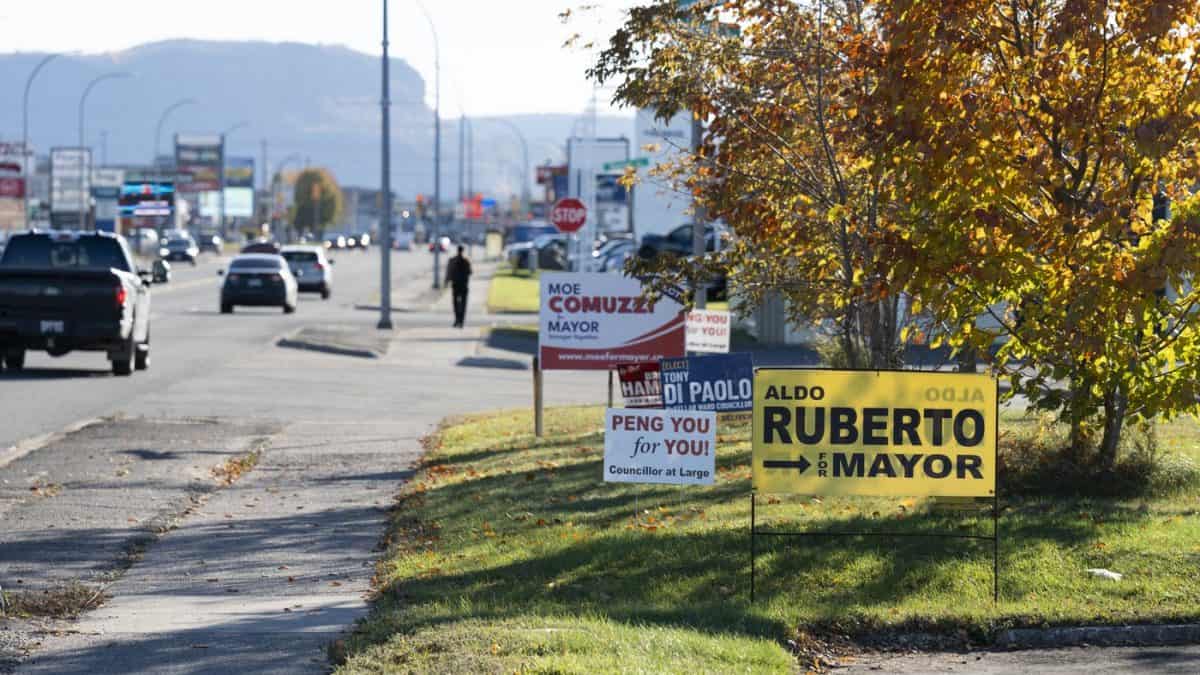
Comuzzi, a real estate broker running for mayor, is making the growth argument most directly, pointing to critical minerals, mining, and small business investment as reasons Thunder Bay needs to build out its infrastructure and housing base now rather than later. That is a development planner’s instinct: housing supply is not a side issue to economic growth, it is the precondition for it. A regional hub cannot attract industry and labour if there is nowhere for workers to live, and Giertuga’s point about 30,000 non-resident users of city services, from medical patients to people from outlying communities, underscores just how much unaccounted-for demand is already straining Thunder Bay’s housing and service infrastructure.
Development is never just about land. It is about timing, access, infrastructure, policy, demand, and the future identity of a community.
Candidate Volker Kromm raised a point that deserves more attention in the feasibility conversation: the city’s social service organizations are doing meaningful work but operating in silos, disconnected from municipal coordination. Lindsay Martin of the Elizabeth Fry Society echoed this, noting her organization has had little contact with the city despite serving some of its most vulnerable residents. Any serious housing and development strategy for Thunder Bay needs to treat service coordination as infrastructure in its own right, because disconnected programming wastes capital that is already scarce.
None of the candidates are promising a property tax freeze, and both Giertuga and Comuzzi have said as much openly. That is a credible signal. Building permanent housing at $450,000 a unit while closing a $30 million infrastructure gap is not compatible with flat revenue. Whoever takes office will need to treat housing development not as a political talking point but as a long-term capital planning exercise, one that requires patience, external funding partnerships, and a willingness to prioritize permanent stock over short-term fixes.
Source: insauga.com