


Essential Tips for Caring for Your Outdoor Furniture with Elegance and Longevity
Outdoor furniture has a rare role in the home. It lives at the threshold between architecture and landscape, extending the language of your interiors into open air. A terrace dining set, a sculptural lounger, or a woven garden chair is never purely practical. Each piece contributes to atmosphere, hospitality, and the quiet beauty of daily life. Caring for outdoor furniture, then, is not simply a matter of upkeep. It is an act of preservation that protects both visual charm and lasting function.
Table Of Content
- Why Outdoor Furniture Fails So Quickly Without Proper Care
- The Foundation of Elegant Outdoor Furniture Care
- What to Avoid When Cleaning Outdoor Furniture
- Material by Material Care for Lasting Beauty
- Teak and Other Outdoor Woods
- Aluminum and Powder Coated Metals
- All Weather Resin Wicker Versus Natural Wicker
- Recycled Plastic, HDPE, and Marine Grade Materials
- Outdoor Cushions, Slings, and Textiles
- How Climate Should Shape Your Care Routine
- The Art of Seasonal Outdoor Furniture Care
- Spring Refresh
- Summer Upkeep
- Autumn Preparation
- Winter Storage and Protection
- How to Use Covers Without Creating New Problems
- Inspection Points Most Homeowners Miss
- A Simple Weekly and Seasonal Routine You Can Actually Keep
- Final Thoughts on Preserving Outdoor Furniture Beautifully
The finest approach to outdoor furniture care begins with an understanding of what truly causes deterioration. Moisture, sunlight, and dirt are the central adversaries. Water promotes corrosion in metals, swelling and rot in wood, and mildew in porous surfaces. Ultraviolet light slowly breaks down wood, textiles, rubber, paints, and protective coatings, causing fading, chalking, cracking, and brittleness over time. Dirt may seem harmless by comparison, yet when it mixes with moisture and settles into seams or crevices, it becomes an agent of abrasion, staining, and decay.
When viewed through this lens, maintenance becomes more elegant and more intelligent. It is not about aggressive scrubbing or overusing harsh cleaners. It is about gentle routines, thoughtful placement, informed material care, and seasonal attention. In this guide, we will explore how to clean outdoor furniture properly, how to protect different materials without diminishing their finish, which products and habits to avoid, and how to adapt your routine to humid, sunny, rainy, or cold climates so your furniture remains beautiful for years to come.
Why Outdoor Furniture Fails So Quickly Without Proper Care
Many homeowners assume outdoor furniture is built to endure everything nature offers with minimal intervention. While high quality pieces are certainly designed for exposure, no material is invulnerable. Weather resistance does not mean weather immunity. Even the most durable patio furniture experiences gradual wear when moisture seeps into joints, when pollutants settle on finishes, and when direct sun quietly weakens fibers and coatings over a long season.
Moisture is often the most destructive force because it appears in many forms. Rain is obvious, yet dew, condensation, snow, ice, and damp air can be equally harmful. Water trapped under cushions, inside hollow frames, beneath covers, or in horizontal seams is especially damaging. Canadian conservation guidance notes that corners, recesses, seams, and flat surfaces hold wet debris longer than surfaces that shed water easily. This is why the underside of a chair or the groove around a tabletop edge often deteriorates before the more visible areas.
Sunlight works more slowly, but no less powerfully. UV exposure degrades organic materials such as wood, textiles, leather, and rubber, and it weakens paints and coatings until they fade or crack. A chair left in intense afternoon sun may still appear intact for a season or two, yet the finish, fabric resilience, and surface color are all being altered. Once this process advances, restoration is more difficult than prevention. The most graceful solution is always to reduce stress before visible damage appears.
Dirt completes this cycle of decline. Pollen, airborne soot, leaf tannins, bird droppings, and urban dust settle onto surfaces and hold moisture against them. They can also become mildly abrasive during cleaning if left too long. What looks like a simple film of grime may, over time, encourage mildew spots, stain porous finishes, and dull the crisp appearance that makes a patio feel cared for and inviting. The lesson is clear. Preservation begins in small, consistent gestures.
The Foundation of Elegant Outdoor Furniture Care
The most effective maintenance routine is gentler than many people expect. For most materials, the ideal first step is to remove loose debris with a soft brush, microfiber cloth, or handheld vacuum attachment. This prevents scratching during washing and clears away leaves, dust, and trapped particles from seams and corners. It is a small ritual, but it immediately reduces wear and reveals where deeper cleaning may be needed.
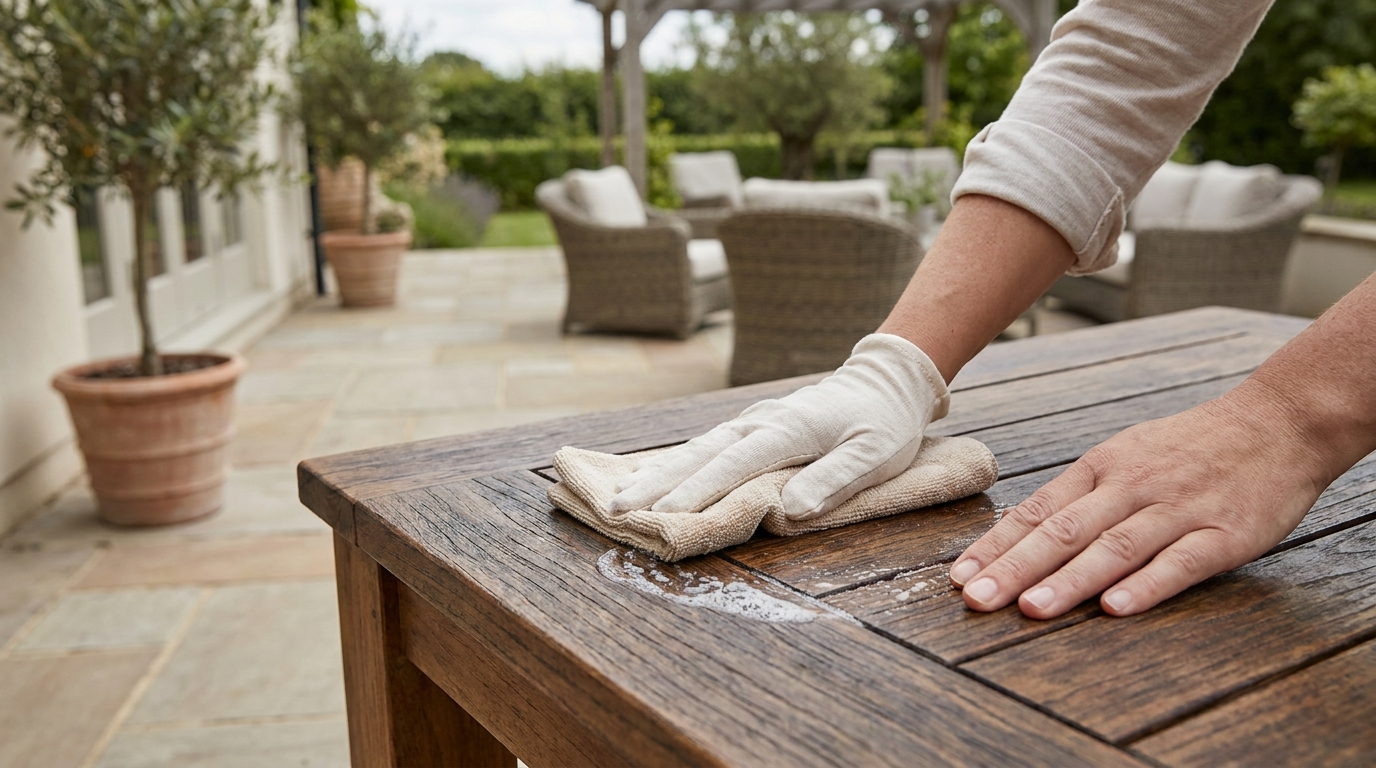
Next comes a simple wash using mild soap and water. This method is widely recommended because it cleans without unnecessarily stripping finishes or leaving harsh residues behind. A soft sponge or cloth is usually sufficient for painted metal, resin wicker, sealed wood, recycled plastic, and many other common patio materials. After washing, rinse thoroughly so soap does not remain on the surface, then dry completely with a clean cloth or allow full air drying in a well ventilated area.
Complete drying is one of the most overlooked steps in patio furniture maintenance. EPA guidance on mold and hard surfaces emphasizes cleaning with water and detergent, followed by thorough drying. For outdoor furniture, this is essential because moisture hidden in cushion seams, woven panels, and frame joints can quickly encourage mildew. A beautiful set put into storage while still damp may emerge with odor, staining, or fabric deterioration that could have been prevented with one dry afternoon.
Refined maintenance is less about force and more about consistency. A mild cleaner, a soft cloth, and complete drying will preserve more beauty over time than aggressive products ever will.
It is also wise to clean in the shade whenever possible. Soap can dry too quickly in direct sun, leading to residue or streaking. Surfaces heated by strong sunlight may also react poorly to certain treatments or simply dry unevenly. Choosing a calm, temperate part of the day gives better results and makes the task itself feel less like labor and more like stewardship.
What to Avoid When Cleaning Outdoor Furniture
One of the most common mistakes in how to clean outdoor furniture is assuming stronger chemicals produce better results. In reality, harsh cleaners often damage the very surfaces they are meant to restore. Abrasive powders can scratch powder coatings and glossy resin. Strong solvents may weaken plastics, fade painted finishes, or leave brittle patches on synthetic straps and mesh. Bleach is frequently overused, especially for mildew concerns, yet it is not a universal answer and should never be mixed with other chemicals.
Another misconception is that all outdoor pieces can tolerate pressure washing. While a controlled rinse may occasionally be appropriate for certain durable materials, high pressure can fray wicker, force water into wood grain, strip finishes, and drive moisture into joints and cushion cores. For elegant furniture, especially pieces with textured surfaces or fine coatings, slower and softer methods are almost always safer. The goal is not merely to remove dirt today but to preserve integrity season after season.
Oily or improvised treatments should also be used with care. Not every wood needs repeated oiling, and not every finish benefits from home remedies. There is a persistent myth that wood furniture must be “fed” with oils to remain healthy, yet conservation principles suggest that proper cleaning, stable conditions, and material appropriate protection matter far more than indiscriminate treatments. Applying the wrong product can create sticky buildup, attract dirt, or alter the intended finish in ways that are difficult to reverse.
Finally, avoid storing furniture under tightly sealed, non breathable covers while it is still damp. A cover can shield furniture from rain and dust, but if it traps condensation, mildew may flourish underneath. Protection is only effective when it balances shelter with airflow. That principle is one of the most important and most elegant truths in outdoor care.
Material by Material Care for Lasting Beauty
Teak and Other Outdoor Woods
Teak remains one of the most admired choices for luxury outdoor settings because it is naturally durable and resistant to rot and pests. Its aging process is part of its appeal. Left untreated, teak gradually develops a soft silver gray patina that many designers find deeply beautiful. Others prefer to preserve its warm honey tone. Neither choice is wrong, but the care routine should align with the look you want.
For regular cleaning, use mild soap, water, and a soft brush or cloth, always rinsing well and allowing the wood to dry fully. Avoid overly aggressive sanding or harsh brighteners unless specifically needed and appropriate for the finish. If your aim is to maintain teak’s original golden tone, use products designed specifically for teak and follow manufacturer directions closely. If you prefer the natural weathered look, simple cleanliness and protection from standing water are usually more important than cosmetic treatment.
Other woods used outdoors may be less forgiving than teak and more vulnerable to swelling, warping, or surface cracking. With these pieces, moisture control becomes especially important. Lift furniture feet out of standing water, keep leaves from accumulating on horizontal surfaces, and inspect joints for finish wear. A wooden bench under a tree may look idyllic, but if damp debris collects in corners and is not removed, deterioration can quietly advance beneath the romance of the setting.
Aluminum and Powder Coated Metals
Aluminum is among the most practical outdoor furniture materials because it is low maintenance and does not rust in the same way iron or plain steel can. Yet this does not mean it requires no care. Finishes can scratch, oxidation can appear, and hardware may still suffer when exposed to salt air, grime, and moisture over time. Its beauty lies in clean lines and lightness, so preserving the finish is key.
Wash aluminum frames with mild soap and water, then rinse and dry thoroughly. Pay special attention to welded joints, screw points, and underside areas where dirt settles. If the furniture has a powder coated finish, avoid abrasive pads that may dull the coating. Minor scratches should be addressed promptly, especially in coastal environments, because exposed areas can become vulnerable to further oxidation and staining.
Steel and wrought iron require a little more vigilance. Unlike aluminum, they are more prone to corrosion if protective coatings are compromised. Any chips, bubbles, or rust spots should be treated early before they spread. In elegant exterior spaces, metal furniture often serves as a visual anchor, and keeping its finish intact maintains not only longevity but also the architectural crispness of the entire composition.
All Weather Resin Wicker Versus Natural Wicker
Wicker is often associated with effortless charm, but it is important to distinguish between natural wicker and all weather resin wicker. Traditional natural wicker is not meant for wet outdoor conditions. It can absorb moisture, weaken, crack, and develop mold or structural distortion when exposed to the elements. If you own natural wicker, it is best treated as a protected porch material or even as indoor furniture in a sunroom rather than furniture for open rain exposure.
Resin wicker, by contrast, is designed for outdoor use. It offers the woven look many people love while tolerating moisture far more effectively. Even so, it should not be neglected. Dust and pollen become trapped in the weave, and mildew can develop if moisture lingers in crevices or beneath cushions. Use a soft brush or vacuum attachment to remove debris before washing gently with mild soapy water. Rinse carefully and let the weave dry thoroughly, especially after heavy rain or seasonal cleaning.
Because woven surfaces contain so many intersections, they are natural collectors of dirt. This does not make them fragile, but it does make them high detail objects that benefit from patient care. In design terms, wicker contributes texture and softness to an outdoor room. In maintenance terms, it asks for attentiveness to airflow and debris removal.
Recycled Plastic, HDPE, and Marine Grade Materials
Recycled plastic and HDPE furniture have become increasingly popular for good reason. They are durable, often sustainable, and generally low maintenance. Marine polymers and similar high performance outdoor materials also offer resilience in demanding climates. These pieces are excellent choices for homeowners who want visual consistency with less frequent intervention, particularly in damp or coastal settings.
Still, low maintenance does not mean no maintenance. Dust, sunscreen residue, food spills, and bird droppings should be cleaned away with mild soap and water before they set. Prolonged direct sunlight can lead to fading in some plastics, especially lower quality products, so placement still matters. If possible, create moments of partial shelter with pergolas, umbrellas, or strategic orientation. Practical materials remain more beautiful when they are not asked to absorb relentless exposure without relief.
One advantage of these modern materials is their compatibility with gentle maintenance. They generally do not require sealing, staining, or frequent refinishing. That simplicity can be deeply luxurious. There is something refined about furniture that keeps its poise with modest care, provided the owner respects its limits and avoids harsh products that mar the surface.
Outdoor Cushions, Slings, and Textiles
Textiles are often the first part of an outdoor arrangement to show neglect. Cushions absorb humidity, trap pollen, and collect invisible residues from skin oils, lotions, and environmental pollutants. Sling fabrics and mesh panels may seem quick drying, yet mildew can still develop if dirt and moisture remain in the weave. The result is not only visual fading but a subtle loss of freshness that affects the atmosphere of the entire space.
Routine fabric care should begin with shaking out debris and brushing off loose dirt. Spot clean with mild detergent and water according to care labels, rinse thoroughly, and dry completely before placing cushions back on furniture or storing them away. If the manufacturer recommends a specific fabric protectant, use that instead of a generic solution. Current consumer guidance increasingly favors care label based maintenance and manufacturer approved products over improvised treatments.
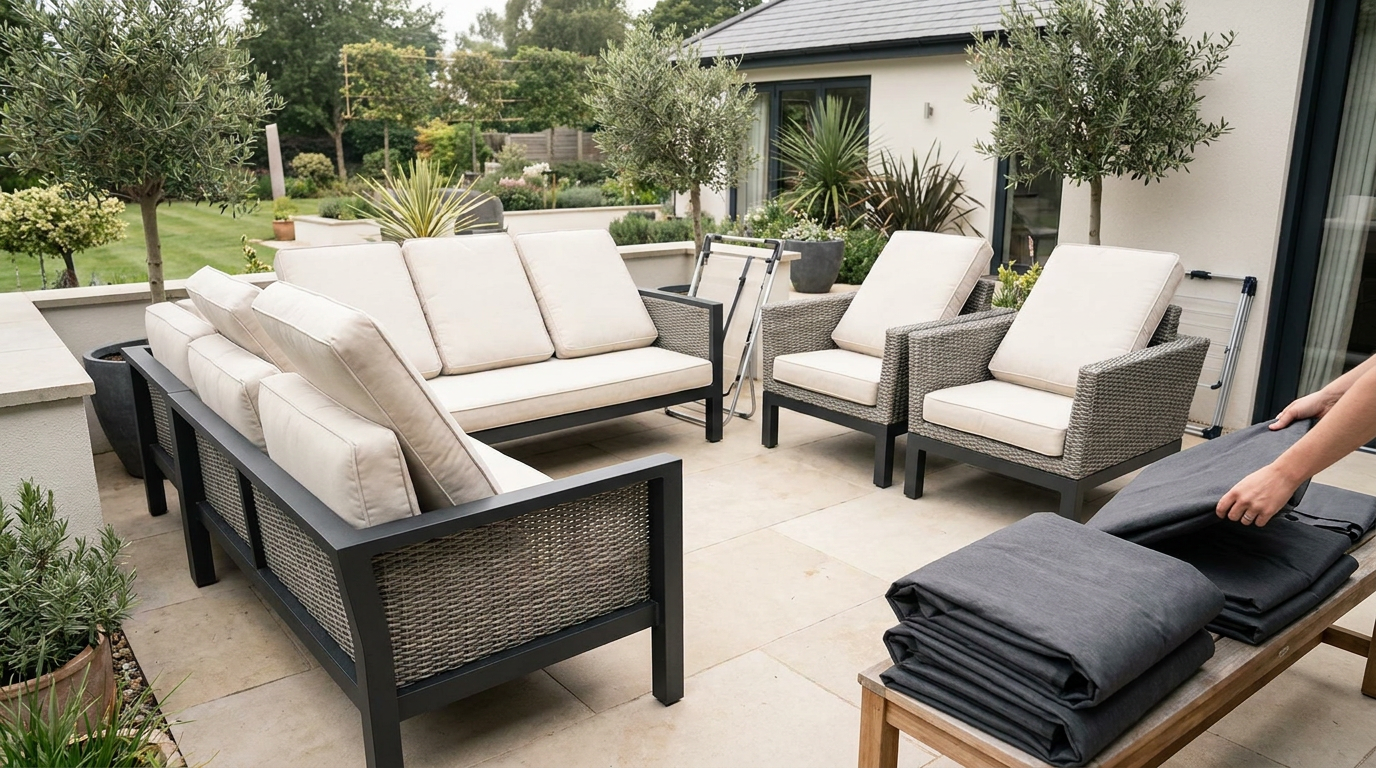
Storage is especially important for cushions. Even weather resistant fabrics last longer when they are not left outside through every storm or damp night. A dry storage bench, ventilated cabinet, or sheltered indoor area can dramatically extend their beauty. If cushions must remain outside during the season, stand them on edge occasionally to release trapped moisture and ensure airflow reaches the seams and undersides.
How Climate Should Shape Your Care Routine
Elegant maintenance is always responsive to place. A terrace in Montreal, a humid porch in Florida, and a sun drenched patio in Arizona do not age in the same way. The most effective patio furniture maintenance routine accounts for climate rather than relying on one universal schedule. What matters most in one region may be secondary in another.
In colder climates, winter introduces freeze thaw stress that can be especially damaging to wood, coatings, and joints where moisture has been allowed to linger. Furniture should be cleaned before storage, dried thoroughly, and ideally moved to a sheltered, dry space for the off season. Even covered outdoor storage can be risky if moisture remains trapped inside seams, cushion cores, or hollow frames. Winter care is less about hiding furniture and more about ensuring it enters storage in a stable, dry condition.
In humid regions, mildew prevention and ventilation deserve constant attention. Surfaces may remain damp long after rain has ended, and shaded patios often dry slowly. Here, airflow becomes a form of protection. Furniture should be spaced to allow ventilation, cushions should be brought in during extended wet periods when possible, and any covers used should be breathable rather than airtight. Regular inspections matter because mildew often starts in hidden places before it appears on visible fabric faces.
In hot and sunny climates, UV exposure can be more destructive than rain. Fabrics fade, plastics can dull, and coatings may become brittle over time. Shade structures, umbrellas, and strategic placement can dramatically slow photodegradation. The most elegant outdoor rooms in such regions are often those that combine sun loving openness with moments of protection, allowing materials to endure without losing their composure.
The Art of Seasonal Outdoor Furniture Care
Spring Refresh
Spring is the moment to reawaken the outdoor room. Begin with a thorough inspection before arranging furniture back into daily use. Look at joints, hardware, feet, undersides, and any seams where winter dust or dampness may have accumulated. Wash surfaces gently, rinse well, and let everything dry in fresh air before replacing cushions or accessories. This is also the time to evaluate placement and make small adjustments that reduce direct exposure for the months ahead.
If you notice chipped coatings, loose screws, frayed glides, or early mildew marks, address them before regular use resumes. Small spring repairs prevent larger midsummer problems. A terrace always looks more luxurious when it is not merely decorated but also quietly maintained at the structural level.
Summer Upkeep
Summer care is about frequency rather than intensity. Wipe down dining tables after meals, brush off pollen and dust, and remove standing water after storms. Rotate or reposition lightweight pieces if one side receives significantly more sun than another. Bring cushions inside during prolonged rain or at least allow them to dry fully in bright air before returning them to service.
Because outdoor living is most active in summer, it is tempting to postpone cleaning until the season ends. Yet small weekly attention is far more effective than a single major effort after neglect. The outdoor room remains inviting, and dirt never has the chance to harden into a larger problem.
Autumn Preparation
Autumn introduces falling leaves, damp mornings, and the first hints of cold stress in many regions. Clear organic debris promptly because wet leaves stain and hold moisture against surfaces. Deep clean furniture before storage, not after. Dirt left on a chair all winter may become much harder to remove, and any trapped moisture can age the material unnecessarily during the dormant season.
Inspect covers before use and ensure they fit well without pressing tightly against every surface. The ideal cover protects from precipitation and dust while still allowing some ventilation. If possible, elevate furniture slightly so it does not sit directly in pooled water on stone or deck boards.
Winter Storage and Protection
Winter asks for restraint and order. Store what can be stored in a dry, sheltered location such as a garage, basement, garden room, or dedicated storage shed. Cushions should never be packed away damp. Frames should be clean and dry, and accessories such as umbrellas should be secured according to manufacturer guidance. If furniture remains outdoors, choose breathable covers and inspect periodically rather than assuming the set can be forgotten until spring.

There is a particular sophistication in winter preparation done well. It preserves not only material life but also the emotional ease of spring, when everything returns ready rather than damaged, dusty, or sour with mildew. Good storage is one of the least visible forms of luxury and one of the most effective.
How to Use Covers Without Creating New Problems
Covers are valuable, but they are often misunderstood. Many people believe a cover alone is enough to protect furniture from all harm. In truth, a cover is only one layer of care. If furniture is dirty when covered, that dirt remains in contact with the surface. If the piece is damp, trapped moisture may intensify mildew and staining. If the cover itself is poorly fitted, wind abrasion can wear the finish at contact points.
Choose covers that are breathable or designed to reduce condensation buildup. Clean and dry furniture before covering it, and avoid letting fabric covers drag on muddy ground where they can wick moisture upward. In rainy periods, lift covers occasionally to allow ventilation and confirm that no water has pooled in recessed areas. This simple check can prevent long hidden damage.
Covers are best understood as companions to maintenance, not substitutes for it. They are especially useful when paired with overhead shelter, thoughtful spacing, and routine cleaning. The result is a layered strategy that feels calm, efficient, and beautifully intentional.
Inspection Points Most Homeowners Miss
Visible surfaces naturally receive the most attention, but deterioration often begins elsewhere. Undersides, joints, screw heads, leg caps, seat supports, and the back faces of cushions are common trouble zones. These areas collect moisture and dirt while escaping notice. A graceful maintenance routine includes turning chairs over occasionally, checking the bottom edge of frames, and looking into any recesses where debris settles.
For wood, look for raised grain, dark spots, softening, and tiny cracks near fasteners. For metal, watch for chips in the coating, oxidation, or rust around welds and hardware. For woven pieces, inspect strands near high stress corners where tension and weather act together. For cushions, unzip covers if possible and ensure the inserts are fully dry and odor free. These details may seem small, yet they determine whether furniture ages well or simply ages.
Inspection also supports sustainability. Repairing a loose strap, replacing a glide, touching up a finish, or improving storage conditions is usually far more economical and environmentally responsible than premature replacement. Extending product life through gentle cleaning, repair, and proper seasonal care aligns practical wisdom with modern values.
A Simple Weekly and Seasonal Routine You Can Actually Keep
To make care manageable, it helps to think in rhythms rather than occasional deep cleans. A consistent schedule protects furniture without making maintenance feel intrusive. The best routine is one elegant enough to sustain through real life.
-
Once a week during active outdoor season, brush away loose dirt, wipe table surfaces, and check for standing water or damp cushions. This prevents buildup and keeps the space visually fresh.
-
Once a month, wash frames and exposed surfaces with mild soap and water, then rinse and dry thoroughly. Vacuum or brush woven details and inspect hidden corners and undersides.
-
At the start and end of each season, perform a more complete inspection. Tighten hardware, address chips or scratches, refresh manufacturer recommended protectants if needed, and confirm that storage or cover plans still suit your climate.
-
Before any long storage period, ensure every element is clean and completely dry. This single step prevents many of the most frustrating springtime discoveries.
Final Thoughts on Preserving Outdoor Furniture Beautifully
Outdoor furniture should never feel disposable. Whether your style leans toward minimalist aluminum silhouettes, weathered teak warmth, sculptural woven forms, or resilient modern polymers, each piece contributes to the life of the home. With thoughtful care, that contribution can remain graceful for many years. The secret is not perfection. It is attention. Gentle cleaning, complete drying, climate aware routines, and respect for each material’s nature create the conditions in which beauty lasts.
There is something deeply satisfying about a terrace or garden seating area that looks as composed in its third or fifth year as it did in its first. This does not happen by accident. It comes from understanding that sunlight, moisture, and dirt are persistent, and that elegant spaces endure when maintenance is equally steady. In that sense, caring for outdoor furniture is not merely housework. It is a refined form of design stewardship.
When you approach maintenance with this perspective, the results are visible in every season. Finishes remain clearer, fabrics fresher, wood richer in character, and the outdoor room itself more welcoming. Beauty, after all, is often preserved not through dramatic intervention but through calm, knowledgeable care repeated at the right moments.


No Comment! Be the first one.