



Elevate Your Home: A Guide to Designer Decor on Any Budget
Designer decor has long been wrapped in a certain mythology. For many homeowners and renters, it suggests immaculate showrooms, recognizable names, and price tags that feel out of reach. Yet the contemporary home tells a different story. Today, beautiful interiors are increasingly built through curation rather than excess, through a thoughtful balance of investment and restraint, and through a more democratic idea of luxury that values mood, material, and proportion just as much as labels.
Table Of Content
- Why Designer Decor Feels Different
- Start With a Design Point of View, Not a Shopping Cart
- The Investment Piece Philosophy
- What Makes an Item Worth the Splurge
- Where to Save Without Sacrificing Style
- The Power of Layering for a Designer Look
- Lighting Is the Shortcut to Luxury
- Mixing High and Low With Confidence
- Choosing Timeless Pieces Over Passing Trends
- Sustainable Materials and the New Meaning of Luxury
- Small Spaces Deserve Beautiful Design Too
- Use Technology to Avoid Expensive Mistakes
- When to Buy and How to Plan Your Budget
- Room by Room: The Smartest Places to Elevate
- The Living Room
- The Bedroom
- The Dining Area
- The Entryway
- The Art of a Home That Feels Collected
This shift has arrived at exactly the right moment. The home decor market across North America remains remarkably robust, with Grand View Research estimating that the region generated about USD 352.1 billion in home decor revenue in 2024, accounting for 36.7% of global revenue. That scale matters because it confirms something designers have understood for years: people continue to invest in their homes, even when they are spending carefully, and they are willing to prioritize pieces that improve daily life. Designer decor, then, is not about filling every corner with expensive objects. It is about identifying where beauty carries the greatest impact.
Accessible luxury is the most useful lens for approaching the subject. Instead of asking whether an entire room can be made designer, the more elegant question is where refined choices matter most. A sculptural chair in a quiet reading corner, a beautifully proportioned lamp on a console, linen drapery that softens a room, or a textured rug that anchors an open space can transform the emotional register of a home. Even on a modest budget, one or two well chosen elements can introduce sophistication, intention, and calm.
There is also a practical rhythm to these decisions. Research from the Federal Reserve published in 2025 found that home purchases often lead to significant increases in spending on furnishings, renovations, and repairs. This means that periods of transition, moving, renovating, downsizing, or restyling after years in one place, are often the most natural moments to make strategic design purchases. Rather than seeing decor as random consumption, it helps to think of it as a phased design plan that evolves with your household.
In this guide, we will explore how to choose designer decor on any budget with clarity and grace. We will look at how to define your style, where to spend, where to save, how to layer a room so that it feels complete, and why sustainability and technology are becoming part of the modern luxury conversation. The goal is not to imitate wealth. It is to create a home that feels composed, personal, and deeply livable.
So, how do you actually choose designer decor on any budget? Start by defining your design point of view before shopping, then split spending into two tiers: invest in one or two anchor pieces, such as a well-made sofa, bed, dining table, or statement light, that get daily use and set the room’s proportions, and save on accents like cushions, trays, and side tables. Layer in a rug, warm and varied lighting, and tactile textiles so the room feels finished rather than sparse. Favor timeless materials and silhouettes for your larger purchases, and mix high and low pieces by repeating one or two finishes so the room reads as curated rather than mismatched. Lighting and rugs tend to deliver the most visible transformation per dollar, since layered light and a well-placed rug can make even modest furniture look designer-grade. This high-low, invest-and-save strategy is the essence of accessible luxury: fewer, better pieces chosen with intention rather than unlimited spending.
Why Designer Decor Feels Different
Designer decor is often misunderstood as a category determined only by prestige. In reality, what gives a room a designer quality is usually a combination of subtler elements. Scale, silhouette, materiality, craftsmanship, and visual balance create the sense of polish that people instinctively read as elevated. A room can contain modest pieces and still feel sophisticated if those pieces relate harmoniously to one another and if the textures and lighting have been chosen with care.
This is one reason the high-low approach has become so influential. Luxury interiors are rarely successful because everything matches or because every object is expensive. They work because the composition feels curated. A contemporary sofa may sit beside a vintage side table. Handmade ceramics may rest on a mass-market console with excellent proportions. An affordable rug may become far more elegant under the glow of the right floor lamp. The result is a room with character rather than a room that looks purchased all at once.
There is another important distinction to make. Designer decor is not simply trend following. While trend-driven styling can refresh a space, the most enduring interiors are built around timeless foundations. Current North American preferences, including minimalist and Scandinavian-inspired aesthetics, have stayed relevant partly because they prioritize simplicity, natural materials, and breathable visual compositions. These qualities lend themselves beautifully to accessible luxury because they reward restraint rather than excess.
The secret of an elevated room is not abundance, but editing. When every piece has a purpose, beauty has more space to breathe.
When you understand designer decor in this way, the category becomes less intimidating. You are no longer trying to reproduce a mansion or a showroom. You are learning to recognize quality, invest with intention, and compose a home that reflects your life with more elegance.
Start With a Design Point of View, Not a Shopping Cart
One of the most expensive mistakes in decorating is shopping before defining the atmosphere you want to create. Beautiful interiors begin with a point of view. That point of view does not need to be rigid or overly technical, but it should describe how you want the home to feel. Calm and airy, warm and tactile, sculptural and modern, or layered and collected are all more useful starting points than vague ideas of luxury.
If you are drawn to accessible designer decor, a restrained palette often provides the most enduring foundation. Soft whites, stone, sand, mushroom, charcoal, walnut, muted olive, and deep blue all offer versatility and visual quiet. Neutral does not mean bland. It means that form, texture, and light become more noticeable. In a modest room especially, this restraint allows one statement piece to carry greater presence without the room feeling crowded.
Collect references before you buy. Save images of spaces that genuinely move you, not just rooms that look expensive. Notice what repeats. Is it curved upholstery, pale oak, linen curtains, ribbed glass, brushed brass, travertine, or matte ceramics. Often what you love is less about a specific product and more about a family of materials or shapes. That insight becomes your design language.
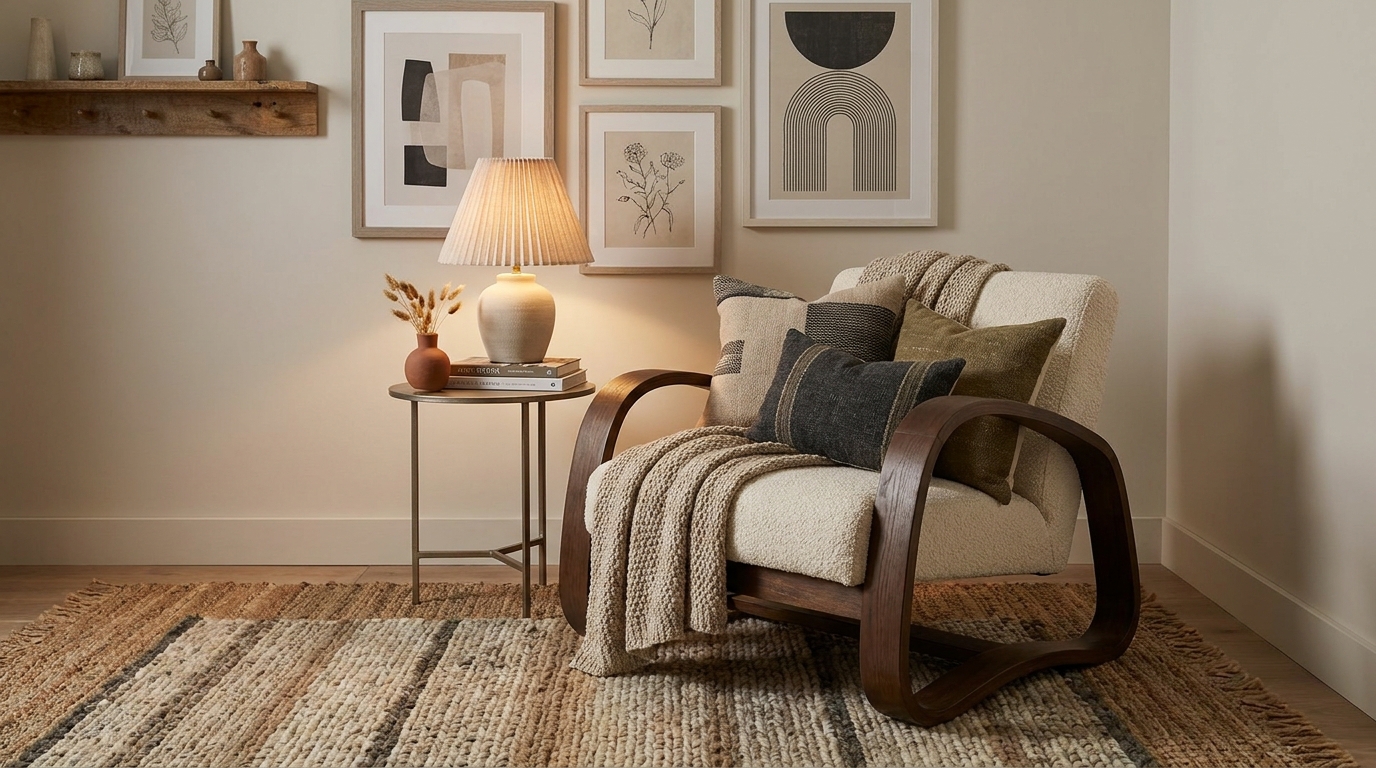
Once you know your design direction, decision making becomes calmer and more economical. Instead of impulsively buying decorative objects that do not belong together, you can choose fewer pieces with greater confidence. This is the beginning of true refinement. A home becomes elegant not when it has the most items, but when the items feel in conversation with each other.
The Investment Piece Philosophy
If there is one principle that defines affordable designer decor, it is this: spend selectively. Research shows that furniture remains the largest home decor product segment in North America, while textiles are among the fastest growing and decorative lighting continues to represent a meaningful category. This supports a practical strategy that designers return to again and again. Invest in one anchor item that shapes the room, then build the atmosphere around it through lower-cost supporting layers.
An investment piece is usually something that affects the room at scale. It might be a sofa with exceptional lines, a dining table in solid wood, a sculptural lounge chair, a bed with beautiful upholstery, or an artisan light fixture. Because these items are visually dominant and used frequently, quality matters. Better construction improves comfort and longevity, and stronger proportions give the room a more tailored appearance. Even if the rest of the room is assembled over time, one anchoring piece can define the entire narrative.
Accent pieces, by contrast, are where you can save more freely. Throw pillows, trays, mirrors, side tables, planters, decorative boxes, and smaller artwork can all be sourced more economically. The goal is not to make them look cheap, but to make them support the overall composition. When the room has one or two strong anchors, these secondary elements need only be tasteful, textural, and appropriately scaled.
This approach also protects your budget from trend fatigue. If you invest heavily in too many statement pieces, the room becomes expensive to update. If your larger purchases are timeless and your accents are flexible, you can refresh the space seasonally or every few years without beginning again from zero. That is the essence of practical luxury: elegance with longevity.
What Makes an Item Worth the Splurge
Before paying more for any item, ask a few disciplined questions. Does it perform an essential function daily. Will it likely move with you to another home. Is the material durable and easy to live with. Are the proportions unusually beautiful. Does it solve a recurring spatial need. When the answer is yes to several of these, the piece is more likely to justify the investment.
A well made sofa is a classic example. It occupies visual and physical territory, it influences how guests gather, and it experiences daily wear. A sofa with a strong frame, resilient cushions, and upholstery in a versatile fabric can serve for many years and set a refined tone for the whole room. The same can be said for a dining table or a bed. These are not impulse purchases. They are architectural elements within the emotional life of the home.
By comparison, highly trend-driven accessories usually deserve a smaller share of the budget. They can be charming and expressive, but they should not carry the financial weight of the room. Save your larger spending for the pieces that shape space, posture, and routine.
Where to Save Without Sacrificing Style
Saving well is an art form. It is not about buying the cheapest version of everything, but about knowing which categories can still look elevated at a lower price point. Textiles are especially powerful here. Since textiles are among the fastest-growing decor segments, the market offers a wide range of appealing choices at different prices. Linen-look curtains, textured cushions, wool-blend throws, and simple bedding can dramatically enrich a room even when sourced affordably.
Artwork is another area where thoughtful restraint pays off. Original art is wonderful, but a home does not need a major collection to feel cultivated. Framed photography, vintage prints, student works, gallery wall studies, or even oversized textured paper pieces can create a graceful visual presence. The trick is to focus on scale and framing. Large art often reads as more expensive than it is, especially when mounted simply and hung with confidence.
Accessories should be edited rather than multiplied. A few sculptural objects with breathing room almost always feel more luxurious than many small items competing for attention. Ceramic bowls, stone trays, glass candlesticks, and books with beautiful spines create atmosphere through composition. If your styling budget is limited, buy less and place each object more intentionally.
Window treatments can also be approached strategically. Custom drapery is exquisite, but ready-made panels hung high and wide can create a similarly refined effect at a fraction of the cost. The key is installation. Place the rod closer to the ceiling and extend it beyond the window frame so the room feels taller and the light feels more generous. This is a designer gesture available to nearly every budget.
The Power of Layering for a Designer Look
Many rooms fail not because the furniture is wrong, but because the space has not been layered. A designer interior feels complete because it considers how surfaces, lighting, textiles, and objects interact throughout the day. Layering introduces depth and softness, which are often what distinguish a home from a catalog arrangement.
Begin with the floor. A rug creates visual architecture. It anchors seating, softens acoustics, and adds pattern or texture without cluttering walls. In living rooms, choose a rug large enough for at least the front legs of major furniture to sit on it. A rug that is too small can make even lovely furniture look unsettled. In bedrooms, a generous rug under the bed adds warmth and a sense of finish.
Then consider textiles at eye and touch level. Cushions, throws, drapery, and bedding are where tactile richness enters the room. Accessible luxury often lives in these details. Washed linen, boucle, brushed cotton, velvet accents, and wool textures catch light differently and make even quiet palettes feel layered. What matters is variation. When all fabrics are similarly flat, the room loses dimension. When textures shift subtly, the room becomes inviting.
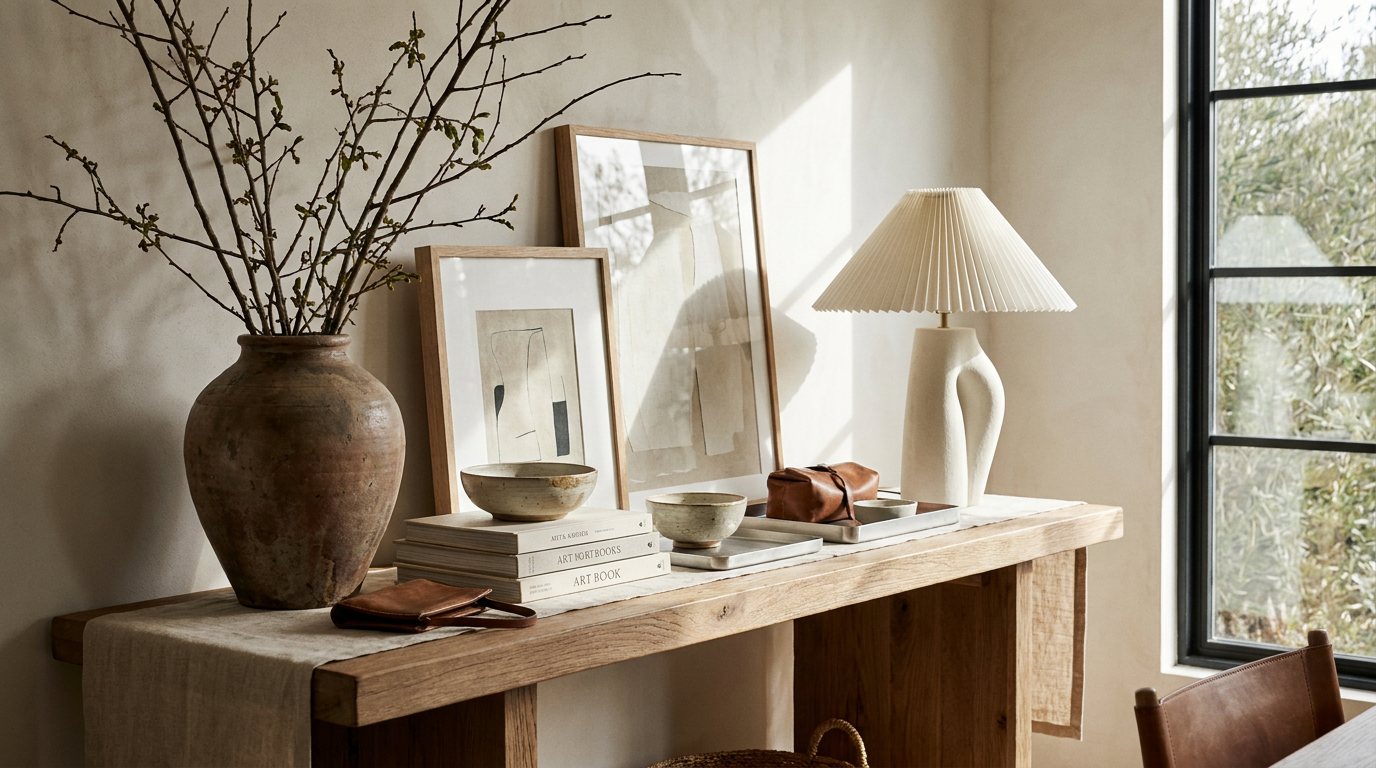
Finally, layer with objects that suggest life rather than display. A tray holding a candle and a small bowl, a stack of books beneath a lamp, a branch in a ceramic vase, or a folded throw draped casually across a chair all humanize a room. They should look considered but not forced. The most elegant homes feel composed, never overly decorated.
Lighting Is the Shortcut to Luxury
If one design category remains consistently undervalued by non-designers, it is lighting. Yet lighting has an extraordinary effect on how a room is perceived. Grand View Research estimated the North America decorative lighting market generated USD 15.2 billion in revenue in 2024, a reminder that homeowners increasingly understand its importance. A room with modest furniture can still feel beautiful under warm, layered light. A room with expensive furniture can feel flat if the lighting is harsh or incomplete.
Designer lighting does not require every fixture to be iconic. What it requires is variety and intention. Most rooms benefit from three types of illumination: ambient light for general glow, task light for function, and accent light for atmosphere. A ceiling fixture alone rarely achieves this. Floor lamps, table lamps, sconces, and even rechargeable accent lamps introduce pools of light that make a home feel softer and more dimensional.
Choose shades and finishes with the same discipline you would bring to furniture. Linen or parchment shades diffuse light beautifully. A ceramic lamp base adds sculptural weight. A metal floor lamp can sharpen a contemporary room, while a pleated shade can bring delicacy to a classic one. The emotional effect of warm light at dusk is one of the most affordable forms of luxury available.
If your budget allows for one decorative lighting splurge, consider a statement pendant above a dining table, in an entry, or over a kitchen island. It functions almost like jewelry in a room. If the budget is tighter, upgrade table lamps and switch bulbs to a warmer, more flattering temperature. Often the transformation is immediate.
Mixing High and Low With Confidence
One of the most persistent misconceptions in decorating is that luxury decor must match throughout a room. In reality, the opposite is often true. Rooms that rely too heavily on one store or one price point can feel predictable. Mixing high and low is what introduces personality and nuance. It also makes a home feel more authentic, because most people build spaces gradually rather than all at once.
The secret is to mix by quality signals rather than by price. Look for good lines, restrained finishes, believable materials, and a coherent palette. A vintage wood stool from a flea market may sit beautifully beside a contemporary sofa if the scale is right and the tones speak to each other. A modest console can look elegant under a distinguished mirror. A mass-market dining chair can be elevated by thoughtful upholstery or by pairing it with a more substantial table.
To keep the room cohesive, repeat one or two visual threads. This may be a specific wood tone, a brushed metal finish, a family of curves, or a palette built around creams and deep browns. Repetition creates rhythm, which in turn creates sophistication. The eye reads continuity as intention.
Do not be afraid of contrast, however. A room becomes memorable when there is a dialogue between elements. Modern and vintage, polished and raw, tailored and organic all create visual tension that enriches the space. Accessible luxury thrives in this balance. It is less about perfection and more about poise.
Choosing Timeless Pieces Over Passing Trends
Every season offers a new flood of desirable shapes, finishes, and color stories. Trends can be delightful, and they should not be dismissed entirely. They keep interiors lively and responsive to cultural shifts. Yet if you are decorating with a budget in mind, it is wise to distinguish between a trend that genuinely reflects your taste and one that simply feels new.
Timeless pieces tend to have clean silhouettes, practical dimensions, and materials that age with dignity. Think oak tables, upholstered headboards in neutral fabrics, classic armchairs, simple stoneware, wool rugs, and understated lighting. These pieces allow a room to evolve around them. They are particularly well suited to the minimalist and Scandinavian-inspired aesthetics that continue to resonate across North America, because those styles favor calm foundations and natural tactility.
Trend-driven styling can then appear in smaller doses. A seasonal cushion color, a lamp shade shape, an accent paint tone, a patterned vase, or a playful side table can all bring freshness without destabilizing the room. In other words, let your investments be timeless and your accents be more experimental. That hierarchy protects both your aesthetic coherence and your finances.
Accessible luxury is not the pursuit of more expensive things. It is the discipline of buying fewer, better, and more enduring things.
This mindset also reduces design fatigue. Rooms built entirely on trends tend to date quickly because they are tied to a specific visual moment. Rooms with strong fundamentals remain graceful even as tastes shift. They invite evolution instead of demanding replacement.
Sustainable Materials and the New Meaning of Luxury
Luxury today is increasingly measured not only by appearance but by values. Buyers are paying more attention to sustainable materials, ethical production, and durability, and market research reflects that shift. Eco-friendly materials and responsible furnishing choices are now central to the decor conversation, not peripheral. For the budget-conscious homeowner, this can be encouraging rather than limiting.
Sustainability often aligns naturally with good design. Solid wood pieces that can be refinished, natural fiber rugs, linen textiles, recycled glass accessories, and vintage furniture all offer character alongside longevity. Choosing a secondhand dresser in beautiful timber can be more sustainable and more visually distinguished than buying a low-quality new piece. The same is true of vintage lighting, antique mirrors, and older occasional tables with strong craftsmanship.
This is where designer decor becomes less about novelty and more about stewardship. A home gains depth when not everything is newly purchased. Collected pieces carry subtle irregularities, patina, and memory. These qualities soften an interior and make it feel grounded. They also support a slower, more intentional approach to buying.
If sustainability matters to you, read product descriptions carefully and ask practical questions. What is the frame made of. Is the wood certified. Can the upholstery be cleaned or re-covered. Is the finish low in harmful emissions. Accessible luxury is often found in pieces that are designed to last rather than designed simply to sell.
Small Spaces Deserve Beautiful Design Too
A limited footprint does not limit the possibility of elegance. In fact, smaller homes and apartments often benefit the most from designer thinking because every object has greater visibility and every square foot must work harder. Current market trends toward multipurpose and space-efficient furniture reflect exactly this reality. Good design in a smaller space is not about fitting more in. It is about choosing smarter pieces and allowing the room to breathe.
Start with furniture that performs more than one role. A storage ottoman, a slim dining table that doubles as a work surface, nesting side tables, or a bed with integrated drawers can reduce visual clutter while preserving comfort. Multipurpose choices do not need to look utilitarian. Many contemporary designs combine elegance with practicality, particularly in natural wood finishes and softly rounded forms.
Mirrors, lighting, and textiles are especially effective in compact spaces. A large mirror can multiply light and visually expand a wall. Wall sconces or plug-in swing arm lamps free surface area. Long drapery panels draw the eye upward and make a room feel more architectural. In a smaller home, these gestures create a sense of generosity without structural change.
Restraint is crucial. A few handsome pieces with room around them feel far more luxurious than a crowded collection of undersized items. Scale matters here. One substantial artwork is often better than many small frames. One well proportioned armchair is better than several awkward occasional seats. Small space luxury is always tied to clarity.
Use Technology to Avoid Expensive Mistakes
The rise of AI recommendations and AR room visualization tools has changed how people shop for furniture and decor, and for budget-conscious buyers this is genuinely useful. One of the greatest hidden costs in decorating is error. A rug that arrives too small, a chair that blocks circulation, or a color that feels wrong under your home’s light can turn a promising purchase into a frustrating expense. Virtual tools help reduce that risk.
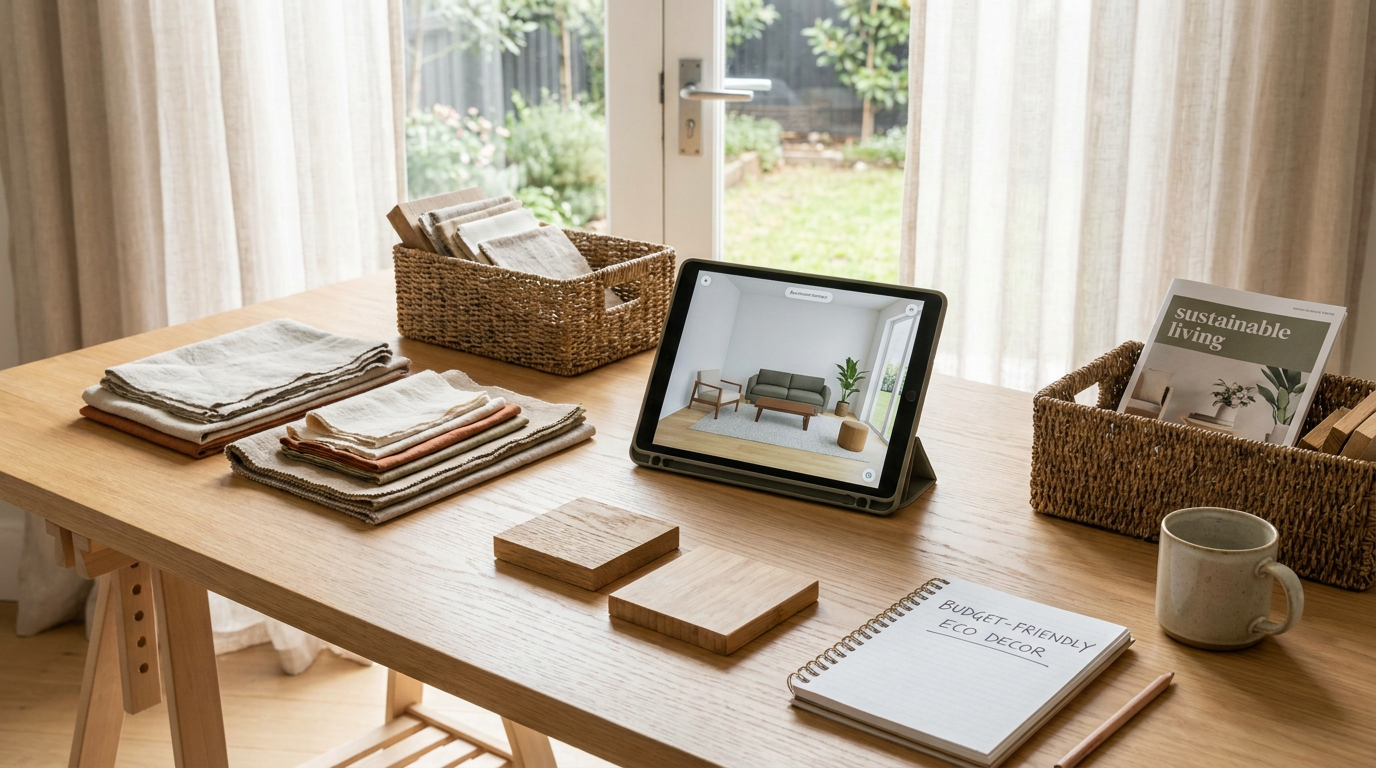
Use room visualization tools to test scale first. Seeing a sofa, lamp, or table in approximate proportion can reveal problems that product photos do not. AI recommendation features can also be helpful when comparing complementary finishes or finding pieces within a similar design language at different price points. They should not replace judgment, but they can support it.
Still, technology works best when paired with old-fashioned observation. Order swatches when possible. Measure repeatedly. Study how morning and evening light alter color. Think about circulation paths and daily habits. A beautiful home is not built by algorithms alone. It is built by aligning visual choices with the way you actually live.
For anyone pursuing accessible designer decor, these tools offer a practical advantage. They make confidence more attainable and help ensure that the pieces you do buy earn their place.
When to Buy and How to Plan Your Budget
The timing of decor purchases matters more than many people realize. Because home-related spending often rises around purchases, moves, and renovations, these moments tend to shape how households allocate money for furnishings. If you are entering a new home or refreshing a room after a renovation, it is wise to divide your decor budget into phases instead of trying to finish everything immediately.
Phase one should focus on essentials and anchors. This includes main seating, a bed, dining surfaces, window treatments for privacy, and foundational lighting. Phase two can bring in rugs, secondary storage, larger art, and occasional tables. Phase three is where accessories, styling objects, and trend touches can enter. Working this way preserves cash flow and reduces the chance of buying filler pieces simply to make a room look complete too quickly.
Current household realities also make this approach sensible. While many adults report doing okay financially or living comfortably, value-oriented design guidance remains important, especially for younger households and those facing tighter margins. There is no shame in decorating slowly. In fact, some of the most elegant interiors emerge over time because they allow for reflection and discernment.
If possible, reserve the largest portion of your budget for the categories that most affect comfort and visual structure. A simple framework can help:
- Anchor furniture: sofas, beds, dining tables, major lounge chairs.
- Architectural softening: rugs, drapery, and lighting.
- Atmosphere: art, mirrors, side tables, and textiles.
- Styling: decorative objects, candles, trays, books, and seasonal accents.
By allocating in this order, you create a room that feels finished in its bones before it is embellished. This is the opposite of panic buying, and it almost always results in a more refined home.
Room by Room: The Smartest Places to Elevate
The Living Room
The living room often offers the greatest return on design investment because it is where people gather, rest, and entertain. Prioritize a strong sofa or a beautifully shaped armchair if your budget permits. Then layer with an affordable rug, warm table lamps, and a few tactile cushions in complementary neutrals. If the room feels sparse, add one oversized artwork or a large mirror rather than many small accessories.
The Bedroom
Luxury in a bedroom is largely sensory. Crisp bedding, a generous headboard, soft bedside lighting, and curtains that filter light elegantly often matter more than decorative abundance. Even budget bedrooms can feel serene and elevated when the palette is quiet and the textiles have variation. Invest in what touches the body first, then add visual softness around it.
The Dining Area
A dining space is transformed by lighting and proportion. A statement pendant above the table can define the room instantly. If the table itself is simple, consider chairs with stronger character or upholstered seats for warmth. A linen runner, ceramic serving pieces, and one sculptural centerpiece can create a composed setting without excess.
The Entryway
The entry is often overlooked, yet it sets the tone for the entire home. A graceful console, a lamp, a mirror, and a tray for essentials can create a wonderfully finished first impression. Because the area is small, even a modest budget can produce a high impact result here. This is an excellent place to introduce one distinctive designer gesture.
The Art of a Home That Feels Collected
Perhaps the most beautiful aspect of designer decor on any budget is that it invites authorship. Instead of asking your home to look expensive, ask it to look considered. Let it reveal what you value: calm, texture, craftsmanship, sustainability, warmth, or simplicity. The result will be more convincing than any attempt to copy a fully styled showroom.
Statistics Canada reported roughly CAD 7.5 billion in sales in December 2025 for the category including home furniture, furnishings, housewares, appliances, and electronics. That continuing consumer demand suggests something important. Home decor is not a remote or elite concern. It is part of how households shape daily experience. The challenge is not whether to care about design, but how to care about it wisely.
Accessible luxury answers that challenge with intelligence. It accepts that budgets differ and that financial realities deserve respect. It also insists that beauty remains worthwhile. A room can be transformed by one elegant chair, one pool of lamplight, one rug that softens the floor, one gathered branch in a handmade vase. These are not extravagant gestures. They are attentive ones.
As the global home decor market continues to grow, projected by Grand View Research to rise from about USD 960.1 billion in 2024 to USD 1.62 trillion by 2030, homeowners will have even more options, more tools, and more inspiration available to them. The wisest response is not to buy more indiscriminately. It is to refine your eye, trust proportion, value longevity, and allow your home to become beautiful layer by layer.
In the end, the most luxurious rooms are not necessarily the most expensive. They are the rooms that feel balanced, deeply personal, and quietly complete. They understand that design is not about performance. It is about atmosphere. And atmosphere, when composed with care, is available at every budget.



No Comment! Be the first one.