



There is a profound difference between a room that is merely furnished and a room that feels truly inhabited. Furniture may establish function, and materials may define quality, yet it is often art that brings intimacy, memory, and soul into a home. A well chosen artwork has the quiet ability to gather a room around it. It can soften strict architecture, deepen a restrained palette, and offer an emotional center that transforms a practical interior into a personal sanctuary.
Table Of Content
- Why Art Matters in Interior Design
- Begin with the Room, Not the Artwork
- The Essential Role of Scale and Proportion
- How to Build Cohesion Without Losing Personality
- Selecting Art for Different Rooms
- Living Rooms: Art as the Social Anchor
- Bedrooms: A Language of Calm
- Dining Rooms: Art That Encourages Gathering
- Home Offices: Focus, Clarity, and Inspiration
- Hallways and Transitional Spaces: Rhythm and Discovery
- Statement Piece or Gallery Wall?
- The Power of Framing, Matting, and Presentation
- Mixing Originals, Prints, Textiles, and Objects
- Creating a Personal Sanctuary Through Art
- Common Mistakes to Avoid
- A Practical Approach to Choosing Art for Your Home
- Designing with Art for the Long Term
Harmonizing art in home design means selecting and placing artwork so that it responds to a room’s architecture, scale, color, texture, and mood rather than simply filling wall space. The goal is not to match art exactly to a sofa or rug, but to create a visual conversation between the artwork and its surroundings through a shared color, shape, texture, or feeling. Successful art integration starts with reading the room itself: its light, proportions, furnishings, and intended use, before choosing a piece. Scale is the most decisive factor, since art above a sofa, bed, or console should relate clearly to the width and mass of the furniture beneath it. From there, presentation matters as much as the art itself: thoughtful framing, matting, and lighting can transform a modest print into a considered design element. Whether a home relies on one statement piece or a curated gallery wall, the same principle holds: art becomes part of the architecture, not an afterthought placed on top of it.
Today, art is no longer treated as an afterthought reserved for the final stages of decorating. Across North American interiors, and especially in homes shaped by a renewed appetite for warmth, texture, and individuality, art has become a central design strategy. This shift reflects a broader movement away from interiors that feel too perfect or too uniform. In their place, homeowners are embracing layered spaces that reveal personality, support well being, and feel collected over time.
This approach is not entirely new. Domestic art has long served as a visual language of identity, taste, memory, and aspiration. Historical interiors used pictures and decorative objects to communicate values and social life, and modern homes continue that tradition in a more intimate and expressive way. When we select art for our living rooms, bedrooms, hallways, and workspaces, we are not simply filling walls. We are shaping atmosphere, telling stories, and building a visual identity around how we want to live.
The beauty of art integration lies in its dual nature. It is both emotional and structural. It can be poetic, yet it must also respond to scale, placement, proportion, colour, and rhythm. A successful room does not ask art to match every finish exactly. Instead, it allows art to converse with the architecture, furnishings, textiles, and light. This conversation is what creates depth and cohesion.
In this guide, we will explore how to integrate art into home design with elegance and intention. From choosing the right scale to creating visual harmony across materials and mood, these principles will help you build spaces that feel curated rather than crowded, expressive rather than chaotic, and timeless rather than trend bound. Whether you are styling a compact city apartment or a spacious family home, art can become the thread that makes every room feel distinctly yours.
Why Art Matters in Interior Design
Art brings a human dimension into design. While architecture provides structure and furniture supports daily life, art introduces interpretation. It invites reflection, emotion, and connection. A room without art can sometimes feel unresolved, as though its surfaces are complete but its spirit has not yet arrived. Even the most beautiful furnishings benefit from a visual anchor that adds presence and individuality.
One of art’s greatest gifts is its ability to define mood. A soft abstract in mineral tones can create serenity in a bedroom, while a vivid figurative work can energize a dining room and encourage conversation. Photography may lend narrative, sculpture may introduce tactility, and textiles may soften a clean lined space with warmth. In this sense, art is not just decoration. It helps determine how a room feels and how people move through it emotionally.
There is also a social and personal dimension at work. Art in the home often reflects what we value, what we remember, and what we wish to surround ourselves with. A framed print acquired while travelling, a work by a local Canadian artist, or a collection of black and white photographs can all become part of a home’s biography. These pieces shape a sense of belonging that no generic styling can replicate.
Current interior trends have made this role even more significant. As warmer palettes, tactile materials, vintage accents, and personality driven styling take center stage, art is increasingly used to connect disparate elements into one cohesive narrative. It can bridge old and new, polished and handmade, quiet luxury and expressive detail. It allows a room to feel refined without becoming impersonal.
Thoughtful art integration turns a room into a story. It gives context to beauty, emotion to structure, and identity to design.
Begin with the Room, Not the Artwork
One of the most effective ways to integrate art gracefully is to begin by reading the room itself. This means looking carefully at the architecture, natural light, existing furnishings, finishes, and how the room is used. Before choosing any piece, ask what the space needs. Does it need softness, energy, scale, contrast, colour, or calm? Art becomes far more powerful when it responds to these questions instead of competing with them.
A room with strong architectural lines and restrained furnishings may benefit from expressive or textured art that adds movement. A richly layered room with patterned upholstery and vintage pieces may call for something quieter that brings balance. In an open concept home, artworks may also help define subtle zones. A large canvas above a sofa can anchor the living area, while a more intimate grouping in the dining corner can create a distinct atmosphere without the need for physical division.
It is useful to think of art as part of a larger design system. Start with the emotional intention of the room. A living room may be meant for gathering and conversation, a bedroom for restoration, a hallway for transition, and a home office for focus. Once the mood is clear, the selection of artwork becomes more intuitive. You are no longer asking what looks good in isolation. You are asking what completes the experience of the space.
This approach also helps avoid a common misconception that art must perfectly match the sofa, rug, or wall colour. Exact matching often flattens a room instead of enriching it. A more sophisticated result comes from identifying one or two visual threads that can connect the artwork to the interior. These might include a repeated tone, a similar curve, a shared material quality, or simply a related feeling.
The Essential Role of Scale and Proportion
If there is one principle that most consistently determines whether art feels integrated or accidental, it is scale. A piece that is too small for the wall or the furniture beneath it can make a room feel fragmented and visually timid. This is one of the most frequent decorating errors, and it often happens because people underestimate how much presence artwork needs in order to hold a space together.
Above a sofa, bed, console, or sideboard, art should relate clearly to the width and mass of the furniture below. The goal is not rigid symmetry but visual balance. A generously scaled piece can act as a hero element, grounding the room and creating an immediate focal point. In contrast, a small frame floating alone on a large wall may feel lost unless it is intentionally part of a sparse, gallery like composition.
Large scale works are especially effective in contemporary interiors where furniture profiles are often lower and cleaner. They provide weight, rhythm, and a sense of confidence. In homes that lean more traditional or collected, a series of medium pieces can accomplish a similar effect when arranged with precision. The important point is that the art must hold its own within the room’s proportions.
Scale also influences emotion. Oversized art can feel immersive and bold, making a room more dramatic or enveloping. Smaller pieces invite intimacy, which can be ideal for reading corners, hallways, dressing areas, or beside a writing desk. Transitional spaces in particular benefit from artworks that create rhythm as one moves through the home. They need not dominate, but they should contribute continuity.
When in doubt, test the proportions before committing. Use paper templates, painter’s tape, or digital mockups to outline the size on the wall. This simple exercise often reveals whether a piece will feel elegant and anchored or visually underpowered. The room will tell you what it needs if you give yourself the chance to see it clearly.
How to Build Cohesion Without Losing Personality
Cohesion is often misunderstood as sameness. In truth, the most beautiful interiors are rarely built from exact repetition. They are built from relationships. Art does not need to match every element in the room, but it should enter into dialogue with its surroundings. That dialogue might happen through colour, material, form, line, subject matter, or mood.
A practical method is to repeat at least one quality from the artwork elsewhere in the room. If the painting contains warm terracotta, that tone might reappear in a cushion, ceramic vase, or vintage rug. If the art has curved organic forms, those shapes might be echoed in a rounded armchair, arched lamp, or sculptural table base. If the piece has a matte, earthy texture, a boucle chair or limewashed wall can reinforce that tactile sensibility.
This principle is particularly useful in today’s interiors, where tactile surfaces and layered materials are central to the overall mood. Warm woods, stone, linen, wool, patinated metals, and handcrafted objects all create a richer backdrop for art than glossy, overly uniform settings. The room begins to feel composed rather than decorated. Every element supports the others, yet each retains its own character.
Personality enters through the courage to allow some contrast. A minimalist room may benefit from a painting with depth and expressive brushwork. A classic interior may come alive with contemporary photography. A moody space with dark walls may glow when paired with luminous abstract art. Contrast, when handled thoughtfully, prevents elegance from slipping into predictability. It is often what gives a room its pulse.
Rather than asking whether a piece matches perfectly, ask whether it belongs to the same visual world. Shared mood and intentional repetition often create more sophistication than direct coordination ever could.
Selecting Art for Different Rooms
Living Rooms: Art as the Social Anchor
The living room is often the most public and layered space in the home, which makes it an ideal place for art that anchors the atmosphere and invites conversation. Here, a single large statement piece can establish the room’s emotional register immediately. It might introduce a colour story that ties together upholstery and accessories, or it might create a deliberate point of tension that lifts a neutral interior into something more memorable.
If your living room includes several seating zones, consider how art can clarify hierarchy. The main wall may call for a hero work, while adjacent walls can host smaller pieces or sculptural objects that maintain rhythm without competing. Art in a living room should feel socially generous. It should have enough presence to gather people, but enough nuance to reward repeated viewing.
Layering is especially effective here. A framed work above a mantel can be balanced by ceramics on a nearby shelf, a sculptural lamp, or a textile hung in a secondary corner. The result feels lived in and curated, which aligns beautifully with the shift away from interiors that appear too polished or too staged.
Bedrooms: A Language of Calm
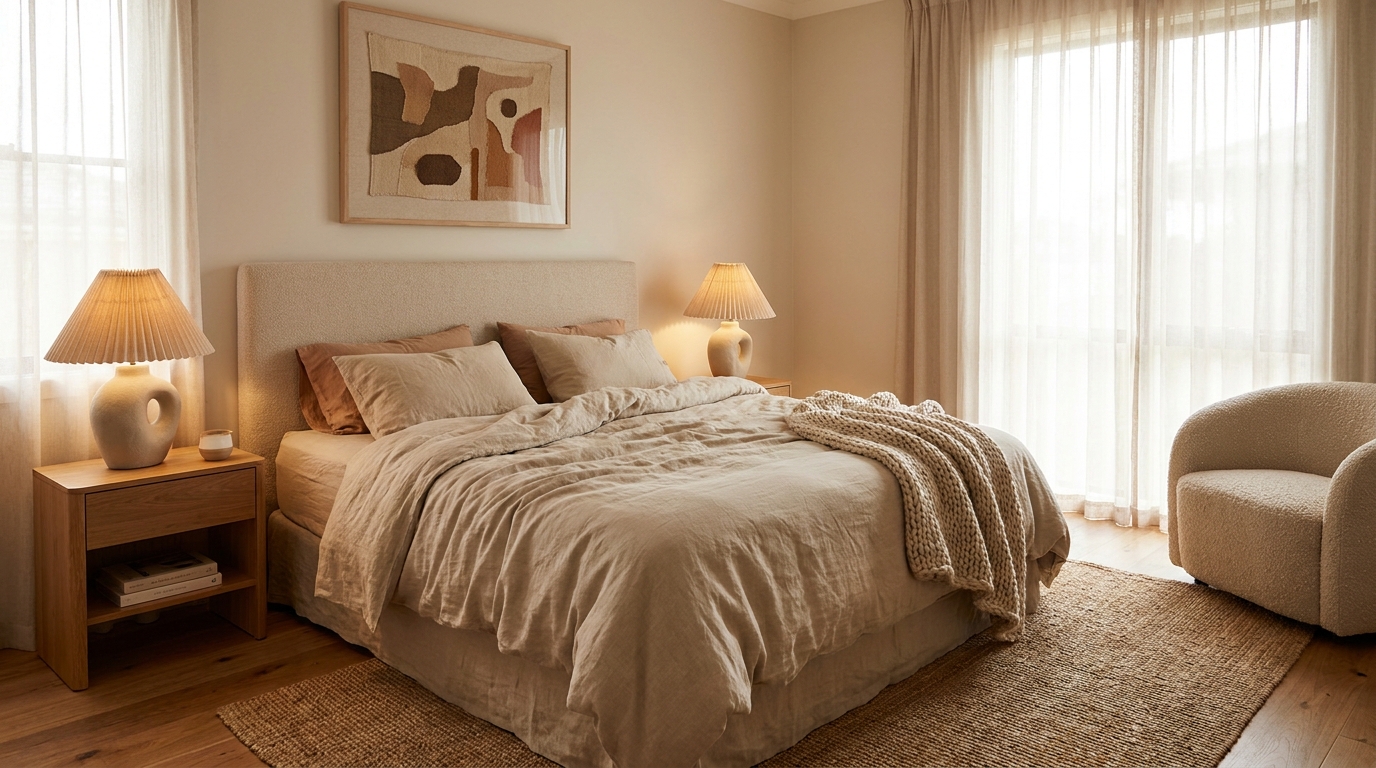
Bedrooms ask for a more delicate approach. Art in these spaces should support rest, privacy, and emotional softness. This does not mean it must be pale or predictable. Rather, it should offer a sense of quiet resonance. Atmospheric landscapes, abstract compositions in muted tonal ranges, intimate photography, and textile based pieces often work especially well.
Placement above the bed is a natural choice, though scale remains essential. The artwork should feel generous enough to balance the width of the headboard. A pair of related works can also create symmetry and poise, particularly in more classic interiors. For a softer, more contemporary mood, a single horizontal piece often feels effortless and calm.
The bedroom is also an excellent place to choose art based on emotion rather than trend. Ask what helps you exhale. What image, palette, or texture brings ease rather than stimulation? The answer may lead you to something deeply personal and unexpectedly beautiful.
Dining Rooms: Art That Encourages Gathering
In the dining room, art contributes to hospitality. It can make the space feel warmer, more intimate, and more ceremonial. Richer colours, figurative works, still lifes, and pieces with layered detail tend to perform well here because they reward lingering attention. Dining rooms often benefit from art that feels slightly more dramatic than what you might choose for a bedroom, particularly when paired with dimmable lighting and tactile materials.
If the dining area is open to a kitchen or living room, let the art connect the zones through repeated tones or framing styles. This creates continuity while allowing each area to retain a distinct mood. Even a modest dining nook can feel elevated by one well proportioned artwork and beautiful lighting.
Home Offices: Focus, Clarity, and Inspiration
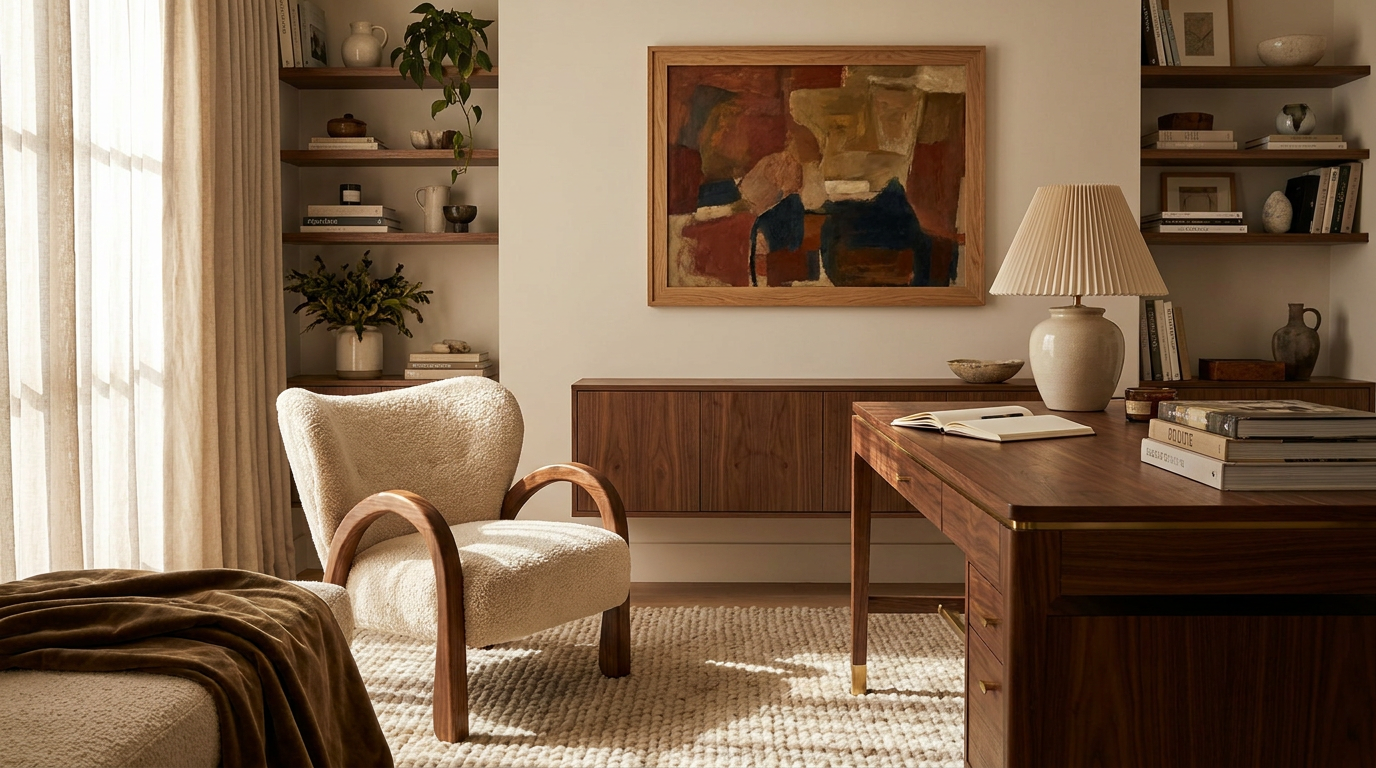
The home office occupies a special position in contemporary life. It must support concentration, yet it should not feel sterile. Art can bring exactly the right amount of inspiration and visual relief. In these spaces, medium scale works often perform best, especially near a desk or on the wall visible during breaks and moments of reflection.
Choose pieces that sharpen the mind rather than scatter it. Clean compositions, architectural photography, abstract works with defined rhythm, or quiet graphic prints can all contribute to a sense of focus. If the office is compact, art can also help establish a professional identity and make the room feel intentional instead of improvised.
Hallways and Transitional Spaces: Rhythm and Discovery
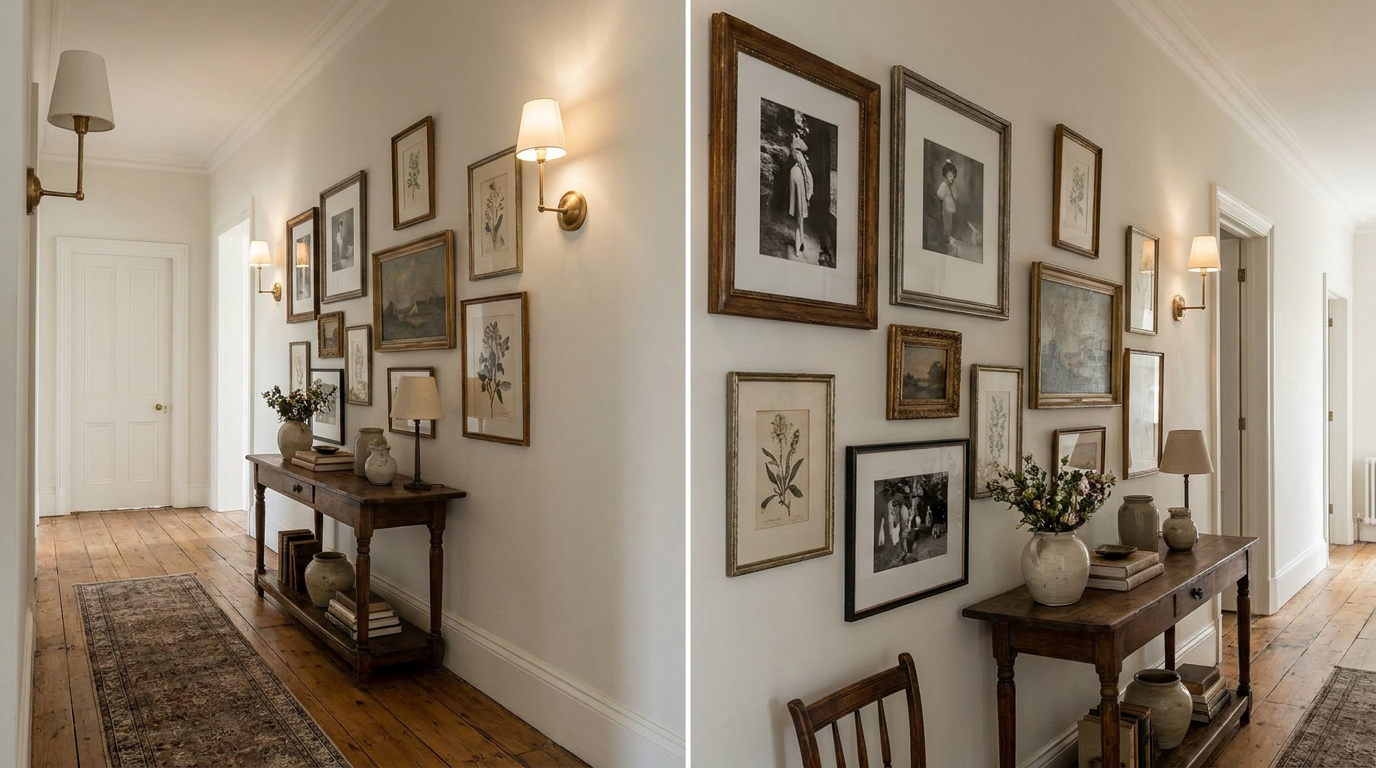
Hallways are often overlooked, yet they are ideal for smaller works that create visual rhythm and narrative. Because these spaces are transitional, art here can function almost cinematically, guiding movement and revealing personality gradually. A series of related photographs, drawings, or collected frames can make a passageway feel intentional and intimate.
These are also wonderful places for experimentation. A hallway gallery wall, when carefully composed, can express a more eclectic side of the home while remaining cohesive through shared framing, palette, or spacing. Transitional spaces remind us that art does not need to be reserved for major walls. Even a narrow corridor can become a graceful moment of beauty.
Statement Piece or Gallery Wall?
Many homeowners assume that a gallery wall is the best way to fill space, yet this is not always true. Sometimes a single substantial work brings far more elegance and clarity than a cluster of smaller frames. A statement piece creates immediate hierarchy. It signals confidence and allows the eye to rest. This approach is particularly effective in rooms where the furnishings are already layered or where architectural simplicity calls for one strong focal point.
Gallery walls, by contrast, are about rhythm, collection, and narrative. They suit spaces where a more personal and evolving expression is desired. Family photography, travel prints, sketches, vintage finds, and contemporary art can coexist beautifully when arranged with discipline. The secret lies in creating enough consistency to make the arrangement feel intentional. This may come through repeated frame finishes, a unified colour family, balanced spacing, or a clear layout.
Neither approach is inherently more stylish. The right choice depends on the architecture of the wall, the emotional tone of the room, and the degree of visual complexity already present. In a calm bedroom, one restrained piece may feel perfect. In a staircase or long hallway, a gallery wall may create the movement and interest the space needs. The most refined homes often use both approaches in different rooms, allowing each one to serve a distinct purpose.
The Power of Framing, Matting, and Presentation
Even beautiful art can lose impact if it is poorly framed. Framing is not merely protective. It is interpretive. It determines how a piece sits within the room, how much presence it commands, and how elegantly it bridges the space between art and architecture. The frame should respect both the artwork and the surrounding interior.
In quiet luxury inspired interiors, natural wood, black, bronze, and softly patinated metal frames often work beautifully because they feel timeless and tactile. In more classical spaces, deeper profiles and generous mats can lend grace and formality. Contemporary rooms may favour slimmer frames and float mounting for a cleaner look. What matters most is consistency of intention. A frame should never feel like an afterthought.
Matting can be especially transformative for smaller works. A generous mat gives a modest piece more visual significance and breathing room, helping it hold its own on the wall. This is useful when integrating prints, photography, or intimate drawings into larger rooms. Good presentation does not make art feel more expensive. It makes it feel more considered.
Lighting deserves equal attention. Picture lights, adjustable sconces, and directional ceiling fixtures can all elevate the way art is perceived, particularly in the evening when natural light fades. Gentle illumination adds depth, draws the eye, and reinforces the sense that art belongs to the architecture of the room.
Mixing Originals, Prints, Textiles, and Objects
An elegant interior does not require every piece to be an expensive original. This is one of the most limiting myths in home styling. Sophistication comes from curation, scale, quality, and context. A carefully framed print, a striking photographic edition, a woven wall textile, or a sculptural ceramic can all contribute meaningfully to a room’s identity.
In fact, mixing mediums often creates a richer result than relying solely on framed canvases. A home feels more layered when visual art is joined by tactile forms. Consider the quiet beauty of a linen wall hanging in a bedroom, a stone object on a console, or a hand glazed vessel that echoes the colours of a nearby painting. These combinations blur the line between art and decor in the most graceful way.
This layered approach aligns beautifully with current interest in handcrafted and sculptural interiors. It also supports more sustainable design choices. Rather than purchasing trend driven wall decor in haste, homeowners can build a collection slowly, combining local artwork, vintage discoveries, inherited pieces, and a few strategic new acquisitions. The result is not only more personal. It is more enduring.
For Canadian homeowners especially, supporting local artists and makers can bring regional identity into the home while investing in work with integrity and longevity. There is a particular pleasure in living with pieces that carry a sense of place, whether through subject, material, or maker. These choices make the home feel rooted as well as beautiful.
Creating a Personal Sanctuary Through Art
The idea of home as a sanctuary has taken on deeper importance in recent years. Interiors are increasingly expected to do more than impress. They must also restore, protect, and support emotional well being. Art plays a vital role in this shift because it shapes not only how a room looks, but how it feels to inhabit.
When choosing art for a sanctuary minded home, begin with emotional intention. Ask what you want to feel when you enter the room. Calm, inspiration, tenderness, energy, nostalgia, focus, openness, groundedness. Then choose works that embody that feeling, even if they do not follow a trend exactly. The emotional truth of a piece matters more than its immediate popularity.
Wellness driven interiors often include mood specific zones such as reading corners, meditation areas, breakfast nooks, or conversation spaces. Art can gently define these zones and deepen their purpose. A small contemplative work beside an armchair can turn a corner into a retreat. A textured abstract in the entry can create an immediate sense of welcome and release from the outside world. A meaningful photograph in the kitchen can make the most practical room feel personal and alive.
Sanctuary does not mean emptiness. It means resonance. A home can be layered, warm, and expressive while still feeling restful. In fact, many people feel more at ease in spaces that contain memory, artistry, and signs of the hand. Art helps transform rooms from polished settings into emotional landscapes.
Common Mistakes to Avoid
One of the most common mistakes is hanging artwork too high. Art should generally relate to human scale and to the furniture nearby. When it floats too close to the ceiling, it disconnects from the room and loses intimacy. Another frequent error is selecting pieces that are too small, especially above substantial furniture. Underscaled art can make even expensive interiors feel unfinished.
A second mistake is pursuing perfect colour matching at the expense of depth. When every tone is repeated too literally, the room may feel flat. Instead, aim for harmony with some variation. Complementary contrast, repeated shapes, or shared texture can create far more sophistication than exact matching.
It is also easy to overcrowd walls in the desire to express personality. Not every surface needs a frame. Negative space is part of the composition. It allows important pieces to breathe and gives the eye places to rest. Curation is as much about restraint as it is about selection.
Finally, avoid treating art as a final filler purchase. The most successful interiors consider art early in the design process, alongside furniture, lighting, and finishes. This leads to better scale, better placement, and a stronger relationship between the room’s function and its visual identity.
A Practical Approach to Choosing Art for Your Home
If you are starting from the beginning, a clear process can make the experience both easier and more rewarding. Begin by observing the room in daylight and evening light. Note the dominant materials, the key sightlines, and where the eye naturally pauses. Then define the emotional purpose of the space. This will guide whether the art should soothe, energize, provoke, or simply unify.
Next, consider the size and placement before shopping. Knowing whether you need one large horizontal work, a vertical series, or a salon style arrangement will keep your search focused. Once proportions are established, build a palette map using a few dominant colours and textures already in the room. This does not mean the art must match them exactly. It simply helps you assess whether a piece will converse well with its surroundings.
As you narrow your options, evaluate each piece through both aesthetic and emotional criteria. Does it improve the balance of the room? Does it add texture or movement where needed? Does it feel memorable after you look away? Most importantly, do you want to live with it every day? A beautiful home is not built from objects that merely coordinate. It is built from choices that continue to speak.
- Study the room first and identify what is missing visually and emotionally.
- Determine scale and placement before browsing, so selections remain grounded in proportion.
- Look for visual links such as repeated colour, line, shape, or texture.
- Choose for mood as well as style, especially in bedrooms, offices, and sanctuary spaces.
- Invest in presentation through framing, matting, and thoughtful lighting.
- Build gradually with a mix of originals, prints, textiles, and sculptural pieces that feel collected over time.
Designing with Art for the Long Term
The most compelling homes are rarely completed in one season. They evolve with time, travel, memory, and taste. Art is uniquely suited to this slower rhythm. It can be acquired gradually, rearranged thoughtfully, and layered into the home as your life changes. This is one reason why art integration feels so enduring. It allows a house to become more itself over time.
Long term thinking also encourages better decisions. Rather than buying a piece simply because it echoes a trend, consider whether it will still resonate when the room shifts. Strong art tends to remain relevant because its value lies not in fashion but in feeling, composition, and presence. The same can be said for quality framing, durable materials, and pieces chosen from local makers or trusted sources.
As interiors move further toward personalization, sustainability, and collected beauty, art will only become more central to home design. It offers a way to resist disposable decor and build spaces with memory and meaning. It rewards attention, and it grows richer as the home evolves around it.
Ultimately, harmonizing art in home design is not about following rigid formulas. It is about learning to see relationships between object and atmosphere, scale and feeling, colour and memory. When art is integrated with care, a room becomes more than attractive. It becomes articulate. It begins to express not only what you love, but how you live.
That is the true elegance of art in the home. It does not simply adorn the walls. It gathers beauty into daily life, gives emotional contour to space, and turns design into something deeply personal. In that transformation, a home becomes what it was always meant to be: a sanctuary with a point of view.


No Comment! Be the first one.