



There was a time when modular furniture was perceived as a purely practical choice, something selected for student flats, temporary layouts, or utilitarian commercial spaces. That impression has changed dramatically. Today, modular furniture has entered a more refined chapter, one shaped by graceful silhouettes, premium materials, and thoughtful engineering.
Table Of Content
- Why Modular Furniture Belongs in the Modern Home
- The Design Evolution of Modular Furniture
- Elegance Meets Everyday Function
- Common Misconceptions About Modular Furniture
- How Modular Furniture Supports a More Sustainable Home
- Where Modular Furniture Works Best in the Home
- Living Rooms
- Home Offices
- Bedrooms
- Entryways and Transitional Spaces
- Larger Open-Plan Homes
- How to Choose Elegant Modular Furniture
- Styling Tips for a Cohesive Look
- Practical Ways to Integrate Modular Furniture Into Any Aesthetic
- The Future of Modular Furniture
- Conclusion: A Graceful Answer to Contemporary Living
- Quick Design Checklist for Buying Modular Furniture
Modular furniture is furniture built from independent units, or modules, that can be added, removed, combined, or rearranged to reconfigure a room as a household’s needs change, rather than requiring an entirely new purchase. It now speaks not only to convenience, but also to beauty, permanence, and the evolving rhythm of contemporary life.
For modern homeowners, the appeal is easy to understand. Homes are working harder than ever before. A living room may need to host a family movie night, a quiet morning of remote work, and an evening of entertaining in the same day. Bedrooms often borrow space for reading corners or compact desks, while entryways are expected to store, organize, and welcome at once. In this landscape, modular furniture offers a compelling answer because it combines sophistication and adaptability without forcing one to compromise the other.
Across North America, this approach to furnishing has become especially relevant. Research and industry reporting consistently identify the region as a strong market for modular furniture, supported by demand across residential interiors, offices, hospitality spaces, and hybrid-use environments. While methodologies vary across commercial market reports, the broader direction is clear: people increasingly value furniture that can be reconfigured over time rather than replaced entirely. This shift reflects more than a passing trend. It points to a larger desire for homes that feel intentional, flexible, and enduring.
What makes modular furniture so elegant is not merely its ability to move or expand. True elegance lies in its quiet intelligence. A beautifully designed modular sofa can contour itself to a room with the same ease as a bespoke installation. A modular shelving system can frame a wall with architectural clarity while still adapting as books, objects, and routines change. The most successful designs conceal their practicality within a polished visual language, allowing a room to feel composed rather than improvised.
This article explores how modular furniture elevates interiors while supporting real everyday needs. From compact apartments to larger family homes, from living rooms to home offices, modular design offers a versatile foundation for modern life. With the right eye for proportion, materiality, and placement, these pieces become more than furniture. They become instruments of graceful living.
Why Modular Furniture Belongs in the Modern Home
Modern homes are shaped by movement. Families grow, routines shift, children need more space, work enters the home, and social habits evolve. Traditional furniture often asks a household to commit to one fixed arrangement for years. Modular furniture offers a different philosophy. It accepts change as a natural part of living and responds with pieces that can be expanded, reduced, rotated, or repurposed according to need.
This quality is particularly valuable in urban apartments, townhomes, and multipurpose spaces where every square foot matters. A sectional that can separate into individual seats, a storage system that grows vertically, or a desk arrangement that adapts to seasonal work habits can make a room feel more generous and more composed. Rather than cluttering a home with additional furniture every time needs change, modularity allows one to refine what is already there. That sense of continuity is not only practical, but aesthetically calming.
North American lifestyles have made this flexibility even more relevant. Hybrid work has changed how many people use their homes, and design conversations increasingly revolve around adaptable rooms rather than single-purpose spaces. At the same time, homeowners are becoming more selective about what they buy. There is a visible shift toward fewer, better pieces that can justify their place over the long term. Modular furniture answers that desire elegantly because it can evolve with the household rather than become obsolete the moment a layout changes.
Importantly, modular furniture is not confined to one visual style. It can feel minimal and architectural, warm and organic, or softly luxurious with tactile upholstery and curved profiles. Recent design coverage has highlighted how contemporary modular systems are becoming more refined, with concealed connectors, sculpted forms, and premium finishes that reduce the old trade-off between function and style. In other words, modular furniture no longer looks like a compromise. In many interiors, it looks like the most intelligent choice in the room.
Elegance in contemporary interiors is increasingly defined by adaptability. The most beautiful spaces are often those that can respond gracefully to real life.
The Design Evolution of Modular Furniture
To appreciate modular furniture today, it helps to understand how far it has come. Earlier modular formats often leaned heavily toward utility. Straight lines, visible connectors, and repetitive forms made them efficient, but not always emotionally inviting. The latest generation is different. Designers are treating modularity as a creative framework rather than a limitation, which has led to pieces that feel softer, warmer, and far more integrated into the language of luxury interiors.
One of the most notable changes is the use of materials. Rich woods, tailored upholstery, stone-inspired surfaces, brushed metals, and textured fabrics now appear regularly in modular collections. This shift matters because materiality is what gives furniture its atmosphere. A modular bookshelf in oak veneer or walnut can feel timeless and architectural. A sectional upholstered in bouclé, velvet, or fine woven linen can become as visually compelling as any fixed-frame sofa. The modular structure remains, but the emotional effect is elevated.
Another evolution is in the engineering. Hidden brackets, seamless junctions, and carefully aligned proportions allow pieces to look intentional from every angle. Instead of appearing like separate units pushed together, well-designed modular furniture reads as one coherent composition. That visual unity is essential in elegant interiors, where cluttered mechanics or awkward seams can interrupt the calm of a room. When details are handled with precision, modular pieces feel serene and resolved.
The forms themselves have also matured. Many of today’s modular collections feature rounded corners, low profiles, generous cushions, and sculptural silhouettes that soften a room. This is especially appealing in homes where people want visual comfort without excess ornament. Modular design can be sleek, but it can also be sensual. It can carry the understatement of modernism while still offering warmth and hospitality.
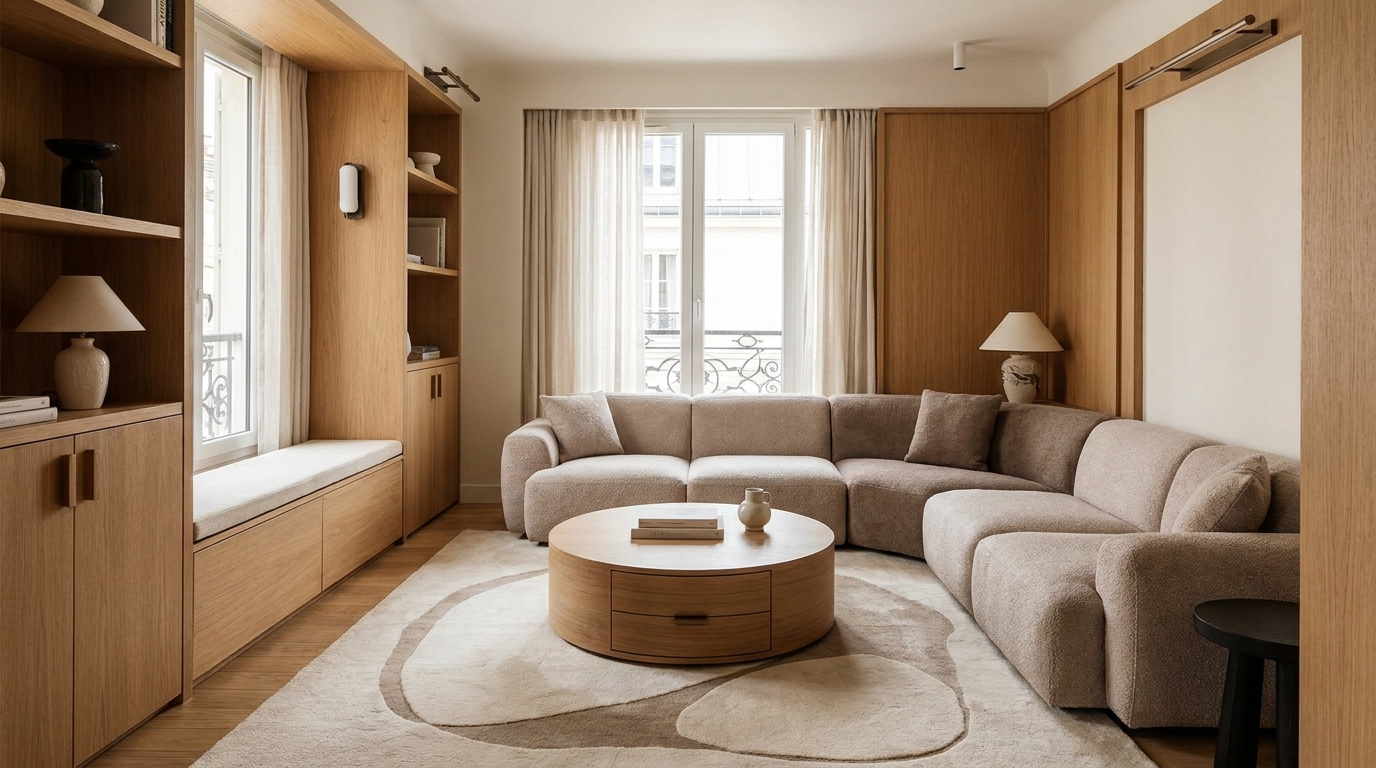
Perhaps most significantly, modular furniture is now being discussed as part of a larger design strategy. It is no longer limited to the famous sectional sofa. Shelving, desks, bed systems, storage cubes, media units, benches, and even hospitality furniture can be modular. This broader application allows homeowners to create continuity across rooms. A living room seating system, an entry storage composition, and a home office wall unit can all share the same finishes, proportions, and visual tone, creating a house that feels carefully curated rather than pieced together over time.
Elegance Meets Everyday Function
Good design should support life quietly. That is where modular furniture excels. It solves practical problems without demanding attention for the solution itself. A modular piece can offer hidden storage, flexible seating, adjustable scale, or simple portability, yet still contribute to an interior with poise. This dual quality is what makes it so compelling for homeowners who want a home that looks sophisticated but also works effortlessly day after day.
Take the living room, for example. In many homes, this space must perform multiple social roles. It may need to host intimate evenings, larger gatherings, lounging, reading, and screen time. A modular sofa allows the room to shift between those moods. Individual modules can open a circulation path, create a more conversational arrangement, or expand the seating capacity for guests. Instead of forcing the room into one rigid plan, the furniture participates in its changing atmosphere.
Storage is another area where modularity reveals its elegance. Traditional storage often imposes a fixed rhythm on a room, which can be helpful until needs change. Modular storage systems are more responsive. They can begin as a low composition under a window, then grow upward into a full shelving wall. They can display books and objects today, then transition to office storage or media organization tomorrow. Because the system retains a consistent visual language, these changes do not feel disruptive. The room evolves while its identity remains intact.
In smaller spaces, this balance between function and beauty becomes especially valuable. A compact apartment cannot afford furniture that is only decorative, yet purely functional pieces can make a home feel cold or temporary. Modular furniture creates a middle ground that is far more livable. It allows a room to stay polished while working hard behind the scenes. That is practical luxury in its truest sense.
Common Misconceptions About Modular Furniture
Despite its growing popularity, modular furniture is still sometimes misunderstood. One of the most persistent misconceptions is that modular design is inherently lower quality. In reality, quality depends on craftsmanship, materials, hardware, upholstery, and joinery, not on whether a piece is modular. A beautifully made modular sofa with durable internal framing and premium fabric can outlast a poorly built conventional sofa with ease.
Another misunderstanding is that modular furniture must look bulky or utilitarian. While that may have been true of some older systems, many current designs are remarkably refined. Concealed connectors, elegant detailing, and carefully balanced forms make contemporary modular pieces feel composed and sophisticated. In some cases, their flexibility actually allows for more graceful spatial arrangements than fixed furniture can provide.
There is also a tendency to associate modular furniture only with small homes. Certainly, it is highly effective in compact interiors, but larger homes benefit just as much. In expansive rooms, modular furniture can help define zones, support entertaining, and allow layouts to be refreshed without starting from scratch. It can create intimacy in an open-plan environment or increase flexibility in a family room that hosts many kinds of activity.
Finally, modular furniture is often reduced to sofas and sectionals alone. That narrow view misses the richness of the category. Modular systems can shape bedrooms, offices, entryways, dining areas, media rooms, and children’s spaces. Seen in this broader way, modularity becomes less about one product and more about a design mindset rooted in adaptability, continuity, and intelligent space planning.
How Modular Furniture Supports a More Sustainable Home
Sustainability has become one of the defining values in contemporary design, and modular furniture aligns with it naturally. At its best, modularity supports a longer product life cycle because it reduces the need to replace an entire piece when only one part no longer suits the household. A homeowner may add seating modules, swap covers, replace a damaged component, or reconfigure a system for a new room. Each of these possibilities extends usefulness and reduces waste.
This approach resonates strongly with current design priorities. Recent home trend reporting points toward more intentional, long-lasting purchases and away from fast turnover. People are increasingly interested in furniture that can remain relevant over time, both visually and functionally. Modular furniture supports this aspiration beautifully because it encourages evolution rather than disposal. A room can be refreshed through reconfiguration instead of replacement.
Brands are also placing greater emphasis on repairability, replaceable parts, and more circular manufacturing approaches. In the wider furniture industry, signals such as closed-loop manufacturing announcements suggest that sustainability is becoming more structural rather than merely promotional. Modular design fits naturally into this conversation because it is fundamentally based on components, which can be updated, repaired, and in some cases more responsibly remade.
There is an emotional dimension to sustainability as well. Furniture that adapts with a home is more likely to be cherished. When a piece remains useful through different life stages, it gathers meaning and continuity. That emotional durability is an often overlooked form of sustainability. A beautiful modular system can stay with a family through moves, renovations, and changing routines, which is far more elegant than a cycle of constant replacement.
Where Modular Furniture Works Best in the Home
Living Rooms
The living room is perhaps the most natural setting for modular furniture, especially when the goal is to combine comfort, sophistication, and flexibility. A modular sofa can adapt to the room’s scale and social rhythm, whether arranged as a classic sectional, a pair of opposing seating islands, or a more open composition for circulation. This flexibility is ideal for homes where entertaining styles vary or where the room must regularly serve multiple purposes.
Beyond seating, modular media units and shelving systems can give the living room visual order. Because these pieces can be arranged according to the architecture of the wall, they often feel more integrated than one-size-fits-all furniture. The result is a space that appears considered and architectural, rather than crowded with unrelated pieces.
Home Offices
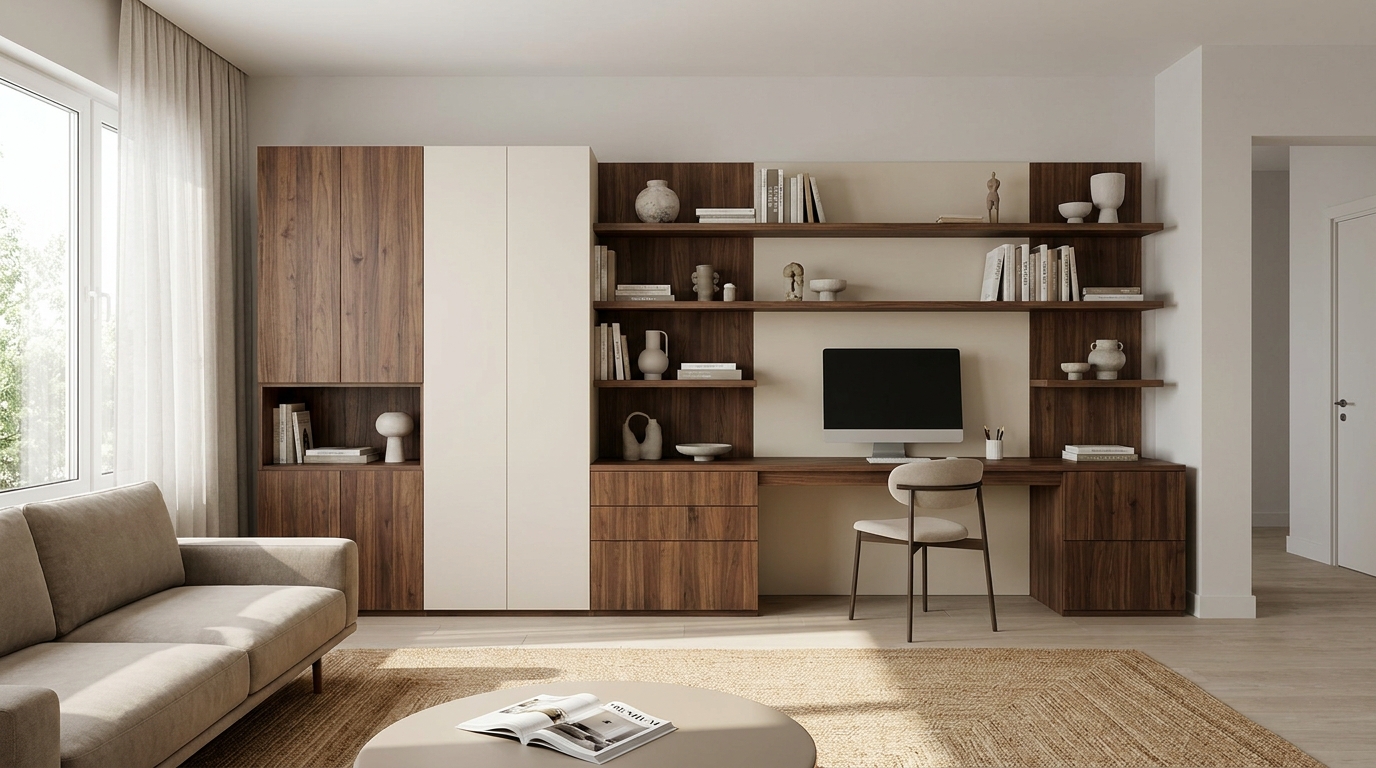
The rise of hybrid work has made the home office one of the most dynamic zones in the house. Not every home has a dedicated room for work, which means office functions often need to coexist with living or bedroom spaces. Modular desks and storage systems make this blending far more elegant. A work area can be compact when needed, then expanded with additional shelving or surfaces as routines evolve.
The visual benefits are equally important. Since home offices are now more visible in everyday life and on video calls, they must feel polished. Modular office systems can maintain a refined, coherent aesthetic while providing practical organization for documents, devices, and display objects. This helps the room feel designed rather than improvised.
Bedrooms
Bedrooms benefit from modularity in quieter, more subtle ways. Modular wardrobes, headboards with integrated storage, bedside systems, and low storage benches can all contribute to a space that feels serene yet functional. Because bedrooms rely so heavily on calm visual order, flexible storage is particularly useful. It allows the room to remain uncluttered even as needs change over time.
For guest rooms, modular furniture is especially effective. A room can shift between hospitality, reading, work, or storage functions without losing its charm. This allows homeowners to make better use of valuable square footage while preserving a welcoming atmosphere.
Entryways and Transitional Spaces
Entryways, corridors, and other transitional areas are often underestimated, yet they set the tone for the home. Modular benches, cubbies, coat storage, and console systems can help these spaces feel composed and efficient. Instead of overfilling the area with mismatched pieces, homeowners can use modular components to create a tailored composition that suits their habits precisely.
These are the spaces where small practical improvements have an outsized effect. Shoes, bags, keys, outerwear, and daily essentials all need a place. When modular storage addresses these needs elegantly, the home begins to feel calmer from the moment one enters.
Larger Open-Plan Homes
In larger homes, modular furniture becomes a powerful tool for zoning. Open-plan layouts can sometimes feel too diffuse if furniture does not provide enough structure. Modular seating and storage systems can define conversation areas, reading corners, work niches, or informal dining extensions while preserving visual flow. The flexibility to reconfigure these zones makes the entire home more responsive to seasonal entertaining, family changes, or renovation phases.
How to Choose Elegant Modular Furniture
Selecting modular furniture well requires attention to the same principles that guide any sophisticated interior. The first is proportion. A modular piece should suit both the scale of the room and the scale of adjacent furnishings. Oversized modules in a compact room can feel oppressive, while undersized units may appear fragmented in a larger space. It is wise to think beyond the initial layout and imagine how the piece will look in future configurations as well.
Material selection matters deeply. Because modular furniture often occupies a central role in a room, its finishes should contribute to the home’s broader palette. Warm woods, refined textiles, and nuanced neutrals tend to offer the greatest longevity. Textural richness can compensate for visual simplicity, allowing a piece to feel luxurious without relying on excessive ornament.
Construction quality should never be overlooked. Since modular systems are designed to move, connect, and sometimes expand, their hardware and internal structure are especially important. Homeowners should pay attention to frame durability, cushion resilience, upholstery quality, and the precision of connectors. Good modular furniture should feel stable, secure, and graceful in use.
Finally, consider how a modular system will age. The most elegant choices are those that can adapt visually as tastes mature. A carefully chosen modular sofa in a timeless fabric, or a shelving system in a classic finish, is far more likely to remain beautiful through changing trends. Modularity should create freedom, but it should do so from a foundation of enduring design.
Styling Tips for a Cohesive Look
Because modular furniture is composed of distinct elements, styling is essential to ensure the final room feels unified. One of the simplest ways to create cohesion is through repetition of material and color. If your modular sofa is upholstered in a soft neutral fabric, echo that quiet warmth through curtains, rugs, and accent chairs. If your shelving system introduces walnut, repeat that wood tone in frames, tables, or lighting details. These visual echoes make the room feel composed rather than assembled in stages.
Layering is equally important. Modular furniture often has strong horizontal lines, so balance can be created through vertical accessories and varied textures. A tall floor lamp, a sculptural vase, or art with gentle movement can soften the geometry. Cushions, throws, and rugs add warmth while preventing the room from feeling too uniform. The goal is to preserve the clarity of the modular piece while surrounding it with atmosphere.
Spacing deserves careful attention as well. Flexibility should not tempt a homeowner to overfill a room simply because modules can be added. Elegance often lies in restraint. Leave enough negative space around compositions so that each element can breathe. A beautifully arranged modular system should feel intentional, with a rhythm that supports circulation and calm.
For those creating cohesion across multiple rooms, modular furniture can become a quiet visual thread throughout the home. Shared finishes, repeated silhouettes, and complementary textiles can link a living room, office, and entryway with subtle sophistication. This approach turns modularity into a language of design continuity rather than a collection of unrelated conveniences.
Practical Ways to Integrate Modular Furniture Into Any Aesthetic
One of the great strengths of modular furniture is its stylistic versatility. In minimalist interiors, it can reinforce clean lines and visual calm through low profiles and monochromatic finishes. In warmer contemporary homes, it can be paired with timber, stone, and tactile fabrics for a softer expression. In more eclectic interiors, modular pieces can act as the disciplined foundation that allows art, collected objects, and patterned textiles to shine without chaos.
For classic-modern spaces, choose modular furniture with tailored detailing and restrained proportions. A sectional in a refined woven fabric, combined with brass accents and a sculptural coffee table, can feel quietly luxurious. In family-oriented homes, opt for durable upholstery and forgiving finishes while keeping the palette elevated. This allows the furniture to support real use while preserving visual elegance.
Even rustic or natural interiors can benefit from modularity. Systems in oak, linen, leather, or textured weaves can feel organic and grounded rather than sleek and urban. The key is to select modules whose material presence aligns with the emotional character of the home. Modularity should not overpower an aesthetic. It should serve it discreetly.
The Future of Modular Furniture
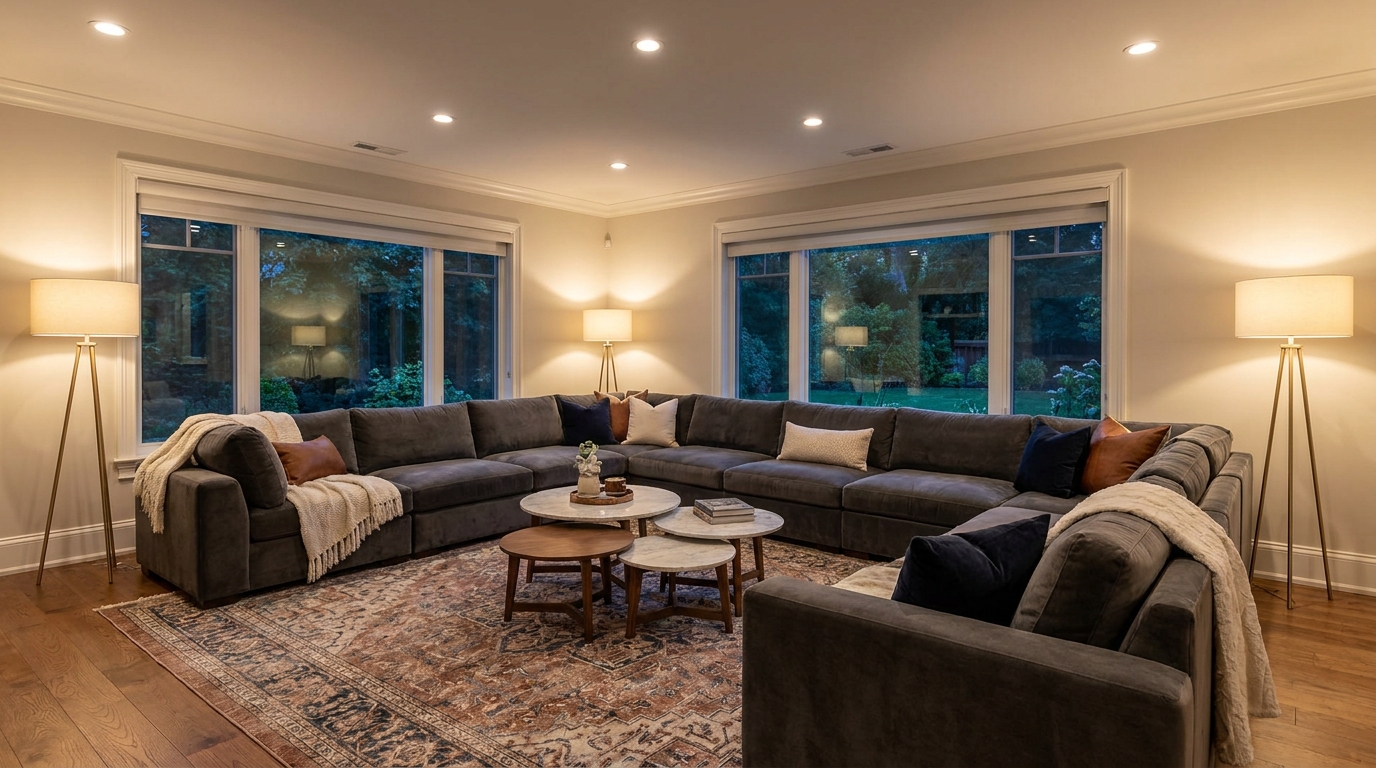
Looking ahead, modular furniture appears less like a trend and more like a lasting design direction. It responds directly to some of the most important realities shaping homes today: changing family structures, flexible work patterns, smaller urban living arrangements, sustainability concerns, and a desire for more thoughtful consumption. These are not temporary conditions. They are long-term influences on how people inhabit space.
As design innovation continues, modular furniture is likely to become even more sophisticated. We can expect better concealed mechanics, more premium materials, expanded customization, and stronger links to circular manufacturing and repair systems. The idea of furniture as static may gradually give way to furniture as responsive architecture within the home. In that sense, modularity is not simply a category. It is a philosophy of living beautifully with change.
For North American homeowners in particular, this makes modular furniture highly relevant. The region’s strong adoption across residential and contract settings suggests a broad cultural comfort with adaptable interiors. From apartments and townhomes to larger mixed-use family houses, people want furnishings that can adjust to life rather than dictate it. When that adaptability is expressed through elegant design, the result is both sensible and aspirational.
Conclusion: A Graceful Answer to Contemporary Living
The elegance of modular furniture lies in its ability to do two things at once. It creates beauty through proportion, material, and composition, and it creates ease through flexibility, longevity, and thoughtful function. That balance is precisely what many modern homeowners are seeking. They do not want homes that look impressive only in photographs, nor do they want rooms that solve practical problems at the expense of atmosphere. They want spaces that feel refined, personal, and deeply livable.
Modular furniture offers that possibility with remarkable intelligence. It can expand with a family, respond to a move, support hybrid work, improve storage, and refresh a room without requiring a complete redesign. It encourages restraint by making a few well-chosen pieces work harder and last longer. It aligns with more sustainable values while still delivering the tactile and visual pleasure that defines a beautiful home.
In the end, modular furniture is not about constant rearrangement for its own sake. It is about freedom with form. It is about creating interiors that can evolve while retaining coherence and grace. Whether in a compact apartment or a spacious family house, that quality feels profoundly modern and quietly luxurious. And perhaps that is why modular furniture has become such a compelling symbol of contemporary design: it proves that practicality, when shaped with care, can be deeply elegant.
Quick Design Checklist for Buying Modular Furniture
- Assess your room’s changing needs before choosing a configuration, especially if the space must support work, entertaining, and relaxation.
- Prioritize quality materials and connectors so the piece remains stable, durable, and visually refined over time.
- Choose timeless finishes that will still feel elegant if the modules are rearranged or moved to another room later.
- Think beyond sofas and consider modular shelving, desks, storage systems, and bed-adjacent furniture for a cohesive home.
- Leave visual breathing room so the flexibility of modular design enhances the space instead of overcrowding it.
When selected thoughtfully, modular furniture becomes far more than a clever furnishing solution. It becomes a graceful framework for living well, adapting beautifully to the needs of the present while remaining ready for whatever the home may ask next.



No Comment! Be the first one.