



Floating cities have long existed at the edge of imagination, often presented as futuristic answers to overcrowding, climate instability, and the limits of land-based growth. Today, that conversation is becoming more grounded. In an era defined by coastal land scarcity, rising housing pressure, and accelerating flood risk, floating urban development is no longer just a speculative architectural idea. It is increasingly being studied as a practical, though highly selective, tool within the broader field of climate adaptation and city building.
Table Of Content
- What Floating Cities Really Are
- Why the Idea Is Gaining Momentum Now
- The Engineering Behind Floating Urban Development
- Design Principles for a Livable Floating City
- Where Floating Cities Make the Most Strategic Sense
- Floating Cities and the Climate Adaptation Portfolio
- The Economics: Opportunity, Cost, and Long Term Value
- The Social Question: Who Benefits and Who Gets Left Out?
- Environmental Considerations and Ecological Risk
- Common Misconceptions About Floating Cities
- A Realistic Path Forward for North America
- Conclusion: Building With Water, Not Just Against It
- Key Takeaways
The appeal is easy to understand. Some of the world’s most economically productive and socially important cities sit near coastlines, rivers, and harbors. These places offer trade access, cultural identity, and economic concentration, but they also face increasing stress from sea level rise, storm surge, erosion, and tidal flooding. In North America, this is particularly relevant. NOAA reports that almost 30% to 40% of the population in the United States lives in coastal areas, where sea level rise is already worsening flood frequency and erosion pressures. In Canada, national climate assessments identify the Atlantic provinces, Pacific coast, and Beaufort coast as major areas of concern for relative sea level rise, making coastal adaptation a long term planning priority.
This article takes a realistic look at floating cities. It does not treat them as a miracle solution, and it does not dismiss them as fantasy. The more useful question is where floating systems can create strategic value, under what conditions they are technically and socially viable, and how they fit within a larger resilience framework that also includes zoning reform, seawalls, elevated construction, wetland restoration, managed retreat, and infrastructure modernization. Floating cities matter not because they will replace every coastal metropolis, but because they may help certain cities adapt more intelligently at the water’s edge.
At their best, floating developments represent a shift in how we think about urban land, resilience, and growth capacity. They challenge the assumption that expansion must occur only on fixed ground. They also force planners, engineers, and policymakers to confront a harder truth: adaptation is not simply about resisting water. In many places, the future will require learning how to live with it more safely, more flexibly, and more equitably.
What Floating Cities Really Are
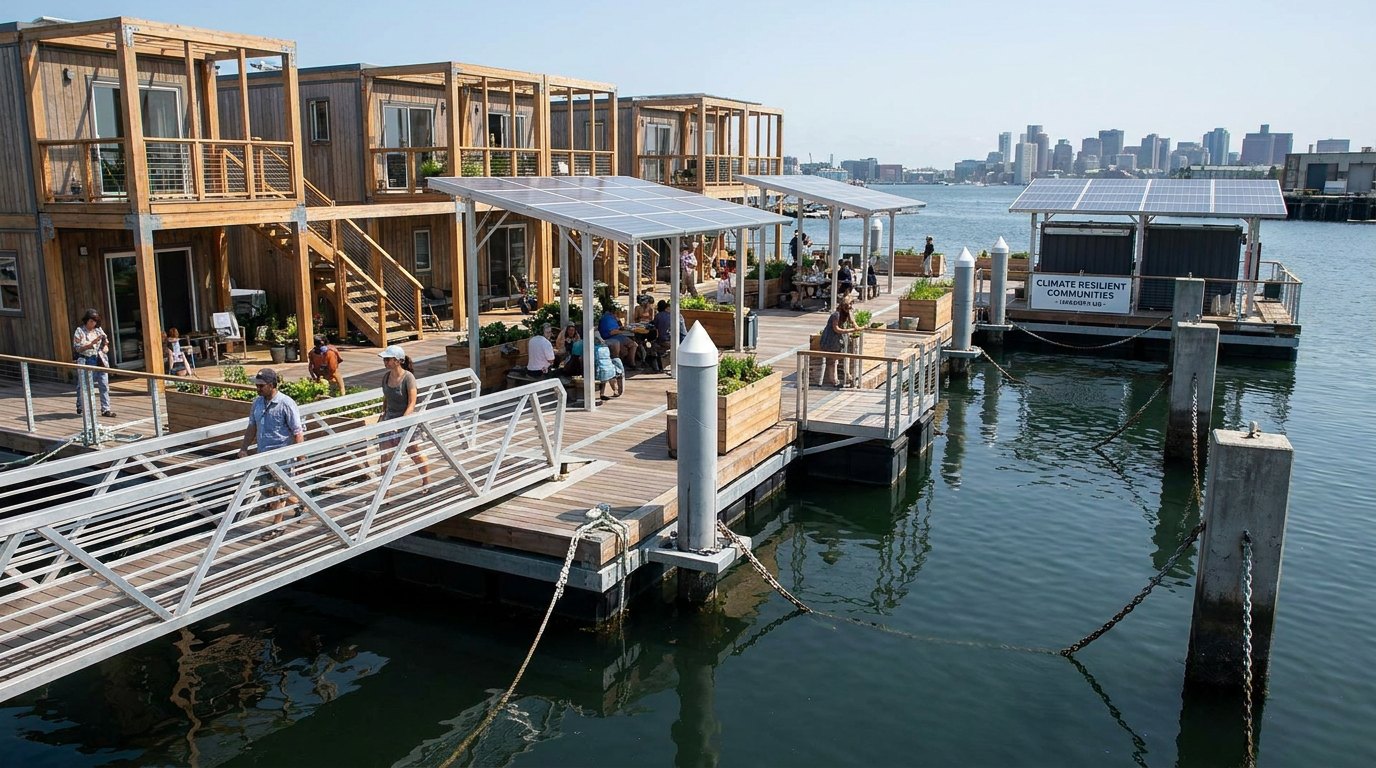
A floating city is a water-based urban development built on buoyant platforms, pontoons, or modular structures rather than fixed land, allowing whole neighborhoods, buildings, and infrastructure to remain stable while rising and falling with the water beneath them. The term can be misleading, though, because it suggests a single, unified model. In practice, floating development is better understood as a family of water-based urban forms. These range from floating homes and amphibious structures to modular platforms, marina-linked communities, floating public buildings, research campuses, and in more ambitious concepts, self-contained offshore districts. Some projects are meant to extend existing waterfronts. Others are designed for protected lagoons, sheltered bays, or specialized infrastructure uses where conventional land development is expensive or constrained. Rather than replacing land-based cities, these projects function as a planning tool for expanding usable urban space in coastal areas where land is scarce or increasingly exposed to flooding.
This distinction matters because public debate often jumps too quickly to the most cinematic version of the concept. People imagine massive oceanic settlements that operate independently from the mainland. That image captures attention, but it is not where the strongest near-term case lies. The most credible pathway for floating urbanism is incremental, modular, and place-specific. It is far more likely that cities will test pilot neighborhoods, floating schools, emergency housing platforms, or small mixed-use districts than launch fully autonomous settlements at open-sea scale.
Recent design interest reflects this shift. Around the world, floating labs, adaptation prototypes, and district-scale concepts are gaining more attention than utopian megaprojects. Projects such as the Maldives Floating City and research initiatives like the University of Pennsylvania’s Blue City Lab point to a practical turn in the conversation. The goal is less about escaping land altogether and more about creating adaptive forms of urban space where water risk and land scarcity intersect.
Seen this way, floating cities are not a replacement for planning. They are a planning instrument. They can add flexibility to a coastal growth strategy, create space in constrained urban markets, and support adaptation in places where shoreline defense alone may not be enough. That is a very different proposition from saying that the future of urban civilization will drift offshore. The difference between those two narratives is the difference between fantasy and feasibility.
Why the Idea Is Gaining Momentum Now
Three pressures are pushing floating cities into more serious discussion. The first is land scarcity in high-demand urban regions. In major coastal metros, developable land is expensive, contested, and often constrained by geography, regulation, or legacy infrastructure. Adding supply on conventional land can be slow and politically difficult. Waterfronts, meanwhile, remain strategically valuable because they are close to employment, transportation, and economic activity. Floating development presents one possible method of creating new usable space without the full land acquisition challenges of terrestrial expansion.
The second pressure is climate adaptation. According to IPCC assessments, without adaptation, the population at risk from a 100-year coastal flood rises sharply as sea levels increase. At around 0.75 meters of mean sea level rise, the at-risk population roughly doubles, and at 1.4 meters it triples. That is a profound planning signal. It means that the risk profile of coastal development is changing, and that static assumptions about the shoreline are becoming less reliable over time.
The third pressure is technological maturity. Marine engineering, modular construction, corrosion-resistant materials, renewable energy systems, water treatment technologies, and digital monitoring have all advanced significantly. None of these eliminate the complexity of building on water, but together they make the idea more technically plausible than it was decades ago. As a result, the floating city discussion has shifted from pure vision to staged implementation. Cities, universities, developers, and climate adaptation researchers are now asking where pilots could work and what standards would be required.
Importantly, momentum does not equal inevitability. Rising interest does not mean floating cities will become common everywhere. It means the concept has entered the serious policy and feasibility phase. That is where it belongs. Responsible urban development starts with context, evidence, and governance, not just striking imagery.
Floating cities are best viewed not as a universal substitute for land-based urbanism, but as a strategic adaptation option for certain coastal conditions where flexibility, resilience, and land constraints intersect.
The Engineering Behind Floating Urban Development
For floating cities to move beyond concept art, they must solve a demanding set of marine and civil engineering challenges. The first and most obvious is buoyancy. Structures must remain stable and habitable while supporting buildings, public spaces, utilities, and movement. This usually involves carefully designed floating foundations or pontoons that distribute weight and maintain balance across varying conditions. In protected waters, this can be manageable. In rougher marine environments, the challenge becomes much greater.
Recent engineering research tends to group the technical problem into five core areas: anchoring and foundation systems, structural dynamics and modular connections, marine materials and durability, installation and assembly methods, and long term monitoring and maintenance. These are not minor details. They define whether a floating district can function safely over decades. Unlike a land-based building, a floating structure is always interacting with motion, water chemistry, tides, biological growth, corrosion, and changing weather patterns.
Anchoring and mooring systems are central. A floating neighborhood cannot simply drift. It must remain securely positioned while still allowing enough movement to accommodate waves, water level changes, and storm conditions. The anchoring system has to account for seabed conditions, water depth, ice exposure in some regions, and the cumulative forces placed on a network of connected modules. What works in a sheltered harbor may not work in a tidal estuary or an exposed coastal inlet.
Structural dynamics also matter deeply because floating platforms move. Even small motion can affect comfort, safety, infrastructure performance, and public acceptance. Buildings, walkways, transit links, and utility lines must be designed to handle that movement without damage or disruption. Modular construction may help because it allows systems to be repeated, tested, and repaired more efficiently, but modularity also introduces connection points that must remain reliable over long periods.
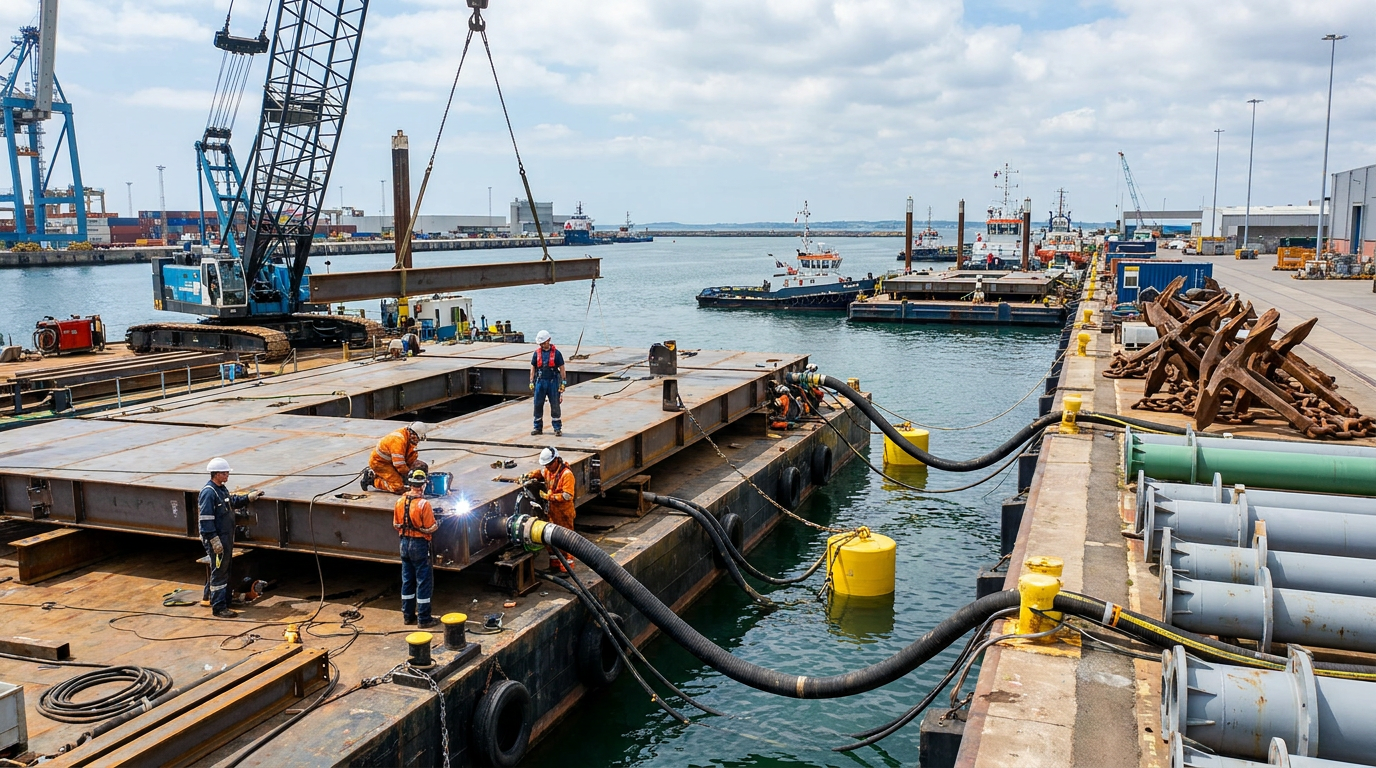
Marine durability is another decisive factor. Saltwater is harsh. It degrades metals, affects concrete, strains coatings, and encourages biological fouling. A floating city therefore requires materials chosen for corrosion resistance and maintenance planning from the start. This is one reason the economics can be challenging. Marine infrastructure is not only expensive to build. It is expensive to maintain. Any serious feasibility study must evaluate total life-cycle cost rather than just the initial capital budget.
Utilities create their own layer of complexity. Water, wastewater, electricity, district energy, waste removal, broadband, and emergency services all need flexible and resilient connections. In some concepts, systems remain linked to the mainland through adaptive service corridors. In others, districts may include decentralized treatment, storage, and renewable generation to reduce reliance on shore-based systems. The right answer depends on scale, location, and the desired level of self-sufficiency. Either way, utility design is not an afterthought. It is one of the main determinants of whether floating urbanism can work as everyday infrastructure rather than as novelty architecture.
Design Principles for a Livable Floating City
The central design principle for floating cities is resilience through adaptability. A successful district must adjust to tides, changing water levels, wave conditions, and climate volatility without sacrificing habitability. In practical terms, that means the urban design of a floating community has to integrate stability, access, safety, and comfort into the public realm. It is not enough for the platform to float. People need to feel that they are living in a real neighborhood, not on a technical experiment.
Good floating urban design starts with protected siting. Sheltered waters, lower wave energy environments, and locations with manageable environmental impacts are generally more viable than exposed offshore conditions. This is one reason many realistic proposals focus on lagoons, marinas, inner harbors, river edges, or protected coastal basins. These settings reduce structural stress and make shore connectivity easier, which in turn improves cost and functionality.
Livability also depends on urban form. Mixed-use layouts can reduce transportation demand and support community life. Walkable connections, public gathering spaces, green roofs, shaded corridors, and social amenities become especially important in floating districts because they influence how people perceive safety and belonging. If a floating development feels isolated, exclusive, or over-engineered, it may fail socially even if it succeeds technically.
Environmental integration should be part of the design logic from the outset. Floating systems may be paired with wetlands restoration, habitat enhancement, water quality measures, and blue infrastructure strategies that improve resilience at the shoreline. This hybrid approach is increasingly important because adaptation research now emphasizes portfolios rather than single solutions. A floating district that complements restored ecosystems and upgraded land-based infrastructure may deliver more public value than one that tries to stand apart from its ecological context.
Design must also anticipate emergency conditions. Fire access, evacuation planning, medical response, storm procedures, and redundancy in power and water systems all require careful integration. On land, these systems are often assumed. On water, they must be explicitly solved. The legitimacy of floating urbanism will depend as much on ordinary reliability as on visionary design. Residents need confidence that daily life and emergency operations will function under stress.
Where Floating Cities Make the Most Strategic Sense
One of the most important conclusions from current research is that floating cities are most viable in targeted use cases, not as immediate replacements for entire metropolitan regions. This is especially true in Canada and North America, where climate adaptation needs vary significantly by location, governance structure, and waterfront condition. The best opportunities tend to appear where three factors overlap: meaningful flood exposure, constrained land supply, and strong institutional capacity to manage marine infrastructure over time.
In practical terms, that can include pilot neighborhoods in high-value waterfront markets, specialized research facilities, marina-linked mixed-use communities, emergency housing platforms, tourism infrastructure, and public buildings in areas where protective works alone may be costly or insufficient. These are contexts where floating systems can be tested, regulated, and refined without forcing cities into premature megaproject commitments.
For Canada, Atlantic and Pacific coastal regions deserve particular attention. Relative sea level rise, shoreline erosion, and changing storm conditions make adaptation planning increasingly urgent in these areas. Certain harbors or sheltered basins may offer opportunities for pilot projects that combine housing, innovation, and resilience research. In the United States, locations along the Gulf Coast and parts of the Eastern Seaboard face recurring flood pressure and growing adaptation costs. In some of these places, floating forms may support a diversified response, especially where conventional land expansion is difficult.
That said, not every waterfront is suitable. Wave climate, storm surge patterns, ecological sensitivity, water depth, ice conditions, navigation needs, and legal constraints can quickly narrow the field. A place that looks ideal on a map may prove highly challenging in engineering or environmental terms. Strategic siting is therefore critical. Floating development should be directed to the places where it clearly outperforms alternatives, not simply to places where it looks dramatic in a rendering.
Floating Cities and the Climate Adaptation Portfolio
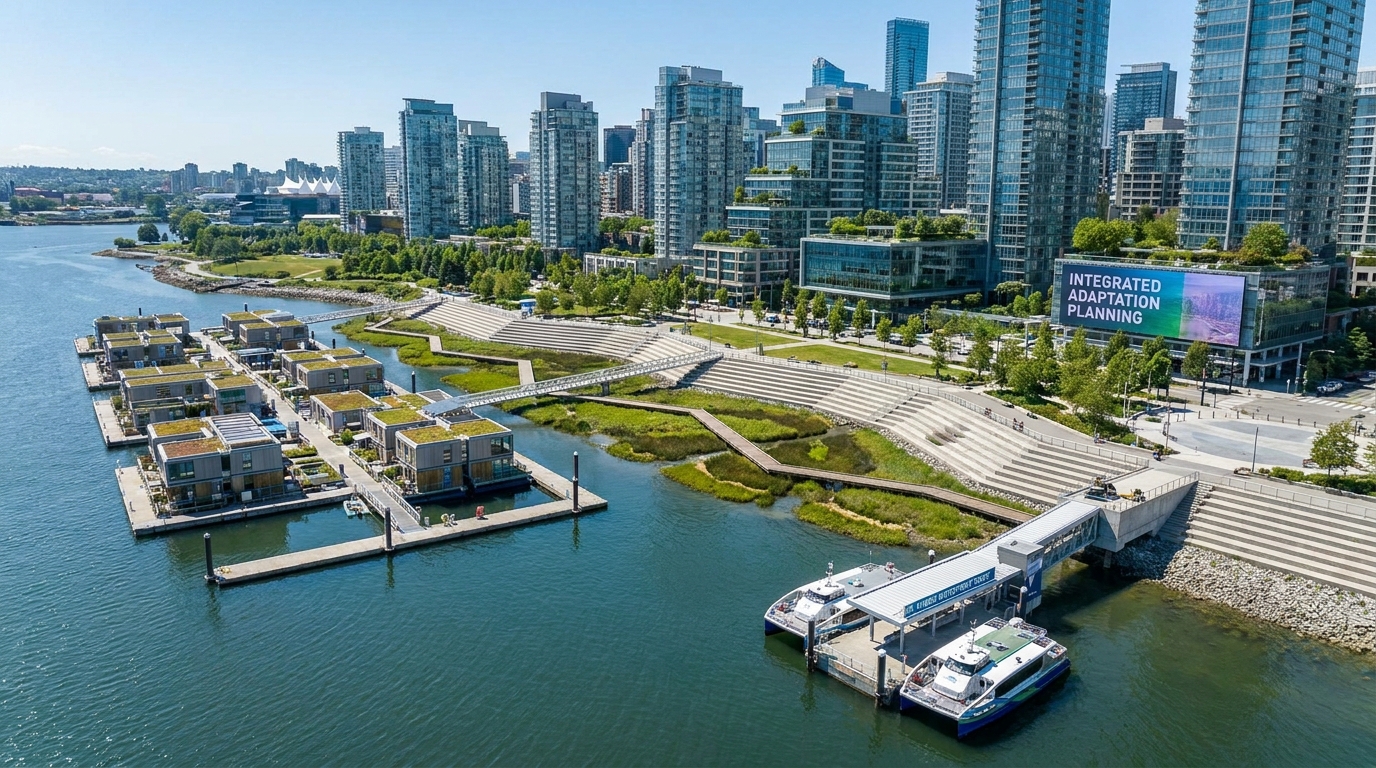
The strongest case for floating cities emerges when they are understood as one tool within a broader coastal resilience portfolio. They do not eliminate climate risk. They redistribute and manage it differently. That distinction is essential because coastal adaptation is rarely solved by one intervention alone. A city facing sea level rise, repeated nuisance flooding, and more intense storms will almost always need multiple responses working together.
These responses may include shoreline armoring in some locations, building elevation in others, zoning changes to reduce risk exposure, nature-based solutions such as marsh restoration, stormwater modernization, and in the most vulnerable areas, forms of managed retreat. Floating systems can complement these strategies by creating adaptive urban space where fixed structures would be harder to defend or more expensive to raise. They can also support continuity of use in waterfront zones that remain economically and socially important.
This hybrid perspective aligns with current thinking from organizations such as UN-Habitat, which emphasizes that effective climate adaptation in cities must be integrated with urban planning, infrastructure, and social policy. In other words, adaptation is not just a technical project. It is a governance project. A floating district that is disconnected from public transit, excludes lower income households, and lacks clear emergency protocols may be innovative in form but weak in public value.
There is also a strategic planning benefit in pilot deployment. Small-scale floating projects can act as learning platforms. They allow cities to test engineering standards, insurance models, financing approaches, transit integration, and social acceptance before considering larger expansions. In an era where climate risk is evolving and capital is constrained, pilot-first development can be a disciplined way to build institutional knowledge while limiting exposure to premature scale.
The Economics: Opportunity, Cost, and Long Term Value
No discussion of floating cities is complete without examining cost. These projects are expensive. They require specialized engineering, marine construction, utility innovation, environmental review, and ongoing maintenance regimes that exceed many land-based building typologies. The upfront capital can be substantial, and the operating model must account for inspection, repair, corrosion management, and climate resilience measures over decades.
That reality is often used as an argument against the concept, but cost alone is not the right lens. The more relevant comparison is between floating development and the full cost of alternatives. In some coastal environments, conventional land reclamation, major seawall systems, extensive raising of infrastructure, or repeated flood recovery may also be enormously expensive. If a floating platform can preserve access, create usable urban space, and adapt more flexibly over time, its economics may compare more favorably than they first appear.
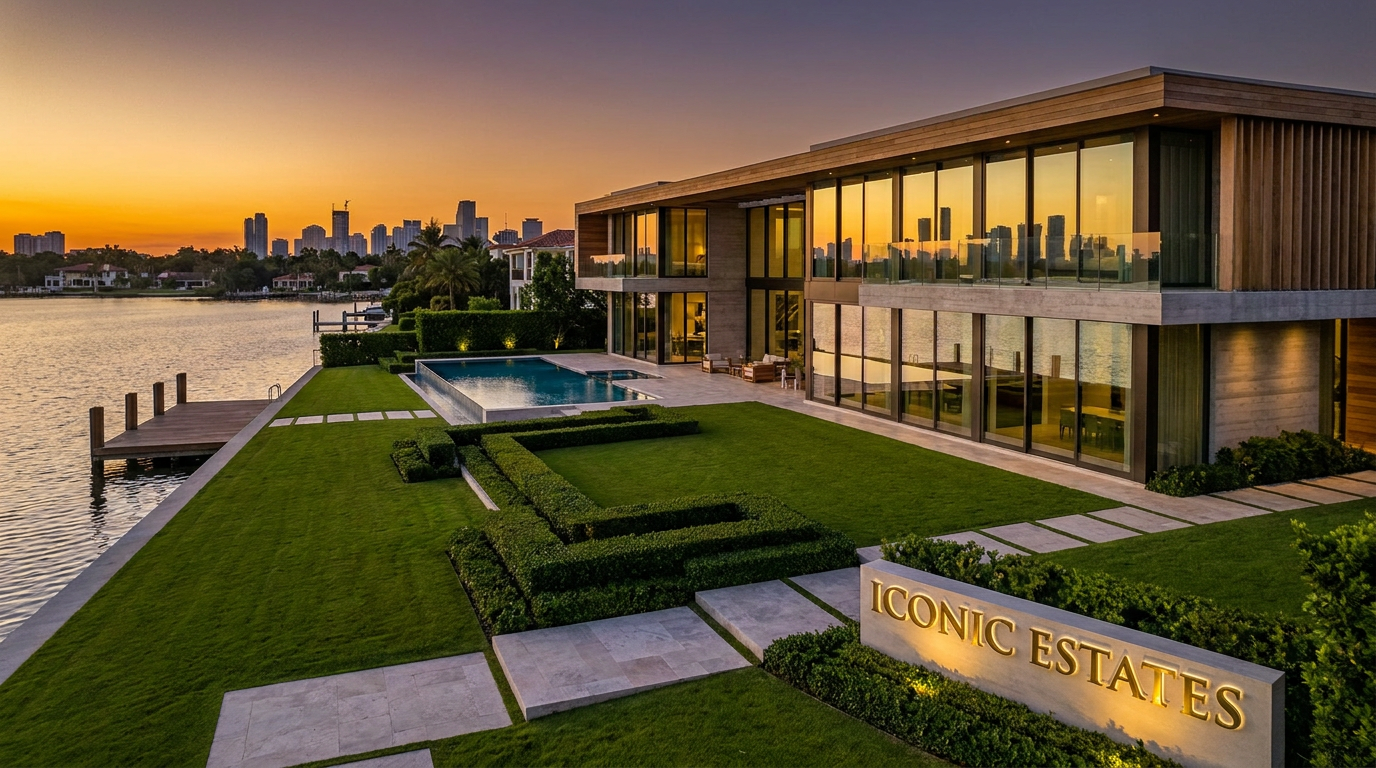
Value also depends on what the project is intended to do. A floating luxury enclave may generate private returns but weak public outcomes. A publicly backed floating district tied to housing supply, research, climate adaptation, or critical infrastructure may deliver broader strategic value. This is why financing structure matters so much. Public-interest financing, climate resilience funds, port authority partnerships, and institutional ownership models may prove more suitable for many floating projects than purely speculative development capital.
Long term valuation should include not only direct project revenues but avoided costs, adaptive flexibility, and network effects. If a pilot floating neighborhood helps a city maintain population, reduce exposure in more vulnerable housing stock, support innovation jobs, or preserve economic activity in a flood-prone district, those benefits matter. The challenge is that they are harder to capture in a narrow pro forma. Strong policy frameworks will therefore be needed to connect private feasibility with public benefit.
The Social Question: Who Benefits and Who Gets Left Out?
Engineering feasibility and social feasibility are not the same thing. A floating city can be structurally sound and still fail the public interest test. Questions of access, affordability, governance, and legitimacy are central. If floating districts become premium enclaves for affluent buyers while more vulnerable households remain in poorly protected neighborhoods, then the model risks deepening inequality rather than helping cities adapt fairly.
This concern is not theoretical. New urban infrastructure often follows capital before it follows need. That is why floating-city proposals require early and explicit equity frameworks. Policymakers need to ask who the housing is for, how public access will be maintained, whether transit links are inclusive, how emergency services will operate, and how climate adaptation funding can serve broader populations rather than a narrow market segment.
Community co-design is likely to be essential. Residents of coastal neighborhoods often have legitimate concerns about environmental impacts, visual change, navigation conflicts, and privatization of the waterfront. Projects imposed without public trust will face resistance. Projects shaped through transparent planning, public review, and demonstrable social value have a stronger chance of earning acceptance. This is especially true if floating development is presented not as waterfront spectacle, but as part of an integrated resilience strategy that addresses real local needs.
Governance is another major issue. Who regulates floating districts? Which building codes apply? How are insurance standards developed? How are taxes, policing, environmental compliance, and infrastructure responsibilities assigned? These questions become more complex when developments sit between marine and urban jurisdictions. Without clear governance structures, even technically successful prototypes may struggle to scale. Cities cannot build confidence in floating development unless legal and regulatory systems evolve alongside design innovation.
Environmental Considerations and Ecological Risk
Floating cities are sometimes assumed to be environmentally positive because they do not consume conventional land in the same way as terrestrial development. That assumption is too simple. Floating development can reduce pressure on some land resources, but it can also create new ecological concerns. Construction activity, shading effects on marine ecosystems, anchoring impacts on the seabed, water quality issues, habitat disruption, and increased boat traffic all need careful assessment.
There is also the issue of embodied carbon. Marine-grade materials, concrete systems, protective coatings, transportation logistics, and specialized fabrication can carry significant emissions. A floating project is not automatically climate-neutral simply because it sits on water. The climate case must be measured honestly across the full life cycle, including construction, operations, maintenance, and end-of-life adaptation or decommissioning.
That said, environmental performance can be improved through design. Renewable energy integration, district systems, low-impact mobility, modular repairability, water-sensitive design, habitat enhancement edges, and integration with nature-based shoreline protection can all support better outcomes. The most responsible projects will likely be those that treat ecological design as core infrastructure rather than branding. In future coastal development, resilience and ecology must reinforce one another, not compete.
Environmental review therefore needs to be rigorous, place-specific, and public. A floating city cannot claim legitimacy if it solves one risk while creating another. In strategic planning terms, the objective is not to float for its own sake. It is to create urban capacity that remains compatible with coastal systems over time.
Common Misconceptions About Floating Cities
The first misconception is that floating cities are a complete replacement for conventional urban planning. They are not. Most realistic applications are niche or district-scale and work best when integrated into existing coastal strategies. Land use policy, transportation planning, utility modernization, and housing reform remain essential whether cities build on water or not.
The second misconception is that floating structures are immune to climate risk. They are not. A floating platform changes the risk profile, but it does not remove storm exposure, marine deterioration, emergency management challenges, or the operational stress of extreme weather. A city that builds on water still needs robust resilience planning, reserve systems, and maintenance capacity.
The third misconception is that all coastal places are equally suited to floating development. In reality, site conditions are decisive. Ice, wave intensity, depth, ecological sensitivity, storm surge, and jurisdictional complexity can make some places far better candidates than others. Feasibility is local. There is no universal template.
The fourth misconception is that floating cities are only luxury products for the wealthy. While some high-end proposals fit that pattern, the more realistic and publicly valuable applications may include pilot housing, educational facilities, emergency accommodations, innovation campuses, and mixed-use waterfront extensions with clear social objectives. The long term legitimacy of floating urbanism will depend on whether it serves cities broadly rather than simply creating prestigious exceptions.
A Realistic Path Forward for North America
If floating cities are to play a meaningful role in North America, the path forward will likely be incremental, hybrid, and heavily regulated. The first stage should focus on feasibility-based pilots in carefully selected locations. These projects should test engineering systems, utility performance, social acceptance, emergency response, insurance frameworks, and environmental safeguards. They should also be tied to measurable public outcomes such as resilience learning, housing innovation, research, or adaptation capacity.
The second stage should involve integration into broader waterfront planning. Floating districts cannot operate as disconnected islands in policy terms. They need transit links, utility agreements, governance clarity, environmental monitoring, and public realm standards. Municipalities, provinces or states, port authorities, and infrastructure agencies will all need roles. The most successful projects will be those embedded in strong planning institutions rather than marketed as exceptions to them.
The third stage should emphasize equity and public value. If governments are asked to support floating development through approvals, infrastructure investment, or resilience funding, the public return must be clear. That could mean mixed-income housing requirements, public access guarantees, adaptation research uses, or integration with climate-vulnerable community needs. Without these conditions, floating development risks being seen as an expensive experiment for the few rather than a strategic investment for the many.
Finally, cities need to remain honest about limits. In some locations, the right answer will still be retreat from high-risk zones, stronger land-based flood protection, or intensified inland growth. Floating systems should not become a distraction from hard but necessary decisions. Their greatest value is likely to come when they are used selectively, where they genuinely improve resilience and urban capacity relative to the alternatives.
Conclusion: Building With Water, Not Just Against It
Floating cities sit at the intersection of climate adaptation, urban growth, and technological ambition. They offer a compelling vision because they speak to a real dilemma facing modern cities: how to expand, protect, and evolve in places where land is constrained and water risk is rising. But their real promise lies not in spectacle. It lies in disciplined application, sound engineering, and a planning framework that treats floating development as one component of a larger resilience strategy.
The future of floating cities will almost certainly be more modest and more practical than the grandest headlines suggest. We are more likely to see pilot districts, specialized facilities, mixed-use harbor extensions, and climate adaptation prototypes than fully independent ocean metropolises. That is not a weakness. It is a sign of maturity. Cities do not become more resilient through fantasy. They become more resilient through targeted innovation, public accountability, and investments that align physical design with social need.
For North America, the strategic question is not whether all cities should move onto the water. It is where floating systems make sense, where they improve options, and where they can be governed responsibly. In coastal regions facing rising risk and growing development pressure, that question deserves serious attention. The shoreline of the future may not be fixed in the way we once assumed. If so, the next chapter of urbanism may depend on learning how to build with water, not just against it.
Key Takeaways
- Floating cities are a spectrum of water-based urban forms, from homes and public buildings to modular districts and specialized infrastructure.
- Their strongest near-term use cases are selective, including pilot neighborhoods, research campuses, emergency housing, and constrained waterfront sites.
- Sea level rise and coastal flood exposure are making the concept more relevant, especially in parts of Canada and the United States.
- Engineering feasibility is real but demanding, with major challenges around anchoring, durability, modular connections, utilities, and long term maintenance.
- Social equity and governance are as important as design, because adaptation infrastructure must serve the public broadly to gain legitimacy.
- The most credible future is hybrid, combining floating systems with nature-based solutions, conventional protection, zoning reform, and infrastructure upgrades.


No Comment! Be the first one.