



Your Daily Cleaning Routine: Easy Steps for a Sparkling, Stress-Free Home
There is something deeply comforting about walking into a home that feels fresh, light, and cared for. The counters are clear, the sink is empty, the bathroom mirror is free of splashes, and the entryway does not greet you with yesterday’s rush still piled at the door. Many people assume this feeling comes from dramatic weekend deep cleans, but in reality, it is usually the result of something much gentler and far more sustainable. A good daily cleaning routine is not about perfection. It is about creating small moments of order that support the way you want to live.
Table Of Content
- Why Daily Cleaning Works Better Than Waiting for a Big Reset
- The Golden Rule: Clean First, Disinfect Only When Needed
- Set Up a Daily Routine That Feels Effortless
- Your 10-Minute Daily Cleaning Flow
- The Kitchen: The Most Important Daily Reset
- The Bathroom: A Two-Minute Refresh That Changes Everything
- The Living Room: Reset the Feeling of the Home
- The Entryway: The Small Zone That Protects the Whole House
- High-Touch Surfaces: The Everyday Priority
- How to Make Cleaning Feel Like Self-Care Instead of Punishment
- Common Mistakes That Make Daily Cleaning Harder
- A Sample Daily Cleaning Schedule for Real Life
- Morning reset
- Afternoon touch-up
- Evening reset
- What Daily Cleaning Should Not Include
- The Real Reward of a Daily Cleaning Routine
- Frequently Asked Questions About Daily Cleaning
- How long should a daily cleaning routine take?
- Do I need to disinfect every day?
- What are the most important places to clean daily?
- How can I stay consistent with cleaning?
- Is cleaning really connected to well-being?
When daily cleaning is approached as a long list of chores, it can feel heavy before it even begins. When it is framed as a short reset, it becomes much easier to start and much easier to maintain. Research on home environments has linked clutter, disorder, and stressful home conditions with higher stress and poorer sleep, while more orderly and restorative homes are associated with better well-being. That means your few minutes of daily cleaning are doing more than polishing surfaces. They are quietly shaping the emotional tone of your home.
Public health guidance also supports a simpler, more focused approach than many of us were taught. In most homes, cleaning high-touch surfaces regularly and cleaning other areas when visibly dirty is the everyday priority. Disinfection is generally reserved for times when someone is sick or when a higher level of germ reduction is needed. This is good news for anyone who wants a practical routine that feels calm, manageable, and safe rather than chemical-heavy and exhausting.
This guide is designed to help you build a routine that works in real life. It is not about spending hours chasing spotless corners. It is about using a consistent order, paying attention to a few important zones, and turning cleaning into a self-care ritual that supports your mood, your schedule, and the atmosphere of your home. With the right rhythm, even ten focused minutes can make a remarkable difference.
Why Daily Cleaning Works Better Than Waiting for a Big Reset
One of the most helpful mindset shifts is understanding that daily cleaning is not a smaller version of deep cleaning. It is an entirely different kind of care. Deep cleaning tackles built-up grime, neglected corners, and seasonal tasks. Daily cleaning keeps the visible, lived-in parts of your home from reaching that overwhelmed stage in the first place. Instead of letting mess accumulate until it feels impossible, you are interrupting the cycle with small acts of maintenance.
This low-friction approach works because it reduces decision fatigue. When you know exactly what you do each day and in what order, cleaning becomes more automatic. You stop standing in the kitchen wondering where to begin. You stop moving from room to room getting distracted by half-finished tasks. A set sequence, even a very short one, gives the routine structure. Structure is often what transforms cleaning from something emotionally draining into something surprisingly calming.
There is also a lifestyle benefit that often gets overlooked. A tidy home feels easier to live in because ordinary routines move more smoothly. Morning coffee is more enjoyable when the counter is clear. Bedtime feels more peaceful when the living room has been reset. Coming home is less stressful when the entryway is not chaotic. These tiny improvements may seem simple, but together they create a sense of comfort that is far more valuable than a home that only looks good once a week.
The goal of daily cleaning is not to make your home look untouched. The goal is to help it recover gently from daily life so it continues to feel welcoming, functional, and restful.
The Golden Rule: Clean First, Disinfect Only When Needed
A modern daily cleaning routine should be both effective and sensible. One of the biggest misconceptions is that every surface needs to be disinfected every day. Public-health guidance makes an important distinction between cleaning and disinfecting. Cleaning removes dirt, crumbs, residue, and many germs from surfaces. Disinfecting uses chemicals to kill more germs, but it is generally most appropriate when someone in the home is ill or when there is a specific contamination concern.
For most households, regular cleaning of high-touch surfaces and visibly dirty areas is enough for everyday care. This approach is not only simpler, it is also easier on your routine and often more comfortable for indoor air quality. If you do need to disinfect, choose an EPA-registered product and use it exactly according to the label, including the intended surface and the required contact time. More product does not mean better results. In fact, using products improperly can reduce effectiveness and increase irritation.
Another often-forgotten piece of the puzzle is ventilation. Opening windows or doors during cleaning can help reduce exposure to cleaning-related particles and odors, especially when using stronger products. Of course, that should be balanced with weather and outdoor air conditions, but a little fresh air can make the entire routine feel lighter and more pleasant. If your home allows it, even a few minutes of ventilation while you wipe down surfaces can help refresh the space in more ways than one.
This is why the best daily routine is rarely the one with the most products. It is usually the one with the clearest method. A soft cloth, a gentle cleaner appropriate for the surface, a small caddy, and a reliable sequence will often do more for your home than an overcomplicated cabinet full of sprays.
Set Up a Daily Routine That Feels Effortless
Before you think about specific rooms, think about access and ease. A routine only sticks when it is easy to begin. If your cloths are in one closet, your cleaner is under a different sink, and your trash bags are in the laundry room, even a five-minute reset can feel inconvenient. The simplest solution is to gather your everyday essentials into a small portable caddy or basket. Keep a microfiber cloth or two, a gentle all-purpose cleaner that suits your surfaces, bathroom-specific supplies if needed, and a few extra basics in one place.
It also helps to anchor your routine to an existing habit. Some people prefer a morning reset after breakfast because the home feels fresh all day. Others prefer an evening reset because it creates a calm handoff into the next morning. There is no universal best time. The best time is the one you can repeat without resentment. If you know you are always exhausted at night, choose a midday rhythm or break the routine into small moments connected to meals and transitions.
The next step is to choose your micro-zones. These are the surfaces and spaces that make the biggest visual difference with the least effort. In most homes, that means the kitchen counter, the sink, the dining table, the bathroom vanity, the coffee table, and the entryway. When these areas are clear and clean, the whole home tends to feel more orderly. You do not need to touch every room every day. You only need to reset the spaces that carry the emotional weight of the home.
A very helpful principle is to work high to low and clean to dirty. Start with cleaner areas and move toward messier ones so you are not spreading soil around. Wipe upper surfaces before lower ones so dust and crumbs fall where they can be collected last. This simple order is supported by environmental cleaning guidance and saves you from repeating tasks.
Your 10-Minute Daily Cleaning Flow
If you love the idea of a routine but struggle with long checklists, this is where things become refreshingly simple. A strong daily cleaning flow can often be done in about ten minutes, especially once it becomes familiar. The point is not to rush. The point is to move with intention and stop before cleaning becomes a marathon.
- Start with air and light. Open a window if conditions allow. Turn on lights, pull back curtains, and let the room feel awake.
- Do a quick gather. Put away obvious items that are out of place such as dishes, cups, mail, toys, and stray clothing.
- Wipe high-touch surfaces. Focus on handles, switches, faucets, and the spots your household touches constantly.
- Reset the kitchen. Clear counters, wipe surfaces, load or unload dishes, and clean the sink.
- Refresh the bathroom. Wipe the sink and vanity, smooth hand towels, and spot-clean the mirror if needed.
- Finish the room visually. Straighten cushions, fold blankets, align chairs, and clear the entryway so the home looks settled.
This sequence is powerful because it combines hygiene, visual calm, and habit. You are not trying to scrub the whole house each day. You are restoring order to the places that affect comfort most. Once the routine is repeated for a week or two, it begins to feel much less like work and much more like maintenance with a purpose.
The Kitchen: The Most Important Daily Reset
In many homes, the kitchen carries the heaviest visual load. It is where breakfasts begin, lunches get packed, snacks happen, groceries land, and the day often seems to collect itself in piles. Because of that, a daily kitchen reset has an outsized effect on how the whole house feels. When the kitchen is tidy, the home feels more under control even if everything else is not perfect.
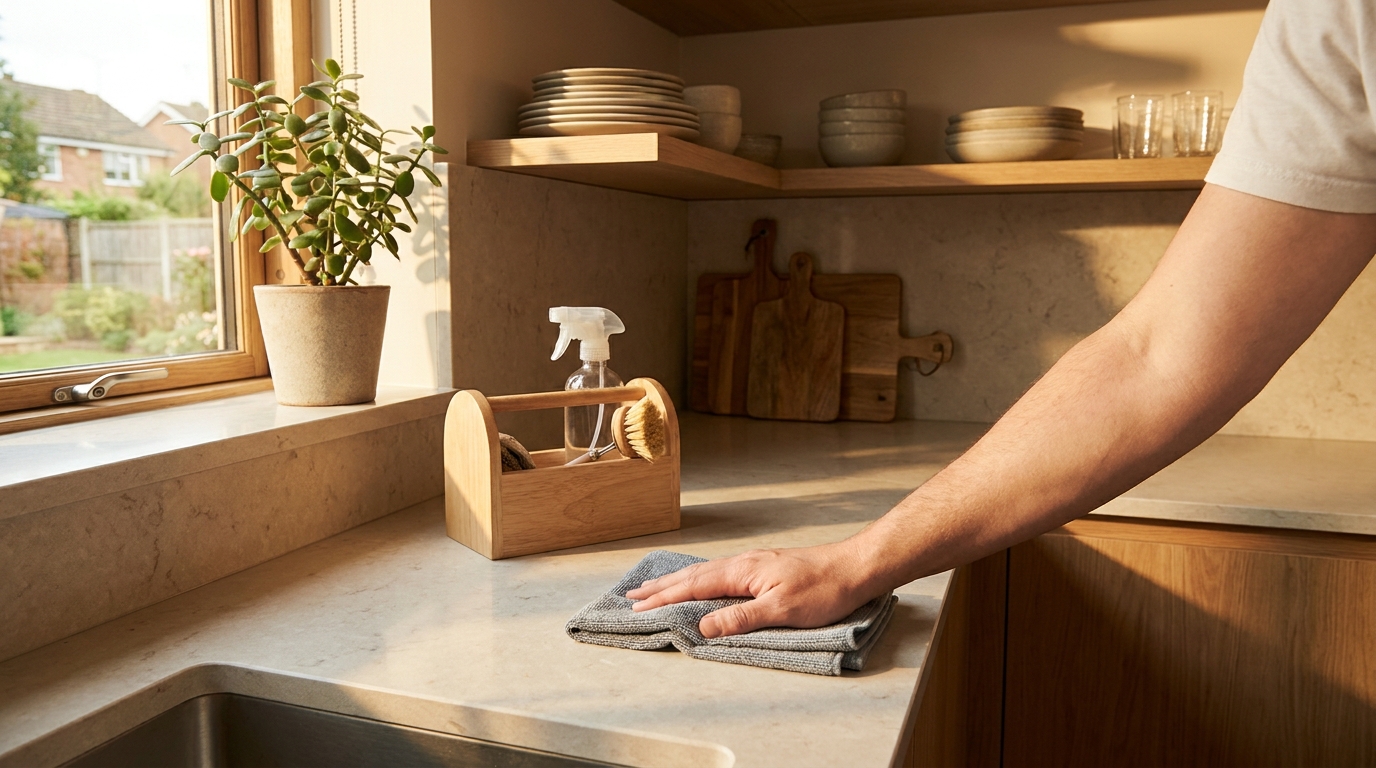
Start by clearing the counter of anything that does not belong there. Put away dishes, return food items to the pantry or refrigerator, and deal with obvious trash. Then wipe the counters using a cleaner that is appropriate for the surface. If your counters need a specific product, keep that in your caddy so there is no extra step to talk yourself out of. Pay attention to the areas around the sink, stove knobs, appliance handles, and the table edge, since these are used constantly.
The sink deserves special attention because a clear, clean sink changes the emotional temperature of a kitchen almost instantly. Even if there are still a few items drying nearby, a rinsed basin and a wiped faucet make the space look intentionally cared for. If you have time, load the dishwasher or wash the final few items before bed. Waking up to a clean sink and a clear counter is one of the simplest luxuries of daily life.
One of the easiest time-saving methods is to clean as you go while cooking. Rinse prep tools while food simmers, wipe spills before they dry, and put ingredients away before sitting down to eat. This tiny shift shortens the evening reset dramatically. It also helps your kitchen feel like a supportive place rather than the scene of a task you are dreading.
The Bathroom: A Two-Minute Refresh That Changes Everything
Bathrooms can feel messy very quickly, which is why small daily attention goes such a long way. A splash on the mirror, toothpaste around the sink, and a hand towel on the counter are all tiny things, yet together they make the room feel less restful. The good news is that a bathroom rarely needs a full scrub every day. It usually needs a quick visual refresh and attention to high-touch points.
Begin with the sink and vanity. Wipe away water spots, toothpaste residue, and obvious dust or hair. Straighten the hand towel or replace it if needed. Spot-clean the mirror instead of treating it like a major task. Then move to faucets, flush handles, and other frequently touched surfaces. This aligns beautifully with public guidance that emphasizes regular cleaning of high-touch areas.
If someone in the household is ill, that is the moment to be more deliberate about disinfection and to follow the product label exactly, including contact time. Otherwise, for day-to-day care, a clean vanity and sink make the room feel serene without requiring much effort. A bathroom that looks fresh also supports a better start and end to the day, which is one reason this small routine feels so rewarding.
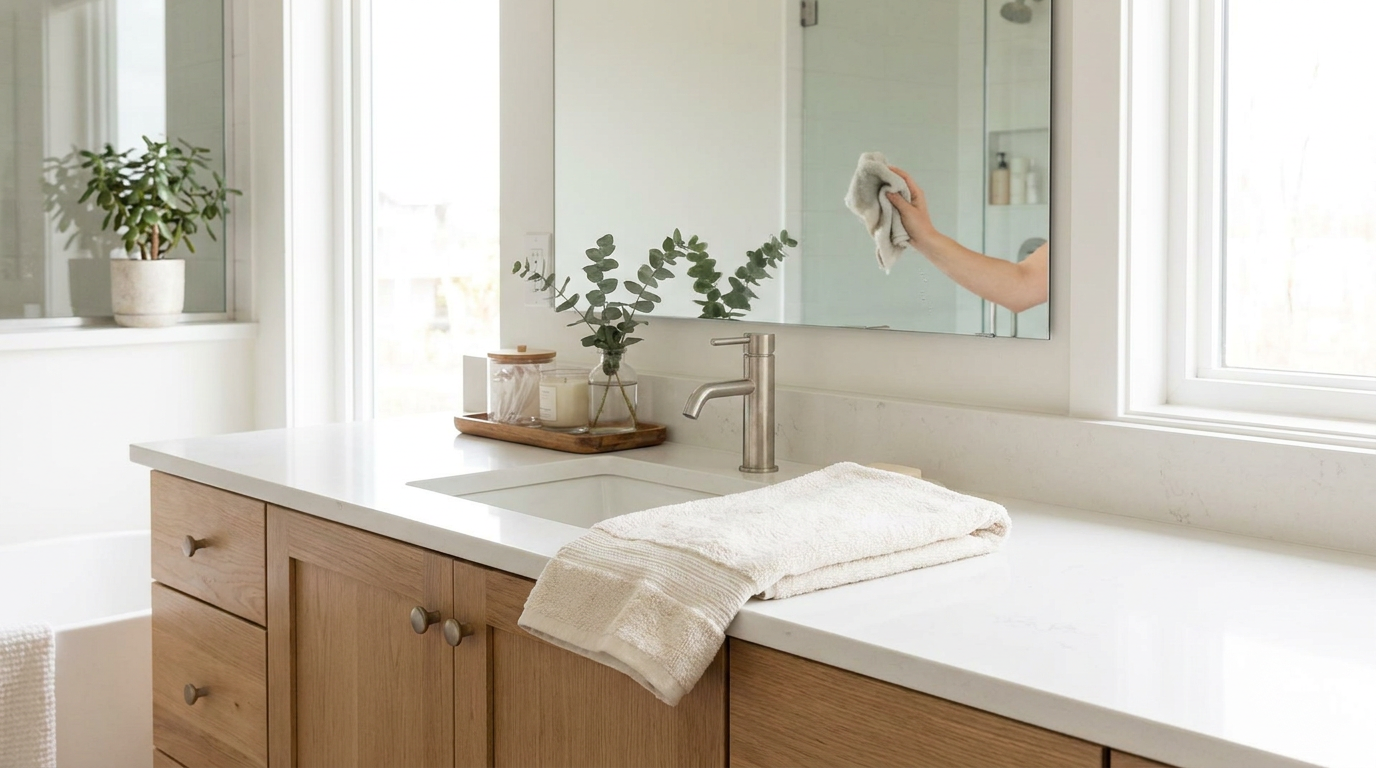
To make this space easier to maintain, keep surfaces as open as possible. A small tray for daily essentials can reduce visual clutter while making the room easier to wipe. Fewer objects on the counter means fewer things to move, fewer edges to clean around, and a calmer look all day long.
The Living Room: Reset the Feeling of the Home
Not every cleaning task is about sanitation. Some are about restoring emotional ease. The living room is a perfect example. This is where families gather, where children play, where you read, stream a show, fold laundry, or exhale at the end of the day. A living room rarely needs intense daily cleaning, but it often needs a reset that removes visual noise.
Start with a quick pickup. Gather cups, dishes, books, remotes, and anything that migrated in from another room. Fold throws, fluff cushions, and straighten the coffee table. If there are crumbs or pet hair, a fast pass with a handheld vacuum or a quick sweep can make the room feel instantly fresher. This does not have to be elaborate. It just needs to bring the room back to neutral.
The beauty of this kind of daily care is that it supports rest. Research suggests that cluttered and disorganized home environments can be associated with more stress and less restorative experiences. That helps explain why a two-minute room reset can feel surprisingly soothing. It is not shallow or aesthetic for its own sake. It is a practical way to reduce stimulation and help the home feel softer around you.
If you want to make this routine especially pleasant, pair it with a tiny sensory cue that signals closure. Open the curtains in the morning after tidying. Switch on a lamp in the evening after the reset. Put on one familiar song while you straighten the room. These cues are simple, but they turn the task into a ritual and that matters when you are trying to build consistency.
The Entryway: The Small Zone That Protects the Whole House
Entryways are often underestimated, but they have a powerful influence on daily life. They are where shoes pile up, bags drop, jackets gather, and paper accumulates. They are also the first thing you see when you come home, which means they have a direct effect on how the house welcomes you. A cluttered entry can make the whole home feel chaotic before you have even taken your coat off.
A daily entryway routine can be very simple. Return shoes to their place, hang coats, sort the mail, and wipe the surface of the console or bench if it has collected dust or debris. If your household tends to let small items drift here, create a few attractive boundaries such as a basket for accessories, a bowl for keys, and one defined spot for incoming papers. This keeps the area functional without making it feel overly strict.
For homes with children, this area can become much easier when every family member has a landing space that is easy to use. Hooks at the right height, labeled baskets, and a simple place for school items can reduce the daily mess dramatically. Household organization and routine have been associated in research with better child sleep outcomes and calmer home patterns, which is a lovely reminder that small structure can support the whole family.
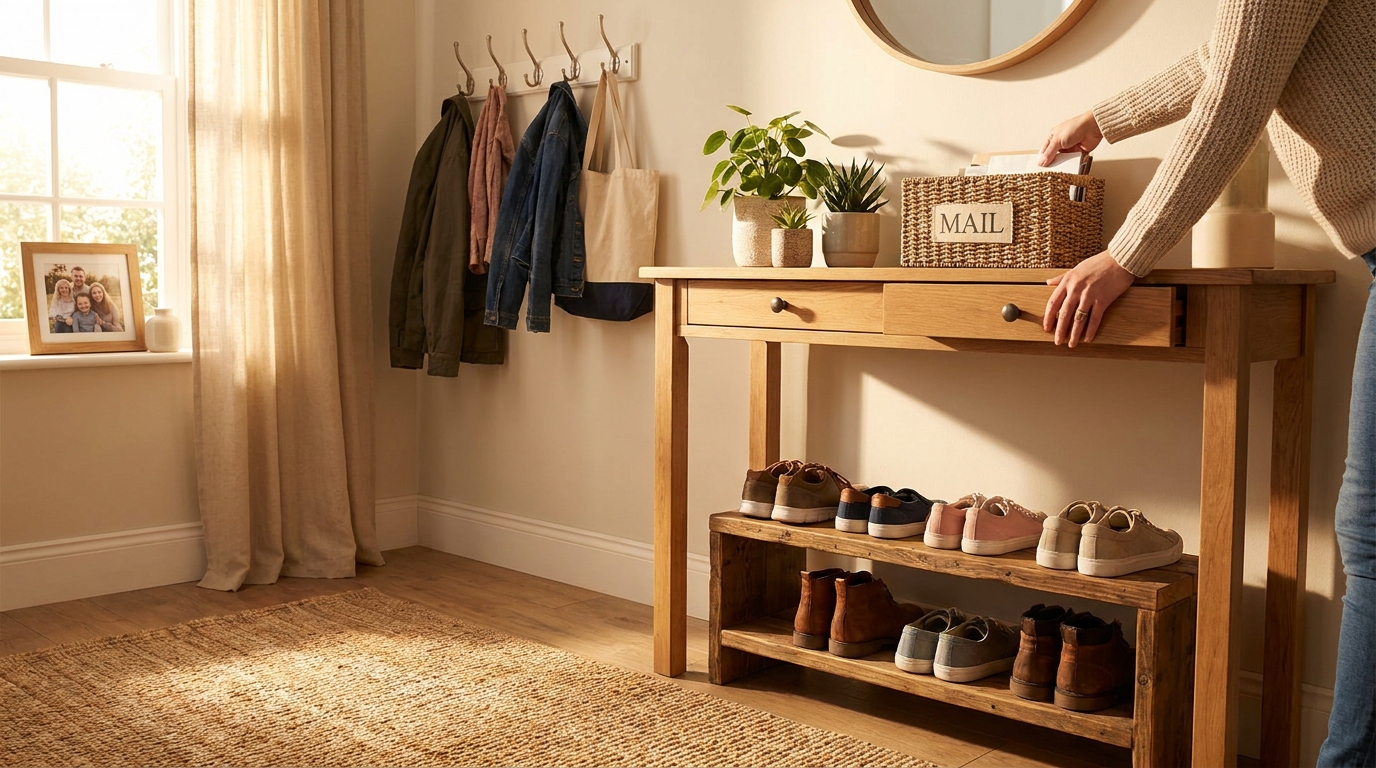
When the entryway is in order, it becomes easier to leave the house and easier to return. That may sound like a small thing, but it changes the rhythm of the day in meaningful ways.
High-Touch Surfaces: The Everyday Priority
If you ever feel unsure about where to focus your energy, come back to high-touch surfaces. These are the spots people interact with constantly, often without noticing. Think light switches, doorknobs, cabinet pulls, refrigerator handles, faucet handles, toilet flush levers, remote controls, and phones or device surfaces that can be cleaned according to manufacturer guidance. These points benefit most from regular attention because they collect fingerprints, residue, and everyday grime quickly.
Cleaning these areas daily or regularly does not take long because the surface area is small. Keep a cloth handy and work through them in the same order each day so the process becomes automatic. In households where someone is sick, this is also where more targeted disinfection may make sense, using the right product and label directions. In everyday life, though, simply keeping these spots clean can make the home feel fresher and better maintained.
This is an excellent example of how a small, evidence-based routine can outperform a dramatic but inconsistent one. Instead of wiping every single wall or spraying entire rooms, you are directing your effort to the places that matter most in daily use. That is what makes the routine sustainable.
How to Make Cleaning Feel Like Self-Care Instead of Punishment
The phrase cleaning as self-care can sound unrealistic if cleaning has always felt like an obligation. But in practice, this idea is not about pretending chores are glamorous. It is about recognizing that caring for your environment is also a way of caring for your nervous system, your comfort, and your future self. When you wipe the sink tonight, you are making tomorrow morning feel gentler. When you reset the sofa and table, you are creating a room that asks less of you later.
One way to support this feeling is to keep the routine sensory and pleasant. Use a cloth that feels soft in your hand. Choose products with scents you genuinely enjoy, while still using them safely and according to labels. Let in fresh air when possible. Play quiet music or a podcast you love. Wear an apron or indoor shoes if that helps the task feel intentional rather than reactive. None of this is frivolous. The easier and more pleasant the routine feels, the more likely you are to keep doing it.
It also helps to release the idea that every daily reset must produce showroom perfection. Some days, the win is simply an empty sink and clear surfaces. Other days, you may have energy to wipe mirrors, sweep floors, and refresh the entry basket. The value of a routine is not that it looks identical every day. The value is that it keeps the home from tipping into overwhelm.
Daily cleaning works best when it feels like a gift to your home, not a punishment for living in it.
Common Mistakes That Make Daily Cleaning Harder
Many cleaning frustrations come from strategy rather than effort. One common mistake is treating daily cleaning like a full-house deep clean. This creates unnecessary pressure and almost guarantees resistance. Daily cleaning should be light, visible, and repeatable. Save the oven interior, baseboards, and other bigger tasks for weekly or monthly schedules.
Another mistake is overusing products or assuming stronger means cleaner. In reality, products work best when used properly and on the surfaces they are intended for. Disinfectants in particular should be EPA-registered and used according to label directions, including contact time. Spraying randomly and wiping immediately may not deliver the intended effect, and it can make the home smell harsh without offering much benefit.
A third mistake is trying to clean without decluttering first. Objects create friction. If every surface is crowded with small items, even a quick wipe becomes annoying. Clearing visual clutter is often half the job. That is why tidy-as-you-go habits are so powerful. They reduce the buildup that makes cleaning feel larger than it really is.
Finally, many people sabotage themselves with inconsistency in order. If you clean the kitchen first one day, then start upstairs the next, then drift into laundry the day after that, you are forcing your brain to make too many small decisions. A fixed order turns the routine into muscle memory, which is the true secret to making it easy.
A Sample Daily Cleaning Schedule for Real Life
If you want a simple model to follow, here is a realistic version that works well for many homes. You can do it all at once or split it across the day. The important part is not the exact timing. It is the repeatable rhythm.
Morning reset
Open curtains, make the bed, clear breakfast dishes, wipe the kitchen counter, and rinse the sink. This gives the home an immediate sense of freshness and reduces the chance that the day begins in visual clutter.
Afternoon touch-up
Spend a few minutes returning stray items to their places, sorting mail, and checking the entryway. If you work from home or spend part of the day in the house, this small touch-up can prevent the late-day pileup that makes evenings feel heavier.
Evening reset
Load or unload dishes, wipe the sink and counters, refresh the bathroom vanity, fold blankets, clear the coffee table, and straighten the entry area. This prepares the home for a calmer next morning and often helps your mind settle too.
If that still feels like too much, reduce the list to three essentials: clear surfaces, clean the sink, and reset the room you use most. Those three things alone can shift the atmosphere of a home in a meaningful way.
What Daily Cleaning Should Not Include
A healthy routine becomes easier when you know what to leave out. Daily cleaning does not need to include heavy scrubbing, moving furniture, organizing every drawer, or disinfecting every visible surface. It should not require a dozen specialty products, and it should not leave you feeling like your home is a problem to solve every single day. If your current routine feels that way, it may simply be trying to do too much.
Instead, think of daily cleaning as a layer of maintenance that protects your peace and prepares the house for normal living. Weekly tasks can include changing bed linens, vacuuming more thoroughly, cleaning showers more deeply, and mopping floors. Monthly tasks can tackle forgotten corners, appliance interiors, and bigger organizational resets. Keeping those categories separate is one of the kindest things you can do for yourself.
The Real Reward of a Daily Cleaning Routine
The reward of a daily cleaning routine is not just a sparkling faucet or a crumb-free counter, although those are lovely. The deeper reward is a home that feels easier to inhabit. It is the relief of not starting each day already behind. It is the comfort of walking into a room that feels settled rather than noisy. It is the way a clear surface can lower the mental volume of an otherwise busy life.
That is why the most successful routines are built on simplicity. Clean first, disinfect only when needed. Focus on high-touch points and visible surfaces. Work from high to low and clean to dirty. Use a small set of tools, keep them accessible, and follow the same order every day. Let the routine be short. Let it be supportive. Let it fit the life you actually have.
If you are just beginning, start tonight with one reset. Clear the kitchen counter. Wipe the sink. Straighten the room you will wake up to tomorrow. Open a window for a few minutes if you can. Notice how much lighter the home feels with just those steps. Then do the same thing tomorrow. Over time, the sparkle you create will not only be something you see. It will be something you feel.
Frequently Asked Questions About Daily Cleaning
How long should a daily cleaning routine take?
For most homes, a daily cleaning routine can take anywhere from 10 to 20 minutes depending on the size of the space and how many people live there. The goal is not to clean everything. The goal is to maintain the most-used areas so mess never becomes overwhelming.
Do I need to disinfect every day?
Usually, no. In most homes, regular cleaning of high-touch surfaces and visibly dirty areas is the everyday priority. Disinfection is generally most useful when someone is sick or when there is a specific need for a higher level of germ reduction. If you disinfect, use an EPA-registered product and follow the label exactly.
What are the most important places to clean daily?
The most useful daily targets are the kitchen counters and sink, bathroom vanity and sink, high-touch surfaces like handles and switches, the dining or coffee table, and the entryway. These zones have the biggest effect on both hygiene and how calm the home feels.
How can I stay consistent with cleaning?
Consistency becomes much easier when the routine is short, done in the same order, and connected to a habit you already have. Try tying it to breakfast cleanup or your evening wind-down. Keep tools easy to reach and focus on a few micro-zones rather than the whole house.
Is cleaning really connected to well-being?
Research suggests that cluttered, disorganized, and stressful home environments are associated with more stress and poorer sleep, while more restorative and orderly environments are linked with better well-being. That is one reason daily cleaning can feel so supportive. It is not only about appearance. It is also about comfort and calm.



No Comment! Be the first one.