


There is something deeply reassuring about a family room that truly works. It is the place where people drop their bags after a long day, where children sprawl out with homework or puzzles, where adults catch up on emails, where movies turn into rituals, and where casual conversations often become the best part of the evening. In many homes today, this room carries more responsibility than ever before. It is no longer only a place for television or occasional lounging. It has become one of the hardest-working spaces in the house, expected to support rest, connection, productivity, play, and flexibility all at once.
Table Of Content
- Why the Multi-Purpose Family Room Matters More Than Ever
- Start With the Emotional Role of the Room
- Use Zoning to Make One Room Do More
- How to define zones without making the room feel smaller
- Choose Furniture That Feels Comfortable and Flexible
- Make Storage Part of the Design, Not an Afterthought
- Layer the Lighting for Every Mood and Task
- Do Not Overlook Acoustics and Noise Control
- Create Healthy Comfort With Better Air and Materials
- Plan for Work, Homework, and Quiet Focus Without Losing Warmth
- Design for All Ages and Life Stages
- Keep the Aesthetic Warm, Cohesive, and Easy to Live With
- How to Transition the Room Through the Day
- Common Mistakes to Avoid
- A Simple Planning Framework for Your Own Space
- The Real Luxury of a Room That Adapts
That shift is not just anecdotal. Statistics Canada has reported that 22.4% of Canadian workers were usually working from home in 2022, and research has also shown that a significant share of jobs can be performed remotely in principle. Across Canada and the United States, that means many households are still living with blended routines where work, school, caregiving, and downtime overlap under one roof. A well-designed multi-purpose family room responds to that reality beautifully. It helps a home feel more generous, even if the square footage has not changed, because the room is able to adapt to the rhythms of real life.
The emotional benefit of this kind of room is just as important as the practical one. A flexible family room can reduce daily friction, lower visual stress, and create a sense of ease. Instead of everyone competing for separate corners of the house, the room becomes a shared environment with enough structure to support togetherness and enough nuance to offer privacy when needed. The result is a home that feels more supportive, more comfortable, and more in tune with the family living inside it.
A multi-purpose family room is a single shared living space designed to support several everyday functions—relaxing, entertaining, working, studying, and children’s play—without requiring separate dedicated rooms for each activity. Rather than treating the family room as a place for television alone, this approach organizes the space into distinct zones for lounging, media, homework or remote work, and play, using tools such as rugs, furniture placement, layered lighting, and closed storage to keep each activity visually and functionally separate. The goal is not to pack every possible use into one area, but to make deliberate choices so the room can shift between roles throughout the day without feeling cluttered or chaotic. A well-planned multi-purpose family room stays comfortable and calm because it includes zoning for privacy and focus, flexible furniture that adapts to changing needs, and storage that lets the space reset quickly after each use.
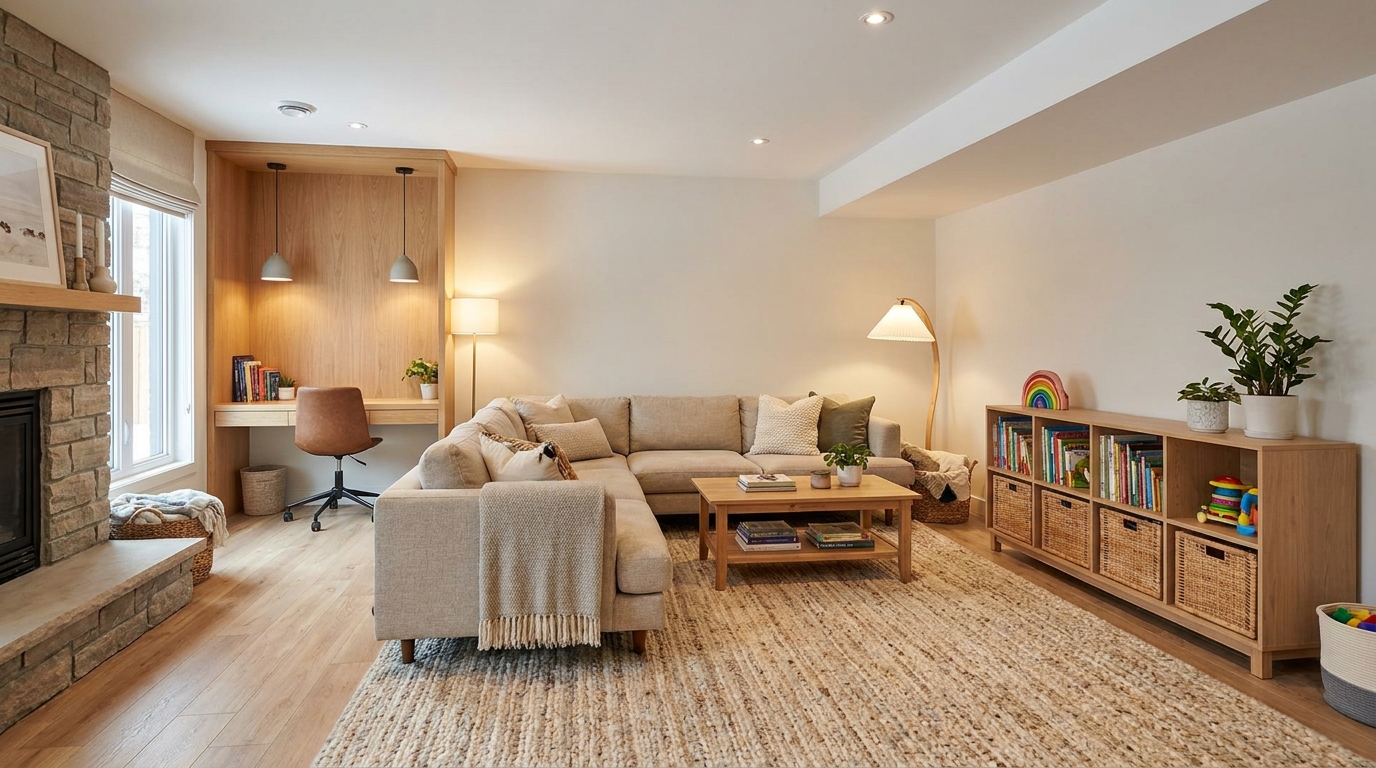
Designing a multi-purpose family room is not about cramming every possible function into one area. It is about making intentional choices that allow the room to shift easily without feeling chaotic. It should still feel warm, inviting, and emotionally grounding. The best versions are not overly complicated. They are simply thoughtful, with each decision helping the room move gracefully from one use to another.
This guide explores how to create a family room that supports modern life with comfort and functionality. From zoning and furniture to lighting, acoustics, storage, indoor air quality, and future-proof design, every element contributes to a space that feels easier to live in day after day. When designed well, a multi-purpose family room does more than look good. It gives a family a better way to be together.
Why the Multi-Purpose Family Room Matters More Than Ever
The idea of one room serving many roles is not a passing trend. It reflects how homes are being used now. Hybrid work remains common, children often need flexible places for study and play, and many families want to spend more time together without sacrificing individual needs. In that context, a family room becomes a kind of daily anchor. It is where routines overlap in manageable ways, and where a household can feel coordinated rather than pulled apart.
There is also a financial and spatial reality behind this shift. Not every home has a dedicated office, playroom, guest room, media room, and fitness area. Most people need one or two shared spaces to perform several jobs. That can sound like a compromise, but it can actually lead to more intentional and more satisfying design. Rather than filling a house with single-use rooms, families can create one highly responsive room that adjusts with their needs over time.
Experts in housing and home design have also been emphasizing adaptability for long-term living. CMHC promotes universal design as a way to help homes evolve, remain usable across life stages, and support aging in place. Harvard’s Joint Center for Housing Studies has similarly highlighted the importance of flexible design and home modifications for households with older residents or residents with disabilities. In other words, the multi-purpose family room is not only helpful for this season of life. It can become part of a home’s long-term resilience.
A truly successful family room does not ask a family to live around the room. It allows the room to live around the family.
That perspective changes the design goal entirely. Instead of chasing a picture-perfect space that looks good for a few moments, the focus becomes comfort, ease, and usability. Beauty still matters, of course, but it works best when it supports life rather than interrupting it. The most loved family rooms often feel polished without being precious, and organized without feeling rigid.
Start With the Emotional Role of the Room
Before choosing furniture or paint, it helps to think about how you want the room to feel. This question may seem softer than practical planning, but it often leads to better decisions. A family room can be calming, social, restorative, playful, focused, or some combination of all these qualities. When you identify the atmosphere you want, you can make choices that support that mood in a consistent way.
For many households, the dream is a room that feels relaxed but not messy, welcoming but not noisy, and versatile without looking temporary. That emotional balance is created by dozens of small details. Soft lighting, pleasant textures, visual order, and furniture that invites people to settle in all contribute to a sense of comfort. At the same time, enough structure is needed so the room can support work or homework without becoming distracting.
Think about the moments that matter most in your household. Perhaps it is movie night with blankets and dimmed lights. Perhaps it is a quiet morning coffee before the day begins. Perhaps it is after-school time when everyone seems to need the room at once. Designing around those recurring experiences gives the room emotional clarity. It becomes not just functional, but deeply supportive of family life.
Use Zoning to Make One Room Do More
The single most important principle in a multi-purpose family room is zoning. Open rooms can feel airy and generous, but without clear zones, they often become visually noisy and hard to use. Houzz design guidance regularly points out that open-plan spaces need defined sub-areas to function well. This is especially true in family rooms, where multiple activities may happen at the same time.
Zoning does not mean building walls. It simply means giving each activity a natural place. A lounge area might center around the sofa and media unit. A small reading corner could sit near a lamp and side table. A homework or laptop station might live along one wall or near a window. A child-friendly area for games or toys can be contained with smart storage and a soft rug. When each function has a visual home, the room feels calmer and more intuitive.
Rugs are one of the easiest tools for zoning because they create visual boundaries without closing off the room. Furniture placement is another powerful strategy. A sectional can subtly define the lounge area, while a console table behind it can create a sense of transition. Open shelving, low cabinets, and even changes in lighting can help distinguish one zone from another. The room still feels connected, but each area has its own purpose.
The beauty of zoning is that it supports both togetherness and independence. Someone can read while another person watches television. A child can color at a small table while an adult answers emails nearby. The room becomes capable of handling parallel routines without turning into a tangle of interruptions. That alone can transform the emotional energy of a home.
How to define zones without making the room feel smaller
Many people worry that creating zones will make a room feel cluttered or chopped up. In practice, the opposite is usually true. Clear zones reduce visual confusion because they stop activities from spreading everywhere. The key is to keep transitions soft and cohesive. Repeat colors across the room, choose furniture with compatible finishes, and maintain enough open floor space so movement feels easy.
It also helps to think vertically. Wall-mounted shelving, slim desks, and storage that uses height rather than floor area can add function without heaviness. If the room is modest in size, select pieces that can pull double duty, such as a storage ottoman, a nesting side table, or a bench that can serve as seating and hidden storage. The goal is not to crowd the room with solutions. It is to choose a few graceful ones that support several needs at once.
Choose Furniture That Feels Comfortable and Flexible
Comfort is the heart of a successful family room, and furniture has a huge role in that. Start with seating that genuinely invites people to stay. A deep sofa, a sectional with soft but supportive cushions, or a pair of lounge chairs can create a welcoming base for the room. This is where people decompress, connect, and gather, so comfort should come before trendiness.
That said, flexibility matters just as much. In a multi-purpose room, furniture should be able to shift or adapt when needed. Lightweight side tables can move closer for work or snacks. Poufs can serve as footrests, extra seating, or play surfaces. An ottoman with a tray can become a coffee table one moment and a soft landing place the next. Pieces that do more than one job are often what make the room feel effortless.
Scale is another detail that affects functionality. Oversized furniture can dominate a room and limit how else it can be used. Very small pieces, on the other hand, can leave the room feeling unsupported or temporary. Aim for furniture that fits the space generously but leaves enough circulation to move comfortably. If a desk or table is part of the family room, choose one that feels integrated with the rest of the design rather than looking like a leftover office piece.
Curved forms and tactile materials are especially appealing right now, and for good reason. Recent design trends have leaned toward warmer palettes, layered textures, and softer shapes. In a multi-purpose family room, these choices make the space feel more relaxed and inviting while visually softening the practical elements. A rounded coffee table, a boucle accent chair, a woven basket, or linen drapery can all help the room feel polished and emotionally warm.
Make Storage Part of the Design, Not an Afterthought
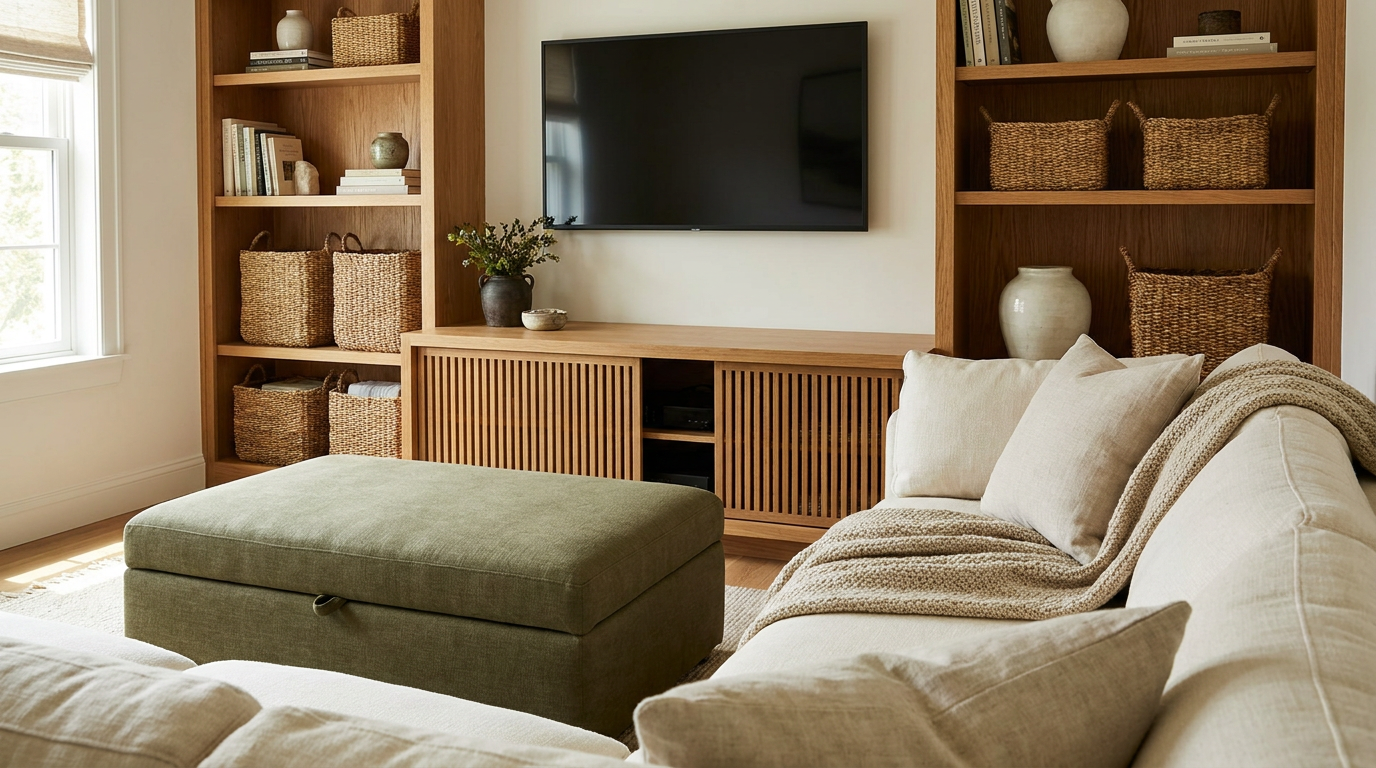
One of the biggest misconceptions about a multi-purpose room is that it must feel cluttered. In reality, thoughtful storage often makes these spaces feel more peaceful than single-use rooms. The reason is simple. When a room needs to change function throughout the day, it also needs a way to reset quickly. Good storage provides that reset.
Closed storage is especially valuable because it helps control visual noise. Media equipment, toys, craft supplies, chargers, paperwork, blankets, and games can all disappear behind cabinet doors when not in use. This does not mean everything should be hidden. Open shelving can still display books, baskets, and decorative objects beautifully. The goal is balance. Keep the visual field calm while ensuring frequently used items are still easy to reach.
Baskets, drawers, ottomans with hidden compartments, and built-ins are some of the most useful tools in a family room. Group items by activity so transitions are simpler. Homework supplies can live in one bin, gaming accessories in another, and cozy evening essentials such as throws or candles in a nearby basket. When each category has a designated place, cleanup becomes less of a project and more of a natural part of the routine.
Concealed storage also supports emotional comfort. It allows the room to feel serene even after a busy day. That matters more than many people realize. Visual clutter can make a room feel louder and more stressful, especially when families are already juggling work, school, and household tasks. Storage is not just about neatness. It is about creating breathing room.
Layer the Lighting for Every Mood and Task
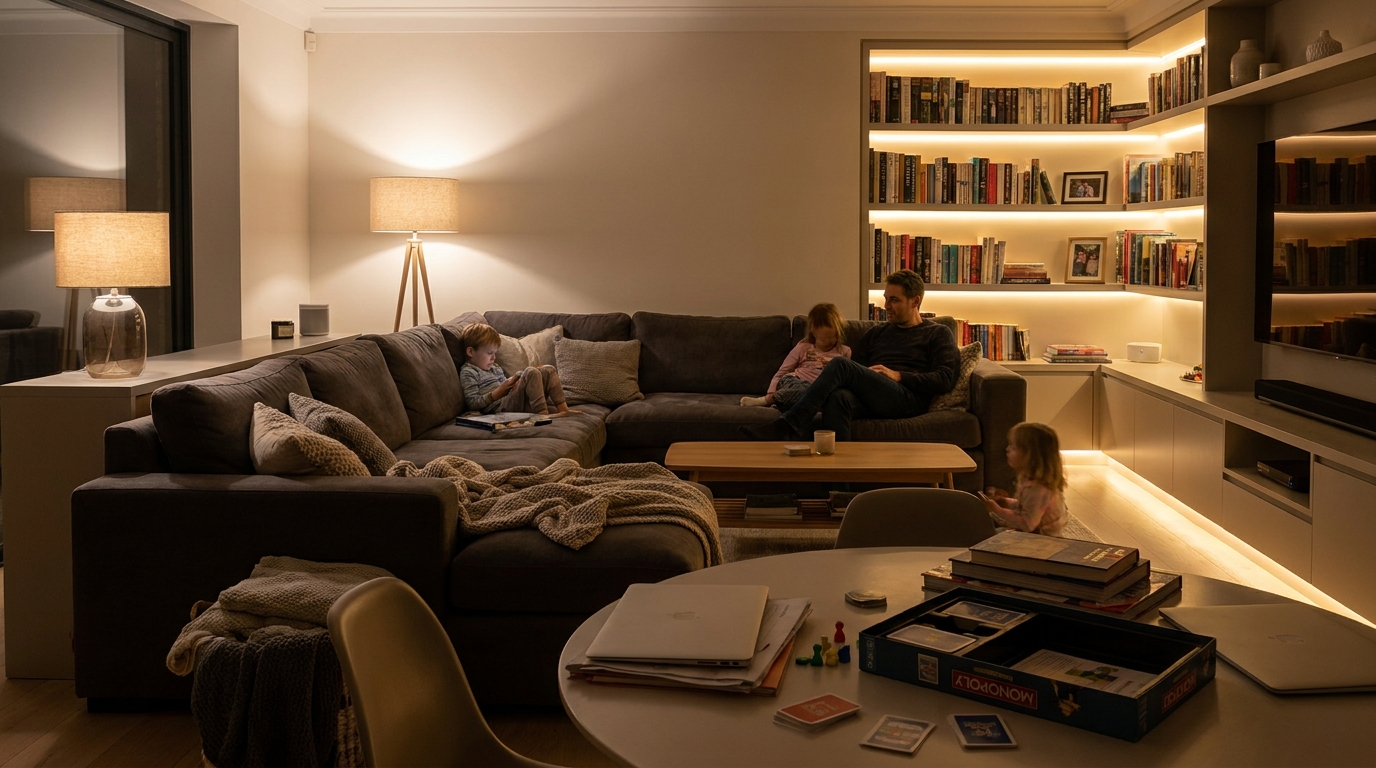
Lighting can completely change how a family room functions. A single overhead fixture is rarely enough for a room that needs to support conversation, entertainment, reading, homework, and relaxation. Layered lighting creates flexibility by allowing the room to shift mood and purpose throughout the day. It is one of the smartest investments you can make in a multi-purpose space.
Start with ambient lighting, which provides the general glow of the room. Then add task lighting where focused activities happen, such as a reading lamp beside a chair or a small lamp at a desk. Finally, include accent lighting to create atmosphere, perhaps with table lamps, picture lights, or soft shelf illumination. Together, these layers make the room feel both practical and inviting.
ENERGY STAR notes that LED lighting can use up to 90% less energy than incandescent bulbs and lasts much longer, making it an excellent choice for family rooms that see heavy daily use. Dimmers are especially worth considering because they allow one space to move easily from bright afternoon productivity to a softer evening mood. Smart lighting can also be helpful, particularly for households that like scene-based controls for movie nights, quiet mornings, or after-school study time.
Natural light should be part of the plan too. If possible, place reading or work zones near windows, and use window treatments that can soften glare without darkening the room entirely. A family room feels best when it responds gently to the time of day. Bright and energizing in the morning, comfortable and balanced in the afternoon, and calm by evening.
Do Not Overlook Acoustics and Noise Control
When one room serves many purposes, sound becomes part of the design conversation. A family room that looks beautiful can still feel exhausting if every activity echoes or competes. Television audio, work calls, music, gaming, conversation, and children at play all create layers of noise. Softening that sound helps the room feel calmer and far more usable.
Textiles are one of the easiest ways to improve acoustics. Rugs, curtains, upholstered furniture, and cushions all absorb sound and reduce harshness. Bookshelves can help too, especially when styled with a mix of books and objects rather than empty hard surfaces. If the room has high ceilings or a lot of glass, adding more softness will usually make a noticeable difference.
Arrangement matters as well. Position the television or louder activity zones away from any desk nook or reading corner if possible. Consider headphones for gaming or work calls when several people share the room at once. Even a small shift in furniture placement can improve how sound moves through the space. The goal is not silence. It is a gentler acoustic environment that allows several forms of living to happen with less friction.
Create Healthy Comfort With Better Air and Materials
A comfortable room is not only about what you can see. It is also about what you breathe and how the space feels physically over time. Because family rooms are often high-use areas, indoor air quality matters. ASHRAE emphasizes that well-designed residential ventilation improves indoor air quality and can reduce health problems. In a room where people gather for hours at a time, that is especially meaningful.
If you are renovating, consider low-emission paints, finishes, and furnishings when possible. If you are simply refreshing the space, focus on practical habits that improve comfort, such as regular filter changes, good ventilation, and avoiding an overload of dust-trapping clutter. Air purifiers can be helpful in some homes, especially in households with allergies, pets, or heavy seasonal use of closed windows.
Temperature also affects how well a family room functions. Spaces that are too warm, too cold, or difficult to ventilate often become frustrating quickly. Layered window treatments, ceiling fans, and thoughtful furniture placement can all help. Comfort should feel stable and easy rather than something the family is constantly trying to correct.
Plan for Work, Homework, and Quiet Focus Without Losing Warmth
One of the biggest changes in modern family rooms is the need to support productivity. A room that once only hosted downtime may now also need to accommodate remote work, school assignments, paperwork, or creative projects. The challenge is to make these functions feel integrated rather than intrusive. A family room should still feel like a place to live, not an office that happens to have a sofa.
A compact desk, a slim console used as a laptop station, or a small round table that can shift between homework and hobbies can all work well. Keep the setup visually light and style it as part of the room with a good lamp, a comfortable chair, and a few attractive organizational pieces. If there is no permanent desk, a beautifully organized cabinet that stores a laptop tray, chargers, and office essentials can make temporary work sessions feel easy and tidy.
Privacy matters too, even in a shared room. A chair angled away from the television, a small screen, or a bookshelf divider can create just enough separation for concentration. This is where zoning becomes especially valuable. The work area does not need to be hidden, but it does need enough definition that the person using it can think clearly without feeling in the middle of everything.
Design for All Ages and Life Stages
A family room should not only serve the people in the house today. It should also be able to support who they may become over time. This is where universal design becomes so relevant. CMHC has explained that universal design helps homes evolve with residents and supports aging in place. It is not only for seniors or people with disabilities. It benefits families at every stage by making spaces easier, safer, and more comfortable to use.
In practical terms, that may mean choosing furniture that is easy to sit in and rise from, leaving clear walkways, selecting durable flooring with minimal trip hazards, and using handles, switches, and storage that are accessible for a range of users. If the family room may one day need to support caregiving, mobility aids, or longer hours of home-based living, these choices become even more valuable. Flexible design rarely feels limiting. More often, it feels quietly intelligent.
Children also benefit from this kind of thinking. Easy-to-reach storage encourages independence. Rounded furniture corners can feel safer and softer. Durable washable fabrics reduce stress. A room designed with multiple ages in mind tends to feel more forgiving and more welcoming, which is exactly what a family room should be.
Universal design is not about making a room feel clinical. It is about creating ease, dignity, and confidence in everyday use.
Keep the Aesthetic Warm, Cohesive, and Easy to Live With
Because a multi-purpose family room does so much, it needs visual cohesion to avoid feeling busy. A warm, earthy palette is often especially successful because it creates a sense of calm and softness. Think clay, sand, taupe, caramel, olive, muted rust, warm gray, and creamy white. These tones are forgiving, timeless, and easy to layer with natural wood, woven textures, and upholstered pieces.
Texture is equally important. In rooms with many functions, tactile layering adds comfort while helping the design feel intentional. A wool rug, linen drapery, a boucle chair, soft throws, and matte finishes can all make the room feel more grounded. These elements are not just decorative. They support acoustics, warmth, and emotional ease.
Try not to treat every part of the room as separate from the others. Even with clear zones, there should be a common visual language. Repeat materials, colors, or shapes across the space so the room feels unified. The work nook, reading corner, and media area should feel like parts of one home story rather than unrelated setups sharing a room.
How to Transition the Room Through the Day
The best multi-purpose family rooms are designed for rhythm. They understand that a family does not use the room the same way at 8 a.m. as it does at 8 p.m. Instead of resisting that reality, the room should make transitions easy. This may mean brightening the lights in the morning, clearing the coffee table for homework in the afternoon, and dimming the lamps for a movie at night.
Small routines can support these shifts beautifully. A basket that stores work supplies can be tucked away after the day ends. A tray can gather remotes, coasters, and candles for evening use. Blankets can be folded into a bench or basket when guests arrive. These gestures may seem minor, but they help the room reset itself in ways that feel satisfying rather than exhausting.
Smart home controls can help too, especially for lighting and media. Pre-set scenes allow the room to change mood almost instantly, which is useful in households where time is tight and routines move quickly. The room feels responsive, and that responsiveness adds to the sense of control and calm.
Common Mistakes to Avoid
Many family rooms struggle not because the idea is wrong, but because the planning is incomplete. One common mistake is trying to make the room do everything without giving each activity a clear place. Another is relying only on one type of lighting, which leaves the room feeling either harsh or dim depending on the hour. Skipping storage is another frequent issue, and it often leads to the clutter people mistakenly assume is inevitable in a multi-purpose space.
It is also worth challenging the idea that open concept automatically means better living. Large shared rooms can feel noisy, exposed, and hard to regulate if they are not carefully planned. Privacy and containment still matter. Even within an open room, people need visual boundaries and moments of retreat.
Finally, avoid focusing only on appearance. A room can be stylish and still fail if it ignores acoustics, comfort, ventilation, or adaptability. The most successful family rooms are beautiful because they feel good to live in. Their aesthetic grows out of their usefulness, not the other way around.
A Simple Planning Framework for Your Own Space
If you are designing or updating your family room, it helps to move through a simple sequence. Start by listing the room’s top functions. Be honest about what happens there now and what you need it to support in the future. Then identify which activities can happen simultaneously and which ones need more separation.
- Define the room’s core roles. Choose three to five real priorities such as lounging, media viewing, homework, remote work, reading, or play.
- Create zones. Use rugs, furniture placement, lighting, and storage to give each activity a natural home.
- Invest in comfort. Choose seating, textiles, and lighting that make people want to spend time in the room.
- Plan storage early. Make sure the room can reset quickly after each use.
- Support health and calm. Consider acoustics, ventilation, and durable low-stress materials.
- Think ahead. Choose flexible features that can serve your family through changing life stages.
This framework keeps the process grounded in real living. It also helps prevent expensive decisions that look appealing at first but do not hold up under everyday use. A successful family room is never only about one purchase or one style choice. It is about how all the parts work together.
The Real Luxury of a Room That Adapts
When people think of luxury in a home, they often imagine expensive materials or dramatic square footage. But there is another kind of luxury that feels even more meaningful in daily life. It is the luxury of a room that adapts. A room that can welcome noise and quiet, play and focus, guests and solitude, all without asking too much from the people who use it. That kind of ease is powerful.
A multi-purpose family room offers exactly that. It reflects the truth that modern family life is layered and evolving. It supports togetherness without forcing it. It allows productivity without sacrificing softness. And it creates a backdrop for routines that feel less frantic and more grounded.
In the end, the most beautiful family rooms are not the ones that seem untouched. They are the ones that hold life gracefully. They help a family gather easily, work quietly, store things neatly, and shift from one part of the day to the next with less stress. When a room can do all of that, it becomes much more than a design project. It becomes part of the home’s emotional intelligence, quietly making everyday life feel better.



No Comment! Be the first one.