


Affordable housing has become one of the defining urban development challenges of our time. In fast growing cities, the issue is no longer whether demand exists. The issue is whether land use systems, financing structures, infrastructure planning, and delivery models can keep up with the scale and complexity of that demand. For households, this challenge is deeply personal because it affects rent burdens, housing stability, commute times, family formation, and access to opportunity. For cities, it is strategic because housing supply influences economic competitiveness, workforce attraction, public health, and long term social cohesion.
Table Of Content
- The Affordable Housing Challenge Is a Systems Problem
- Why Rental Supply Has Moved to the Center of the Strategy
- Missing Middle Housing as a Practical Urban Growth Tool
- Why By Right Approval Matters
- The Housing Accelerator Fund and the Power of Incentive Based Reform
- Modular, Prefabricated, and Standardized Delivery Systems
- Standardization Without Monotony
- Transit Oriented Development and the Geography of Opportunity
- Adaptive Reuse and Mixed Use Density
- Financing Affordable Housing Requires Layered Capital and Clear Priorities
- Community Engagement as a Development Variable, Not a Formality
- Case Study Patterns That Point to What Works
- What Developers, Municipalities, and Communities Should Prioritize Next
- Conclusion: Innovation Means Building a Better Housing Delivery System
Too often, the conversation about affordability becomes overly narrow. It gets reduced to one construction type, one subsidy source, or one political debate about density. In reality, successful affordable housing development depends on a coordinated framework. It requires municipalities that are willing to reform zoning and approvals, developers that can structure financially viable projects, public agencies that can align incentives with outcomes, and communities that are meaningfully engaged in shaping growth. Innovation in this context is not a single technology or product. It is a smarter operating system for housing delivery.
That is especially important in today’s market. Recent reporting from CMHC shows that rental construction has become a dominant driver of supply, while many municipalities participating in the Housing Accelerator Fund are adopting reforms that allow more duplexes, triplexes, fourplexes, and other missing middle forms in established neighborhoods. At the same time, development teams are testing modular, prefabricated, and panelized systems to improve schedule certainty and cost predictability. These trends point to a larger lesson. The future of affordable housing will be shaped by strategic coordination across planning, policy, finance, construction, and public trust.
The most effective strategies for innovative affordable housing development combine several forces at once: a shift toward purpose-built rental supply, zoning reform that legalizes missing middle housing such as duplexes and fourplexes, streamlined by-right approvals that reduce delay and carrying costs, modular and prefabricated construction that improves schedule certainty, transit-oriented and mixed-use development that lowers household transportation costs, and layered public and private financing that matches the depth of subsidy to the depth of need. None of these tools works well in isolation. Housing delivery improves when zoning, financing, construction methods, and community engagement are coordinated as one system rather than treated as separate initiatives. The goal is not simply to build more units. It is to create durable, accessible, and financially sustainable places that communities can accept and support over time.
The Affordable Housing Challenge Is a Systems Problem
When people hear the phrase affordable housing, they often imagine one specific product type, such as government funded apartments or deeply subsidized social housing. Those forms remain essential, especially for households with the greatest needs, but they are only one part of the picture. Affordability is shaped by the interaction between land costs, planning rules, entitlement timelines, construction methods, debt pricing, operating costs, household incomes, and available subsidies. If any one of those variables is misaligned, a project can become delayed, downsized, or financially infeasible.
That is why supply alone, while essential, does not automatically solve every affordability problem. Harvard JCHS reported in 2024 that 11.0 million extremely low income renter households in the United States were competing for only 3.8 million affordable and available units. This gap illustrates the depth of the challenge at the lower end of the market. Even when cities add new homes, the mismatch between incomes and rents can remain severe unless public policy also addresses operating subsidies, supportive services, and targeted affordability mechanisms.
In Canada, the supply side picture is also complex. CMHC reported 227,697 urban housing starts in 2024, up 2 percent from 2023, and 245,120 total starts nationally including rural areas. Those numbers show the market is still producing homes, but CMHC also noted in its 2024 outlook that starts were expected to soften before recovering in 2025 and 2026 due to higher interest rates and financing pressures. In other words, the need for housing may be urgent, but the ability to deliver it remains highly sensitive to capital markets and development feasibility.
For decision makers, the implication is clear. Affordable housing should be approached as a systems problem rather than a stand alone building problem. The cities that make the most progress are not simply approving isolated projects. They are redesigning the conditions under which housing can be delivered at scale. That means updating zoning, reducing soft costs, coordinating infrastructure, mobilizing public land, encouraging rental supply, and making approvals more predictable.
Why Rental Supply Has Moved to the Center of the Strategy
One of the most important shifts in the current market is the renewed focus on purpose built rental housing. In large urban regions, rental supply is increasingly carrying the burden of responding to population growth, immigration, delayed homeownership, and affordability pressures. For many households, particularly younger workers, newcomers, seniors, and moderate income families, rental housing is not a temporary step. It is a long term tenure option that needs to be well located, stable, and professionally managed.
From a strategic development perspective, rental has several advantages. It can be structured to accommodate mixed income models, layered subsidies, long term ownership by institutions or nonprofit entities, and phased delivery across larger sites. It can also support transit oriented growth more naturally than low density ownership product in many urban settings. Most importantly, rental supply responds to immediate occupancy needs in cities where purchase affordability has been pushed out of reach for a growing share of residents.
But purpose built rental is not automatically easy to deliver. Projects are highly exposed to construction costs, interest rates, municipal fees, and timeline risk. If the entitlement process stretches too long, the financial model can weaken before construction even begins. This is why innovative affordable housing strategy increasingly emphasizes speed, predictability, and policy alignment. Reducing delay is not a procedural convenience. It is a core affordability lever because time directly affects carrying costs, debt exposure, and the final rent required to make a project viable.
For cities, encouraging rental supply means going beyond general statements of support. It means calibrating development charges, reviewing parking requirements, identifying suitable land near transit, and streamlining approvals for projects that deliver affordability outcomes. It also means recognizing that a healthy rental market supports broader economic goals. Employers need workers who can live within a reasonable distance of jobs. Transit systems perform better when more residents live near stations. Main streets become more resilient when there is a stable residential base supporting local commerce.
Missing Middle Housing as a Practical Urban Growth Tool
If high rise towers represent one end of the urban density spectrum and detached homes represent the other, missing middle housing sits in the broad space between them. This category includes duplexes, triplexes, fourplexes, townhouses, laneway homes, courtyard apartments, and low rise walk ups. These forms are important because they can increase housing supply in established neighborhoods without requiring dramatic changes in built form. They are often more compatible with local streetscapes than larger apartment blocks, and they can create more attainable price points than detached housing in high cost markets.
Recent CMHC reporting indicates that many municipalities using Housing Accelerator Fund incentives are enabling missing middle forms such as fourplexes. That trend matters because exclusionary zoning has historically limited the geography of housing opportunity. When large portions of a city are restricted to detached homes only, land becomes less efficient, infrastructure is underused, and lower density neighborhoods remain inaccessible to many households. Allowing gentle density broadens the supply response and distributes growth more evenly across urban areas.
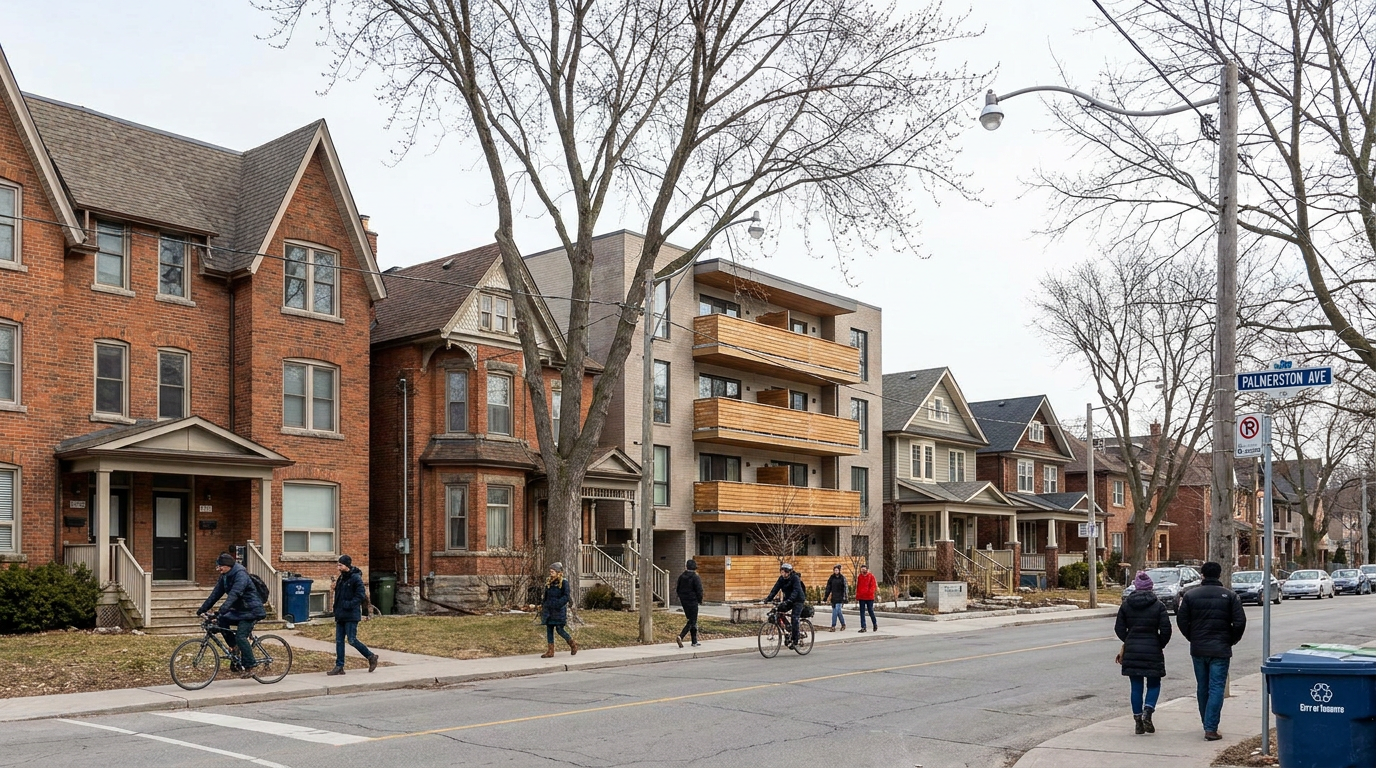
There is also a strategic political advantage to missing middle housing. In many communities, public concern about growth is less about the principle of adding homes and more about the fear of abrupt change. Missing middle forms can help bridge that tension. They add meaningful supply while preserving a human scale relationship to the street. They can support multigenerational living, create rental income for small property owners, and open neighborhoods to households who would otherwise be priced out.
That said, zoning reform on paper is only the first step. If rules remain complicated, parking minimums remain excessive, servicing is constrained, and approvals still require long discretionary processes, production may remain limited. The real innovation lies in pairing zoning permission with by right pathways, standardized design guidance, and infrastructure readiness. When municipalities reduce uncertainty for small and mid scale housing, they create conditions in which more participants can build, not only the largest development firms.
Why By Right Approval Matters
By right approval is one of the least flashy but most effective housing innovations available to cities. It means that if a project meets established zoning and design standards, it can proceed through a more predictable administrative process without prolonged discretionary review. This matters because uncertainty is costly. Developers price risk into pro formas, lenders become more cautious when timelines stretch, and smaller builders often avoid participating altogether if the process feels too complex or politicized.
For affordable housing, predictability is especially valuable. Projects with reduced rents, nonprofit ownership, or layered public funding already operate within narrow margins. They are less able to absorb delay, redesign, or duplicated studies. By right approvals can shorten timelines, reduce legal and consulting costs, and make land more usable for housing rather than speculative holding. In practical terms, that can mean more units delivered and more organizations capable of delivering them.
Innovation in affordable housing often begins with governance rather than hardware. When land use rules become clearer, faster, and more aligned with public goals, the entire development system performs better.
The Housing Accelerator Fund and the Power of Incentive Based Reform
Federal programs are increasingly shaping local housing outcomes by tying funding to reform. CMHC states that the Housing Accelerator Fund is a $4.4 billion initiative launched in 2023 to help municipalities cut red tape, with a goal of at least 112,000 additional permitted housing units. This model is significant because it recognizes a core reality of housing delivery. Many of the barriers to supply are municipal in nature, but local governments often need both political support and financial capacity to modernize their planning systems.
The strategic value of incentive based reform is that it rewards action rather than simply identifying need. Municipalities that update zoning, digitize permitting, reduce approval bottlenecks, and legalize additional housing forms can unlock funding that supports implementation. This creates a more direct relationship between policy change and development outcomes. It also encourages local governments to think beyond isolated approvals and instead redesign the rules of the game.
For developers and housing providers, these reforms can improve feasibility in measurable ways. Faster approvals reduce carrying costs. Broader as of right permissions increase land optionality. Better coordination among planning, engineering, and building departments reduces project friction. Over time, these operational improvements can be as important as direct financial subsidies because they lower the structural cost of producing housing in the first place.
There is a broader lesson here for urban strategy. Affordable housing policy works best when it is integrated with implementation. Announcing ambitious targets is easy. Building a planning and permitting environment that consistently delivers on those targets is much harder. The Housing Accelerator Fund represents an important move toward performance based housing governance, and its long term success will depend on whether municipalities translate funding into durable institutional change.
Modular, Prefabricated, and Standardized Delivery Systems
Construction innovation remains a major area of interest in affordable housing, especially as cost escalation and labor constraints put pressure on traditional delivery models. Modular, prefabricated, and panelized systems are often presented as solutions that can produce homes faster and at lower cost. There is truth in that potential, but it requires nuance. CMHC notes that modular construction can reduce costs and speed delivery, yet savings depend on factory scale production, logistics, and project design. It is not automatically cheaper in every case.
This distinction is essential because the market often oversimplifies modular housing. The real advantage is not magic cost reduction. It is improved predictability through standardization, reduced weather related disruption, quality control in factory conditions, and potentially shorter on site construction timelines. For affordable housing developers, that predictability can be highly valuable because schedule certainty affects financing, lease up timing, and exposure to inflation.
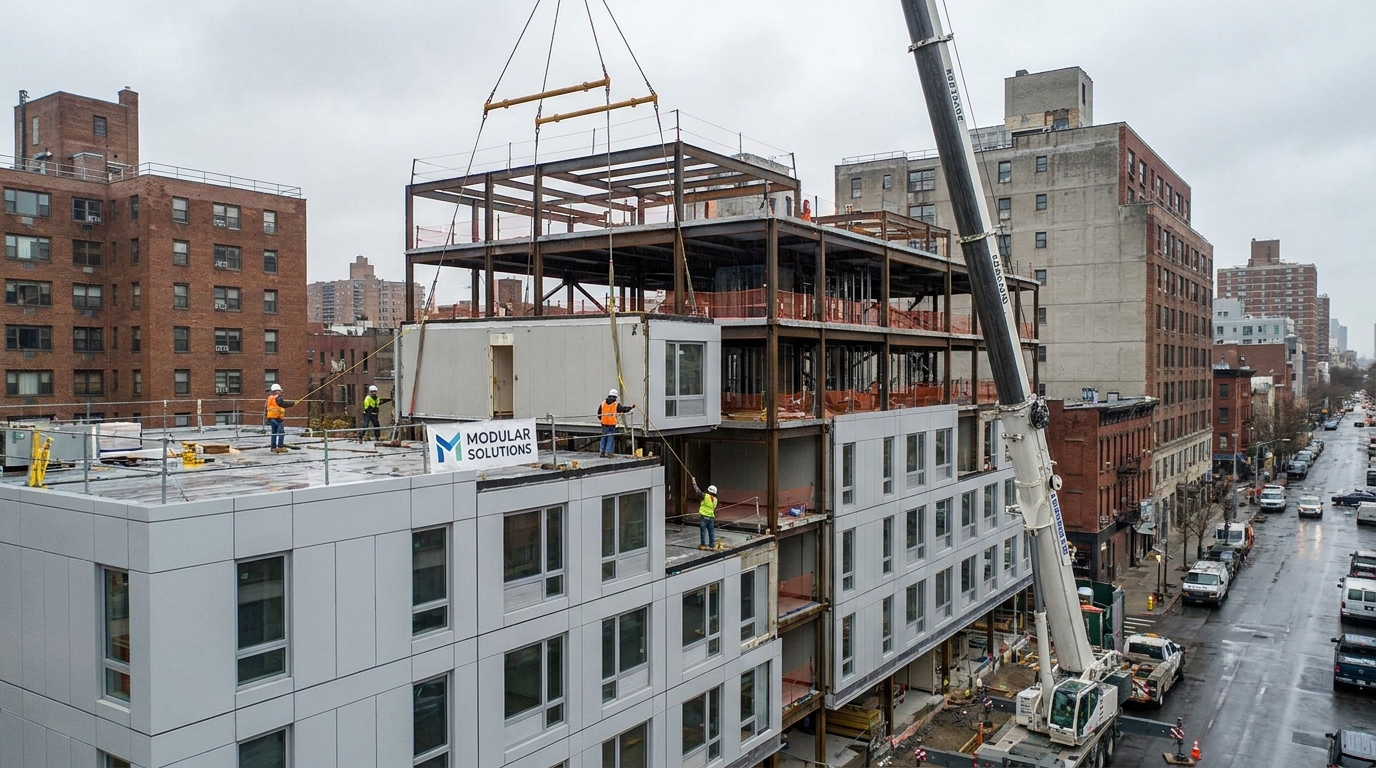
CMHC case studies also show that modular housing can be especially effective in remote, northern, and weather challenged communities. In those contexts, shorter site duration and factory based production can be meaningful advantages. However, the same case studies emphasize the importance of community and stakeholder engagement. This is a crucial point. Even the most efficient delivery method can fail if local needs, operational realities, or cultural context are ignored. Construction innovation must still be grounded in social and geographic fit.
For urban affordable housing, the best use of modular and prefab systems often comes when they are paired with repeatable building types, supportive public procurement, and pipelines large enough to justify factory investment. A city or housing agency that can support multiple projects with similar design parameters creates better conditions for standardization than one off developments. In strategic terms, innovation works best when it moves from isolated pilots to coordinated platforms.
Standardization Without Monotony
Some critics worry that standardization will produce uniform, low quality housing that ignores local character. That risk exists if efficiency is treated as the only design objective. But standardization does not have to mean monotony. It can mean repeatable structural grids, rationalized unit layouts, common servicing strategies, and pre approved components that still allow variety in facade treatment, public realm design, and neighborhood integration. The goal is to simplify what is expensive without flattening what makes a place livable.
In fact, good standardization can improve quality by reducing errors and freeing up time for teams to focus on the aspects of design that matter most to residents. Those include daylight, acoustics, accessibility, energy performance, storage, durability, and shared amenity space. Affordable housing should not be framed as a tradeoff against dignity or design intelligence. The best projects show that efficient delivery and thoughtful architecture can reinforce each other.
Transit Oriented Development and the Geography of Opportunity
Housing affordability cannot be separated from transportation. A home that appears affordable in isolation can become economically burdensome if residents must spend heavily on commuting, car ownership, or travel time. This is why transit oriented development has emerged as one of the most compelling strategies for innovative affordable housing. By concentrating homes near rapid transit, cities can reduce household transportation costs, support higher ridership, and connect residents more efficiently to jobs, schools, and services.
From a land economics perspective, transit oriented development is also about using public infrastructure more productively. Rail stations, frequent bus corridors, and mobility hubs represent major public investments. When surrounding land is underbuilt or locked into low density patterns, cities leave value on the table. Adding mixed income housing in these locations can help align infrastructure investment with housing need while reducing pressure for sprawl at the urban edge.
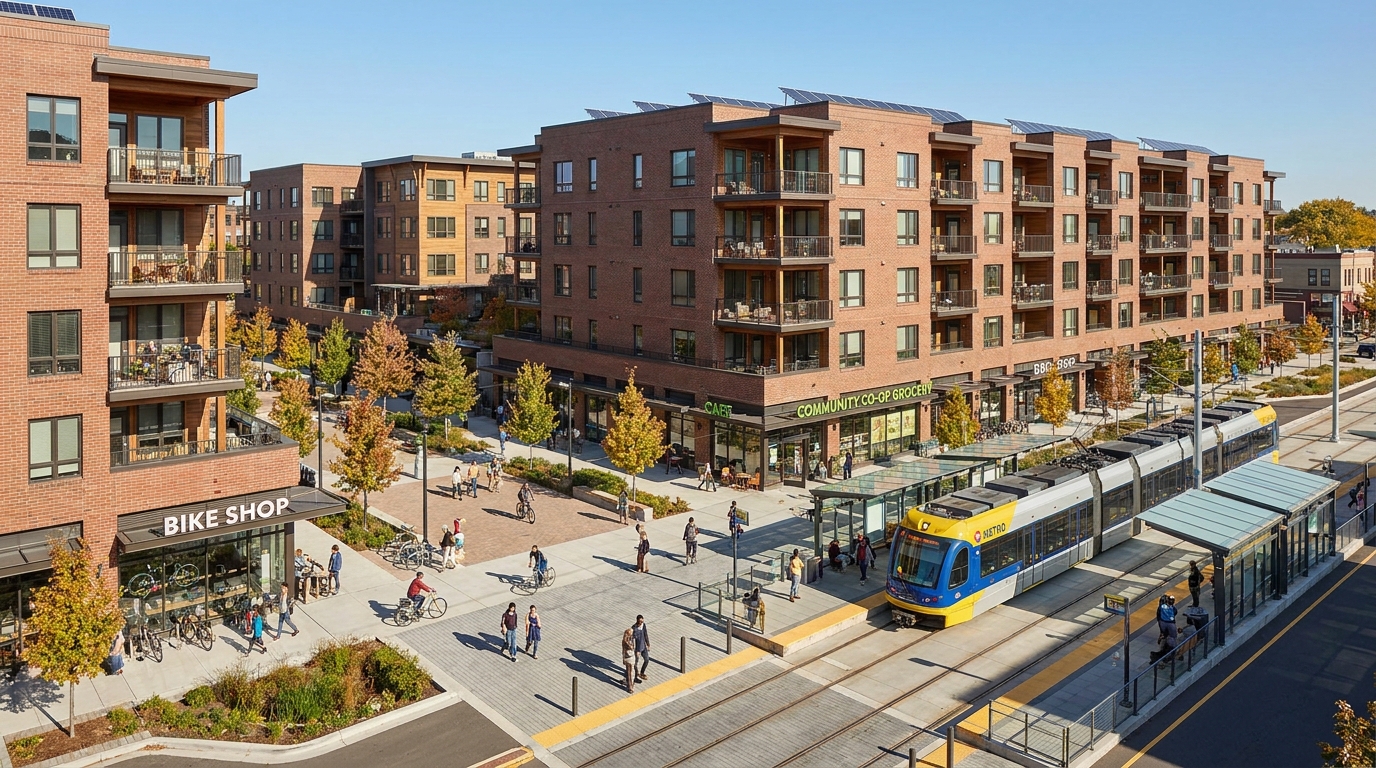
Transit adjacency, however, is not enough on its own. Successful transit oriented affordable housing requires careful calibration of density, public realm, affordability requirements, and infrastructure capacity. If land values around stations rise too quickly without affordability protections, lower income households can be displaced from the very locations that offer the best mobility access. This is where tools such as land value capture, inclusionary zoning, public land strategies, and long term affordability covenants become important.
There is also a climate dimension to this strategy. Compact, transit supportive housing can reduce per capita emissions, support walkability, and limit the expansion of infrastructure into undeveloped areas. In that sense, affordable housing near transit is not only a social goal. It is also part of climate responsive urban development. Cities do not need to choose between housing growth and sustainability if they plan density in the right places and support it with quality design.
Adaptive Reuse and Mixed Use Density
Another increasingly important strategy is adaptive reuse. In many urban areas, obsolete office buildings, underused commercial sites, aging retail plazas, and surplus institutional lands create opportunities to add housing within already serviced parts of the city. Adaptive reuse can be attractive because it avoids some of the land assembly challenges associated with ground up development and can reposition underperforming assets into productive community uses.
The feasibility of adaptive reuse depends on building depth, floor plate efficiency, window access, servicing, code compliance, and retrofit costs. Not every office or commercial building can become housing. Yet where the physical conditions are right, reuse can deliver housing more quickly than waiting for entirely new growth areas to be planned and serviced. It can also strengthen local districts by bringing residents into areas that need renewed activity and foot traffic.
Mixed use density works in a similar way by pairing housing with commercial, community, and civic functions. This is valuable because affordability is not only about the price of a home. It is also about access to daily needs. A resident living near childcare, groceries, healthcare, public space, and employment options experiences a different level of practical affordability than someone whose housing is physically isolated from basic services. Good mixed use planning supports convenience, resilience, and stronger neighborhood economics.
For local governments, adaptive reuse and mixed use housing require a flexible regulatory posture. Legacy zoning categories, parking standards, and change of use rules can make sensible projects unnecessarily difficult. The cities that succeed in this space are those willing to update codes, coordinate utilities, and view underused urban land through a housing lens rather than a narrow legacy lens.
Financing Affordable Housing Requires Layered Capital and Clear Priorities
No affordable housing strategy is complete without a realistic discussion of capital. Housing projects that serve low and moderate income households often require a layered financing stack that combines private debt, equity, public grants, tax incentives, land contributions, and in some cases long term operating support. The challenge is not simply raising money. It is structuring capital in a way that aligns with the project’s affordability goals, risk profile, and operating model over time.
In the United States, HUD identifies HOME as the largest federal block grant dedicated exclusively to affordable housing, while the Low Income Housing Tax Credit remains a central mechanism in affordable housing finance. These tools demonstrate the importance of stable public participation in the capital stack. Private markets alone rarely deliver deep affordability at the scale required, especially in high cost cities where land and construction pricing put pressure on rents from the start.
In Canada, a similar lesson applies even though the toolkit differs. Public land, municipal incentives, development charge relief, low cost financing, and nonprofit partnerships can all improve feasibility. What matters most is strategic alignment. If a city wants affordable housing outcomes, it must decide where direct subsidy is essential, where regulatory reform can reduce cost without subsidy, and where mixed income cross subsidy can support long term viability. Not every site requires the same intervention, and not every affordability target can be achieved with the same tool.
A mature affordable housing strategy also distinguishes between shallow affordability and deep affordability. Moderate rent reductions may be achievable through lower soft costs, increased density, and faster approvals. Deep affordability for very low income households usually requires ongoing public support or mission driven ownership structures. Confusing these categories can lead to unrealistic expectations and policy disappointment. Clarity about the affordability objective is critical from the beginning.
Community Engagement as a Development Variable, Not a Formality
Community engagement is frequently treated as a communications exercise that happens after a project is largely defined. That approach is short sighted. In reality, engagement can materially affect entitlement risk, design quality, delivery timelines, and long term project acceptance. For affordable housing in particular, where misconceptions can be persistent, meaningful engagement is not optional. It is part of the development strategy itself.
One common misconception is that engagement simply means convincing people to support growth. A more effective approach begins by recognizing that communities often have legitimate concerns about traffic, infrastructure strain, public realm quality, school capacity, or the fit between new buildings and existing streets. Addressing those concerns does not require abandoning housing goals. It requires integrating local knowledge into project design and clearly communicating the broader benefits of adding homes in a thoughtful way.
Another misconception is that affordable housing only appears in the form of large, monolithic projects. In practice, missing middle homes, purpose built rentals, mixed income communities, cooperative housing, and supportive housing all play different roles. Engagement works better when the public can see that housing solutions are diverse, context sensitive, and tied to clear planning principles. Residents are more likely to support change when they understand what is being proposed, why it is needed, and how it fits into a coherent vision for their area.
Communities do not resist growth in the abstract. They resist uncertainty, exclusion from decision making, and the feeling that change is happening to them rather than with them.
Strong engagement also improves long term outcomes after occupancy. Projects that are connected to local services, transportation patterns, public spaces, and neighborhood institutions tend to perform better over time. Residents benefit from smoother integration, and the wider community sees tangible value rather than disruption alone. The most credible affordable housing strategies therefore combine speed in approvals with depth in public trust building.
Case Study Patterns That Point to What Works
When we look across successful affordable housing developments in North America, several patterns appear repeatedly. The first is that the best projects are rarely defined by one innovation. They are usually the result of several aligned decisions. The site is well located, zoning has been updated or made more predictable, the financing stack is layered thoughtfully, the building type fits the context, and the delivery model reduces cost or schedule risk. Success comes from integration rather than novelty alone.
The second pattern is the growing role of mixed income and mixed tenure approaches. These models can spread risk, support more stable operations, and build broader political support than single category projects in some contexts. They also reflect an important urban principle. Healthy neighborhoods are strengthened by a range of housing options that serve different incomes, household types, and life stages. Affordable housing is most durable when it is embedded within a wider housing ecosystem rather than isolated from it.
The third pattern is institutional learning. Municipalities and housing agencies that treat each project as a one off transaction often repeat the same delays and cost escalations. By contrast, organizations that create standardized approval pathways, repeatable procurement models, template partnerships, and data informed policy updates tend to improve performance over time. In other words, the most scalable innovation is often organizational, not architectural.
Finally, the strongest projects are anchored in place based logic. A transit rich corridor may support mid rise rental housing with limited parking. A mature low rise neighborhood may be best served by fourplex legalization and small site intensification. A remote northern community may benefit more from modular delivery than a downtown infill site with custom design constraints. Strategic development means selecting the right tool for the right geography instead of applying the same answer everywhere.
What Developers, Municipalities, and Communities Should Prioritize Next
The next phase of affordable housing delivery will depend on disciplined prioritization. Developers should focus on product types and partnerships that align with where public policy is moving, especially rental housing, missing middle typologies, and transit supportive mixed use projects. They should also evaluate standardized design and construction systems where project pipelines are large enough to support real efficiencies. Most importantly, they need to underwrite entitlement and timing risk with realism, because optimism alone does not create feasibility.
Municipalities should continue shifting from discretionary, case by case housing governance toward clearer rules that support desired outcomes. That includes by right permissions for more housing forms, digitized and coordinated permitting, realistic parking standards, and infrastructure planning that anticipates growth instead of reacting to it. It also means using public land and incentive programs strategically rather than diffusely. Every tool should connect back to a clear supply and affordability objective.
Communities and local institutions have an equally important role. The question should not be whether growth happens, because in many cities the demand is already present. The question is what kind of growth creates opportunity, supports inclusion, and strengthens neighborhood function over the long term. Productive engagement can help move the conversation away from fear of change and toward stewardship of outcomes. That is where trust is built and where better projects emerge.
Affordable housing is not a narrow policy silo. It is a foundation for city building. It determines whether economic growth is shared, whether infrastructure investments perform as intended, whether families can remain near support networks, and whether urban regions can sustain diversity across income levels. The stakes are therefore much larger than unit counts alone, even though unit counts remain critically important.
Conclusion: Innovation Means Building a Better Housing Delivery System
The most effective affordable housing developments are not the product of isolated creativity. They emerge from a better system. That system combines land use reform, rental supply, missing middle permissions, streamlined approvals, thoughtful financing, construction efficiency, transit alignment, adaptive reuse, climate awareness, and authentic community engagement. Each element addresses a different barrier, and together they create the conditions for durable progress.
Current trends support this integrated view. CMHC data shows that housing delivery remains active but exposed to financing pressures. Rental supply is central. Municipalities are increasingly using Housing Accelerator Fund reforms to legalize more flexible housing forms. Modular methods are gaining attention, though their economics depend on scale and execution. Across North America, policy conversations are increasingly focused on lower end supply gaps, permitting reform, and aligning housing with broader workforce and sustainability goals.
The strategic lesson is straightforward. Innovation in affordable housing is not about chasing the newest idea in isolation. It is about coordinating the right ideas in the right places, with the right public and private partnerships, to create homes faster, more predictably, and in ways communities can sustain. Cities that understand this will not only add housing. They will build stronger, more resilient urban futures.
For leaders in development, planning, and public policy, that is the real opportunity ahead. Affordable housing can move from a recurring crisis response to a disciplined city building agenda. The path forward is not simple, but it is visible. If we treat housing as essential infrastructure and organize our systems accordingly, we can deliver more homes that are attainable, well located, and worthy of the communities they serve.



No Comment! Be the first one.