



How to Maintain and Restore Wood Finishes for Timeless Elegance
Wood has a singular way of bringing grace into a home. It can make a room feel grounded yet luminous, traditional yet current, formal yet welcoming. Whether it appears as a satin dining table, a bank of painted cabinetry, a walnut console, paneled doors, or the gentle rhythm of hardwood floors, wood contributes depth that few other materials can imitate. Yet what we often admire is not only the wood itself, but the finish that reveals its character and protects it from daily life.
Table Of Content
- Why Wood Finishes Matter More Than Many Homeowners Realize
- The Preservation First Philosophy
- Routine Maintenance That Preserves Beauty
- What to Avoid During Everyday Care
- Understanding Finish Types Before You Treat the Surface
- How to Approach Finish Identification at Home
- How to Clean Wood Finishes Safely and Elegantly
- A Simple Cleaning Sequence for Most Stable Finished Wood
- Protective Treatments That Extend the Life of a Finish
- When a Dull Surface Needs Revival, Not Refinishing
- Restoration Versus Full Refinishing
- Questions to Ask Before You Refinish
- Preparing for Restoration the Right Way
- Surface Preparation, Deglossing, Sanding, and Stripping
- Choosing Compatible Modern Finishes for Long Term Results
- Special Considerations for Furniture, Trim, Cabinetry, and Floors
- Furniture
- Trim and Doors
- Cabinetry
- Floors
- When to Call a Professional
- The Quiet Luxury of Consistent Wood Care
A wood finish serves two roles at once. It shapes appearance through color, sheen, texture, and clarity, and it provides a defensive layer against moisture, handling, soil, abrasion, and light exposure. For indoor wood, appearance and cleanability are often the primary goals, while outdoor wood demands stronger resistance to water, sunlight, and weathering. Understanding this difference is essential because maintenance should always reflect where the wood lives, how heavily it is used, and what type of finish is actually on the surface.
The most elegant approach to wood care is rarely aggressive. It is observant, restrained, and consistent. In many homes, a finish does not need dramatic intervention so much as it needs protection from neglect, overcleaning, harsh products, and unnecessary refinishing. A preservation first mindset allows original patina to remain, prevents avoidable damage, and often saves considerable time and expense.
This guide is designed to make wood finish maintenance feel approachable without losing the nuance the subject deserves. We will look at routine care, finish identification, compatible cleaning methods, protective treatments, environmental control, and the difference between gentle restoration and full refinishing. We will also consider when modern low VOC options make sense, how to work more safely, and why testing in an inconspicuous area remains one of the most refined habits any homeowner can adopt.
Timeless wood care begins with one simple principle: preserve the existing surface whenever possible, and restore only as much as the piece truly needs.
Why Wood Finishes Matter More Than Many Homeowners Realize
A finish is the visual translator between raw timber and interior atmosphere. The same oak can appear pale and contemporary under a matte waterborne coating, honeyed and classic beneath varnish, or soft and mellow with a waxed or oiled effect. Cherry can deepen into warm amber, walnut can reveal smoky richness, and painted trim can gain either velvety softness or crisp enamel definition depending on the chosen coating. These differences shape how a space feels, which is why finish maintenance is as much an aesthetic concern as a practical one.
Protection is the second part of the story. Finished wood resists fingerprints, kitchen residue, minor spills, airborne grime, and the friction of use more effectively than bare wood. Cabinets near a cooktop, tabletops used for entertaining, stair rails touched every day, and entry consoles exposed to damp umbrellas all rely on the finish as a sacrificial barrier. Once that barrier degrades, the wood below becomes more vulnerable to stains, swelling, scratching, and uneven wear.
There is also a value dimension. Fine furniture, custom millwork, original doors, and well made vintage pieces often lose character when stripped unnecessarily. A surface with modest age, slight softening of sheen, and subtle patina can be more beautiful than a harshly refinished replacement. In design terms, maintenance is not simply about keeping wood looking new. It is about allowing it to age with dignity.
The Preservation First Philosophy
One of the most persistent misconceptions about wood care is that every dull or marked surface needs to be stripped and redone. In reality, many finishes only need careful cleaning, local touch up, re waxing where appropriate, or a compatible top layer applied after proper preparation. Conservation guidance has long emphasized that cleaning should be performed only when needed and only when the finish is stable. Overcleaning can remove wax, disturb patina, dull sheen, or harm fragile coatings.
This is why thoughtful maintenance begins with assessment rather than action. Before reaching for soap, polish, oil, or a refinishing kit, spend time observing the piece. Is the surface simply dusty. Is it greasy from handling. Does it have white water marks, dark stains, scratches, cloudy patches, peeling areas, or rings from planters. Is the coating intact but tired, or is it actively failing. These distinctions determine whether the answer is routine care, modest restoration, or complete refinishing.
For heritage furniture, veneers, antiques, or surfaces with clear historical value, restraint becomes even more important. Some finishes are delicate enough that moisture or solvent can alter them quickly. Preliminary testing in a discreet location allows you to evaluate how the finish reacts before committing to broader cleaning or repair. This small act of patience can prevent irreversible change.
Routine Maintenance That Preserves Beauty
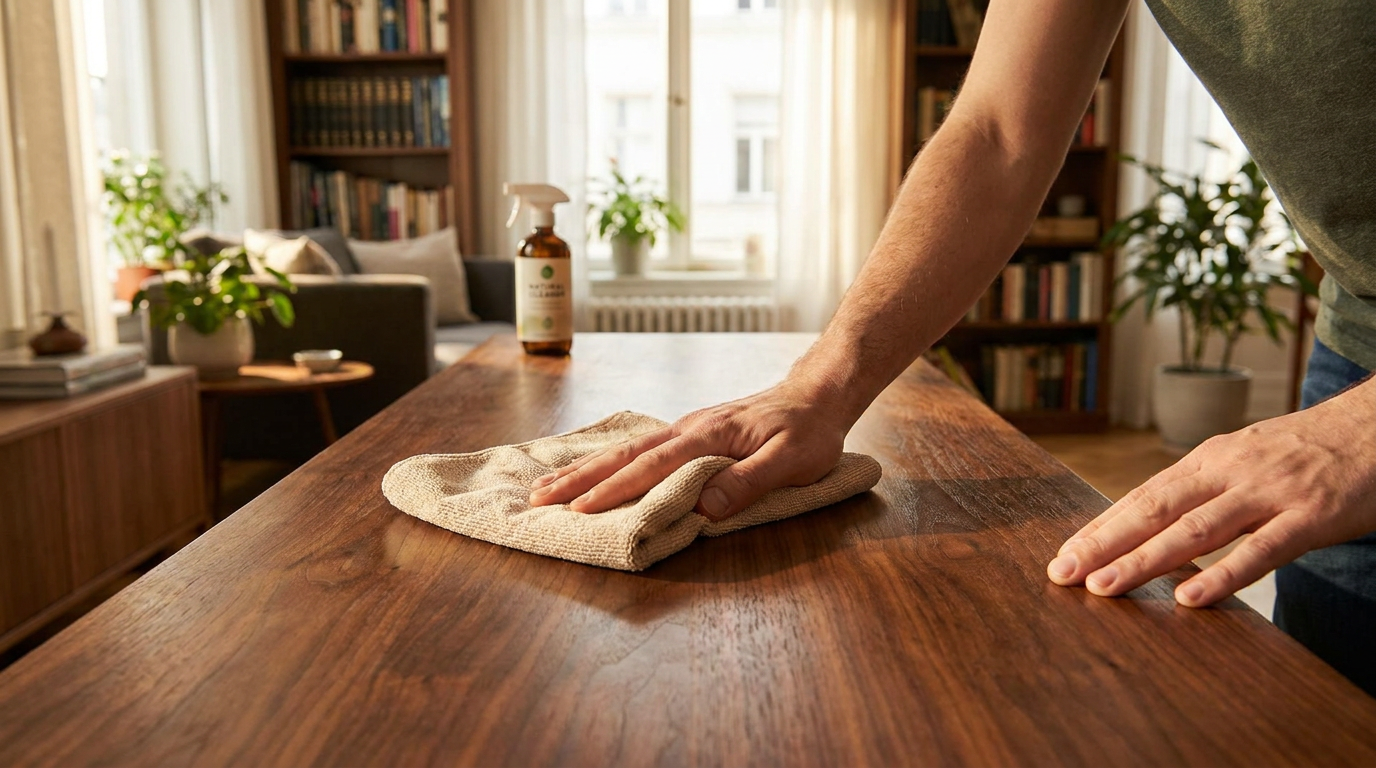
The daily and weekly habits around wood matter more than occasional heroic efforts. Dust is not just a visual nuisance. Fine particles can act as abrasives when rubbed across glossy or satin surfaces, especially on dark finishes where micro scratches catch the light. Using a soft microfiber cloth, a clean cotton cloth, or a vacuum with a brush attachment is usually sufficient for regular maintenance. The aim is to lift dust gently rather than push it around with pressure.
Spills deserve prompt attention because time changes their chemistry. Water can leave pale rings or swell vulnerable edges, alcohol can soften certain finishes, oil can darken unsealed cracks, and sugary residues attract further grime. Blot rather than scrub, and use the least moisture necessary. A slightly damp cloth may be suitable for many durable modern finishes, but saturation is never elegant and rarely safe.
Humidity control is another quiet form of preservation. Wood responds to moisture in the air by expanding and contracting, which can stress joinery, crack brittle finishes, and open veneer seams over time. A stable indoor environment is kinder to both furniture and architectural woodwork. In practical terms, this means avoiding prolonged extremes, using ventilation in kitchens and baths, and considering a humidifier or dehumidifier if your climate is severe.
Sunlight should be managed with equal seriousness. Ultraviolet exposure can bleach some woods, deepen others unevenly, and degrade clear coatings. Window treatments, UV filtering film, and periodic rotation of decor can all reduce differential fading. In rooms where one section of a tabletop or floor receives strong light every afternoon, prevention is far easier than correction.
What to Avoid During Everyday Care
Many attractive bottles marketed for wood are not universally suitable. Heavy silicone polishes may create residue that complicates future refinishing. Abrasive pads can haze glossy coatings. Harsh alkaline cleaners may strip wax or soften vulnerable finishes. Excessive detergent can leave a film that collects dirt and dims the surface. More product is not a sign of better care. It is often a shortcut to buildup.
Water is another frequent misunderstanding. People often assume that because wood is a natural material, water must be harmless. In truth, excess moisture can raise grain, stain veneers, weaken glue lines, and seep into joints or end grain. Even on durable finishes, wet cleaning should be measured and followed by immediate drying. A carefully wrung cloth is very different from a soaked rag.
It is also wise to avoid habitual over polishing. Repeated applications of product without removing old residue can leave surfaces tacky, uneven, or falsely shiny. When wood looks tired, the answer is not always another polish. Sometimes it simply needs a proper, conservative cleaning or a reassessment of the finish itself.
Understanding Finish Types Before You Treat the Surface
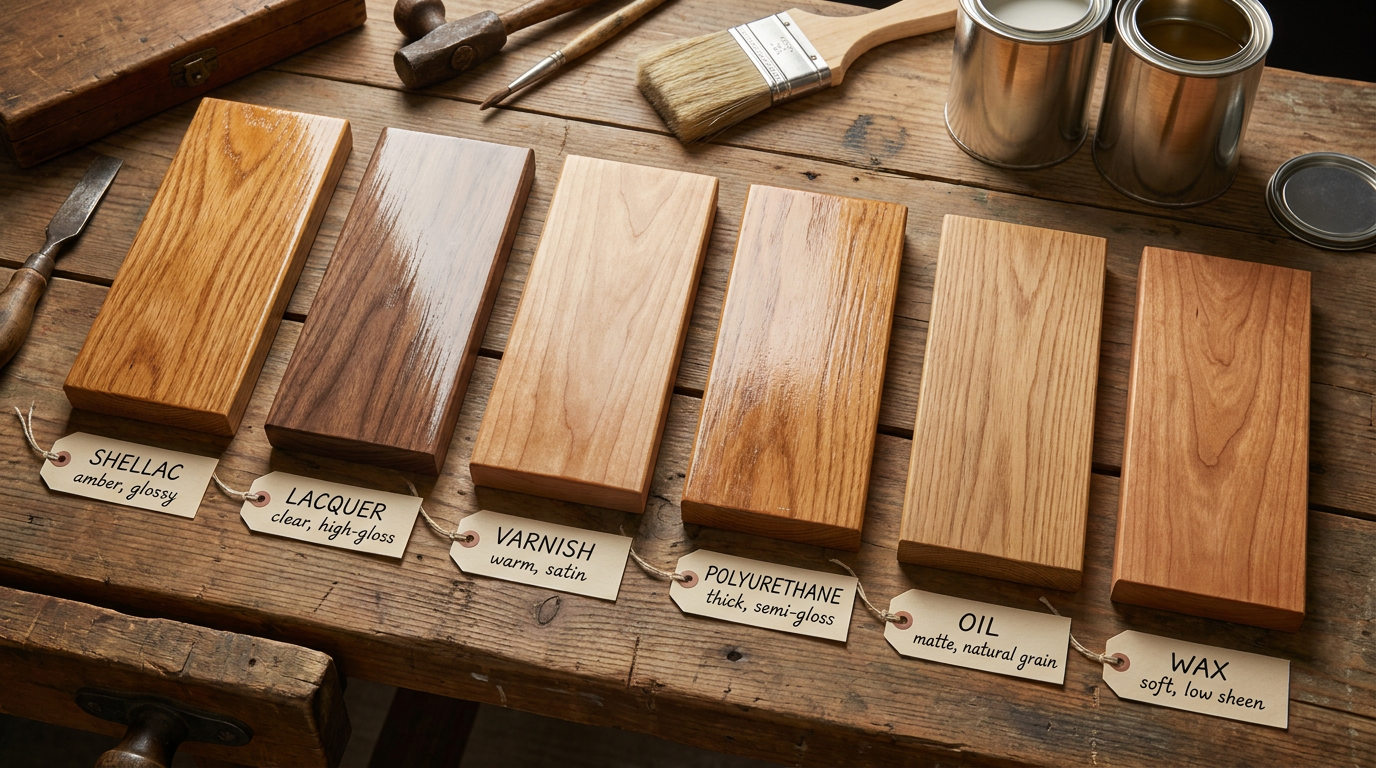
Wood finishes are not interchangeable, and this is where many maintenance mistakes begin. Shellac, lacquer, varnish, polyurethane, oil, wax, and stain each respond differently to moisture, solvents, abrasion, and topcoats. A cleaner that is harmless on polyurethane might cloud shellac. A wax suitable for stable varnish may be inappropriate on bare wood. A modern coating may resist water beautifully but react poorly to incompatible touch up products.
Shellac has a traditional beauty and a warm, nuanced glow, but it can be sensitive to alcohol and moisture. Lacquer offers clarity and was widely used on furniture, though some versions can be vulnerable to solvent damage. Varnish tends to be more durable and moisture resistant, making it a longstanding favorite for many household applications. Polyurethane is widely used for floors, tabletops, and cabinetry because it forms a robust protective film. Oil finishes penetrate rather than build the same kind of film and often require a different maintenance rhythm. Wax can add luster and tactile softness, but it is not a universal answer and should not be applied indiscriminately.
Painted wood introduces another layer of consideration. Paint can last far longer than many clear finishes, often in the range of a decade or two depending on conditions and maintenance, but once it begins to crack, peel, or chalk, the repair strategy changes. Older painted wood may also raise lead concerns, which makes dry scraping, sanding, and disposal issues more serious. Painted wood should never be burned, especially if age or origin is uncertain.
How to Approach Finish Identification at Home
Homeowners are not expected to become conservators overnight, but a little deduction goes a long way. Consider the age of the piece, its use, and how the surface behaves. Does it feel waxy. Does water bead strongly. Is the sheen high and hard, or soft and mellow. Do white rings appear easily. Has the furniture been polished for years. Even these clues can narrow the possibilities.
If uncertainty remains, perform gentle spot tests only in hidden areas and only if the finish appears stable. Testing should be minimal, patient, and carefully documented so that you know what has been tried. When a piece is valuable, fragile, veneered, or historically significant, it is sensible to consult a professional rather than experimenting too freely. Sophistication in restoration often looks like knowing when not to proceed alone.
How to Clean Wood Finishes Safely and Elegantly
Safe cleaning begins with the least invasive method. Start by removing loose dust with a dry soft cloth or brush attachment. If the surface remains grimy, move to a slightly damp cloth with distilled water or a mild cleaning solution suitable for the finish, then dry immediately. The cloth should never drip. It should feel barely moist in the hand.
Kitchen cabinetry often gathers oils and airborne residue that plain dusting will not remove. In this case, a restrained solution of mild soap may help, but any cleaner should be tested first. Follow with a clean damp cloth to remove residue and then dry thoroughly. Detergent buildup can leave a subtle film that catches dirt and mutes the finish, so thorough but gentle rinsing is part of the discipline.
On stable clear finishes such as shellac, lacquer, and varnish, paste wax may sometimes be used after cleaning to renew sheen and offer a modest sacrificial layer. However, wax is not for bare wood because it penetrates pores and becomes difficult to remove. It is also not necessary for every modern coating. Used sparingly and buffed well, wax can create beautiful depth. Used indiscriminately, it can create haze and maintenance complications.
Unfinished wood deserves particular caution because any cleaning can alter the surface. It readily absorbs moisture, oils from the skin, and dissolved soils. For that reason, discreet testing is essential before broader cleaning. In some cases, leaving a faint mark undisturbed is wiser than creating a larger, lighter, or more uneven patch through over treatment.
A Simple Cleaning Sequence for Most Stable Finished Wood
- Assess the surface in natural light and identify grime, scratches, water marks, or areas of finish failure.
- Dust thoroughly with a soft cloth or vacuum brush attachment.
- Test your chosen cleaning method in a hidden area and let it dry fully.
- Clean lightly using the least moisture and gentlest product that works.
- Dry immediately with a separate soft cloth.
- Reassess before adding any polish, wax, or touch up product.
This sequence is not dramatic, but it is dependable. Many surfaces that seem in need of restoration reveal themselves beautifully after a careful cleaning alone. Grime can flatten color and obscure grain so effectively that homeowners sometimes mistake dirt for finish failure. The difference only becomes clear once the surface is genuinely clean.
Protective Treatments That Extend the Life of a Finish
Maintenance is not merely reactive. It also includes subtle protections that reduce the rate of wear. Felt pads beneath decorative objects, trays under bottles, placemats for regular dining, coasters for drinks, and breathable barriers under plants all help preserve finished wood. These interventions may seem modest, but they are exactly the sort of quiet luxuries that allow materials to endure with grace.
For cabinetry and trim, attention to touch points is particularly useful. Areas around handles, lower door rails, and switch height paneling gather oils from the hand more quickly than broad untouched sections. Cleaning these zones a little more often, but still gently, can prevent localized darkening and premature finish fatigue. In a well kept home, maintenance follows use patterns.
Floors deserve their own logic because traffic creates constant abrasion. Dirt carried in from outside behaves like fine grit, which is why entry mats and regular sweeping matter so much. Avoid standing water during mopping, and follow the finish manufacturer’s recommendations whenever known. A protective floor finish can be long lasting, but once grit cuts through the top layer repeatedly, wear accelerates.
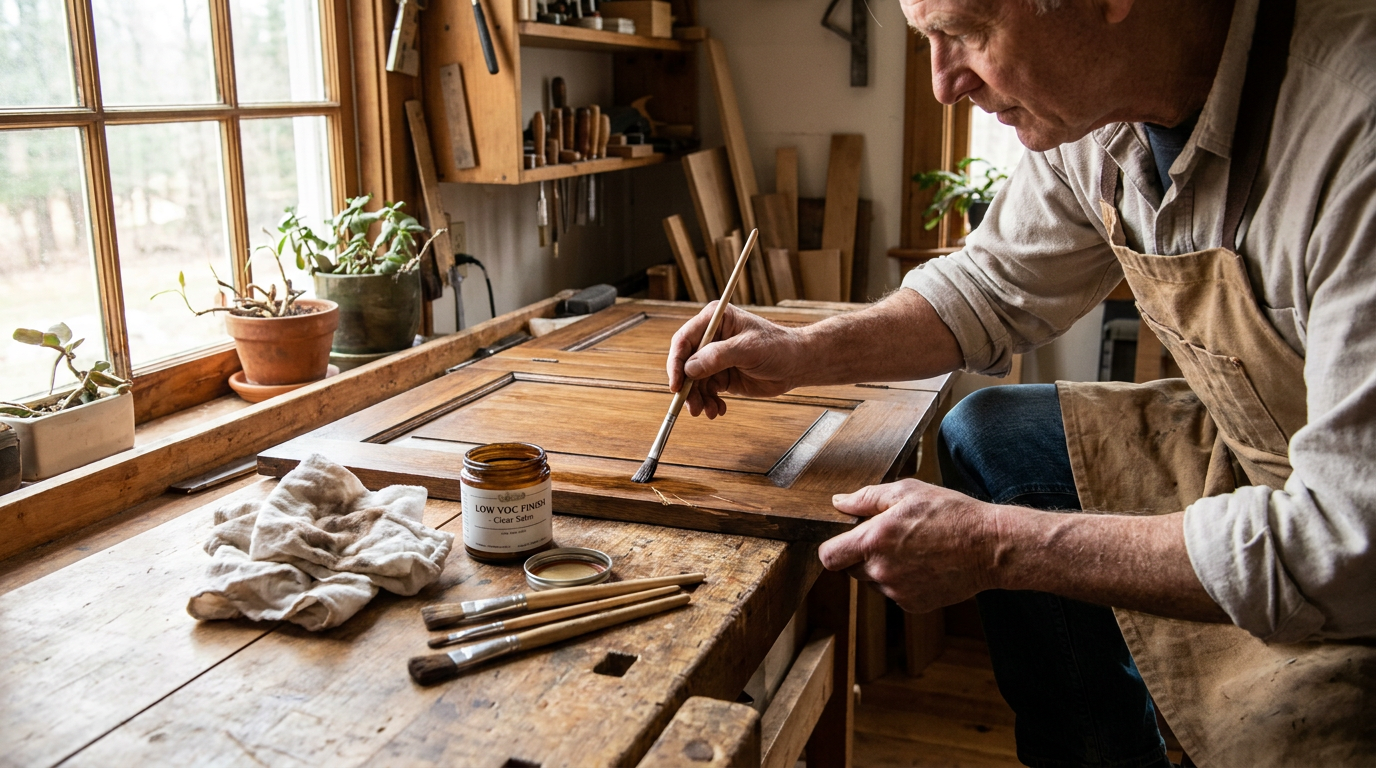
Modern low VOC finishes are increasingly attractive because they support indoor air quality while offering good durability. They are not all identical, but many contemporary systems provide easier maintenance and lower odor than older solvent heavy products. For households balancing beauty, health, and practicality, this is one of the most meaningful developments in finish care.
When a Dull Surface Needs Revival, Not Refinishing
Dullness does not automatically signal failure. A finish can lose brilliance simply because it is covered in wax residue, airborne cooking film, hand oils, or years of inappropriate polish. Once cleaned properly, it may need only a minor restorative step to recover depth. This is one reason preservation first care is so effective. It avoids stripping away what may still be structurally sound.
Minor scratches can often be softened visually without full sanding. Depending on the finish, tinted wax sticks, touch up markers, or carefully chosen repair products may reduce the contrast between the mark and surrounding wood. These are aesthetic repairs rather than structural ones, but they can be remarkably successful when the coating is otherwise intact. The goal is visual harmony, not total erasure at any cost.
Light re waxing, where appropriate for a stable clear finish, can also revive a weary surface. The key is restraint. Apply very sparingly, allow proper drying as directed, and buff thoroughly with a soft cloth. A refined waxed finish should feel dry, smooth, and luminous rather than greasy or sticky.
For isolated white rings or superficial moisture marks, conservative touch up methods may help, but they should be approached carefully because every finish reacts differently. Deep black water stains, in contrast, often indicate that moisture has penetrated beyond the finish into the wood itself. Such damage usually requires more than surface revival and may call for skilled restoration.
Restoration Versus Full Refinishing
Restoration sits between maintenance and complete refinishing. It may involve cleaning away stubborn grime, reducing old wax buildup, blending scratches, treating water marks, stabilizing small areas of finish loss, or applying a compatible renewing coat after appropriate preparation. Full refinishing, by contrast, removes or significantly abrades the existing coating and starts again with stain, sealer, and topcoat. The visual result may look newer, but it can also erase age, softness, and authenticity.
There are times when full refinishing is justified. If the finish is peeling broadly, flaking, alligatored beyond repair, sticky from chemical breakdown, or worn through to bare wood across large areas, patching may become more laborious and less beautiful than a complete reset. Surfaces that have suffered severe water damage, smoke residue, or incompatible past repairs may also require more decisive intervention. The important thing is to arrive at refinishing through diagnosis, not impatience.
Service life expectations help frame this decision. Some water repellent and tinted clear finishes may last only one to three years in exposed conditions, semitransparent stains perhaps two to three years, while paint can last roughly ten to twenty years depending on exposure and care. Indoors, conditions are often kinder, but finish longevity still varies according to sunlight, humidity, use, and maintenance quality. No coating is eternal. Elegant homes endure by accepting renewal as part of material life.
Questions to Ask Before You Refinish
- Is the current finish mostly intact, or is it failing across the whole surface?
- Would cleaning and localized touch up restore enough beauty for the piece’s role?
- Is the item antique, veneered, or valuable enough that original finish matters?
- Do you know what finish is currently present and what products are compatible with it?
- Will sanding or stripping remove patina, soften edges, or damage detail?
- Could a professional achieve a more conservative and elegant result?
These questions protect both aesthetics and investment. In design, as in conservation, less intervention often yields the more convincing result.
Preparing for Restoration the Right Way
Successful restoration depends heavily on preparation. The work area should be clean, well ventilated, and protected from dust settling into fresh coatings. Good lighting is indispensable because sheen variations, drips, and scratch patterns are easiest to read under angled light. Gather soft cloths, appropriate abrasives if needed, compatible cleaners, touch up materials, and enough time to move slowly. Rushed finish work almost always reveals itself later.
Ventilation is a matter of both comfort and health. Finishing materials and solvents can emit pollutants, so fresh air and proper product handling are non negotiable. Even low odor products deserve respect. Read labels carefully, avoid mixing chemicals casually, and store materials safely away from flame or heat. Indoor elegance should never come at the expense of indoor air quality.
On painted surfaces of uncertain age, assume caution. If lead may be present, professional assessment is wise before sanding, scraping, or disturbing the coating. This is especially important in older North American homes where trim, doors, and built ins may have accumulated multiple generations of paint. The restoration of beauty must begin with the restoration of safety.
Surface Preparation, Deglossing, Sanding, and Stripping
If a new topcoat is needed, compatibility and surface preparation become central. Some restoration projects require only a gentle deglossing to help a new compatible coating adhere. Others call for spot sanding around damaged areas. Complete stripping is the most invasive path and should be reserved for truly failed finishes or situations where repeated incompatible layers have created an unstable surface.
Sanding should be controlled and minimal, especially on veneer. Veneers can be far thinner than homeowners expect, and aggressive sanding can expose substrate or permanently flatten the refined crispness of an edge. Always work with the grain when possible, remove dust meticulously, and use the mildest abrasive that achieves the task. Surface preparation is not about force. It is about calibration.
Stripping introduces chemicals, residue management, and the risk of dissolving adhesives or forcing softened finish into pores and corners. It can be the correct solution, but it should not be romanticized. If your aim is timeless elegance rather than raw novelty, preserving profile, proportion, and grain clarity matters as much as achieving a smooth reset. The craft lies in removing only what truly needs to go.
Choosing Compatible Modern Finishes for Long Term Results
When restoration reaches the point of recoating or refinishing, compatibility should guide every choice. A beautiful finish is not merely the one that looks right on day one. It is the one that bonds properly, cures predictably, supports future maintenance, and suits the object’s use. Kitchen cabinets need a different performance profile from an occasional side table. Trim in a sunlit corridor has different demands from a bedroom dresser.
Modern waterborne finishes have become increasingly appealing for homeowners seeking lower VOC options with clearer color and easier cleanup. Traditional solvent based varnishes still offer depth and resilience in some settings. Oils can be lovely where a natural tactile quality is desired, though they may require more regular refreshing. Shellac remains a favorite in certain restoration contexts because of its historic authenticity and reparability. No option is universally superior. The best finish is the one that respects the wood, the existing surface, the room, and the user’s willingness to maintain it.
Sheen selection also influences longevity in practical and visual terms. High gloss can look dramatic but may highlight scratches and dust. Satin and matte finishes often feel more forgiving and quietly luxurious in residential settings. A timeless interior usually benefits from finishes that reveal grain and craftsmanship without demanding constant perfection.
Special Considerations for Furniture, Trim, Cabinetry, and Floors
Furniture
Tables, consoles, dressers, and case pieces often benefit most from conservative care. Because they are handled closely, their finish contributes strongly to tactile experience. Gentle dusting, quick spill response, and the use of coasters or liners can preserve them beautifully. Antique and veneered furniture should be treated with the greatest caution because replacement of original finish or accidental water intrusion can significantly diminish value and beauty.
Trim and Doors
Architectural woodwork tends to be ignored until wear becomes obvious. Yet hand contact around door pulls, stair rails, and corners can gradually dull sheen and transfer oils. A periodic careful cleaning schedule helps maintain continuity across the room. If touch up is needed, matching sheen is often more important than matching color exactly, because the eye catches reflectivity differences very quickly on vertical surfaces.
Cabinetry
Cabinet finishes face heat, steam, grease, and daily contact. This makes routine gentle degreasing more important than on most other wood surfaces. Use restraint with moisture around panel joints and edges, and avoid allowing drips to linger below sinks or near dishwashers. Cabinetry ages gracefully when surface care and moisture management work together.
Floors
Floor finishes are performance finishes. Dirt control, soft furniture pads, and adherence to manufacturer approved cleaners will do more for longevity than occasional cosmetic products. Areas near exterior doors, kitchen sinks, and rolling chairs usually need the earliest attention. Timely recoating of a worn finish layer can prevent the more invasive expense of full sanding later.
When to Call a Professional
There is elegance in discernment. Some projects truly are ideal for an attentive homeowner, while others warrant a specialist. If the piece is historically important, heavily veneered, structurally loose, deeply water stained, affected by mold or smoke, or coated with a finish you cannot identify, a professional can often preserve more than a confident amateur would. The same is true when lead paint may be present or when previous repair attempts have left a confusing residue.
Professionals also become valuable when color matching matters across built in elements such as integrated cabinetry, wall paneling, and original millwork. In these cases, the challenge is not merely technical repair but visual continuity within an interior composition. A well restored room should not announce where the intervention occurred. It should simply feel whole again.
The Quiet Luxury of Consistent Wood Care
There is something deeply civilized about maintaining wood well. It resists disposable habits and honors the labor embedded in furniture, joinery, and architecture. In a home shaped by thoughtful design, material longevity is part of the atmosphere. Surfaces are not stripped of history at every sign of wear. They are observed, understood, and guided back to balance with patience.
Traditional techniques still have much to teach us. Dust carefully. Clean only when needed. Test first. Respect finish compatibility. Wax sparingly and only when appropriate. Repair before damage spreads. These habits are not old fashioned. They are enduring because they work. Modern low VOC systems, improved tools, and better awareness of indoor air quality simply refine the practice further.
Ultimately, timeless elegance in wood finishes comes from choosing preservation over impulse. A satin tabletop that still carries its original warmth, cabinetry that has been kept clean and dry rather than repeatedly coated with quick fix products, a handrail whose sheen has been restored instead of stripped bare, these are the quiet victories that make interiors feel cultivated rather than merely decorated. Wood rewards those who care for it with subtlety. Its beauty deepens when maintenance is done with intelligence, restraint, and affection.
If you remember only one principle, let it be this: treat the finish as part of the design, not as an afterthought. Once you do, wood maintenance becomes less of a chore and more of a graceful form of stewardship. That is how furniture, trim, cabinetry, and floors retain their charm for decades. That is how elegance becomes lasting.



No Comment! Be the first one.