



10 Simple Ways to Optimize Your HVAC System for Better Energy Efficiency
For most households, heating and cooling quietly shape both the comfort of daily life and the cost of monthly utility bills. They also represent one of the biggest energy demands in the home. ENERGY STAR notes that nearly half of home energy use goes to heating and cooling, which means HVAC efficiency is not a small detail. It is one of the most practical places to focus if you want lower energy costs and a lighter environmental footprint.
Table Of Content
- Why HVAC Efficiency Deserves Attention
- 1. Replace or Clean Your Air Filter on a Reliable Schedule
- 2. Book an Annual HVAC Tune Up Before Peak Season
- 3. Seal and Insulate Ductwork, Especially in Unconditioned Spaces
- 4. Keep Supply Vents, Return Grilles, and Registers Clear
- 5. Program Your Thermostat for Real Life, Not Idealized Habits
- 6. Upgrade to a Certified Smart Thermostat if Your Controls Are Outdated
- 7. Clear the Area Around Your Outdoor Unit
- 8. Reduce the Load on Your HVAC System with Air Sealing and Insulation
- 9. Pay Attention to Moisture, Indoor Air Quality, and Comfort Signals
- 10. Replace Aging Equipment Only When the Time Is Right, and Choose High Efficiency Wisely
- A Practical Order of Operations for Homeowners
- Common Mistakes to Avoid
- How HVAC Efficiency Supports Sustainability Goals
- Final Thoughts
The good news is that meaningful improvement does not always begin with a major equipment replacement. In many homes across Canada and the United States, the biggest gains come from simple maintenance, better airflow, smarter controls, and a closer look at how the home works as a system. Natural Resources Canada emphasizes this whole house approach because insulation, air sealing, and proper HVAC operation all influence how hard your equipment has to work.
This matters for sustainability in a very grounded way. Better HVAC performance can reduce electricity or fuel use, cut greenhouse gas emissions associated with energy consumption, improve comfort from room to room, and even help your system last longer. A more efficient system often runs more steadily and quietly, with better humidity control and fewer frustrating hot and cold spots.
If you have assumed that an HVAC system is efficient simply because it still turns on and keeps the house livable, you are not alone. That is one of the most common misconceptions homeowners have. Equipment can appear functional while quietly wasting energy through clogged filters, leaking ducts, poor thermostat settings, deferred maintenance, or a home envelope that allows conditioned air to slip away.
This guide focuses on ten manageable steps that support real efficiency gains without creating unnecessary overwhelm. Some can be done in an afternoon. Others require a qualified technician, but are still relatively straightforward and often cost effective. Together, they create a practical path toward a home that feels more comfortable, costs less to run, and aligns better with long term sustainability goals.
In short, efficient HVAC is not about chasing perfection. It is about reducing waste, supporting comfort, and making the equipment you already have perform as well as it reasonably can. Let us start with the simplest place to look.
Why HVAC Efficiency Deserves Attention
When homeowners think about energy efficiency, they often picture insulation, windows, or solar panels first. Those upgrades can absolutely matter, but HVAC is where efficiency becomes visible month after month on your utility statement. Because heating and cooling operate so often, even a modest improvement in performance can translate into noticeable savings over time.
There is also a useful sustainability principle here. The cleanest energy is often the energy you never have to use. Before replacing major equipment or adding new systems, it makes sense to reduce avoidable losses in the one you already depend on. That is why ENERGY STAR and NRCan both put so much emphasis on maintenance, controls, and airflow.
Another reason to prioritize HVAC optimization is system longevity. A furnace, air conditioner, or heat pump that runs under strain from restricted airflow, dirty components, or poor calibration may wear out sooner than expected. Annual tune ups and routine care do not just support lower energy bills. They can help prevent costly breakdowns and early replacement.
Small HVAC improvements are often some of the most practical sustainability actions a homeowner can take because they reduce waste without asking anyone to live less comfortably.
1. Replace or Clean Your Air Filter on a Reliable Schedule
If there is one HVAC habit that deserves to become automatic, it is filter maintenance. Filters do more than catch dust and support cleaner indoor air. They also protect airflow through the system. When a filter is dirty, the equipment has to work harder to move air, which increases energy use and can strain components over time.
ENERGY STAR recommends changing or cleaning HVAC air filters monthly during heavy use periods and at minimum every three months. The exact schedule depends on your system, the filter type, whether you have pets, indoor air quality concerns, or nearby construction or wildfire smoke. Homes with more dust or more occupied hours often need more frequent checks than the default timeline suggests.
What makes this step especially valuable is how affordable it is. A fresh filter is one of the lowest cost ways to support system performance. It is also an important response to the misconception that filters only affect air quality. In reality, dirty filters can restrict airflow enough to reduce efficiency in a very real and measurable way.
When replacing a filter, make sure the new one matches the size and recommended specifications for your system. Installing an overly restrictive filter without confirming compatibility can create its own airflow problems. If you are unsure, check the system manual or ask an HVAC technician which filter rating balances air cleaning and equipment performance.
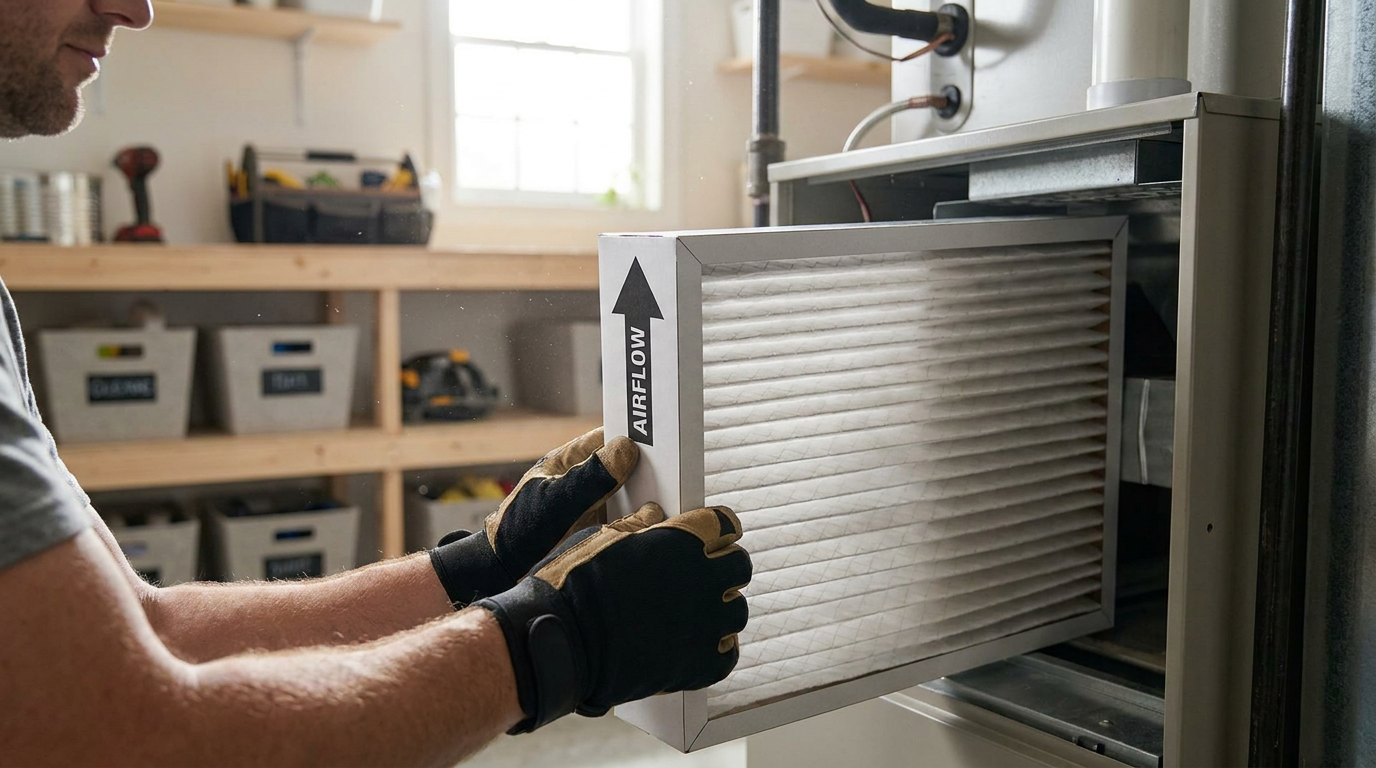
A simple practice can help here. Mark the installation date on the filter frame and set a recurring reminder on your phone or calendar. That small routine turns filter maintenance from a vague intention into a consistent efficiency habit.
2. Book an Annual HVAC Tune Up Before Peak Season
Routine professional maintenance is one of the most overlooked ways to optimize HVAC efficiency. Many homeowners wait until something sounds wrong or stops working, but preventive service is usually far less expensive than reactive repair. ENERGY STAR notes that annual HVAC tune ups help maintain efficiency and comfort while reducing the risk of early equipment failure.
A tune up typically includes checking electrical connections, testing controls, cleaning components, measuring airflow, inspecting the blower, and confirming safe operation. For cooling equipment and heat pumps, technicians may also inspect refrigerant charge and coil condition. These details matter because systems often lose efficiency gradually, not dramatically. By the time comfort drops enough to notice, the equipment may already have been working harder than necessary for months.
Professional maintenance is especially useful because some efficiency problems are not obvious from a homeowner perspective. A coil can be dirty without being visible. Refrigerant levels can be off without causing a full breakdown. A blower motor can still operate while moving less air than it should. A trained technician can catch these issues before they become energy drains or expensive failures.
In colder Canadian climates and in mixed climate regions across North America, a practical rhythm is to service heating equipment before winter and cooling equipment before summer if they are separate systems. If you have a heat pump, ask for service based on manufacturer guidance and system usage. The key idea is simple: your HVAC system performs better when it is maintained before it is under seasonal stress.
3. Seal and Insulate Ductwork, Especially in Unconditioned Spaces
Leaky ducts are one of the quietest ways a home wastes energy. Conditioned air can escape into attics, crawl spaces, basements, garages, and wall cavities long before it reaches the rooms where you actually want it. That means your system may run longer to compensate, increasing both energy use and wear.
ENERGY STAR reports that sealing and insulating ducts can improve heating and cooling efficiency by as much as 20 percent in some homes, and sometimes more. That is a substantial gain for an upgrade many homeowners do not think about until a renovation or major repair. It also directly challenges the misconception that duct leaks are minor. In homes with ductwork routed through unconditioned areas, losses can be significant.
You can start by visually inspecting any exposed ducts for obvious disconnections, gaps, or damaged insulation. Rooms that are consistently harder to heat or cool may also point to leakage or poor distribution. That said, a proper assessment often benefits from professional testing, especially if much of the duct system is hidden. Duct leakage testing can show exactly where conditioned air is being lost.
If you move forward with sealing, use HVAC appropriate materials such as mastic sealant or approved foil tape, not standard cloth duct tape, which tends to fail over time. Duct insulation is particularly important in spaces that are not heated or cooled. Even if air is not leaking out, poorly insulated ducts can lose heat in winter and gain heat in summer before the air reaches living areas.
This is a good example of efficiency that improves comfort too. Sealed ducts help more of the conditioned air arrive where it belongs, which can reduce temperature imbalance between rooms and shorten run times. It is practical, relatively invisible once completed, and often one of the better long term returns in HVAC optimization.
4. Keep Supply Vents, Return Grilles, and Registers Clear
Airflow problems do not only start inside the equipment. They also happen throughout the house when vents and returns are blocked by furniture, rugs, curtains, toys, or dust buildup. ENERGY STAR notes that airflow problems can reduce HVAC efficiency by up to 15 percent, which makes this a simple but meaningful area to review.
Walk through your home and look carefully at each supply vent and return grille. Make sure couches, dressers, beds, and shelving are not covering them. A vent that is half blocked may still deliver some air, but the system has to work harder to achieve the same result. In homes with limited floor space, this can happen gradually as furniture arrangements change over time.
Return grilles are especially important because the system needs a clear path to draw air back for conditioning. If returns are obstructed, overall circulation suffers. Rooms may feel stuffy or uneven, and the system may run longer without improving comfort proportionally.
Cleaning vents and grilles also helps. Dust accumulation can restrict airflow and recirculate particles through the home. While this step alone will not solve deeper system issues, it is part of maintaining clear, efficient operation. Think of it as supporting the air distribution network your equipment relies on every day.
5. Program Your Thermostat for Real Life, Not Idealized Habits
One of the easiest ways to waste HVAC energy is to control your home as though occupancy never changes. Many systems are set once and then forgotten, maintaining the same temperature around the clock even when no one is home or when everyone is asleep. A better approach is to adjust settings around actual routines while keeping comfort realistic.
Programmable thermostats and smart thermostats can both help with this. The goal is not to make the house uncomfortable. It is to reduce unnecessary heating or cooling during periods when full conditioning is not needed. Small setbacks, used consistently, often produce better results than dramatic changes that feel disruptive and lead people to override the schedule.
For households with changing routines, app based control is especially useful. You can shift settings on the go, respond to travel, and avoid conditioning an empty home all day. This is one reason smart thermostats have become such a mainstream efficiency upgrade. ENERGY STAR says an ENERGY STAR certified smart thermostat can save homes with high heating and cooling use about $100 per year, particularly in homes that are empty for much of the day or have high HVAC bills.
That said, thermostat upgrades alone do not solve efficiency. They work best when paired with good airflow, reasonable insulation, and a well maintained system. If a home has major duct leakage or an overdue tune up, a smart thermostat may help, but it cannot fully compensate for those losses.
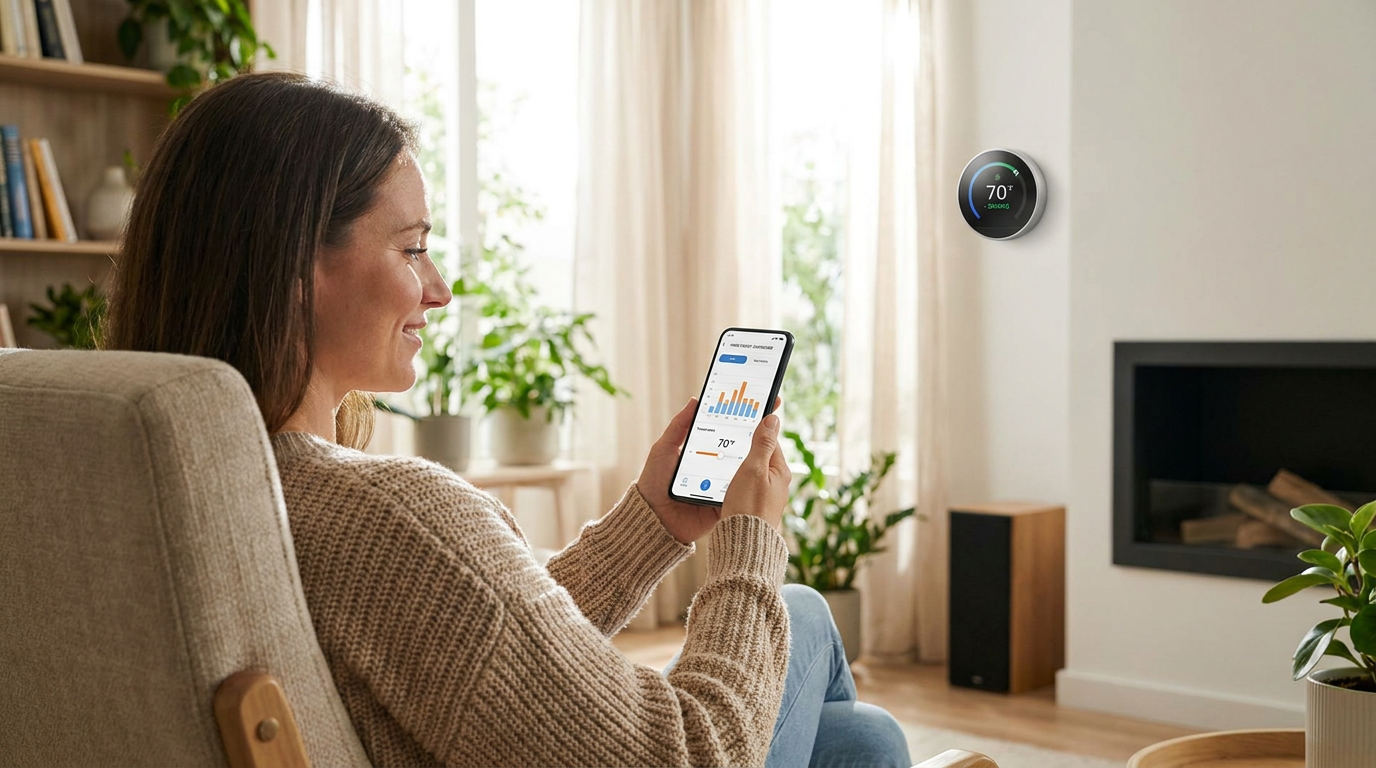
A thoughtful temperature strategy feels sustainable in the best sense of the word. It reduces waste quietly and consistently, without requiring daily effort once the schedule is set.
6. Upgrade to a Certified Smart Thermostat if Your Controls Are Outdated
If your current thermostat is basic, inaccurate, or difficult to program, replacing it can be a worthwhile next step. This is particularly true in homes where schedules vary, residents travel often, or HVAC use is high through long heating or cooling seasons. Certified smart thermostats make it easier to create practical routines and maintain them over time.
Beyond scheduling, many smart thermostats provide usage insights, maintenance reminders, and weather responsive adjustments. Some can alert you when the system seems to be running longer than normal. That does not replace diagnosis by a professional, but it can help homeowners notice efficiency drift sooner.
Installation should be handled carefully. Not every HVAC system is compatible with every thermostat, and some setups require a common wire or specific configuration. If you are uncertain, confirm compatibility with the manufacturer or hire a technician to install and optimize the settings.
From a sustainability perspective, smart controls are appealing because they make efficient behavior easier to sustain. Good intentions often fade when manual adjustment depends on memory and discipline. Better controls help turn efficiency into a normal part of how the home operates.
7. Clear the Area Around Your Outdoor Unit
Outdoor condensers need space to breathe. When grass, leaves, shrubs, fencing, or stored items crowd the unit, airflow suffers and the system can become less efficient. This is another issue that may not cause an immediate failure, but can steadily push energy use in the wrong direction.
Take time to remove leaves, weeds, and debris from around the unit, and trim vegetation back to maintain open clearance. Keep the top and sides unobstructed according to manufacturer guidance. If dirt has built up on the coil fins, a careful cleaning can help, though it is wise to avoid bending delicate fins or spraying with excessive pressure.
Homes in areas with heavy pollen, cottonwood, dust, or falling leaves may need more frequent checks during active seasons. If the unit sits near a dryer vent or busy driveway, accumulation can happen faster than expected. A few minutes of seasonal upkeep can support better airflow and more stable cooling performance.
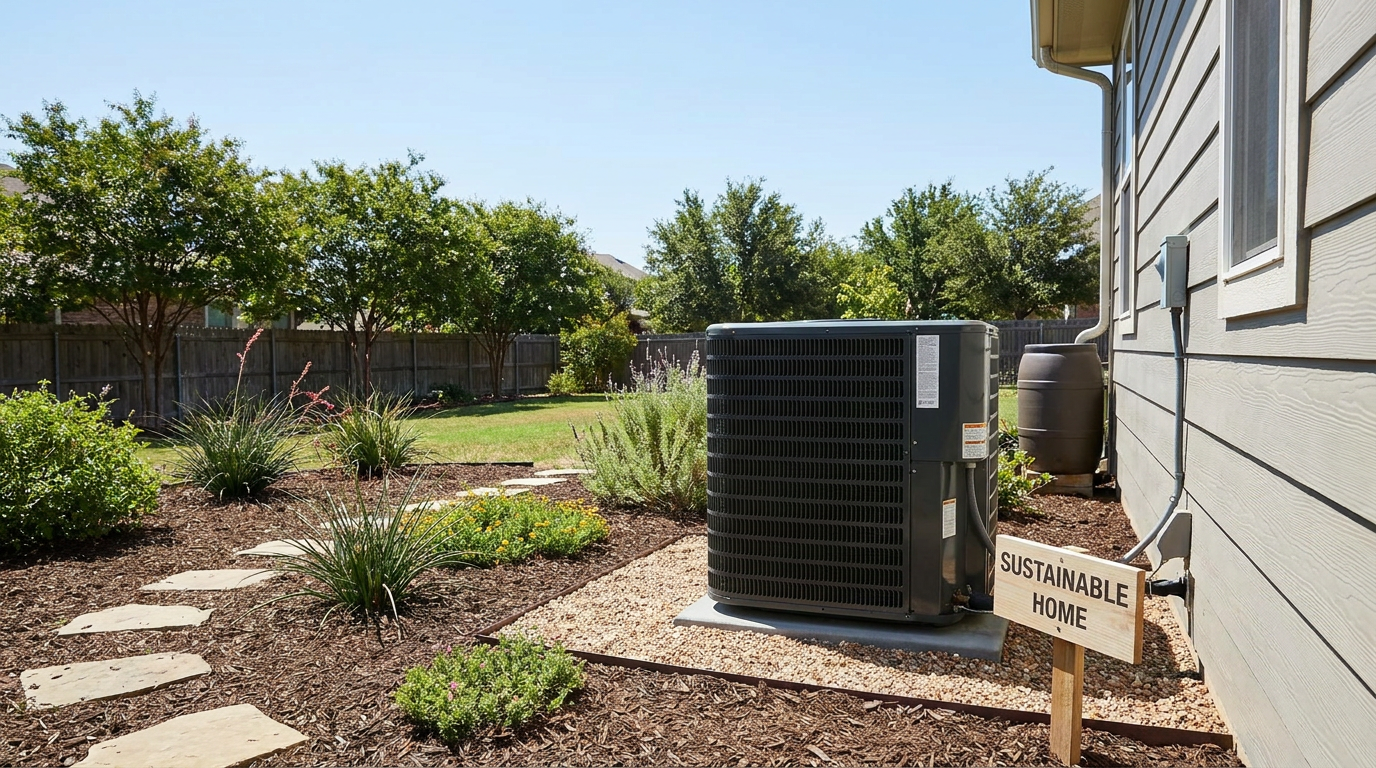
This step is simple, visible, and satisfying because it aligns maintenance with performance. Clear surroundings help the outdoor unit exchange heat more efficiently, which supports lower energy use and can reduce operational strain during hot weather.
8. Reduce the Load on Your HVAC System with Air Sealing and Insulation
One of the smartest ways to optimize HVAC performance is to make the house easier to heat and cool in the first place. NRCan emphasizes that HVAC should be understood as part of a whole house system. If warm air is escaping through leaks in winter, or summer heat is pouring in through an underinsulated attic, your HVAC equipment has to compensate regardless of how efficient the unit itself may be.
Air sealing around windows, doors, attic penetrations, plumbing openings, and other leakage points can lower the demand placed on your system. Adding or improving insulation, especially in attics and upper assemblies, often delivers strong comfort benefits alongside energy savings. Rooms become easier to keep at stable temperatures, and HVAC cycles may become less frequent or less extreme.
This is also where the conversation becomes more integrated. Homeowners sometimes expect the HVAC system alone to solve comfort problems that are actually caused by the building envelope. If one room is always cold, the issue may be poor insulation or leakage rather than insufficient equipment capacity. Treating the home as a system leads to better decisions and often prevents unnecessary oversized replacements.
Envelope improvements can be phased over time. You do not have to complete a whole home retrofit all at once to benefit. Even targeted air sealing and attic insulation can noticeably reduce load and help existing equipment perform more effectively.
9. Pay Attention to Moisture, Indoor Air Quality, and Comfort Signals
Energy efficiency should not be pursued in a way that makes a home less pleasant to live in. In fact, a well optimized HVAC system often improves comfort and indoor air quality. More even temperatures, better humidity control, cleaner airflow, and quieter operation are all common co benefits of a system that is functioning as it should.
If your home feels clammy in summer, dry in winter, dusty year round, or uneven from room to room, those are useful signals. They may point to airflow issues, oversized equipment, duct leakage, poor controls, or a need for balanced ventilation. Solving these issues can reduce waste while making the home feel noticeably better day to day.
This is important because some homeowners assume sustainability requires compromise. In reality, many efficiency improvements improve livability. Reducing excessive run times, preventing short cycling, and supporting better distribution can make rooms feel steadier and calmer. That can be especially valuable in bedrooms, home offices, and multi story homes where comfort differences tend to be more obvious.
Indoor air quality also deserves attention as part of maintenance. Filter replacement is one piece, but not the only one. Depending on the home, discussions about ventilation, humidity management, and system cleanliness may be worthwhile during a professional service visit. Efficient homes perform best when comfort, health, and energy use are considered together.
10. Replace Aging Equipment Only When the Time Is Right, and Choose High Efficiency Wisely
Replacement has an important place in HVAC planning, but it is not the first move for most households. A common misconception is that installing new equipment is always the fastest or best route to lower energy use. In reality, many homes can reduce waste substantially through maintenance, controls, duct improvements, and load reduction before a replacement becomes necessary.
That said, aging equipment eventually reaches a point where replacement does make sense. If your system is older, frequently breaking down, struggling to maintain comfort, or costing too much to repair, a high efficiency replacement may be the better long term choice. ENERGY STAR says properly installed high efficiency replacement equipment can save up to 20 percent on heating and cooling costs.
Installation quality matters as much as equipment ratings. An efficient unit that is improperly sized or poorly installed may never deliver its expected performance. Ask contractors to evaluate the home as a system, including ductwork, insulation conditions, and load calculations. In Canada, look for EnerGuide and ENERGY STAR qualified equipment as part of the decision making process. In both Canada and the United States, local utility rebates and government incentives may improve the financial case for efficient equipment and controls.
Heat pumps are increasingly central to this conversation. Across North America, and especially in Canada, heat pump adoption is growing as part of electrification and decarbonization efforts. For many households, a modern high efficiency heat pump can provide both heating and cooling with lower emissions, depending on the local grid and the home’s configuration. This does not mean every home should switch immediately, but it does mean heat pumps deserve consideration whenever a major HVAC upgrade is on the table.
A Practical Order of Operations for Homeowners
If all ten steps feel like a lot at once, it helps to sequence them. HVAC optimization works best when you start with the easiest and most universal actions, then build toward more technical or capital intensive improvements. This approach respects both budget and attention, which is often what makes efficiency efforts sustainable over time.
-
Check and replace or clean the air filter.
-
Clear vents, returns, and the outdoor unit.
-
Review thermostat settings and align them with actual occupancy.
-
Book an annual professional tune up.
-
Inspect exposed ducts and discuss duct sealing or testing if comfort is uneven.
-
Address air sealing and insulation where the home is losing conditioned air.
-
Consider smart thermostat upgrades if controls are outdated.
-
Plan for efficient replacement only when the system’s age, condition, or repair history justifies it.
This order keeps the focus where it usually belongs first: maintenance, airflow, and demand reduction. Those areas often produce meaningful savings and better comfort without the cost of replacing equipment prematurely.
Common Mistakes to Avoid
Even well intentioned homeowners can make choices that limit efficiency gains. A few recurring mistakes are worth keeping in mind because they can quietly undo progress or lead to unnecessary spending.
-
Assuming the system is efficient because it still runs. Function is not the same as efficiency, especially with older or poorly maintained equipment.
-
Ignoring filters until there is visible dust. Airflow can suffer long before the filter looks dramatic.
-
Buying a thermostat without checking compatibility. Better controls only help when they are installed and configured correctly.
-
Closing too many vents to force air into other rooms. This can disrupt system balance and increase pressure in ways the equipment was not designed for.
-
Skipping ductwork when evaluating comfort issues. Duct leaks and insulation gaps are often at the root of uneven temperatures.
-
Replacing equipment before reducing load. Without air sealing and insulation improvements, new equipment may still work harder than necessary.
None of these are unusual errors. They are simply reminders that HVAC efficiency tends to improve most when the home is approached thoughtfully rather than reactively.
How HVAC Efficiency Supports Sustainability Goals
There is a reason HVAC optimization belongs in conversations about greener homes. It connects environmental responsibility with practical household benefits. Lower energy use generally means lower operating costs. It also means fewer emissions associated with heating and cooling, whether your home uses electricity, natural gas, oil, or another source.
Just as importantly, efficiency avoids waste without asking for dramatic lifestyle changes. You do not have to tolerate discomfort to operate a home more responsibly. In many cases, the opposite is true. Better maintained systems, clearer airflow, more responsive controls, and a tighter building envelope often create a noticeably more comfortable living environment.
For households interested in deeper sustainability over time, HVAC efficiency can also be a bridge to future upgrades. A home with improved insulation, sealed ducts, and lower heating and cooling loads is often better prepared for high efficiency equipment, including heat pumps. It makes later investments more effective because the underlying system losses have already been addressed.
Practical sustainability works best when each step supports daily comfort, financial resilience, and long term building performance at the same time.
Final Thoughts
Optimizing your HVAC system does not need to begin with a costly overhaul. In fact, the most effective first steps are often the simplest: change the filter, maintain airflow, clear obstructions, tune the system, and use controls that reflect the way your home is actually lived in. Those actions can lower bills, reduce wear on equipment, and improve comfort almost immediately.
From there, the bigger picture becomes clearer. Duct sealing, air sealing, and insulation improvements help the entire house operate more efficiently. And when the time does come to replace aging equipment, you will be making that decision from a stronger position, with lower loads and a better understanding of what the home truly needs.
If your goal is a more eco friendly home, HVAC efficiency is one of the most achievable places to start. It is practical, measurable, and closely tied to everyday quality of life. Small improvements made consistently can add up to a home that feels better, wastes less, and supports a calmer, more durable kind of sustainability.


No Comment! Be the first one.