



Luxury in the garden has long been misunderstood. For many homeowners, the phrase suggests sprawling estates, demanding flower borders, imported stone, and a maintenance schedule fit for a private staff. Yet the most memorable outdoor spaces are rarely defined by excess alone. They are defined by atmosphere, comfort, coherence, and the subtle pleasure of being beautifully cared for. A luxury garden can be intimate rather than grand, restrained rather than ornate, and entirely achievable when each decision is made with intention.
Table Of Content
- What Makes a Garden Feel Luxurious
- Luxury and Accessibility Can Belong Together
- Begin with Structure, Not Decoration
- Choose a Restrained Palette for a Calm, Elevated Look
- Planting for Abundance Without Excess
- How to Make Native Planting Look Polished
- The Signature Feature That Changes Everything
- Outdoor Rooms That Feel Like an Extension of Home
- Lighting as Atmosphere, Not Afterthought
- Water-Wise Can Still Be Opulent
- Small Garden, Grand Effect
- Budgeting for Luxury the Smart Way
- Maintenance Is Part of the Design
- A Garden That Reflects Beauty, Responsibility, and Daily Life
Today, the idea of an opulent outdoor space is evolving in a way that feels both refined and practical. Homeowners are seeking gardens that invite entertaining and solitude, that soften architecture, that support health and well-being, and that remain beautiful without becoming exhausting to maintain. In North America, especially in Canada and northern regions of the United States, this also means responding gracefully to climate, seasonality, biodiversity, and long winters. A truly elevated garden is one that looks exquisite in June and still feels composed in November.
There is also a deeper value in investing in green space. Public health and parks guidance in Canada has noted that access to green space can support physical activity, social connection, biodiversity, cleaner air and water, and reduced heat impacts. In domestic terms, that makes the garden more than a decorative perimeter. It becomes an extension of the home that restores, shelters, and enriches daily life. Luxury, in this sense, is not only what the garden looks like. It is what the garden allows you to feel.
This guide explores how to create that feeling with clarity and confidence. Whether you have a compact courtyard, a suburban backyard, or a larger property with multiple zones, the principles remain remarkably similar. Strong structure, layered planting, elegant materials, thoughtful lighting, and a realistic maintenance strategy can transform almost any outdoor area into a sophisticated retreat. The secret is not to chase extravagance at every turn, but to choose a few things beautifully and repeat them with discipline.
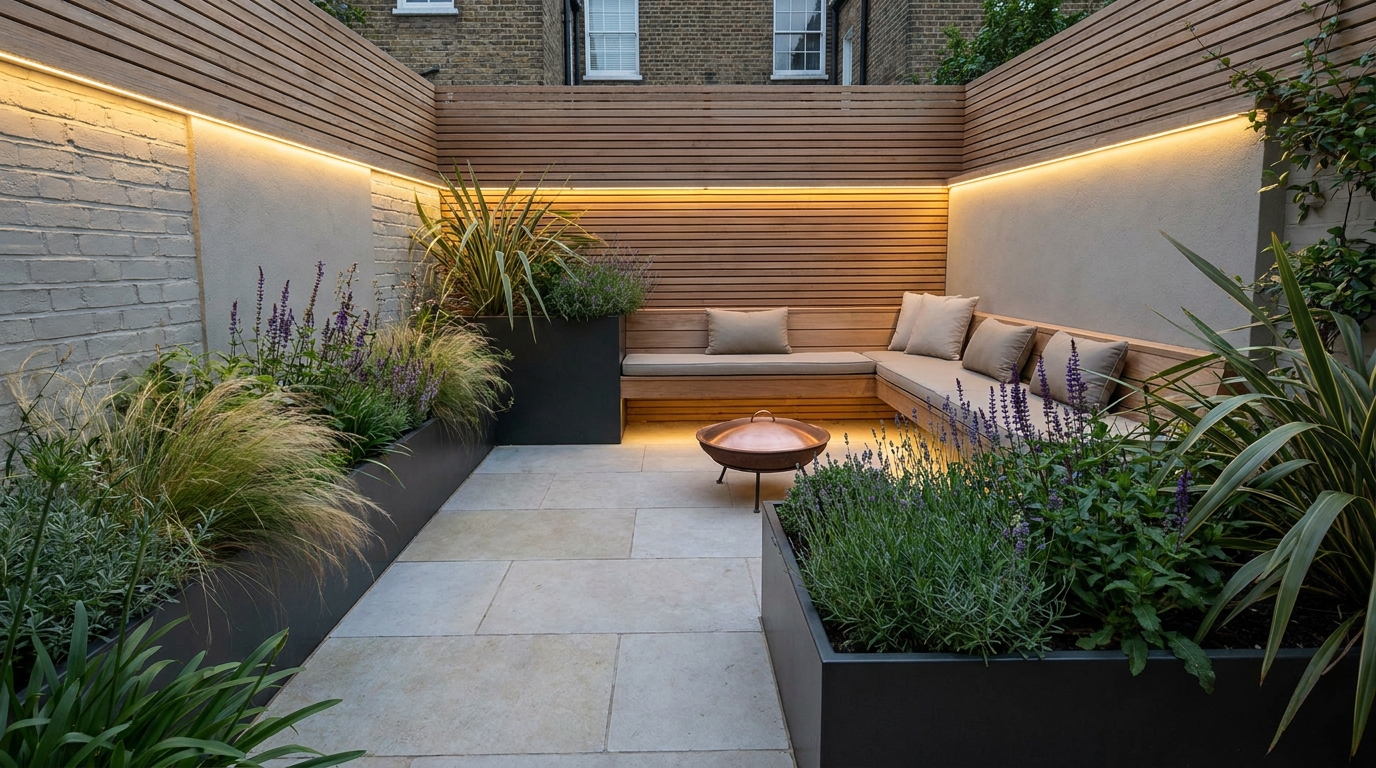
What Makes a Garden Feel Luxurious
A luxury garden is, above all, a composed experience. It does not rely on visual noise or a crowded collection of expensive elements competing for attention. Instead, it feels calm, layered, and complete. Materials relate to the architecture of the home, paths flow naturally, planting appears abundant without becoming chaotic, and there is always a sense that every corner has been considered. This kind of restraint often reads as more expensive than overt ornament because it suggests confidence rather than display.
There are several qualities that consistently define opulent outdoor spaces, regardless of size. Privacy is one of them. A garden feels more exclusive when it is sheltered from view through hedging, screens, trees, or beautifully placed structures. Comfort is another. Well-positioned seating, shade, gentle lighting, and surfaces that feel solid underfoot all contribute to a feeling of generosity. Then there is continuity, which is perhaps the most important ingredient of all. Repetition of materials, forms, and plant palettes creates visual harmony and allows the eye to rest.
Luxury also has a tactile dimension. The smoothness of stone, the movement of grasses in a breeze, the filtered shade under a tree canopy, and the fragrance of herbs or roses near a path all create richness that cannot be measured by cost alone. This is why even a modest garden can feel elevated when sensory experience is carefully designed. Sound, texture, scent, and changing light make an outdoor space feel alive and memorable.
Perhaps most importantly, a luxurious garden feels easy to inhabit. It is not precious in a way that discourages use. It supports a morning coffee, an evening gathering, a quiet walk, and a child or older family member moving through it comfortably. Modern luxury is less about viewing the garden from indoors and more about living within it. This shift is one of the most valuable ways to think about garden design today.
Luxury and Accessibility Can Belong Together
One of the most important updates to outdoor design is the idea that elegance and accessibility should be developed together. Inclusive spaces are often more beautiful because they are more thoughtful. A wide path with a graceful curve can be visually superior to a narrow one that feels awkward. A smooth step free transition between indoor and outdoor areas can make a terrace feel more expansive and serene. Comfortable seat heights, stable paving, and shaded resting places support more people while also improving the experience for everyone.
Canadian park and urban green space planning increasingly emphasizes reduced barriers and broader access to nature. In the garden, this can translate into design decisions that are subtle but transformative. Raised beds can make tending herbs and flowers easier while adding pleasing geometry. Lighting can be warm and low glare, illuminating edges without harshness. Surfaces can be elegant and slip resistant at once. Even handrails, when needed, can be integrated as beautifully finished metal details rather than utilitarian additions.
Accessible luxury also means designing the garden for everyday life rather than occasional display. Consider how one moves from the back door to a dining area, how a guest carrying a tray will navigate the space, or where someone may wish to pause in shade on a warm day. Gardens become more refined when circulation is intuitive. Good planning eliminates inconvenience, and that sense of ease is one of the truest markers of quality.
For aging homeowners, families with children, or households with varying mobility needs, these choices also protect the future value of the landscape. An outdoor space that remains usable over time is far more luxurious than one that must be altered later under pressure. The most graceful gardens are often those that quietly anticipate human needs before they become problems.
Begin with Structure, Not Decoration
When people imagine creating a luxury garden, they often begin with flowers, accessories, or furniture. In reality, the foundation of refinement is structure. This means the underlying arrangement of paths, terraces, walls, edges, trees, and focal points that gives the garden shape throughout the year. A structurally sound landscape looks composed even in winter or early spring when herbaceous plants have not yet reached their peak.
Think of structure as the architecture of the garden. A well-placed pergola can define an outdoor room. A row of small trees can create procession and privacy. Stone coping, gravel bands, or clipped hedges can sharpen edges and make planting appear more deliberate. These decisions create order, and order allows planting to feel abundant rather than messy. Without structure, even expensive elements can appear unresolved.
One useful approach is to divide the garden into a sequence of spaces rather than trying to design the entire yard as one open field. An entry zone, a dining terrace, a lounge corner, and a planted retreat can each have their own emphasis while remaining connected through shared materials and palette. This concept of outdoor rooms is especially effective in smaller gardens because it creates intimacy and depth. A compact site can feel much larger when there is rhythm and progression.
If your budget is limited, spend early on the elements that organize the space. Hardscape, grading, drainage, and key planting positions matter more than decorative accessories. A simple garden with excellent bones will always age better than one filled with ornate but disconnected details. Luxury is often the result of sound planning revealed over time.
Choose a Restrained Palette for a Calm, Elevated Look
Restraint is one of the signatures of sophisticated garden design. This does not mean the landscape should feel dull or severe. It means that color, material, and plant selection should be edited with care. A limited palette creates serenity and helps the eye appreciate contrast in form, texture, and light. Too many paving types, too many flower colors, or too many statement pieces can make even a large budget feel scattered.
One of the easiest ways to create an expensive impression is to repeat just a few materials consistently. For example, a pale limestone terrace may be echoed by stone coping on raised beds, while blackened steel appears in planters, lighting, and pergola details. Timber can warm the composition through benches or fencing, but it should be one timber tone rather than several. This level of consistency reads as intentional and refined.
The same principle applies to planting. Instead of collecting dozens of unrelated species, choose a concise palette and use repetition generously. Repeated masses of grasses, shrubs, or perennials create rhythm and fullness. White, green, silver, soft blue, and muted purple often lend themselves beautifully to a serene luxury garden, though warmer palettes can be equally successful when handled with discipline. The objective is not monotony but cohesion.
Seasonality should also influence the palette. In colder climates, evergreen forms, bark, seedheads, and winter silhouettes matter greatly because they carry the design beyond the flowering season. A garden that remains poised under frost or snow feels deeply considered. This is where luxury separates itself from fleeting spectacle.
Planting for Abundance Without Excess
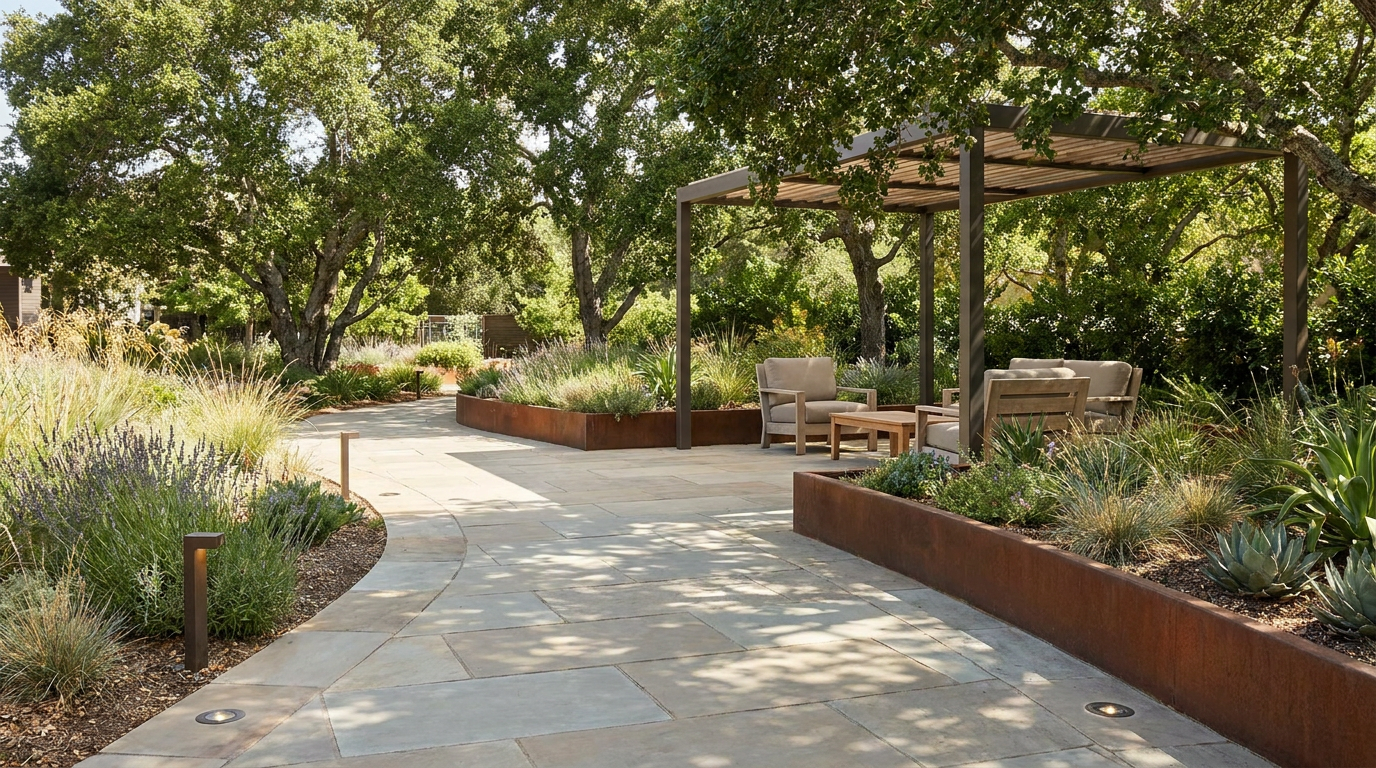
Many people still assume that a high end garden must depend on exotic plants, perfect lawns, or demanding annual displays. In fact, the most advanced landscape thinking now shows that beauty, resilience, and ecological intelligence can coexist. Native plants are adapted to local climate and soil conditions and can require less water, fewer fertilizers, and fewer pesticides than lawns, while also supporting pollinators and wildlife. This makes them not a compromise, but a sophisticated design choice.
USDA guidance also warns that some ornamental introductions can become invasive when planted outside their native range without natural controls. For homeowners, this is a useful reminder that luxury should never be confused with novelty for its own sake. A curated planting palette that belongs to its setting will often perform better, age more gracefully, and require less intervention than a collection of difficult imports. The elegance comes from composition and confidence, not from rarity alone.
To achieve a sense of abundance, focus on layering. Start with a framework of trees or large shrubs, then add mid-level structure through ornamental grasses, mounded perennials, or evergreen forms, and finally soften edges with groundcovers or low seasonal bloomers. This creates visual depth and a lush effect even when the plant list is quite concise. Repetition across these layers is what creates richness.
There is also wisdom in designing for maturity. Native and climate-adapted landscapes often take time to establish and may need a few seasons before they look fully mature and intentional. This can feel frustrating if one expects instant fullness, but patience is part of the luxury process. Proper soil preparation, appropriate spacing, and faith in the long view usually produce a garden that becomes more beautiful with each year rather than declining after an impressive but unsustainable debut.
True garden luxury is not about forcing nature into submission. It is about composing with it so skillfully that beauty appears effortless.
How to Make Native Planting Look Polished
A native or pollinator friendly garden can look as tailored as any formal landscape when it is organized with strong design principles. Begin by using clear edging. Crisp borders instantly make looser planting schemes feel intentional. Then repeat dominant species in generous drifts rather than mixing too many varieties. This creates a visual rhythm that reads as design rather than happenstance.
Include a few evergreen anchors or sculptural shrubs that hold shape year round. These permanent forms counterbalance the seasonal informality of perennials and grasses. Finally, pair ecologically beneficial planting with refined hardscape such as gravel, stone slabs, corten steel edging, or beautifully detailed raised beds. The dialogue between soft planting and disciplined materials is what gives the garden its poised character.
The Signature Feature That Changes Everything
If there is one principle that allows a garden to feel luxurious on a moderate budget, it is this: choose one unforgettable feature and let it lead the composition. This could be a pergola, a specimen tree, a sculptural planter, a water bowl, a fireplace, a built in bench, or a beautifully detailed dining terrace. The feature need not be large, but it should have presence. A singular focal point elevates the whole landscape because it gives the eye a destination.
For smaller spaces, a single multi stem tree in a gravel court can be transformative. In a suburban backyard, a pergola with integrated lighting and climbing plants may become the emotional center of the garden. In a larger landscape, a long reflecting trough or a canopied allée can provide drama. The secret lies in selecting something that suits the architecture and scale of the property rather than simply following trends.
Water remains one of the most seductive garden elements, but it should be approached with both beauty and practicality in mind. A modest recirculating water feature can provide sound and reflection without excessive use. Likewise, fire features can bring warmth and occasion, especially in cooler climates, but they should be integrated into seating and paving plans rather than added as isolated objects. When a focal point is structurally embedded in the landscape, it appears far more sophisticated.
In budget conscious projects, it is often wise to simplify everything around the signature feature. Let surrounding planting be repetitive and calm. Choose durable materials over numerous finishes. Keep furniture elegant but understated. This contrast allows one memorable gesture to do the visual lifting for the entire space.
Outdoor Rooms That Feel Like an Extension of Home
One of the defining trends in luxury garden design is the creation of outdoor rooms. Rather than treating the garden as leftover exterior space, designers are shaping it as a continuation of interior life. This may mean a dining terrace that feels connected to the kitchen, a lounge area under a pergola, a reading corner surrounded by planting, or a small wellness zone with a plunge tub or meditation bench. The effect is deeply inviting because it gives purpose to every part of the landscape.
To achieve this sense of continuity, pay close attention to thresholds. Flooring materials that echo interior tones can visually enlarge the living area. Doors that open onto a clear terrace rather than an awkward patch of lawn immediately create sophistication. Furniture proportions should suit the architecture and circulation, and textiles should be used thoughtfully to soften the setting. Comfort is not separate from luxury. It is one of its foundations.
Shade is equally important. A terrace without relief from summer sun is far less usable, no matter how beautiful the paving. Trees, pergolas, umbrellas, or architectural overhangs can all contribute to comfort while adding form. In Canada and other regions affected by urban heat, trees and green space also help cool surroundings and reduce heat island effects. This practical value only strengthens their design importance.
When planning outdoor rooms, think of sequence and mood. A lively dining area may transition into a quieter planted corner. A child friendly lawn panel may sit beyond a more formal terrace. The luxury lies in feeling that the garden knows how to host many kinds of life without confusion. That level of accommodation is what makes a landscape feel deeply personal.
Lighting as Atmosphere, Not Afterthought
Lighting is one of the most underestimated tools in garden design. During the day, it is nearly invisible. At night, it determines whether the landscape feels magical, flat, or harsh. In a luxury garden, lighting should be layered with subtlety. It should reveal pathways, mark changes in level, soften seating areas, and draw attention to beautiful bark, specimen trees, or architectural textures. It should never feel glaring or theatrical without purpose.
At 216 Duncan Rd in Richmond Hill, the front garden is lit in exactly this layered way, with low uplighting along clipped boxwood hedges and lanterns on the limestone gate piers.
Warm color temperatures tend to create the most inviting atmosphere in residential settings. Low glare fixtures are particularly important for accessibility because they make edges legible without discomfort. Path lights should guide movement gently. Uplighting can emphasize trees or sculptural forms, while integrated bench and step lighting can add both safety and elegance. The objective is to create depth and intimacy rather than brightness alone.
There is also an economic argument for thoughtful lighting. A modest garden can feel dramatically more expensive after sunset when the right features are illuminated and the rest is left in shadow. This is one of the most effective places to invest because it extends the usability of the garden and transforms entertaining. It also allows the landscape to be appreciated from indoors during darker months.
When planning, consider wiring and fixture placement early rather than treating lighting as a last minute accessory. A beautifully designed garden deserves to be composed at night as carefully as it is by day. This continuity of experience is one of the clearest marks of a premium space.
Water-Wise Can Still Be Opulent
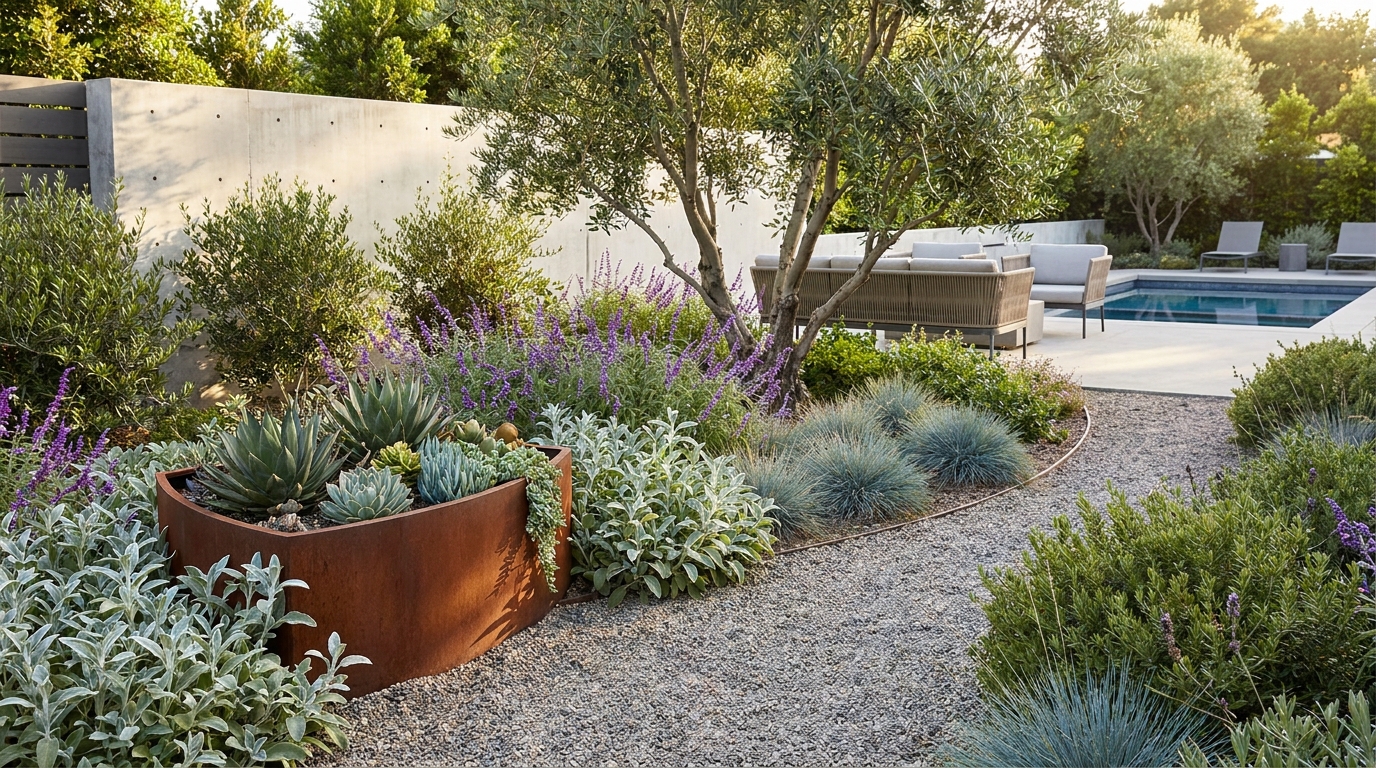
There is a persistent misconception that low water gardens must look sparse, gravelly, or unfinished. In reality, water-wise design has matured into one of the most elegant directions in contemporary landscaping. Research in arid and semi arid regions has shown that attractive, high performing landscapes can be built around drought tolerant and native planting with thoughtful planning. The visual luxury comes from massing, contrast, texture, and composition, not from wasteful water use.
Grasses, aromatic shrubs, flowering perennials, and carefully chosen trees can create softness and abundance while requiring less irrigation than a conventional lawn dominated yard. Mulch in the form of fine gravel or organic material helps retain moisture and gives beds a finished appearance. Irrigation can be targeted rather than broad and indiscriminate. These systems are not only environmentally responsible. They also reduce long term stress, which makes the garden easier to enjoy.
In climates with hotter summers or increasing drought pressure, water wise design is not merely a trend. It is a durable strategy for maintaining beauty under changing conditions. This may involve reducing lawn areas, capturing rainwater where possible, amending soil properly, and selecting plants with regional suitability. The result can be every bit as lush in feeling as a traditional landscape, especially when planting is repeated generously and layered carefully.
For homeowners worried that sustainability may look austere, the answer lies in detail. Use elegant paving, sculptural pots, beautiful seating, and one or two refined focal points to add polish. Ecological responsibility and visual richness are not opposing goals. Increasingly, the most sophisticated gardens are those that unite them seamlessly.
Small Garden, Grand Effect
Some of the most luxurious gardens are the smallest. A compact space invites concentration, and concentration often produces stronger design. In a courtyard or townhouse garden, every view matters. The paving pattern, the scale of a planter, the position of a bench, and the framing of a tree all become more noticeable. This is an advantage because it encourages curation rather than accumulation.
To make a small garden feel opulent, begin by simplifying the layout. Too many tiny zones make a space feel nervous. A clear geometry, one seating area, and one memorable focal point often work best. Vertical layering becomes especially important. Walls can support climbers, trellises, or espaliered forms. Narrow beds can still feel rich when they combine evergreen structure, seasonal flowering, and trailing edges.
Mirrors, water, and strategic lighting can increase the sense of depth, but these should be used judiciously. More effective still is the use of generous materials. A small terrace paved in larger format stone can feel calmer and more expensive than one broken into many little units. Built in seating can save space while adding architectural weight. In compact gardens, luxury often comes from precision.
Privacy is also essential. Because smaller urban spaces are often overlooked, screening should be integrated beautifully through slatted timber, pleached trees, tall grasses, or layered planting. Once enclosure is achieved, even a narrow yard can become an intimate sanctuary. The emotional transformation is often extraordinary.
Budgeting for Luxury the Smart Way
Creating a refined garden does not require unlimited funds, but it does require discipline in where money is spent. The most effective strategy is to prioritize the elements that most strongly influence perception and use. These usually include the entry sequence, a key hardscape material, lighting, one signature feature, and a strong planting framework. When these are done well, the entire garden feels more valuable.
Phasing can be particularly helpful. Install the structural elements first, then build the planting in stages as budget allows. This approach works well with native and climate adapted landscapes because many of these gardens improve with time. There is no need to force instant maturity if the bones are already in place. In fact, spacing plants correctly from the outset often leads to a healthier and more graceful result than overcrowding for immediate effect.
It is also wise to avoid scattering the budget across too many decorative extras. Ten average features rarely create the impact of two excellent ones. Durable materials that age well are generally a better investment than fashionable finishes that deteriorate quickly. Likewise, fewer plant varieties used in larger numbers often look more luxurious than a collector’s assortment purchased one pot at a time.
Below is a practical order of priorities for homeowners who want an elevated result without unnecessary expense.
- Get the layout right so movement, seating, and views feel natural from the beginning.
- Invest in one beautiful hardscape material and repeat it consistently.
- Create a focal point such as a pergola, specimen tree, or sculptural water element.
- Use layered, repeated planting rather than many unrelated species.
- Install lighting early so the garden can be enjoyed in the evening and through winter.
- Plan for maintenance with irrigation, mulch, access, and realistic plant selection.
Maintenance Is Part of the Design
A garden cannot feel luxurious if it is constantly asking too much of its owner. Maintenance should never be considered after the design is complete. It must be woven into the design itself. This means choosing plants appropriate to local conditions, allowing enough room for growth, ensuring easy access for pruning or care, and using irrigation systems that match the planting style. It also means understanding that the first year of a garden is not the final expression of the design.
USDA guidance on native landscaping emphasizes that establishment can take time and that several seasons may pass before a planting shows its full intended effect. This is important because disappointment often comes from unrealistic expectations rather than poor design. A garden that is young may look sparse in places, but if the structure is clear and the planting plan is sound, the long term result can be far more satisfying than an instantly crowded border that later declines.
Mulching helps conserve moisture and suppress weeds. Smart irrigation reduces waste and targets plant needs more precisely. Seasonal editing, such as cutting back grasses or refreshing containers, keeps the garden looking deliberate. In colder climates, choosing plants with winter structure and hardscape that withstands freeze thaw cycles is equally essential. All of this contributes to a landscape that remains handsome without becoming burdensome.
For households that entertain often or travel frequently, low stress maintenance is one of the most meaningful luxuries available. A garden should restore energy, not consume it. The highest compliment a landscape can receive is that it feels effortless, even when considerable thought has gone into making it so.
A Garden That Reflects Beauty, Responsibility, and Daily Life
The most inspiring luxury gardens today do something more nuanced than simply impress. They create a sense of refuge, they support biodiversity, they respond to climate, and they make room for real life with grace. They can host dinner under stringently edited lighting, offer a shaded place to read on a hot afternoon, welcome pollinators with regionally appropriate planting, and still look composed from the windows in January. This balance of beauty and function is where modern opulence truly resides.
If you are beginning your own garden transformation, resist the temptation to think first in terms of things. Think instead in terms of feelings. Do you want the garden to feel serene, sociable, sheltered, airy, romantic, sculptural, or restorative. From there, let structure, materials, and planting choices serve that emotional intention. A luxurious garden is ultimately a story of atmosphere translated into space.
Remember that size is not destiny and extravagance is not the only path to elegance. Cohesion, comfort, privacy, and thoughtful detail can create richness in the smallest courtyard just as surely as on a broad property. Native plants, water wise strategies, accessible pathways, and seasonally intelligent design do not reduce luxury. They refine it for the way we live now.
To create your own opulent outdoor space is to compose a landscape that feels deeply personal and beautifully resolved. It is an act of design, certainly, but also an act of care. When a garden is shaped with intention and lived in with pleasure, it becomes more than a backdrop to the home. It becomes one of its most eloquent rooms.


No Comment! Be the first one.