



Minimal luxury has a quiet kind of power. It does not rely on dramatic statements, crowded rooms, or endless shopping bags to make a home feel special. Instead, it creates beauty through calm, intention, and comfort. A room with space to breathe, a beautifully made chair that feels wonderful at the end of a long day, sunlight moving across natural wood, and bedding that invites deep rest can feel far more luxurious than a house full of decorative excess.
Table Of Content
- What Is Minimal Luxury?
- Why Calm Interiors Matter for Well-Being
- The Emotional Benefits of Minimal Luxury
- Natural Light, Air, and Sensory Comfort as the New Luxury
- How Nature Softens a Minimal Space
- Minimal Luxury Is Not Cold, Empty, or Out of Reach
- Designing a Minimal Luxury Living Room
- Creating a Restorative Bedroom
- Small Spaces Can Feel Luxurious Too
- A More Peaceful Home Office
- How to Choose What Stays and What Goes
- The Materials and Finishes That Make a Home Feel Softer
- Minimal Luxury as a Daily Practice
- Redefining Luxury for Real Life
- Final Thoughts
For many people, this approach feels especially meaningful right now. Home has become more than a place where we sleep and store our belongings. It is where we recover from stress, work, gather, parent, rest, and try to feel like ourselves again. Research on housing and indoor environmental quality continues to show that better daylight, healthier indoor conditions, adequate space, lower noise, and thermal comfort are linked with better well-being and lower stress. When we look at minimal luxury through that lens, it becomes less of a style trend and more of a compassionate way of living.
There is also a practical side to its appeal. In North America, many households are balancing rising costs, changing routines, and the emotional fatigue that comes from overstimulation and overconsumption. Statistics Canada has reported that a meaningful share of households spend 30 percent or more of their income on shelter costs. That reality makes the idea of buying less but buying better feel not only elegant, but deeply sensible. Minimal luxury asks us to invest in what genuinely improves daily life, rather than filling a space with items that do little for comfort or peace of mind.
At its best, minimal luxury is warm, restorative, and personal. It is not sterile minimalism, and it is not display-driven luxury. It is a thoughtful middle ground that values softness, texture, craftsmanship, and emotional ease. It says that true comfort may come from less visual noise, fewer but better objects, and a home that gently supports your energy instead of draining it.
In this article, we will explore how minimal luxury can reshape the feeling of home, why it is closely tied to well-being, and how to bring it into real spaces, whether you live in a large family house, a compact condo, or a city apartment. The goal is not perfection. The goal is a home that feels lighter, calmer, and beautifully suited to everyday life.
What Is Minimal Luxury?
Minimal luxury is a design philosophy that pairs restraint with comfort, quality, and warmth rather than treating them as opposites. It means reducing what feels unnecessary so that what remains — beautiful materials, thoughtful lighting, and pieces with real function or meaning — can be felt more deeply. A minimal luxury home is not empty, severe, or intimidating; it can include a beloved ceramic bowl, a cashmere throw, or a dining table that carries family memories, all layered together to create warmth rather than opulence. It values atmosphere over abundance and quality over quantity, favoring fewer but better choices, softness, texture, and craftsmanship. In practice, this means every element serves a practical, emotional, or sensory purpose, creating rooms that feel calm and restorative rather than cluttered or performative, where comfort and quality matter more than visible display.
In many ways, minimal luxury reflects a shift in how people define success at home. The old idea of luxury often depended on more space, more objects, and more visible opulence. The newer version is much quieter. It focuses on how a home feels when you wake up in it, move through it, and return to it after a demanding day. It asks whether your spaces help you breathe more easily, rest more deeply, and think more clearly.
That emotional quality matters because people spend about 90 percent of their time indoors. If the spaces that surround us most of the day are cluttered, noisy, poorly lit, or visually restless, they can subtly increase stress and mental fatigue. If they are calm, balanced, and comfortable, they can become restorative environments that support emotional regulation. This is where minimal luxury becomes more than a visual preference. It becomes a lifestyle choice rooted in well-being.
Minimal luxury is not about owning less to impress others. It is about creating enough space, softness, and sensory ease that your home begins to feel like a true refuge.
Why Calm Interiors Matter for Well-Being
There is a growing body of research connecting the quality of our indoor environments to our mental and emotional health. Reviews of housing conditions and indoor environmental quality have found that better daylight, healthy air, adequate space, and lower noise are associated with lower stress and better mental health outcomes. These findings help explain why some homes leave us feeling restored, while others leave us feeling depleted even when they are visually attractive.
Minimal luxury works so well because it naturally supports many of these conditions. By reducing clutter, it can make rooms feel more spacious and easier to use. By prioritizing fewer, better materials, it often leads to more tactile comfort and less visual chaos. By emphasizing thoughtful layouts and sensory quality, it can improve how a home functions throughout the day. A space does not have to be large to feel generous. Sometimes all it needs is better flow, cleaner surfaces, softer lighting, and room for the eye to rest.
There is also an emotional dimension to visual simplicity. Constant sensory input can make it harder to relax. Too many patterns, objects, unfinished piles, and competing focal points can create a background hum of tension. Minimal luxury softens that experience. It gives the nervous system fewer things to process, which can make ordinary routines feel easier. Morning coffee at a clear counter, getting dressed in a bedroom that feels serene, or sitting down to work at an uncluttered desk can all have subtle but meaningful effects on mood.
This is one reason restorative home environments have become so important in recent years. People are not only looking for beauty. They are looking for relief. A calm home can support better transitions between work and rest, reduce decision fatigue, and make it easier to reconnect with yourself and the people you live with. In that sense, minimal luxury is not about creating a showroom. It is about creating emotional breathing room.
The Emotional Benefits of Minimal Luxury
One of the most compelling things about minimal luxury is that its benefits are often felt before they are fully explained. You walk into a room with soft daylight, natural textures, and a sense of spaciousness, and your shoulders drop a little. You sleep better in a bedroom that is visually quiet and physically comfortable. You feel more present in a living room where seating invites conversation instead of competing with décor. These reactions are not imaginary. They reflect the way well-designed environments shape our nervous systems and daily habits.
The first emotional benefit is calm. Minimal luxury reduces overstimulation and allows a space to feel settled. Calm does not mean boring. It means the room is not asking too much of you. It holds you gently instead of demanding your attention at every turn. This can be especially powerful in homes where life is already full, whether that means children, work stress, caregiving, or simply the fast pace of modern routines.
The second benefit is comfort. In minimal luxury interiors, comfort is not an afterthought. It is central. Upholstery feels good against the skin, lighting flatters rather than glares, and materials age beautifully instead of wearing out quickly. Comfort also comes from ease of use. A room that is organized, intuitive, and free from needless clutter can help daily life flow with less friction.
The third benefit is focus. In a visually quieter environment, it becomes easier to think, work, read, and even have more meaningful conversations. This matters for families, remote workers, and anyone who feels mentally scattered by too much noise or visual density. A clear space can encourage clearer thinking, not because it is magically productive, but because it removes obstacles to concentration.
The fourth benefit is restoration. Home should offer some degree of recovery from the outside world. Research on restorative environments and biophilic design suggests that natural elements, greenery, and nature-inspired settings can help reduce stress and improve mood. Minimal luxury often incorporates these cues beautifully, making rooms feel less artificial and more grounded.
Natural Light, Air, and Sensory Comfort as the New Luxury
One of the most meaningful shifts in modern luxury is the move away from obvious display and toward invisible comfort. Better air quality, a room that stays at a pleasant temperature, daylight that changes beautifully over the day, and acoustics that support rest are not always the first things guests notice. Yet they are often the very things that make a home feel exceptional to live in.
Wellness-centered design frameworks such as WELL have reinforced this idea by placing human health, comfort, and well-being at the center of interior quality. This reflects a broader change in how premium homes are imagined. Today, a luxurious home is increasingly one that helps people sleep better, breathe more easily, and feel calmer within their own routines. That may sound subtle, but subtle improvements can have the deepest impact because they shape everyday experience.
In practical terms, minimal luxury often begins with paying attention to sensory comfort. Light should feel soft and layered, not harsh. Air should feel fresh. Fabrics should have texture and warmth. Noise should be managed as much as possible through rugs, curtains, upholstered furniture, and thoughtful room arrangements. These choices may seem humble compared with dramatic renovations, but they often do more to improve quality of life.
When people say a room feels expensive in the best sense, they are often responding to this sensory coherence. The room is comfortable without trying too hard. It feels finished but not overdone. It supports your body as much as it pleases your eye. That is the essence of minimal luxury, and it is one of the reasons the concept feels so enduring.
How Nature Softens a Minimal Space
One of the most beautiful ways to keep minimal luxury from feeling too stark is to bring nature indoors. Research on biophilic design and restorative environments suggests that greenery, natural elements, and organic references can support stress reduction and emotional restoration. That does not mean you need to turn your home into a greenhouse. Even a few carefully placed plants, a branch arrangement, or a strong connection to outdoor views can make a room feel more alive.
Natural materials also play a powerful role. Wood, linen, wool, clay, stone, and cotton add warmth and tactility that prevent simple spaces from feeling flat. Research has associated wood interiors with warmth, pleasantness, and restorative potential, which helps explain why even a modest amount of natural wood can transform the feeling of a room. These materials carry visual softness and a sense of authenticity that manufactured finishes often struggle to replicate.
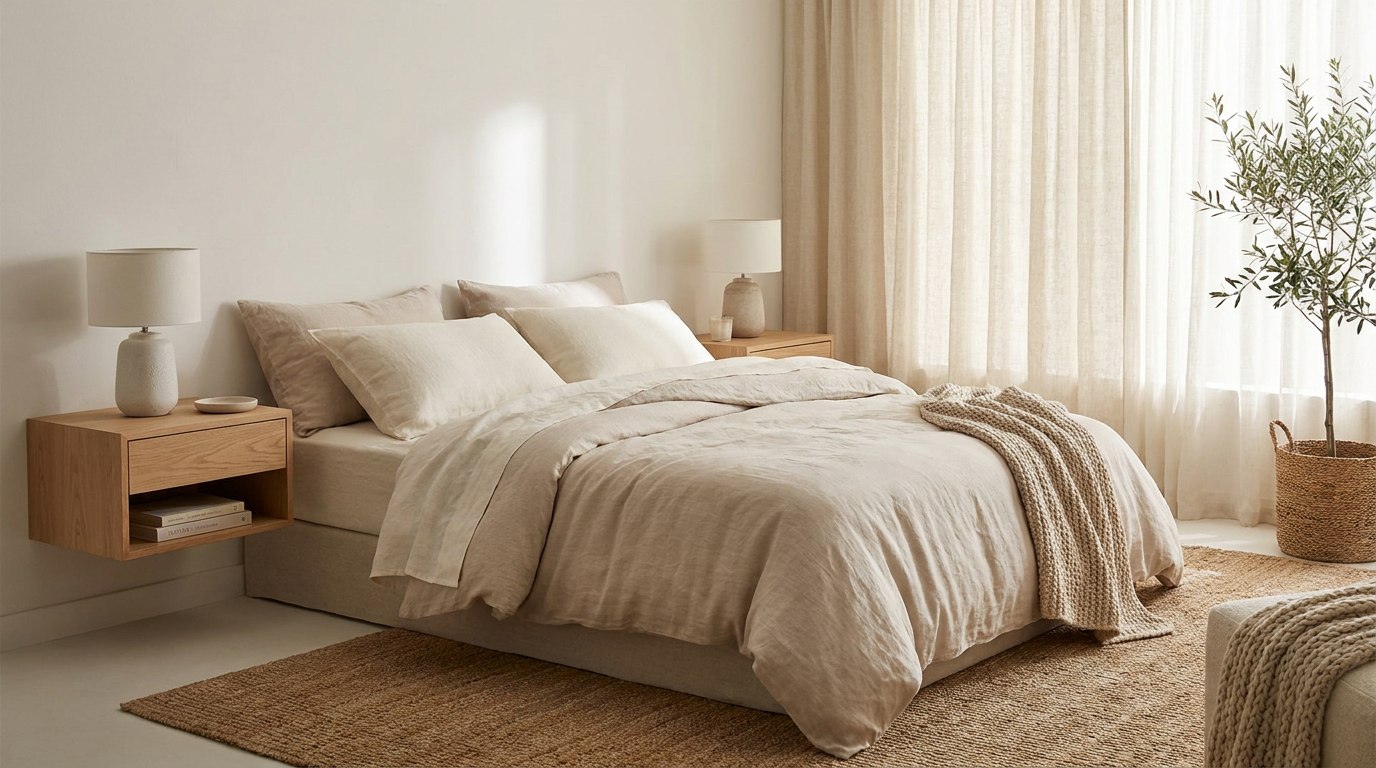
Bedrooms are a wonderful place to see this in action. A minimal luxury bedroom might include crisp but inviting bedding, a warm wood bedside table, a ceramic lamp, linen drapery that filters light beautifully, and a single plant in the corner. Nothing feels excessive, yet everything contributes to a deeper sense of rest. The room is not empty. It is edited in a way that makes comfort more visible and more available.
Nature also helps connect minimal luxury to seasonality and daily rhythm. Fresh flowers in spring, heavier natural textiles in winter, and light sheer curtains in summer can all enrich the atmosphere without creating clutter. These changes invite a home to feel responsive and lived in rather than static. In this way, minimal luxury becomes less about fixed aesthetics and more about creating an ongoing relationship with your environment.
Minimal Luxury Is Not Cold, Empty, or Out of Reach
One of the biggest misconceptions about minimal luxury is that it leads to cold and emotionally sterile rooms. This usually comes from confusing it with extreme minimalism or with overly staged interiors that prioritize visual control over comfort. True minimal luxury is much softer. It welcomes warmth, patina, and intimacy. It simply avoids unnecessary excess so those qualities can stand out more clearly.
Another misconception is that it is only for wealthy homeowners with expansive square footage. In reality, this philosophy can be especially helpful in smaller homes because curation makes limited space feel more generous. A compact apartment can feel luxurious when storage is thoughtful, surfaces are not overcrowded, and every piece contributes either beauty or function. The feeling of ease matters more than the size of the floor plan.
It is also worth addressing the idea that luxury must always mean spending more. Minimal luxury can involve investment, especially when choosing better-quality furnishings or healthier materials, but it is not about constant acquisition. It is about spending intentionally. Sometimes the most luxurious choice is keeping a room simpler so that one excellent sofa, one beautiful rug, or one carefully selected lamp has room to breathe.
This mindset can feel particularly refreshing in a culture that often equates improvement with accumulation. Minimal luxury suggests another path. It invites us to ask whether a purchase will genuinely improve comfort, atmosphere, and longevity. If the answer is no, then leaving space empty may actually be the more elegant decision.
Designing a Minimal Luxury Living Room
The living room is often where the philosophy of minimal luxury becomes most visible because it carries so many different roles. It is a place for conversation, recovery, entertainment, reading, and often family life in all its unpredictability. A minimal luxury living room should not feel formal or untouchable. It should feel open, grounded, and quietly inviting.
Start with the largest visual elements. A sofa with beautiful proportions and durable, tactile upholstery can set the entire tone. Neutral does not have to mean plain. Cream, oatmeal, taupe, soft clay, and warm gray can all create depth when layered thoughtfully. Add a rug that softens sound and underfoot comfort, then choose a coffee table or side tables with honest materials such as wood or stone. If every large piece feels calm and cohesive, the room will immediately feel more settled.
Lighting matters enormously in this room. Instead of relying on one overhead fixture, think in layers. A floor lamp beside a chair, a table lamp on a console, and soft ambient lighting in the evening create a more restful mood. This kind of lighting supports how people actually live. It makes evenings feel gentler and encourages slower, more comfortable routines.
Décor in a minimal luxury living room should feel intentional rather than absent. A few books, a vessel, a textured throw, framed art with emotional resonance, and perhaps one sculptural object may be enough. The goal is not to remove personality. It is to let personality emerge more clearly through fewer, stronger choices. When there is less visual competition, the details that remain often feel more meaningful.
For family homes, this approach can still be wonderfully practical. Closed storage, baskets in natural materials, and furniture with durable finishes allow a room to support daily life without looking chaotic. Minimal luxury is not precious. It is simply organized in a way that protects calm.
Creating a Restorative Bedroom
If any room deserves the language of sanctuary, it is the bedroom. This is where minimal luxury can have one of the most immediate effects on well-being because sleep, stress, and visual environment are so closely intertwined. A restorative bedroom is not packed with furniture or decorative filler. It is shaped around comfort, softness, and ease.
The bed should be the clearest priority. Invest in bedding that feels breathable and gentle against the skin. Natural fibers such as linen and cotton are often ideal because they contribute both comfort and understated texture. Layering can be simple but thoughtful, with a quilt, a lighter coverlet, and pillows that support rest without making the bed feel overly staged.
Color should support unwinding. Soft neutrals, muted earth tones, and nature-inspired shades tend to create a more grounded atmosphere than highly stimulating colors. Window treatments are also essential. Drapery that filters light beautifully by day and supports darkness at night can transform how a room feels and functions. Even the act of drawing curtains in the evening can become part of a calming ritual.
Nightstands should hold only what supports rest, perhaps a lamp, a book, a small tray, and a glass of water. Keeping surfaces visually quiet can make bedtime feel less mentally busy. This is one of those moments where minimal luxury becomes emotional rather than aesthetic. A clean, comfortable bedside area can signal that the day is ending and recovery can begin.
Small Spaces Can Feel Luxurious Too
Minimal luxury may be especially useful in apartments, condos, and smaller homes because it helps every choice work harder. When square footage is limited, excess becomes more noticeable and more draining. A room with too much furniture or too many decorative objects can quickly feel crowded. In contrast, a small home that is carefully edited can feel deeply comfortable and surprisingly elegant.
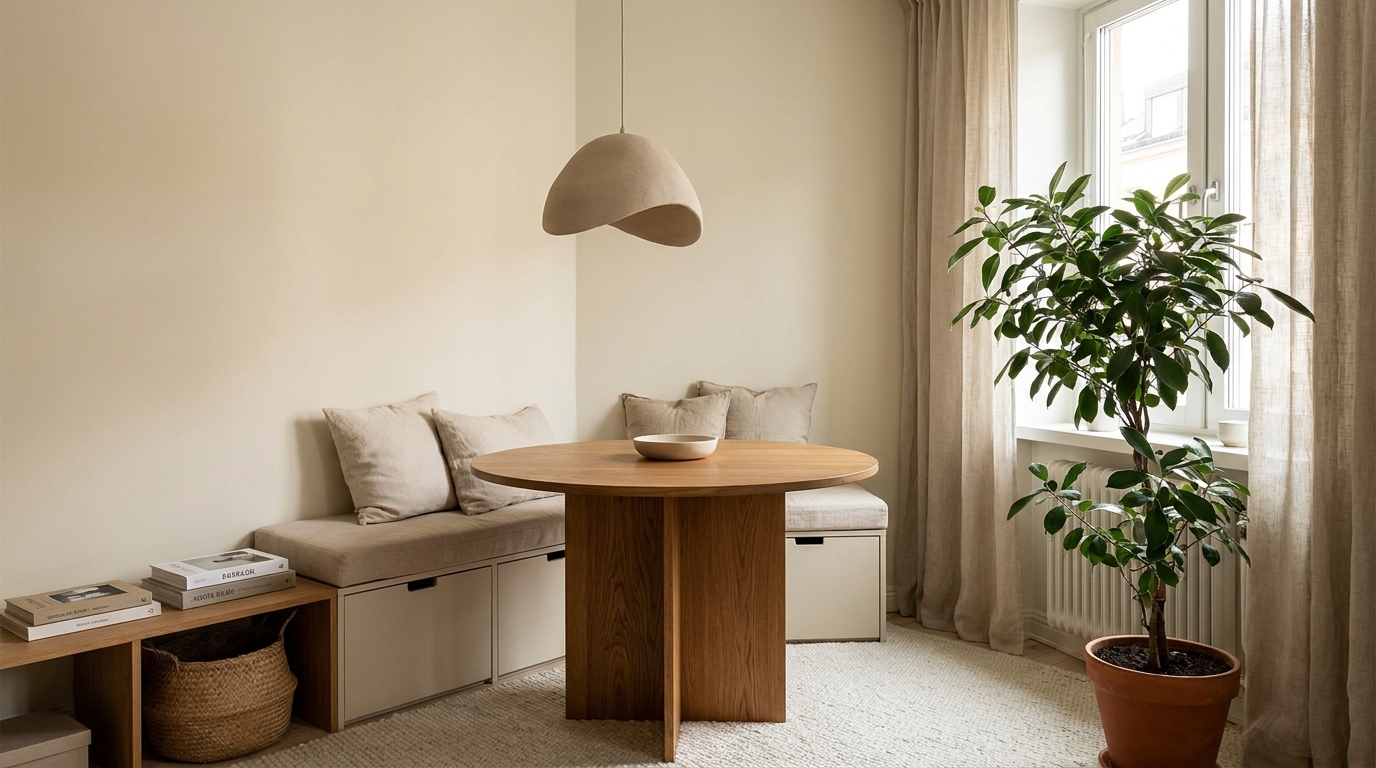
The key is to focus on pieces that serve multiple purposes without looking purely utilitarian. A bench with hidden storage, a beautiful cabinet that conceals everyday clutter, or a dining table that doubles as a work surface can all support the feeling of spaciousness. Materials become even more important in smaller rooms because you notice them more closely. A simple chair in a lovely fabric or a compact table in warm wood can elevate the whole atmosphere.
Mirrors, good lighting, and clear walkways also help. They do not create actual square footage, but they can create a sense of relief. So can limiting the palette. When materials and colors relate to one another gently, the eye moves through a room more peacefully. This visual continuity makes small spaces feel cohesive rather than chopped up.
Most importantly, small-space luxury is emotional. It comes from a home that feels cared for and easy to inhabit. If your apartment allows you to wake up in calm surroundings, cook without fighting clutter, and end the day in a room that feels soft and settled, then it is already offering a kind of luxury that matters.
A More Peaceful Home Office
As work-from-home routines have become part of everyday life for many households, the emotional quality of the home office matters more than ever. A minimal luxury workspace does not have to look corporate or austere. It should feel supportive, focused, and integrated with the rest of the home. This is especially important because visual clutter in work areas can amplify stress and mental fatigue.
Begin with what you see most often. A clear desktop, comfortable chair, and good natural or layered light can completely change the tone of a workday. Storage should be close enough to be useful but subtle enough not to dominate the room. Shelves with a few books, a box for paper clutter, and one or two personal objects are often enough to create personality without distraction.
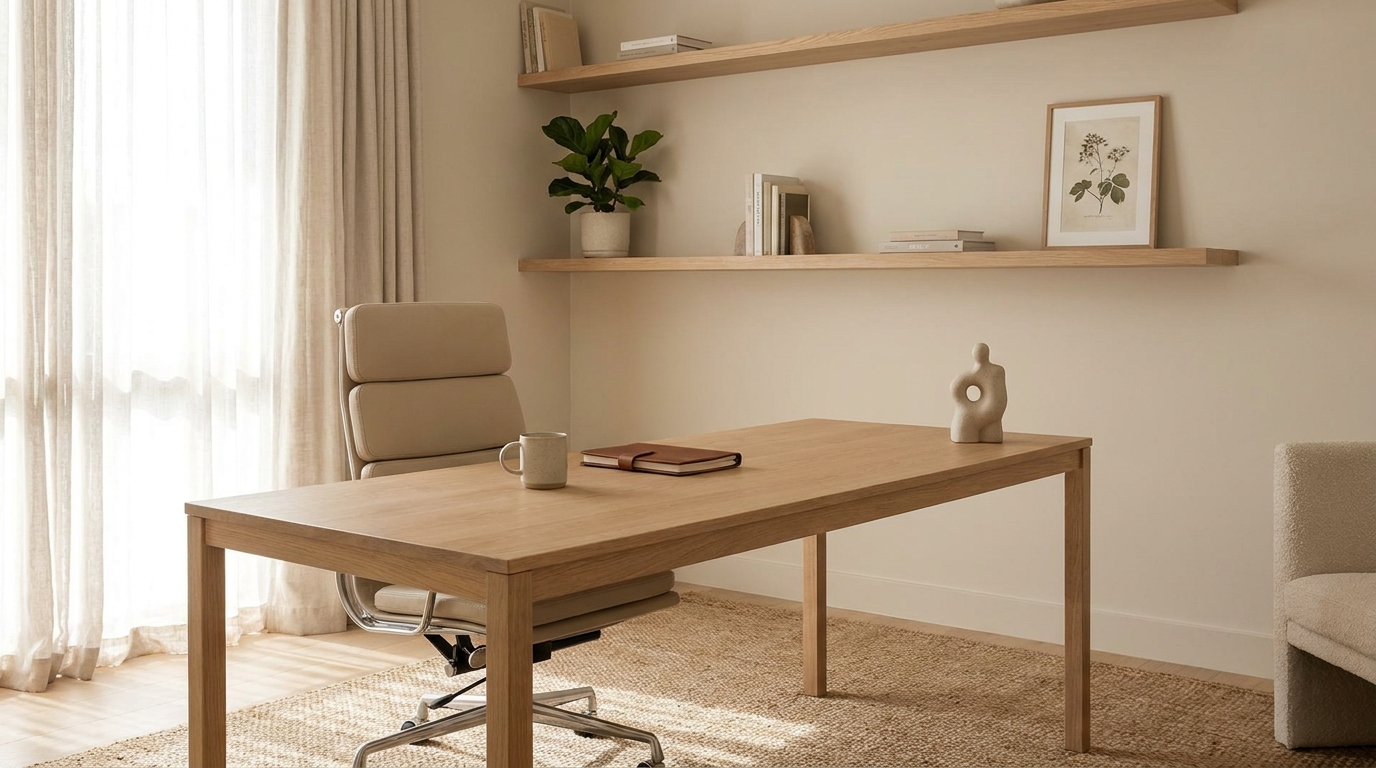
Nature can be especially effective in workspaces. A plant, natural wood finish, or even artwork that references landscape can soften the analytical energy of the room. Research on indoor greenery and restorative design points to the emotional value of these elements, and in practice, they help make a workspace feel less mechanical. This matters when professional demands unfold in the same place where you are also trying to feel at home.
A minimal luxury office also supports transitions. At the end of the day, it should be easy to reset the space so work does not visually spill into your evening. A place for the laptop, concealed storage for paperwork, and a simple ritual of clearing the desk can help protect the emotional boundary between productivity and rest.
How to Choose What Stays and What Goes
One of the most useful ways to begin embracing minimal luxury is not by shopping, but by editing. This can feel surprisingly emotional because objects often carry memory, guilt, or aspiration. Yet thoughtful editing is what allows a home to become clearer and more supportive. The process does not need to be severe. It should feel kind and realistic.
A helpful framework is to ask whether each item contributes to one of three things: function, comfort, or meaning. If it does none of these, it may simply be adding noise. This question can be used everywhere, from kitchen counters to bookshelves to entry consoles. Minimal luxury does not require empty surfaces at all times, but it does benefit from surfaces that can breathe.
Another useful practice is to group rather than scatter. A few objects displayed together with intention often feel more luxurious than many small items spread throughout a room. This principle creates visual rhythm and lets your favorite pieces stand out. It also makes cleaning and daily maintenance easier, which is a practical form of comfort in itself.
If you are replacing items, prioritize longevity. Choose pieces you will want to live with for years. This aligns with the growing interest in sustainable luxury and thoughtful consumption. A home built slowly through quality choices tends to feel more grounded than one filled quickly with trend-driven purchases.
- Clear visible clutter first so the room can breathe.
- Keep what truly supports comfort, function, or emotional meaning.
- Choose natural or tactile materials when possible.
- Layer lighting to create softness across the day.
- Add one or two nature-based elements for warmth and restoration.
- Let empty space remain where it improves calm and flow.
The Materials and Finishes That Make a Home Feel Softer
Material authenticity is one of the defining traits of minimal luxury. Instead of relying on heavy ornament, this aesthetic lets texture and craftsmanship do the work. A room may look simple at first glance, but when you spend time in it, you notice the grain of the wood, the weight of the linen, the softness of the wool rug, or the subtle movement in natural stone. These details create depth without clutter.
They also create emotional warmth. Synthetic finishes can sometimes feel visually flat or overly slick, while natural materials tend to age in more graceful and comforting ways. This does not mean every surface in a home must be expensive or rare. It means choosing finishes that feel honest, pleasant to touch, and durable enough to support real life. Even one beautifully made material in a room can change its atmosphere.
Quiet luxury interiors often rely on this principle. The palette may be restrained, but the experience is rich because the textures are layered and the materials feel substantial. This is a powerful reminder that simplicity does not equal blandness. In fact, when there are fewer elements competing for attention, the beauty of good materials becomes easier to appreciate.
Think of it this way: minimal luxury asks less from a room visually so it can offer more sensorially. That exchange is part of what makes it so satisfying. It engages the body as much as the eye.
Minimal Luxury as a Daily Practice
Perhaps the most appealing thing about minimal luxury is that it is not limited to renovation budgets or major design overhauls. It can also be practiced in small, daily ways. Opening the curtains each morning to invite natural light, clearing a kitchen counter before bed, lighting a lamp instead of using harsh overhead light in the evening, and keeping fresh sheets on the bed all contribute to the feeling of a more supportive home.
These rituals matter because atmosphere is created over time. A peaceful home is not only the result of good furniture. It is also the result of repeated care. When rooms are easy to maintain and pleasant to use, those routines become more natural. The home begins to work with you rather than against you.
This is especially important for families and busy households. Minimal luxury should never become another standard to fail at. It should function as a gentle framework that helps life feel smoother. A basket for toys, a designated drop zone near the entry, and washable but beautiful textiles can all support a home that feels both elevated and realistic.
In that sense, minimal luxury is less about strict rules and more about emotional intention. It asks what kind of life you want your home to support, then encourages choices that make that life easier, calmer, and more beautiful.
Redefining Luxury for Real Life
Luxury is being redefined in a way that feels more personal and more humane. It is no longer only about square footage, branded objects, or decorative abundance. Increasingly, it is about well-being, authenticity, and environments that genuinely improve everyday life. This shift can be seen in the rise of quiet luxury, wellness design, sustainable interiors, and the growing importance of indoor environmental quality.
Minimal luxury sits beautifully within this movement because it reflects what so many people are truly craving: relief from visual overload, stronger connection to home, and spaces that support emotional restoration. It offers a design language for living well rather than merely appearing to. It makes room for softness, calm, and the kind of elegance that feels lived in instead of staged.
For those who have felt overwhelmed by clutter, tired of chasing trends, or simply eager for a home that feels more peaceful, this approach can be transformative. You do not need to strip everything back or start over. You simply need to begin noticing what makes your spaces feel good, and what quietly gets in the way. Often, that awareness is the first step toward a more luxurious life in the truest sense.
Minimal luxury is not about deprivation. It is about discernment. It is about choosing light over heaviness, comfort over excess, and atmosphere over noise. When that happens, home begins to feel less like a container for things and more like a place that truly cares for you.
Final Thoughts
Embracing minimal luxury means giving yourself permission to want a home that feels peaceful, elegant, and emotionally supportive all at once. It means seeing luxury not as a performance, but as a quality of experience. The soft chair by the window, the bedroom that welcomes sleep, the living room that invites conversation, and the home office that allows focus all become part of a larger picture of well-being.
In a time when many people are spending so much of life indoors, these choices matter more than they once did. Better light, fewer distractions, healthy materials, natural elements, and thoughtful comfort are not small details. They are the building blocks of a home that restores rather than overwhelms. They help create an everyday environment that supports mental ease and a deeper sense of refuge.
If there is a promise at the heart of minimal luxury, it is this: your home does not need to be bigger or fuller to feel richer. Sometimes it only needs to be clearer, warmer, and more intentional. And in that quiet shift, comfort is redefined in the most beautiful way.


No Comment! Be the first one.