Toronto’s $2.7B Rental Push Shows What Coordinated Land Strategy Can Deliver
Every major housing announcement tells you something about how a city thinks about its own growth. This week’s $2.7 billion commitment from the federal government and the City of Toronto, unveiled by Prime Minister Mark Carney and Mayor Olivia Chow, is less about a single project than about a strategy finally lining up across levels of government. Eighteen rental projects, more than 5,600 homes, and a three year build window is the kind of scale that only comes when land, financing, and policy move together instead of fighting each other.
What stands out to me is the structure behind the numbers. This is not one program doing all the work. Build Canada Homes is putting more than $310 million into nine projects on City owned land, producing close to 1,900 homes, while the City matches that with land at nominal value, over $530 million in capital funding, and property tax exemptions running as long as 99 years. On the market side, CMHC’s Apartment Construction Loan Program is supplying more than $1.8 billion in low cost financing for a separate slate of nine projects expected to deliver over 3,700 rental homes. That is a deliberate split between non market and market delivery, which is exactly how a city de-risks a housing pipeline of this size.
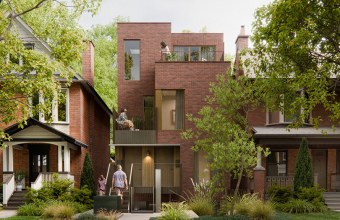
Land use decisions inside the portfolio are worth watching too. A 100-unit Indigenous-led supportive housing development at 15 Denison Avenue, a mass-timber build at 1113-1125 Dundas Street West, and a volumetric-modular project at 805 Wellington are not just architectural choices, they are feasibility choices. Modular and mass-timber methods compress construction timelines and, according to the government, can cut construction emissions by up to 22 percent compared with conventional builds. When a developer or a city is trying to hit a 2026 construction start on more than 4,500 homes, method matters as much as money.
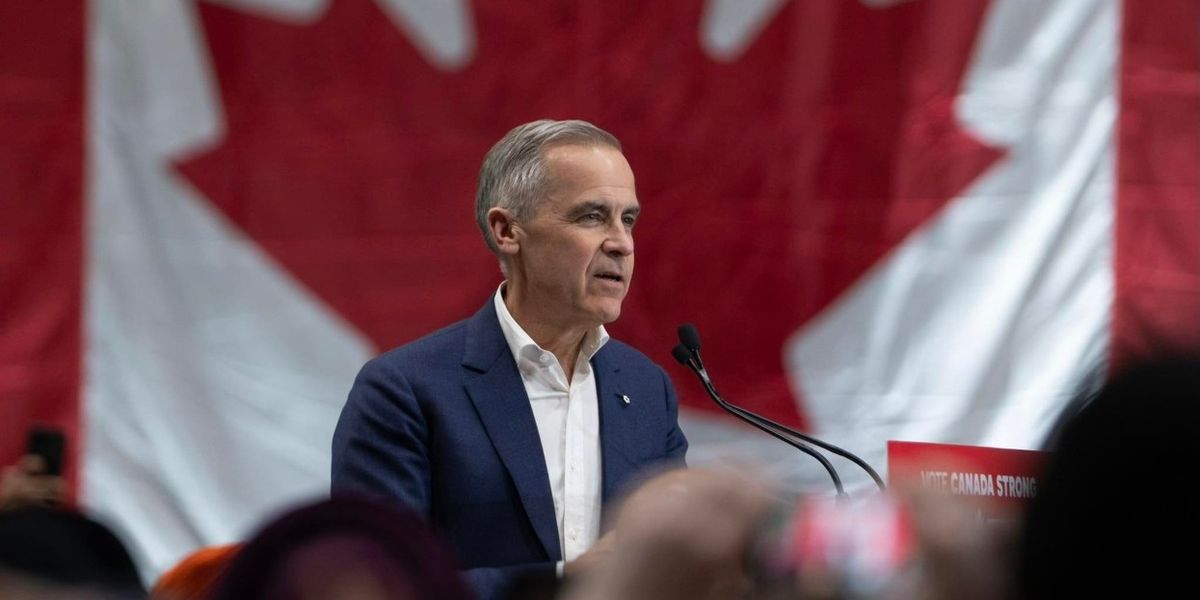
Toronto is becoming a model for how a great city can build its way forward.
That line from Carney is the kind of statement every city wants to earn, but the underlying mechanics are what actually make it credible. This deal sits on top of a year of federal moves that reduce the friction around new supply, including the elimination of GST on homes up to $1 million for first-time buyers and the removal of the full 13 percent HST on new homes in Ontario. Add in the Canada-Ontario Partnership to Build, which directed $1.5 billion to Toronto to cut development charges by 40 to 60 percent, and you have a city systematically lowering the cost of building at the same time it is financing the building itself.
For anyone tracking large scale housing vision, the real signal here is not the dollar figure, it is the coordination. Land, capital, and policy rarely move on the same timeline. When they do, roughly 2,100 jobs a year and thousands of new homes are the result, and other cities watching Toronto’s model should be asking how much of this playbook they could replicate with their own land and their own leverage.
Source: Storeys, “Federal Government and City of Toronto Reach $2.7 Billion Rental Housing Deal”