
Amazon’s San Francisco Office Bet: What Its Lease Renewal Signals for Commercial Real Estate Investors
When a company sends mixed signals about its real estate, the smart money pays attention to the signal that costs the most to send. Amazon just closed its downtown San Francisco AI lab, yet in the same stretch it renewed a multi-year lease at 525 Market St., a 38-story tower where it already occupies roughly 300,000 square feet. That is not indecision. That is a company drawing a clear line between what it is exiting and what it is committed to.
For investors tracking commercial office demand, this is the kind of granular, company-by-company data point that matters more than a headline vacancy rate. Amazon is not simply holding its ground at 525 Market. Sources describe the renewal as including an expansion of roughly 30,000 square feet onto an additional floor, even as the exact term and pricing remain undisclosed. A tenant does not expand its footprint in a building it plans to abandon. That is a durable signal about the desirability of that specific asset, on that specific block of Market Street.
Contrast that with the other side of Amazon’s ledger. The company is clearing out more than half of its space at 188 Spear St. ahead of a lease expiration next year, and it shut down an AI lab that once employed about 80 people, a move it says was unrelated to a separate wave of over 1,000 warehouse layoffs in Florida. Read together, these are not the actions of a company retreating from San Francisco. They are the actions of a company reallocating capital within the city, away from a location it no longer values and toward the assets and neighborhoods it does.
The most interesting move, from a pure opportunity standpoint, is happening in Showplace Square. Amazon is reportedly finalizing roughly 250,000 square feet there for its Robotics division at 650 Townsend St., a deal that would rank among the city’s largest office leases in recent years. Combine that with the $200 million distribution facility Amazon is slowly building nearby, and you get a thesis: automation and robotics real estate demand is real and growing, even while generative AI research office space proved disposable. Investors watching for the next wave of tenant demand in San Francisco should be looking at Showplace Square, not just the traditional financial district corridor.
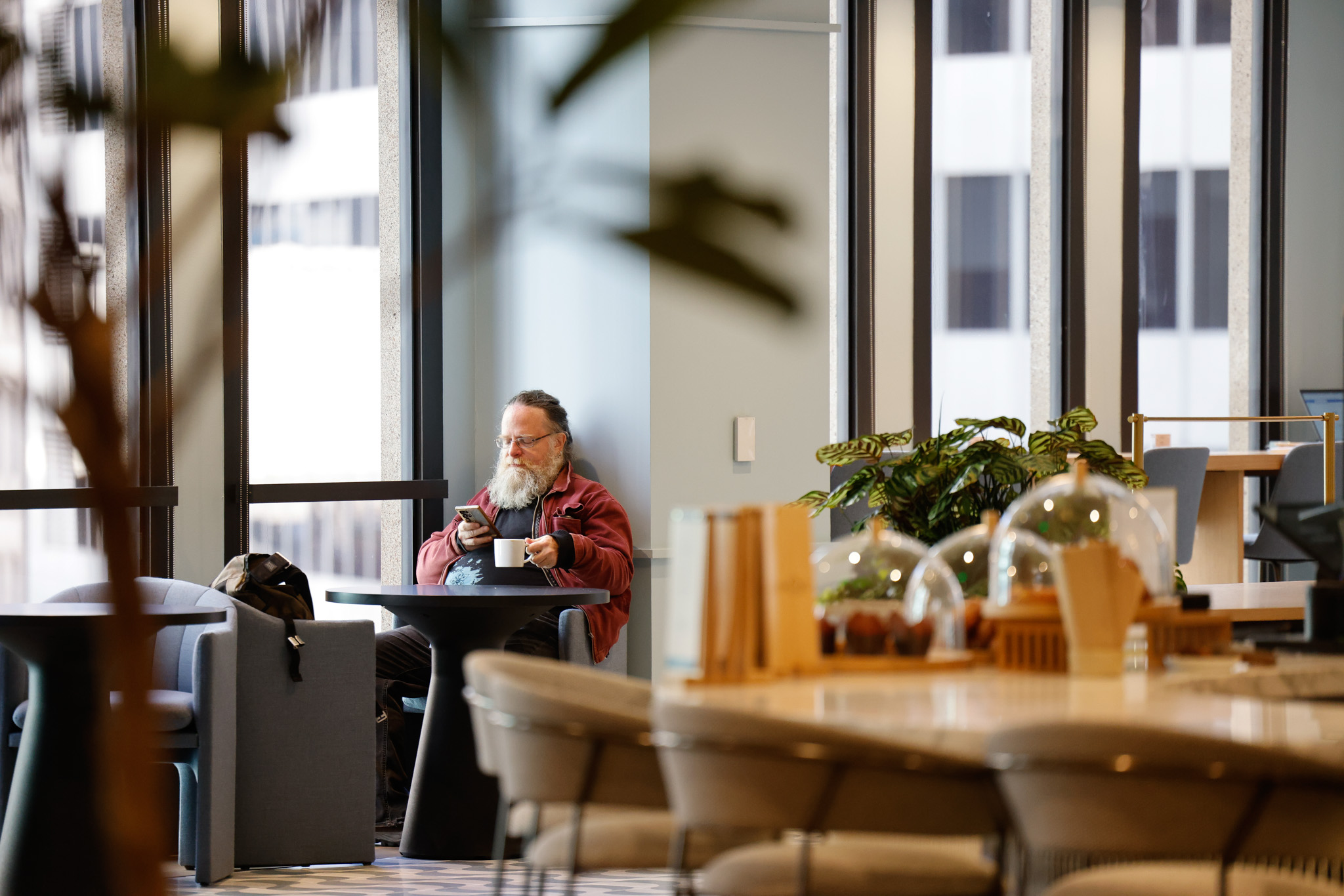
A tenant does not expand its footprint in a building it plans to abandon.
There is a broader lesson here for anyone underwriting office exposure in gateway cities. Blanket narratives about corporate retreat from downtown cores oversimplify what is actually a highly selective process. Large tenants are not uniformly shrinking. They are pruning underperforming or misaligned locations while doubling down on the buildings and neighborhoods tied to their actual growth strategy. For San Francisco commercial real estate, that means value is concentrating unevenly, and the winners will be the landlords and submarkets aligned with where corporate capital, not corporate headlines, is actually flowing.
Source: San Francisco Chronicle