



Commercial development has long attracted investors seeking higher returns, stronger control over value creation, and exposure to the growth of cities, logistics corridors, and business districts. Yet the modern market has become less forgiving of optimistic assumptions. In Canada and across North America, commercial development returns are now shaped by a more disciplined set of forces that include financing costs, construction pricing, sector specific demand, municipal approvals, tenant preferences, and exit liquidity. The opportunity remains significant, but success increasingly belongs to investors who approach development as a strategic operating business rather than a simple land and building transaction.
Table Of Content
- Why Commercial Development Still Matters
- The First Principle: Development Returns Are Built, Not Assumed
- Sector Selection Is the Core of Return Strategy
- Industrial and Logistics
- Retail
- Office
- Adaptive Reuse and Alternative Uses
- How to Underwrite Returns Properly
- Key Return Drivers to Evaluate
- Cap Rates, Financing Costs, and the New Return Math
- Risk Management: Where Development Returns Are Won or Lost
- Practical Ways to Manage Development Risk
- Interdisciplinary Diligence Is No Longer Optional
- Regional Variation Matters More Than Headlines Suggest
- Common Misconceptions That Distort Investment Decisions
- What Strong Opportunities Look Like in This Cycle
- A Practical Framework for Investors
- Conclusion: Returns Now Belong to the Disciplined
That distinction matters because commercial development is not a single asset class. It is a framework for producing income generating space across sectors with very different demand cycles and risk profiles. Industrial logistics, necessity based retail, multifamily adjacent mixed use, data infrastructure, adaptive reuse, and select prime office opportunities can all sit under the development umbrella, yet each behaves differently under pressure. A warehouse project tied to reshoring and e commerce demand carries one set of assumptions, while a downtown office repositioning carries another. Investors who fail to separate these dynamics often misprice risk and overestimate returns.
The current cycle reinforces the need for selectivity. The Bank of Canada’s policy rate fell from 3.50% on December 12, 2024 to 2.50% by October 30, 2025, improving financing conditions relative to the prior tightening phase. That is helpful, but it does not mean capital has become cheap in a historical sense. Borrowing costs remain a central underwriting constraint, and major market outlooks continue to suggest that cap rates may stabilize or compress modestly rather than return quickly to the ultra low levels of the 2010s. In practical terms, investors should expect a more measured environment where returns depend on execution quality and realistic assumptions rather than broad market multiple expansion.
Maximizing returns in commercial developments comes down to four connected disciplines: strategic sector selection, rigorous underwriting, resilient capital structure design, and interdisciplinary diligence across planning, engineering, and leasing. Investors who apply all four are far less exposed to construction cost overruns, leasing delays, and unfavorable cap rate shifts than those relying on optimistic assumptions alone. Persistent misconceptions continue to distort decisions, including the beliefs that office is universally distressed, industrial is effectively risk free, and development automatically outperforms buying an existing asset below replacement cost. The real answer is not to chase the highest projected upside. It is to understand and manage the full chain of risk from land basis to final exit.

Why Commercial Development Still Matters
Commercial development remains one of the most important engines of real estate value creation because it can produce assets that are better aligned with current tenant demand than much of the existing stock. That matters in a market where tenants increasingly prioritize location quality, energy performance, logistics efficiency, parking functionality, amenity mix, and flexible design. Existing buildings can still be compelling, particularly when acquired below replacement cost, but development offers the possibility of delivering exactly what the market is missing. In supply constrained submarkets, that precision can translate into pricing power and stronger leasing traction.
The broader economic footprint of the sector also underscores why investors continue to allocate capital to it. NAIOP estimated that U.S. commercial building development and operations in 2024 contributed US$2.5 trillion to GDP, US$862.5 billion in personal earnings, and supported 14.2 million jobs. Those numbers do more than demonstrate scale. They highlight how deeply development outcomes are tied to labor conditions, municipal policy, infrastructure, and local business activity. A successful project is never isolated from its surrounding economy, which is why macroeconomic and local market analysis must be integrated from the beginning.
In Canada, the commercial investment environment has also shown signs of resilience. CBRE projected that Canadian commercial real estate investment could total C$48 billion in 2025, with office stabilizing and retail and multifamily fundamentals remaining relatively strong. That does not imply a broad based surge across every property type. It suggests a market where confidence is returning selectively, particularly where demand visibility is clearer and asset quality is stronger. Investors should interpret this as a signal to focus less on blanket optimism and more on specific situations where the supply demand balance remains favorable.
The First Principle: Development Returns Are Built, Not Assumed
One of the most important truths in commercial real estate is that development returns are manufactured through dozens of interlocking decisions. They are not simply the result of buying land and waiting for appreciation. A project can appear compelling at acquisition and still miss its target return if construction costs escalate, approvals drag, leasing velocity slows, tenant improvement packages expand, debt costs rise, or exit cap rates move against the sponsor. This is why experienced investors spend as much time stress testing downside cases as they do modeling upside.
At a high level, commercial development returns should be assessed through both income creation and capital preservation. Income creation focuses on net operating income, lease quality, tenant retention, operating efficiency, and the timing of stabilization. Capital preservation focuses on basis control, contingency planning, debt resilience, environmental exposure, and exit liquidity. The strongest projects combine both. They do not depend on aggressive rent growth or perfect market timing to be viable.
Institutional performance benchmarks reinforce this point. The NCREIF Property Index, a widely followed unlevered total return benchmark for institutional U.S. commercial real estate, tracks office, retail, industrial, apartment, and hotel assets across cycles. Its relevance is not that it predicts future returns for any single project. Its value is in reminding investors that commercial property performance is cyclical, sector specific, and heavily influenced by vintage. What looks attractive in one period can become vulnerable in another if financed poorly or acquired at the wrong basis.
Sector Selection Is the Core of Return Strategy
If returns are built rather than assumed, then sector selection becomes the first major lever. The market today is not rewarding every property type equally. Commercial development is several markets operating at the same time, and investors must separate strong structural demand from temporary narrative momentum. The best opportunities are generally found where supply remains constrained, tenant demand is visible, and the delivered product solves a real occupancy problem for users.
Industrial and Logistics
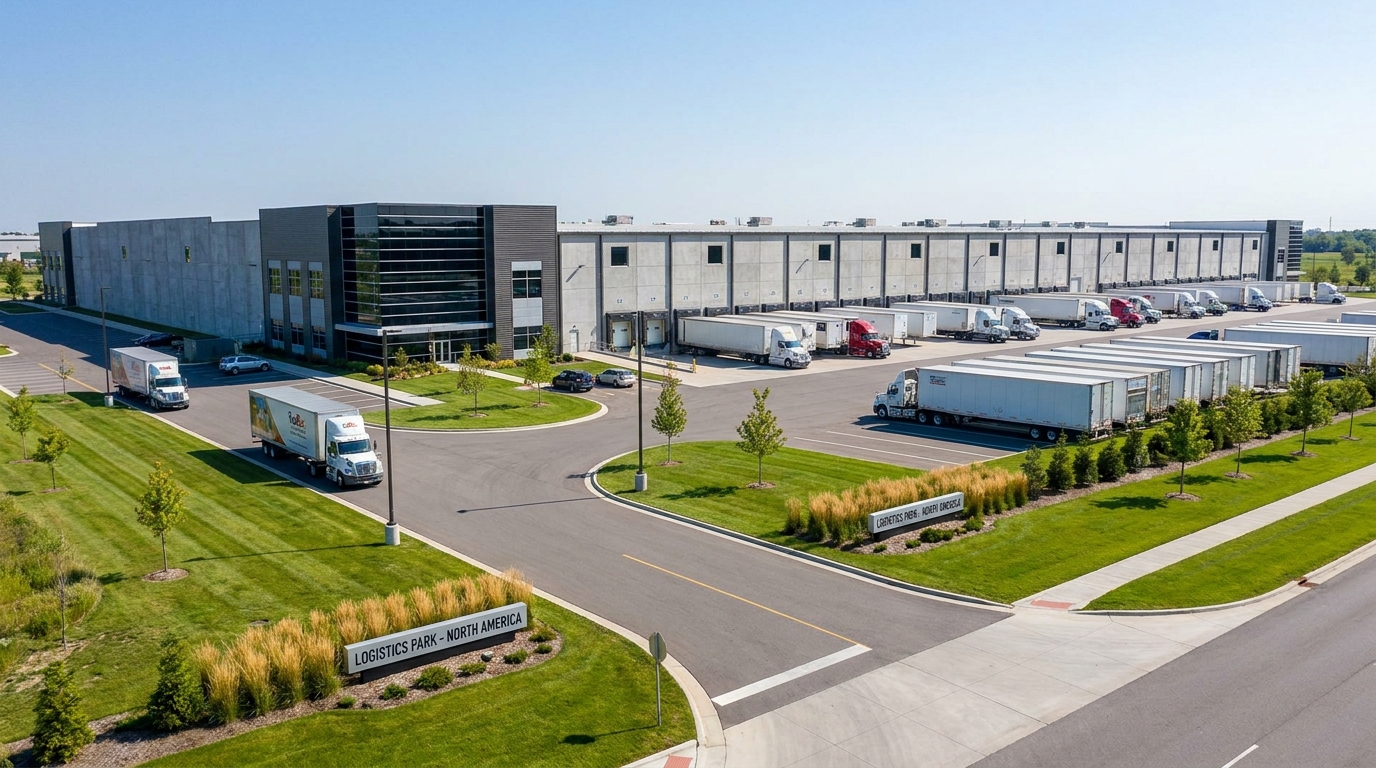
Industrial remains one of the most favored sectors in North America because it sits at the intersection of e commerce, supply chain reconfiguration, manufacturing reshoring, and distribution efficiency. Even as leasing activity has normalized from pandemic era peaks, industrial development still benefits from deep occupier demand in many corridors. The key, however, is not to treat industrial as risk free. Higher land costs, local oversupply, tenant concentration, and softer absorption in certain submarkets can all reduce returns if underwriting is too broad or too optimistic.
The best industrial opportunities are often linked to transportation infrastructure, labor accessibility, ceiling height requirements, trailer storage needs, and clear user demand from logistics, light manufacturing, or regional distribution tenants. Projects with flexible bay configurations and modern loading functionality tend to outperform because they appeal to a wider leasing pool. In a market where industrial availability has softened in some regions, design adaptability and location quality become even more important. Strong returns come from solving for tenant utility, not simply from delivering square footage.
Retail
Retail has quietly improved as an investment story, particularly in formats anchored by everyday spending and limited new supply. CBRE’s 2025 U.S. outlook noted that retail entered 2025 with the lowest vacancy rate among major commercial sectors. That is a meaningful signal because it reflects a market where available space is limited and tenant demand in the right formats remains healthy. For development investors, this can create attractive opportunities in neighborhood retail, grocery anchored centers, service retail, and mixed use projects where retail supports the broader income profile.
Retail development still requires careful underwriting because tenant quality and merchandising mix determine resilience. A retail project with creditworthy anchors, strong traffic patterns, and a practical service offering can behave very differently from fashion dependent or discretionary heavy formats. Investors should focus on trade area income, co tenancy risk, parking functionality, household formation, and competition from both existing centers and digital commerce. In many cases, modestly scaled retail in high barrier locations offers better risk adjusted returns than large speculative formats that rely on aggressive leasing assumptions.
Office
Office is the most misunderstood sector in the current cycle. It is inaccurate to describe office as universally distressed. The more precise view is that office is deeply bifurcated. Prime assets in stronger submarkets have shown stabilization, while older and non prime properties continue to face elevated vacancy and value pressure. CBRE reported that Canadian office recorded positive net absorption for a second consecutive year in 2025, totaling 2.2 million square feet nationally, and early 2026 data indicated that the national market had stabilized. That is not a blanket recovery, but it does challenge simplistic narratives.
For development investors, office can still work when the location, amenity package, transit access, and building specifications align with what high quality tenants actually want. Speculative office with weak differentiation is a different story. Legacy product without major upgrades, poor floorplates, weak environmental performance, or limited amenity appeal is far more vulnerable. Investors looking at office should think in terms of competitive relevance. If the building cannot attract or retain tenants against the best local alternatives, its projected returns are likely overstated.
Adaptive Reuse and Alternative Uses
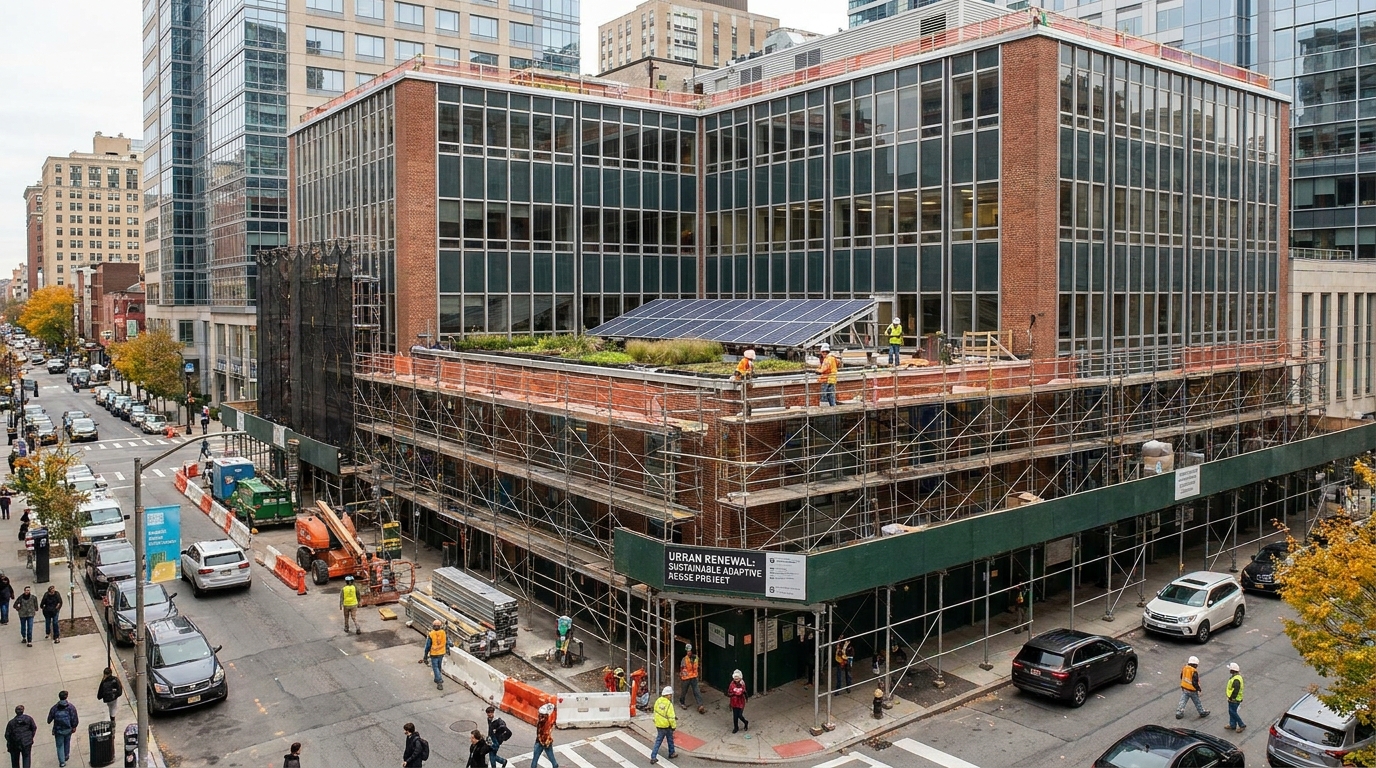
Adaptive reuse has become an increasingly important part of the development discussion, especially where obsolete office or underused commercial properties can be converted to residential, hospitality, medical, education, or mixed use alternatives. This is not a simple trend driven by headlines. It is a practical response to changing demand and a recognition that some buildings no longer compete effectively in their original form. In the right market, reuse can lower replacement cost exposure, improve entitlement speed, and create a differentiated product.
Still, adaptive reuse requires rigorous feasibility analysis. Structural grids, window lines, mechanical systems, elevator placement, code requirements, and zoning constraints can all affect viability. Investors should be especially cautious about assuming that every underperforming office building is a conversion candidate. The strongest reuse opportunities typically combine physical suitability, policy support, realistic construction budgets, and end use demand that is already evident in the submarket.
How to Underwrite Returns Properly
Investors often talk about returns in shorthand, but strong underwriting requires a wider lens than projected sale price or headline internal rate of return. Commercial development returns depend on a chain of variables that interact with one another across the life of the project. The most important are basis, construction cost, financing terms, lease up timing, stabilized yield, tenant credit, operating expenses, tax treatment, and exit assumptions. A weakness in one category can offset strength in another.
Stabilized yield should be one of the first filters. Investors need to know whether the project’s stabilized net operating income justifies total cost in a market where cap rates are no longer unusually compressed. If the spread between yield on cost and likely exit cap rate is too thin, the margin for error narrows quickly. A modest leasing delay or cost overrun can erase the profit buffer. In a higher cost capital environment, disciplined yield on cost thresholds are essential.
Debt service coverage ratio and leverage sensitivity also deserve close attention. A project may appear accretive at one interest rate and fragile at another. While financing conditions have improved from peak tightening levels, they remain restrictive enough that developers cannot rely on refinancing relief alone to rescue a marginal business plan. Underwriting should test how the project performs under slower lease up, higher rates, lower rents, and expanded exit cap assumptions. If the deal only works in the base case, it may not work at all.
Preleasing and absorption analysis are equally important. Speculative development can produce excellent returns in undersupplied submarkets, but it can also create painful carry costs if tenant demand arrives more slowly than expected. Investors should study tenant pipelines, broker feedback, recent move ins, net absorption, competitive deliveries, and historical lease up periods for comparable assets. This work is often more predictive of real outcomes than broad market narratives about a sector being hot or cold.
Key Return Drivers to Evaluate
- Land basis must leave enough room for construction contingencies, financing, and leasing costs without forcing aggressive rent assumptions.
- Yield on cost versus market cap rate should provide a healthy spread after realistic operating expenses and downtime assumptions.
- Debt structure should be matched to the project timeline, with attention to rate resets, extension options, covenants, and interest reserve adequacy.
- Tenant quality affects both current income and exit liquidity, especially in retail and office formats where lease rollover concentration can be material.
- Exit timing should reflect market liquidity, not just projected value, because a theoretically attractive sale price is less useful if buyers are scarce.
Cap Rates, Financing Costs, and the New Return Math
One of the biggest mistakes in commercial development today is assuming that falling policy rates automatically translate into strong value expansion. They can help, but cap rate compression is not guaranteed simply because central bank policy becomes more accommodative. Values also depend on credit spreads, lender appetite, debt availability, buyer conviction, and expected net operating income growth. CBRE’s U.S. outlook suggested that cap rates would compress only modestly in 2025 and remain above the ultra low levels of the previous decade. That is a strong reminder that the market has structurally repriced risk.
For investors, this means the old habit of relying on exit cap rate compression as a return engine is less dependable. The more durable strategy is to focus on projects that can produce compelling economics through stable income creation and thoughtful basis management. If rates move in your favor, that is helpful. If they do not, the project should still be defensible. Development deals that require both perfect leasing and aggressive exit pricing to hit target returns are the first to disappoint.
Loan to value discipline also matters more in this environment. Excess leverage can inflate projected equity returns on paper while materially increasing downside exposure if lease up stalls or appraised value softens. Lower leverage may reduce headline return projections, but it often improves flexibility, refinancing capacity, and sponsor control during uncertain periods. In a market defined by uneven sector performance and staggered normalization, resilience is often worth more than modeled upside.
Strategic takeaway: In the current cycle, the best development returns are increasingly generated by selectivity, operating discipline, and realistic exits rather than by broad market beta.
Risk Management: Where Development Returns Are Won or Lost
Every development story contains timing risk. The challenge is not merely whether the project is desirable, but whether each component arrives on schedule and within budget. Financing can be committed and still become expensive if draws are delayed. Construction can be on budget and still underperform if tenants hesitate. Leasing can be healthy and still fail to produce target returns if exit cap rates move wider before stabilization. That is why commercial development should be viewed as a sequence of controlled risks, not a single investment decision.
Construction cost escalation remains a central concern, particularly when labor markets are tight or materials are vulnerable to supply disruption. Investors should insist on detailed budgets, realistic contingencies, contractor diligence, and clear scope definition before closing on a site. Guaranteed maximum price contracts can help, but they are not a complete shield if exclusions are broad or if design changes are likely. The objective is not to eliminate every surprise, which is impossible. It is to reduce the number of ways a project can fail.
Leasing risk is equally consequential. A project that reaches completion without a sufficient tenant base can burn through interest reserves and dilute equity returns long before stabilization. This is why preleasing has become more valuable, especially in office, larger retail boxes, and specialized industrial formats. Even where full preleasing is not feasible, evidence of active tenant demand and practical leasing assumptions are essential. Market confidence should come from signed commitments and broker verified demand, not from hopeful projections.
Exit liquidity is the final major checkpoint. Some projects can produce attractive cash flow but still disappoint if the buyer universe is too narrow at sale. Specialized buildings, single tenant concentrations, weak secondary locations, and unstable tenant rosters can all limit liquidity. Investors should ask not only what the asset might be worth, but who will realistically buy it and on what terms. Value without liquidity is not the same as realizable return.
Practical Ways to Manage Development Risk
- Use conservative base case rents and test downside scenarios with slower absorption and wider exit caps.
- Structure debt with sufficient time, reserves, and flexibility to withstand construction or leasing delays.
- Prioritize locations with demonstrated tenant demand rather than relying on projected market transformation.
- Phase larger developments where possible so that capital deployment can follow demand signals.
- Review environmental, servicing, zoning, and infrastructure issues early because small oversights can become large cost items later.
Interdisciplinary Diligence Is No Longer Optional
One of the clearest shifts in commercial development investing is the rising importance of interdisciplinary diligence. The old model, where an investor relied mainly on acquisition underwriting and a broker opinion, is no longer sufficient. Successful development now requires coordination across planning, engineering, architecture, leasing, environmental review, tax structuring, financing, legal strategy, and increasingly, energy and carbon performance. The complexity is higher, but so is the value of getting these decisions right.
Municipal approval timelines alone can materially alter return outcomes. Delays in zoning, site plan approval, utility coordination, traffic review, or heritage considerations can extend carry periods and create refinancing pressure. Engineering diligence should therefore happen alongside land underwriting, not after it. Servicing capacity, stormwater requirements, geotechnical conditions, and access constraints can all shift both schedule and budget. A land parcel that appears attractive in a spreadsheet may prove far less compelling once practical delivery conditions are examined.
Environmental and energy considerations also deserve a larger place in underwriting. JLL’s global outlook has highlighted retrofit and energy performance as increasingly material to building economics, and this is consistent with what many occupiers now expect. Efficient buildings often command stronger tenant interest, lower operating expenses, and better long term competitiveness. Conversely, buildings with poor performance or expensive retrofit needs may see weaker demand and lower exit value. Energy strategy is no longer just branding. It is an operating and capital markets issue.
Tax and ownership structure should be treated with the same seriousness. Sales tax, transfer tax, property tax assumptions, depreciation treatment, partnership structure, and jurisdictional incentives can all affect net outcomes. Sophisticated investors know that returns are shaped not only by where a project is built, but by how the deal itself is structured. Interdisciplinary diligence is therefore not administrative complexity for its own sake. It is how capital protects itself in a more demanding market.
Regional Variation Matters More Than Headlines Suggest
Another common mistake is treating Canada or the broader North American market as if they were uniform. They are not. Toronto, Calgary, Ottawa, Montreal, Vancouver, and major U.S. metros all respond differently to office demand, industrial supply, infrastructure, labor trends, and municipal policy. Even within a single city, one submarket may be tightening while another is softening. Development investors who underwrite from broad national headlines without local granularity increase their risk significantly.
Regional variation is especially important in office and industrial. Some Canadian office markets have benefited from conversion activity and stronger quality focused demand, while others continue to work through older inventory. Industrial remains favored overall, yet some submarkets are seeing softer availability dynamics than others as new supply comes online. This makes local absorption trends, tenant movement patterns, and competitive pipeline analysis far more important than generic sector enthusiasm.
The same applies to retail and mixed use development. A necessity retail project in a fast growing suburban node can have a very different risk profile from a downtown street retail concept dependent on discretionary spending. Infrastructure, demographic growth, commuting patterns, and municipal redevelopment priorities all shape leasing potential. In practice, local intelligence often creates more value than macro forecasting. Investors maximize returns when they understand exactly which tenants need the product, why they need it, and what alternatives they already have.
Common Misconceptions That Distort Investment Decisions
Several persistent misconceptions continue to affect commercial development decisions. The first is that development always beats buying an existing asset. In reality, development usually carries higher execution risk, construction inflation exposure, and lease up uncertainty. It can outperform when market conditions and project design align, but it is not automatically superior to acquiring a well leased property below replacement cost.
The second misconception is that office is universally distressed. The better interpretation is that office is highly segmented, with prime and well located assets behaving very differently from older non prime stock. Investors who assume every office opportunity is broken may miss selective value, while those who ignore quality differentiation may step into structural obsolescence. Precision matters more than narrative.
The third misconception is that industrial is effectively risk free. It is not. Industrial remains attractive, but vacancy pressure, land cost inflation, tenant concentration, and normalized demand can all affect outcomes. Likewise, the idea that cap rates will automatically compress when rates fall is too simplistic. Net operating income growth, liquidity conditions, and investor sentiment all matter. Finally, the belief that green buildings are mainly a branding exercise is increasingly outdated. Efficiency, operating expense control, and retrofit economics can materially affect both current income and long term value.
What Strong Opportunities Look Like in This Cycle
The strongest commercial development opportunities today tend to share several characteristics. They are usually located in submarkets with durable tenant demand and constrained or rational new supply. They often offer adaptable design that can serve multiple users rather than a single narrow use case. They are underwritten with financing discipline and realistic lease up assumptions. Most importantly, they do not require heroic exit assumptions to work.
In practical terms, that may include industrial projects tied to logistics corridors, retail developments rooted in daily needs, mixed use projects in growth nodes, and select repositioning or adaptive reuse strategies where the building can be made genuinely competitive. It can also include assets adjacent to themes like life sciences, manufacturing, or data infrastructure where tenant demand is supported by broader economic shifts. What these opportunities have in common is not sector branding. It is visible use case relevance.
The weakest opportunities tend to look different. They often involve speculative development without preleasing in uncertain demand environments, legacy office without a convincing reinvestment thesis, or projects in locations where the competitive set is already oversupplied. These are the deals that may look attractive in an optimistic model but struggle in execution. In a market where capital is more selective, such projects face a narrower margin for error and often weaker exit liquidity.
A Practical Framework for Investors
For investors evaluating commercial developments, a practical framework can improve decision quality. Start with the market, not the site. Identify where demand is structurally durable and where new supply is rational. Then evaluate whether the proposed product is genuinely needed and competitive. Only after that should the land basis, construction budget, financing, and exit strategy be layered into the model.
Next, separate controllable risk from uncontrollable risk. Construction management, design efficiency, contingency planning, and debt structure can be actively managed. Interest rate direction, macro shocks, and broad capital market sentiment cannot. The goal is to build a project that remains resilient even when the uncontrollable variables are less favorable than hoped. This is where conservative assumptions create strategic advantage rather than limiting ambition.
Finally, align the deal with the investor’s own objectives and risk tolerance. Some investors are better suited to near stabilized development with lower execution complexity. Others can take on phased land plays, complex entitlements, or adaptive reuse where they have specialist knowledge. There is no universal template for the best commercial development strategy. The strongest approach is the one where sector choice, capital structure, operational capability, and exit horizon all fit together logically.
Conclusion: Returns Now Belong to the Disciplined
Commercial development remains one of the most powerful ways to create value in real estate, but the path to strong returns has become more exacting. In Canada and across North America, financing conditions have improved from the tightest part of the recent cycle, yet borrowing costs, cap rates, and tenant expectations still require careful underwriting. Investors can no longer depend on cheap capital, rapid cap rate compression, or broad market momentum to rescue weak assumptions. The modern edge comes from selectivity, discipline, and execution.
The investors most likely to succeed are those who recognize that development is not one market but many. They understand the difference between favored sectors and fashionable ones, between prime assets and obsolete stock, and between real demand and optimistic storytelling. They stress test leverage, focus on income durability, account for construction and approval risk, and treat energy performance and building adaptability as part of the investment thesis rather than secondary details.
Maximizing returns in commercial developments is therefore less about chasing the highest projected upside and more about producing dependable value under realistic conditions. When the asset type is right, the basis is controlled, the leasing strategy is credible, and the risk is managed across disciplines, commercial development can still deliver excellent performance. In this cycle, strong returns belong not to the boldest assumptions, but to the best prepared investors.



No Comment! Be the first one.