
Vertiports Are the Next Infrastructure Frontier for Canadian Cities
Every major shift in urban mobility eventually becomes a land use question. Highways reshaped where we built suburbs. Transit lines reshaped density along their corridors. Now advanced air mobility is arriving, and the cities that plan for it early will be the ones that capture its value. A newly announced partnership between Figurr Architects Collective and Aureum Mobility, an Advanced Air Mobility infrastructure company, signals that the groundwork for vertiport development in Canada is no longer theoretical.
Figurr will act as Aureum’s architecture and Canadian technology distribution partner, supporting the planning, design, and rollout of vertiport infrastructure across the country. This is not a niche aviation story. It is a land development story, and a significant one. Vertiports require feasibility studies, site selection, master planning, regulatory navigation, and integration with airports and urban developments, the same disciplines that shape any large scale housing or mixed use project. The difference is the asset class is new, and so is the opportunity for developers who move early.
Aureum brings modular vertiport and droneport systems along with charging technology built to work across aircraft manufacturers, from rural drone operations to urban passenger networks. Figurr contributes decades of aviation architecture experience, having designed environments for airlines, airports, simulator manufacturers, and defense organizations. Together, the partnership is positioned to serve communities, developers, and public sector organizations that need to answer a question few had to consider a decade ago: where does a city put its air infrastructure, and how does that infrastructure connect to everything already on the ground.
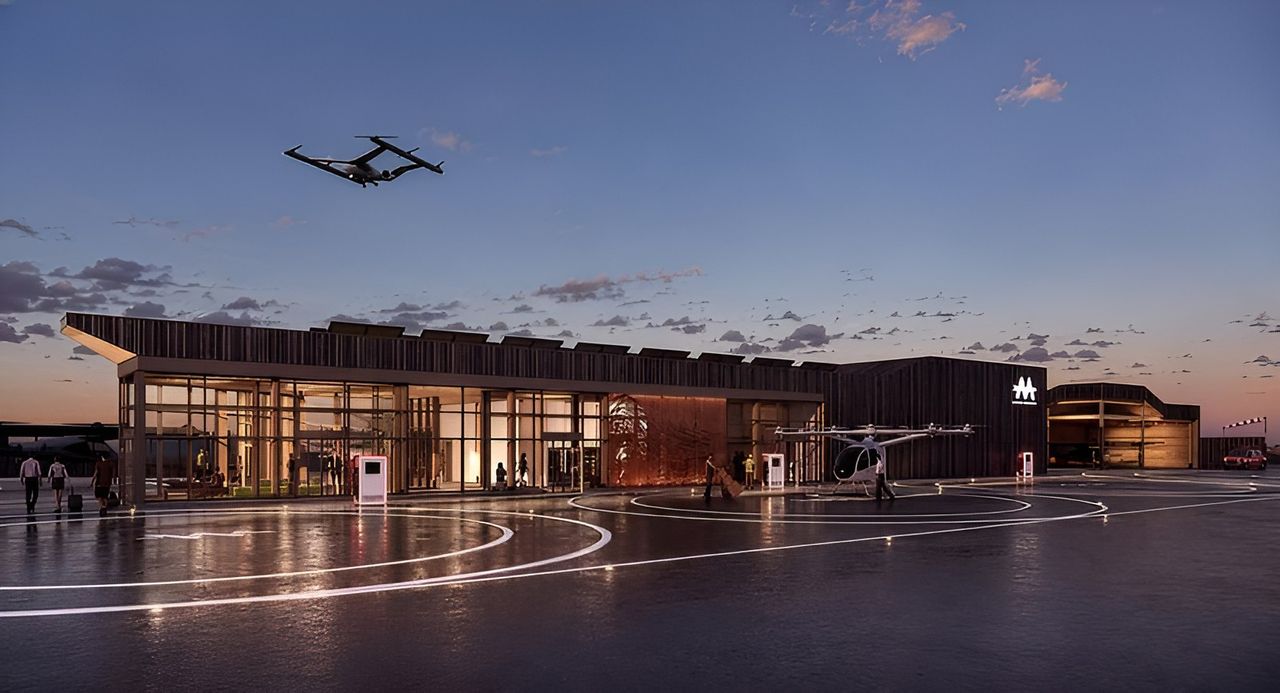
For developers and municipal planners, this matters well beyond the aviation sector. Vertiport sites will interact with zoning, transit connectivity, noise considerations, and property values in the surrounding area, much like any transportation node historically has. A well sited vertiport near a growth corridor could become an amenity that lifts nearby land value. A poorly sited one becomes a planning headache for decades. JR Hammond, Executive Director of the Canadian Advanced Air Mobility organization, framed the stakes clearly, noting that Canada’s advanced air mobility future depends on turning innovation into infrastructure that is safe, inclusive, and operationally ready.
Strong projects are built from a wider understanding of timing, access, infrastructure, and the future identity of a community. Vertiports are about to test whether our cities have that understanding.
What stands out from a development strategy lens is how early this partnership positions itself in the planning pipeline. Feasibility studies and master planning happen years before a single structure breaks ground, which means the decisions being made right now by Figurr and Aureum will quietly shape which Canadian municipalities are ready when commercial air mobility operations scale up. Cities and developers who engage with this infrastructure conversation today, rather than reacting once demand materializes, will hold the stronger negotiating position on land value, access rights, and long term integration with airports and urban cores.
This is a reminder that development vision is never confined to housing alone. It extends to the infrastructure layers that make a community function and grow. Vertiports may still sound futuristic, but the planning decisions behind them are being made now, and that timing is exactly where long term value in land and infrastructure gets created.
Source: Halldale