The Winter Coat Retrofit: How a Toronto Seniors’ Tower Is Becoming a Model for Net Zero Affordable Housing
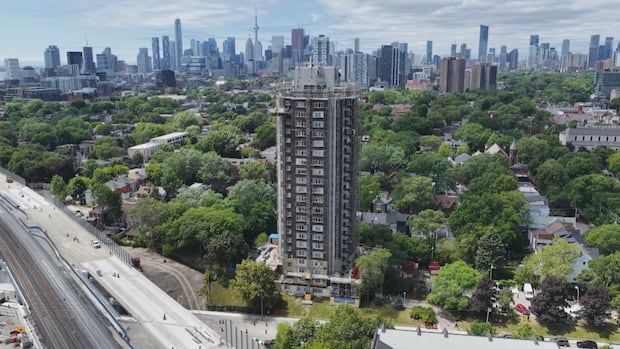
There is a quiet kind of climate solution that never shows up in flashy renderings, and it is happening right now at Ray McCleary Towers in Toronto’s east end. Instead of tearing down an aging 1967 apartment building and displacing the more than 160 seniors who call it home, the team behind this retrofit is wrapping the entire tower in prefabricated insulating panels, essentially giving it what they describe as a giant winter coat. I find that image irresistible, because it captures exactly what good sustainability work should feel like: protective, practical, and built around the people already living inside.
This is not a cosmetic upgrade. The building at 444 Logan Avenue, originally opened by WoodGreen Community Services, is being brought toward net zero operation. That means full building air conditioning, dehumidification, direct ventilation into every suite for the first time, new mechanical and electrical systems, rooftop solar panels, and an exterior cladding replacement that dramatically improves how well the building holds heat. According to Graeme Stewart of ERA Architects, the goal is a building that produces no CO2 emissions while providing good, stable housing.
What makes this project genuinely important to me is the choice to retrofit rather than replace. Demolishing an older tower and building new almost always carries a heavier embodied carbon cost than most people realize, and it displaces residents who often have nowhere comparable to go. Stewart notes the retrofit approach is also more affordable than starting from scratch. For a building housing vulnerable, low income seniors, that distinction is not just an environmental win, it is a housing stability win.
The human side of this deserves as much attention as the technical side. Shad Mwarigha of WoodGreen Community Housing explained that a dedicated tenant representative works directly with the construction team every day, so residents understand the milestones as clearly as the people doing the work. That kind of transparency matters enormously when you are asking people, many of them elderly and vulnerable, to live through months of construction around them.
Part of the housing solution is keeping what we have, and making it last another 50 to 100 years.
That line from Stewart is really the heart of this story. Canada has thousands of aging apartment towers built in the same era as Ray McCleary, and most face the same quiet crisis of leaky envelopes, outdated systems, and rising energy bills. Deep retrofits using Canadian made prefabricated panels, supported here by funding from the Canada Mortgage and Housing Corporation and Natural Resources Canada, offer a genuinely scalable path. This is not a one off showcase project, it is meant to be a blueprint.
When the work wraps up in spring 2027, the building will look sharper, but the real achievement will be invisible: lower bills, better air, near zero emissions, and 160 residents who never had to leave home to get there. That is what practical sustainability looks like when it is done well.
Source: CBC News