

Mississauga’s New Height Record Signals the Suburban Core Has Entered a Different Development Cycle
Mississauga’s M3 at M City is more than a skyline milestone. At 260 metres, the tower now stands as Canada’s tallest skyscraper outside Toronto, according to Mjengo Hub, and its real significance is what it says about the next phase of growth in the Greater Toronto Area. The suburban centre is no longer just absorbing spillover demand. It is becoming a vertical urban market in its own right.
For developers and planners, M3 is a clear signal that height, density, and mixed-use intensity are moving beyond the traditional downtown core. That shift has been building for years, driven by housing pressure, land scarcity, employment concentration, and the political reality that low-rise expansion cannot carry the region’s growth forecasts. Mississauga, once defined by automobile-oriented suburban form, is now being tested as a high-density city with metropolitan expectations.
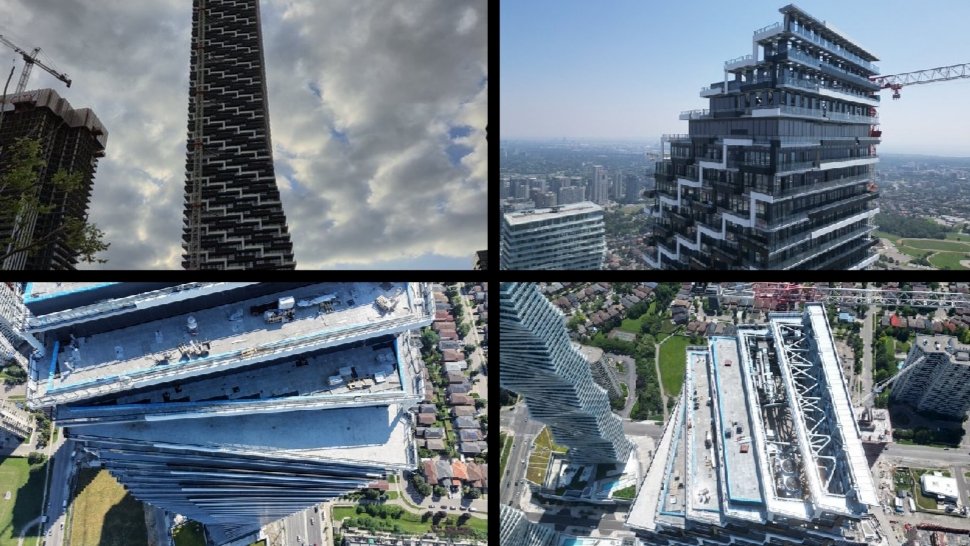
M City matters because it sits at the intersection of several forces that shape feasibility. The first is land value. Large suburban parcels near transit, major roads, employment nodes, and civic infrastructure are no longer being priced as conventional suburban development sites. They are being valued as future urban districts. That changes acquisition strategy, holding assumptions, servicing expectations, and phasing models.
The second force is policy. Municipalities across the GTA are under pressure to accommodate population growth without endless outward expansion. Height permissions, reduced parking expectations, mixed-use zoning, and intensification around nodes are becoming central tools. Projects like M City show what happens when planning frameworks begin to align with market demand. The built result is not just taller buildings. It is a different urban hierarchy.
That hierarchy has consequences. Once a suburban municipality permits and absorbs a tower of this scale, expectations shift for surrounding sites. Landowners begin underwriting greater density. Residents begin demanding stronger public realm, schools, parks, and transit capacity. Infrastructure teams face pressure to match growth that is no longer incremental. Height is visible, but the real test is whether water, roads, transit, emergency services, and community facilities can support the population being added.
A tower like M3 does not simply change a skyline. It resets the development assumptions for every major parcel around it.
The opportunity is substantial. High-rise growth in Mississauga can relieve some pressure from Toronto while creating housing closer to jobs, highways, transit connections, and established services. It can also support stronger retail, office, civic, and cultural uses if the district is planned as a complete urban centre rather than a collection of isolated towers. Density alone does not create livability. The ground plane, mobility network, and sequencing of public infrastructure determine whether vertical development becomes a city or simply a skyline.
For large-scale investors, the lesson is to watch secondary cores with the same seriousness once reserved for downtown sites. The next wave of value creation in the GTA may come from municipalities willing to convert aging suburban land patterns into high-density, mixed-use districts. The risk is execution. The upside belongs to projects that combine height with infrastructure logic, public realm quality, and long-term municipal alignment.
M3 at M City is a record-setting building, but the bigger story is structural. Mississauga is moving from suburban expansion to urban intensification. Developers who understand that shift early will read the skyline not as a finish line, but as a market signal.
Source: Mjengo Hub