Coxwell Avenue and the Blueprint for Toronto’s Supportive Housing Push
Every housing strategy eventually has to answer a hard question: who is being left out of the market, and what will it take to bring them in. Toronto just delivered one answer at 230 Coxwell Ave., where a new building operated by Na-Me-Res has opened with 17 one-bedroom units and three studios built specifically for Indigenous men experiencing or at risk of homelessness. On paper it is a modest building. In terms of what it signals about how this city intends to build supportive housing going forward, it is much more significant.
What stands out to me first is the capital stack. This project did not happen because of a single funder writing a large check. It happened because multiple levels of government and a specialized housing intermediary aligned around the same site at the same time. The City of Toronto put in more than $2 million through capital funding, development charge exemptions, and waived fees. Ottawa contributed $5.8 million directly, with more than $1.7 million more flowing through federal-provincial arrangements. The province added over $1.1 million on its own, and the National Indigenous Collaborative Housing Inc. brought nearly $3 million to the table. That is five distinct funding sources converging on 20 units. It tells you how much coordination it now takes to get supportive housing built at all, and it is a template other developers and non-profits should be studying closely.
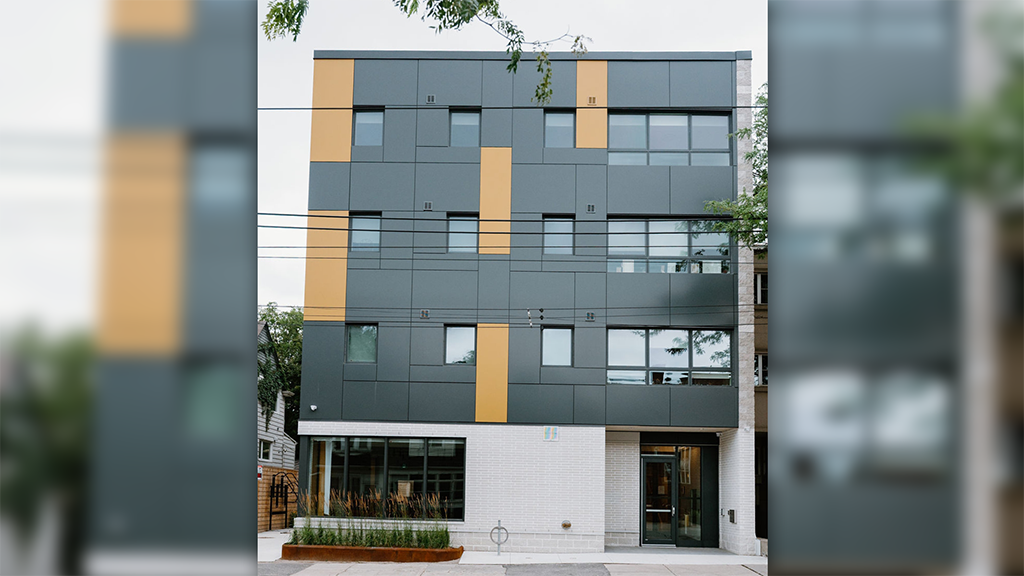
Toronto has been public about its target of approving 18,000 new supportive homes by 2030, and this project is one of the early proof points of that commitment. From a development strategy standpoint, supportive housing is not simply about unit count. It requires site selection near services, an operating partner capable of delivering culturally grounded care, and a funding model that can absorb the higher per-unit cost of onsite health and wellness supports. Na-Me-Res will be running client services built around an Indigenous approach to mental and physical health, community integration, and spiritual well-being, which means the building’s design and operating budget had to account for far more than shelter alone.
Strong projects are built from a wider understanding of timing, access, infrastructure, policy, and demand, and Coxwell Ave. reflects that layered approach in a very concrete way.
For developers and planners watching Toronto’s housing pipeline, the lesson here is about feasibility under complexity. A 20-unit building drawing on five funding streams and a specialized operator is not a quick build. It is a long-horizon project that only works when land use policy, incentive structures, and community partnership move in the same direction. As the city pushes toward its 2030 supportive housing goal, expect more projects to follow this same blended model, because it is increasingly the only way underserved housing needs get met at scale in a market this constrained.
Source: Construct Connect Canada