
A $4.32B Tunnel Contract and What It Signals for Toronto’s East End Growth
Large infrastructure contracts rarely make headlines for their construction details alone. They matter because of what they unlock. This week’s $4.32 billion award to Pape North Connect, a joint venture between Webuild and FCC Canada Ltd., for the Pape Tunnel and Underground Stations package of the Ontario Line is exactly that kind of signal. It is not just a tunnel. It is a long term commitment to how a corridor of Toronto will grow.
The contract covers three kilometres of twin tunnels and two underground stations, one of which connects directly to the existing Pape Station on Line 2. The alignment runs from Gerrard Street through Greektown, Pape Village, and East York, before reaching Minton Place near the Don Valley Parkway. This is a stretch of the city that has been waiting on this kind of transit certainty for years, and certainty is exactly what land developers and city planners need before committing capital.
The joint venture was first selected in 2024 for the collaborative development phase under a Progressive Design-Build model, and this award moves the project into implementation. That progression matters. Progressive Design-Build allows the owner and contractor to work through design challenges together before locking in the full delivery contract, which reduces the kind of surprises that can derail large civil works. For a project running beneath one of Canada’s densest and most complex urban environments, with existing utilities, active roadways, and neighbourhood infrastructure layered above and below grade, that de-risking matters as much to future development around these stations as the tunnel itself.
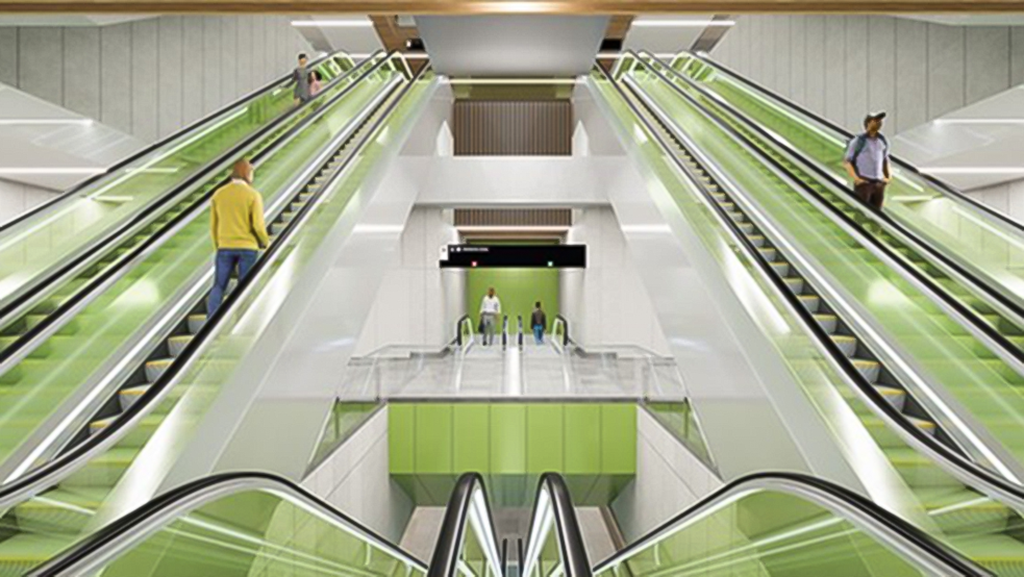
What should development watchers take from this. New underground stations do not just move people, they reshape land value along their footprint. Greektown, Pape Village, and the surrounding East York blocks have long been considered stable but underleveraged residential markets. A confirmed connection into the broader 15.6 kilometre Ontario Line changes that calculus. Sites near future station entrances tend to see earlier and steeper interest from mid rise and mixed use developers, well before a single train runs, because the transit commitment itself becomes the asset that justifies density.
Strong development decisions are rarely made after a station opens. They are made in the years while it is being built, when the risk is priced in but the certainty is already real.
Webuild has described the Pape package as one of the most technically demanding sections of the entire Ontario Line, given the excavation required in a dense urban core with existing infrastructure networks running both above and below ground. That complexity is worth noting for anyone tracking timelines around this corridor, since coordination at this scale tends to shape not just construction schedules but the pace at which surrounding development approvals move as well.
For a city still working through a housing supply gap, projects like this are the infrastructure backbone that makes future intensification along the Ontario Line corridor feasible rather than aspirational. The tunnel is the visible part. The real story is the decade of land use decisions it sets in motion.