CMHC’s Weaker Outlook Is A Land Strategy Warning For Canada’s Largest Housing Markets
CMHC’s summer update, reported by Storeys, is more than a market forecast. It is a signal that the development cycle in Canada’s largest housing regions is entering a more selective, more capital-disciplined phase. Sales weakness, price declines, high construction costs, and slower population growth are now directly reshaping where projects can proceed, which approvals have real value, and how builders allocate risk.
For developers, the key issue is not simply that demand has softened. It is that improved pricing has not yet been enough to restore buyer confidence. That matters because land value is ultimately supported by achievable end pricing, absorption, financing conditions, and construction cost assumptions. When all four are under pressure, pro formas become less forgiving and sites once underwritten for condominium density may no longer clear feasibility thresholds.
This is especially visible in Ontario and British Columbia, where CMHC expects historically low construction levels to show most clearly in the condominium market. That has major planning implications. These provinces have spent years building housing supply strategies around intensification, transit-oriented development, and high-rise condominium delivery. If the condo engine slows, municipalities may find that approved density does not automatically translate into housing starts.
The immediate adjustment is already underway: more capital is moving toward purpose-built rental. That shift is rational, but it is not simple. Rental projects require different financing structures, longer hold periods, different operating assumptions, and often deeper patience from investors. They also depend heavily on municipal charges, tax treatment, interest rates, and construction timelines. A site that fails as a condo may not automatically work as rental unless policy and capital stack conditions support the conversion.
Approved density is not supply. Supply only arrives when market demand, financing, construction economics, and municipal policy align.
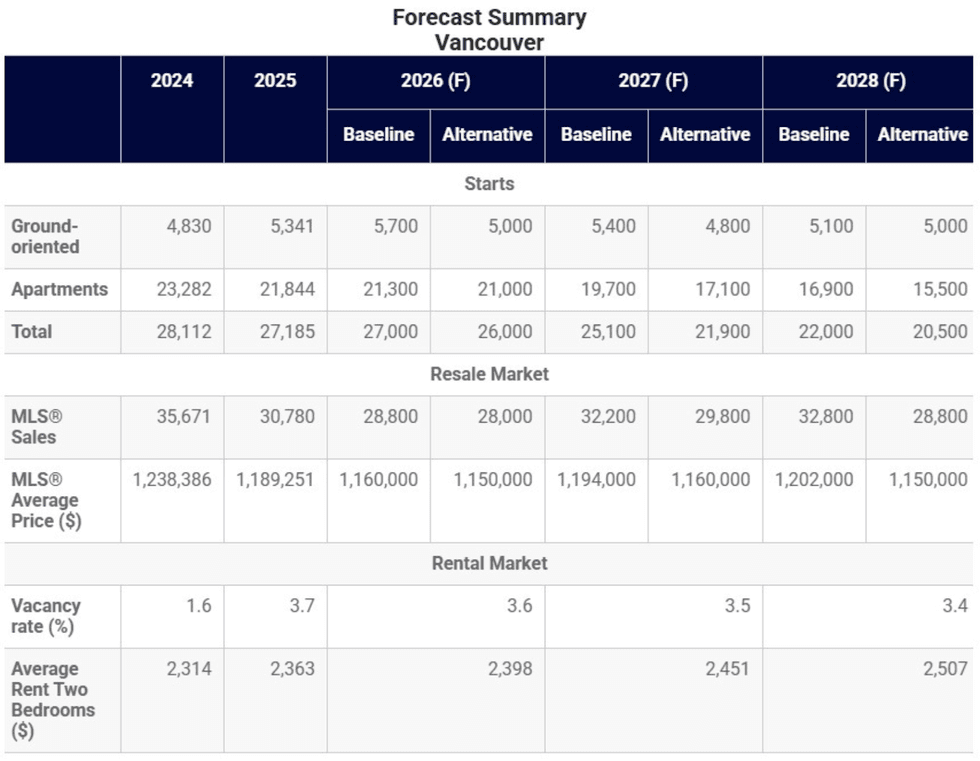
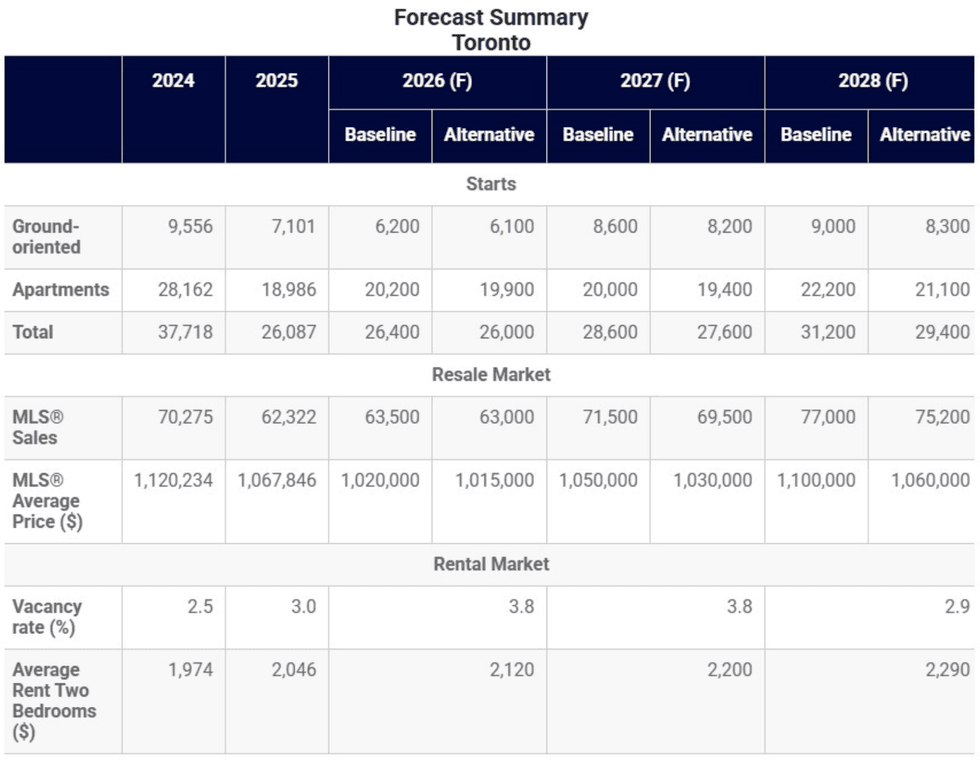
The divergence between Vancouver and Toronto is also important. CMHC’s updated forecasts suggest Vancouver starts may decline through 2028, while Toronto could begin to recover after 2026. That points to different land strategies. In Metro Vancouver, constrained geography, high land costs, and persistent affordability gaps may keep feasibility tight even as rental vacancy remains within a healthier range. In the Greater Toronto Area, the larger projected rebound in resale activity may eventually restore more confidence to developers holding entitled or near-entitled sites.
For planners, the message is equally direct. If municipalities want approved housing targets to become actual units, they must understand feasibility as a planning variable, not a private-sector complaint. Development charges, parkland requirements, approval timelines, servicing capacity, parking standards, and inclusionary obligations all interact with interest rates and construction costs. In a stronger market, projects can absorb more friction. In a weak market, friction kills starts.
The rental easing in Toronto and Vancouver should not be mistaken for a permanent solution. Higher vacancy and slower rent growth can provide short-term relief, but they may also reduce the urgency of new rental starts if returns compress. The next risk is a delayed supply gap: fewer starts today can become renewed scarcity several years from now, especially if population growth strengthens again or interest rates normalize.
For large-scale investors and landowners, the strategic response is patience with precision. Watch absorption, construction pricing, municipal fee policy, infrastructure commitments, and lender appetite. The strongest opportunities will not simply be the cheapest sites. They will be sites with policy support, servicing certainty, flexible built-form options, and enough basis discipline to survive a slower cycle. In this market, entitlement still matters, but feasibility decides what gets built.
Source: Storeys