Trade War Volatility Is Reshaping the Risk Calculus at the Top of Toronto’s Housing Market
Four straight months of rising national home sales had convinced a good portion of Bay Street that the correction was finally behind us. Then, on August 21, Canada-U.S. trade talks collapsed, new tariffs landed, and Prime Minister Mark Carney signaled countertariffs were coming. For investors watching Toronto’s luxury segment, the timing could not have been more instructive: this is exactly the kind of macro shock that separates disciplined capital from speculative capital.
Just days before the breakdown, a newly built Forest Hill residence at 211 Dunvegan Rd. sold for 23.5 million dollars, well above its 22 million dollar asking price, after drawing three competing bidders. Jane Zhang, the Sotheby’s International Realty Canada broker who listed the property, called the result a shock to the market. It is worth understanding why that deal happened, and why it is not yet evidence of a durable rebound at the top end.
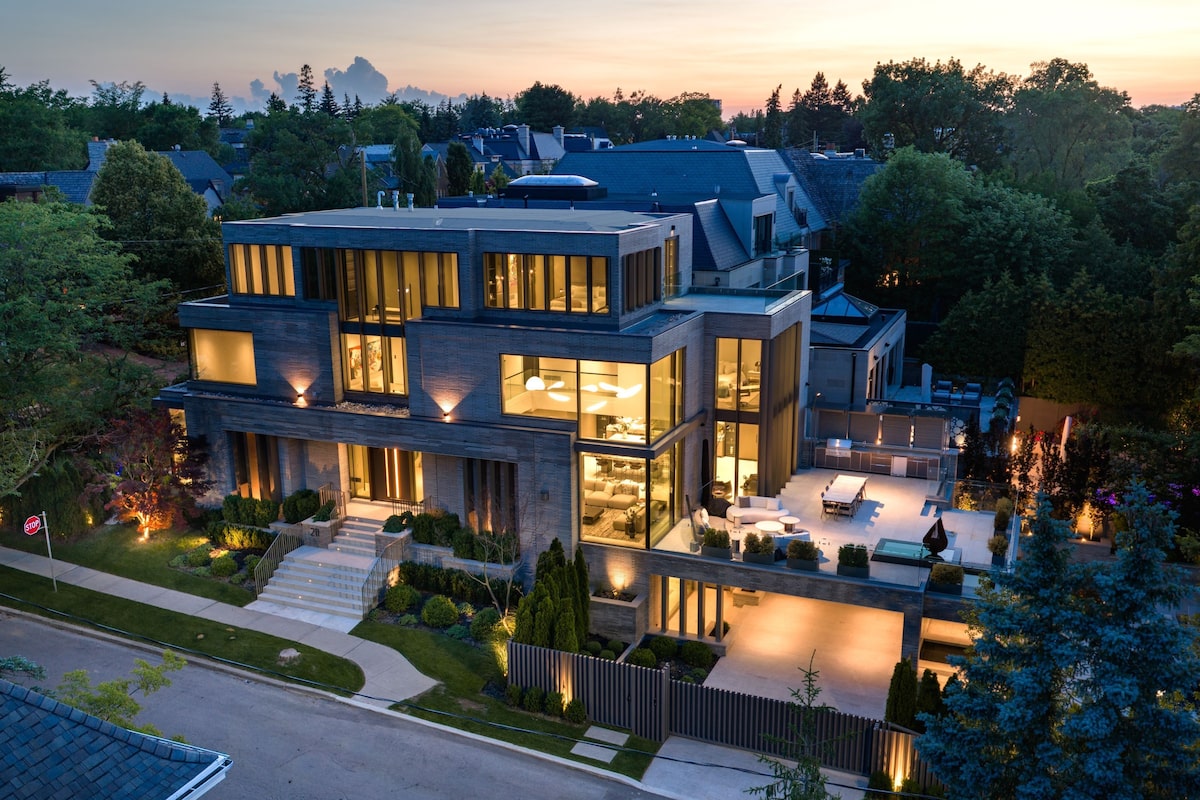
Luxury trades in Toronto have been scarce for two years, weighed down by the federal foreign buyers’ ban, Ontario’s 25 per cent non-resident speculation tax, an additional 10 per cent municipal levy in the city, and separate taxes on luxury and vacant homes. Layer trade uncertainty on top of that policy environment, and it is easy to see why high-net-worth buyers, largely domestic in this case, have stayed on the sidelines. Every bidder on the Dunvegan property was a Canadian citizen or permanent resident. That detail matters for anyone assessing demand depth in this segment: the buyer pool at these price points has narrowed to a smaller, more selective group.
Robert Kavcic, senior economist with Bank of Montreal, put the stakes plainly after negotiations broke down, warning that if the shelter of USMCA is broken and trust in the trade relationship is further scarred, business confidence takes another hit. That is the variable investors should track closest. Confidence, not inventory, has been the binding constraint on high-end transaction volume, and confidence is precisely what a trade dispute erodes fastest.
The reason they are wealthy is they are smart. They do not want to overpay.
That line from Zhang captures the discipline defining this cohort of buyers. James Warren of Chestnut Park Real Estate adds a second, equally important signal: some wealthy prospective sellers are keeping money deployed in public markets rather than real estate simply because returns there have been stronger. He is preparing to list a Rosedale property near 25 million dollars in September, but notes inventory remains ample in that enclave and overpriced listings tend to languish. His own estimate is that both supply and asking prices in the ultra-luxury tier need to come down roughly 20 per cent to clear efficiently.
For investors, the Dunvegan sale is a useful data point, not a trend. A well-priced, well-marketed asset with a motivated broker can still generate genuine competition even in a stalled segment. But renewed trade friction, an unresolved USMCA question, and a buyer pool constrained by policy suggest the broader luxury recovery remains fragile. The opportunity here favours patient capital willing to underwrite price discovery over the next several quarters, not buyers chasing the next headline sale.
Source: The Globe and Mail